
Grazia Deledda (1871–1936)
Author of Reeds in the Wind
About the Author
Among the most honored women writers of modern Italy, Deledda wrote naturalistic or realistic novels, drawing upon her Sardinian background for material. Some critics hold, however, that in Deledda's formula often only the names of places and people serve to evoke a Sardinian atmosphere of show more strangeness. Her best works especially Elias Portolu (1903), Cenere (1904), and The Mother (1920) contain excellent portrayals of women. While her characters are complex, often dominated by an overwhelming sense of destiny and by nature's mythic powers, her narrative structures remain simple and classic. She was awarded the Nobel Prize for Literature in 1926. (Bowker Author Biography) show less
Series
Works by Grazia Deledda
Kõrkjad tuules : [romaan] 4 copies
Obras escogidas 4 copies
Scritti scelti 4 copies
I giuochi della vita 3 copies
Lia ja mehed : romaan 2 copies
La volpe 2 copies
La Patrino 2 copies
Il sigillo d'amore 2 copies
Sardinian Stories 1 copy
I'incendio nell'oliveto 1 copy
Die Mutter: Neu übersetzt (Perlen der Literatur: Europäische wiederveröffentlichte Titel des 19. oder 20. Jahrhunderts) (2022) 1 copy, 1 review
Novella da viaggio 1 copy
Noveller 1 copy
På onda vägar : roman 1 copy
L'heura 1 copy
Il rifugio 1 copy
Racconti di Natale 1 copy
Γιατί αμάρτησε 1 copy
Giaffà: racconti per ragazzi 1 copy
Flykten till Egypten 1 copy
Cattive compagnie 1 copy
℗1: ℗Romanzi e novelle 1 copy
Jó lelkek 1 copy
Versi e prose giovanili 1 copy
Andras Synder 1 copy
The Shoes 1 copy
Il tesoro degli zingari 1 copy
På Onda Vägar 1 copy
Skuggan Av Det Förflutna 1 copy
Bestiario 1 copy
Il nostro padrone 1 copy
Romanzi e novelle , vol. 1 1 copy
Il nonno 1 copy
L'ospite 1 copy
La bambina rubata 1 copy
Naufraghi in porto 1 copy
Collezione premi nobel 1 copy
Opere complete 1 copy
Golubovi i jastrebovi 1 copy
Temptation And Other Stories 1 copy
Klatba 1 copy
Romanzi e novelle. Vol. 4 1 copy
Pannain Serra Elena 1 copy
Novelle: Vol. II 1 copy
Associated Works
Ladies of Fantasy: Two Centuries of Sinister Stories by the Gentle Sex (1975) — Contributor — 53 copies, 1 review
A Very Italian Christmas: The Greatest Italian Holiday Stories of All Time (Very Christmas, 3) (2018) — Contributor — 20 copies
Los premios Nobel de literatura. En la ciudad / Elias Portolu / El Maestro — Contributor — 1 copy
Tagged
Common Knowledge
- Legal name
- Madesani, Grazia
- Birthdate
- 1871-09-27
- Date of death
- 1936-08-15
- Gender
- female
- Education
- Studi Letterali privati
- Occupations
- novelist
poet
short story writer
playwright - Awards and honors
- Nobel Prize (Literature, 1926)
- Short biography
- Grazia Deledda was born to a "fairly well-to-do landowner who farmed his own land," as she wrote, on the island of Sardinia. She had little formal education, attending elementary school and then receiving some private lessons in Italian with a tutor. She began to write stories and published her first work in a magazine as a teenager. In 1900, she made her first trip to the capital of Cagliari, where she met and married Palmiro Madesani, a civil servant, The couple later moved to Rome, though they made frequent return trips to her native Sardinia. It was the setting for many of her books. She published some successful fiction before achieving real fame with her novel Elias Portolu (1903). Her 1904 novel Cenere (Ashes) was made into a silent film starring the great tragic stage actress Eleonora Duse. Grazia Deledda wrote about 50 novels, poems, collections of short stories, and plays. She's considered a leader of the "verismo" (realism) school of Italian literature. She won the Nobel Prize in Literature in 1926 and continued to write extensively. An autobiographical novel, Cosima, was published posthumously in 1937.
- Nationality
- Italy
- Birthplace
- Nuoro, Italy
- Places of residence
- Cagliari, Italy
- Place of death
- Rome, Italy
- Burial location
- Cimitero Monumentale al Verano, Rome, Italy
- Associated Place (for map)
- Italy
Members
Reviews
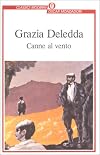
Credo che chiunque voglia scrivere bene dovrebbe leggere Grazia Deledda. La sua prosa è sontuosa senza essere opprimente; l'uso degli aggettivi nelle descrizioni, semplicemente magistrale. I personaggi e le situazioni vengono costruiti mediante un sapiente e paziente lavoro di sovrapposizione, cosicché alla fine il lettore se li vede davanti, perfettamente tridimensionali, e se ne sente nell'anima le emozioni e sulle spalle le vicende. Il fatto che la Deledda non venga proposta di più e show more meglio agli studenti, al posto del pesantissimo e prevaricante Verga, che, in quanto a statura letteraria, non le arriva nemmeno al ginocchio, temo sia dovuto al solito pregiudizio nei confronti delle autrici, ma vabbé. Prima o poi il vero lettore, e il vero scrittore, imparano da dove prendere i loro modelli.
Detto questo, Canne al vento è un capolavoro che lascia negli occhi paesaggi selvaggi e indimenticabili e nel cuore l'incredibile vicenda di Efix, servo umilissimo eppure padrone delle vicende delle tre dame Pintor, di cui governa le terre e le vite dal giorno in cui, per amore della quarta di loro, ne ha ucciso il padre per aiutare quest'ultima a fuggire dalla tirannia di una vita senza prospettive. La storia si snoda, tormentata e piena di passioni sotto il mantello dell'immobilità paesana, fino al giorno in cui le sorti delle dame, ormai rimaste in due, sono assicurate e l'anima del vecchio servo è finalmente libera di lasciarne il corpo. show less
Detto questo, Canne al vento è un capolavoro che lascia negli occhi paesaggi selvaggi e indimenticabili e nel cuore l'incredibile vicenda di Efix, servo umilissimo eppure padrone delle vicende delle tre dame Pintor, di cui governa le terre e le vite dal giorno in cui, per amore della quarta di loro, ne ha ucciso il padre per aiutare quest'ultima a fuggire dalla tirannia di una vita senza prospettive. La storia si snoda, tormentata e piena di passioni sotto il mantello dell'immobilità paesana, fino al giorno in cui le sorti delle dame, ormai rimaste in due, sono assicurate e l'anima del vecchio servo è finalmente libera di lasciarne il corpo. show less

The Sardinian novelist Grazia Deledda was the second female Nobel laureate in literature, in 1926. This simple little pastoral tragedy from 1903 was her third novel and the one that first brought her to popular attention.
It is a fairly straightforward tale of a young shepherd who returns to his family in Sardinia after a spell in jail on the continent and falls heavily in love with the girl that his brother is about to marry. As he evidently has a self-destructive urge as strong as any of show more Thomas Hardy's unhappy heroes, we have a pretty good idea that things aren't going to work out for the best, and they don't. But of course that's what we're paying for: the interesting thing to watch on the way is how Deledda plays with the interaction between the characters, the Sardinian landscape, and the almost overtly pagan religion of the islanders. There's a wonderful set-piece description of the annual pilgrimage to a mountain chapel to celebrate the festival of Santu Franziscu that clearly has only the most tenuous connection with any sort of Catholicism that would be recognised in Rome, and the hero's mother is forever doing divination ceremonies at her domestic altar.
So, it's a nice example of early twentieth-century pastoral quasi-realism, with the added benefit of Sardinian scenery, but I couldn't help feeling (even though it's a cliché to say this of any Italian story) that it would have worked better as an opera. Elias, in particular, is forever delivering apostrophes to the reader that are only a gnat's crochet away from being arias, and you just imagine the Shearers' Chorus... show less
It is a fairly straightforward tale of a young shepherd who returns to his family in Sardinia after a spell in jail on the continent and falls heavily in love with the girl that his brother is about to marry. As he evidently has a self-destructive urge as strong as any of show more Thomas Hardy's unhappy heroes, we have a pretty good idea that things aren't going to work out for the best, and they don't. But of course that's what we're paying for: the interesting thing to watch on the way is how Deledda plays with the interaction between the characters, the Sardinian landscape, and the almost overtly pagan religion of the islanders. There's a wonderful set-piece description of the annual pilgrimage to a mountain chapel to celebrate the festival of Santu Franziscu that clearly has only the most tenuous connection with any sort of Catholicism that would be recognised in Rome, and the hero's mother is forever doing divination ceremonies at her domestic altar.
So, it's a nice example of early twentieth-century pastoral quasi-realism, with the added benefit of Sardinian scenery, but I couldn't help feeling (even though it's a cliché to say this of any Italian story) that it would have worked better as an opera. Elias, in particular, is forever delivering apostrophes to the reader that are only a gnat's crochet away from being arias, and you just imagine the Shearers' Chorus... show less

Grande dia... para ler literatura sarda. Este mês estou fazendo um curso na USP sobre literatura na Sardenha e a Grazia Deledda foi a primeira autora sarda que enfrentei. Segunda ganhadora mulher na história do Nobel de Literatura, sua escrita pode muito bem entrar no quesito "estranho familiar" freudiano, há toda uma sorte de lendas e costumes sardos peculiares, das quais o que mais salta aos olhos é toda uma tensão incestuosa que só comunidades insulares como a Sardenha são capazes show more de produzir.
Seguimos a trajetória de Efix, praticamente um escravo moderno devido à dor na consciência dele, se autopune a vida toda por um erro do passado e vemos todas suas relações primárias se desenrolarem a partir de seus mandos como ventrílocuo social.
Enfim, Deledda é uma outora que deveria ser melhor conhecida fora do âmbito da literatura italiana, apesar de ser uma leitura de veia regionalista, tem um apelo universal. show less
Seguimos a trajetória de Efix, praticamente um escravo moderno devido à dor na consciência dele, se autopune a vida toda por um erro do passado e vemos todas suas relações primárias se desenrolarem a partir de seus mandos como ventrílocuo social.
Enfim, Deledda é uma outora que deveria ser melhor conhecida fora do âmbito da literatura italiana, apesar de ser uma leitura de veia regionalista, tem um apelo universal. show less
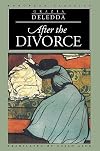
Deledda (winner of the 1926 Nobel Prize) was the daughter of a wealthy landowner from rural Sardinia, a largely impoverished island ruled by the Italians since the 18th century. Indeed, Deledda often used island’s hostile landscape as a ruling metaphor. She was particularly adept at using her style—verismo (realism), the same as that employed by Giovanni Verga—to telling effect. After the Divorce is a particularly representative work inasmuch as Deledda was fascinated by how temptation show more and sin played out, particularly among the poorer classes. The plot is simple: Costantino is convicted of murdering his vicious uncle, despite being innocent; he accepts the verdict as the price for his failure (because of his poverty) to be married in the church. His wife, Giovanna, quickly becomes unable to support herself and their child and her mother pushes her to divorce Costantino and remarry, a well-to-do landowner. When Costantino is released, he and Giovanna begin meeting secretly and, unsurprisingly, things end badly. The cast of characters is not large but most are indelibly drawn. After the Divorce evokes Sardinian culture by highlighting the local: language, tradition, families, landscape, and, above all, the poverty and pessimism locked into place by centuries of oppression. Two of Deledda’s choices are worth noting: she took poverty as a given and focused on its effects, not it causes, and she emphasized women’s suffering instead of their autonomy. Neither choice is particularly surprising, but both substantially define her writing and her approach. For her, the world was a place of sin, suffering, and remorse. Like Thomas Hardy, her near contemporary, Deledda was preoccupied with the notion of transgression. Her fiction is peopled by fatally flawed characters torn between hope and despair, right and wrong, sin and redemption. Here, as in other works, a moral dilemma leads to tragedy, all set against the background of a mythical, primordial world. show less
Lists
Awards


You May Also Like


Associated Authors
Statistics
- Works
- 155
- Also by
- 19
- Members
- 1,708
- Popularity
- #15,025
- Rating
- 3.8
- Reviews
- 44
- ISBNs
- 358
- Languages
- 18
- Favorited
- 5

