

Kurt Vonnegut (1922–2007)
Author of Slaughterhouse-Five
About the Author
The appeal of Kurt Vonnegut, especially to bright younger readers of the past few decades, may be attributed partly to the fact that he is one of the few writers who have successfully straddled the imaginary line between science-fiction/fantasy and "real literature." He was born in Indianapolis and show more attended Cornell University, but his college education was interrupted by World War II. Captured during the Battle of the Bulge and imprisoned in Dresden, he received a Purple Heart for what he calls a "ludicrously negligible wound." After the war he returned to Cornell and then earned his M.A. at the University of Chicago.He worked as a police reporter and in public relations before placing several short stories in the popular magazines and beginning his career as a novelist. His first novel, Player Piano (1952), is a highly credible account of a future mechanistic society in which people count for little and machines for much. The Sirens of Titan (1959), is the story of a playboy whisked off to Mars and outer space in order to learn some humbling lessons about Earth's modest function in the total scheme of things. Mother Night (1962) satirizes the Nazi mentality in its narrative about an American writer who broadcasts propaganda in Germany during the war as an Allied agent. Cat's Cradle (1963) makes use of some of Vonnegut's experiences in General Electric laboratories in its story about the discovery of a special kind of ice that destroys the world. God Bless You, Mr. Rosewater (1965) satirizes a benevolent foundation set up to foster the salvation of the world through love, an endeavor with, of course, disastrous results. Slaughterhouse-Five; or The Children's Crusade (1969) is the book that marked a turning point in Vonnegut's career. Based on his experiences in Dresden, it is the story of another Vonnegut surrogate named Billy Pilgrim who travels back and forth in time and becomes a kind of modern-day Everyman. The novel was something of a cult book during the Vietnam era for its antiwar sentiments. Breakfast of Champions (1973), the story of a Pontiac dealer who goes crazy after reading a science fiction novel by "Kilgore Trout," received generally unfavorable reviews but was a commercial success. Slapstick (1976), dedicated to the memory of Laurel and Hardy, is the somewhat wacky memoir of a 100-year-old ex-president who thinks he can solve society's problems by giving everyone a new middle name. In addition to his fiction, Vonnegut has published nonfiction on social problems and other topics, some of which is collected in Wampeters, Foma and Granfalloons (1974). He died from head injuries sustained in a fall on April 11, 2007. (Bowker Author Biography) show less
Disambiguation Notice:
Kilgore Trout, the name of a character in several of Kurt Vonnegut's books, was later used as a pseudonym by Philip José Farmer. Vonnegut himself never wrote under or went by the name Kilgore Trout.
Image credit: Kurt Vonnegut, 2001.
Works by Kurt Vonnegut
Novels & Stories, 1963-1973: Cat's Cradle / God Bless You, Mr. Rosewater / Slaughterhouse-Five / Breakfast of Champions / Stories (2011) 496 copies, 8 reviews
Novels & Stories 1950-1962: Player Piano / The Sirens of Titan / Mother Night / Stories (2012) 303 copies, 4 reviews
Slaughterhouse-Five • The Sirens of Titan • Player Piano • Cat's Cradle • Breakfast of Champions • Mother Night (1980) 190 copies, 1 review
Kurt Vonnegut: The Last Interview: And Other Conversations (The Last Interview Series) (2011) 128 copies, 1 review
If this isn't nice what is?, (much) expanded second edition: the graduation speeches and other words to live by (2014) 125 copies, 2 reviews
If This Isn't Nice, What Is? (Even More) Expanded Third Edition: The Graduation Speeches and Other Words to Live By (2020) 84 copies, 3 reviews
Kurt Vonnegut, Jr. Reads Welcome to the Monkey House, New Dictionary, and Harrison Bergeron 19 copies, 2 reviews
The Sirens of Titan • Mother Night • Cat's Cradle • God Bless You, Mr. Rosewater • Slaughterhouse-Five (1988) 18 copies
Cat's Cradle • The Sirens of Titan • God Bless You, Mr. Rosewater • Welcome to the Monkey House • Slaughterhouse Five (1973) 15 copies
The Vonnegut Quartet: Breakfast of Champions / Mother Night / Player Piano / Wampeters, Foma & Granfalloons (1976) 9 copies
Thanasphere 6 copies
Kurt Vonnegut 6 copies
galaxy 14 Auswahl der besten Stories aus dem Science Fiction Magazine Galaxy (1970) — Contributor — 5 copies
The Big Space Fuck [short story] 4 copies
Utopia 14 - 1º volume 4 copies
Utopia 14 - 2º Volume 4 copies
Long Walk to Forever [short story] 4 copies
Masters of Science Fiction, Vol 1 4 copies
Short Science Fiction Collection 005 3 copies
Short Science Fiction Collection 007 3 copies
The Souvenir 3 copies
Kirjailijan työ : Saul Bellow, William Faulkner, Ernest Hemingway, Boris Pasternak, Kurt Vonnegut (1985) 3 copies
Kurt Vonnegut PALM SUNDAY An Autobiographical Collage 1981 Delacorte Press, NY [Hardcover] unknown (1981) 3 copies
Hall of Mirrors 3 copies
Happy Birthday, Kurt Vonnegut: A Festschrift for Kurt Vonnegut on his Sixtieth Birthday (1982) 3 copies
Short Science Fiction Collection 076 2 copies
Short Science Fiction Collection 075 2 copies
Short Science Fiction Collection 067 2 copies
Short Science Fiction Collection 056 2 copies
Short Science Fiction Collection 020 2 copies
Runaways 2 copies
The Ides of March 2 copies
utopia 14 - 2 2 copies
Works of K. Vonnegut: Slaughterhouse Five, Breakfast of Champions, The Sirens of Titan — Author — 2 copies
Short Science Fiction Collection 051 2 copies
Cold Turkey 2 copies
The Cruise Of The Jolly Roger 2 copies
MËNGJES KAMPIONËSH 1 copy
Here is a Lesson in Creative Writing (in The Best American Nonrequired Reading 2006 - EGGERS) 1 copy
Bard books 1 copy
0083- Selected stories 1 copy
The Package 1 copy
Mnemonics 1 copy
Any Reasonable Offer 1 copy
Sirens of Triton 1 copy
Slaughterhouse 5, or The Children's Crusade - A Duty-dance with Death by Kurt Vonnegut (1991-03-21) 1 copy
Slaugherhouse 5 1 copy
Hello, Red (Stories) 1 copy
דיק הצלף 1 copy
Колыбель для кошки Бойня номер пять, или Крестовый поход детей; Сирены Титана : Романы : [Пер. с… (1999) 1 copy
Бойня номер пять, или Крестовый поход детей ; Балаган, или Конец одиночеству : [романы] (2009) 1 copy
עריסת חתול 1 copy
Del 1 copy
Колыбель для кошки 1 copy
epicac 1 copy
Gempa Waktu 1 copy
Cat’s Cradle 1 copy
The Good Explainer (Stories) 1 copy
Śniadanie mistrzów 1 copy
Custom-made Bride 1 copy
Lot 3 books by Kurt Vonnegut,Jr., Galapagos a novel, Slaughter-House Five, Player Piano, (1974) 1 copy
Requiem for Zeitgeist 1 copy
The Drone King 1 copy
A Night For Love 1 copy
This Son Of Mine 1 copy
The Boy Who Hated Girls 1 copy
Find Me A Dream 1 copy
Notes on Armagedon 1 copy
Fortitude [short story] 1 copy
Hal Irwin’s Magic Lamp 1 copy
Lovers Anonymous 1 copy
Bode Vermelho 1 copy
Fates Worth Than Death 1 copy
Elle est pas belle, la vie ? 1 copy
Untitled 1 copy
The World Without Us 1 copy
Poor Little Rich Town 1 copy
Gdy Śmiertelnicy Śpią 1 copy
Unpaid Consultant 1 copy
Un avanzo di galera 1 copy
Sláturhús fimm 1 copy
The Lost Board Game: GMQ 1 copy
A Present For Big Saint Nick 1 copy
Ambitious Sophomore 1 copy
Часотрус 1 copy
Associated Works
The Story and Its Writer: An Introduction to Short Fiction (1976) — Contributor — 1,214 copies, 3 reviews
The Big Book of Science Fiction: The Ultimate Collection (2016) — Contributor — 522 copies, 8 reviews
Writers on Writing: Collected Essays from the New York Times (2001) — Contributor — 479 copies, 5 reviews
For the Love of Books: 115 Celebrated Writers on the Books They Love Most (1999) — Contributor — 479 copies, 4 reviews
The Man with the Golden Arm: 50th Anniversary Critical Edition (1999) — Contributor — 462 copies, 8 reviews
The Moral Life: An Introductory Reader in Ethics and Literature (1999) — Contributor — 202 copies, 2 reviews
First Fiction: An Anthology of the First Published Stories by Famous Writers (1994) — Contributor — 196 copies, 1 review
The Rolling Stone Book of the Beats: The Beat Generation and American Culture (1999) — Contributor — 181 copies, 2 reviews
The Mark Twain Anthology: Great Writers on His Life and Work (2010) — Contributor — 159 copies, 1 review
The Very Best of Fantasy & Science Fiction: Sixtieth Anniversary Anthology (2009) — Contributor — 148 copies, 6 reviews
War No More: Three Centuries of American Antiwar and Peace Writing (2016) — Contributor — 109 copies, 2 reviews
Write If You Get Work : The Best of Bob and Ray (1975) — Foreword, some editions — 107 copies, 3 reviews
The Prentice Hall Anthology of Science Fiction and Fantasy (2000) — Contributor — 100 copies, 2 reviews
The Best Fantasy Stories from the Magazine of Fantasy & Science Fiction (1985) — Contributor — 78 copies, 2 reviews
Cape Cod Stories: Tales from Cape Cod, Nantucket, and Martha's Vineyard (1996) — Contributor — 59 copies, 5 reviews
Grave Predictions: Tales of Mankind’s Post-Apocalyptic, Dystopian and Disastrous Destiny (2016) 35 copies, 7 reviews
The Magazine of Fantasy and Science Fiction October 1961, Vol. 21, No. 4 (1961) — Contributor — 21 copies, 1 review
Democracy in Print: The best of the Progressive Magazine, 1909-2009 (2009) — Contributor — 14 copies
MHQ: The Quarterly Journal of Military History — Winter 1994 (1993) — Author "So it goes." — 10 copies
Tider skal komme : 15 langtidsvarsler : en science fiction-antologi — Contributor — 5 copies
10 Lost Vintage Sci-Fi Masterpieces for Hardcore Fans Only! (2009) — Contributor — 4 copies, 1 review
Short Science Fiction Collection 045 2 copies
Short Science Fiction Collection 047 — Contributor — 2 copies
Ki ょ う も 気 God prepared a short masterpiece SF election (Kadokawa library) (2010) — Contributor — 2 copies
RDCBLP Saint Paul | Apostle to All Men | Horowitz and Mrs. Washington | The Foster Portfolio | Bel Ria (1980) 1 copy
The Most Dangerous Game and Other Stories of Menace and Adventure (2013) — Contributor — 1 copy, 1 review
S-Fマガジン 2007年 09月号 [雑誌] 1 copy
Tagged
Common Knowledge
- Legal name
- Vonnegut, Kurt, Jr.
- Birthdate
- 1922-11-11
- Date of death
- 2007-04-11
- Gender
- male
- Education
- University of Chicago
Cornell University
Carnegie Institute of Technology
University of Tennessee - Occupations
- journalist
novelist
essayist
playwright
screenwriter - Organizations
- American Humanist Association
U.S. Army (WWII|POW)
Iowa Writers' Workshop - Awards and honors
- State Author of New York/Edith Wharton Citation of Merit (2001-03)
American Academy of Arts and Letters Academy Award [1970]
Humanist of the Year [1992]
Asteroid Namesake [2539]
Purple Heart
Prisoner of War Medal (show all 8)
Science Fiction and Fantasy Hall of Fame (2015)
Carl Sandburg Literary Award (2001) - Relationships
- Vonnegut, Mark (son)
Vonnegut, Edith (daughter)
Krementz, Jill (spouse) - Cause of death
- a fall (brain injuries incurred several weeks prior from a fall at his New York brownstone home)
- Nationality
- USA
- Birthplace
- Indianapolis, Indiana, USA
- Places of residence
- New York, New York, USA
Indianapolis, Indiana, USA
Barnstable, Massachusetts, USA - Place of death
- New York, New York, USA
- Map Location
- Indiana, USA
- Disambiguation notice
- Kilgore Trout, the name of a character in several of Kurt Vonnegut's books, was later used as a pseudonym by Philip José Farmer. Vonnegut himself never wrote under or went by the name Kilgore Trout.
Members
Discussions
Slaughterhouse-Five by Kurt Vonnegut [Hamilton Press 2001] in Fine Press Forum (October 2022)
Sci-Fi Story, People Live Forever in Name that Book (August 2017)
November 2013: Kurt Vonnegut in Monthly Author Reads (November 2014)
1001 Group Read-December, 2012: Slaughterhouse Five in 1001 Books to read before you die (January 2013)
Reviews

Slaughterhouse-Five is a book forged deep in the soul. Perhaps it’s not a book so much as it is a memory: a love-letter to a tragedy, a break-up letter with happiness. It is death, regretful but expectant. So it goes.
Every sentence of this memory-love-breakup-death makes me want to cry. Some did. Some do. It's the story of Billy Pilgrim, a man who survives, and in some ways does not survive, the military action known as the fire-bombing of Dresden. Along with this he becomes unstuck in show more time, and jumps between moments of his life from birth to final death. Death is white noise. So it goes.
When he's painfully washed by the Germans after becoming a prisoner of war, he is suddenly a baby, being washed by his mother. It's as involuntary as a human may experience a memory. Once Billy is returned to America, he is captured several years later by an alien race that lives in four dimensions. The race, the Tralfamadorians, experience time not as a continuum but all moments at once. Birth is not a starting point, it’s only a point. All things continue to exist somewhere, not even death is the end, because there is no end. So it goes.
I read this book around 2008 and gave it three stars because I hadn’t lived enough. I haven’t seen death up close and personal, perhaps this will affect me even more when I do. As is befitting the idea of time, it’s rare for anything to be told in older, but this is how humans operate. We live in order, but we don’t think in order. We’re impossibly bad at remembering orders of details: we become Tralfamadorians in our minds. But our memories allow life beyond death. So it goes. We exist as nine, or as twenty-one, we exist at times when our fathers are aliveC or that girl still loves us. Slaughter-house Five is anti-war, yes, but also, and more so, it’s about memory, and it’s about death. So it goes.
So it goes, so it goes, so it goes —
- "We'll meet again... If the accident will" [the concept of meeting someone in the future if God allows it]
- He never got mad at anything. He was wonderful that way.
- "How did I get so old?"
- Among the things Billy Pilgrim could not change were the past , the present, and the future.
- Every so often, for no apparent reason, Billy Pilgrim would find himself weeping. Nobody had ever caught Billy doing it. Only the doctor knew. It was an extremely quiet thing Billy did, and not very moist.
- "What we love in our books are the depths of many marvelous moments seen all at one time."
- He said that everything there was to know about life was in The Brothers Karamazov by Feodor Dostoevsky. "But that isn't enough anymore."
- “I look at you sometimes and I get a funny feeling that you’re just full of secrets.” “I’m not,” said Billy. This was a lie, of course.
- Everything was beautiful, and nothing hurt.
- They do not love one another because they do not love themselves.
- Now he closes his speech as he closes every speech—with these words: “Farewell, hello, farewell, hello.”
- They covered themselves with their hands and turned their backs and so on, and made themselves utterly beautiful.
- Later on in life, the Tralfamadorians would advise Billy to concentrate on the happy moments of life, and to ignore the unhappy ones—to stare only at pretty things as eternity failed to go by.
- The woman was softly beautiful, transparent... show less
Every sentence of this memory-love-breakup-death makes me want to cry. Some did. Some do. It's the story of Billy Pilgrim, a man who survives, and in some ways does not survive, the military action known as the fire-bombing of Dresden. Along with this he becomes unstuck in show more time, and jumps between moments of his life from birth to final death. Death is white noise. So it goes.
When he's painfully washed by the Germans after becoming a prisoner of war, he is suddenly a baby, being washed by his mother. It's as involuntary as a human may experience a memory. Once Billy is returned to America, he is captured several years later by an alien race that lives in four dimensions. The race, the Tralfamadorians, experience time not as a continuum but all moments at once. Birth is not a starting point, it’s only a point. All things continue to exist somewhere, not even death is the end, because there is no end. So it goes.
I read this book around 2008 and gave it three stars because I hadn’t lived enough. I haven’t seen death up close and personal, perhaps this will affect me even more when I do. As is befitting the idea of time, it’s rare for anything to be told in older, but this is how humans operate. We live in order, but we don’t think in order. We’re impossibly bad at remembering orders of details: we become Tralfamadorians in our minds. But our memories allow life beyond death. So it goes. We exist as nine, or as twenty-one, we exist at times when our fathers are aliveC or that girl still loves us. Slaughter-house Five is anti-war, yes, but also, and more so, it’s about memory, and it’s about death. So it goes.
So it goes, so it goes, so it goes —
- "We'll meet again... If the accident will" [the concept of meeting someone in the future if God allows it]
- He never got mad at anything. He was wonderful that way.
- "How did I get so old?"
- Among the things Billy Pilgrim could not change were the past , the present, and the future.
- Every so often, for no apparent reason, Billy Pilgrim would find himself weeping. Nobody had ever caught Billy doing it. Only the doctor knew. It was an extremely quiet thing Billy did, and not very moist.
- "What we love in our books are the depths of many marvelous moments seen all at one time."
- He said that everything there was to know about life was in The Brothers Karamazov by Feodor Dostoevsky. "But that isn't enough anymore."
- “I look at you sometimes and I get a funny feeling that you’re just full of secrets.” “I’m not,” said Billy. This was a lie, of course.
- Everything was beautiful, and nothing hurt.
- They do not love one another because they do not love themselves.
- Now he closes his speech as he closes every speech—with these words: “Farewell, hello, farewell, hello.”
- They covered themselves with their hands and turned their backs and so on, and made themselves utterly beautiful.
- Later on in life, the Tralfamadorians would advise Billy to concentrate on the happy moments of life, and to ignore the unhappy ones—to stare only at pretty things as eternity failed to go by.
- The woman was softly beautiful, transparent... show less

YAŞAMA
VE ÖLÜME
TERSTEN BİR BAKIŞ.
Bizi durdurabilecek hiçbir şey yok. Tavşanlar gibi çoğalmaya devam edeceğiz. Öngörülemeyen korkunç yan etkileri olan teknolojik aptallıklarla uğraşmaya devam edeceğiz. Artık yıkılmakta olan kentlerimizde sadece göstermelik tamirler yapacağız. Bizim eserimiz olan zehirli pisliğin çoğunu temizlemeyeceğiz.
Yenilikçi ve muzip yazar Kurt Vonnegut, kendi yaşamından karelerle birleştirdiği bu “kolaj”da kaleminin sivri ucunu bu show more kez modern topluma ve kültüre dokunduruyor. İntihardan sansüre, dünya barışından depresyona, dünyayı bekleyen olaylardan müziğe, her konuda Vonnegut’un eğlenceli üslubunu ve iyimser nihilizmini bulmak mümkün.
“İyi kalpli bir hiciv ustası, osuruk torbasıyla ahlak dersi veren bir eğitmen.”
JAY MCINERNEY show less
VE ÖLÜME
TERSTEN BİR BAKIŞ.
Bizi durdurabilecek hiçbir şey yok. Tavşanlar gibi çoğalmaya devam edeceğiz. Öngörülemeyen korkunç yan etkileri olan teknolojik aptallıklarla uğraşmaya devam edeceğiz. Artık yıkılmakta olan kentlerimizde sadece göstermelik tamirler yapacağız. Bizim eserimiz olan zehirli pisliğin çoğunu temizlemeyeceğiz.
Yenilikçi ve muzip yazar Kurt Vonnegut, kendi yaşamından karelerle birleştirdiği bu “kolaj”da kaleminin sivri ucunu bu show more kez modern topluma ve kültüre dokunduruyor. İntihardan sansüre, dünya barışından depresyona, dünyayı bekleyen olaylardan müziğe, her konuda Vonnegut’un eğlenceli üslubunu ve iyimser nihilizmini bulmak mümkün.
“İyi kalpli bir hiciv ustası, osuruk torbasıyla ahlak dersi veren bir eğitmen.”
JAY MCINERNEY show less
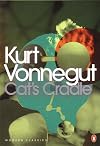
I am just going to come out and say it: I am pretty sure that Kurt Vonnegut is my spirit animal. When I read his works, I feel like he is talking to a darkness that has lived inside of me that has been protected by comedic outbursts and nurtured by the sorrows of the world. Vonnegut’s books are strange, fantastical, and confronting. They make me question my values, my beliefs, and what way is really up. Cat’s Cradle is no exception. The opening lines read:
Nothing in this book is true.
show more ‘Live by the foma* that make you brave and kind and healthy and happy.’
The Book of Bokonon. 1:5
*Harmless untruths
Bokononism is a religion found on an island republic in the Caribbean, San Lorenzo. Their catchphrase is: “Busy, busy, busy,” which is used whenever there are lots of things afoot. The Bokononist life is simple and blunt.They believe:
Everything is a lie.
Nothing can be true.
Love the people around you.
Give into your karass* and the kan-kan* that takes you there.
(*”We Bokononists believe that humanity is organized into teams, teams that do God’s Will without every discovering what they are doing. Such a team is called a Karass by Bokonon, and the instrument, the kan-kan…”)
There is a lot of beauty in this. It might seem rather bleak to think that everything is a lie. However, the concept is not uncommon in philosophy. It stems from the notion that there are no origins because everything is essentially made up of everything else. Theorists like Jaques Derrida, and Michel Foucault explore this concept. So if there are no true origins, where do we centre ourselves? This comes from the idea that our perception of reality, what we think to be true, is only a subjective interpretation. Reality can only exist in multiplicity: multiple subjective perspectives that we interpret and represent through speech, art, actions, and everyday life. Interpretation and representation as ways to understand the world, stem from extremely old concepts that come from Plato’s Republic and Aristotle’s Poetics from Ancient Greece.
Love the people around you (I guess you don’t always had to rub feet). This is simple. And while it is rooted in all religions it often interpreted, I believe, wrongly. There is usually a catch. Love the people around, as long as they… Love the people around you, provided they… Too many times I see this love turned into a moral high ground. I love you because you do not know what you do, really means, what I think you do is wrong, but I am going to sit here smugly and judge you through the lens of my own subjective perceptions of religion and life. Whether there is such a thing as pure love, and unbiased love, I don’t know. But it isn’t a bad thing to strive for?
Your karass and your kan-kan. While this might seem fatalistic-you have no control over your destiny so just give into it- I like to think of it as give into your own desires and follow where they take you (as long as your desires don’t involve mass murder). Too many times we have a voice inside ourselves that whispers, “What if…” and this voice is policed by our internalised cultural and social expectations: “Don’t do that… People will think your a fool/wrong/stupid/strange.” Life is short, and as the Bokononists say: those who rise from the mud will return to it.
I’m not sure Bokononism is for me, but it has taught me some great life lessons with sharp irony and blackest of humours around. Thank you Kurt. show less
Nothing in this book is true.
show more ‘Live by the foma* that make you brave and kind and healthy and happy.’
The Book of Bokonon. 1:5
*Harmless untruths
Bokononism is a religion found on an island republic in the Caribbean, San Lorenzo. Their catchphrase is: “Busy, busy, busy,” which is used whenever there are lots of things afoot. The Bokononist life is simple and blunt.They believe:
Everything is a lie.
Nothing can be true.
Love the people around you.
Give into your karass* and the kan-kan* that takes you there.
(*”We Bokononists believe that humanity is organized into teams, teams that do God’s Will without every discovering what they are doing. Such a team is called a Karass by Bokonon, and the instrument, the kan-kan…”)
There is a lot of beauty in this. It might seem rather bleak to think that everything is a lie. However, the concept is not uncommon in philosophy. It stems from the notion that there are no origins because everything is essentially made up of everything else. Theorists like Jaques Derrida, and Michel Foucault explore this concept. So if there are no true origins, where do we centre ourselves? This comes from the idea that our perception of reality, what we think to be true, is only a subjective interpretation. Reality can only exist in multiplicity: multiple subjective perspectives that we interpret and represent through speech, art, actions, and everyday life. Interpretation and representation as ways to understand the world, stem from extremely old concepts that come from Plato’s Republic and Aristotle’s Poetics from Ancient Greece.
Love the people around you (I guess you don’t always had to rub feet). This is simple. And while it is rooted in all religions it often interpreted, I believe, wrongly. There is usually a catch. Love the people around, as long as they… Love the people around you, provided they… Too many times I see this love turned into a moral high ground. I love you because you do not know what you do, really means, what I think you do is wrong, but I am going to sit here smugly and judge you through the lens of my own subjective perceptions of religion and life. Whether there is such a thing as pure love, and unbiased love, I don’t know. But it isn’t a bad thing to strive for?
Your karass and your kan-kan. While this might seem fatalistic-you have no control over your destiny so just give into it- I like to think of it as give into your own desires and follow where they take you (as long as your desires don’t involve mass murder). Too many times we have a voice inside ourselves that whispers, “What if…” and this voice is policed by our internalised cultural and social expectations: “Don’t do that… People will think your a fool/wrong/stupid/strange.” Life is short, and as the Bokononists say: those who rise from the mud will return to it.
I’m not sure Bokononism is for me, but it has taught me some great life lessons with sharp irony and blackest of humours around. Thank you Kurt. show less

It's been said that young people don't read novels for their plots or their themes, they read them so that they might inhabit a universe they find comfortable and sympathetic. I read a whole lot of Kurt Vonnegut in my younger days, though I haven't revisited him since I was seventeen or so. Rereading "Slaughterhouse-Five," I'm a little mystefied as to why I liked him so much, though there is something in his dry, detached humor that still strikes a chord with me, however faint. Time passes: show more I think I understand Vonnegut much better now than I did then, but I think I like him much less. So it goes.
These days, I'd call "Slaughterhouse-Five" a fine, accessible example of a postmodern novel: in this literary universe, both sequential time and grand narrative have more or less been disposed of. In true Transfalmadorian style, everything happens simultaneously and one's experience depends more or less on one's position: you're either inside the slaughterhouse, and, paradoxically, safe, or outside of it, and dead. You're either in the prisoners' railcar and starving to death or in the guards' car and living it up. Things are, those little green beings might say, structured that way. "Slaughterhouse-Five" is, of course, the author's best attempt to process his experience as a prisoner of war in Dresden and explain why he survived an inferno in which more than a hundred thousand others perished. In true postmodernist fashion, he's pretty much unable to come up with any good reason why he made it through and other, nobler people he knew did not. Vonnegut seems to posit that in Dresden, and, by extension, in most places, life and death are the products for random chance and unforseeable, capricious fate. I get the feeling that some readers, particulalrly those attached to more traditional concepts of heroism, might have found this sort of war story shocking and discomfiting when it was published, and Vonnegut makes it clear in the book's first chapter that he's writing a both an anti-war book and an anti-epic, but that doesn't make "Slaughterhouse-Five" particularly enjoyable, or, some might say, particularly insightful. Vonnegut seems to struggle with Dresden's very barbarity and meaninglessness, and both of these elements seem to overwhelm the text. Still, when one considers the horrors that "Slaughterhouse-Five" describes, it's possible that the sort of gallows humor that the author displays is the only really honest human reaction one can have. I did not, I admit, find this a particularly enjoyable read, and I found Vonnegut's aformentioned dry detachment less than charming this time around, but I also have to concede that it might be impossible to write about surviving tragedies of this magnitude in any other way. Sometimes life presents us with circumstances that makes the mind boggle and the soul quail, and traditional literatury structures, adaptable as they are, struggle to fill the gap. "Slaugherhouse-Five" might be, for good or ill, the best novel that a survivor of the Dresden firebombing could possibly produce. Some might say that it's the only sort of novel a survivor of such an event could produce. show less
These days, I'd call "Slaughterhouse-Five" a fine, accessible example of a postmodern novel: in this literary universe, both sequential time and grand narrative have more or less been disposed of. In true Transfalmadorian style, everything happens simultaneously and one's experience depends more or less on one's position: you're either inside the slaughterhouse, and, paradoxically, safe, or outside of it, and dead. You're either in the prisoners' railcar and starving to death or in the guards' car and living it up. Things are, those little green beings might say, structured that way. "Slaughterhouse-Five" is, of course, the author's best attempt to process his experience as a prisoner of war in Dresden and explain why he survived an inferno in which more than a hundred thousand others perished. In true postmodernist fashion, he's pretty much unable to come up with any good reason why he made it through and other, nobler people he knew did not. Vonnegut seems to posit that in Dresden, and, by extension, in most places, life and death are the products for random chance and unforseeable, capricious fate. I get the feeling that some readers, particulalrly those attached to more traditional concepts of heroism, might have found this sort of war story shocking and discomfiting when it was published, and Vonnegut makes it clear in the book's first chapter that he's writing a both an anti-war book and an anti-epic, but that doesn't make "Slaughterhouse-Five" particularly enjoyable, or, some might say, particularly insightful. Vonnegut seems to struggle with Dresden's very barbarity and meaninglessness, and both of these elements seem to overwhelm the text. Still, when one considers the horrors that "Slaughterhouse-Five" describes, it's possible that the sort of gallows humor that the author displays is the only really honest human reaction one can have. I did not, I admit, find this a particularly enjoyable read, and I found Vonnegut's aformentioned dry detachment less than charming this time around, but I also have to concede that it might be impossible to write about surviving tragedies of this magnitude in any other way. Sometimes life presents us with circumstances that makes the mind boggle and the soul quail, and traditional literatury structures, adaptable as they are, struggle to fill the gap. "Slaugherhouse-Five" might be, for good or ill, the best novel that a survivor of the Dresden firebombing could possibly produce. Some might say that it's the only sort of novel a survivor of such an event could produce. show less
Lists
Unread books (13)
Five Star Novels (1)
Cult Classics (1)
bound (1)
On the pile (1)
Literary SF/F (1)
scav (1)
On Books (1)
Short and Sweet (1)
Classics (1)
A Novel Cure (1)
Classic Sci-Fi (1)
. (1)
E's Reader (1)
recommended (1)
Read (1)
Dead narrators (1)
Check Library (1)
Europe (1)
SF Masterworks (1)
READ IN 2020 (1)
SF - To Read (1)
Magic Realism (1)
Banned Books (1)
The "A" List (1)
Non-Fiction (1)
Existentialism (1)
um actually (1)
2015 UpROOTed (1)
Read (12)
Metafiction (2)
Five star books (2)
THE WAR ROOM (2)
Best Satire (5)
el (3)
Overdue Podcast (3)
1980s (3)
Favourite Books (3)
Best Dystopias (3)
Best First Lines (1)
Midwest (1)
Science Fiction (1)
Best War Stories (1)
science fiction (1)
Read in 2014 (1)
Reading LIst (1)
. (1)
BitLife (1)
Books (1)
Folio Society (1)
Reiny (1)
SF Masterworks (2)
1960s (2)
War Literature (2)
1970s (2)
Nifty Fifties (2)
1950s (2)
Read This Next (2)
history (1)
Books I've Read (1)
Awards


You May Also Like


Associated Authors
Statistics
- Works
- 291
- Also by
- 92
- Members
- 200,982
- Popularity
- #20
- Rating
- 4.0
- Reviews
- 2,637
- ISBNs
- 1,695
- Languages
- 40
- Favorited
- 1,409


