
Nino Haratischwili
Author of The Eighth Life (for Brilka)
About the Author
Image credit: Nino Haratischwili, 2009
(by Julia Bührle-Nowikowa)
(by Julia Bührle-Nowikowa)
Works by Nino Haratischwili
Radio Universe 1 copy
Associated Works
Tagged
Common Knowledge
- Legal name
- ხარატიშვილი, ნინო
- Birthdate
- 1983
- Gender
- female
- Education
- Shota Rustaveli Theater and Film University
- Occupations
- theatre director
playwright
novelist - Awards and honors
- Carl-Zuckmayer-Medaille (2022)
Anna-Seghers-Preis (2015)
Adelbert-von-Chamisso-Preis Förderpreis (2010)
Kranichsteiner Literaturförderpreis (2011)
Literaturpreis des Kulturkreises der deutschen Wirtschaft (2015)
Hertha Koenig-Literaturpreis (2017) (show all 8)
Saba-Preis (2018)
Schiller-Gedächtnispreis (2019) - Nationality
- USSR (birth)
Georgia (1991-2012)
Germany (naturalisation) - Birthplace
- Tbilisi Georgian SSR, USSR
- Places of residence
- Hamburg, Germany
- Map Location
- Georgia
Members
Reviews
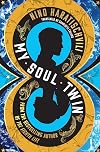
Nino Haratischwili’s books open up a part of the world that most of us know little about, at least in the U.S.A. Here Georgia is a state; the fact that it is also a country might come as a surprise to many in the U.S. And even those who know of its existence probably don’t know where in the world it is. I seek out books from and about places like Georgia precisely to open the world up for myself. Her amazing and epic first book, The Eighth Life, is mostly set in Georgia, while My Soul show more Twin starts in Germany, where Haratischwili now has citizenship, and ends up back in the land of her childhood. With these two books under my belt, I can safely say I will read anything she writes at this point.
I saw in one of the blurbs that this book was described as a modern-day Wuthering Heights. While I guess I understand Brontë’s book being a classic, I didn’t like it much myself, and one reading of it was enough. So blurbs like that don’t make me want to read whatever is being hyped. But I like Nino Haratischwili, so read it I did. I didn’t see a modern-day Wuthering Heights. Misguided (maybe?) love in an incredibly dysfunctional family? Sure. And everyone in the book pays some kind of price for that dysfunction whether they were a prime mover in the dysfunction or not. Life is complicated and hard, and seems to be getting more so, not less. But as hard as it sometimes is for me, this passage really resonated with how I feel:
“I was confronted from time to time with scenes from a world that had been bombed to pieces. I would reassure myself, especially when feeling almost overwhelmed by the heat, that my world was a world full of uncertainty, but it was one without bombs.”
Yes, my life also is one so far without bombs, but again I resonated with the main character when she thinks, “What a fucking dictatorship of happiness life is...”
I highly recommend checking this book out. And The Eighth Life. show less
I saw in one of the blurbs that this book was described as a modern-day Wuthering Heights. While I guess I understand Brontë’s book being a classic, I didn’t like it much myself, and one reading of it was enough. So blurbs like that don’t make me want to read whatever is being hyped. But I like Nino Haratischwili, so read it I did. I didn’t see a modern-day Wuthering Heights. Misguided (maybe?) love in an incredibly dysfunctional family? Sure. And everyone in the book pays some kind of price for that dysfunction whether they were a prime mover in the dysfunction or not. Life is complicated and hard, and seems to be getting more so, not less. But as hard as it sometimes is for me, this passage really resonated with how I feel:
“I was confronted from time to time with scenes from a world that had been bombed to pieces. I would reassure myself, especially when feeling almost overwhelmed by the heat, that my world was a world full of uncertainty, but it was one without bombs.”
Yes, my life also is one so far without bombs, but again I resonated with the main character when she thinks, “What a fucking dictatorship of happiness life is...”
I highly recommend checking this book out. And The Eighth Life. show less
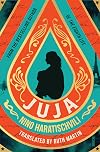
I finished this book about a month ago and it has been percolating away in my brain ever since. Partly because I needed to write this review of it but also because it is that type of book for me. A book that was interesting and disturbing to read and that stays with me long after reading. And one that probably begs a reread or two.
Interestingly, I’m currently wrapping up my reading of the amazing Rodrigo Fresán triptych of The Dreamed Part, The Invented Part, and The Remembered Part. The show more protagonist in those books is a writer and one of the “themes” that constantly comes up is that readers today want to take whatever they read as fact. In other words, there is no fiction; a writer is of course being autobiographical or writing about things that happened. This is exacerbated by the autofiction and memoir that is so ubiquitous in today’s publishing market, and by the glowing screens we all consult to get the “facts.” In Juja, that tendency to assume autobiography and fact has tragic consequences for some of the women who come across, read, and often obsess about the book and the mysterious person who wrote it.
But who wrote it? And who is talking? There are so many narrators, most of them pretty unreliable, I’d say. Is ICE AGE the mysterious Jeanne Saré? The original suicide? The one who pens the first lines:
“I was an EMBRYO and knew everything. I was pushed out into life and forgot my knowledge. I was fucked into life. My knowledge was taken from me. I want revenge.”
What are we getting into here?
It took me half the book to think I figured out who “ME” was.
The most reliable narrator is Laura, a university professor who ends up researching the book attributed to Jeanne Saré, and even she has challenges to confuse the reader. In no small part her reluctance to even be involved in something so outside her expertise in the visual arts. And while she doesn’t seem to be one of the women in the book that is susceptible to the suicide spell, she’s definitely processing her own baggage and acting out because of it. It doesn’t help that she’s a loner with little space for people in her life:
“Sometimes Laura thought that there just wasn't room in her heart for more than one person. Child, husband, sister, it didn't matter. It was a very monogamous heart, a very eccentric heart.”
Another intersection with the Fresán book for me is chasing down musical references. The title seems to refer to a song ‘Juja,’ which is referenced in the epigraph but I sure can’t find it out in the streamiverse. Maybe it’s an invention of Hratischvili’s? It’s driving me crazy.
I’ve read all of Haratischvili’s books available in English and they have each been enthralling reads for different reasons. The premise of this one and the characters she develops have stayed with me since finishing it. It’s got some lessons to teach about the dangers of taking a book too seriously, or, conversely, the dangers of fiction posing as non-fiction or truth. And, as I mourn the loss of some of my oldest friends and prepare to lose my elderly parents, there is a great line about grief that I think is often on point:
“… the saddest thing about the death of someone you love is the disregard for your own life that follows it.” show less
Interestingly, I’m currently wrapping up my reading of the amazing Rodrigo Fresán triptych of The Dreamed Part, The Invented Part, and The Remembered Part. The show more protagonist in those books is a writer and one of the “themes” that constantly comes up is that readers today want to take whatever they read as fact. In other words, there is no fiction; a writer is of course being autobiographical or writing about things that happened. This is exacerbated by the autofiction and memoir that is so ubiquitous in today’s publishing market, and by the glowing screens we all consult to get the “facts.” In Juja, that tendency to assume autobiography and fact has tragic consequences for some of the women who come across, read, and often obsess about the book and the mysterious person who wrote it.
But who wrote it? And who is talking? There are so many narrators, most of them pretty unreliable, I’d say. Is ICE AGE the mysterious Jeanne Saré? The original suicide? The one who pens the first lines:
“I was an EMBRYO and knew everything. I was pushed out into life and forgot my knowledge. I was fucked into life. My knowledge was taken from me. I want revenge.”
What are we getting into here?
It took me half the book to think I figured out who “ME” was.
The most reliable narrator is Laura, a university professor who ends up researching the book attributed to Jeanne Saré, and even she has challenges to confuse the reader. In no small part her reluctance to even be involved in something so outside her expertise in the visual arts. And while she doesn’t seem to be one of the women in the book that is susceptible to the suicide spell, she’s definitely processing her own baggage and acting out because of it. It doesn’t help that she’s a loner with little space for people in her life:
“Sometimes Laura thought that there just wasn't room in her heart for more than one person. Child, husband, sister, it didn't matter. It was a very monogamous heart, a very eccentric heart.”
Another intersection with the Fresán book for me is chasing down musical references. The title seems to refer to a song ‘Juja,’ which is referenced in the epigraph but I sure can’t find it out in the streamiverse. Maybe it’s an invention of Hratischvili’s? It’s driving me crazy.
I’ve read all of Haratischvili’s books available in English and they have each been enthralling reads for different reasons. The premise of this one and the characters she develops have stayed with me since finishing it. It’s got some lessons to teach about the dangers of taking a book too seriously, or, conversely, the dangers of fiction posing as non-fiction or truth. And, as I mourn the loss of some of my oldest friends and prepare to lose my elderly parents, there is a great line about grief that I think is often on point:
“… the saddest thing about the death of someone you love is the disregard for your own life that follows it.” show less

To be honest, I am lost for words when it comes to this monumental work. It has been a long time since a novel has impressed me so deeply. Over the course of nearly 1000 pages, Nino Haratischwili sweeps us along through the entire, yes the entire 20th century. Despite its scope, it never becomes boring. Every era is palpable, and the characters never get lost in the waves of time.
As readers, we are forced to witness many terrible things, leading me to ask these questions: What constitutes a show more life? How much is our existence influenced by the lives that came before us, by our ancestors? Was every century as turbulent as the twentieth?
The saga begins with Stasia, born in 1900, and her mother Ketevan. I could not help but wonder how Ketevan herself was shaped by her ancestors. How far back does this influence reach? And what must we do to finally overcome intergenerational trauma?
Perhaps the answer lies in the act of storytelling itself. Haratischwili demonstrates that the titular "eighth life" only becomes possible if we summon the courage to examine the lives that came before it. It is a painful process of demystification that can strip the wounds of the past of their power over the future. In this way, the novel dares to hope (albeit quietly) that the cycle of suffering may eventually be broken.
One thing is certain: This will not be the last time I read The Eighth Life (for Brilka). show less
As readers, we are forced to witness many terrible things, leading me to ask these questions: What constitutes a show more life? How much is our existence influenced by the lives that came before us, by our ancestors? Was every century as turbulent as the twentieth?
The saga begins with Stasia, born in 1900, and her mother Ketevan. I could not help but wonder how Ketevan herself was shaped by her ancestors. How far back does this influence reach? And what must we do to finally overcome intergenerational trauma?
Perhaps the answer lies in the act of storytelling itself. Haratischwili demonstrates that the titular "eighth life" only becomes possible if we summon the courage to examine the lives that came before it. It is a painful process of demystification that can strip the wounds of the past of their power over the future. In this way, the novel dares to hope (albeit quietly) that the cycle of suffering may eventually be broken.
One thing is certain: This will not be the last time I read The Eighth Life (for Brilka). show less
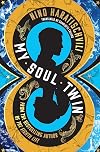
Billed as 'an intense story of forbidden love' and a 'modern day Wuthering Heights', My Soul Twin didn't seem like my usual reading fare, but I liked Nino Haratischvili's bestseller The Eighth Life, for Brilka, (translated by Charlotte Collins and Ruth Martin, see my review) so I set out to see how I got on with a somewhat hysterical female narrator. (Wuthering Heights is narrated by the somewhat bloodless Mr Lockwood.)
We know some of what we're in for, from the prologue in Book One. Shaving show more off one's hair over some lost love seems a bit extreme to me. But this character's self-destructive behaviour goes beyond a few shorn locks. Stella is a married woman and she treats both her young child and her husband with #Understatement little concern for their wellbeing because the only thing that matters is her passion for her lover. She is cavalier at her workplace, risking the sack, even though she admits (at least to herself) that if she offloads her marriage, she's going to need that job to maintain the congenial lifestyle she's had with her husband. She treats the rest of her family with disdain if any of them try to remonstrate with her. She is especially scornful to her sister Leni, with her three 'alpha' sons.
(She seems to despise Leni for being bourgeois, but she's bourgeois herself.)
So, no, not a character who engages our sympathy. And that's whether or not the reader feels moral outrage because the cause of all this mayhem is that Stella is having an affair with her Heathcliff, Ivo, brought up in her family as a brother.
This novel is about her feelings — her passion, and his — and the way these two oscillate around each other in an on-again, off-again relationship that everyone recognises is destructive.
To read the rest of my review please visit https://anzlitlovers.com/2022/11/05/my-soul-twin-by-nino-haratischvili-translate... show less
We know some of what we're in for, from the prologue in Book One. Shaving show more off one's hair over some lost love seems a bit extreme to me. But this character's self-destructive behaviour goes beyond a few shorn locks. Stella is a married woman and she treats both her young child and her husband with #Understatement little concern for their wellbeing because the only thing that matters is her passion for her lover. She is cavalier at her workplace, risking the sack, even though she admits (at least to herself) that if she offloads her marriage, she's going to need that job to maintain the congenial lifestyle she's had with her husband. She treats the rest of her family with disdain if any of them try to remonstrate with her. She is especially scornful to her sister Leni, with her three 'alpha' sons.
(She seems to despise Leni for being bourgeois, but she's bourgeois herself.)
So, no, not a character who engages our sympathy. And that's whether or not the reader feels moral outrage because the cause of all this mayhem is that Stella is having an affair with her Heathcliff, Ivo, brought up in her family as a brother.
This novel is about her feelings — her passion, and his — and the way these two oscillate around each other in an on-again, off-again relationship that everyone recognises is destructive.
To read the rest of my review please visit https://anzlitlovers.com/2022/11/05/my-soul-twin-by-nino-haratischvili-translate... show less
Lists
Awards


You May Also Like


Associated Authors
Statistics
- Works
- 16
- Also by
- 1
- Members
- 1,439
- Popularity
- #17,871
- Rating
- 4.1
- Reviews
- 67
- ISBNs
- 109
- Languages
- 10