
Robert Cohen (3) (1957–)
Author of Inspired Sleep
For other authors named Robert Cohen, see the disambiguation page.
About the Author
Robert Cohen is the author of three novels, The Organ Builder, The Here and Now, and Inspired Sleep. His work has been awarded a Whiting Writers' Award, a Lila Wallace-Reader's Digest Writers Award, The Ribalow Prize, and The Pushcart Prize, and has appeared in a wide variety of publications, show more including Harpers, GQ, The Paris Review, Atlantic Unbound, and Ploughshares. He teaches at Middlebury College in Vermont show less
Image credit: Robert Cohen (3)
Works by Robert Cohen
Associated Works
Tagged
Common Knowledge
- Birthdate
- 1957-03-09
- Gender
- male
- Education
- School of the Arts de l'université Columbia (MFA)
Université de Californie, Berkeley - Occupations
- teacher
- Organizations
- Middlebury College (Teacher)
The Warren Wilson MFA Program for Writers (Teacher) - Awards and honors
- Whiting Writers' Award (2000)
Bourse Guggenheim (2003) - Nationality
- USA
- Places of residence
- Vermont, USA
Westfield, New Jersey, USA - Associated Place (for map)
- USA
Members
Reviews
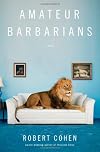
A wonderfully written tale of a man going through a mid-life crisis, who shares alternating chapters with 30-year-old man trying to get a start on adulthood.
Wonderful insights into male psyche here, but the main reason to read Robert Cohen is the beauty of his prose, his genius-level observations on the human condition, and his light humorous touch that makes taking all his brilliance in such a joy.
Wonderful insights into male psyche here, but the main reason to read Robert Cohen is the beauty of his prose, his genius-level observations on the human condition, and his light humorous touch that makes taking all his brilliance in such a joy.
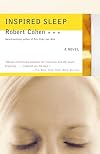
Robert Cohen has won numerous awards, and I can't quite understand why his
name and sales don't rank right up there with other contemporary writers
like Michael Chabon and Tom Perrotta. In INSPIRED SLEEP, Cohen examines the
public's dependence on/love affair with prescription drugs such as
anti-depressants. Chapters rotate between the perspective of two main
characters --Bonnie Saks, a divorced mother of two, and Ian Ogelvie, a
psychiatrist/researcher on a project designed to enhance REM sleep show more and
thereby elevate the subject's mood. Saks is an insomniac who becomes a
subject in Ogelvie's study at "Boston General" hospital. The novel explores
a lot of big issues -- such as the way today's medical researchers are in
bed with big pharma -- and all the room for corruption/lapses of ethics that
can create. The book also looks at the potential impact of placebos,
explained in detail by Ian as expectancy theory -- the idea that merely
wanting something to come true can bring about its fruition. It's
fascinating to watch the varied perspectives -- Bonnie's a cynic, who is
depressed about her life -- and Ian is an idealist, who has complete faith
in the medical model, believing that one day medicine can find a
drug-related cure for every human ailment -- emotional and physical. As much
as this book will get you thinking, though, the greatest joy comes from the
way Cohen writes. He drafts some of the most beautiful sentences I've ever
read. If you like this one, go back and read The Here and Now and The Organ
Builder. Both are terrific reads as well. show less
name and sales don't rank right up there with other contemporary writers
like Michael Chabon and Tom Perrotta. In INSPIRED SLEEP, Cohen examines the
public's dependence on/love affair with prescription drugs such as
anti-depressants. Chapters rotate between the perspective of two main
characters --Bonnie Saks, a divorced mother of two, and Ian Ogelvie, a
psychiatrist/researcher on a project designed to enhance REM sleep show more and
thereby elevate the subject's mood. Saks is an insomniac who becomes a
subject in Ogelvie's study at "Boston General" hospital. The novel explores
a lot of big issues -- such as the way today's medical researchers are in
bed with big pharma -- and all the room for corruption/lapses of ethics that
can create. The book also looks at the potential impact of placebos,
explained in detail by Ian as expectancy theory -- the idea that merely
wanting something to come true can bring about its fruition. It's
fascinating to watch the varied perspectives -- Bonnie's a cynic, who is
depressed about her life -- and Ian is an idealist, who has complete faith
in the medical model, believing that one day medicine can find a
drug-related cure for every human ailment -- emotional and physical. As much
as this book will get you thinking, though, the greatest joy comes from the
way Cohen writes. He drafts some of the most beautiful sentences I've ever
read. If you like this one, go back and read The Here and Now and The Organ
Builder. Both are terrific reads as well. show less
This intelligent novel captures early 21st century upper-middle-class dysphoria brilliantly and unsentimentally. 2001 doesn't seem long ago, but the listserv or message board transcript early in the book is a snapshot of a bygone era in online interaction. (Narrative devices like the listserv, meant to be funny I suppose, were the weakest parts of this book.)I do appreciate it when a novelist takes the trouble to write in third person these days--but the all-seeing narrator in Inspired Sleep show more is a little too chummy with his reader, at the expense of his characters in a few instances. Too much winking and nudging for complete suspension of disbelief. Overall, though, it's a wise and clever book with more perfect turns of phrase than I've read in a long time. He's as good as Tom Perrotta and Francine Prose, who probably don't see themselves as at all comparable to each other or to Robert Cohen. Oh, well--it's MY library and my review! I highly recommend this book, though, and hope Robert Cohen writes more novels. show less
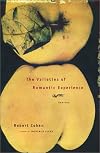
Drawn to this book by a recent glowing "You Must Read This" review on NPR, I looked forward to being exposed to a same-age-as-me contemporary author. Alas, for me, the book fell flat -- though I did read it through to the end. I appreciate that Cohen writes with style and care, but I felt he was trying to be clever and witty at the expense of many of his largely self-absorbed protagonists. In most cases, the narrative voice lacked sympathy, which led me to wonder: why did Cohen bother show more bringing the characters to life in the first place? Personally I wouldn 't begin compare Cohen with Philip Roth, even when the latter writer is having a very bad day, because the characters who inhabit Cohen's stories (this set of them, at least) are narrowly peculiar and not very memorable.
In comparison with this volume, two contemporary short story collections that did a better job of grabbing me over the past year were Amy Bloom's "Where the God of Love Hangs Out" and Jhumpa Lahiri's "Unaccustomed Earth". show less
In comparison with this volume, two contemporary short story collections that did a better job of grabbing me over the past year were Amy Bloom's "Where the God of Love Hangs Out" and Jhumpa Lahiri's "Unaccustomed Earth". show less
Lists
Awards


You May Also Like


Associated Authors
Statistics
- Works
- 9
- Also by
- 1
- Members
- 310
- Popularity
- #76,068
- Rating
- 3.6
- Reviews
- 5
- ISBNs
- 192
- Languages
- 4