
Stephen Elliott (1) (1971–)
Author of The Adderall Diaries: A Memoir of Moods, Masochism, and Murder
For other authors named Stephen Elliott, see the disambiguation page.
About the Author
Stephen Elliott lives in San Francisco and lectures at Stanford. He was born in Chicago, and was a Ward of the State of Illinois from age thirteen to eighteen
Image credit: wikipedia
Series
Works by Stephen Elliott
Looking Forward to It: Or, How I Learned to Stop Worrying and Love the American Electoral Process (2004) 57 copies
The Score [short story] 1 copy
About Cherry 1 copy
Associated Works
The Bastard on the Couch: 27 Men Try Really Hard to Explain Their Feelings About Love, Loss, Fatherhood, and Freedom (2004) — Contributor — 186 copies, 7 reviews
Working Sex: Sex Workers Write About a Changing Industry (2007) — Contributor — 101 copies, 2 reviews
Read Hard: Five Years of Great Writing from the Believer (2009) — Contributor — 87 copies, 2 reviews
Tagged
Common Knowledge
- Birthdate
- 1971-12-03
- Gender
- male
- Education
- University of Illinois (BA)
Northwestern University (MA)
Stanford University (Truman Capote Fellow) - Occupations
- LSAT coach
filmmaker
founding Editor-in-Chief, The Rumpus
Senior editor, Epic magazine - Organizations
- Progressive Reading Series, Founder
LitPAC, Executive Director
therumpus.net - Nationality
- USA
- Birthplace
- Chicago, Illinois, USA
- Places of residence
- San Francisco, California, USA
Los Angeles, California, USA
Chicago, Illinois, USA - Map Location
- USA
Members
Reviews
Review snippet: I don’t intend to demean the power of the addiction or sexual discovery narrative, and I don’t want to demean those who may have found something relevant in Elliott’s narrative. And I fully admit that I may have missed something because I have not read any of Elliott’s other works. I wonder if I would have cared more if I had read his other books. But the fact remains that I did not care much about this book. The narrative was flat and uninvolved. The addiction barely show more registered as being damaging. The bondage and S&M details were seemingly tossed out with no emotion or attempt to lure the reader into a deeper sense of understanding Elliott. It’s a bizarre condemnation of a memoir to say it was self-absorbed, but that was the problem I had with this book.
How can a memoir be self-absorbed? Well, it’s easy, actually. When someone you find interesting goes on and on about him or herself, your interest trumps the self-absorption. It is subjective, to be sure, but a memoir has to contain content that makes the reader care that they are reading a stranger go on and on about him or herself. Given the proliferation of it, this flat, disengaged writing style must appeal to someone. But I am not that person. ( Which is odd, in a way, because I am fully aware that my book discussions are utterly self-indulgent, written to please myself as much as to entertain and inform.)
The subject matters of this book – addiction, sexual taboos, a murder trial – should all be interesting. But conveyed through Elliott’s numb prose, it is all unexciting. It’s the literary equivalent of tapioca with a dash of tequila. It’s white bread with a dab of mold on it. It’s a boring man telling boring stories to a barely interested audience. I contrast the content of this book with much more taboo writing, like the non-fiction of Peter Sotos, and it becomes clear why Elliott’s writing did not appeal to me. Sotos, in his extremity, forces the reader to think, or to react at the very least. Elliott’s numb tale was like watching a Warhol movie. As I read this book, a quote from Charles Bukowski came to mind often: “Boring damned people. All over the earth.”
You can read my entire discussion here: http://ireadoddbooks.com/the-adderall-diaries-by-stephen-elliott/ show less
How can a memoir be self-absorbed? Well, it’s easy, actually. When someone you find interesting goes on and on about him or herself, your interest trumps the self-absorption. It is subjective, to be sure, but a memoir has to contain content that makes the reader care that they are reading a stranger go on and on about him or herself. Given the proliferation of it, this flat, disengaged writing style must appeal to someone. But I am not that person. ( Which is odd, in a way, because I am fully aware that my book discussions are utterly self-indulgent, written to please myself as much as to entertain and inform.)
The subject matters of this book – addiction, sexual taboos, a murder trial – should all be interesting. But conveyed through Elliott’s numb prose, it is all unexciting. It’s the literary equivalent of tapioca with a dash of tequila. It’s white bread with a dab of mold on it. It’s a boring man telling boring stories to a barely interested audience. I contrast the content of this book with much more taboo writing, like the non-fiction of Peter Sotos, and it becomes clear why Elliott’s writing did not appeal to me. Sotos, in his extremity, forces the reader to think, or to react at the very least. Elliott’s numb tale was like watching a Warhol movie. As I read this book, a quote from Charles Bukowski came to mind often: “Boring damned people. All over the earth.”
You can read my entire discussion here: http://ireadoddbooks.com/the-adderall-diaries-by-stephen-elliott/ show less
"Femdom" is typically not the stuff of serious fiction these days, but as Stephen Elliott manages to mix it with the trauma of his upbringing, he manages to cultivate sympathy in the reader of serious fiction. However, my problem with Elliott is this: I don't entirely buy it. Buy the need to consistently EXPLAIN his proclivity, or suggest his masochistic inclinations (during sexplay with women) are all tied to his victim status as a kid (and now a man). I find that whole victim role he's show more adopted (in his last 3 books, in fact, including his new one) slightly bogus. In fact, it wasn't until reading his new "memoir," The Adderall Diaries, that I realized how much he's exploiting the public's ignorance and fear of BDSM and, in particular, femdom -- casting it as some demon horror he keeps coming back to compulsively -- right along with re-surging flashbacks of his hellish childhood. Hey, what is the big deal anyway? The big deal to admitting to being topped? And LIKING it? So fucking what?
Hear this: A lot of people are into it -- into BDSM (in all its variations, including Elliot’s) -- but as a FUN thing, as a "trust" thing, as a release (not necessary of trauma, but stress). It can be a source of great intimacy and connection. Really, it's not such a big deal, is it? To allow yourself to be topped? Should it be?
Or is it just a “man needs to be a man” thing? And no “real man” should allow himself to be portrayed as any less of a man -- or be regarded a “pussy?”
Think about it: Is it that women are still seen as such lesser beings -- such inferiors to men -- that, for a man, to admit to being topped by one (during sexplay or otherwise) should necessarily bring with it such humiliation and shame? Obviously, the “equality of the sexes” thing -- harped on since the early days of feminism -- hasn't come very far if this little thing -- “femdom” or whatever you wanna call it -- needs to remain some deep dark inclination or deviance -- some secret -- that no man -- no "real man” -- can admit to openly. This leads me to believe that BDSM -- especially femdom (let me spell that out: F.E.M.D.O.M.) -- is really the last taboo. The public needs to lighten up. Every man needs to get his ass kicked by a woman -- (lovingly, if possible) and repeatedly, if necessary -- until the shame -- all the shame -- is gone. And the public -- the mainstream -- needs to stop demonizing BDSM as something freakin' satanic.
Back to the book: I do admire Stephen Elliott's courage in "coming out," so to speak.
In fact, he really is one of the first. And I admit I look forward to the day when admitting to such things won't carry such a ridiculous social stigma.
I was very happy to hear him mention fetish artist Eric Stanton (one of my cult heroes) in the book. Elliott’s writing is very "literate," which is to say a little precious (in my view), but I know that's what a lot people see as "literature," still.... (I’m not a fan of minimalism either. That’s just my taste … or maybe my own cultural/ethnic inclination.)
In the future, I look forward to reading more of Stephen Elliott’s work, especially hoping that one day he’ll mesh his very specific femdom inclinations in his life, while writing about it -- but in a more fun and positive way. (FUN, Elliott, do you hear me? Wipe away those tears.) And I know that one day all this stuff -- BDSM stuff -- will finally make it out of the closet (as many other so-called “deviancies” have done so in the past) and, in this way, not be such a source of shame for millions of otherwise normal, certainly creative, people. show less
Hear this: A lot of people are into it -- into BDSM (in all its variations, including Elliot’s) -- but as a FUN thing, as a "trust" thing, as a release (not necessary of trauma, but stress). It can be a source of great intimacy and connection. Really, it's not such a big deal, is it? To allow yourself to be topped? Should it be?
Or is it just a “man needs to be a man” thing? And no “real man” should allow himself to be portrayed as any less of a man -- or be regarded a “pussy?”
Think about it: Is it that women are still seen as such lesser beings -- such inferiors to men -- that, for a man, to admit to being topped by one (during sexplay or otherwise) should necessarily bring with it such humiliation and shame? Obviously, the “equality of the sexes” thing -- harped on since the early days of feminism -- hasn't come very far if this little thing -- “femdom” or whatever you wanna call it -- needs to remain some deep dark inclination or deviance -- some secret -- that no man -- no "real man” -- can admit to openly. This leads me to believe that BDSM -- especially femdom (let me spell that out: F.E.M.D.O.M.) -- is really the last taboo. The public needs to lighten up. Every man needs to get his ass kicked by a woman -- (lovingly, if possible) and repeatedly, if necessary -- until the shame -- all the shame -- is gone. And the public -- the mainstream -- needs to stop demonizing BDSM as something freakin' satanic.
Back to the book: I do admire Stephen Elliott's courage in "coming out," so to speak.
In fact, he really is one of the first. And I admit I look forward to the day when admitting to such things won't carry such a ridiculous social stigma.
I was very happy to hear him mention fetish artist Eric Stanton (one of my cult heroes) in the book. Elliott’s writing is very "literate," which is to say a little precious (in my view), but I know that's what a lot people see as "literature," still.... (I’m not a fan of minimalism either. That’s just my taste … or maybe my own cultural/ethnic inclination.)
In the future, I look forward to reading more of Stephen Elliott’s work, especially hoping that one day he’ll mesh his very specific femdom inclinations in his life, while writing about it -- but in a more fun and positive way. (FUN, Elliott, do you hear me? Wipe away those tears.) And I know that one day all this stuff -- BDSM stuff -- will finally make it out of the closet (as many other so-called “deviancies” have done so in the past) and, in this way, not be such a source of shame for millions of otherwise normal, certainly creative, people. show less
Can you have a memoir without judgment? More importantly, what is a person without self-judgment like?
Stephen Elliott answers the first two questions to the best of his ability, and it turns out that person is awful, along with their memoir. What use does a list of facts do? Fiction writers are supposed to suspend judgment on others, but who would suspend judgment on themselves, or even worse, think their own actions are justifiable?
I'm not educated enough to diagnose the pathology of show more Elliott, but the bare confession of culpability towards the end rings false, and the denouement clumsy. Granted this is all subjective, but when Elliott swerves towards the verifiable, he looks even worse. As someone who used to follow ReiserFS (and was shocked when Hans Reiser murdered his ex-wife), Elliott's pontificating about file-systems is borderline-incoherent and utterly useless to boot.
This is a shitty, shitty book filled with lies of omission, and lies of praise in the first few pages of blurbs. Fuck all that. I read through this book so quickly so I wouldn't feel any remorse at a white-hot hatred. show less
Stephen Elliott answers the first two questions to the best of his ability, and it turns out that person is awful, along with their memoir. What use does a list of facts do? Fiction writers are supposed to suspend judgment on others, but who would suspend judgment on themselves, or even worse, think their own actions are justifiable?
I'm not educated enough to diagnose the pathology of show more Elliott, but the bare confession of culpability towards the end rings false, and the denouement clumsy. Granted this is all subjective, but when Elliott swerves towards the verifiable, he looks even worse. As someone who used to follow ReiserFS (and was shocked when Hans Reiser murdered his ex-wife), Elliott's pontificating about file-systems is borderline-incoherent and utterly useless to boot.
This is a shitty, shitty book filled with lies of omission, and lies of praise in the first few pages of blurbs. Fuck all that. I read through this book so quickly so I wouldn't feel any remorse at a white-hot hatred. show less
In late January of 2010, I attended a function at 826NYC in Park Slope, Brooklyn. Stephen Elliott's book, The Adderall Diaries had been published in September and this would be part reading, part memoir workshop. It was held on a Wednesday night in the back room at 826, behind the darkened Superhero Supply Store and in the brighter light of the tutoring center. I confess that I had no memoir-writing aspirations; I went mostly because Steve is a friend of mine. I try to attend his New York show more readings whenever I can, the way most of us with writer-friends do. We met when I volunteered for LitPAC, a literary political action committee that Steve started in early 2006 to get authors more involved in the political process. I helped run the NYC reading events, spurred to volunteer by a sense of uselessness which came with the knowledge that I'd been out of college for a year and hadn't done much outside of my regular job. The novelty of freedom from reading lists and being able to pick up whatever fiction I wanted had worn off (a bit), so I started a book club and helped promote progressive congressional candidates. Naturally. Only one of the candidates that we supported actually won her race, but it got a lot of people involved in the political process and I wound up with Steve as a friend, so I considered it a decent success. When LitPAC ended, Steve founded and still runs The Rumpus, a website with literary leanings that "focuses on culture as opposed to 'pop culture.'"
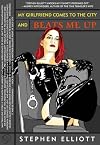
We keep in touch vaguely (mostly through the illusion of keeping in touch that is Twitter) and occasionally grab coffee or a drink when he visits New York. We made out once, in a friendly, nothing-else-need-come-of-this kind of way. I had officially ended a significant relationship the day before and was scheduled to meet Steve for a drink that night -- he had told me that there would be several people and I needed to get out of my apartment. When I realized that he wasn't expecting anyone but me, I took the chance to relish my new-found singledom and as a result of this encounter, I popped up in one of this stories. I tend to remember my presence as occupying a single sentence, but I'm actually the subject of a whole paragraph. It begins with my red hair, as descriptions of me usually do, and our encounter sparks a deeper musing on the part of the author about his own sexuality. When I joke about my brief appearance in Steve's work and refer to it as my "sentence of fame," Steve will insist, "It's a very crucial sentence!" I told a few friends about this shortly before Steve released My Girlfriend Comes to the City and Beats Me Up, a book of short stories with a cover featuring a redheaded dominatrix in leather. My friends knew it was coincidental ("Um... it is, right?") but when Steve gave me a warm welcome at a Strand reading to promote the book, the whole audience kept shifting their eyes back to me. At the time, I tried to sink into my seat, but now I rather wished that I had a whip to crack them back to attention.
I arrived a bit early for the 826NYC event and got to chat with Steve... mostly about his latest DIY book-tour that he wrote about for the New York Times, where readings were held in the living rooms of people who could promise at least twenty attendees. He presents a very unassuming and compact figure, with a pleasant smile and look to his eye that suggests he's always thinking. I don't think I've ever seen him in clothing where at least one article doesn't have a tear in it. It makes me want to buy him new shirts, but sometimes I suspect the rips might be intentional. His cuticles are always ripped, too, and their bloodiness always seems rather seemed apt, given his stripped down writing style and how he must pick at his own self to achieve such honesty in his work. It must be strange to meet people who already know so much about you... not the way movie stars' fans know details pried from their lives by gossip columnists and paparazzi. People who write memoirs offer their experiences up for dissection an discussion; they invite others in to share intimate and personal scenes. I'm never surprised that his events feature a largely female audience. Whether it's just that more women attend literary functions or that women are drawn to him like moths to an honest and communicative flame with a damaged past... well, perhaps it's both.
Soon, the real attendees of the memoir workshop arrived and we settled in for the session. Steve told us that this particular two-hour memoir class was distilled down from a longer workshop that he'd been giving, so this would feature some key points, using his latest memoir as a touchstone. The book came free with the price of a ticket for the session, or Steve would let you trade it in for two paperbacks of his other work. He kept them all in a rolling suitcase and I had a feeling that if he had any other clothes for this trip beyond the ones he was wearing, they were stuffed in his backpack.
Stephen Elliott has some very definite ideas about writing from personal experience. There might be other authors out there that are just as synonymous with the protagonist-author novel, but if there are, I don't know them. I have never found a writer to be so unflinchingly honest in his writing and still wind up on the fiction shelf. His childhood, group homes, drug use, politics, sexual proclivities... Steve offers them up to the reader in an effort to communicate and connect. He writes almost exclusively about things that have happened to him, and whether that gets labeled as fiction or memoir, you're aware that it's all pretty close to the bone. Consequently, he's had some time to develop opinions on this topic.
Perhaps the most important lesson of the session is an obvious one, but one worth stressing, and it has to do with honesty. Where writing rules are concerned, Steve insists upon what he calls "radical honesty" in one's memoir. The main thing is to never intentionally lie to the reader. They'll figure it out and will not forgive you. Though if there's anything he's learned from his writing, it's that truth is a tricky thing. There's no such thing as one truth when it comes to memories. As an example, he spoke about his father and their very tumultuous relationship. They both remember specific events very differently, which led Steve to note that his father's "truth and memories were valid, even though they directly contradicted [Steve's] memories." (There was also an important reminder to everyone about keeping one's success in perspective, as the memoir genre isn't generally a best-seller game and being a success consists of making maybe $20k a year. As a 38-year old man with two roommates in a one bedroom apartment and seven books to his credit, I hope they understood that he speaks from experience.)
Within The Adderall Diaries, questioning the nature of memories is an overarching theme. There are multiple storylines at play in this memoir, connected to each other by their relevance to Steve and some other surprising links. Struggling with writer's block and an Adderall addiction, Steve started following a court case that involves a man accused of murdering his wife. Hans Resier was an American computer entrepreneur, lacking certain social graces and the ability to connect to many people. We all know a computer geek that merits this description, though few go on to murder their wives. While working in Russia, Hans met Nina through a dating company that bears a resemblance to mail-order bride systems. They had two children and then separated, when Nina supposedly left Reiser for his best friend, Sean Sturgeon. That relationship also ended and Nina began another, but her divorce to Reiser was never finalized. In September of 2006, Nina went missing after dropping off her children with Hans and he was the last person known to have seen her alive.
The Reiser case provides the framework for the book, but this is not a true-crime novel. Not every storyline has to do with murder, but they all have to do with guilt and the loss of innocence. For most of us, murder is shocking enough, but in this story, there are far worse things that people can do to others. The Adderall Diaries is about the pain we inflict on ourselves and each other, addiction to more things than drugs, and the potentially futile struggle to ever know what someone else might be thinking. The tenuous link that the case has to Steve comes through Sean Sturgeon, with whom Steve shared a few girlfriends along with a similar presence in the bondage and sado-masochism sexual scene in San Francisco. Sturgeon purportedly confessed to eight and a half murders, but never gave any names and was never charged. When it comes to the question of why one confesses to a murder that one may or may not have committed... well, that gets us a bit closer to the crux of The Adderall Diaries, for Steve's father also may have committed a murder, though Steve can find no evidence of it. Did I mention that this novel is also about the scars our fathers leave on us by what they did or did not do? There's a lot going on here.
People can recall events in different ways and come to different conclusions after reading the same book. This is a memoir told from a single perspective, but that just seems to make it all the more prone to leave people with separate insights. Stephen Elliott has been telling his story for a long time, but in this, his seventh book, I found a level of communication and conversation that has never before been reached. His writing style here echoes the Adderall: straightforward, focused, and quick... with jittery moments of introspective questions that come with the crash. Just as he is left gasping for breath, so are we -- not because of plot twists or action scenes, but because of the unflinching reality of his story and its confessional fragility, which makes for something that is heartbreaking, haunting, and lovely. Simply put, this is Stephen Elliott's best book to date and I cannot recommend it highly enough.
If you haven't read any Stephen Elliott before, you're in for a very eclectic treat as you start through his wide-ranging list of titles. If you're in San Francisco or New York, you have a better chance of learning about memoir from the man himself if you're interested, or even just seeing a Rumpus function. Check out TheRumpus.net or his twitter feed (@S___Elliott) for amusing updates and to see if he ever offers this class again. Clearly, it contains a great deal more insight about the art of writing from one's life experiences. Otherwise, be sure to catch a reading of his, or a Rumpus event, as they're always entertaining. In the spring, Steve was back in New York to preside over a function at the Highline, something The Rumpus was hosting with Flavorpill that featured authors, comedians, and performers. When I arrived, he gave me a large hug and didn't set me down for a while, finally moving back to give me his somewhat sly and boyish grin that's never too far from his lips at events like this. He's in his element when he promotes communities of writers and artists. Steve started the evening off by reading, not from The Adderall Diaries, but a shorter and sexy piece before turning the stage over to Lorelei Lee and others, including Jeffrey Lewis and Michael Showalter. It all seemed a far cry from The Adderall Diaries, which I had only recently finished reading prior to the Highline event, and yet similar elements were there (though no Russian mail-order brides that I could spy).
I did, however, feel like The Adderall Diaries had emphasized to me an important fact of the creative world, which still seemed embodied by several readings and performances from the evening. "Radical honesty" applies to more things than just memoir; it's at the heart of creative expression in most any medium. It's that kind of open communication that fosters interaction and leads to passions that stretch beyond ourselves while diving deep into ourselves. It takes one's story from being a monologue to a back-and-forth discussion, something worth sharing with others. And it's books like The Adderall Diaries and sites like The Rumpus that remind me I'll always find an enlivened and enlightening discussion when Stephen Elliott is as the helm. So check out The Adderall Diaries and let me know what you think. And if you keep reading his other work, I think you're smart enough to not assume every half-naked redhead is me. Just the one. show less
We keep in touch vaguely (mostly through the illusion of keeping in touch that is Twitter) and occasionally grab coffee or a drink when he visits New York. We made out once, in a friendly, nothing-else-need-come-of-this kind of way. I had officially ended a significant relationship the day before and was scheduled to meet Steve for a drink that night -- he had told me that there would be several people and I needed to get out of my apartment. When I realized that he wasn't expecting anyone but me, I took the chance to relish my new-found singledom and as a result of this encounter, I popped up in one of this stories. I tend to remember my presence as occupying a single sentence, but I'm actually the subject of a whole paragraph. It begins with my red hair, as descriptions of me usually do, and our encounter sparks a deeper musing on the part of the author about his own sexuality. When I joke about my brief appearance in Steve's work and refer to it as my "sentence of fame," Steve will insist, "It's a very crucial sentence!" I told a few friends about this shortly before Steve released My Girlfriend Comes to the City and Beats Me Up, a book of short stories with a cover featuring a redheaded dominatrix in leather. My friends knew it was coincidental ("Um... it is, right?") but when Steve gave me a warm welcome at a Strand reading to promote the book, the whole audience kept shifting their eyes back to me. At the time, I tried to sink into my seat, but now I rather wished that I had a whip to crack them back to attention.
I arrived a bit early for the 826NYC event and got to chat with Steve... mostly about his latest DIY book-tour that he wrote about for the New York Times, where readings were held in the living rooms of people who could promise at least twenty attendees. He presents a very unassuming and compact figure, with a pleasant smile and look to his eye that suggests he's always thinking. I don't think I've ever seen him in clothing where at least one article doesn't have a tear in it. It makes me want to buy him new shirts, but sometimes I suspect the rips might be intentional. His cuticles are always ripped, too, and their bloodiness always seems rather seemed apt, given his stripped down writing style and how he must pick at his own self to achieve such honesty in his work. It must be strange to meet people who already know so much about you... not the way movie stars' fans know details pried from their lives by gossip columnists and paparazzi. People who write memoirs offer their experiences up for dissection an discussion; they invite others in to share intimate and personal scenes. I'm never surprised that his events feature a largely female audience. Whether it's just that more women attend literary functions or that women are drawn to him like moths to an honest and communicative flame with a damaged past... well, perhaps it's both.
Soon, the real attendees of the memoir workshop arrived and we settled in for the session. Steve told us that this particular two-hour memoir class was distilled down from a longer workshop that he'd been giving, so this would feature some key points, using his latest memoir as a touchstone. The book came free with the price of a ticket for the session, or Steve would let you trade it in for two paperbacks of his other work. He kept them all in a rolling suitcase and I had a feeling that if he had any other clothes for this trip beyond the ones he was wearing, they were stuffed in his backpack.
Stephen Elliott has some very definite ideas about writing from personal experience. There might be other authors out there that are just as synonymous with the protagonist-author novel, but if there are, I don't know them. I have never found a writer to be so unflinchingly honest in his writing and still wind up on the fiction shelf. His childhood, group homes, drug use, politics, sexual proclivities... Steve offers them up to the reader in an effort to communicate and connect. He writes almost exclusively about things that have happened to him, and whether that gets labeled as fiction or memoir, you're aware that it's all pretty close to the bone. Consequently, he's had some time to develop opinions on this topic.
Perhaps the most important lesson of the session is an obvious one, but one worth stressing, and it has to do with honesty. Where writing rules are concerned, Steve insists upon what he calls "radical honesty" in one's memoir. The main thing is to never intentionally lie to the reader. They'll figure it out and will not forgive you. Though if there's anything he's learned from his writing, it's that truth is a tricky thing. There's no such thing as one truth when it comes to memories. As an example, he spoke about his father and their very tumultuous relationship. They both remember specific events very differently, which led Steve to note that his father's "truth and memories were valid, even though they directly contradicted [Steve's] memories." (There was also an important reminder to everyone about keeping one's success in perspective, as the memoir genre isn't generally a best-seller game and being a success consists of making maybe $20k a year. As a 38-year old man with two roommates in a one bedroom apartment and seven books to his credit, I hope they understood that he speaks from experience.)
Within The Adderall Diaries, questioning the nature of memories is an overarching theme. There are multiple storylines at play in this memoir, connected to each other by their relevance to Steve and some other surprising links. Struggling with writer's block and an Adderall addiction, Steve started following a court case that involves a man accused of murdering his wife. Hans Resier was an American computer entrepreneur, lacking certain social graces and the ability to connect to many people. We all know a computer geek that merits this description, though few go on to murder their wives. While working in Russia, Hans met Nina through a dating company that bears a resemblance to mail-order bride systems. They had two children and then separated, when Nina supposedly left Reiser for his best friend, Sean Sturgeon. That relationship also ended and Nina began another, but her divorce to Reiser was never finalized. In September of 2006, Nina went missing after dropping off her children with Hans and he was the last person known to have seen her alive.
The Reiser case provides the framework for the book, but this is not a true-crime novel. Not every storyline has to do with murder, but they all have to do with guilt and the loss of innocence. For most of us, murder is shocking enough, but in this story, there are far worse things that people can do to others. The Adderall Diaries is about the pain we inflict on ourselves and each other, addiction to more things than drugs, and the potentially futile struggle to ever know what someone else might be thinking. The tenuous link that the case has to Steve comes through Sean Sturgeon, with whom Steve shared a few girlfriends along with a similar presence in the bondage and sado-masochism sexual scene in San Francisco. Sturgeon purportedly confessed to eight and a half murders, but never gave any names and was never charged. When it comes to the question of why one confesses to a murder that one may or may not have committed... well, that gets us a bit closer to the crux of The Adderall Diaries, for Steve's father also may have committed a murder, though Steve can find no evidence of it. Did I mention that this novel is also about the scars our fathers leave on us by what they did or did not do? There's a lot going on here.
People can recall events in different ways and come to different conclusions after reading the same book. This is a memoir told from a single perspective, but that just seems to make it all the more prone to leave people with separate insights. Stephen Elliott has been telling his story for a long time, but in this, his seventh book, I found a level of communication and conversation that has never before been reached. His writing style here echoes the Adderall: straightforward, focused, and quick... with jittery moments of introspective questions that come with the crash. Just as he is left gasping for breath, so are we -- not because of plot twists or action scenes, but because of the unflinching reality of his story and its confessional fragility, which makes for something that is heartbreaking, haunting, and lovely. Simply put, this is Stephen Elliott's best book to date and I cannot recommend it highly enough.
If you haven't read any Stephen Elliott before, you're in for a very eclectic treat as you start through his wide-ranging list of titles. If you're in San Francisco or New York, you have a better chance of learning about memoir from the man himself if you're interested, or even just seeing a Rumpus function. Check out TheRumpus.net or his twitter feed (@S___Elliott) for amusing updates and to see if he ever offers this class again. Clearly, it contains a great deal more insight about the art of writing from one's life experiences. Otherwise, be sure to catch a reading of his, or a Rumpus event, as they're always entertaining. In the spring, Steve was back in New York to preside over a function at the Highline, something The Rumpus was hosting with Flavorpill that featured authors, comedians, and performers. When I arrived, he gave me a large hug and didn't set me down for a while, finally moving back to give me his somewhat sly and boyish grin that's never too far from his lips at events like this. He's in his element when he promotes communities of writers and artists. Steve started the evening off by reading, not from The Adderall Diaries, but a shorter and sexy piece before turning the stage over to Lorelei Lee and others, including Jeffrey Lewis and Michael Showalter. It all seemed a far cry from The Adderall Diaries, which I had only recently finished reading prior to the Highline event, and yet similar elements were there (though no Russian mail-order brides that I could spy).
I did, however, feel like The Adderall Diaries had emphasized to me an important fact of the creative world, which still seemed embodied by several readings and performances from the evening. "Radical honesty" applies to more things than just memoir; it's at the heart of creative expression in most any medium. It's that kind of open communication that fosters interaction and leads to passions that stretch beyond ourselves while diving deep into ourselves. It takes one's story from being a monologue to a back-and-forth discussion, something worth sharing with others. And it's books like The Adderall Diaries and sites like The Rumpus that remind me I'll always find an enlivened and enlightening discussion when Stephen Elliott is as the helm. So check out The Adderall Diaries and let me know what you think. And if you keep reading his other work, I think you're smart enough to not assume every half-naked redhead is me. Just the one. show less
Lists
Awards


You May Also Like


Associated Authors
Statistics
- Works
- 18
- Also by
- 16
- Members
- 790
- Popularity
- #32,236
- Rating
- 3.6
- Reviews
- 19
- ISBNs
- 59
- Languages
- 4
- Favorited
- 1