
Betty Smith (1) (1896–1972)
Author of A Tree Grows in Brooklyn
For other authors named Betty Smith, see the disambiguation page.
About the Author
Betty Smith, December 15, 1896 - January 17, 1972 Betty Smith was born December 15, 1896, in Brooklyn, New York. She attended grammar school in Brooklyn, completing only the eighth grade. After leaving school at the age of fourteen, she worked in a factory, in retail and clerical jobs in New York show more City and eventually became a reader and editor for Dramatists Play Service, as well as an actress and playwright for the Federal Theater project and a radio actress. She attended the University of Michigan, from 1927 to 1930, as a special student. While attending the University of Michigan, some of her one-act plays were published, and she also worked as a feature writer for NEA (a newspaper syndicate) and wrote columns for the Detroit Free Press. She went on to Yale University Drama School, from 1930 to 1934. Smith became a member of the faculty of the University of North Carolina, Chapel Hill, from 1945 till 1946. She was a member of the Authors League and the Dramatists Guild. Smith is perhaps best known for her work "A Tree Grows in Brooklyn," which became an overnight success for the first time writer. She won the Avery and Jule Hopwood first prize of $1,000 in 1931; the Rockefeller fellowship in playwriting and Rockefeller Dramatists Guild playwriting fellowship while at Yale and the Sir Walter Raleigh award for fiction in 1958, for "Maggie--Now." Betty Smith died on January 17, 1972. (Bowker Author Biography) show less
Image credit: Courtesy of the NYPL Digital Gallery (image use requires permission from the New York Public Library)
Works by Betty Smith
Associated Works
The Roads from Bethlehem: Christmas Literature from Writers Ancient and Modern (1993) — Contributor — 34 copies, 1 review
Reader's Digest Condensed Books 1964 v01: Naked Game I / Joy in the Morning / The Peregrine Falcon / Careful He Might Hear You / The Cincinnati Kid (1964) 24 copies
Die schönsten Bücher für junge Leser: Ein Baum wächst in Brooklyn, Taifun, Der Glöckner von Notre Dame, Lausbubengeschichten (1973) 5 copies
Reader's Digest Condensed Books: The Island / Wolfpack / Joy in the Morning / The Spy Who Came in From the Cold (1965) 4 copies
The Ethnic Image in Modern American Literature, 1900-1950, Volumes 1-2 (1984) — Contributor — 1 copy
Natale raccontato da ... — Contributor — 1 copy
Tagged
Common Knowledge
- Legal name
- Smith, Betty Wehner
Wehner, Elisabeth Lillian (born) - Birthdate
- 1896-12-15
- Date of death
- 1972-01-17
- Gender
- female
- Education
- University of Michigan, Ann Arbor
Yale School of Drama - Occupations
- author
novelist
playwright - Awards and honors
- Rockefeller Fellowship (1940)
- Short biography
- Betty Smith was born Elizabeth (or Elisabeth) Wehner in Brooklyn, New York, to parents who were German immigrants. She attended school until age 14, when she was obliged to go to work to help support the family. She worked at a succession of jobs, including making tissue flowers at a factory and at a press clipping bureau. In 1919, she married George Smith, a fellow German-American, and moved with him to Ann Arbor, Michigan, where he went to law school at the University of Michigan. The couple had two children and Betty waited until they were in school to complete her higher education. Although she had not finished high school, in 1927 she was permitted to enroll in classes, and studied journalism, literature, writing, and drama.
She attended the Yale University School of Drama from 1931 to 1934, and had two one-act plays produced in 1932. In 1938, she and her first husband divorced, and she moved to Chapel Hill, North Carolina. She remarried to Joseph Jones, a newspaper columnist, in 1943, the same year in which she published A Tree Grows in Brooklyn, her highly autobiographical novel. It was a runaway bestseller. A Tree Grows in Brooklyn was adapted into a famous 1945 film and several television versions, and has proven to be her most enduring work. She went on to become a well-known playwright, receiving many awards and fellowships. Her other novels include Tomorrow Will Be Better (1947), Maggie-Now (1958) and Joy in the Morning (1963). - Nationality
- USA
- Birthplace
- Brooklyn, New York, New York, USA
- Places of residence
- Williamsburg, Brooklyn, New York, New York, USA
Ann Arbor, Michigan, USA
Chapel Hill, North Carolina, USA - Place of death
- Shelton, Connecticut, USA
- Burial location
- Legion Street Cemetery, Chapel Hill, North Carolina, USA
- Associated Place (for map)
- USA
Members
Discussions
A Tree Grows in Brooklyn Group Read (August 1, 2012) in 75 Books Challenge for 2012 (August 2012)
Reviews
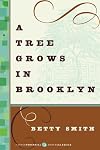
Among the most fervent and outspoken of coming-of-age novels in American literature that I've read, full to the brim with life sketches as pictorial as David Copperfield and with an epic scope as sweeping as East of Eden. Betty Smith invites us into a breathtaking depiction of New York with the same richness that Woody Allen's Manhattan did for the big screen, visualized from the perspective of an aspiring and headstrong Francie Nolan raised in the heart of poverty-stricken Brooklyn. This show more novel expresses a hope for American immigrants at the turn of the century that isn't to be found in Upton Sinclair's the Jungle, and although Francie's relatives are far from perfect, their love and care for each other is irrefutable and irrepressible. Francie is met with experiences and choices that are as various and unique as any uncommon family, and their stories are forever memorable as the small things that are best in a simple life. show less
4.5 / 5.0
I feel 'A Tree Grows in Brooklyn' endures because of its honesty about periods, and lovemaking, and sorrow and childbearing and parenting and everything in-between, but what really makes the novel a lasting work? The characters.
The sister/aunt, Sissy, is quirky and hilarious and fabulous and oh-so-very human. The whole scene with the tricycle? So. Funny. And then with the teacher? The grandmother, Mary, is wise and interesting. The father, Johnny, the mother, Katie, Neeley, really show more just everyone, you just can't help but love, foibles, warts, and all.
There are a couple places where I feel the book falls apart. One, the book is overly long and there are a few side characters and frame stories that I feel could be trimmed. The other is that with all the wondrous characters, Francie isn't really all that interesting, mostly because she's a young child. As the book goes on, she gets more interesting, but that delayed my investment. By the end, she was far more interesting. Some of the teacher interactions and how Francie dealt with them were awesome. Still, I mostly stuck around because of the other characters.
There are also a lot of little side stories about living in Brooklyn in the early 1900's that are fabulous. Details about bored cigar rollers and old Christmas trees and noodle making and barber shop cups really bring the book to life.
In short, a bit overly long, but worth it for the characters, honesty, and humanity. show less
I feel 'A Tree Grows in Brooklyn' endures because of its honesty about periods, and lovemaking, and sorrow and childbearing and parenting and everything in-between, but what really makes the novel a lasting work? The characters.
The sister/aunt, Sissy, is quirky and hilarious and fabulous and oh-so-very human. The whole scene with the tricycle? So. Funny. And then with the teacher? The grandmother, Mary, is wise and interesting. The father, Johnny, the mother, Katie, Neeley, really show more just everyone, you just can't help but love, foibles, warts, and all.
There are a couple places where I feel the book falls apart. One, the book is overly long and there are a few side characters and frame stories that I feel could be trimmed. The other is that with all the wondrous characters, Francie isn't really all that interesting, mostly because she's a young child. As the book goes on, she gets more interesting, but that delayed my investment. By the end, she was far more interesting. Some of the teacher interactions and how Francie dealt with them were awesome. Still, I mostly stuck around because of the other characters.
There are also a lot of little side stories about living in Brooklyn in the early 1900's that are fabulous. Details about bored cigar rollers and old Christmas trees and noodle making and barber shop cups really bring the book to life.
In short, a bit overly long, but worth it for the characters, honesty, and humanity. show less
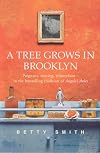
'But poverty, starvation and drunkenness are ugly subjects to choose. We all admit these things exist. But one doesn't write about them.' So says the English teacher of the young narrator, Francie Nolan. What I would add is that one could do with writing a whole lot less about them, and in a far less preachy and plodding third person voice.
I thought this book, another American 'classic' with an enduring popularity that now baffles me, would be like To Kill A Mockingbird, but apart from the show more young girl at the heart of the story, there is no comparison. Betty Smith writes more like Louisa May Alcott than Harper Lee, continually banging on the same moral drum throughout her long, presumably autobiographical novel. I got the message - life is hard for the working class families of immigrants and education is the only way to improve your prospects - but I'm not sure that I needed 500 pages of scrubbing floors, alcoholic fathers, strong women who exist just to have babies, even when they can't afford to keep them, and choosing between earning a pittance or going to school to get there. There's just no life to Francie's story - and for a budding writer, she doesn't even get to use her own words - and the narration is simplistic to the point of grating at times. As Francie observes, 'In a story, you had to explain why people were the way they were but when you wrote in conversation you didn't have to do that because the things people said explained what they were' - AKA show don't tell and halve your word count, Betty.
The author's bitterness at certain types of women was also surprising and a little tiring: 'Married women were not allowed to teach in those days, hence most of the teachers were women made neurotic by starved love instincts. These barren women spent their fury on other women's children in a twisted authoritative manner'. I get that the idealised women in the story - Francie's mother Katie, her maternal but childless aunt Sissy - are strong in the Catholic tradition of popping babies out and that the story is set in the early twentieth century, but let's try for a little balance, shall we?
Well, I finally got to read another great and treasured American tome, but I won't be keeping my copy. show less
I thought this book, another American 'classic' with an enduring popularity that now baffles me, would be like To Kill A Mockingbird, but apart from the show more young girl at the heart of the story, there is no comparison. Betty Smith writes more like Louisa May Alcott than Harper Lee, continually banging on the same moral drum throughout her long, presumably autobiographical novel. I got the message - life is hard for the working class families of immigrants and education is the only way to improve your prospects - but I'm not sure that I needed 500 pages of scrubbing floors, alcoholic fathers, strong women who exist just to have babies, even when they can't afford to keep them, and choosing between earning a pittance or going to school to get there. There's just no life to Francie's story - and for a budding writer, she doesn't even get to use her own words - and the narration is simplistic to the point of grating at times. As Francie observes, 'In a story, you had to explain why people were the way they were but when you wrote in conversation you didn't have to do that because the things people said explained what they were' - AKA show don't tell and halve your word count, Betty.
The author's bitterness at certain types of women was also surprising and a little tiring: 'Married women were not allowed to teach in those days, hence most of the teachers were women made neurotic by starved love instincts. These barren women spent their fury on other women's children in a twisted authoritative manner'. I get that the idealised women in the story - Francie's mother Katie, her maternal but childless aunt Sissy - are strong in the Catholic tradition of popping babies out and that the story is set in the early twentieth century, but let's try for a little balance, shall we?
Well, I finally got to read another great and treasured American tome, but I won't be keeping my copy. show less

This is one of the more heart wrenching novels I've read in years, this Pulitzer Prize-winning classic about an ethnically-blended family in Brooklyn just before the first World War, told through the young protagonist, Francie Nolan. Her mother Katie is an uneducated but proud mother, struggling to provide for her children and secure a better life for them. Her loving but alcoholic husband is a meager provider. This is before there was any societal safety net at all, and many times it's a show more question whether the family will be able to survive another week or not. The novel is semi-autobiographical; the sequences about the family's many and practiced strategies for keeping fed and sheltered ring with brutal truth. Katie Nolan knows in her heart that the children will have a chance in life if they can only get a decent education, something which Francie desires more than anything. But many times the struggle for survival overshadows everything. This is a powerful and emotional story that draws us into the family's hardscrabble life and makes us care for them, rooting for their small successes and reeling with the many setbacks and tragedies they endure. The sadly sweet ending left me teary-eyed, and hoping that the safeguards a modern and more compassionate (?) society now have in place are enough that this kind of life is rare indeed. show less
Lists
Overdue Podcast (1)
Comfort Reads (1)
el (1)
. (1)
Five star books (1)
Sonlight Books (1)
1940s (1)
BitLife (1)
top 100 (1)
history (1)
Poverty (1)
Unread books (1)
First Novels (1)
Female Author (1)
. (1)
1970s (1)
Favourite Books (1)
Carole's List (1)
Ambleside Books (1)
AP Lit (1)
Awards


You May Also Like


Associated Authors
Statistics
- Works
- 19
- Also by
- 12
- Members
- 20,957
- Popularity
- #1,033
- Rating
- 4.3
- Reviews
- 530
- ISBNs
- 206
- Languages
- 13
- Favorited
- 38
