
Bill Manley (1)
Author of How to Read Egyptian Hieroglyphics; A Step-by-Step Guide to Teach Yourself
For other authors named Bill Manley, see the disambiguation page.
About the Author
Bill Manley is a curator and lecturer, and has taught Egyptology and hieroglyphs for more than twenty years at the universities of Glasgow, Liverpool and Madrid. He is the coauthor of the complementary best-selling volume How to Read Egyptian Hieroglyphs.
Works by Bill Manley
How to Read Egyptian Hieroglyphics; A Step-by-Step Guide to Teach Yourself (1998) 1,036 copies, 10 reviews
Associated Works
Tagged
Common Knowledge
- Canonical name
- Manley, Bill
- Gender
- male
- Nationality
- UK
- Map Location
- UK
Members
Reviews
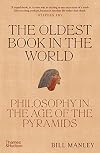
The Teaching of Ptahhatap is a text of about 15 pages, and one of the oldest narrative writings that have come down to us. It was produced in Ancient Egypt and contains moral instructions from a top employee of the pharaoh to his son. The earliest surviving version (a papyrus document) dates from about 1700 BCE, but its origins are thought to be at least several centuries earlier. Bill Manley delves particularly deeply into these and related texts and also provides partial translations. The show more whole thing looks solid and interesting. But his thesis that this is the oldest book in the world is not entirely convincing, because it is mainly based on reasoned speculation. It is also strange that he nowhere mentions the Epic of Gilgamesh from Mesopotamia, which is at least as old, but has been handed down in many more different versions. The connection with philosophy is also not entirely clear to me: The Teaching of Ptahhatap contains ethical guidelines; but Manley makes a connection with an Egyptian text from the 7th century bce, so at least a thousand years later, to prove his point. In short, this is certainly a fascinating book, but it does not quite live up to its ambitions. More in my History account on Goodreads: https://www.goodreads.com/review/show/5570669450 show less
Excellent introduction. Serious, informative and generally well-paced. I think it would help to have a tutor to support study of the later, more technical chapters but you can get a long way with this book as an independent learner. I really appreciated being able to put the skills it teaches to the test in e British Museum, where most of the examples come from.
How to Read Egyptian Hieroglyphs: A Step-by-step Guide to Teach Yourself Hieroglyphs by Mark Collier
This is a very clever little book. I read it, went to the British Museum's Egyptology Collection and could read the hieroglyphs fairly well. The authors are from the BM, but present the Egyptian in modern way for the beginner. The chapters are well-paced, and you can work your way through them by yourself. Egyptian isn't the easiest language to learn, but this book certainly helps.
Excellent small book that teaches serious tourists to be able to read inscriptions on Ancient Egyptian museum pieces and on site in Egyptian monuments. The lessons are easily divided and are not too difficult like the college texts.
You May Also Like


Associated Authors
Statistics
- Works
- 8
- Also by
- 1
- Members
- 1,942
- Popularity
- #13,248
- Rating
- 3.8
- Reviews
- 13
- ISBNs
- 40
- Languages
- 10