
Stephen Mansfield (1) (1958–)
Author of Never Give In: The Extraordinary Character of Winston Churchill (Leaders in Action Series)
For other authors named Stephen Mansfield, see the disambiguation page.
About the Author
Stephen Mansfield is a New York Times best-selling author of books about history and contemporary culture His works include The Faith of Barack Obama, The Faith of George W. Bush, Lincoln's Battle with God. and Mansfield's Book of Manly Men. He is a popular speaker who also coaches leaders show more worldwide. StephenMansfield.TV show less
Works by Stephen Mansfield
Never Give In: The Extraordinary Character of Winston Churchill (Leaders in Action Series) (1995) 743 copies, 2 reviews
The Search for God and Guinness: A Biography of the Beer that Changed the World (2009) 317 copies, 17 reviews
Lincoln's Battle with God: A President's Struggle with Faith and What It Meant for America (2012) 227 copies, 6 reviews
Mansfield's Book of Manly Men: An Utterly Invigorating Guide to Being Your Most Masculine Self (2013) 219 copies, 5 reviews
Ten Tortured Words: How the Founding Fathers Tried to Protect Religion in America . . . and What's Happened Since (2007) 88 copies
The Mormonizing of America: How the Mormon Religion Became a Dominant Force in Politics, Entertainment, and Pop Culture (2012) 85 copies, 7 reviews
Paul Harvey's America: The Life, Art, and Faith of a Man Who Transformed Radio and Inspired a Nation (2009) 71 copies, 1 review
The Miracle of the Kurds: A Remarkable Story of Hope Reborn in Northern Iraq (2014) 58 copies, 5 reviews
Choosing Donald Trump: God, Anger, Hope, and Why Christian Conservatives Supported Him (2017) 40 copies, 2 reviews
Ask the Question: Why We Must Demand Religious Clarity from Our Presidential Candidates (2016) 36 copies, 2 reviews
Where Has Oprah Taken Us?: The Religious Influence of the World's Most Famous Woman (2011) 21 copies, 2 reviews
Healing Your Church Hurt: What To Do When You Still Love God But Have Been Wounded by His People (2012) 20 copies, 1 review
Tagged
Common Knowledge
- Canonical name
- Mansfield, Stephen
- Legal name
- MANSFIELD, Stephen L.
MANSFIELD, Stephen Lee
MANSFIELD, Stephen - Other names
- 斯蒂芬.曼斯菲爾德
- Birthdate
- 1958-06-28
- Gender
- male
- Education
- Oral Roberts University
Abilene Christian University - Occupations
- pastor
- Nationality
- USA
- Birthplace
- Columbus, Georgia, USA
- Associated Place (for map)
- Georgia, USA
Members
Reviews
Lincoln's Battle with God: A President's Struggle with Faith and What It Meant for America by Stephen Mansfield
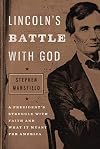
"The silencing of Lincoln’s faith by the secular and the exaggerating of Lincoln’s faith by the religious have given us a less accurate and a less engaging Lincoln. We are poorer for the distortions."
There seems to be a blanket assumption on the part of most of us Americans that Abraham Lincoln was just born a Christian, remained a Christian and died a Christian. Nothing could be further from the truth. While it is true that he was born into a very Christian family, Thomas and Nancy show more Lincoln being referred to as "Hard Shell Baptists", he went on quite a spiritual path of his own when he was a young man first arriving in New Salem, Illinois. Lincoln's boyhood had been marked with the early death of his beloved mother Nancy when he was 9 and a very stern and (possibly) abusive father. While all this was going on at home, Lincoln was exposed to the beginnings of what would be referred to later on through the years as "Big Tent Revivals" nearly next door to his home in Kentucky on the Cumberland Trail. At first, these were pure revivals with only the savings of souls as the goal, but quickly devolved into part religious fervor; part entertainment for the masses and part glorious opportunities for snake oil salesmen who came to take advantage of the faithful and/or gullible country folk. There was quite a bit of hell fire and brimstone coming from the pulpit and Lincoln wasn't having any of it. He wasn't a fan of legalism; he didn't like the idea of hell for anybody, and he certainly didn't like the attitude of the self-righteous (allegedly) predestined for heaven souls who gloated over their predestined for hell brethren. Then there was the fighting between the Christian denominations - fighting that had become so feverish that it wasn't uncommon for the Methodist to interrupt a Baptist service and vice versa. Add to this Lincoln's proneness to melancholy (a trait inherited from his mother); the death of his mother and a much beloved older sister with his father's coldness towards him, it's no wonder then that by the time he is on his own in Illinois, Lincoln who "... had known only the religion of the haughty, self-assured hyper-Calvinist or the exuberant camp meeting extremes. He had found both wanting. Paine and Volney—along with Burns and Gibbon before them—pointed a way out of the confusion of perpetual skepticism into a clear and always rational faith: the existence of God, love of mankind, the cathedral of the mind. This was what they gave Lincoln, and he loved them for it." As a matter of fact, Lincoln's departure from the traditional Christian faith was such that he was nicknamed the "Infidel" by some of the locals. He even (allegedly, according to one source close to him) "decided to write a booklet arguing his newfound ideas. This became known in memory as his “little book on Infidelity,” the one in which he attacked the divinity of Christ and the inspiration of the Bible." (The friend burned the book knowing that it would have been the death blow to Lincoln's political career if it got out.)
So how do we get from that Lincoln to the one who moments before his death is confiding to his wife Mary Todd Lincoln (according to Mary herself), that "We will visit the Holy Land and see those places hallowed by the footsteps of the Savior ..... There is no place I so much desire to see as Jerusalem." According to Mansfield, Lincoln's journey was a long, torturous process. Lincoln's life was marked by tragedy and melancholy but he was also well read and self-educated and it was, according to the author, one particular book and one very intellectual clergyman who turns out to be the turning point in Lincoln's spiritual journey. It seems that Lincoln didn't come to his faith by faith alone but by a very studious and measured study of it. There doesn't seem to be any eleventh hour prayer or lightning bolt from the sky. And even then, like the author points out, we can never really know for sure but the evidence certainly does point to the fact that the young Lincoln of New Salem in the early 1830s is a much different Lincoln that we see leading the nation through the Civil War who refers to the "... better angels of our nature" in his first inaugural speech and quotes the New Testament in his second inaugural speech.
It is a fascinating look into one aspect of Lincoln's character - but I think possibly one of his most important - that not only shaped him personally as the years went on but the decisions he made later that affected so many. I like this clay-footed struggling with God Lincoln so much better than the alternative.
"... He always surprises, always resists confinement to the forms and definitions imposed upon him. He lived in an age still foreign to us. He was a complicated soul, an innovative mind, and an oppressed spirit. He was raw and earthy and poetic. He could be ambitious and enraged and cold. He rose from a spare cabin to the White House, and did so in an age of titanic conflict, of near incomprehensible change. We can strive to know what we may of Lincoln. We can hope to understand. Yet never can we confine him; never can we seek to make him conform."
(I also listened to a small sample of this on audio, read by the author, and was not disappointed.) show less
There seems to be a blanket assumption on the part of most of us Americans that Abraham Lincoln was just born a Christian, remained a Christian and died a Christian. Nothing could be further from the truth. While it is true that he was born into a very Christian family, Thomas and Nancy show more Lincoln being referred to as "Hard Shell Baptists", he went on quite a spiritual path of his own when he was a young man first arriving in New Salem, Illinois. Lincoln's boyhood had been marked with the early death of his beloved mother Nancy when he was 9 and a very stern and (possibly) abusive father. While all this was going on at home, Lincoln was exposed to the beginnings of what would be referred to later on through the years as "Big Tent Revivals" nearly next door to his home in Kentucky on the Cumberland Trail. At first, these were pure revivals with only the savings of souls as the goal, but quickly devolved into part religious fervor; part entertainment for the masses and part glorious opportunities for snake oil salesmen who came to take advantage of the faithful and/or gullible country folk. There was quite a bit of hell fire and brimstone coming from the pulpit and Lincoln wasn't having any of it. He wasn't a fan of legalism; he didn't like the idea of hell for anybody, and he certainly didn't like the attitude of the self-righteous (allegedly) predestined for heaven souls who gloated over their predestined for hell brethren. Then there was the fighting between the Christian denominations - fighting that had become so feverish that it wasn't uncommon for the Methodist to interrupt a Baptist service and vice versa. Add to this Lincoln's proneness to melancholy (a trait inherited from his mother); the death of his mother and a much beloved older sister with his father's coldness towards him, it's no wonder then that by the time he is on his own in Illinois, Lincoln who "... had known only the religion of the haughty, self-assured hyper-Calvinist or the exuberant camp meeting extremes. He had found both wanting. Paine and Volney—along with Burns and Gibbon before them—pointed a way out of the confusion of perpetual skepticism into a clear and always rational faith: the existence of God, love of mankind, the cathedral of the mind. This was what they gave Lincoln, and he loved them for it." As a matter of fact, Lincoln's departure from the traditional Christian faith was such that he was nicknamed the "Infidel" by some of the locals. He even (allegedly, according to one source close to him) "decided to write a booklet arguing his newfound ideas. This became known in memory as his “little book on Infidelity,” the one in which he attacked the divinity of Christ and the inspiration of the Bible." (The friend burned the book knowing that it would have been the death blow to Lincoln's political career if it got out.)
So how do we get from that Lincoln to the one who moments before his death is confiding to his wife Mary Todd Lincoln (according to Mary herself), that "We will visit the Holy Land and see those places hallowed by the footsteps of the Savior ..... There is no place I so much desire to see as Jerusalem." According to Mansfield, Lincoln's journey was a long, torturous process. Lincoln's life was marked by tragedy and melancholy but he was also well read and self-educated and it was, according to the author, one particular book and one very intellectual clergyman who turns out to be the turning point in Lincoln's spiritual journey. It seems that Lincoln didn't come to his faith by faith alone but by a very studious and measured study of it. There doesn't seem to be any eleventh hour prayer or lightning bolt from the sky. And even then, like the author points out, we can never really know for sure but the evidence certainly does point to the fact that the young Lincoln of New Salem in the early 1830s is a much different Lincoln that we see leading the nation through the Civil War who refers to the "... better angels of our nature" in his first inaugural speech and quotes the New Testament in his second inaugural speech.
It is a fascinating look into one aspect of Lincoln's character - but I think possibly one of his most important - that not only shaped him personally as the years went on but the decisions he made later that affected so many. I like this clay-footed struggling with God Lincoln so much better than the alternative.
"... He always surprises, always resists confinement to the forms and definitions imposed upon him. He lived in an age still foreign to us. He was a complicated soul, an innovative mind, and an oppressed spirit. He was raw and earthy and poetic. He could be ambitious and enraged and cold. He rose from a spare cabin to the White House, and did so in an age of titanic conflict, of near incomprehensible change. We can strive to know what we may of Lincoln. We can hope to understand. Yet never can we confine him; never can we seek to make him conform."
(I also listened to a small sample of this on audio, read by the author, and was not disappointed.) show less
Lincoln's Battle with God: A President's Struggle with Faith and What It Meant for America by Stephen Mansfield
The common perception of Abraham Lincoln is that he was a man whose lifelong, deeply held Christian faith gave him the courage to prosecute a long and bloody war to right one of mankind’s greatest wrongs: slavery. The facts, however, tell a different story about Lincoln’s long journey, a journey that, although it ultimately may have arrived at the same destination, involved numerous sidetracks and obstacles along the way.
As Stephen Mansfield notes in Lincoln’s Battle with God (A show more President’s Struggle with Faith and What It Meant for America):
“He was a complicated soul, an innovative mind, and an oppressed spirit. He was raw and earthy and poetic. He could be ambitious and enraged and cold… We can hope to understand. Yet never can we confine him; never can we seek to make him conform.”
Abraham Lincoln is, after all, a man who sporadically attended church services but never officially joined a church. During his presidency, he often spoke of God and made Biblical references in his public addresses, but almost never mentioned Jesus Christ directly. Many of the people of New Salem, Illinois, those who knew Lincoln longest and best, remained skeptical about his supposed Christian faith right up to the moment of his death. And because Lincoln was such a vocal anti-Christianity advocate when they knew him, who can blame them?
Lincoln simply could not keep his personal convictions private – he never missed an opportunity to ridicule a preacher or to express his religious doubts (privately or publicly) to the more pious of his acquaintances. Citing an old Winston Churchill saying that, “a fanatic is one who can’t change his mind and won’t change the subject,” Mansfield stresses just how obsessed Lincoln was about debunking organized religion. His resulting anti-religion reputation cost Lincoln many a vote during his political life when preachers specifically asked their congregations to vote for his political opponents.
But Lincoln was a tortured soul from the beginning, and his journey would be a long one. His mother died when he was nine years old, leaving the boy in the care (if you can call it that) of a wandering, but demanding father who saw his son more as slave labor than as a member of his family. And it did not help that Mr. Lincoln was a Christian of the most hypocritical sort, helping to nip the boy’s budding faith in the bud.
Through the years, Lincoln would lose others close to him, including two young sons, and would suffer from regular (and sometimes near suicidal) bouts with depression. And just when America was most severely tested, Lincoln was forced by his incompetent Generals to redefine the presidential role of Commander-in-Chief, a role for which he was not prepared. By war’s end, Lincoln had come to believe that God was playing a direct role in what was happening on the battlefield, that the country must pay a heavy price for its past sins before God would allow the killing to stop. Although his evolutionary religious journey, almost complete, was cut short by an assassin’s bullet, the man who died in Washington was far different from the one who lived in Illinois.
Lincoln’s Battle with God is an eye-opener, particularly as regards Lincoln’s days in New Salem - a reminder that the real Abraham Lincoln is no less amazing a man than the mythical one.
Rated at: 4.0 show less
As Stephen Mansfield notes in Lincoln’s Battle with God (A show more President’s Struggle with Faith and What It Meant for America):
“He was a complicated soul, an innovative mind, and an oppressed spirit. He was raw and earthy and poetic. He could be ambitious and enraged and cold… We can hope to understand. Yet never can we confine him; never can we seek to make him conform.”
Abraham Lincoln is, after all, a man who sporadically attended church services but never officially joined a church. During his presidency, he often spoke of God and made Biblical references in his public addresses, but almost never mentioned Jesus Christ directly. Many of the people of New Salem, Illinois, those who knew Lincoln longest and best, remained skeptical about his supposed Christian faith right up to the moment of his death. And because Lincoln was such a vocal anti-Christianity advocate when they knew him, who can blame them?
Lincoln simply could not keep his personal convictions private – he never missed an opportunity to ridicule a preacher or to express his religious doubts (privately or publicly) to the more pious of his acquaintances. Citing an old Winston Churchill saying that, “a fanatic is one who can’t change his mind and won’t change the subject,” Mansfield stresses just how obsessed Lincoln was about debunking organized religion. His resulting anti-religion reputation cost Lincoln many a vote during his political life when preachers specifically asked their congregations to vote for his political opponents.
But Lincoln was a tortured soul from the beginning, and his journey would be a long one. His mother died when he was nine years old, leaving the boy in the care (if you can call it that) of a wandering, but demanding father who saw his son more as slave labor than as a member of his family. And it did not help that Mr. Lincoln was a Christian of the most hypocritical sort, helping to nip the boy’s budding faith in the bud.
Through the years, Lincoln would lose others close to him, including two young sons, and would suffer from regular (and sometimes near suicidal) bouts with depression. And just when America was most severely tested, Lincoln was forced by his incompetent Generals to redefine the presidential role of Commander-in-Chief, a role for which he was not prepared. By war’s end, Lincoln had come to believe that God was playing a direct role in what was happening on the battlefield, that the country must pay a heavy price for its past sins before God would allow the killing to stop. Although his evolutionary religious journey, almost complete, was cut short by an assassin’s bullet, the man who died in Washington was far different from the one who lived in Illinois.
Lincoln’s Battle with God is an eye-opener, particularly as regards Lincoln’s days in New Salem - a reminder that the real Abraham Lincoln is no less amazing a man than the mythical one.
Rated at: 4.0 show less
The Mormonizing of America: How the Mormon Religion Became a Dominant Force in Politics, Entertainment, and Pop Culture by Stephen Mansfield
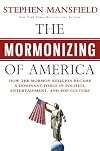
Bashing Joseph Smith
With two Mormon candidates for US president in this election (now only one) the Mormon Church has received an unusual amount of news coverage, much of it negative. The Mormon or LDS Church is one of the fastest growing religions with over 14 million members worldwide (about half in the United States) and there are influential and successful Mormons in American politics, business, sports, entertainment, and many other areas which makes Stephen Mansfield very nervous. He show more wonders how a church that was so persecuted in its early days could have become such a potent symbol of American values and ideals. And, more importantly, he wonders what it might mean if a Mormon were elected president.
The Church of Jesus Christ of Latter-day Saints (which has been known historically as the Mormon Church) has long made a point of saying that its truthfulness hinges on the story of Joseph Smith. As a 14 year old boy Smith claimed to have a vision where he saw God and Jesus Christ, and that through him the gospel of Jesus Christ was "restored." This also involved the translation of The Book of Mormon, which Mormons claim as holy scripture in addition to the Bible. It follows that if Joseph Smith was a fraud, the church would be as well. But if Joseph Smith was a true prophet, then the church he established is true. As evidence they offer The Book of Mormon, and missionaries invite people all over the world to read it and pray about it.
This oft-repeated claim does not go unnoticed by the perceptive Mansfield, and he uses it as the backbone of his attack. While he can be complimentary toward current members, his "history" of Joseph Smith and The Book of Mormon is a rehash of every anti-Mormon accusation regardless of merit or source. He repeatedly uses words like "fraud" and "charlatan" when describing Smith, and dismisses The Book of Mormon as boring and unsupported by evidence. (He also conveniently glosses over the fact that Joseph Smith gave his life for his cause and died as a martyr.) Instead, he lamely asserts that the incredible success of the church is due simply to its sense of community, focus on family and education, and its organization.
I tried to give the author the benefit of the doubt and assume his intentions were noble, but sadly this is a very poorly-researched book that was rushed to print before the election is over and the issue fades away. Like other anti-Mormon literature, Mansfield uses second-hand quotes and takes quotes out of context to make Mormon leaders seem extra strange, and anything factual is presented in a way to support his own bias. He uses lots of short vignettes that are supposedly real conversations happening every day in "Mormon America" that mostly play on irrational fears or cast Mormons in extreme ways. He continually gets his facts about the priesthood wrong and insinuates that polygamy is still practiced by church members. He even quotes a fictional novel to suggest Mormons claim to have planted all the sunflowers in the American west. And as a long-time member of the church I've never heard some of the "common Mormon sayings" he quotes.
I might agree with Mansfield when he says too many Mormons aren't familiar *enough* with doctrines (pg 56-57), but this ignores the fact that surveys show Mormons are generally more familiar with their own doctrines than non-Mormons are with theirs. He also says the church discourages its members from studying doctrine and favors "experience over doctrines" and emphasizes a "mystical inner knowing" instead, which mostly demonstrates his own lack of familiarity with his subject. He says The Book of Mormon has been "ignored as serious literature," but he's ignoring that it was recently named among the most influential books in America.
His explanation of how Mormons "became a dominant force" is weak (again, he says it's because of an emphasis on community, family, education, etc., and urges other churches to adopt such attitudes) and he questions the continuing loyalty and patriotism of members (even though he praises such attributes). He suggests a higher level of scrutiny is necessary and that the integrity of such previously honest people isn't good enough, which is really just a shameless political jab.
I do not resent or begrudge Mansfield for not sharing my religious beliefs - that's his prerogative - but there is little that is fair or unbiased in his book. He admits "Smith has come in for quite a bashing in these pages..." (pg 210), and laughably makes pretense at scholarly writing (pg xxii) even though the notes and sources at the end of the book occupy only a few short pages. (While I was reading it someone saw the unusually large font the book is printed with and asked if I was reading a children's book.) To use Mansfield's words, this book "need not have been written." (I received this book from the publisher, and as an avid reader I deeply regret the time I have wasted on it.) show less
With two Mormon candidates for US president in this election (now only one) the Mormon Church has received an unusual amount of news coverage, much of it negative. The Mormon or LDS Church is one of the fastest growing religions with over 14 million members worldwide (about half in the United States) and there are influential and successful Mormons in American politics, business, sports, entertainment, and many other areas which makes Stephen Mansfield very nervous. He show more wonders how a church that was so persecuted in its early days could have become such a potent symbol of American values and ideals. And, more importantly, he wonders what it might mean if a Mormon were elected president.
The Church of Jesus Christ of Latter-day Saints (which has been known historically as the Mormon Church) has long made a point of saying that its truthfulness hinges on the story of Joseph Smith. As a 14 year old boy Smith claimed to have a vision where he saw God and Jesus Christ, and that through him the gospel of Jesus Christ was "restored." This also involved the translation of The Book of Mormon, which Mormons claim as holy scripture in addition to the Bible. It follows that if Joseph Smith was a fraud, the church would be as well. But if Joseph Smith was a true prophet, then the church he established is true. As evidence they offer The Book of Mormon, and missionaries invite people all over the world to read it and pray about it.
This oft-repeated claim does not go unnoticed by the perceptive Mansfield, and he uses it as the backbone of his attack. While he can be complimentary toward current members, his "history" of Joseph Smith and The Book of Mormon is a rehash of every anti-Mormon accusation regardless of merit or source. He repeatedly uses words like "fraud" and "charlatan" when describing Smith, and dismisses The Book of Mormon as boring and unsupported by evidence. (He also conveniently glosses over the fact that Joseph Smith gave his life for his cause and died as a martyr.) Instead, he lamely asserts that the incredible success of the church is due simply to its sense of community, focus on family and education, and its organization.
I tried to give the author the benefit of the doubt and assume his intentions were noble, but sadly this is a very poorly-researched book that was rushed to print before the election is over and the issue fades away. Like other anti-Mormon literature, Mansfield uses second-hand quotes and takes quotes out of context to make Mormon leaders seem extra strange, and anything factual is presented in a way to support his own bias. He uses lots of short vignettes that are supposedly real conversations happening every day in "Mormon America" that mostly play on irrational fears or cast Mormons in extreme ways. He continually gets his facts about the priesthood wrong and insinuates that polygamy is still practiced by church members. He even quotes a fictional novel to suggest Mormons claim to have planted all the sunflowers in the American west. And as a long-time member of the church I've never heard some of the "common Mormon sayings" he quotes.
I might agree with Mansfield when he says too many Mormons aren't familiar *enough* with doctrines (pg 56-57), but this ignores the fact that surveys show Mormons are generally more familiar with their own doctrines than non-Mormons are with theirs. He also says the church discourages its members from studying doctrine and favors "experience over doctrines" and emphasizes a "mystical inner knowing" instead, which mostly demonstrates his own lack of familiarity with his subject. He says The Book of Mormon has been "ignored as serious literature," but he's ignoring that it was recently named among the most influential books in America.
His explanation of how Mormons "became a dominant force" is weak (again, he says it's because of an emphasis on community, family, education, etc., and urges other churches to adopt such attitudes) and he questions the continuing loyalty and patriotism of members (even though he praises such attributes). He suggests a higher level of scrutiny is necessary and that the integrity of such previously honest people isn't good enough, which is really just a shameless political jab.
I do not resent or begrudge Mansfield for not sharing my religious beliefs - that's his prerogative - but there is little that is fair or unbiased in his book. He admits "Smith has come in for quite a bashing in these pages..." (pg 210), and laughably makes pretense at scholarly writing (pg xxii) even though the notes and sources at the end of the book occupy only a few short pages. (While I was reading it someone saw the unusually large font the book is printed with and asked if I was reading a children's book.) To use Mansfield's words, this book "need not have been written." (I received this book from the publisher, and as an avid reader I deeply regret the time I have wasted on it.) show less
Mansfield's Book of Manly Men: An Utterly Invigorating Guide to Being Your Most Masculine Self by Stephen Mansfield
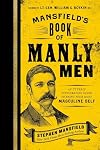
The old cliche of "don't judge a book by it's cover" can be applied to this book for sure. When you first look at the cover, what vision of "manly men" pops into you head? Some sort of physical definition like wrestling bears, or hunting, or chopping down trees on a mountainside, or pressing massive barbells above your head one handed? Men with lots of hair on their chest?
If that's what you pictured, then the cover did it's job. It's meant to be a little snarky, a little tongue in cheek. show more But, that's where the cheekiness ends. In Mansfield's Book Of Manly Men, Stephen Mansfield sets out to try and define what it means to be a man, what traits and characteristics make a good man. And, frankly, almost none of them have anything to do with the caricatures I described above. This book is about traits like honor, friendship, sacrifice, integrity. And DOING. Men Do. Great men have always Done. Great men are intentional, focused, purposeful.
Each chapter in the book covers a trait and starts with a figure from history who represents this trait. Men like Churchill, Lincoln, Coach John Wooden, and numerous figures from the pages of The Bible, which is where Stephen draws most of his guidelines on what it means to be a man. He quotes the Bible often, but if you're not a Christian, don't be turned off. The lessons here are for believers and non-believers alike. You don't have to subscribe to the same world view as Mansfield to find this book impactful
I've read a handful of self improvement books and the thing that sets this one apart from the rest is it's actionable-ness. Many times when I read these kind of books, I'm left saying to myself "OK, great idea. Now HOW do I do that?". Many books are great at giving you the What, but they never give you the How. At the end of each chapter, Mansfield leaves you with a handful of questions to help you dig deeper into your own situation as well as some actionable things to do in order to work towards achieving your goal.
In a culture where many men are found sitting on their hands, not knowing what it means to be a man anymore, this book will help give you direction. It should be required reading and not a bookshelf in existence should go without it. show less
If that's what you pictured, then the cover did it's job. It's meant to be a little snarky, a little tongue in cheek. show more But, that's where the cheekiness ends. In Mansfield's Book Of Manly Men, Stephen Mansfield sets out to try and define what it means to be a man, what traits and characteristics make a good man. And, frankly, almost none of them have anything to do with the caricatures I described above. This book is about traits like honor, friendship, sacrifice, integrity. And DOING. Men Do. Great men have always Done. Great men are intentional, focused, purposeful.
Each chapter in the book covers a trait and starts with a figure from history who represents this trait. Men like Churchill, Lincoln, Coach John Wooden, and numerous figures from the pages of The Bible, which is where Stephen draws most of his guidelines on what it means to be a man. He quotes the Bible often, but if you're not a Christian, don't be turned off. The lessons here are for believers and non-believers alike. You don't have to subscribe to the same world view as Mansfield to find this book impactful
I've read a handful of self improvement books and the thing that sets this one apart from the rest is it's actionable-ness. Many times when I read these kind of books, I'm left saying to myself "OK, great idea. Now HOW do I do that?". Many books are great at giving you the What, but they never give you the How. At the end of each chapter, Mansfield leaves you with a handful of questions to help you dig deeper into your own situation as well as some actionable things to do in order to work towards achieving your goal.
In a culture where many men are found sitting on their hands, not knowing what it means to be a man anymore, this book will help give you direction. It should be required reading and not a bookshelf in existence should go without it. show less
Lists
Awards

You May Also Like


Associated Authors
Statistics
- Works
- 28
- Members
- 3,573
- Popularity
- #7,093
- Rating
- 3.8
- Reviews
- 71
- ISBNs
- 195
- Languages
- 5
- Favorited
- 2
