
David Boyle (1) (1958–2025)
Author of World War Two in Photographs
For other authors named David Boyle, see the disambiguation page.
About the Author
David Boyle is the author of several books about history, ideas, and the future. His Authenticity: Brands, Fakes, Spin and the Lust for Real Life helped put the search for authenticity on the agenda as a social phenomenon, while Funny Money: In Search of Alternative Cash launched the "time banks show more movement" in the UK. His work on the history and future of money has also been published in many books and pamphlets. He has stood for Parliament and undertaken an independent review for the UK Treasury and Cabinet Office. show less
Series
Works by David Boyle
Know It All Great Inventions: The 50 Greatest Inventions, Each Explained in Under a Minute (2017) 12 copies, 2 reviews
O Manifesto Comunista De Marx E Engels. Coleção Série Manifesto (Em Portuguese do Brasil) (2006) 5 copies
Money Matters: Putting the Eco into Economics - Global Crisis, Local Solutions (Paperback) (2009) 5 copies
Cancelled!: The strange, disturbing story of the crisis at Southern Rail and what to do about it (2016) 2 copies, 1 review
Associated Works
Agenda 2020 essay collection — Contributor — 1 copy
Tagged
Common Knowledge
- Legal name
- Boyle, David Courtney
- Birthdate
- 1958-05-20
- Date of death
- 2025-06-20
- Gender
- male
- Education
- Clifton College, Bristol, England
Trinity College, University of Oxford (philosophy and theology) - Occupations
- journalist
magazine editor
time banks advocate
history writer
novelist - Organizations
- Oxford Star
Town and Country Planning Journal
New Economics Foundation (fellow)
Barriers to Public Service Choice
New Weather Institute (cofounder, co-director)
London Time Bank (founder) (show all 10)
Time Banks UK (cofounder)
The Real Press
Radix (cofounder, policy director)
Liberal Democrats - Cause of death
- complications of Parkinson's disease
- Nationality
- UK
- Birthplace
- Paddington, London, England, UK
- Places of residence
- London, England, UK
Steyning, Sussex, England, UK - Associated Place (for map)
- England, UK
Members
Reviews
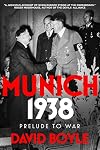
This short book covers all three of the summit meetings that British PM Neville Chamberlain held with Adolf Hitler in September 1938 in a largely sincere, but naive and of course ultimately disastrously unsuccessful attempt to stave off the threat of war. It is a deeply unedifying account of missed opportunities to stand up to Hitler, naivety and even crass unpreparedness, e.g. Britain and France not jointly deciding tactics beforehand, Chamberlain at one of the summits not having an show more interpreter with him and having to rely on Hitler's interpreter Paul Schmidt. No doubt from the point of view of many Britons, Czechoslovakia was a faraway country of which they knew nothing; but the treatment meted out to that country by Britain and France (the latter of whom had a defence treaty with them that was ignored) was truly shameful. Even worse than the handing over of the Sudetenland with its German speaking majority was the fact that these border areas contained the great majority of Czech border fortifications, heavy industry and armaments factories; as a result the rest of the country was ripe for the plucking when Hitler invaded and occupied the whole country the following March. A wider tragic missed opportunity was the fact that senior German army officers were prepared to overthrow the regime, if only Britain and France had shown more resolve. The author has a family connection with these events. His great-aunt, journalist Shiela Grant Duff, was a strong supporter of the Czechs and her book Europe and the Czechs was published just as the crisis was resolved in Hitler's favour; despite this it was read widely and played a major role in shifting public opinion away from appeasement. A very useful short and succinct account. show less
A delightful little book that should be rated at six stars out of five if content were the only criteria. It is a complete history of impressionism, beginning with it's immediate predecessors after the French Revolution and continuing into the post-Impressionists in the 1920's. Comprehensive, it draws all the cultural history into focus and relates it to political and economic conditions. It even takes side jaunts into literature, music and the world of the art dealer and auction house. But show more ...
This was one of the hardest books to read, physically, that I've ever made it through. It's only 7 x 5 inches, and 146 pages and is crammed with information and beautiful artworks. It's also filled with 4 point type - I've seen larger texts at the bottom of loan contracts. Some pages are set in one column, some in two, with no apparent reason. Some side info boxes are printed in Italic, which with the colored background really strained my bifocals.
This book needs to be bigger, physically.
Nevertheless, it is well worth the struggle: if you want to know the complete history of Impressionism as an art movement, this is required reading. show less
This was one of the hardest books to read, physically, that I've ever made it through. It's only 7 x 5 inches, and 146 pages and is crammed with information and beautiful artworks. It's also filled with 4 point type - I've seen larger texts at the bottom of loan contracts. Some pages are set in one column, some in two, with no apparent reason. Some side info boxes are printed in Italic, which with the colored background really strained my bifocals.
This book needs to be bigger, physically.
Nevertheless, it is well worth the struggle: if you want to know the complete history of Impressionism as an art movement, this is required reading. show less
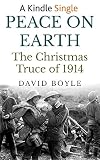
This short book looks at the famous Christmas truce of 1914, when soldiers of both sides in the First World War trenches temporarily stopped fighting and greeted each other with gifts and handshakes, and even played football. It's probably the single most well known incident from the early part of the First World War, and has been much celebrated and mythologised in the century since. Boyle's book looks out the facts from contemporary accounts and emphasises the important point that how it show more was seen at the time is crucial, not just how it has been interpreted in later years. In sum, the truce (including the football) happened in many places up and down the line, but was not universal. There were similar incidents leading up to Christmas and in some places going through until the new year. But there was still fighting and death in places throughout this period - the first air raid in British history, a German bomb dropped on Dover, took place on Christmas Eve, and on the same day nearly 100 British soldiers were killed, many by sniper fire. Even on Christmas day itself, German gunners shelled the headquarters of the Belgian army in Furnes, British seaplanes attacked Cuxhaven, the German supply port for U-boats, and a Norwegian steamer was mined and sunk in the North Sea. There was also some opposition to the truce on both sides where it did happen, and not just from the high command. Some saw fraternisation as disloyalty to their fallen comrades, as destructive of the fighting spirit needed to win victory, or as a potential cover for intelligence-gathering operations. At the same time, local officers often supported the truce as a valuable breathing space to bury the dead and take stock of the situation at a time of stalemate when it was becoming increasingly clear, at least on the ground, that the tactics of 1914 were not working. But it must be said there is no evidence of the truce being motivated by a political or pacifist upswelling, as has sometimes been implied since. The author concludes that: "The Christmas truce was not political. It wasn’t a demonstration or a planned event. But it derived from a fear about what the war had become, and about the competence of the men who led it, and – as such, and paradoxically – it provided a source of inspiration for those who took part". A good and useful short book. show less

This is a short biography in the Kindle Singles range covering the short life and genius that was Alan Turing. The word "genius" is often overused, but Turing is one of the few 20th century figures to whom I think it can genuinely be applied, not only or even mainly because of his brilliant contribution to the war effort in breaking Nazi codes, but because of his views in advance of his time about the nature of electronic machines and the future of artificial intelligence. His hounding by show more the authorities due to his sexuality and his early death, very likely suicide, are deeply tragic and his formal pardoning in recent years a long overdue recognition of both the injustice he suffered and his brilliant contribution to modern science. show less
Lists
You May Also Like


Associated Authors
Statistics
- Works
- 58
- Also by
- 3
- Members
- 1,569
- Popularity
- #16,449
- Rating
- 3.6
- Reviews
- 32
- ISBNs
- 144
- Languages
- 12