
Nancy Kress
Author of Beggars in Spain
About the Author
Nancy Kress is an author who won Best Novella at the Nebula Awards 2014 for her title Yesterday's Kin. (Bowker Author Biography)
Image credit: Ellen Datlow
Series
Works by Nancy Kress
Dynamic Characters: How to Create Personalities That Keep Readers Captivated (1998) 352 copies, 4 reviews
Nancy Kress 9 copies
Inertia [short fiction] 9 copies
Trinity [short story] 9 copies
My Mother, Dancing {short story} 8 copies
By Fools Like Me 7 copies
Philippa's Hands [short fiction] 6 copies
Saviour 6 copies
Patent Infringement [short story] 6 copies
Asimov's Science Fiction: Vol. 49, No. 5 & 6 [May/June 2025] — Contributor — 5 copies
Images Of Anna 5 copies
Exegesis 5 copies
State of Nature [Short Story] — Author — 5 copies
The Kindness of Strangers 4 copies
Shiva In Shadow 4 copies
First Rites 4 copies
The Battle of Long Island 3 copies
And No Such Things Grow Here 3 copies
Spillage [short fiction] 3 copies
Semper Augustus 3 copies
Deadly Sins 3 copies
Stone Man 3 copies
Future Perfect 2 copies
Elevator 2 copies
Dear Sarah 2 copies
Explanations Inc. 2 copies
Sidewalk at 12:10 P.M. 2 copies
Shadows on the Cave Wall 2 copies
Mirror Image 2 copies
People Like Us 2 copies
Lassù oltre il cielo (Urania Jumbo) 2 copies
Sleeping Dogs [Sleepless] 2 copies
Un domani per la terra 2 copies
The War on Treemon 2 copies
Sex and violence 2 copies
Product Development 2 copies
A Hundred Hundred Daisies 2 copies
تقنيات كتابة الرواية 2 copies
Cocoons 1 copy
Plant Engineering 1 copy
Arms and the Woman 1 copy
An Alien Night 1 copy
Il mare cambia (Urania) 1 copy
Quantum Ghosts: Part 1 1 copy
Quantum Ghosts: Part II 1 copy
Se ci sarà un domani 1 copy
Solomon's Choice — Author — 1 copy
Architectes du vertige: 1974-2024 : Cinquante ans de Grand Prix de l'Imaginaire (2024) (2024) 1 copy
Pathways (Novelette) 1 copy
Erdmann Nexus 1 copy
Borovsky's Hollow Woman 1 copy
Unintended Behavior 1 copy
First Flight 1 copy
Stalking Beans 1 copy
Eoghan {short story} 1 copy
Craps [Short Story] 1 copy
Marigold Outlet 1 copy
First Principle 1 copy
Phone Repairs 1 copy
The Rules 1 copy
Wetlands Preserve 1 copy
Night Win 1 copy
Machine Learning (short) 1 copy
Cocoons {short story} 1 copy
Canoe {short story} 1 copy
Cost Of Doing Business 1 copy
Casey's Empire 1 copy
Pyramid 1 copy
Eaters 1 copy
Talp Hunt 1 copy
Against a Crooked Stile 1 copy
Writer's Block 1 copy
The Common Good 1 copy
Associated Works
Wizards: Magical Tales From the Masters of Modern Fantasy (2007) — Contributor — 851 copies, 25 reviews
The Year's Best Science Fiction: Twenty-Second Annual Collection (2005) — Contributor — 579 copies, 11 reviews
The Year's Best Science Fiction: Twenty-First Annual Collection (2004) — Contributor — 573 copies, 6 reviews
The Year's Best Science Fiction: Nineteenth Annual Collection (2002) — Contributor — 559 copies, 6 reviews
The Year's Best Science Fiction: Twentieth Annual Collection (2003) — Contributor — 525 copies, 1 review
The Year's Best Science Fiction: Twenty-Fifth Annual Collection (2008) — Contributor — 511 copies, 3 reviews
The Year's Best Science Fiction: Eighteenth Annual Collection (2001) — Contributor — 504 copies, 2 reviews
The Year's Best Science Fiction: Tenth Annual Collection (1993) — Contributor — 476 copies, 5 reviews
The Year's Best Science Fiction: Fifteenth Annual Collection (1998) — Contributor — 469 copies, 2 reviews
The Year's Best Science Fiction: Eleventh Annual Collection (1994) — Contributor — 468 copies, 2 reviews
The Year's Best Science Fiction: Ninth Annual Collection (1992) — Contributor — 456 copies, 4 reviews
The Year's Best Science Fiction: Thirteenth Annual Collection (1996) — Contributor — 454 copies, 4 reviews
The Year's Best Science Fiction: Fourteenth Annual Collection (1997) — Contributor — 447 copies, 2 reviews
The Best of the Best: 20 Years of the Year's Best Science Fiction (2005) — Contributor — 437 copies, 20 reviews
The Year's Best Science Fiction: Twenty-Sixth Annual Collection (2009) — Contributor — 424 copies, 2 reviews
The Year's Best Science Fiction: Eighth Annual Collection (1991) — Contributor — 416 copies, 6 reviews
The Norton Book of Science Fiction: North American Science Fiction, 1960-1990 (1993) — Contributor — 345 copies, 6 reviews
The Year's Best Fantasy and Horror: Eighth Annual Collection (1995) — Contributor — 330 copies, 6 reviews
The Year's Best Science Fiction: Twenty-Seventh Annual Collection (2010) — Contributor — 321 copies, 6 reviews
The Year's Best Science Fiction: Seventh Annual Collection (1990) — Contributor — 310 copies, 2 reviews
The Year's Best Fantasy and Horror: Seventh Annual Collection (1994) — Contributor — 284 copies, 3 reviews
Future Visions: Original Science Fiction Inspired by Microsoft (2015) — Contributor — 260 copies, 5 reviews
The Year's Best Science Fiction: Third Annual Collection (1986) — Contributor — 250 copies, 1 review
The Best of the Best, Volume 2: 20 Years of the Best Short Science Fiction Novels (2007) — Contributor — 234 copies, 10 reviews
Women of Wonder, the Contemporary Years: Science Fiction by Women from the 1970s to the 1990s (1995) — Contributor — 216 copies, 2 reviews
The Year's Best Fantasy and Horror: Second Annual Collection (1987) — Contributor — 207 copies, 1 review
The Year's Best Science Fiction: Thirty-Second Annual Collection (2015) — Contributor — 206 copies, 8 reviews
The Year's Best Science Fiction: Thirty-First Annual Collection (2014) — Contributor — 203 copies, 3 reviews
The Year's Best Science Fiction: Thirty-Third Annual Collection (2016) — Contributor — 190 copies, 2 reviews
The Very Best of the Best: 35 Years of The Year's Best Science Fiction (2019) — Contributor — 183 copies, 1 review
Crafting Novels & Short Stories: The Complete Guide to Writing Great Fiction (Creative Writing Essentials) (2011) — Contributor — 183 copies, 1 review
The Best Science Fiction and Fantasy of the Year, Volume 2 (2008) — Contributor — 177 copies, 4 reviews
The Year's Best Science Fiction: Thirty-Fifth Annual Collection (2018) — Contributor — 153 copies, 3 reviews
Loosed upon the World: The Saga Anthology of Climate Fiction (2015) — Contributor — 130 copies, 4 reviews
Asimov's Science Fiction: Hugo & Nebula Award Winning Stories (1995) — Contributor — 103 copies, 2 reviews
Solaris Rising 2: The New Solaris Book of Science Fiction (2013) — Contributor — 75 copies, 6 reviews
The Final Frontier: Stories of Exploring Space, Colonizing the Universe, and First Contact (2018) — Contributor — 72 copies, 4 reviews
New Eves: Science Fiction About the Extraordinary Women of Today and Tomorrow (1994) — Contributor — 70 copies, 3 reviews
Nebula Awards 27: SFWA's Choices for the Best Science Fiction and Fantasy of the Year (1993) — Contributor — 61 copies, 1 review
Nebula Awards 21: Sfwa's Choices for the Best Science Fiction and Fantasy, 1985 (Nebula Awards Showcase) (1986) — Contributor — 44 copies, 2 reviews
L. Ron Hubbard Presents Writers of the Future, Volume 40 (2024) — Contributor — 27 copies, 9 reviews
Asimov's Science Fiction: Vol. 35, No. 10 & 11 [October/November 2011] (2011) — Contributor — 25 copies, 2 reviews
Asimov's Science Fiction: Vol. 31, No. 12 [December 2007] (2007) — Contributor — 15 copies, 1 review
Isaac Asimov's Science Fiction Magazine: Vol. 13, No. 4 [April 1989] (1989) — Contributor — 15 copies
Isaac Asimov's Science Fiction Magazine: Vol. 10, No. 12 [December 1986] (1986) — Contributor — 14 copies
Asimov's Science Fiction: Vol. 33, No. 10 & 11 [October/November 2009] (2009) — Contributor — 13 copies, 2 reviews
Isaac Asimov's Science Fiction Magazine: Vol. 16, No. 4 & 5 [April 1992] (1992) — Contributor — 12 copies
Asimov's Science Fiction: Vol. 42, No. 5 & 6 [May/June 2018] (2018) — Contributor — 12 copies, 1 review
Isaac Asimov's Science Fiction Magazine: Vol. 13, No. 13 [Mid-December 1989] (1989) — Contributor — 9 copies
Shapers of Worlds Volume II: Science fiction and fantasy by authors featured on The Worldshapers podcast (2021) — Contributor — 9 copies
Fearless Women Fall Sampler: Excerpts of Science Fiction and Fantasy Novels by Fearless Women (2018) — Contributor — 3 copies
Millemondi Inverno 1996 — Contributor — 2 copies
The World Fantasy Convention 2011: Sailing the Seas of the Imagination — Contributor — 1 copy
The Year’s Top Ten Tales of Science Fiction 6 — Contributor — 1 copy
Millemondi Inverno 1992 — Contributor — 1 copy
Tagged
Common Knowledge
- Other names
- Kendall, Anna
Koningisor, Nancy Anne (birth name) - Birthdate
- 1948-01-20
- Gender
- female
- Education
- State University of New York, Plattsburgh
State University of New York, Brockport (MS|Education|1977, MA|English|1979) - Occupations
- science fiction writer
- Organizations
- Science Fiction and Fantasy Writers of America
- Relationships
- Sheffield, Charles (2nd husband)
Skillingstead, Jack (3rd husband) - Nationality
- USA
- Birthplace
- Buffalo, New York, USA
- Places of residence
- Buffalo, New York, USA
East Aurora, New York, USA
Plattsburgh, New York, USA
Rochester, New York, USA
Brockport, New York, USA
Silver Spring, Maryland, USA (show all 7)
Seattle, Washington, USA - Associated Place (for map)
- New York, USA
Members
Discussions
SF short story: Time travelers capture Ann Boleyn in Name that Book (August 2017)
"Beggars in Spain" Group Discussion in Group Reads - Sci-Fi (August 2009)
Reviews
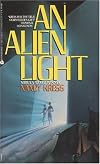
Nancy Kress clearly loves classic SF and the opening chapters of this novel appeared to be a straightforward implementation of that classic plot where aliens can't figure out what makes humans so special and successful.
I hate that plot! But I loved this book because unlike the shallow pat on the back "aren't we special" offerings of other authors (all male that I recall), Kress uses the situation to explore in depth what it means to be alien on several very personal levels. The storyline show more shares a number of features with King's more recent Under the Dome: humans who shouldn't be on the same coast are placed in a closed environment, with declining health and a crumbling moral and social structure. As in Under the Dome, there's a lot of violence, especially against women, and fear here, but unlike King there's a lot more being said about identity, how socially-defined values can make true communication near impossible, and how often and how deeply societies embed the mistreatment of women.
The weakest aspect of the book are the aliens who are studying the humans. A critical aspect of the "aren't humans special" plot is that the aliens have to be very advanced, convincingly alien, and clueless. I've yet to see a writer bring that combination off. Kress does no worse than the rest I suppose. Had she managed that, this would be 4, maybe even 5 stars. Highly recommended even so. show less
I hate that plot! But I loved this book because unlike the shallow pat on the back "aren't we special" offerings of other authors (all male that I recall), Kress uses the situation to explore in depth what it means to be alien on several very personal levels. The storyline show more shares a number of features with King's more recent Under the Dome: humans who shouldn't be on the same coast are placed in a closed environment, with declining health and a crumbling moral and social structure. As in Under the Dome, there's a lot of violence, especially against women, and fear here, but unlike King there's a lot more being said about identity, how socially-defined values can make true communication near impossible, and how often and how deeply societies embed the mistreatment of women.
The weakest aspect of the book are the aliens who are studying the humans. A critical aspect of the "aren't humans special" plot is that the aliens have to be very advanced, convincingly alien, and clueless. I've yet to see a writer bring that combination off. Kress does no worse than the rest I suppose. Had she managed that, this would be 4, maybe even 5 stars. Highly recommended even so. show less
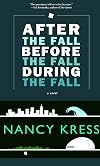
In recent years, I’ve hesitated to pick up a hard science fiction novel. The quantum physics one must be familiar with to enjoy the novel is so far beyond me that I feel I need a physics course or two as a prerequisite. It’s hard to appreciate a novel when you haven’t the faintest idea what’s going on.
Trust Nancy Kress to write a hard science fiction novella that is so clear, so precise and so well-written that the reader is never left behind. It is no surprise that After the Fall, show more Before the Fall, During the Fall has been nominated for a Nebula Award this year. It has finely drawn characters (especially Pete, from the future, and Julie, from the present), and is based (at least in the sections set “during the fall”) on solid scientific principals with a touch of imagination — just enough to power the plot.
The novella opens with Pete just beginning what we learn is a Grab: he is transported to the past for only ten minutes, during which he must grab whatever he can and bring it into the future with him. The top priority is young children, unaffected by the radiation that has poisoned his generation and rendered it mostly infertile. Pete, a young teenager, arrives near the ocean, but his delight in the scene is erased when he realizes all that has been destroyed by the Tesslies. The Tesslies, we learn, are entities about which nothing is known except that they reduced humankind to a mere handful of people eking out an existence in the Shell, a habitat the Tesslies provided for them. Pete is able to grab a toddler and a baby and bring them back with him.
In the next few pages, we switch to an omniscient point of view, narrowing in on a plateau in Brazil where bacteria is mutating at the base of the roots of coffee plants. We learn in subsequent chapters that this mutation essentially converts the bacteria to alcohol, destroying the roots, destroying plant life — and the same mutation is inexplicably happening at the same time in disparate corners of the globe.
Then we’re in the present, where Julie is working with the FBI on the kidnapping of the toddler and baby. The mother’s husband was killed in the kidnapping — not by Pete, but by the machinery that allows him to travel in time and space, through which adults may not pass. She is, understandably, hysterical, though her hysteria takes a form that makes it impossible to communicate with her. Julie has been working on a series of kidnappings, mathematically predicting where and when the next one will take place, and this brings her work closer to solving the puzzle.
As the book proceeds, we learn much more about Pete and the small community in which he lives, and the manner in which the adults are trying to preserve the good and obliterate the bad in their young charges. More than that, they are trying to rebuild the human race from a very small population. The group is scientifically oriented; the children do not even understand the religious references and hymns that the oldest member of the group often uses. They keep watch for changes in the world outside their Shell, waiting for the day when it is safe to venture out again. The one factor no one quite understands is the Tesslies. Are they aliens who invaded our world? Are they human creations? It isn’t even known if they are machines or biological organisms. We never do learn quite what their nature is, which is the only fault I find with the novella.
We also learn more about Julie, who, it turns out, is pregnant from an affair she had with the FBI agent with whom she was working. She leaves her full-time project with the FBI and prepares herself for the child she always wanted, but she continues to do independent consulting. More, she continues to work on the algorithms that she was preparing to predict the kidnappings. One of her projects, for a professor seeking to make a name for himself, reveals that big changes are coming to the world — and not for the good.
We learn more about those changes, too. They are not limited to bacterial mutation, but include enormous changes in the behavior of the Earth’s tectonic plates, increased volcanic activity, and other signs that the Earth is becoming hostile to its human infection.
Kress effectively guides the flow of all three of these narrative streams, ultimately bringing them to a confluence that is both frightening and uplifting. Kress’s skill shows in the intricacy of the plotting, the scientific knowledge, and the strong characterization. Although I’ve read only three of the Nebula-nominated novellas so far, I have to think that After the Fall has an excellent chance of claiming the rocket ship.
Originally published at http://www.fantasyliterature.com/reviews/after-the-fall/ show less
Trust Nancy Kress to write a hard science fiction novella that is so clear, so precise and so well-written that the reader is never left behind. It is no surprise that After the Fall, show more Before the Fall, During the Fall has been nominated for a Nebula Award this year. It has finely drawn characters (especially Pete, from the future, and Julie, from the present), and is based (at least in the sections set “during the fall”) on solid scientific principals with a touch of imagination — just enough to power the plot.
The novella opens with Pete just beginning what we learn is a Grab: he is transported to the past for only ten minutes, during which he must grab whatever he can and bring it into the future with him. The top priority is young children, unaffected by the radiation that has poisoned his generation and rendered it mostly infertile. Pete, a young teenager, arrives near the ocean, but his delight in the scene is erased when he realizes all that has been destroyed by the Tesslies. The Tesslies, we learn, are entities about which nothing is known except that they reduced humankind to a mere handful of people eking out an existence in the Shell, a habitat the Tesslies provided for them. Pete is able to grab a toddler and a baby and bring them back with him.
In the next few pages, we switch to an omniscient point of view, narrowing in on a plateau in Brazil where bacteria is mutating at the base of the roots of coffee plants. We learn in subsequent chapters that this mutation essentially converts the bacteria to alcohol, destroying the roots, destroying plant life — and the same mutation is inexplicably happening at the same time in disparate corners of the globe.
Then we’re in the present, where Julie is working with the FBI on the kidnapping of the toddler and baby. The mother’s husband was killed in the kidnapping — not by Pete, but by the machinery that allows him to travel in time and space, through which adults may not pass. She is, understandably, hysterical, though her hysteria takes a form that makes it impossible to communicate with her. Julie has been working on a series of kidnappings, mathematically predicting where and when the next one will take place, and this brings her work closer to solving the puzzle.
As the book proceeds, we learn much more about Pete and the small community in which he lives, and the manner in which the adults are trying to preserve the good and obliterate the bad in their young charges. More than that, they are trying to rebuild the human race from a very small population. The group is scientifically oriented; the children do not even understand the religious references and hymns that the oldest member of the group often uses. They keep watch for changes in the world outside their Shell, waiting for the day when it is safe to venture out again. The one factor no one quite understands is the Tesslies. Are they aliens who invaded our world? Are they human creations? It isn’t even known if they are machines or biological organisms. We never do learn quite what their nature is, which is the only fault I find with the novella.
We also learn more about Julie, who, it turns out, is pregnant from an affair she had with the FBI agent with whom she was working. She leaves her full-time project with the FBI and prepares herself for the child she always wanted, but she continues to do independent consulting. More, she continues to work on the algorithms that she was preparing to predict the kidnappings. One of her projects, for a professor seeking to make a name for himself, reveals that big changes are coming to the world — and not for the good.
We learn more about those changes, too. They are not limited to bacterial mutation, but include enormous changes in the behavior of the Earth’s tectonic plates, increased volcanic activity, and other signs that the Earth is becoming hostile to its human infection.
Kress effectively guides the flow of all three of these narrative streams, ultimately bringing them to a confluence that is both frightening and uplifting. Kress’s skill shows in the intricacy of the plotting, the scientific knowledge, and the strong characterization. Although I’ve read only three of the Nebula-nominated novellas so far, I have to think that After the Fall has an excellent chance of claiming the rocket ship.
Originally published at http://www.fantasyliterature.com/reviews/after-the-fall/ show less
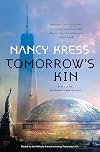
Wow, this book just never lets up. I kept trying to put it down and then I'd turn a page instead and not come up for air for hours. Tragic, hopeful, complex, interesting and thoughtful. Really, really enjoyable what-if with regards to alien contact and evolutionary paths.
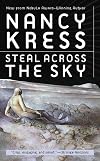
Humanity is contacted by an alien race calling itself the Atoners, who tell us that 10,000 years ago, they kidnapped a large number of humans and resettled them on other planets. They wish to atone for the terrible thing they did to humanity in the process, something which goes beyond the mere kidnapping, and they seek humans to volunteer to be Witnesses, who will travel to those other planets to observe the cultures that have developed. That observation, the Atoners believe, will allow us show more to understand what they have done to us.
The Witnesses are sent to seven sets of binary planets where the Atoners settled humans. We follow Cam and Lucca, the Witnesses on one planet pair where two very different cultures have developed. They are not archaeologists or specialists of any sort -- the Atoners have specifically avoided such people in choosing Witnesses -- so they have only their own instincts to guide their interactions with the natives.
The parallel stories of those two Witnesses are entertaining, with a sharply contrasting pair of intriguing cultures to be explored. Had the novel been entirely about those explorations, it would have been sufficient. But Kress brings that piece of the story to an end more quickly than I'd expected, and when we learn what it is that the Atoners are atoning for, her exploration of the fallout from that discovery is thoughtful and provocative. (Well, the short term fallout, at any rate; the novel ends with a reminder that the long range changes are going to be really interesting. While it doesn't quite rise to a full-on "here comes the sequel" tease, a return to look at how things have changed in 20 years or so would be more than welcome.)
Kress has been writing for more than 40 years now, and has a dozen or so major genre award nominations to her credit. She's never been a flashy or trendy author, and outside SF, she's probably best known for her regular "how to write" column for Writer's Digest. But she's a solidly reliable author, and you can count on her to provide well-considered speculation about technological/scientific change and its consequences, with a bit more attention to character and personality than is common in the genre. Steal Across the Sky is a good example of her work; it's a sturdy, well-constructed novel built around one big idea and its consequences. show less
The Witnesses are sent to seven sets of binary planets where the Atoners settled humans. We follow Cam and Lucca, the Witnesses on one planet pair where two very different cultures have developed. They are not archaeologists or specialists of any sort -- the Atoners have specifically avoided such people in choosing Witnesses -- so they have only their own instincts to guide their interactions with the natives.
The parallel stories of those two Witnesses are entertaining, with a sharply contrasting pair of intriguing cultures to be explored. Had the novel been entirely about those explorations, it would have been sufficient. But Kress brings that piece of the story to an end more quickly than I'd expected, and when we learn what it is that the Atoners are atoning for, her exploration of the fallout from that discovery is thoughtful and provocative. (Well, the short term fallout, at any rate; the novel ends with a reminder that the long range changes are going to be really interesting. While it doesn't quite rise to a full-on "here comes the sequel" tease, a return to look at how things have changed in 20 years or so would be more than welcome.)
Kress has been writing for more than 40 years now, and has a dozen or so major genre award nominations to her credit. She's never been a flashy or trendy author, and outside SF, she's probably best known for her regular "how to write" column for Writer's Digest. But she's a solidly reliable author, and you can count on her to provide well-considered speculation about technological/scientific change and its consequences, with a bit more attention to character and personality than is common in the genre. Steal Across the Sky is a good example of her work; it's a sturdy, well-constructed novel built around one big idea and its consequences. show less
Lists
Five star books (1)
Books with Twins (1)
Awards


You May Also Like


Associated Authors
Statistics
- Works
- 188
- Also by
- 244
- Members
- 12,944
- Popularity
- #1,804
- Rating
- 3.7
- Reviews
- 379
- ISBNs
- 332
- Languages
- 11
- Favorited
- 36
