
Robert Young Pelton
Author of Robert Young Pelton's the World's Most Dangerous Places
About the Author
Robert Young Pelton is also the author of Come Back Alive, his auto-biography, The Adventurist, and is a regular columnist for National Geographic Adventure. He produces and hosts a television series for Discovery and the Travel Channel, and appears frequently as an expert on current affairs and show more travel safety on CNN, FOX News, and other news networks. .010. show less
Works by Robert Young Pelton
Associated Works
American Soldier: Stories of Special Forces from Iraq to Afghanistan (Adrenaline) (2002) — Contributor — 22 copies
Boots on the Ground: Stories of American Soldiers from Iraq and Afghanistan (2004) — Contributor — 8 copies
Tagged
Common Knowledge
- Birthdate
- 1955-07-25
- Gender
- male
- Nationality
- USA
Canada
Members
Reviews
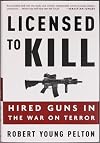
Pelton has a gift for getting people who should really know better to open up, like Chechnyan terrorists, Afghan warlords, ex-Special Forces mercenaries, and 21st century violence entrepreneurs like Erik Prince. Pelton also has a gift for getting in and out of dangerous places alive, pioneering the practice of "solo" journalism where one person does the writing, images, sound, etc. In Licensed to Kill, Pelton traces a journey through the shadowy world of the private military contractor, show more asking who these people are, and what this means for the future of warfare.
First, a little background. Mercenaries are about as old as warfare. The Carthaginians depended on mercenaries for their armies. Italian city-states warred with bands of paid soldiers called condoterri, literally meaning "contractor". Privateers and private adventurers and officers seconded to local powers have a long history. The 21st century version comes from the spread of valuable corporate property into violent and loosely governed areas, and the push to privatize non-core governmental functions. Someone has to guard the oil rigs in disputed zones. Someone has to escort local politicians and supply convoys, and it isn't going to be the US army. But where is the line between security and warfare?
One of Pelton's key experiences is with the Mamba squad, a Blackwater unit that regularly transits the notorious Route Irish from Baghdad's Green Zone to the Baghdad International Airport and back. Route Irish at the time was undoubtedly the most dangerous road in the world, with regular snipers, IEDs, and car bombs. The Blackwater team had three Mamba MRAPs and a soft-skinned cargo truck. Rules of engagement follow a four step process: hand signals, warning shots, shots to disable a vehicle, and then lethal fire. Every step beyond the first involves firing a machine gun in a populated area, and there's no accountability or legal consequences for bullets fired. Contractors in Iraqi had formal legal immunity, and then de facto legal immunity. Of course, getting it wrong means a violent death for you and your entire squad.
The frontline of Blackwater and similar units are typically former military. ex-Delta Force and SAS are at the top of the internal contractor pecking order, with other special forces, regular army and Marines, and ex-cops at the bottom (but cops know how to drive, and SEALs are notoriously trigger happy meatheads). A westerner at the time could earn perhaps $600 a day, which at the typical 90-on 30-off cycle and three deployments a year comes to $162,000 annually. The flipside is the risk of death or serious injury, with compensation of $68,000 to your survivors if that happens. Pelton mentions, but does not spend much time with, the third-party nationals Gurkhas, Chileans, and South Africans who take many of the same risks for a fraction of the cost, or local "campaigns" who bear arms against insurgencies composed of their fellow countrymen, which is the single major oversight of the book.
Contractors have a certain macho style, but by and large they're depicted as ordinary dudes who want to make money and go home. By comparisons, the leadership, Erik Prince and Simon Mann and Tim Spicer, of the British Executive Outcomes/Sandlines, are legitimate freaks, with a vision of Western imperialism and corporate profit. Private Military Companies serve to do what the government needs done, but mushy and morally muddled liberal democracies are unwilling to do directly.
One open question is where exactly the money goes. Hundreds of millions to billions of dollars in poorly supervised contracts have gone to PMCs for services in Iraq and Afghanistan, at prices that the companies argue have saved the US taxpayer and immense amount, while also making the owners and investors immensely wealthy. Likely, the savings come from cutting corners. In the infamous Blackwater Bridge incident in Falluja, a convoy escorting commercial kitchen equipment was sent into town without a risk assessment, proper briefing, without armored vehicles, and with half the gunners promised. Four Blackwater contractors died trying to move an oven.
Politically, PMCs have been involved in coup attempts in the 3rd world, with Equatorial Guinea and Papua New Guinea having attempted regime changes spearheaded by a mercenary group. No local country wants heavily armed and unaccountable foreigners roaming around. The shadowy and deniable world of contractors creates space for outright scam artists, like Jack Idema, who set up a private prison in Afghanistan and started kidnapping and torturing random Afghans while claiming he was working for the CIA.
Pelton tells a thrilling story, and mostly lets the subjects speak in their own words. He got closer than typical journalistic ethics allow (he later edited and substantially rewrote Erik Prince's autobiography), but this neutrality favorable contrasts to say, P. W. Singer, who was writing about PMCs at the same time and pointedly not going to Iraq. From the distance of two decades, Pelton notes that the contractors remind him a lot of the Mujahideen of the 1980s Soviet-Afghan War, and he wonders what will happen when the violent men return home.
It's nightmarish, but the converse is that while Blackwater and other PMCs likely killed a lot Iraqis, they didn't run Abu Ghraib, they didn't level Fallujah, and direct government employees are handling plenty of 2025 era crimes against humanity. Somehow events turned out worse than Pelton's worst case scenario. show less
First, a little background. Mercenaries are about as old as warfare. The Carthaginians depended on mercenaries for their armies. Italian city-states warred with bands of paid soldiers called condoterri, literally meaning "contractor". Privateers and private adventurers and officers seconded to local powers have a long history. The 21st century version comes from the spread of valuable corporate property into violent and loosely governed areas, and the push to privatize non-core governmental functions. Someone has to guard the oil rigs in disputed zones. Someone has to escort local politicians and supply convoys, and it isn't going to be the US army. But where is the line between security and warfare?
One of Pelton's key experiences is with the Mamba squad, a Blackwater unit that regularly transits the notorious Route Irish from Baghdad's Green Zone to the Baghdad International Airport and back. Route Irish at the time was undoubtedly the most dangerous road in the world, with regular snipers, IEDs, and car bombs. The Blackwater team had three Mamba MRAPs and a soft-skinned cargo truck. Rules of engagement follow a four step process: hand signals, warning shots, shots to disable a vehicle, and then lethal fire. Every step beyond the first involves firing a machine gun in a populated area, and there's no accountability or legal consequences for bullets fired. Contractors in Iraqi had formal legal immunity, and then de facto legal immunity. Of course, getting it wrong means a violent death for you and your entire squad.
The frontline of Blackwater and similar units are typically former military. ex-Delta Force and SAS are at the top of the internal contractor pecking order, with other special forces, regular army and Marines, and ex-cops at the bottom (but cops know how to drive, and SEALs are notoriously trigger happy meatheads). A westerner at the time could earn perhaps $600 a day, which at the typical 90-on 30-off cycle and three deployments a year comes to $162,000 annually. The flipside is the risk of death or serious injury, with compensation of $68,000 to your survivors if that happens. Pelton mentions, but does not spend much time with, the third-party nationals Gurkhas, Chileans, and South Africans who take many of the same risks for a fraction of the cost, or local "campaigns" who bear arms against insurgencies composed of their fellow countrymen, which is the single major oversight of the book.
Contractors have a certain macho style, but by and large they're depicted as ordinary dudes who want to make money and go home. By comparisons, the leadership, Erik Prince and Simon Mann and Tim Spicer, of the British Executive Outcomes/Sandlines, are legitimate freaks, with a vision of Western imperialism and corporate profit. Private Military Companies serve to do what the government needs done, but mushy and morally muddled liberal democracies are unwilling to do directly.
One open question is where exactly the money goes. Hundreds of millions to billions of dollars in poorly supervised contracts have gone to PMCs for services in Iraq and Afghanistan, at prices that the companies argue have saved the US taxpayer and immense amount, while also making the owners and investors immensely wealthy. Likely, the savings come from cutting corners. In the infamous Blackwater Bridge incident in Falluja, a convoy escorting commercial kitchen equipment was sent into town without a risk assessment, proper briefing, without armored vehicles, and with half the gunners promised. Four Blackwater contractors died trying to move an oven.
Politically, PMCs have been involved in coup attempts in the 3rd world, with Equatorial Guinea and Papua New Guinea having attempted regime changes spearheaded by a mercenary group. No local country wants heavily armed and unaccountable foreigners roaming around. The shadowy and deniable world of contractors creates space for outright scam artists, like Jack Idema, who set up a private prison in Afghanistan and started kidnapping and torturing random Afghans while claiming he was working for the CIA.
Pelton tells a thrilling story, and mostly lets the subjects speak in their own words. He got closer than typical journalistic ethics allow (he later edited and substantially rewrote Erik Prince's autobiography), but this neutrality favorable contrasts to say, P. W. Singer, who was writing about PMCs at the same time and pointedly not going to Iraq. From the distance of two decades, Pelton notes that the contractors remind him a lot of the Mujahideen of the 1980s Soviet-Afghan War, and he wonders what will happen when the violent men return home.
It's nightmarish, but the converse is that while Blackwater and other PMCs likely killed a lot Iraqis, they didn't run Abu Ghraib, they didn't level Fallujah, and direct government employees are handling plenty of 2025 era crimes against humanity. Somehow events turned out worse than Pelton's worst case scenario. show less
Robert Young Pelton's The World's Most Dangerous Places: 5th Edition (Robert Young Pelton the World's Most Dangero by Robert Young Pelton
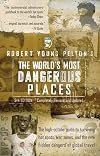
I almost didn't buy it. When I picked it up it looked more like a dictionary for travelers from the State Department than it did a novel. However, I plunged in and boy was I glad. Gritty reality - for each country what kind of bugs and parasites, can you bribe officials, how to get out of the country in a hurry, who is most likely to kill you, etc. As a result it kind of read like William Vollmann meets Special Forces. Highly recommend this one, and stick with it.

Being Australian and living in one of the safest countries on earth, one can get complacent about danger. So, it's always an education to open "The World's Most Dangerous Places" to a random page and see what the poor people in any given country have to deal with on a daily basis.
"The World's Most Dangerous Places" lists a range of countries and areas one would be best to avoid and the myriad reasons for avoiding them. Interestingly, I've been to ten of the countries listed as dangerous and show more survived visiting them all so I don't know if that makes me a hardened traveller or just particularly lucky.
Young Pelton sometimes sounds like he's bragging about all the dangers he's seen and I can imagine that if you were to meet him at the pub, his stories would get a bit tiresome after a while. So much better all round if you get the book and read at your pleasure. show less
"The World's Most Dangerous Places" lists a range of countries and areas one would be best to avoid and the myriad reasons for avoiding them. Interestingly, I've been to ten of the countries listed as dangerous and show more survived visiting them all so I don't know if that makes me a hardened traveller or just particularly lucky.
Young Pelton sometimes sounds like he's bragging about all the dangers he's seen and I can imagine that if you were to meet him at the pub, his stories would get a bit tiresome after a while. So much better all round if you get the book and read at your pleasure. show less
Robert Young Pelton's The World's Most Dangerous Places: 5th Edition (Robert Young Pelton the World's Most Dangerous Pl by Robert Young Pelton
Some people choose to travel in places less wandered. This is the book for them. Think of this as a travel book for places you wouldn't typically think to vacation in - and exactly how you would want to go about it. A who's who list of seedy places around the world, Pelton takes the time to quickly run thru the area's history - telling you where you most definitely should not want to go - and laying out exactly what puts the country on the questionable list It may surprise some to learn that show more the US is indeed on Pelton's infamous list - but after reading it you realize it's not much of a stretch to see that America can indeed be a dangerous place. show less
You May Also Like


Associated Authors
Statistics
- Works
- 11
- Also by
- 3
- Members
- 1,047
- Popularity
- #24,609
- Rating
- 3.7
- Reviews
- 12
- ISBNs
- 24
- Languages
- 2
- Favorited
- 2
