
Vonda N. McIntyre (1948–2019)
Author of Dreamsnake
About the Author
Vonda Neel McIntyre was born in Louisville, Kentucky on August 28, 1948. She received a bachelor's degree in biology from the University of Washington in 1970 and studied genetics there as a postgraduate until ending her studies in 1971. In 1973, her short story, Of Mist, Grass, and Sand, won a show more Nebula Award for best novelette. Her novel, Dreamsnake, won a Nebula Award and a Hugo Award in 1978. She wrote five Star Trek novels including The Entropy Effect and Enterprise: The First Adventure. Her other novels included Curve of the World and The Moon and the Sun, which won a Nebula Award in 1997. She died from pancreatic cancer on April 1, 2019 at the age of 70. (Bowker Author Biography) show less
Image credit: Photo by Beth Gwinn
Series
Works by Vonda N. McIntyre
Misprint 2 copies
The Curve of the World 2 copies
Night Harvest Cuvée Rouge 2 copies
The Curve of the World 1 copy
Steelcollar Worker 1 copy
Diamond Craters 1 copy
Cages {short story} 1 copy
Dreamsnake [excerpt] 1 copy
Associated Works
The Year's Best Science Fiction: Twenty-Third Annual Collection (2006) — Contributor — 564 copies, 5 reviews
Women of Wonder: Science Fiction Stories by Women about Women (1975) — Contributor — 369 copies, 5 reviews
The Norton Book of Science Fiction: North American Science Fiction, 1960-1990 (1993) — Contributor — 344 copies, 6 reviews
The New Women of Wonder: Recent Science Fiction Stories by Women about Women (1977) — Contributor — 197 copies, 5 reviews
Women of Wonder, the Classic Years: Science Fiction by Women from the 1940s to the 1970s (1995) — Contributor — 189 copies, 1 review
The Crystal Ship: Three Original Novellas of Science Fiction (1976) — Author — 165 copies, 2 reviews
The Science Fiction Hall of Fame, Volume Four: Nebula Winners 1970-1974 (1986) — Contributor — 132 copies, 1 review
Analog Anthology #1: Fifty Years of the Best Science Fiction From Analog (1980) — Contributor — 118 copies, 1 review
The Future Is Female! Volume Two, The 1970s: More Classic Science Fiction Storie s By Women: A Library of America Special Publication (2022) — Contributor — 108 copies, 3 reviews
The James Tiptree Award Anthology 3: Subversive Stories about Sex and Gender (2007) — Contributor — 98 copies, 2 reviews
Returning My Sister's Face: And Other Far Eastern Tales of Whimsy and Malice (2009) — Introduction, some editions — 94 copies, 6 reviews
The Best Science Fiction and Fantasy of the Year, Volume 10 (2016) — Contributor — 60 copies, 3 reviews
Thieves' World® Volume One: Thieves' World, Tales from the Vulgar Unicorn, and Shadows of Sanctuary (2020) — Contributor — 52 copies, 4 reviews
Nevertheless, She Persisted: A Book View Cafe Anthology (2017) — Contributor — 48 copies, 18 reviews
Visions of Tomorrow: Science Fiction Predictions that Came True (2010) — Contributor — 40 copies, 1 review
Analog Science Fiction/Science Fact: Vol. XCVI, No. 9 (September 1976) (1976) — Contributor — 30 copies
Analog Science Fiction/Science Fact: Vol. XCVIII, No. 3 (March 1978) (1978) — Contributor — 29 copies
Bloodchildren: Stories by the Octavia E. Butler Scholars (2013) — Contributor — 27 copies, 2 reviews
Analog Science Fiction/Science Fact: Vol. XCVIII, No. 2 (February 1978) (1978) — Contributor — 26 copies
Analog Science Fiction/Science Fact: Vol. XCII, No. 2 (October 1973) (1973) — Contributor — 24 copies
Tagged
Common Knowledge
- Legal name
- McIntyre, Vonda Neel
- Other names
- McIntyre, Vonda
- Birthdate
- 1948-08-28
- Date of death
- 2019-04-01
- Gender
- female
- Education
- University of Washington
Clarion West Writers Workshop - Occupations
- teacher
scientist
science fiction writer - Organizations
- Science Fiction and Fantasy Writers of America
American Civil Liberties Union
Book View Cafe
Authors Guild
Clarion West Writers Workshop - Awards and honors
- SF Hall Of Fame (2019)
- Cause of death
- cancer
- Nationality
- USA
- Birthplace
- Louisville, Kentucky, USA
- Places of residence
- Netherlands
- Place of death
- Seattle, Washington, USA
- Map Location
- USA
Members
Discussions
Found: A healer who uses snake venom in Name that Book (July 2021)
Vonda N. McIntyre 1948-2019 in Science Fiction Fans (April 2019)
Reviews
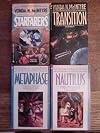
I read another reviewer describe this series as "what if first contact were handled by academics?" I think that's why I enjoyed it so much. Victoria, Stephen Thomas, Satoshi, and J.D. battle to keep politicians and military leaders out of their business because they believe so strongly in peaceful first contact and the sharing of knowledge. But they aren't treated just as academics, we get to know them intimately experiencing Victoria, Stephen Thomas, and Satoshi's poly partnership, J.D.'s show more deepest thoughts and feelings about her friends, and even her attachment to the alien squidmoth she befriends. A fantastic series, one that rekindled my affection for scifi on starships. show less

Stayed up until 2 am re-reading Superluminal. Something reminded me of this story, and I wanted to reacquaint myself with it. I particularly love the scene where Orca tells off Dr Kristen van de Graaf, the administrator who is supervising the debriefing of the pilots and crew from the unprecedented search and rescue success of a lost space ship and subjecting them to a battery of medical tests and generally keeping them locked away from everyone and everything:
At the hatch of the shuttle, show more Orca stopped short.
"Wait a minute," she said, "Where are you planning to take us?"
"Back to earth," Van de Graaf said.
"Very funny," Orca snapped. "Landing where?"
"White Sands."
"I can't land at White Sands."
"Why not?"
"Because I have no intention of being and arrested and interned as a prisoner of war. Surely you know that my family has never made peace with the United States government."
"After a moment of incomprehension, van de Graaf said, "Oh. I'd forgotten all about that. Surely in an emergency--"
"No! Even if they promised me free passage I wouldn't believe them. Besides, I'd be in trouble with my own people if I accepted it."
"We all have more important things to think about than ancient history."
"Do you think this is some kind of joke?" Orca said angrily. "It may be ancient history to you, but my family has an even longer memory than the U.S. Navy--and the U.S. Navy blows us out of the water whenever they have a chance. They still consider us traitors, if not spies."
"I'll get you a world council safe-conduct on the way down--"
"Let me explain it to you in terms you may understand, doctor," Orca said. "Not landing in the United States is in my contract."
I like the characters and the concepts in this story. Maybe the news story about researchers recording an apparent conversation between dolphins brought this novel to mind. Or returning to visit the PNW earlier this year (I so miss that area!).
Orca is a genetically engineered diver--humans adapted to become marine mammals who have formed clans with adoptive family ties to different whale species with whom they have created a shared society. The divers can still operate on land, and Orca has taken a job as a spaceship crew member, though some of the divers never interact with the landers, preferring to stay within their own territory, learning from the wisdom of the great whales, such as Orca's younger brother. I like this vision of a future where a subset of humanity has found a way to not only coexist with other dominant species, but to thrive with them in a cooperative society of mutual learning.
But actually, all of that is just backstory and subplot. The novel opens with Laenea Trevelyan waking up from the surgery to remove her heart. The story is really an exploration of love and loss, identity and transformation and even transcendence, in many flavors: star-crossed lovers whose passionate affair is intense but all too brief, family members who love but don't quite understand each other either, friends with mysterious pasts, the transition from crew to pilot, from sea to land to space, from the 3 dimensions that everyone experiences to higher dimensions that so few people can perceive or experience, the sacrifices and difficult choices people must make when they don't quite fit in anymore, and finding connections between the familiar and the alien.
The story is full of strong female characters--in fact, I think there might be more female characters than male, or perhaps they're at parity. But the men have strong roles too. And there is a great diversity of representation in terms of race and ethnicity--from a new world colonized by Australian aboriginals (and a crew member returning home to them), to crew and pilots with French Canadian, Japanese, Latino, eastern European, Russian, and various Anglo names. There's plenty of action, interesting characters, good dialogue, adventure and wonder. What more can you ask for in science fiction? show less
At the hatch of the shuttle, show more Orca stopped short.
"Wait a minute," she said, "Where are you planning to take us?"
"Back to earth," Van de Graaf said.
"Very funny," Orca snapped. "Landing where?"
"White Sands."
"I can't land at White Sands."
"Why not?"
"Because I have no intention of being and arrested and interned as a prisoner of war. Surely you know that my family has never made peace with the United States government."
"After a moment of incomprehension, van de Graaf said, "Oh. I'd forgotten all about that. Surely in an emergency--"
"No! Even if they promised me free passage I wouldn't believe them. Besides, I'd be in trouble with my own people if I accepted it."
"We all have more important things to think about than ancient history."
"Do you think this is some kind of joke?" Orca said angrily. "It may be ancient history to you, but my family has an even longer memory than the U.S. Navy--and the U.S. Navy blows us out of the water whenever they have a chance. They still consider us traitors, if not spies."
"I'll get you a world council safe-conduct on the way down--"
"Let me explain it to you in terms you may understand, doctor," Orca said. "Not landing in the United States is in my contract."
I like the characters and the concepts in this story. Maybe the news story about researchers recording an apparent conversation between dolphins brought this novel to mind. Or returning to visit the PNW earlier this year (I so miss that area!).
Orca is a genetically engineered diver--humans adapted to become marine mammals who have formed clans with adoptive family ties to different whale species with whom they have created a shared society. The divers can still operate on land, and Orca has taken a job as a spaceship crew member, though some of the divers never interact with the landers, preferring to stay within their own territory, learning from the wisdom of the great whales, such as Orca's younger brother. I like this vision of a future where a subset of humanity has found a way to not only coexist with other dominant species, but to thrive with them in a cooperative society of mutual learning.
But actually, all of that is just backstory and subplot. The novel opens with Laenea Trevelyan waking up from the surgery to remove her heart. The story is really an exploration of love and loss, identity and transformation and even transcendence, in many flavors: star-crossed lovers whose passionate affair is intense but all too brief, family members who love but don't quite understand each other either, friends with mysterious pasts, the transition from crew to pilot, from sea to land to space, from the 3 dimensions that everyone experiences to higher dimensions that so few people can perceive or experience, the sacrifices and difficult choices people must make when they don't quite fit in anymore, and finding connections between the familiar and the alien.
The story is full of strong female characters--in fact, I think there might be more female characters than male, or perhaps they're at parity. But the men have strong roles too. And there is a great diversity of representation in terms of race and ethnicity--from a new world colonized by Australian aboriginals (and a crew member returning home to them), to crew and pilots with French Canadian, Japanese, Latino, eastern European, Russian, and various Anglo names. There's plenty of action, interesting characters, good dialogue, adventure and wonder. What more can you ask for in science fiction? show less

The Exile Waiting by Vonda N. McIntyre
Like many good books, I think The Exile Waiting can be read on different levels. If I was still in my teens, I would probably feel that it is simply an engaging post-apocalyptic adventure story. More mature readers, though, will likely identify the complex web of dysfunctional and tragic relationships as what stands out most clearly. And it is these relationships which power much of the story.
The Exile Waiting (1975) is set in the same world as show more Dreamsnake (1978), but cannot really be considered a prequel. The characters are all different and the stories are unrelated, although there are points of convergence. In Dreamsnake, the people who have to fend for themselves in the outside world seem to imagine the inhabitants of Center (an enclosed enclave, and supposedly the last bastion of civilization remaining after a global nuclear war) as enjoying a high standard of living and technology, but in The Exile Waiting we see that in some ways they suffer more than their outdoor counterparts. In Dreamsnake, tunnels behind certain desert caves in which cave panthers dwell are thought to lead into Center, and these dark galleries beneath the city are the focus for some of the most important events in The Exile Waiting. Similar to Dreamsnake, this novel also features a strong female lead character, in this case a determined young girl named Mischa.
The overarching theme of the book seems to be how people react and behave under various forms of slavery. Some of the characters are bound in physical slavery, and some are controlled by manipulative individuals or by their own fears and vices. One is dependent on a certain kind of drug. Prejudice and mistreatment due to perceived differences or disabilities is another theme, and Mischa has to conceal carefully the way in which she is different from the others around her. Eventually, many of those who on the surface appear strongest prove to be weak, and those considered the weakest triumph through their reserves of inner strength and their willingness to learn and adapt.
The above description probably sounds somewhat grim and depressing, but I found the novel quite uplifting. Other reviewers have identified certain details they see as weaknesses in the plot, but I did not even notice these and they did not affect my enjoyment in any way. I think this work is at least as good as Dreamsnake, although I would not like to choose between the two books. After finishing The Exile Waiting, the reader can also ponder on the meaning of the title. show less
Like many good books, I think The Exile Waiting can be read on different levels. If I was still in my teens, I would probably feel that it is simply an engaging post-apocalyptic adventure story. More mature readers, though, will likely identify the complex web of dysfunctional and tragic relationships as what stands out most clearly. And it is these relationships which power much of the story.
The Exile Waiting (1975) is set in the same world as show more Dreamsnake (1978), but cannot really be considered a prequel. The characters are all different and the stories are unrelated, although there are points of convergence. In Dreamsnake, the people who have to fend for themselves in the outside world seem to imagine the inhabitants of Center (an enclosed enclave, and supposedly the last bastion of civilization remaining after a global nuclear war) as enjoying a high standard of living and technology, but in The Exile Waiting we see that in some ways they suffer more than their outdoor counterparts. In Dreamsnake, tunnels behind certain desert caves in which cave panthers dwell are thought to lead into Center, and these dark galleries beneath the city are the focus for some of the most important events in The Exile Waiting. Similar to Dreamsnake, this novel also features a strong female lead character, in this case a determined young girl named Mischa.
The overarching theme of the book seems to be how people react and behave under various forms of slavery. Some of the characters are bound in physical slavery, and some are controlled by manipulative individuals or by their own fears and vices. One is dependent on a certain kind of drug. Prejudice and mistreatment due to perceived differences or disabilities is another theme, and Mischa has to conceal carefully the way in which she is different from the others around her. Eventually, many of those who on the surface appear strongest prove to be weak, and those considered the weakest triumph through their reserves of inner strength and their willingness to learn and adapt.
The above description probably sounds somewhat grim and depressing, but I found the novel quite uplifting. Other reviewers have identified certain details they see as weaknesses in the plot, but I did not even notice these and they did not affect my enjoyment in any way. I think this work is at least as good as Dreamsnake, although I would not like to choose between the two books. After finishing The Exile Waiting, the reader can also ponder on the meaning of the title. show less
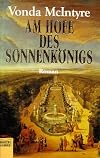
Marie-Josèphe has just become lady-in-waiting to Lotte, a niece of Louis XIV, the Sun King. Her brother, a Jesuit, returns from his adventures at sea and brings a pair of sea monsters to the court: The male is dead, but the female is still alive. The King wishes to possess such a creature because it is supposed to bring him immortality. Marie-Josèphe assists her brother with the autopsy and he gives her the task of feeding the female creature. A friendship grows between the human woman and show more the being from the sea, and Marie-Josèphe realizes that the creature is not a monster. She decides to save it, which means danger and maybe losing everything she cares for, including the favor of the king and of another man whom she has grown to admire.
This novel is long and includes many lavish descriptions of life at court, of the clothing, the food, the rooms, the customs, and its main players. These descriptions were never boring to me, though - not in the end of the 1990s, and not now. On the contrary, I felt like I discovered this world with Marie-Josèphe, I was impressed and enchanted like she was, until she has to decide what is more important: The freedom and life of a friend, or the dazzling theatre of Versailles.
Apart from being a portrait of the court, the novel explores topics of otherness, not only because of the sea monster, but also because of the character of Lucien, a man with achondroplasia.
I love how the relationship between Marie-Josèphe the creature develops, how they learn to communicate, and how their bond grows. There are heart breaking moments in this, but ultimately it is a novel about caring and kindness, and that we should not lose these traits no matter how the world around us reacts. show less
This novel is long and includes many lavish descriptions of life at court, of the clothing, the food, the rooms, the customs, and its main players. These descriptions were never boring to me, though - not in the end of the 1990s, and not now. On the contrary, I felt like I discovered this world with Marie-Josèphe, I was impressed and enchanted like she was, until she has to decide what is more important: The freedom and life of a friend, or the dazzling theatre of Versailles.
Apart from being a portrait of the court, the novel explores topics of otherness, not only because of the sea monster, but also because of the character of Lucien, a man with achondroplasia.
I love how the relationship between Marie-Josèphe the creature develops, how they learn to communicate, and how their bond grows. There are heart breaking moments in this, but ultimately it is a novel about caring and kindness, and that we should not lose these traits no matter how the world around us reacts. show less
Lists
Awards


You May Also Like


Associated Authors
Statistics
- Works
- 70
- Also by
- 77
- Members
- 14,535
- Popularity
- #1,580
- Rating
- 3.6
- Reviews
- 267
- ISBNs
- 271
- Languages
- 15
- Favorited
- 23

