
Joshua Furst
Author of The Sabotage Café
About the Author
Image credit: Olin Thomas
Works by Joshua Furst
Tagged
Common Knowledge
- Canonical name
- Furst, Joshua
- Birthdate
- 1971-03-19
- Gender
- male
- Education
- Tisch School of the Arts
Iowa Writers' Workshop - Occupations
- teacher
fiction writer - Organizations
- Eugene Lang College
Pratt Institute - Nationality
- USA
- Birthplace
- Boulder, Colorado, USA
- Places of residence
- New York, New York, USA
Wisconsin, USA - Associated Place (for map)
- USA
Members
Reviews

This novel is told from the grown-up perspective of Freedom, a child of counter-culture, revolutionary parents who were leading the peace-loving hippies of bohemian New York City toward a better future. For all of the peace Freedom’s parents, Lenny and Suzy, claimed to want, they certainly caused a lot of trauma for their own child.
Lenny was a social organizer of a sort, but it all seemed like chaos and anarchism. He used his own child to spread messages and provoke attention, not seeming show more to care how dangerous it was. He was narcissistic and egotistical and cruel. He wanted people to be who he wanted them to be. Of course, he could also be fun and spontaneous and depressed and sullen. Time passed and the world moved on without needing him or his causes any longer. When he was arrested for selling cocaine to undercover cops, his concern was focused himself and not his wife or child.
Freedom tells story after story of the ways he was on his own to fend for himself. He wanted to be helpful and to be what his parents wanted him to be, but also kept feeling like a failure. What he didn’t know then as a child but realizes now as an adult was that there was nothing he could do to make their lives better and that there never would be. It is a hard lesson to learn that you are never going to be able to fix someone else, you are never going to get the love from them you deserve, you are never going to get from them the level of attention they give to themselves, and that all of the focus and devotion you place on them will never be returned. show less
Lenny was a social organizer of a sort, but it all seemed like chaos and anarchism. He used his own child to spread messages and provoke attention, not seeming show more to care how dangerous it was. He was narcissistic and egotistical and cruel. He wanted people to be who he wanted them to be. Of course, he could also be fun and spontaneous and depressed and sullen. Time passed and the world moved on without needing him or his causes any longer. When he was arrested for selling cocaine to undercover cops, his concern was focused himself and not his wife or child.
Freedom tells story after story of the ways he was on his own to fend for himself. He wanted to be helpful and to be what his parents wanted him to be, but also kept feeling like a failure. What he didn’t know then as a child but realizes now as an adult was that there was nothing he could do to make their lives better and that there never would be. It is a hard lesson to learn that you are never going to be able to fix someone else, you are never going to get the love from them you deserve, you are never going to get from them the level of attention they give to themselves, and that all of the focus and devotion you place on them will never be returned. show less
This novel, a bitter fictional memoir of the miserable childhood of Abbie Hoffman's (here named Lenny Snyder) son Freedom (Fred), is a complete bummer of an abusive childhood. Some names are unredacted (folk singer Phil Ochs, pitifully sad; movement lawyer William Kuntsler, self-absorbed; Bobby Seale, hawking BBQ sauce) and some are disguised (Jerry Rubin, Eldridge and Kathleen Cleaver). Why? The narrative even inexplicably leaves out the trial of the Chicago Seven. I regret finishing this book.
Long dates between start and finish for this one. Picked up between other books as some of the stories in here are disturbing. Not for one read through. These are stories about kids to teens and traumatic experiences growing up. They range from sad to frightening but are compelling. The things that got to me were not so much the stories themselves but in between the stories are short blurbs and micro fictions that can be heartbreaking. Furst is a writer who should be better known. I show more recommend this collection. show less
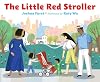
An inclusive picture book that celebrates sharing, connecting, variety, and community.
A stroller can provide convenience, transportation, and comfort for little ones and caregivers alike. The titular red stroller carries a young girl named Luna to school and the playground, as well as on weekend errands that include yummy pizza. When Luna outgrows the stroller, her mother passes it on to her neighbors. The stroller is next shared with a little girl and her father who visit her grandfather. show more Among the stroller’s owners are caregivers who are interracial, same-sex, Muslim, South Asian, single, and more, along with children who are multiracial and (probably) adopted, each depicted uniquely, with a wide variety of skin colors, body shapes, hairstyles, etc. The stroller-sharing device becomes a bit tedious (it changes hands nine times before it falls apart, to be replaced with a newer yellow stroller). Nevertheless, in today’s divisive society, this book’s message—however heavy-handed it might be—bears emphasizing. Wu’s bright, digital art offers a multitude of tiny details to discover, and sharp-eyed readers will find a series of colorful dots to help them follow the stroller’s travels. Vivid colors evoke the happiness the characters feel as they look out for one another.
Pair an array of characters that vary in gender, color, age, religion, size, and shape with a variety of settings, and you have a powerful message of inclusivity and diversity. (Picture book. 4-8)
-Kirkus Review show less
A stroller can provide convenience, transportation, and comfort for little ones and caregivers alike. The titular red stroller carries a young girl named Luna to school and the playground, as well as on weekend errands that include yummy pizza. When Luna outgrows the stroller, her mother passes it on to her neighbors. The stroller is next shared with a little girl and her father who visit her grandfather. show more Among the stroller’s owners are caregivers who are interracial, same-sex, Muslim, South Asian, single, and more, along with children who are multiracial and (probably) adopted, each depicted uniquely, with a wide variety of skin colors, body shapes, hairstyles, etc. The stroller-sharing device becomes a bit tedious (it changes hands nine times before it falls apart, to be replaced with a newer yellow stroller). Nevertheless, in today’s divisive society, this book’s message—however heavy-handed it might be—bears emphasizing. Wu’s bright, digital art offers a multitude of tiny details to discover, and sharp-eyed readers will find a series of colorful dots to help them follow the stroller’s travels. Vivid colors evoke the happiness the characters feel as they look out for one another.
Pair an array of characters that vary in gender, color, age, religion, size, and shape with a variety of settings, and you have a powerful message of inclusivity and diversity. (Picture book. 4-8)
-Kirkus Review show less
Lists
Awards

You May Also Like


Associated Authors
Statistics
- Works
- 5
- Members
- 172
- Popularity
- #124,307
- Rating
- 3.3
- Reviews
- 5
- ISBNs
- 17
- Languages
- 1
- Favorited
- 1
