
Isabel Colegate (1931–2023)
Author of The Shooting Party
About the Author
Isabel Colegate is the author of thirteen previous books, including the novels The Shooting Party, The Summer of the Royal Visit and, most recently, Winter Journey. She is married with three children and lives near Bath
Series
Works by Isabel Colegate
The Great Occasion 1 copy
Associated Works
Tagged
Common Knowledge
- Legal name
- Colegate, Isabel Diane (born)
Briggs, Isabel Diane (married) - Birthdate
- 1931-09-10
- Date of death
- 2023-03-12
- Gender
- female
- Education
- Runton Hill School
- Occupations
- novelist
secretary
literary critic - Awards and honors
- Royal Society of Literature (Fellow, 1981)
- Short biography
- Isabel Colegate left school at the age of 16. She went to work as a secretary in the small literary agency of flamboyant publisher Anthony Blond; he later published her books and helped in her successful writing career. Her novels often deal with the decline of the English aristocracy, the disintegration of class structures, and social change in the years immediately before and after World War I.
- Nationality
- UK
- Birthplace
- Lincolnshire, England, UK
- Places of residence
- Lincolnshire, England, UK (birth)
Norfolk, England, UK - Associated Place (for map)
- England, UK
Members
Reviews
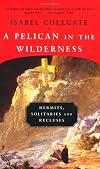
I picked up this book after searching my library’s catalogue for Isabel Colegate’s works, and was curious about this non-fiction work of hers (ok I was curious about all her works as I have yet to read her fiction). This is a book about the solitary, about hermits and recluses, and I wasn’t entirely sure why I felt compelled to search it out, but I did, and I took it home and it sat on my shelf for a little while, as I sought out what I felt to be the more interesting books in my show more recent Library Loot. Then I finally picked up A Pelican in the Wilderness, and I was pleasantly surprised. This book is less a scholarly treatise than a collection of thoughts, a wandering, a pondering of a subject that is so obviously dear to Colegate. Her passion for this topic is very affecting. So while at first hesitant, I grew to understand her ardor. What makes a person leave society behind and live on their own? Why do some of these hermits naturally attract a following? What is living all alone like? Colegate delves into the lives of the well-known and the obscure, often quoting from literary sources such as Somerset Maugham, Geoffrey Chaucer and Alexander Pope. She discusses the lives of Thoreau, J.D. Salinger, Lao-Tse, St Anthony, and many more.
But if you are truly looking for answers about becoming a hermit, this isn’t exactly the book for you. Instead, this book is a little more like an exploration, a revaluation of the solitary, a kind of selection of character sketches (although character sketch doesn’t seem to be the right word – it sounds too vague). Colegate’s journey is a meandering one, and at times disjointed which can occasionally frustrate, but A Pelican in the Wilderness is a wonderful voyage through a surprisingly refreshing topic, with Colegate’s passionate voice as a rather suitable tour guide.
“The idea of the hermit’s life – simplicity, devotion, closeness to nature – lurks somewhere on the periphery of most people’s consciousness, a way glimpsed, oddly familiar, not taken. It is like one of those tracks you sometimes see as you drive along a country road, a path leading up a hill and disappearing into a wood, almost painfully inviting, so that you long to stop the car and follow it, and perhaps you take your foot off the accelerator for a couple of seconds, no more. Most of us wouldn’t like it if we did walk up the hill, we’d become bored, depressed, uncomfortable, take to drink. But the idea is still there: the path we didn’t take.” show less
But if you are truly looking for answers about becoming a hermit, this isn’t exactly the book for you. Instead, this book is a little more like an exploration, a revaluation of the solitary, a kind of selection of character sketches (although character sketch doesn’t seem to be the right word – it sounds too vague). Colegate’s journey is a meandering one, and at times disjointed which can occasionally frustrate, but A Pelican in the Wilderness is a wonderful voyage through a surprisingly refreshing topic, with Colegate’s passionate voice as a rather suitable tour guide.
“The idea of the hermit’s life – simplicity, devotion, closeness to nature – lurks somewhere on the periphery of most people’s consciousness, a way glimpsed, oddly familiar, not taken. It is like one of those tracks you sometimes see as you drive along a country road, a path leading up a hill and disappearing into a wood, almost painfully inviting, so that you long to stop the car and follow it, and perhaps you take your foot off the accelerator for a couple of seconds, no more. Most of us wouldn’t like it if we did walk up the hill, we’d become bored, depressed, uncomfortable, take to drink. But the idea is still there: the path we didn’t take.” show less
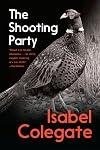
As he does every October, in 1913, Sir Randolph Nettleby, Bart., invites some of the best shots in England to his Oxfordshire estate to shoot pheasant. The activity has a particular meaning here, for we don’t expect tweed-coated gentlemen to trample through the underbrush in their wellingtons, bagging a few birds for supper.
Rather, we have the spectacle of “beaters,” local men and boys recruited to flush the pheasant so that the frightened birds take brief flight — the only type show more they are capable of — toward the tweed-coated gentlemen, waiting with their loaders and dogs. Not that the participants would agree, but this is more mechanized killing than sport. The shooters take hundreds of birds, and the loaders are there to make sure the gentlemen never even have to turn their heads to receive a ready weapon, restocked with cartridges.
The novel’s opening paragraph notes that an infamous incident will take place, “an error of judgment which resulted in a death.” And since the timing is the autumn before the Great War, Colegate intends The Shooting Party as a metaphor for England on the eve of that tragic struggle.
What a metaphor it is, slaughter for its own sake, by the so-called best people in the country, no less. That the death referred to is a mistake, and that the author reveals it up front, properly removes any sense of whodunit, though the narrative does build suspense as to who will be the victim, how, and why. Instead, Colegate focuses on the characters, who represent various social classes and attitudes.
In lesser hands, this premise and approach could have devolved into a talky, theme-driven tract, populated by two-dimensional ideas rather than characters. But Colegate writes well-drawn people whose private concerns merge beautifully in a single, cohesive picture, and whose opinions often seem contradictory, which makes them more human.
For example, Sir Randolph, courteous to all despite his oft-injured sensibilities, worries that the stewards of the land, as he views himself, are a vanishing breed. Outwardly almost diffident, he nevertheless carries himself as the aristocrat born to rule, and his confusion as to how the world has changed lends him depth.
Stolid Bob Lilburn, who believes in form above all, astonishes his gorgeous wife, Olivia, by doubting that there could exist in England any people worth knowing whom he doesn’t already know. Lionel Stephens, a lawyer who seems perfect to everyone, believes he’s passionately in love with Olivia and would be willing to die for her if the fraught international situation brought war. A footman repeats this sentiment to the young parlor maid he fancies, who has the sense to think it’s twaddle.
Throughout, Colegate’s description of the shoot evokes the future conflict, often involving the manner in which the birds, fed and catered to before their destruction, are driven toward the guns. Again, a lesser author might have overplayed the symbolism, but Colegate’s hand remains deft. That’s because she’s careful to keep her descriptions active as well as physically and visually precise.
Though published forty years ago, The Shooting Party still keeps its edge. It’s one of those elegant novels I admire, in which the central action is itself an arresting metaphor. I must warn you that other than from a library (or sources in the UK), the book may be hard to find. But it is well worth your time and effort, a classic tale. show less
Rather, we have the spectacle of “beaters,” local men and boys recruited to flush the pheasant so that the frightened birds take brief flight — the only type show more they are capable of — toward the tweed-coated gentlemen, waiting with their loaders and dogs. Not that the participants would agree, but this is more mechanized killing than sport. The shooters take hundreds of birds, and the loaders are there to make sure the gentlemen never even have to turn their heads to receive a ready weapon, restocked with cartridges.
The novel’s opening paragraph notes that an infamous incident will take place, “an error of judgment which resulted in a death.” And since the timing is the autumn before the Great War, Colegate intends The Shooting Party as a metaphor for England on the eve of that tragic struggle.
What a metaphor it is, slaughter for its own sake, by the so-called best people in the country, no less. That the death referred to is a mistake, and that the author reveals it up front, properly removes any sense of whodunit, though the narrative does build suspense as to who will be the victim, how, and why. Instead, Colegate focuses on the characters, who represent various social classes and attitudes.
In lesser hands, this premise and approach could have devolved into a talky, theme-driven tract, populated by two-dimensional ideas rather than characters. But Colegate writes well-drawn people whose private concerns merge beautifully in a single, cohesive picture, and whose opinions often seem contradictory, which makes them more human.
For example, Sir Randolph, courteous to all despite his oft-injured sensibilities, worries that the stewards of the land, as he views himself, are a vanishing breed. Outwardly almost diffident, he nevertheless carries himself as the aristocrat born to rule, and his confusion as to how the world has changed lends him depth.
Stolid Bob Lilburn, who believes in form above all, astonishes his gorgeous wife, Olivia, by doubting that there could exist in England any people worth knowing whom he doesn’t already know. Lionel Stephens, a lawyer who seems perfect to everyone, believes he’s passionately in love with Olivia and would be willing to die for her if the fraught international situation brought war. A footman repeats this sentiment to the young parlor maid he fancies, who has the sense to think it’s twaddle.
Throughout, Colegate’s description of the shoot evokes the future conflict, often involving the manner in which the birds, fed and catered to before their destruction, are driven toward the guns. Again, a lesser author might have overplayed the symbolism, but Colegate’s hand remains deft. That’s because she’s careful to keep her descriptions active as well as physically and visually precise.
Though published forty years ago, The Shooting Party still keeps its edge. It’s one of those elegant novels I admire, in which the central action is itself an arresting metaphor. I must warn you that other than from a library (or sources in the UK), the book may be hard to find. But it is well worth your time and effort, a classic tale. show less
Like a voice out of the past, this sad, beautiful novel so evocatively recreates the texture, language, and mores of Edwardian England. Colegate pulls off the magic trick of making this novel feel so utterly of the period, something that only the best historical fiction can achieve. The number of characters feels a little overwhelming for such a short book, but I think for the most part Colegate succeeds in making them all distinct. The book takes place during a pheasant shoot on a large show more country estate the fall before the outbreak of World War I. The specter of the war and of a looming death (announced in the first sentence of the book) gives the novel an airless, foreboding feeling despite the luminous writing and gorgeous setting.
I did not know anything about this author until now; her style reminded me of some other British/Commonwealth female novelists of about the same age, Jane Gardam and Shirley Hazzard, whom I also read for the first time this year. All three are superb at showing, obliquely through action and dialogue, the motivations and feelings of their characters.
This book comes out of a long tradition of similar works in British fiction; as the reviewer below noted, The Shooting Party adds to that tradition, inspiring in its turn the screenwriting work of Julian Fellowes. Colegate's wistful but guarded love letter to the Edwardians has clear echoes in Fellowes's own interpretation of the era, Downton Abbey. I will certainly have to investigate other of her novels! show less
I did not know anything about this author until now; her style reminded me of some other British/Commonwealth female novelists of about the same age, Jane Gardam and Shirley Hazzard, whom I also read for the first time this year. All three are superb at showing, obliquely through action and dialogue, the motivations and feelings of their characters.
This book comes out of a long tradition of similar works in British fiction; as the reviewer below noted, The Shooting Party adds to that tradition, inspiring in its turn the screenwriting work of Julian Fellowes. Colegate's wistful but guarded love letter to the Edwardians has clear echoes in Fellowes's own interpretation of the era, Downton Abbey. I will certainly have to investigate other of her novels! show less

"The element of ritual lent it a kind of solemnity; like so many rituals it required a sacrifice"
By sally tarbox on 21 June 2018
Format: Kindle Edition
It's 1913 and in an aristocratic household, a group come together for a shooting party. In the first paragraph the author tells us that it culminated in "an error of judgement that resulted in a death...a mild scandal at the time."
So the reader is trying to guess throughout the narrative of the preceding twenty-four hours who will be the show more victim...the highly strung grandson who fears for his pet duck as the shooters blast the wildfowl? The gamekeeper's studious son who's been roped in as a beater? One of the participants in extra marital liaisons? The two menservants in competition over whose master is the best shot? The socialist eccentric who's turned up preaching animal rights and equality for the poor?
The novel (inspiration for the later Gosford Park and Downton Abbey) focuses on both above and below stairs, and gives a flavour of the world on the cusp of war, the endless loss of bird life an image of what is to follow...
Enjoyable read. show less
By sally tarbox on 21 June 2018
Format: Kindle Edition
It's 1913 and in an aristocratic household, a group come together for a shooting party. In the first paragraph the author tells us that it culminated in "an error of judgement that resulted in a death...a mild scandal at the time."
So the reader is trying to guess throughout the narrative of the preceding twenty-four hours who will be the show more victim...the highly strung grandson who fears for his pet duck as the shooters blast the wildfowl? The gamekeeper's studious son who's been roped in as a beater? One of the participants in extra marital liaisons? The two menservants in competition over whose master is the best shot? The socialist eccentric who's turned up preaching animal rights and equality for the poor?
The novel (inspiration for the later Gosford Park and Downton Abbey) focuses on both above and below stairs, and gives a flavour of the world on the cusp of war, the endless loss of bird life an image of what is to follow...
Enjoyable read. show less
Lists
Spirit of Place (1)
Reading LIst (1)
Awards


You May Also Like


Associated Authors
Statistics
- Works
- 16
- Also by
- 3
- Members
- 1,312
- Popularity
- #19,573
- Rating
- 3.9
- Reviews
- 17
- ISBNs
- 71
- Languages
- 4
- Favorited
- 1