
Bradford Morrow
Author of The Forgers
About the Author
Bradford Morrow is a professor of literature at Bard College and is founder and editor of the literary journal Conjunctions. He lives in New York.
Image credit: Photo credit: Michael Eastman
Series
Works by Bradford Morrow
Catalogue Nine 1 copy
A Bestiary 1 copy
A writer's aviary 1 copy
Os Falsários 1 copy
Gardener Of Heart 1 copy
CREWDSON 1999 GREGORY. 1 copy
Associated Works
A Convergence of Birds: Original Fiction and Poetry Inspired by Joseph Cornell (2001) — Contributor — 207 copies, 2 reviews
Bibliomysteries, Volume Two: Stories of Crime in the World of Books and Bookstores (2018) — Contributor — 80 copies, 3 reviews
ParaSpheres: Extending Beyond the Spheres of Literary and Genre Fiction: Fabulist and New Wave Fabulist Stories (2006) — Contributor — 65 copies
Tamarisk, Volume V, Number 3/4, Summer/Fall 1983 — Contributor — 1 copy
Tagged
Common Knowledge
- Birthdate
- 1951-04-08
- Gender
- male
- Education
- University of Colorado
- Occupations
- novelist
editor
essayist
poet - Organizations
- Bard College
- Awards and honors
- American Academy of Arts and Letters Academy Award (Literature, 1998)
- Agent
- Henry Dunow
- Nationality
- USA
- Birthplace
- Baltimore, Maryland, USA
- Places of residence
- Honduras
New York, New York, USA
Littleton, Colorado, USA
Cuneo, Italy
Ithaca, New York, USA
Santa Barbara, California, USA - Associated Place (for map)
- USA
Members
Reviews
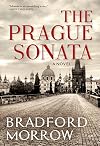
First, full disclosure. I gained early access to this book with the understanding that I would write an impartial review AND I requested that access because I read a lot about the two world wars and the book's description indicated it was related to Prague during World War II.
PRAGUE SONATA is a great read! It's suspenseful, has interesting and multi-dimensional characters and takes the reader deep inside the world of professional musicians and musicologists. One of the novel's main show more characters is an old music score that just might turn out to be extremely valuable. As it turns out, the story is only tangentially related to Prague during World War II. It's much more focused on the passion people often have for music.
There are two women central to the plot:
• One is a young Czech woman, Otylie, who inherited the mysterious musical score as a precious legacy from her father. And she is determined to keep it out of the hands of the occupying Nazis. She divides the score into its three movements, holds onto one, gives another to her best friend, and gives the last third to her husband, just as he is about to disappear into the Czech underground. Otylie hopes the score of the sonata will provide a link to help these three people reunite when the war ends.
• The second woman is Meta, a pianist whose promising career ascent was cut short by a car accident. Redirecting her energy into the world of musicology, she happens upon one piece of the sonata, decades after Otylie divided the score. Something about the music intrigues her so deeply that Meta leaves her life in New York in order to search for the other two missing movements.
Along the way -- traveling to Prague, London, and several midwest states -- she relies on guidance from a former teacher-mentor, as her quest to hunt down the sonata's missing pieces leads her to survivors of the war, former collaborators, unscrupulous music experts, and a struggling free-lance journalist who smells a good story.
The novel moves back and forth in time, slowly unraveling both Meta's search and Otylie's life. At times the back and forth felt a little clunky, sometimes too abrupt, other times the switch came in an awkward place. And a few new characters were introduced quite late in the book.
It is obvious that the author did quite a bit of research on musicology. And when any author approaches writing a novel with a particular knowledge base, it's often difficult to find the right mix of just enough detail to make the book authentic and interesting without that detail becoming distracting or tiresome. There were moments when I felt Morrow crossed the line into the realm of pedagogy -- too eager to include some obscure detail that was of minimal interest or relevance to the plot. But that did not wind up interfering in my overall enjoyment of the book. show less
PRAGUE SONATA is a great read! It's suspenseful, has interesting and multi-dimensional characters and takes the reader deep inside the world of professional musicians and musicologists. One of the novel's main show more characters is an old music score that just might turn out to be extremely valuable. As it turns out, the story is only tangentially related to Prague during World War II. It's much more focused on the passion people often have for music.
There are two women central to the plot:
• One is a young Czech woman, Otylie, who inherited the mysterious musical score as a precious legacy from her father. And she is determined to keep it out of the hands of the occupying Nazis. She divides the score into its three movements, holds onto one, gives another to her best friend, and gives the last third to her husband, just as he is about to disappear into the Czech underground. Otylie hopes the score of the sonata will provide a link to help these three people reunite when the war ends.
• The second woman is Meta, a pianist whose promising career ascent was cut short by a car accident. Redirecting her energy into the world of musicology, she happens upon one piece of the sonata, decades after Otylie divided the score. Something about the music intrigues her so deeply that Meta leaves her life in New York in order to search for the other two missing movements.
Along the way -- traveling to Prague, London, and several midwest states -- she relies on guidance from a former teacher-mentor, as her quest to hunt down the sonata's missing pieces leads her to survivors of the war, former collaborators, unscrupulous music experts, and a struggling free-lance journalist who smells a good story.
The novel moves back and forth in time, slowly unraveling both Meta's search and Otylie's life. At times the back and forth felt a little clunky, sometimes too abrupt, other times the switch came in an awkward place. And a few new characters were introduced quite late in the book.
It is obvious that the author did quite a bit of research on musicology. And when any author approaches writing a novel with a particular knowledge base, it's often difficult to find the right mix of just enough detail to make the book authentic and interesting without that detail becoming distracting or tiresome. There were moments when I felt Morrow crossed the line into the realm of pedagogy -- too eager to include some obscure detail that was of minimal interest or relevance to the plot. But that did not wind up interfering in my overall enjoyment of the book. show less

This sequel to Bradford Morrow's, "The Forgers" is a thought-provoking tale of antiquarian book forging, a failed attempt of breaking free from one's criminal past, and of a tortured soul conflicted between a desire to to stay clean yet also desiring to protect his family from great harm. It's a story of many secrets where every character has them or may even be one. The writing is superlative. It displays the author's love for the written word as well as his ability to paint well the show more landscape of place as well as that of the mind. The book is part mystery, part psychological thriller and has a fair amount of historical and technical detail related to the fine art of forging historic documents. It also speaks well to the involved process of assessing provenance of historical masterworks from which the forgeries are made. The vast amount of research gathered for this story is most evident and handily shared throughout the book.
A bit about the story -
After twenty years of living a crime-free life, our protagonist and former forger, Will, is coerced, if not blackmailed into creating an exact replica of Edgar Allen Poe's rare imprint of his first book, "Tamerlane". The person seemingly behind this distasteful plan is an old "colleague" of Will's from his former life, with a bit of an axe to grind, who claims to hold damning evidence of a horrific crime perpetrated by Will. What choice does Will have but to do as told and hopefully place this scoundrel in his rear-view mirror for good. To complete the forgery, Will must draw upon the burgeoning artistic talents of his twenty-something year old daughter, Nicole. She is as gifted as her father if not even more so.
In alternating chapters, we hear the voices of Will and his beloved wife, Meghan as they provide a delicate counterpoint - he, trying to protect his family from his disgraceful past and she, fretting about the "masterwork" created by father and daughter, toiling over an old letterpress behind closed doors - their world; not hers. All this to appease a criminal?!!
To this reader, the technical detail and painterly descriptions of scene and senses were captivating. Yet there was also a touch of the macabre which was found to be a bit repulsive. Regardless, the narratives are beautifully rendered, the plot was twisted and went in unimaginable directions. The ending felt disappointingly abrupt, leaving this reader with a myriad of unanswered questions. Perhaps this is just an indication that there will be a third installment in this forger's tale. Only time will tell.
I am grateful to publisher Grove Atlantic for having provided a complimentary electronic uncorrected proof of this work through NetGalley. Their generosity, however, has not influenced this review - the words of which are mine alone. show less
A bit about the story -
After twenty years of living a crime-free life, our protagonist and former forger, Will, is coerced, if not blackmailed into creating an exact replica of Edgar Allen Poe's rare imprint of his first book, "Tamerlane". The person seemingly behind this distasteful plan is an old "colleague" of Will's from his former life, with a bit of an axe to grind, who claims to hold damning evidence of a horrific crime perpetrated by Will. What choice does Will have but to do as told and hopefully place this scoundrel in his rear-view mirror for good. To complete the forgery, Will must draw upon the burgeoning artistic talents of his twenty-something year old daughter, Nicole. She is as gifted as her father if not even more so.
In alternating chapters, we hear the voices of Will and his beloved wife, Meghan as they provide a delicate counterpoint - he, trying to protect his family from his disgraceful past and she, fretting about the "masterwork" created by father and daughter, toiling over an old letterpress behind closed doors - their world; not hers. All this to appease a criminal?!!
To this reader, the technical detail and painterly descriptions of scene and senses were captivating. Yet there was also a touch of the macabre which was found to be a bit repulsive. Regardless, the narratives are beautifully rendered, the plot was twisted and went in unimaginable directions. The ending felt disappointingly abrupt, leaving this reader with a myriad of unanswered questions. Perhaps this is just an indication that there will be a third installment in this forger's tale. Only time will tell.
I am grateful to publisher Grove Atlantic for having provided a complimentary electronic uncorrected proof of this work through NetGalley. Their generosity, however, has not influenced this review - the words of which are mine alone. show less
First, full disclosure. I gained early access to this book with the understanding that I would write an impartial review AND I requested that access because I read a lot about the two world wars and the book's description indicated it was related to Prague during World War II.
PRAGUE SONATA is a great read! It's suspenseful, has interesting and multi-dimensional characters and takes the reader deep inside the world of professional musicians and musicologists. One of the novel's main show more characters is an old music score that just might turn out to be extremely valuable. As it turns out, the story is only tangentially related to Prague during World War II. It's much more focused on the passion people often have for music.
There are two women central to the plot:
• One is a young Czech woman, Otylie, who inherited the mysterious musical score as a precious legacy from her father. And she is determined to keep it out of the hands of the occupying Nazis. She divides the score into its three movements, holds onto one, gives another to her best friend, and gives the last third to her husband, just as he is about to disappear into the Czech underground. Otylie hopes the score of the sonata will provide a link to help these three people reunite when the war ends.
• The second woman is Meta, a pianist whose promising career ascent was cut short by a car accident. Redirecting her energy into the world of musicology, she happens upon one piece of the sonata, decades after Otylie divided the score. Something about the music intrigues her so deeply that Meta leaves her life in New York in order to search for the other two missing movements.
Along the way -- traveling to Prague, London, and several midwest states -- she relies on guidance from a former teacher-mentor, as her quest to hunt down the sonata's missing pieces leads her to survivors of the war, former collaborators, unscrupulous music experts, and a struggling free-lance journalist who smells a good story.
The novel moves back and forth in time, slowly unraveling both Meta's search and Otylie's life. At times the back and forth felt a little clunky, sometimes too abrupt, other times the switch came in an awkward place. And a few new characters were introduced quite late in the book.
It is obvious that the author did quite a bit of research on musicology. And when any author approaches writing a novel with a particular knowledge base, it's often difficult to find the right mix of just enough detail to make the book authentic and interesting without that detail becoming distracting or tiresome. There were moments when I felt Morrow crossed the line into the realm of pedagogy -- too eager to include some obscure detail that was of minimal interest or relevance to the plot. But that did not wind up interfering in my overall enjoyment of the book. show less
PRAGUE SONATA is a great read! It's suspenseful, has interesting and multi-dimensional characters and takes the reader deep inside the world of professional musicians and musicologists. One of the novel's main show more characters is an old music score that just might turn out to be extremely valuable. As it turns out, the story is only tangentially related to Prague during World War II. It's much more focused on the passion people often have for music.
There are two women central to the plot:
• One is a young Czech woman, Otylie, who inherited the mysterious musical score as a precious legacy from her father. And she is determined to keep it out of the hands of the occupying Nazis. She divides the score into its three movements, holds onto one, gives another to her best friend, and gives the last third to her husband, just as he is about to disappear into the Czech underground. Otylie hopes the score of the sonata will provide a link to help these three people reunite when the war ends.
• The second woman is Meta, a pianist whose promising career ascent was cut short by a car accident. Redirecting her energy into the world of musicology, she happens upon one piece of the sonata, decades after Otylie divided the score. Something about the music intrigues her so deeply that Meta leaves her life in New York in order to search for the other two missing movements.
Along the way -- traveling to Prague, London, and several midwest states -- she relies on guidance from a former teacher-mentor, as her quest to hunt down the sonata's missing pieces leads her to survivors of the war, former collaborators, unscrupulous music experts, and a struggling free-lance journalist who smells a good story.
The novel moves back and forth in time, slowly unraveling both Meta's search and Otylie's life. At times the back and forth felt a little clunky, sometimes too abrupt, other times the switch came in an awkward place. And a few new characters were introduced quite late in the book.
It is obvious that the author did quite a bit of research on musicology. And when any author approaches writing a novel with a particular knowledge base, it's often difficult to find the right mix of just enough detail to make the book authentic and interesting without that detail becoming distracting or tiresome. There were moments when I felt Morrow crossed the line into the realm of pedagogy -- too eager to include some obscure detail that was of minimal interest or relevance to the plot. But that did not wind up interfering in my overall enjoyment of the book. show less

Historical fiction about a young woman’s search to recover the separated movements of a sonata. As a child living in Prague, Otylie inherits a musical score from her father, who was killed in WWI. She breaks the score into three parts to hide it from the Nazis during WWII. In 2000, an elderly woman entrusts one of the parts to Meta, a musicologist and former concert pianist. Meta feels compelled to put her current life on hold to pursue the missing pieces. Her search takes her to the city show more of Prague, where she meets a variety of colorful characters, some of whom prove helpful, while others attempt to sabotage her efforts.
The writing is beautifully descriptive, especially the details about life in Prague. The storyline encompasses many timeless themes, such as family relationships, friendship, the far-reaching impacts of war, love, sacrifice, betrayal, idealism vs. pragmatism, and music as a source of inspiration and motivation. The story spans multiple time lines, including WWI, WWII, 1989, and 2000, and tends to jump backward and forward frequently. It is extremely detailed in places and includes musical jargon that may not be familiar to all readers. The upside of this use of musically descriptive language is the author’s ability to present an almost audible quality to the work. In addition to being an entertaining reading experience, I thought the author skillfully conveyed a message about the importance of preserving art and music for the enjoyment of future generations.
Recommended to classical music lovers and those interested in Czech history or culture. I requested and received an advance copy of this book from the publisher via NetGalley in return for a candid review. It is scheduled to be released on 10/3/17. show less
The writing is beautifully descriptive, especially the details about life in Prague. The storyline encompasses many timeless themes, such as family relationships, friendship, the far-reaching impacts of war, love, sacrifice, betrayal, idealism vs. pragmatism, and music as a source of inspiration and motivation. The story spans multiple time lines, including WWI, WWII, 1989, and 2000, and tends to jump backward and forward frequently. It is extremely detailed in places and includes musical jargon that may not be familiar to all readers. The upside of this use of musically descriptive language is the author’s ability to present an almost audible quality to the work. In addition to being an entertaining reading experience, I thought the author skillfully conveyed a message about the importance of preserving art and music for the enjoyment of future generations.
Recommended to classical music lovers and those interested in Czech history or culture. I requested and received an advance copy of this book from the publisher via NetGalley in return for a candid review. It is scheduled to be released on 10/3/17. show less
Lists
Awards


You May Also Like


Associated Authors
Statistics
- Works
- 88
- Also by
- 16
- Members
- 2,169
- Popularity
- #11,839
- Rating
- 3.5
- Reviews
- 91
- ISBNs
- 211
- Languages
- 6
- Favorited
- 1
