
Lynne Tillman
Author of Bookstore: The Life and Times of Jeannette Watson and Books & Co.
About the Author
Lynne Tillman should be awarded a special Pulitzer for the most perfect use of the word moron in the history of the American novel-Fran Lebowitz
Works by Lynne Tillman
Associated Works
This Is Not Chick Lit: Original Stories by America's Best Women Writers (2006) — Contributor — 362 copies, 3 reviews
The New Gothic: A Collection of Contemporary Gothic Fiction (1991) — Contributor — 274 copies, 2 reviews
Wrestling with Zion: Progressive Jewish-American Responses to the Israeli-Palestinian Conflict (2003) — Contributor — 84 copies, 1 review
And We Came Outside and Saw the Stars Again: Writers from Around the World on the COVID-19 Pandemic (2020) — Contributor — 16 copies
Raw No. 4: The Graphix Magazine for Your Bomb Shelter's Coffee Table (1982) — Contributor — 13 copies
Telephone 16 — Contributor — 1 copy
Tagged
Common Knowledge
- Birthdate
- 1947
- Gender
- female
- Occupations
- novelist
short story writer
professor
cultural critic - Organizations
- University at Albany, SUNY
- Relationships
- Hofstra, David (partner)
- Nationality
- USA
- Places of residence
- Manhattan, New York, USA
- Associated Place (for map)
- New York, USA
Members
Reviews
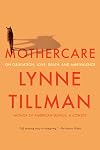
“Life doesn’t proceed in an orderly way. It frustrates people who need to control every part of their lives, who go berserk when anything changes on them. Life doesn’t allow it, total control, and things will go south, and north, every which unexpected way.”
“I thought I knew my limits, I thought I should have limits, but limits and boundaries are erased and erected and erased again. There is nothing stable when dealing with a parent or friend whose condition is essentially show more unstable.”
Lynne Tillman initially presents her mother, Sophie—whose final years are the subject of this book—as she imagines her when young: talented and ambitious, a girl who dreamt of painting and writing. Marriage had apparently changed everything for her. This attractive, smart, and resourceful woman had tried to contort herself into the ideal 1950s American wife and mother: she stayed home and raised three daughters in the suburbs. It made her very angry. When her husband retired, the couple moved to Florida. After his death in 1984, her eldest daughter found her an ideal Manhattan apartment. Nearly 79 years old, Sophie was finally back in the lively city of her birth, the place where she belonged.
She spent seven-and-a-half years strolling the streets she loved and enjoying all that New York had to offer. But that’s not what this book is about. Its focus is the eleven years that Tillman and her two older sisters cared for Sophie when she became ill. “Keeping her alive was done generously,” writes the author, “but not selflessly.” Since childhood, Lynne had disliked her mother, so being involved in her care for such a long period was “a gruelling obligation.” Life felt “narrower”, “disturbed by emergencies, eruptions, and thudding repetitions.” Time was being “stolen” by her parent. A paragon of rationality, practicality, and organizational ability Sophie may have been, but she was also blunt, rude, arrogant, competitive, narcissistic, and envious of her daughters—the youngest in particular. It is the tension between ego and superego—the author’s actual feelings towards her parent and the sense of obligation to her—that makes this memoir so compelling.
Tillman makes it clear that she’s not speaking for her sisters here; the reflections in the book are hers alone. Late in the memoir, she explains why her reactions to the circumstances were unlike those of Sophie’s older daughters:
Each of us sisters had a different mother and father. It’s remarkable and true that siblings experience their parents differently, and each can say, “That wasn’t how he was with me,” or “She liked you better,” and “We had different parents,” the main source of disorder among them. It is confounding to comprehend just how different parental differences can be. Winnicott’s good-enough mother might be good enough for one, not the other.
The author also notes that the terminal illness of a mother or father places unique strains on adult children. Differences in siblings’ sense of duty and their understanding of how a parent’s care should be handled can permanently break and divide families. Although not explicitly discussed, their awareness of the potential for estrangement, as well as “a decided practicality,” informed the Tillman sisters’ interactions with each other and “encouraged getting along.”
Sophie’s health problems were first apparent to Tillman in 1994 when she returned to New York after four months abroad. Her mother’s behaviour had become strange: she was unkempt and distant, she stared vacantly in front of her, and she seemed depressed. Dementia, you might think—everyone does, including doctors, when an elderly person presents as cognitively impaired. However, when you hear hoofbeats, it’s not always horses; sometimes there really can be zebras.
Sophie had normal pressure hydrocephalus (NPH), a little-known and often missed condition, mainly affecting the elderly. Cerebral spinal fluid (CSF) accumulates in the ventricles (fluid-filled chambers) of the brain, which then press on tissues and structures. While the cause of NPH can’t always be determined, it’s often due to a head injury, hemorrhage, infection, inflammation, or a tumour, which impedes CSF flow. When the condition was first named, the pressure of the fluid was thought to be normal, but it can, in fact, run quite high. Memory loss, urinary frequency/poor bladder control, and problems walking are the main signs.
The Tillmans were both lucky and unlucky. A good internist made this “subtle” diagnosis based on symptoms and an MRI, but the arrogant neurologist to whom he referred the family for confirmation of the diagnosis did not agree with it. The specialist believed the patient’s adult daughters were simply refusing to face the truth: Sophie had Alzheimer’s. He ridiculed them, dismissing their point that her cognitive decline had been precipitous, not an insidious process, as is the case with Alzheimer’s disease. The differing opinions of two other physicians further muddied the waters.
Ultimately, the condition was treated as NPH. A neurosurgeon operated, placing a shunt in Sophie’s brain. This would allow CSF to drain through tubing from the brain’s ventricles, down the neck, and into the abdomen. Unfortunately, the surgery failed. Within days of being released from hospital, Sophie began to have seizures. The tubing was too long and had twisted, and the CSF was unable to drain. A “revision” surgery was performed to adjust the tube’s length, but the patient still didn’t progress: she was immobile, even semi-comatose. For the neurologist, this confirmed his view that the patient did not have hydrocephalus at all. A new neurologist provided assistance and a fresh perspective on care of the elderly. Sophie underwent further revision to address a tube-clogging issue (a common problem), and though the surgical delay had caused permanent brain damage, she did begin to recover some of her faculties. Over the years, a total of six revisions would be performed. According to Tillman, when the shunt was functional, Sophie was lucid. Towards the end, however, its malfunction caused significant seizure activity.
During the last decade of her life. Sophie was also on a whole host of ever-changing medications. Over a dozen were administered at breakfast alone. The impression the author gives is that her mother, though wheelchair-bound, was active and engaged with life. She took lessons to relearn how to knit and paint, she enjoyed being taken to the park and the theatre by her caregiver, and she derived pleasure from the birthday parties her daughters threw for her.
I admit that I was skeptical about an elderly person (in her 80s, then 90s) going through multiple surgeries and setbacks. Was the payoff worth the cost for this mother and her daughters? It’s hard to say. The second neurologist was free of the ageist bias of the first. An optimist with high expectations, he told Sophie’s daughters that if this were his mother, he would choose as they did. Tillman stresses how fit, vigorous, and generally together her mother had been prior to the onset of the NPH symptoms and how determined and resilient she was after.
Much of the book concerns the challenges around finding reliable, competent, full-time caregivers for Sophie. She had not wanted to be placed in a home, and the sisters did their utmost to respect her wishes. However, there were financial constraints and ethical dilemmas, not the least of which was hiring women of colour at minimum wage to do the demanding work. Some of the carers were incompetent, thieving, or downright loopy, and had to be let go. Frances, the caregiver who stayed the longest, treating Sophie like her own mother, stole from the family and regularly rang up huge phone bills. Tillman turned a blind eye to it all. If this was the price that had to be paid for care—and to save Tillman from spending more time in the apartment than she had to—then so be it.
A short, absorbing memoir, Mothercare acknowledges some hard truths. Children do not always love their parents. Even when they do, caring for them is demanding and life-altering. “I learned what I never wanted to know,” writes Tillman, who was clearly transformed by the experience. The fifteen years between Sophie’s death in 2007 and the writing of this book appear to have provided time for reflection and understanding. This is a thoughtful, honest, and mature work that comes not from the wound but the scar. Tillman concludes with some thoughts on mortality, but it’s her remarks about the aged among us that most struck me:
In New York City, these people are not hidden from sight, they are in plain sight, if you notice them. The healthy and capable elderly take buses, go shopping, go to movies, take walks, slowly, go to restaurants alone or with friends, they live among and with us. They live. That’s the point.
The turning away interests me, the ignoring, ways to ignore inevitability. Now that I have seen the inevitable, against my will, which I didn’t want to see or know, I can rarely pretend it won’t happen to me, and pay more attention. Let’s say, I have become aware. show less
“I thought I knew my limits, I thought I should have limits, but limits and boundaries are erased and erected and erased again. There is nothing stable when dealing with a parent or friend whose condition is essentially show more unstable.”
Lynne Tillman initially presents her mother, Sophie—whose final years are the subject of this book—as she imagines her when young: talented and ambitious, a girl who dreamt of painting and writing. Marriage had apparently changed everything for her. This attractive, smart, and resourceful woman had tried to contort herself into the ideal 1950s American wife and mother: she stayed home and raised three daughters in the suburbs. It made her very angry. When her husband retired, the couple moved to Florida. After his death in 1984, her eldest daughter found her an ideal Manhattan apartment. Nearly 79 years old, Sophie was finally back in the lively city of her birth, the place where she belonged.
She spent seven-and-a-half years strolling the streets she loved and enjoying all that New York had to offer. But that’s not what this book is about. Its focus is the eleven years that Tillman and her two older sisters cared for Sophie when she became ill. “Keeping her alive was done generously,” writes the author, “but not selflessly.” Since childhood, Lynne had disliked her mother, so being involved in her care for such a long period was “a gruelling obligation.” Life felt “narrower”, “disturbed by emergencies, eruptions, and thudding repetitions.” Time was being “stolen” by her parent. A paragon of rationality, practicality, and organizational ability Sophie may have been, but she was also blunt, rude, arrogant, competitive, narcissistic, and envious of her daughters—the youngest in particular. It is the tension between ego and superego—the author’s actual feelings towards her parent and the sense of obligation to her—that makes this memoir so compelling.
Tillman makes it clear that she’s not speaking for her sisters here; the reflections in the book are hers alone. Late in the memoir, she explains why her reactions to the circumstances were unlike those of Sophie’s older daughters:
Each of us sisters had a different mother and father. It’s remarkable and true that siblings experience their parents differently, and each can say, “That wasn’t how he was with me,” or “She liked you better,” and “We had different parents,” the main source of disorder among them. It is confounding to comprehend just how different parental differences can be. Winnicott’s good-enough mother might be good enough for one, not the other.
The author also notes that the terminal illness of a mother or father places unique strains on adult children. Differences in siblings’ sense of duty and their understanding of how a parent’s care should be handled can permanently break and divide families. Although not explicitly discussed, their awareness of the potential for estrangement, as well as “a decided practicality,” informed the Tillman sisters’ interactions with each other and “encouraged getting along.”
Sophie’s health problems were first apparent to Tillman in 1994 when she returned to New York after four months abroad. Her mother’s behaviour had become strange: she was unkempt and distant, she stared vacantly in front of her, and she seemed depressed. Dementia, you might think—everyone does, including doctors, when an elderly person presents as cognitively impaired. However, when you hear hoofbeats, it’s not always horses; sometimes there really can be zebras.
Sophie had normal pressure hydrocephalus (NPH), a little-known and often missed condition, mainly affecting the elderly. Cerebral spinal fluid (CSF) accumulates in the ventricles (fluid-filled chambers) of the brain, which then press on tissues and structures. While the cause of NPH can’t always be determined, it’s often due to a head injury, hemorrhage, infection, inflammation, or a tumour, which impedes CSF flow. When the condition was first named, the pressure of the fluid was thought to be normal, but it can, in fact, run quite high. Memory loss, urinary frequency/poor bladder control, and problems walking are the main signs.
The Tillmans were both lucky and unlucky. A good internist made this “subtle” diagnosis based on symptoms and an MRI, but the arrogant neurologist to whom he referred the family for confirmation of the diagnosis did not agree with it. The specialist believed the patient’s adult daughters were simply refusing to face the truth: Sophie had Alzheimer’s. He ridiculed them, dismissing their point that her cognitive decline had been precipitous, not an insidious process, as is the case with Alzheimer’s disease. The differing opinions of two other physicians further muddied the waters.
Ultimately, the condition was treated as NPH. A neurosurgeon operated, placing a shunt in Sophie’s brain. This would allow CSF to drain through tubing from the brain’s ventricles, down the neck, and into the abdomen. Unfortunately, the surgery failed. Within days of being released from hospital, Sophie began to have seizures. The tubing was too long and had twisted, and the CSF was unable to drain. A “revision” surgery was performed to adjust the tube’s length, but the patient still didn’t progress: she was immobile, even semi-comatose. For the neurologist, this confirmed his view that the patient did not have hydrocephalus at all. A new neurologist provided assistance and a fresh perspective on care of the elderly. Sophie underwent further revision to address a tube-clogging issue (a common problem), and though the surgical delay had caused permanent brain damage, she did begin to recover some of her faculties. Over the years, a total of six revisions would be performed. According to Tillman, when the shunt was functional, Sophie was lucid. Towards the end, however, its malfunction caused significant seizure activity.
During the last decade of her life. Sophie was also on a whole host of ever-changing medications. Over a dozen were administered at breakfast alone. The impression the author gives is that her mother, though wheelchair-bound, was active and engaged with life. She took lessons to relearn how to knit and paint, she enjoyed being taken to the park and the theatre by her caregiver, and she derived pleasure from the birthday parties her daughters threw for her.
I admit that I was skeptical about an elderly person (in her 80s, then 90s) going through multiple surgeries and setbacks. Was the payoff worth the cost for this mother and her daughters? It’s hard to say. The second neurologist was free of the ageist bias of the first. An optimist with high expectations, he told Sophie’s daughters that if this were his mother, he would choose as they did. Tillman stresses how fit, vigorous, and generally together her mother had been prior to the onset of the NPH symptoms and how determined and resilient she was after.
Much of the book concerns the challenges around finding reliable, competent, full-time caregivers for Sophie. She had not wanted to be placed in a home, and the sisters did their utmost to respect her wishes. However, there were financial constraints and ethical dilemmas, not the least of which was hiring women of colour at minimum wage to do the demanding work. Some of the carers were incompetent, thieving, or downright loopy, and had to be let go. Frances, the caregiver who stayed the longest, treating Sophie like her own mother, stole from the family and regularly rang up huge phone bills. Tillman turned a blind eye to it all. If this was the price that had to be paid for care—and to save Tillman from spending more time in the apartment than she had to—then so be it.
A short, absorbing memoir, Mothercare acknowledges some hard truths. Children do not always love their parents. Even when they do, caring for them is demanding and life-altering. “I learned what I never wanted to know,” writes Tillman, who was clearly transformed by the experience. The fifteen years between Sophie’s death in 2007 and the writing of this book appear to have provided time for reflection and understanding. This is a thoughtful, honest, and mature work that comes not from the wound but the scar. Tillman concludes with some thoughts on mortality, but it’s her remarks about the aged among us that most struck me:
In New York City, these people are not hidden from sight, they are in plain sight, if you notice them. The healthy and capable elderly take buses, go shopping, go to movies, take walks, slowly, go to restaurants alone or with friends, they live among and with us. They live. That’s the point.
The turning away interests me, the ignoring, ways to ignore inevitability. Now that I have seen the inevitable, against my will, which I didn’t want to see or know, I can rarely pretend it won’t happen to me, and pay more attention. Let’s say, I have become aware. show less
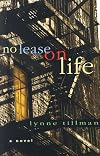
I have been meaning to read Lynne Tillman for a while! Tillman would probably hate that I say this, but this book is like a time capsule of 1990s NYC. I don't know if that is a good or bad thing. A woman is from the suburbs but now lives in a dump of an NYC apartment building. She keeps trying to get the super to clean the hallways but the other tenants just think "This is how it is, suburb lady." She can't sleep. There is always someone making a racket. I can tell this narrator is the type show more that will shove a reader right out of the book. I am usually a fan of those narrators. If the narrator doesn't shove the reader out of the book, then these dated jokes will shove the reader out of the book. I guess I'm not a joke person? I was trying to tell the purpose of so many jokes, but there is one line at the end that I think gave the jokes a bit of purpose. The jokes were odd for a punkish leaning book. I loved the line featuring a public bathroom: "The walls were zines." Take out the annoying jokes, and I really would have loved this gritty, punky book. As the narrator seems to become gritty, punky and a bit crazy. Most books about NYC would probably annoy me more. This book will not discourage me from reading other books from Lynne Tillman! I'm still looking forward to them. show less
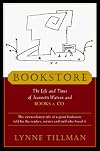
This is something between a memoir, a biography, and an oral history of Jeannette Watson and her bookstore Books & Co.
The way the book was organized felt a little jumbled to me. Sort of... Here, you reader, are all my notes and interviews for this book. Have at it.
That is fine. I'm a fan of Studs Terkel, so I like oral histories, but this back and forth...first Jeanette speaks...then someone else adds a piece...felt oddly disjointed to me.
But, the subject matter is one I love, books about show more books, and there are lists, including a list of every author reading that happened in the store.
So for that, it receives four stars. show less
The way the book was organized felt a little jumbled to me. Sort of... Here, you reader, are all my notes and interviews for this book. Have at it.
That is fine. I'm a fan of Studs Terkel, so I like oral histories, but this back and forth...first Jeanette speaks...then someone else adds a piece...felt oddly disjointed to me.
But, the subject matter is one I love, books about show more books, and there are lists, including a list of every author reading that happened in the store.
So for that, it receives four stars. show less
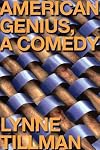
American Genius: a Comedy falls into the category of post-modern self-referential novels a la Wittgenstein's Mistress, Wittgenstein's Nephew, and perhaps Jaeggy's Sweet Days of Discipline. All of these present a first person narrative: an isolated individual enjoys the dubious privilege of existing in an institution that allows them time to think--that is, time to follow a thought at leisure--with very minimal outside interference.
(Mann's Magic Mountain also partially satisfies this show more criteria--as generally do most novels set in sanatoriums).
On the whole, this genre can be differentiated by the specificity of the protagonist’s “triggers,” or “tics,” and the extent to which they are artfully woven into their personal, stream of consciousness narrative.
Our protagonist, Helen, has her own peculiar idiosyncratic preoccupations: they center around skin conditions, ergonomic mid-century modern chairs, animals her parents killed, American History, Puritanism, fabric, memory (and its loss), time, sexuality, etc., to name but a few. She has a neurotic’s sense of humor; she is tactilely & socially sensitive; for each described instance, she exhaustively enumerates the psychology which might explain a particular human behavior.
If the specific topics mentioned are not of interest to you, then I would advise skipping this book. If you have any interest in contemplating (or ruminating on) the complexity of superficiality, or the profundity of the phrase “skin-deep,” then this is the book for you. show less
(Mann's Magic Mountain also partially satisfies this show more criteria--as generally do most novels set in sanatoriums).
On the whole, this genre can be differentiated by the specificity of the protagonist’s “triggers,” or “tics,” and the extent to which they are artfully woven into their personal, stream of consciousness narrative.
Our protagonist, Helen, has her own peculiar idiosyncratic preoccupations: they center around skin conditions, ergonomic mid-century modern chairs, animals her parents killed, American History, Puritanism, fabric, memory (and its loss), time, sexuality, etc., to name but a few. She has a neurotic’s sense of humor; she is tactilely & socially sensitive; for each described instance, she exhaustively enumerates the psychology which might explain a particular human behavior.
If the specific topics mentioned are not of interest to you, then I would advise skipping this book. If you have any interest in contemplating (or ruminating on) the complexity of superficiality, or the profundity of the phrase “skin-deep,” then this is the book for you. show less
Lists
Awards


You May Also Like


Associated Authors
Statistics
- Works
- 35
- Also by
- 25
- Members
- 1,294
- Popularity
- #19,838
- Rating
- 3.4
- Reviews
- 21
- ISBNs
- 77
- Languages
- 2

