
John Burnside (1955–2024)
Author of The Glister
About the Author
John Burnside is a poet, novelist, and memoirist whose many books include Still Life with Feeding Snake and On Henry Miller (Princeton). He is professor of English at the University of St Andrews and a regular contributor to the London Review of Books.
Image credit: Image by Norman McBeath
Works by John Burnside
Associated Works
The Poetry Pharmacy: Tried-and-True Prescriptions for the Heart, Mind, and Soul (2017) 198 copies, 5 reviews
Tagged
Common Knowledge
- Other names
- Dick, John-Paul (pseudonnym)
- Birthdate
- 1955-03-19
- Date of death
- 2024-05-29
- Gender
- male
- Occupations
- poet
writer
novelist
memoirist
professor - Organizations
- University of St Andrews
- Awards and honors
- David Cohen British Literature Prize (2023)
- Agent
- Anna Webber
- Nationality
- UK
- Birthplace
- Dunfermline, Fife, Scotland, UK
- Places of residence
- Cowdenbeath, Fife, Scotland, UK
Corby, Northamptonshire, England, UK - Map Location
- Scotland, UK
Members
Reviews
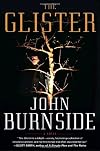
Unlike novels that create a world and then reflect it through the interior monologue of one or more characters, The Glister seems to be all interior voice and no reality. The terror of childhood is ever-present, even as our protagonist Leonard speaks with the voice of someone at least twice his age. Leonard's interior world is a deliciously wicked place to be - his observations razor-sharp, his motives decidedly unpure - yet he is not evil or even all that deviant. Leonard is a teenager show more navigating a literally poisoned world; poisoned by the plant since closed that chemically contaminated the town and the surrounding woods. And now boys are being murdered, stolen from their homes and turning up dead in horrifying corporeal displays. As Leonard winds his way toward an equally grim end, we are hard-pressed to determine what is real and what exists in the boy's head, refracted through the toxins of terror and distrust.
The book's cover describes this work as "terrifying" - I didn't find it so much terrifying in the traditional adult sense. What it does well is encapsulate the fear that children spend so much time trying to ignore. They are told by adults not to talk to strangers, for example, but they are usually not told why in an effort not to frighten them. But what could be more frightening than not knowing what you are supposed to be frightened of? The few adult characters in the book are not as thoroughly examined, but all are broken, shattered people. No one escapes whole - there is no hope here, just despair and decay. The story does not wrap up nicely; there are no easy answers, no definitive resolutions. I recommend it with reservations - a mystery with a toxic cloud at its center. show less
The book's cover describes this work as "terrifying" - I didn't find it so much terrifying in the traditional adult sense. What it does well is encapsulate the fear that children spend so much time trying to ignore. They are told by adults not to talk to strangers, for example, but they are usually not told why in an effort not to frighten them. But what could be more frightening than not knowing what you are supposed to be frightened of? The few adult characters in the book are not as thoroughly examined, but all are broken, shattered people. No one escapes whole - there is no hope here, just despair and decay. The story does not wrap up nicely; there are no easy answers, no definitive resolutions. I recommend it with reservations - a mystery with a toxic cloud at its center. show less
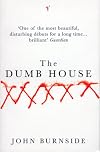
The foreword for the book (I’m sure this would class as a novella rather than a novel at 198 pages) explains about Akbar the Great and how in Persian myth he apparently built a palace that was filled with newborn children who were looked after by mutes. This was done in order to learn whether language is innate or acquired. This palace was known as the Gang Mahal, which translates as the Dumb House. Burnside’s story is a modern-day repetition of Akbar’s investigations.
It doesn’t show more often happen that I agree with an endorsement but the quote from ‘The Guardian’ on the front cover announcing ‘One of the most beautiful, disturbing débuts for a long time ... brilliant’ sums up how I felt. It is both chilling yet compelling and is so morally incomprehensible. The book is sectioned into three parts with each part entitled according to who Luke’s involvement is with at that time. I can’t recollect if the reader is party to how old Luke is but when the story opens you know he is an adult living at home with his mother. The beginning of the novel is actually the end and then Luke moves into explaining how he reached this point, so in essence it is a recount.
The opening paragraph had me hooked, “no one could say it was my choice to kill the twins, any more than it was my decision to bring them into the world ... I chose to perform the laryngotomies, if only to halt their constant singing ... that ululation entered my sleep through every crevice of my dreams”. From here, I was gripped. The reason I didn’t give it 5 stars and opted for 4 was simply because there were several pages where I felt Luke rambled. Whilst appropriate for his character I tired quickly of the passages about Mother and one or two sections about Karen. Other than that if you like your fiction somewhat darker, then this is one for you. Horrifying in that it isn’t a thriller but enough to leave you wondering about the complexities of human nature. show less
It doesn’t show more often happen that I agree with an endorsement but the quote from ‘The Guardian’ on the front cover announcing ‘One of the most beautiful, disturbing débuts for a long time ... brilliant’ sums up how I felt. It is both chilling yet compelling and is so morally incomprehensible. The book is sectioned into three parts with each part entitled according to who Luke’s involvement is with at that time. I can’t recollect if the reader is party to how old Luke is but when the story opens you know he is an adult living at home with his mother. The beginning of the novel is actually the end and then Luke moves into explaining how he reached this point, so in essence it is a recount.
The opening paragraph had me hooked, “no one could say it was my choice to kill the twins, any more than it was my decision to bring them into the world ... I chose to perform the laryngotomies, if only to halt their constant singing ... that ululation entered my sleep through every crevice of my dreams”. From here, I was gripped. The reason I didn’t give it 5 stars and opted for 4 was simply because there were several pages where I felt Luke rambled. Whilst appropriate for his character I tired quickly of the passages about Mother and one or two sections about Karen. Other than that if you like your fiction somewhat darker, then this is one for you. Horrifying in that it isn’t a thriller but enough to leave you wondering about the complexities of human nature. show less
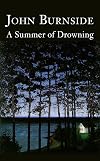
This puzzling, poetic, even mythic, novel does not easily give up its secrets to the reader, even with determined repeated readings of key passages. A young girl, Liv, who has just finished high school, lives on a remote Norwegian island with her famously reclusive artist mother. Angelika, who once painted portraits, has, for the past several years, surrendered to the deep solitude of the place and is mostly lost in the work of painting landscapes. She is a beautiful, remote, and unavailable show more woman, more angel than human. Her daughter appears to have taken after her, demonstrating none of the expected traits and interests of a typical adolescent girl. Liv's best friend is an elderly man, steeped in old Norse stories. When two teenaged brothers drown, Liv--taking her cues from Kyrre, the old storyteller--believes that their deaths are attributable to a dark-spirited girl, Maia, who may be a modern embodiment of the huldra, a siren figure from Norse mythology, known to lure the "susceptible" to their deaths.
The world, Burnside intimates in this novel, is a great, unexplained mystery. Its meaning or, rather, the meaning of human events, is opaque. Liv grapples with the unresolved mystery of several deaths over the course of one arctic summer, and barely evades the clutches of madness in the process. In the end, it seems that the old stories, the myths, provide a structure, a narrative, if not a full explanation, for making sense of the strange, dark forces of life. show less
The world, Burnside intimates in this novel, is a great, unexplained mystery. Its meaning or, rather, the meaning of human events, is opaque. Liv grapples with the unresolved mystery of several deaths over the course of one arctic summer, and barely evades the clutches of madness in the process. In the end, it seems that the old stories, the myths, provide a structure, a narrative, if not a full explanation, for making sense of the strange, dark forces of life. show less
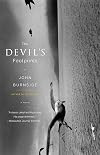
This is a well written book, with a strange looping narrative. The narrator seems like a character from a Richard Ford short story, with limited self-knowledge, as he attempts to piece together the elements of his life. He is affected by a strange lassitude, and a matter-of-fact approach to the various horrendous events of the story, which include his "murder" of an older bully in high school.
There are various hints that this will be an updated version of Dr. Jekyll and Mr. Hyde, or James show more Hogg's "The Private Memoirs and Confessions of a Justified Sinner", but in the end no such luck. The long final section, as the protagonist walks the 100 miles back home after being duped and dumped by the 14 year old girl who may or may not be his daughter, needs editing. And the ending itself is a big fizzle. Where Richard Ford or Raymond Carver could pull this off, Burnside struggles. What does it add up to? Perhaps an extended meditation on place, family, history and destiny .. but no real revelation or resolution. Burnside is, however, worth reading, if for no other reason than his evocative descriptions of light and water.
There is an overarching moodiness to this novel, a disengagement by the protagonist, which reminds me (again) from a line in "Rock Springs", by Richard Ford, where the judgement is this: "Earl, you got a character that leaves something out." Unfortunately, the same can be said of this novel. It needs a little something in the way of plot. .. or perhaps some clear thematic resolution. show less
There are various hints that this will be an updated version of Dr. Jekyll and Mr. Hyde, or James show more Hogg's "The Private Memoirs and Confessions of a Justified Sinner", but in the end no such luck. The long final section, as the protagonist walks the 100 miles back home after being duped and dumped by the 14 year old girl who may or may not be his daughter, needs editing. And the ending itself is a big fizzle. Where Richard Ford or Raymond Carver could pull this off, Burnside struggles. What does it add up to? Perhaps an extended meditation on place, family, history and destiny .. but no real revelation or resolution. Burnside is, however, worth reading, if for no other reason than his evocative descriptions of light and water.
There is an overarching moodiness to this novel, a disengagement by the protagonist, which reminds me (again) from a line in "Rock Springs", by Richard Ford, where the judgement is this: "Earl, you got a character that leaves something out." Unfortunately, the same can be said of this novel. It needs a little something in the way of plot. .. or perhaps some clear thematic resolution. show less
Lists
Awards


You May Also Like


Associated Authors
Statistics
- Works
- 55
- Also by
- 17
- Members
- 1,922
- Popularity
- #13,397
- Rating
- 3.8
- Reviews
- 68
- ISBNs
- 163
- Languages
- 9
- Favorited
- 2