
Amitav Ghosh
Author of Sea of Poppies
About the Author
Born in Calcutta, and spent his childhood in Bangladesh, Sri Lanka, and Northern India. He studied in Delhi, Oxford, and Egypt and taught at various Indian and American universities. Author of a travel book and three acclaimed novels. Ghosh has also written for GRANTA, THE NEW YORKER, THE NEW YORK show more TIMES, and THE OBSERVER. He lives in New York City with his wife and two children. (Publisher Provided) Amitav Ghosh was born in Calcutta, India on July 11, 1956. He studied in Delhi, Oxford and Alexandria. His first book, The Circle of Reason, won France's Prix Médicis. He has won several other awards including the Sahitya Akademi Award and the Ananda Puraskar for The Shadow Lines, the Arthur C. Clarke award for The Calcutta Chromosome, and the Crossword Book Prize for The Hungry Tide and Sea of Poppies. His other works include In an Antique Land, Dancing in Cambodia, The Glass Palace, and River of Smoke. In 2007, he was awarded the Padma Shri, one of India's highest honors, by the President of India. He made the New Zealand Best Seller List in 2015 with his title Flood of Fire. (Bowker Author Biography) show less
Image credit: By Slowking4 - https://www.flickr.com/photos/73455099@N07/48656423478/, CC BY-SA 2.0, https://commons.wikimedia.org/w/index.php?curid=83848308
Series
Works by Amitav Ghosh
Fumo e ceneri: Il viaggio di uno scrittore nelle storie nascoste dell'oppio (2024) 3 copies, 1 review
2004 1 copy
වීදුරු මාළිගාව 1 copy
2008 1 copy
2000 1 copy
ভ্রমি বিস্ময়ে 1 copy
Associated Works
Will the Flower Slip Through the Asphalt? Writers Respond to Capitalist Climate Change (2017) — Afterword, some editions — 20 copies
Tagged
Common Knowledge
- Canonical name
- Ghosh, Amitav
- Legal name
- অমিতাভ ঘোষ
- Birthdate
- 1956-07-11
- Gender
- male
- Education
- The Doon School
St. Stephen's College, Delhi
Delhi University (BA|1976|MA|1978)
St Edmund Hall, Oxford University (D.Phil |1982|Social Anthropology)
University of Alexandria - Occupations
- novelist
- Awards and honors
- Royal Society of Literature (Fellow, 2009)
Padma Shri (2007)
Dan David Prize (2010)
Jnanpith Award (2018)
Sahitya Akademi Award (1989)
Prix Médicis étranger (1990) (show all 14)
Ananda Puraskar (1989)
Vodafone Crossword Book Award (2009)
Pushcart Prize (1999)
Blue Metropolis International Literary Grand Prix (2011)
Man Asia Literary Prize (2011)
Grinzane Cavour International Prize (2007)
Hutch Crossword Book Award (2004)
International e-book Award Grand Prize for Fiction (2001) - Relationships
- Baker, Deborah (wife)
- Nationality
- India
- Birthplace
- Kolkata, West Bengal, India
- Places of residence
- Calcutta, India
New York, New York, USA
Bangladesh - Associated Place (for map)
- India
Members
Discussions
River of Smoke Group Read (June 15th) in 75 Books Challenge for 2012 (July 2012)
Sea of Poppies Group Read: Week Two in 75 Books Challenge for 2011 (January 2012)
Sea of Poppies Group Read: Week One in 75 Books Challenge for 2011 (January 2012)
Reviews
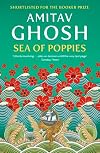
The use of language in ‘Sea of Poppies’ is beguiling and brilliant. Set in and around the colonial India of the 1830s, the novel cleverly helps the reader immediately identify with the Asian point of view characters by having the colonial occupiers and ship’s officers speak the most extraordinary pidgin. I loved this verging-on-incomprehensible talk, as it demonstrated that these invading foreigners have little understanding of the cultures and societies they’ve imposed themselves show more upon. An example:
And another:
The whole book has an impressive sense of atmosphere. Indeed, I was surprised by the amount of time spent scene-setting. The blurb implies that the whole book concerns the voyage of the Ibis. This is by no means the case - the ship only sets sail two thirds of the way through. Prior to that, the reader is gradually introduced to the cast of characters travelling aboard and it is explained how and why they came to be there. Although this probably could have been achieved in fewer pages, I found it so well-written and compelling that I blamed only the blurb-writer for mistaking the narrative emphasis. The main characters are all fascinating and well-drawn, their worlds beautifully displayed to the reader. Deeti and Neel are especially sympathetic and appealing. The background of opium production and consumption is carefully woven through the narrative, with the war over it only starting to brew as the book ends. In fact, my only real complaint about this novel is that it ends abruptly on the cliffhanger. I understand that it’s the first in a series, but cliffhangers are frustrating when you’re invested in characters! show less
”Why, look at you, Puggly - you’re flapping about like a titler!” she said. “I’ve never seen you worry about your jumma before. It’s not because of a chuckeroo, is it?”
“Why no,” said Paulette quickly. “Of course not! It is only that I feel I should not let down your family at such an important evenment.”
Annabel was not taken in. “You’re trying to bundo someone, aren’t you?”
And another:
The mate took another sip, watching the convicts over the rim of the mug. “Jack-gagger - ye’re a ready one with the red-rag. Let’s hear it: do y’know why we called yer up on deck?”
“No, sir,” said Neel.
“Here’s the gaff then,” said Mr Crowle. “Me and my good friend Subby-dar Muffin-mug, we was coguing our noses with a nipperkin of the boosey and he says to me…”
The whole book has an impressive sense of atmosphere. Indeed, I was surprised by the amount of time spent scene-setting. The blurb implies that the whole book concerns the voyage of the Ibis. This is by no means the case - the ship only sets sail two thirds of the way through. Prior to that, the reader is gradually introduced to the cast of characters travelling aboard and it is explained how and why they came to be there. Although this probably could have been achieved in fewer pages, I found it so well-written and compelling that I blamed only the blurb-writer for mistaking the narrative emphasis. The main characters are all fascinating and well-drawn, their worlds beautifully displayed to the reader. Deeti and Neel are especially sympathetic and appealing. The background of opium production and consumption is carefully woven through the narrative, with the war over it only starting to brew as the book ends. In fact, my only real complaint about this novel is that it ends abruptly on the cliffhanger. I understand that it’s the first in a series, but cliffhangers are frustrating when you’re invested in characters! show less

Flood of Fire completes Amitav Ghosh’s colourful trilogy of the linked histories of China, India and the colonizing forces, particularly Britain. I enjoyed it more than the last book, which got bogged down in ideological argument, but perhaps not quite as much as the first, which revealed a detailed story of people and places in the opium trade. This novel takes us into the early phases of the British invasion of China now known as the Opium Wars.
Looking at the history from a South Asian show more perspective, Ghosh brings in the Indian traders who hoped to profit from the opium sales and Indian soldiers who had to fight the wars, as well as an educated noble class that found itself disposessed from its former privilege in India. The character of the mystic gomusta, Baboo Nob Kissin, adds a slightly comic viewpoint as he helps bring all the forces together for what he hopes will be a destructive cataclysm that will launch a new spiritual world. The British, the Chinese and the Americans all have characters representing their viewpoints, but the main focus is the characters from the Indian subcontinent.
I found the clash of these varying national and personal interests brought a lot of interest to events that I knew of only as a historical note. Ghosh describes home life, ship life and warfare in concrete detail that gives a real sense of what’s involved and what’s at stake for the characters that he chooses for his story. (Except for a few soldiers, he chooses only relatively wealthy middle and upper class characters.) The Indian soldier Kesri, for example, lives the farce of military bureaucracy as well as 19th century cannon fire and hand-to-hand combat in conditions where food, water and ammunition had to be carried to soldiers by hand. The advantage of modern weapons over traditional ones is violently clear.
Each character’s personal motivations also develops and plays into the broader historical forces. Zachery becomes a key character as he develops from a naïve and generous American sailor with mixed-heritage into a self-interested businessman who wants status and wealth. He finds his way to prove his merit by making vast profits in the drug trade. In this, he follows the model and the moral justification of the British. They regard him as a useful tool in facilitating their own acquisition, and his anger at the emotional and social costs he has to pay is key to his motivation. However, it is Zachery that Baboo Nob Kissin is thinking of when he envisions the destruction of the world through greed. Pointedly, Zachery sees the bombardnent of Canton as the high point of rational civilization, where technology and science come together to project modern comercial values on a recalcitrant country.
There are some things in the novel that, for me, don’t entirely fit. The characters are all drawn to travel together on the Hind in their passage from ancient India to modern Hong Kong, but somehow they are all connected through the Ibis, the schooner that was at the centre of the first novel in the trilogy. The Ibis was carrying its characters to a range of new lives in Mauritius when it was hit by a storm. The ghost of a key Indian trader appears on the Ibis before another storm sinks the ship in Hong Kong harbour. This is all a bit mystical and I’m not sure what it adds to the story. Modern transport and communications are the instrument that links new and old and brings about their destruction? It is obviously a factor, but it’s not the only one or the most powerful one, and it doesn’t act in a mystical way.
Nevertheless, the narrative is a gripping way of looking at the history of southeast Asia. It shows not only the economic and political forces at work, but also their impacts on individuals of many classes. The narrative and the characters are interesting and keep the story moving along through its considerable length. show less
Looking at the history from a South Asian show more perspective, Ghosh brings in the Indian traders who hoped to profit from the opium sales and Indian soldiers who had to fight the wars, as well as an educated noble class that found itself disposessed from its former privilege in India. The character of the mystic gomusta, Baboo Nob Kissin, adds a slightly comic viewpoint as he helps bring all the forces together for what he hopes will be a destructive cataclysm that will launch a new spiritual world. The British, the Chinese and the Americans all have characters representing their viewpoints, but the main focus is the characters from the Indian subcontinent.
I found the clash of these varying national and personal interests brought a lot of interest to events that I knew of only as a historical note. Ghosh describes home life, ship life and warfare in concrete detail that gives a real sense of what’s involved and what’s at stake for the characters that he chooses for his story. (Except for a few soldiers, he chooses only relatively wealthy middle and upper class characters.) The Indian soldier Kesri, for example, lives the farce of military bureaucracy as well as 19th century cannon fire and hand-to-hand combat in conditions where food, water and ammunition had to be carried to soldiers by hand. The advantage of modern weapons over traditional ones is violently clear.
Each character’s personal motivations also develops and plays into the broader historical forces. Zachery becomes a key character as he develops from a naïve and generous American sailor with mixed-heritage into a self-interested businessman who wants status and wealth. He finds his way to prove his merit by making vast profits in the drug trade. In this, he follows the model and the moral justification of the British. They regard him as a useful tool in facilitating their own acquisition, and his anger at the emotional and social costs he has to pay is key to his motivation. However, it is Zachery that Baboo Nob Kissin is thinking of when he envisions the destruction of the world through greed. Pointedly, Zachery sees the bombardnent of Canton as the high point of rational civilization, where technology and science come together to project modern comercial values on a recalcitrant country.
There are some things in the novel that, for me, don’t entirely fit. The characters are all drawn to travel together on the Hind in their passage from ancient India to modern Hong Kong, but somehow they are all connected through the Ibis, the schooner that was at the centre of the first novel in the trilogy. The Ibis was carrying its characters to a range of new lives in Mauritius when it was hit by a storm. The ghost of a key Indian trader appears on the Ibis before another storm sinks the ship in Hong Kong harbour. This is all a bit mystical and I’m not sure what it adds to the story. Modern transport and communications are the instrument that links new and old and brings about their destruction? It is obviously a factor, but it’s not the only one or the most powerful one, and it doesn’t act in a mystical way.
Nevertheless, the narrative is a gripping way of looking at the history of southeast Asia. It shows not only the economic and political forces at work, but also their impacts on individuals of many classes. The narrative and the characters are interesting and keep the story moving along through its considerable length. show less

A historical novel set in 1838, with the East India Company's lucrative opium trade stalled because of the frivolous objections of the Chinese government to the import of large quantities of addictive drugs. There are rumours that Lord Palmerston may be contemplating firm action to teach them the value of Free Trade, but that's for the later parts of the trilogy.
In this first part, Ghosh sets himself the task of getting a bunch of very diverse characters on to the schooner Ibis, sailing show more from Calcutta to Mauritius with a cargo of indentured labourers ("coolies", or girmitiyas). But he has a lot of scene-setting to do, and social and historical background to fill in, and after all it is a trilogy, so there's plenty of time, and the ship doesn't sail until about three-quarters of the way into the book anyway.
The book picks up a lot of the typical themes of 19th century adventure stories: disguises, rescues, accidents, orphans fending for themselves, people passing as other races or genders, cruel tyrants, pirates, prisons, shipboard floggings, and all the rest of it. There's even a widow rescued from her husband's funeral pyre in the nick of time, although sadly Ghosh forgets that you're supposed to do this from a hot-air balloon... But this isn't a pastiche of Kipling or Jules Verne: there's a hard modern edge to the threats that the characters face, and you know that it isn't necessarily all going to turn out right in the end. And, perhaps more to the point, there's a sharp postcolonial view of life that questions what it sees and doesn't allow the reader to slip automatically into identifying with the European characters.
Ghosh is evidently deeply in love with the languages of the period, from the bizarre Indianised English of the British (what would later be called Hobson-Jobson) and the peculiarities of nautical English and the very specific shipboard pidgin used to communicate between European officers and their multiracial "lascar" crew members. Not to mention Bengali, Hindi, Urdu, Bhojpuri, etc. His exploration of odd words and their origins is perhaps a distraction from the unfolding of the story, but it is a great part of the enjoyment of reading the book.
The only place where he strikes a slightly wrong note linguistically is in the character Paulette, whom he makes to speak an implausible Hercule Poirot sort of Franglais, to remind us how different she is in her background from the British around her. But she's also a clever teenage girl, who has grown up bilingual in Bengali and French, in a city where (Indian) English was being spoken all around her, and has lived in a British family for a year when we first meet her. Young people accommodate to the language around them very fast: there's no way she would still be saying "attend" for "wait" and "regard" for "look", entertaining though that is to read. She'd be much more likely to have picked up "have a dekko..." show less
In this first part, Ghosh sets himself the task of getting a bunch of very diverse characters on to the schooner Ibis, sailing show more from Calcutta to Mauritius with a cargo of indentured labourers ("coolies", or girmitiyas). But he has a lot of scene-setting to do, and social and historical background to fill in, and after all it is a trilogy, so there's plenty of time, and the ship doesn't sail until about three-quarters of the way into the book anyway.
The book picks up a lot of the typical themes of 19th century adventure stories: disguises, rescues, accidents, orphans fending for themselves, people passing as other races or genders, cruel tyrants, pirates, prisons, shipboard floggings, and all the rest of it. There's even a widow rescued from her husband's funeral pyre in the nick of time, although sadly Ghosh forgets that you're supposed to do this from a hot-air balloon... But this isn't a pastiche of Kipling or Jules Verne: there's a hard modern edge to the threats that the characters face, and you know that it isn't necessarily all going to turn out right in the end. And, perhaps more to the point, there's a sharp postcolonial view of life that questions what it sees and doesn't allow the reader to slip automatically into identifying with the European characters.
Ghosh is evidently deeply in love with the languages of the period, from the bizarre Indianised English of the British (what would later be called Hobson-Jobson) and the peculiarities of nautical English and the very specific shipboard pidgin used to communicate between European officers and their multiracial "lascar" crew members. Not to mention Bengali, Hindi, Urdu, Bhojpuri, etc. His exploration of odd words and their origins is perhaps a distraction from the unfolding of the story, but it is a great part of the enjoyment of reading the book.
The only place where he strikes a slightly wrong note linguistically is in the character Paulette, whom he makes to speak an implausible Hercule Poirot sort of Franglais, to remind us how different she is in her background from the British around her. But she's also a clever teenage girl, who has grown up bilingual in Bengali and French, in a city where (Indian) English was being spoken all around her, and has lived in a British family for a year when we first meet her. Young people accommodate to the language around them very fast: there's no way she would still be saying "attend" for "wait" and "regard" for "look", entertaining though that is to read. She'd be much more likely to have picked up "have a dekko..." show less
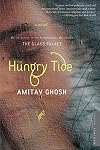
Amitav Ghosh’s novels are a structuralist’s nightmare. Structuralists, having a binary perspective of the world, see everything in terms of Either / Or, ignoring the grey between the blacks and whites.
Amitav Ghosh revels in dissolving the boundaries between conventionally understood binaries. In The Shadow Lines, he dissolved geographical as well as temporal boundaries. In The Hungry Tide, he goes further--- he focuses on the middle ground between Land and Sea, fresh water Rivers and show more salt water Oceans, Language and Silence as means of communication, Prose and Poetry, Fact and Fiction, so that the reader’s never sure what he’s grappling with.
The entire novel abounds in these juxtapositions, but I will refer to one example, the part of the book that I liked best. This is the chapter titled The Gift, and is about the gift that Kanai gives to Piyali. The chapter starts in normal prose, but somewhere midstream you realise that there’s a lilt in your reading, and you’re actually chanting what seems to be a hymn. It is actually the hymn of Bon Bibi, but not in the original Bengali. Though the words are English, yet Ghosh captures the ‘dwipodi poyar’ that is the prosody of the original. You realise that the words rhyme, but so insidiously does it creep upon you that you experience a Eureka moment.
Though the characters are drawn sketchily, the protagonist Kanai caught my attention, because as a woman, I consider him a typical Indian male—chauvinistic and patronising. The author also makes no bones about painting him in an unflattering light: ‘Kanai like to think that he had the true connoisseur’s ability to both praise and appraise women’ later in the story he describes him as possessing the wide legged stance of a man with the self -confidence to prevail in all but the most trying circumstances. However, he is the only character who evolves in the book; the others are more or less static, even Fokir, for whom Piyali has a soft corner. Kanai experiences an epiphany in the course of the novel, and he sheds his self-absorption to actually desire the happiness of another person even if if comes at the cost of his own.
Another delightful idea is about rainbows caused by moonlight. While I have had the good fortune to see a double rainbow while flying across the Nicobar Sea in a helicopter, seeing a rainbow by moonlight would be the ultimate. One more item for my bucket list! show less
Amitav Ghosh revels in dissolving the boundaries between conventionally understood binaries. In The Shadow Lines, he dissolved geographical as well as temporal boundaries. In The Hungry Tide, he goes further--- he focuses on the middle ground between Land and Sea, fresh water Rivers and show more salt water Oceans, Language and Silence as means of communication, Prose and Poetry, Fact and Fiction, so that the reader’s never sure what he’s grappling with.
The entire novel abounds in these juxtapositions, but I will refer to one example, the part of the book that I liked best. This is the chapter titled The Gift, and is about the gift that Kanai gives to Piyali. The chapter starts in normal prose, but somewhere midstream you realise that there’s a lilt in your reading, and you’re actually chanting what seems to be a hymn. It is actually the hymn of Bon Bibi, but not in the original Bengali. Though the words are English, yet Ghosh captures the ‘dwipodi poyar’ that is the prosody of the original. You realise that the words rhyme, but so insidiously does it creep upon you that you experience a Eureka moment.
Though the characters are drawn sketchily, the protagonist Kanai caught my attention, because as a woman, I consider him a typical Indian male—chauvinistic and patronising. The author also makes no bones about painting him in an unflattering light: ‘Kanai like to think that he had the true connoisseur’s ability to both praise and appraise women’ later in the story he describes him as possessing the wide legged stance of a man with the self -confidence to prevail in all but the most trying circumstances. However, he is the only character who evolves in the book; the others are more or less static, even Fokir, for whom Piyali has a soft corner. Kanai experiences an epiphany in the course of the novel, and he sheds his self-absorption to actually desire the happiness of another person even if if comes at the cost of his own.
Another delightful idea is about rainbows caused by moonlight. While I have had the good fortune to see a double rainbow while flying across the Nicobar Sea in a helicopter, seeing a rainbow by moonlight would be the ultimate. One more item for my bucket list! show less
Lists
All Things India (5)
Take Four Books (1)
World Books (1)
Climate Change (1)
Climate Change (1)
A Novel Cure (1)
Climate Change (1)
Best Sea Stories (1)
Asia (3)
Booker Prize (1)
Indian Diaspora (1)
Reading LIst (1)
My TBR (1)
Venice (1)
True Crime (1)
Awards


You May Also Like


Associated Authors
Statistics
- Works
- 44
- Also by
- 14
- Members
- 15,806
- Popularity
- #1,438
- Rating
- 3.8
- Reviews
- 470
- ISBNs
- 493
- Languages
- 22
- Favorited
- 48


