
Frederic Raphael
Author of List of Books
About the Author
Frederic Raphael has written twenty novels, as well as many story collections, biographies, screenplays, and translations from ancient Greek and Latin.
Image credit: Photograph: Rex Features
Series
Works by Frederic Raphael
Associated Works
The Oresteia: Agamemnon, Women at the Graveside, Orestes in Athens (0458) — Translator, some editions — 11,750 copies, 87 reviews
Literary Genius: 25 Classic Writers Who Define English & American Literature (2007) — Contributor — 96 copies, 2 reviews
Great Tours and Detours: The Sophisticated Traveler Series (1985) — Contributor — 35 copies, 1 review
The Serpent Son: Aeschylus: Oresteia (Translations from Greek and Roman Authors) (1979) — Translator, some editions — 10 copies
Tagged
Common Knowledge
- Canonical name
- Raphael, Frederic
- Legal name
- Raphael, Frederic Michael
- Birthdate
- 1931-08-14
- Gender
- male
- Education
- St John's College, University of Cambridge (MA|1954)
Charterhouse School
Copthorne Preparatory School - Occupations
- novelist
journalist
screenwriter - Awards and honors
- Royal Society of Literature (Fellow, 1964)
Academy Award (Best Original Screenplay, 1966) - Agent
- Deborah Rogers (Coleridge-White)
- Relationships
- Raphael, Sarah (daughter)
- Nationality
- USA (birth)
UK (residence) - Birthplace
- Chicago, Illinois, USA
- Places of residence
- Chicago, Illinois, USA
Putney, London, England, UK - Associated Place (for map)
- Putney, London, England, UK
Members
Reviews
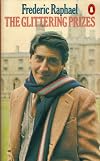
Those of us who have been to university may well remember our excited, optimistic, fresher selves staring up at the gates of our halls of residence, full of anticipation, surveying the entrance to the promised land of opportunity. Here, we believed, was our ticket to knowledge, wisdom, experience and improved life, love and job prospects.
It seems that, in this respect at least, the young Adam Morris and his contemporaries were no different to those starry-eyed young things. Through him, in show more this semi-autobiographical novel (Morris appears to be heavily modelled on Raphael himself), Raphael follows the life, loves and fortunes of a group of Cambridge students from their time at the university in the late 50s/early 60s and beyond into later life.
Although after university nothing is ever quite the same again, this is not a novel weighed down by disillusionment and despair (although, naturally, as in life, they do make an appearance). It positively sparkles with wit (particularly in the dialogue where, perhaps, the author's theatrical background shines through) and in many ways reminded me of the writing of Martin Amis, Rachel Papers era. I think, however, that in a number of aspects it may possibly surpass even that particular eminent debut.
Raphael is not afraid to confront some of life's grand overarching themes head on, namely: youth, how we handle difference (particularly with anti-semitism and racism in general), politics, the arts, education, love, family life, disillusionment etc. None of these swamp the book, however, and it all flows along nicely. It is sometimes a little difficult to follow owing to the sheer proliferation of characters - remembering who is who can be tricky. However it is never of sufficient difficulty to spoil one's enjoyment of the novel.
Given that this is a debut, and given also that we are all mere fallible human beings, I think we can forgive the book a minor flaw or two. Indeed, it seems to make it all the more endearing - a little like Morris/Raphael himself. Read this book before going to university, and then again before the reunion. Or just read it whenever you have the opportunity. Either way, it is an easy, enjoyable, delightful read and I am now very much interested in exploring the rest of the bibliography of this exceedingly talented, engrossing and witty writer. show less
It seems that, in this respect at least, the young Adam Morris and his contemporaries were no different to those starry-eyed young things. Through him, in show more this semi-autobiographical novel (Morris appears to be heavily modelled on Raphael himself), Raphael follows the life, loves and fortunes of a group of Cambridge students from their time at the university in the late 50s/early 60s and beyond into later life.
Although after university nothing is ever quite the same again, this is not a novel weighed down by disillusionment and despair (although, naturally, as in life, they do make an appearance). It positively sparkles with wit (particularly in the dialogue where, perhaps, the author's theatrical background shines through) and in many ways reminded me of the writing of Martin Amis, Rachel Papers era. I think, however, that in a number of aspects it may possibly surpass even that particular eminent debut.
Raphael is not afraid to confront some of life's grand overarching themes head on, namely: youth, how we handle difference (particularly with anti-semitism and racism in general), politics, the arts, education, love, family life, disillusionment etc. None of these swamp the book, however, and it all flows along nicely. It is sometimes a little difficult to follow owing to the sheer proliferation of characters - remembering who is who can be tricky. However it is never of sufficient difficulty to spoil one's enjoyment of the novel.
Given that this is a debut, and given also that we are all mere fallible human beings, I think we can forgive the book a minor flaw or two. Indeed, it seems to make it all the more endearing - a little like Morris/Raphael himself. Read this book before going to university, and then again before the reunion. Or just read it whenever you have the opportunity. Either way, it is an easy, enjoyable, delightful read and I am now very much interested in exploring the rest of the bibliography of this exceedingly talented, engrossing and witty writer. show less
The strength of this book lies equally in its brevity and its authorship. Only a truly informed lover of Russell such as Monk could achieve so concise and elucidatory a review. What's more, by situating Russell's life's work in his early childhood traumas, one gleans so much more than just a clear and accessible panoramic overview of the evolution in his thinking, itself an incredible achievement for subject matter so heavy, but one also appreciates the personal mission in Russell's life's show more work to prove the existence of absolute truth. In this way, [spoiler alert] when one reaches the end of these 58 printed pages, one is able thus to interpret its ending not as a failure of mission but as transcendence. So Russell renounces the search for absolute truth, and in this way, finally is able to accept, integrate and overcome the great loss and uncertainty of his early life. At a spiritual level we come to understand his superficial failure as his most meaningful success. This is a movingly universal and inspirational tale with meaning beyond the history of western philosophical thought. And how charming to by the way come to understand the genealogy of the language of my high school mathematics teachers. This story of a man who largely did his thinking alone and can be said to have achieved nothing in his life, can also so clearly be understood to have created the language and frameworks from which entire field(s) of thinking would arise within a generation. A fantastic introduction to Russell - and Wittgenstein - and very well told. Bravo! show less
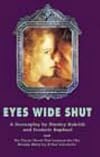
NOTE: This is a review of the film, rather than of reading of the screenplay itself, and how it differs from Arthur Schnitzler’s novella, Dream Story, which I’ve reviewed in detail HERE.
It was Stanley Kubrick’s final film, in 1999, starring Tom Cruise and Nicole Kidman, who were still married to each other at the time (though they divorced soon afterwards). See imdb for details here.
The plot closely follows that of Dream Story, but it is a world away in time, place, and atmosphere. show more
The film is set in contemporary NYC, shortly before Christmas (rather than early spring in 1910s Vienna): there is an abundance of colourful lights and lavishly decorated trees in every home, shop, bar, and workplace. On a taxi ride, even ordinary street lights look like chains of festive lights.
Bill is less sympathetic on screen than Fridolin is on the page, and there is friction between him and Alice even before she confesses her fantasy (at his request).
The film is remarkably unerotic, despite plenty of nudity and brief glimpses of group sex.
But the most profound difference is that the film lacks the hypnotic, dreamy, enchanted aura of the book. This is partly because all Bill's adventures are unquestionably real, and hers unquestionably imagined. It lacks the subtle blurring of reality that is so distinctive in the book, though it indirectly acknowledges the possibility in the final scene, when they paraphrase several lines from the book. The realism of Bill’s exploits are partly because you see them on screen (without the visual or musical mist used for Alice’s), and also because there’s a new character, Ziegler, who connects many of the otherwise disjointed people and events.
There is sensual menace, though, at the secret society’s party, which is more of a mystical cult than I pictured from the book. Cold stone interiors, sinister masks, and a total lack of the festive gew-gaws that are ubiquitous in the rest of the film, collude to raise the pulse and seal the fear. show less
It was Stanley Kubrick’s final film, in 1999, starring Tom Cruise and Nicole Kidman, who were still married to each other at the time (though they divorced soon afterwards). See imdb for details here.
The plot closely follows that of Dream Story, but it is a world away in time, place, and atmosphere. show more
The film is set in contemporary NYC, shortly before Christmas (rather than early spring in 1910s Vienna): there is an abundance of colourful lights and lavishly decorated trees in every home, shop, bar, and workplace. On a taxi ride, even ordinary street lights look like chains of festive lights.
Bill is less sympathetic on screen than Fridolin is on the page, and there is friction between him and Alice even before she confesses her fantasy (at his request).
The film is remarkably unerotic, despite plenty of nudity and brief glimpses of group sex.
But the most profound difference is that the film lacks the hypnotic, dreamy, enchanted aura of the book. This is partly because all Bill's adventures are unquestionably real, and hers unquestionably imagined. It lacks the subtle blurring of reality that is so distinctive in the book, though it indirectly acknowledges the possibility in the final scene, when they paraphrase several lines from the book. The realism of Bill’s exploits are partly because you see them on screen (without the visual or musical mist used for Alice’s), and also because there’s a new character, Ziegler, who connects many of the otherwise disjointed people and events.
There is sensual menace, though, at the secret society’s party, which is more of a mystical cult than I pictured from the book. Cold stone interiors, sinister masks, and a total lack of the festive gew-gaws that are ubiquitous in the rest of the film, collude to raise the pulse and seal the fear. show less

The screenplay for Eyes Wide Shut in this volume seems to exactly correspond to the film as released, which makes me suspect that the text was actually conformed to the final cut of the movie. Of course, since Kubrick was the director, he was in a position to "enforce" the screenplay, but in any case, those curious for unscreened ideas from writers Kubrick and Raphael will be disappointed.
The script is bound with Arthur Schnitzler's novel Dream Story, of which it is in fact a rather show more faithful adaptation, transposing the narrative from its original setting of Vienna in the 1920s to New York City in the 1990s. There is no editorial apparatus or commentary to assist the reader in any contextualization or comparison of these two documents.
Schnitzler's novel has been alternately viewed as an precocious piece of Continental modernism, or as an advanced item of Viennese decadence, and it has features to credit either classification. It is certainly informed by the ideas of Freud, with whom Schnitzler had a significant dialogue. The doctor Fridolin (Bill in Eyes Wide Shut) is furnished with ample realism in the details of his medical practice--easily written by Schnitzler who himself had had a career as a physician before dedicating himself to writing.
Schnitzler's story is more explicit about the protagonist's confused hostility toward his wife, whereas the screenplay does a better job of communicating a pervading atmosphere of menace. The endings of the two versions also strike somewhat different notes, with a greater sense of closure in Schnitzler's original--not necessarily to its credit. The dream element is certainly more significant in Schnitzler, and the Freudian tone is overt in the characters' recurrent trepidation that "no dream is altogether a dream": that the play of fantasy always provides evidence of a self which is masked by waking responsibilities. show less
The script is bound with Arthur Schnitzler's novel Dream Story, of which it is in fact a rather show more faithful adaptation, transposing the narrative from its original setting of Vienna in the 1920s to New York City in the 1990s. There is no editorial apparatus or commentary to assist the reader in any contextualization or comparison of these two documents.
Schnitzler's novel has been alternately viewed as an precocious piece of Continental modernism, or as an advanced item of Viennese decadence, and it has features to credit either classification. It is certainly informed by the ideas of Freud, with whom Schnitzler had a significant dialogue. The doctor Fridolin (Bill in Eyes Wide Shut) is furnished with ample realism in the details of his medical practice--easily written by Schnitzler who himself had had a career as a physician before dedicating himself to writing.
Schnitzler's story is more explicit about the protagonist's confused hostility toward his wife, whereas the screenplay does a better job of communicating a pervading atmosphere of menace. The endings of the two versions also strike somewhat different notes, with a greater sense of closure in Schnitzler's original--not necessarily to its credit. The dream element is certainly more significant in Schnitzler, and the Freudian tone is overt in the characters' recurrent trepidation that "no dream is altogether a dream": that the play of fantasy always provides evidence of a self which is masked by waking responsibilities. show less
Lists
Awards


You May Also Like


Associated Authors
Statistics
- Works
- 71
- Also by
- 14
- Members
- 2,445
- Popularity
- #10,490
- Rating
- 4.0
- Reviews
- 49
- ISBNs
- 180
- Languages
- 10
- Favorited
- 2