
Dylan Thomas (1914–1953)
Author of The Collected Poems of Dylan Thomas 1934-1952
About the Author
The most important Welsh poet of the twentieth century, Thomas was born in Swansea, about which he remembered unkindly "the smug darkness of a provincial town." He attended Swansea Grammar School but received his real education in the extensive library of his father, a disappointed schoolteacher show more with higher ambitions. Refusing university study in favor of immediately becoming a professional writer, Thomas worked first in Swansea and then in London at a variety of literary jobs, which included journalism and, eventually, filmscripts and radio plays. In 1936 he began the satisfying but stormy marriage to the bohemian writer and dancer Caitlin MacNamara that would endure for the rest of his career. His life fell into a pattern of oscillation between work and dissipation in London and recovery and relaxation in a rural retreat, usually in Wales. Thomas worked in a documentary film unit during the war. Besides his poetry, he wrote plays and fiction. In the early 1950s, he gave three celebrated poetry-reading tours of the United States, during which his outrageous behavior vied with his superb reading ability for public attention. Aggravated by chronic alcoholism, his health collapsed during the last tour, and he died in a New York City hospital. In his poetry, Thomas embraced an exuberant romanticism in the encounter between self and world and a joyous riot in the lushness of language. His work falls into three periods---an early "womb-tomb" phase during which he produced a notebook, which he later mined for further poems, a middle one troubled by marriage and war, and a final acceptance of the human condition. The exuberant rhetoric of his work belies an equally strong devotion to artistry, what he once called "my craft or sullen art." His great "Fern Hill," for example, builds its imagery of the rejoicing innocence of childhood on a strict and demanding syllabic count. A recollection of boyhood holidays on the farm of his aunt and uncle, that poem places its emotion within an Edenic framework typical of Thomas's work. The impressive sonnet sequence "Altarwise by Owl-Light" (1936) combines the internal quest of romanticism with a more elaborate religious outlook in tracing the birth and spiritual autobiography of a poet. Almost at the end of his career he produced the moving elegy "Do Not Go Gentle into That Good Night" (1952), written during the final illness of his father. Despite his periods of doubt and dissipation, Thomas celebrated the fullness of life. As he wrote in a note to his Collected Poems (1952), "These poems, with all their crudities, doubts, and confusion, are written for the love of Man and in praise of God, and I'd be a damn fool if they weren't." (Bowker Author Biography) show less
Disambiguation Notice:
Full name Dylan Marlais Thomas. On combining works of this author: Please take note that editions of the "Poems" can be different works (selections as opposed to complete works). Identical titles alone do not indicate identical works.
Image credit: Commons / Wikipedia
Series
Works by Dylan Thomas
Dylan Thomas Reads: And Death Shall Have No Dominion, a Winter's Tale, on Reading Poetry Aloud and Other Selections (1992) 10 copies
Twenty-five poems 9 copies
A mão ao assinar este papel 8 copies
Svlékání tmy : Výbor z veršů 5 copies
In the Direction of the Beginning 3 copies
Piimmetsa vilus 3 copies
The peaches 3 copies
I Racconti 2 copies
La playa de Falesá 2 copies
The Londoner 2 copies
Eu vi o tempo assassinar-me 2 copies
Dylan Thomas Miscellany 2 copies
CARTAS 2 copies
Under Milk Wood, a BBC Cymru Production — Author — 2 copies
Uma Visão do Mar e Outras Histórias 2 copies
Rejsen tilbage 2 copies
Gedichten 2 copies
il dottore e i diavoli 1 copy
Kapradinový vrch 1 copy
Avanture pod pločnikom 1 copy
The Beach at Falesa 1 copy
Portrait Of The Artist As A Young Dog and Other Fiction: Fully annotated edition: contains over 300 textual notes (Evergreens) (2024) 1 copy
十月の詩 1 copy
En casa del abuelo 1 copy
Poemes 1 copy
Reading Volume 2 (1957) (LP) 1 copy
The Complete Poems: The most complete edition of Dylan Thomas’s poems available (Great Poets Series) (2025) 1 copy
En novell 1 copy
Dylan Thomas : Word and Image : An Exhibition Based on the Jeff Towns / Dylans Bookstore Collection 1 copy
Under Milk Wood [EMI] 1 copy
The collected poems 1 copy
Dylan Thomas - poems - 1 copy
Dylan Thomas: poesie 1 copy
A Winter's Tale 1 copy
More Dylan Thomas Reads: Adventures in the Skin Trade / Quite Early One Morning / and Other Poems (1993) 1 copy
Thomas Dylan 1 copy
Selected Stories 1 copy
Dylan Thomas : the poems 1 copy
Time Life Books 1 copy
Poetry 1 copy
Patricia, Edith, And Arnold 1 copy
Prose e racconti 1 copy
The Burning Baby 1 copy
Twenty-Six Poems 1 copy
Return Journey to Swansea 1 copy
I Survived 1 copy
A Boy Growing Up (Program) 1 copy
Seven poems 1 copy
The Enemies 1 copy
Viziune și rugă 1 copy
Favole di cinema 1 copy
Selected Writings 1 copy
緑の導火線 1 copy
Associated Works
The Making of a Poem: A Norton Anthology of Poetic Forms (2000) — Contributor — 1,474 copies, 9 reviews
Literature: An Introduction to Fiction, Poetry, and Drama (1995) — Contributor, some editions — 1,017 copies, 7 reviews
World Poetry: An Anthology of Verse from Antiquity to Our Time (1998) — Contributor — 499 copies, 2 reviews
Against Forgetting: Twentieth-Century Poetry of Witness (1993) — Contributor — 377 copies, 2 reviews
The Penguin Book of Christmas Stories: From Hans Christian Andersen to Angela Carter (2019) — Author — 330 copies, 5 reviews
The Norton Anthology of English Literature, 4th Edition, Volume 2 (1979) — Contributor — 271 copies, 1 review
Poetry Speaks Expanded: Hear Poets Read Their Own Work from Tennyson to Plath (2007) — Contributor — 158 copies, 2 reviews
Poems to See By: A Comic Artist Interprets Great Poetry (2020) — Contributor — 130 copies, 33 reviews
Answering Back: Living Poets Reply to the Poetry of the Past (2007) — Contributor — 119 copies, 1 review
The Poet's Work: 29 Poets on the Origins and Practice of Their Art (1979) — Contributor — 96 copies, 1 review
Out of the Best Books: An Anthology of Literature, Vol. 1: The Individual and Human Values (1964) — Contributor — 40 copies
Kingfisher Christmas Book: A Collection of Stories, Poems and Carols for the Twelve Days of Christmas (1985) — Contributor — 29 copies
The Best of Both Worlds: An Anthology of Stories for All Ages (1968) — Contributor — 25 copies, 1 review
New World Writing: Fifth Mentor Selection - Fiction, Drama, Poetry, Criticism (1954) — Contributor — 9 copies
New World Writing: Third Mentor Selection - Poetry, Fiction, Drama, Criticism (1953) — Contributor — 8 copies
Edexcel Poetry Anthology for Advanced subsidiary and advanced GCE examinations in English Literature (2000) — Contributor, some editions — 6 copies
Die englische Literatur 09 in Text und Darstellung. 20. Jahrhundert. (2001) — Contributor — 3 copies
Oskar Kokoschka, Städteportraits: [Ausstellung "Oskar Kokoschka - Städteportraits", Österreichisches Museum für Angewandte Kunst, Wien, 4. März - 6. April 1986] (1986) — Contributor — 3 copies
American Aphrodite: a Quarterly For The Fancy-Free (Volume 4, Number 14) (1954) — Contributor — 2 copies
American Aphrodite: A Quarterly for the Fancy Free (Volume 5, Number 19) (1955) — Contributor — 2 copies
Tagged
Common Knowledge
- Canonical name
- Thomas, Dylan
- Legal name
- Thomas, Dylan Marlais
- Birthdate
- 1914-10-27
- Date of death
- 1953-11-09
- Gender
- male
- Education
- Swansea Grammar School
- Occupations
- poet
reporter - Organizations
- South Wales Evening Post (junior reporter)
- Awards and honors
- Memorial in Poets Corner, Westminster Abbey
- Relationships
- Thomas, Caitlin (wife)
Thomas, Llewelyn Edouard (son)
Thomas, Aeronwy (daughter)
Thomas, Colm Garan Hart (son)
Campbell, Roy (friend)
Johnson, Pamela Hansford (romance) - Nationality
- UK
- Birthplace
- Uplands, Swansea, West Glamorgan, Wales, UK
- Places of residence
- Swansea, West Glamorgan, Wales, UK
Laugharne, Carmarthenshire, Wales, UK - Place of death
- New York, New York, USA
- Burial location
- Saint Martin's Churchyard, Laugharne, Carmarthenshire, Wales, UK
- Map Location
- Wales, UK
- Disambiguation notice
- Full name Dylan Marlais Thomas. On combining works of this author: Please take note that editions of the "Poems" can be different works (selections as opposed to complete works). Identical titles alone do not indicate identical works.
Members
Discussions
1914: Dylan Thomas - Resources and General Discussion in Literary Centennials (February 2015)
Reviews

"One Christmas was so much like another, in those years around the sea-town corner now and out of all sound except the distant speaking of the voices I sometimes hear a moment before sleep, that I can never remember whether it snowed for six days and six nights when I was twelve or whether it snowed for twelve days and twelve nights when I was six. All the Christmases roll down toward the two-tongued sea, like a cold and headlong moon bundling down the sky that was our street; and they stop show more at the rim of the ice-edged, fish-freezing waves, and I plunge my hands in the snow and bring out whatever I can find."
So begins A Child's Christmas in Wales, in which acclaimed twentieth-century poet Dylan Thomas reminisces about his childhood Christmas experiences. With an impressionistic, string-of-consciousness format, in which memories rush in, one upon the other, crowding together in chaotic ways, and yet somehow combining unexpectedly into a moving whole, this is a lovely little holiday book. One gets a sense of the wealth of family and tradition that surrounded Thomas in his youth, and of the wider community around him in his childhood hometown of Swansea. There is a wonderful sense of humor here, especially in some of the descriptions of the aunts and uncles who come to visit, and a poignant sense of a world and a time - the world and time of childhood - now lost.
Apparently based upon some recordings that Dylan Thomas did for the BBC, A Child's Christmas in Wales is one of those holiday classics I have been meaning to read for years. I'm glad that I finally did, as I greatly enjoyed the experience, both of reading the author's poetic prose, and of perusing the lovely artwork done by Trina Schart Hyman for the edition that I read. Hyman is one of my favorite fairy-tale artists, but whatever the subject matter, her illustrations always do her source material justice. Recommended to Dylan Thomas fans, if they have not already picked it up, as well as to anyone looking for nostalgic reexaminations of childhood, as seen through a Christmas lens. show less
So begins A Child's Christmas in Wales, in which acclaimed twentieth-century poet Dylan Thomas reminisces about his childhood Christmas experiences. With an impressionistic, string-of-consciousness format, in which memories rush in, one upon the other, crowding together in chaotic ways, and yet somehow combining unexpectedly into a moving whole, this is a lovely little holiday book. One gets a sense of the wealth of family and tradition that surrounded Thomas in his youth, and of the wider community around him in his childhood hometown of Swansea. There is a wonderful sense of humor here, especially in some of the descriptions of the aunts and uncles who come to visit, and a poignant sense of a world and a time - the world and time of childhood - now lost.
Apparently based upon some recordings that Dylan Thomas did for the BBC, A Child's Christmas in Wales is one of those holiday classics I have been meaning to read for years. I'm glad that I finally did, as I greatly enjoyed the experience, both of reading the author's poetic prose, and of perusing the lovely artwork done by Trina Schart Hyman for the edition that I read. Hyman is one of my favorite fairy-tale artists, but whatever the subject matter, her illustrations always do her source material justice. Recommended to Dylan Thomas fans, if they have not already picked it up, as well as to anyone looking for nostalgic reexaminations of childhood, as seen through a Christmas lens. show less

I'm in love.
I want to read and listen again. Probably multiple times, if possible. There's so many sudden flashes of humor and delight, and this being my first time through, I reveled in those moments when you feel uncertain, then a lightbulb goes on with that adrenaline rush of illumination.
And the language is to die for.
It reminded me a bit of two other classics, the 1914 [Spoon River Anthology] poems by Edgar Lee Masters (except Thomas' people are sleeping, Masters' people are sleeping show more forever) and also the 1922 poem [The Waste Land] by T S Eliot, especially in the "Goodnight, ladies" part. But this work came later--equally good and definitely Dylan made it his own.
I listened to the play on YT, the one with Richard Burton and followed along reading it. I noticed the play did not include all the text. Wonder if Dylan continued to work on the play even after that performance, or if some was cut due to time constraints. Never mind, the audio was dreamy good and added immensely to the pleasure of the play.
https://www.youtube.com/watch?v=im7ICMh0h9M&list=PLBx3BOGiHZrXqgEZ2xhUZWn4Ep...
https://gutenberg.net.au/ebooks06/0608221.txt show less
I want to read and listen again. Probably multiple times, if possible. There's so many sudden flashes of humor and delight, and this being my first time through, I reveled in those moments when you feel uncertain, then a lightbulb goes on with that adrenaline rush of illumination.
And the language is to die for.
It reminded me a bit of two other classics, the 1914 [Spoon River Anthology] poems by Edgar Lee Masters (except Thomas' people are sleeping, Masters' people are sleeping show more forever) and also the 1922 poem [The Waste Land] by T S Eliot, especially in the "Goodnight, ladies" part. But this work came later--equally good and definitely Dylan made it his own.
I listened to the play on YT, the one with Richard Burton and followed along reading it. I noticed the play did not include all the text. Wonder if Dylan continued to work on the play even after that performance, or if some was cut due to time constraints. Never mind, the audio was dreamy good and added immensely to the pleasure of the play.
https://www.youtube.com/watch?v=im7ICMh0h9M&list=PLBx3BOGiHZrXqgEZ2xhUZWn4Ep...
https://gutenberg.net.au/ebooks06/0608221.txt show less
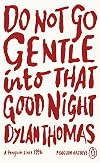
Some poets have a way with words, but Dylan Thomas had a way with the rhythm of words. Many of his poems are lyrical ciphers, hard to parse on a line-by-line basis but which have a roll to them which carries you along. When Thomas matched that roll with a tough lucidity, the effect was profound, as in the starkly immediate 'Do Not Go Gentle Into That Good Night'. Sadly, that fond favourite is not representative of the rest of his work. This new 2025 Penguin selection, however, is show more representative, and a worthy brief challenge for a reader so inclined. show less

One Christmas was so much like another, in those years around the sea-town corner now and out of all sound except the distant speaking of the voices I sometimes hear a moment before sleep, that I can never remember whether it snowed for six days and six nights when I was twelve or whether it snowed for twelve days and twelve nights when I was six. All the Christmases roll down toward the two-tongued sea, like a cold and headlong moon bundling down the sky that was our street; and they stop show more at the rim of the ice-edged, fish-freezing waves, and I plunge my hands in the snow and bring out whatever I can find. In goes my hand into that wool-white bell-tongued ball of holidays resting at the rim of the carol-singing sea, ...
And so begins the heart-song of my Christmas holidays.
Along with a recording by Dylan Thomas (1952) reading it, this little story defines Christmas for me, in an unnameable way. I become six again ... or maybe twelve ... or both at once, as I listen to the magic of his words. It is a yearly tradition that I indulge in; and indeed listen to, and re-read a few times over the Christmas season, for the lovely sing-song cadence of his words, written and spoken.
'Tis wizardry that he employs, for I am utterly bewitched, each and every time. show less
And so begins the heart-song of my Christmas holidays.
Along with a recording by Dylan Thomas (1952) reading it, this little story defines Christmas for me, in an unnameable way. I become six again ... or maybe twelve ... or both at once, as I listen to the magic of his words. It is a yearly tradition that I indulge in; and indeed listen to, and re-read a few times over the Christmas season, for the lovely sing-song cadence of his words, written and spoken.
'Tis wizardry that he employs, for I am utterly bewitched, each and every time. show less
Lists
Modernism (1)
Five star books (1)
Favourite Books (1)
recommended (1)
Plays I Like (1)
Awards


You May Also Like


Associated Authors
Statistics
- Works
- 275
- Also by
- 73
- Members
- 15,836
- Popularity
- #1,433
- Rating
- 4.1
- Reviews
- 206
- ISBNs
- 546
- Languages
- 25
- Favorited
- 100


