
Thomas Wolfe (1900–1938)
Author of Look Homeward, Angel
About the Author
Thomas Wolfe was born in Asheville, North Carolina on October 3, 1900. He graduated from the University of North Carolina and Harvard University. He taught at New York University from 1924 to 1930. His four long autobiographical novels are Look Homeward, Angel; Of Time and the River; The Web and show more the Rock; and You Can't Go Home Again. He also wrote short stories that were collected in The Hills Beyond and From Death to Morning. He wrote several plays including Welcome to Our City. From an early bout with pneumonia, he suffered from tuberculosis of the lungs, which led to fatal tuberculosis of the brain. He died following brain surgery on September 15, 1938 at age 37. (Bowker Author Biography) show less
Image credit: Photo by Carl Van Vechten, Apr. 14, 1933 (Library of Congress, Prints & Photographs Division, Carl Van Vechten Collection, Reproduction Number: LC-USZ62-87328)
Series
Works by Thomas Wolfe
Beyond Love and Loyalty: The Letters of Thomas Wolfe and Elizabeth Nowell : Together With No More Rivers : A Story (1983) 13 copies
The Four Lost Men: The Previously Unpublished Long Version, Including the Original Short Story (2008) 9 copies, 1 review
Letters 8 copies
Oktoberfest: Ein literarisches Wiesn-Schmankerl / A Literary Tidbit from the Munich Beer Festival - (2010) — Author — 7 copies
Gewebe und Fels 3 copies
Rare Thomas WOLFE / Western Journal Daily Log of The Great Parks Trip June 20 1st ed (1951) 2 copies
The Child By Tiger 2 copies
My Father's Hands 2 copies
What a writer reads 2 copies
The Whore 1 copy
A Portrait of Bascom Hawke 1 copy
O času in reki 1 copy
Il ritorno e altre prose 1 copy
Chickamauga 1 copy
Anatomia della solitudine 1 copy
The Scribner Library 1 copy
الفتى المفقود 1 copy
Eve Bak, Melek 1 copy
“A Cullenden of Virginia” 1 copy
La orgullosa hermana muerte 1 copy
The Wed And The Rock 1 copy
O trem e a cidade 1 copy
Nie ma powrotu 1 copy
O času in reki I, II 1 copy
Tylko umarli znają Brooklyn 1 copy
Un retrato de Bascom Hawke 1 copy
Tres relatos 1 copy
Thomas Wolfe: a Bibliography 1 copy
Gentlemen of the Press 1 copy
The Far and The Near 1 copy
The Death of Gant 1 copy
De la moarte până în zori 1 copy
Associated Works
Perrine's Literature: Structure, Sound, and Sense (1970) — Contributor, some editions — 896 copies, 4 reviews
A Patriot's Handbook: Songs, Poems, Stories, and Speeches Celebrating the Land We Love (2003) — some editions — 568 copies, 5 reviews
Writing New York: A Literary Anthology (Expanded 10th-Anniversary Edition) (2008) — Contributor — 101 copies, 1 review
Years of Protest: A Collection of American Writings of the 1930's (1967) — Contributor — 44 copies, 1 review
Food Tales: A Literary Menu of Mouthwatering Masterpieces (1992) — Contributor — 41 copies, 1 review
Out of the Best Books: An Anthology of Literature, Vol. 1: The Individual and Human Values (1964) — Contributor — 40 copies
The night before Chancellorsville, and other Civil War stories (1957) — Contributor — 14 copies, 1 review
The Best Short Stories of 1936 and the Yearbook of the American Short Story (1936) — Contributor — 5 copies
Great Railroad Stories of the World — Contributor — 2 copies
O. Henry Memorial Award Prize Stories of 1935 — Contributor — 2 copies
The Best Short Stories of 1935 and the Yearbook of the American Short Story (1935) — Contributor — 2 copies
The Ethnic Image in Modern American Literature, 1900-1950, Volumes 1-2 (1984) — Contributor — 1 copy
Kerouac Quarterly, V. 2, No. 1 — Contributor — 1 copy
Tagged
Common Knowledge
- Legal name
- Wolfe, Thomas Clayton
- Birthdate
- 1900-10-03
- Date of death
- 1938-09-15
- Gender
- male
- Education
- University of North Carolina, Chapel Hill (BA|1920)
Harvard University (MA|1922) - Occupations
- novelist
short story writer
playwright
essayist
professor - Organizations
- American Academy of Arts and Letters (Literature ∙ 1937)
National Institute of Arts and Letters
Pi Kappa Phi
New York University (professor) - Awards and honors
- Thomas Wolfe Memorial
Guggenheim fellowship - Relationships
- Perkins, Maxwell E. (friend)
Baker, George Pierce (teacher)
Bernstein, Aline (girlfriend)
Armstrong, Anne W. (correspondent) - Cause of death
- tuberculosis
- Nationality
- USA
- Birthplace
- Asheville, North Carolina, USA
- Places of residence
- Asheville, North Carolina, USA
Chapel Hill, North Carolina, USA
Brooklyn, New York, USA
Baltimore, Maryland, USA - Place of death
- Baltimore, Maryland, USA
- Burial location
- Riverside Cemetery, Asheville, North Carolina, USA
- Associated Place (for map)
- USA
Members
Reviews
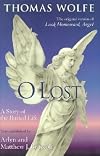
It is easy to see why an editor would be tempted to take this--the original version of what came to be Look Homeward Angel--and cut it, rearrange it, and smooth it out to be more of a normal novel, as if anything written in Wolfe's luxuriant prose could be normal. I read Look Homeward Angel many years ago, and it left a great impression on me through its poetry, so I was fascinated these many years later to read this original version. Of course, I honestly wouldn't be able to tell you what show more had changed without the editors' introductions. The nature of Look Homeward Angel had stayed with me, but not its story.
In any case, O Lost is very much worth reading and is not some sort of mess that takes a genius to read. Yes, Wolfe digresses. Yes, he goes on for pages about people waking up in the morning. Yes, he spends lots of time providing critiques of other authors through his characters. Yes, he adds pastiches of children's fiction. But, while the book loses a bit of focus in the middle part, it all hangs together for a powerful, moving climax (that is somewhat offset by the several chapters that follow!) The relationship between Eugene Gant, who is the author's alter ego, and his brother Ben is the emotional center of the book, and it is unforgettable. Mr. Gant, Eugene's father, is one of the most memorable fathers in fiction, and his mother, Julia, with her obsession for investing in real estate, is a larger than life presence as well. Of course, this is largely autobiographical. Eugene's brothers and sisters in the book have the same names as Wolfe's own brothers and sisters. Altamont is Asheville. Pulpit Hill is Chapel Hill, and so on. How much is actually fictional, I don't know. What matters, however, is how Wolfe tells the story and what it is ultimately trying to say, which, I think, is "What's it all about?" That's pretty much what brother Ben wants to know, and its something Eugene struggles with. What is the point of living, when so much of what we are is foretold in the fate of our parents and siblings. Can we escape it? Certainly that is Eugene's intent as he goes off to the University of North Carolina and prepares to leave for Harvard at the end of the book. Of course, when Look Homeward Angel was published, Wolfe himself had less than 10 years to live, dying at age 38 in 1938. Perhaps he had a premonition even as writing this.
The book will jar you with its descriptions of race and ethnicity. Maybe that is why Look Homeward Angel has fallen out of favor in recent years compared to contemporary works by Faulkner, Hemingway, and others. But these are just the unvarnished thoughts of the narrator, who himself doesn't seem particularly racist or anti-semitic or anything else; his observations of others are usually very clear--it is just his language that has fallen into disrepute. One thing I can say is that Wolfe is much more readable than most of Faulkner and much deeper than most of Hemingway. Apparently Wolfe's later novels, both before and after his death, as published were even more edited and "constructed" versions of the massive manuscripts they began as, which the editor here compares to Proust's magnum opus. After reading this original version, I would love to see the rest of Wolfe published as he wrote it, warts and all. Unfortunately, that is probably not going to happen soon. O Lost doesn't seem to be available new any more. I had to purchase a used copy for over $35, and the copies I see now on Amazon, abebooks, etc. are even more expensive. I hope someone will bring this back out in a paperback edition and that we will be able to read even more of Wolfe's original work in the future. In the meantime, find a copy of this--perhaps at your library--and prepare to be absorbed for more than a few days. show less
In any case, O Lost is very much worth reading and is not some sort of mess that takes a genius to read. Yes, Wolfe digresses. Yes, he goes on for pages about people waking up in the morning. Yes, he spends lots of time providing critiques of other authors through his characters. Yes, he adds pastiches of children's fiction. But, while the book loses a bit of focus in the middle part, it all hangs together for a powerful, moving climax (that is somewhat offset by the several chapters that follow!) The relationship between Eugene Gant, who is the author's alter ego, and his brother Ben is the emotional center of the book, and it is unforgettable. Mr. Gant, Eugene's father, is one of the most memorable fathers in fiction, and his mother, Julia, with her obsession for investing in real estate, is a larger than life presence as well. Of course, this is largely autobiographical. Eugene's brothers and sisters in the book have the same names as Wolfe's own brothers and sisters. Altamont is Asheville. Pulpit Hill is Chapel Hill, and so on. How much is actually fictional, I don't know. What matters, however, is how Wolfe tells the story and what it is ultimately trying to say, which, I think, is "What's it all about?" That's pretty much what brother Ben wants to know, and its something Eugene struggles with. What is the point of living, when so much of what we are is foretold in the fate of our parents and siblings. Can we escape it? Certainly that is Eugene's intent as he goes off to the University of North Carolina and prepares to leave for Harvard at the end of the book. Of course, when Look Homeward Angel was published, Wolfe himself had less than 10 years to live, dying at age 38 in 1938. Perhaps he had a premonition even as writing this.
The book will jar you with its descriptions of race and ethnicity. Maybe that is why Look Homeward Angel has fallen out of favor in recent years compared to contemporary works by Faulkner, Hemingway, and others. But these are just the unvarnished thoughts of the narrator, who himself doesn't seem particularly racist or anti-semitic or anything else; his observations of others are usually very clear--it is just his language that has fallen into disrepute. One thing I can say is that Wolfe is much more readable than most of Faulkner and much deeper than most of Hemingway. Apparently Wolfe's later novels, both before and after his death, as published were even more edited and "constructed" versions of the massive manuscripts they began as, which the editor here compares to Proust's magnum opus. After reading this original version, I would love to see the rest of Wolfe published as he wrote it, warts and all. Unfortunately, that is probably not going to happen soon. O Lost doesn't seem to be available new any more. I had to purchase a used copy for over $35, and the copies I see now on Amazon, abebooks, etc. are even more expensive. I hope someone will bring this back out in a paperback edition and that we will be able to read even more of Wolfe's original work in the future. In the meantime, find a copy of this--perhaps at your library--and prepare to be absorbed for more than a few days. show less
Six-word review: We are made of lost things.
Extended review:
It's easy to see why this opus won passionate admiration and a place among the most influential novels of the early twentieth century. It's also easy to see why admiring imitators would have done better to choose some other sort of sincere flattery. Like any other distinctive stylist--Van Gogh comes to mind--only Wolfe is Wolfe, and it's best that others not try to be him.
I feel remiss in having failed to read this novel for more show more than half a century beyond the time when it was first recommended to me. If I had come to it sooner, I might have recognized traces of its unique character in other readings that I can only now reflect on in retrospect. I might also have had enough time by now to come to a full recognition of what the author did in these many pages.
On the one hand, there are beautiful, moving, lyrical passages, such as his paean to the lost young love (page 372), and insights of notable psychological reach: "Unknowingly, he had begun to build up in himself a vast mythology for which he cared all the more deeply because he realized its untruth. Brokenly, obscurely, he was beginning to feel that it was not truth that men live for--the creative men--but for falsehood." (page 183)
And, as if to counterbalance numerous prolix outflowings of overwrought prose, there is on occasion marvelous economy of phrase: "elegant young ensigns out of college, with something blonde and fluffy at their sides" (page 418). And: "As that spring ripened he felt entirely, for the first time, the full delight of loneliness." Some of those, however, are cloyingly sugar-coated, as with all the instances of "lilac darkness" and the abundance of pearl and nacreous light.
On the other hand, there are numerous instances of questionable use of showoff words such as "phthisic" and "inchoate" (nine of the latter, including the absurd "a wild inchoate scream," page 227). When Wolfe springs words such as "gabular" and "ptotic" and "adyts" into the text, I seldom feel, as I do, for instance, with Oscar Wilde, that they belong to his peculiarly erudite vocabulary and flow naturally from his thought; but rather that he has gone to some little trouble to acquire them and that they are there more to impress than to honor precision.
Also noted: frequent suffocating passages swamped in bobbing, floating adverbs: these, for instance, gathered from two almost randomly chosen facing pages (135 and 136): stiffly, desperately, richly, moistly, sparsely, slightly, fiercely, beautifully, brightly, leafily, softly, musically, lazily, swinishly, cleanly, cynically (twice), belligerently, silently, contemptuously, toughly, thinly, pugnaciously, quietly.
Nonetheless, the novel drew me on; I didn't choose to abandon it. I found depths and revelations in this protracted coming-of-age tale, with its permeating theme of loss, that rewarded my attention. I also noticed that it made me write a little oddly for a while afterward, in much the same way that I start to talk a little funny after I've been bingeing on BBC costume dramas. My note immediately upon finishing it says this: "Style is at once lyrical and juvenile, erudite and ostentatious. Characters never seem to be, but constantly becoming. Does not draw conclusions or look for a simple answer anywhere. At times seems breathless and at times breathes wordlessly." show less
Extended review:
It's easy to see why this opus won passionate admiration and a place among the most influential novels of the early twentieth century. It's also easy to see why admiring imitators would have done better to choose some other sort of sincere flattery. Like any other distinctive stylist--Van Gogh comes to mind--only Wolfe is Wolfe, and it's best that others not try to be him.
I feel remiss in having failed to read this novel for more show more than half a century beyond the time when it was first recommended to me. If I had come to it sooner, I might have recognized traces of its unique character in other readings that I can only now reflect on in retrospect. I might also have had enough time by now to come to a full recognition of what the author did in these many pages.
On the one hand, there are beautiful, moving, lyrical passages, such as his paean to the lost young love (page 372), and insights of notable psychological reach: "Unknowingly, he had begun to build up in himself a vast mythology for which he cared all the more deeply because he realized its untruth. Brokenly, obscurely, he was beginning to feel that it was not truth that men live for--the creative men--but for falsehood." (page 183)
And, as if to counterbalance numerous prolix outflowings of overwrought prose, there is on occasion marvelous economy of phrase: "elegant young ensigns out of college, with something blonde and fluffy at their sides" (page 418). And: "As that spring ripened he felt entirely, for the first time, the full delight of loneliness." Some of those, however, are cloyingly sugar-coated, as with all the instances of "lilac darkness" and the abundance of pearl and nacreous light.
On the other hand, there are numerous instances of questionable use of showoff words such as "phthisic" and "inchoate" (nine of the latter, including the absurd "a wild inchoate scream," page 227). When Wolfe springs words such as "gabular" and "ptotic" and "adyts" into the text, I seldom feel, as I do, for instance, with Oscar Wilde, that they belong to his peculiarly erudite vocabulary and flow naturally from his thought; but rather that he has gone to some little trouble to acquire them and that they are there more to impress than to honor precision.
Also noted: frequent suffocating passages swamped in bobbing, floating adverbs: these, for instance, gathered from two almost randomly chosen facing pages (135 and 136): stiffly, desperately, richly, moistly, sparsely, slightly, fiercely, beautifully, brightly, leafily, softly, musically, lazily, swinishly, cleanly, cynically (twice), belligerently, silently, contemptuously, toughly, thinly, pugnaciously, quietly.
Nonetheless, the novel drew me on; I didn't choose to abandon it. I found depths and revelations in this protracted coming-of-age tale, with its permeating theme of loss, that rewarded my attention. I also noticed that it made me write a little oddly for a while afterward, in much the same way that I start to talk a little funny after I've been bingeing on BBC costume dramas. My note immediately upon finishing it says this: "Style is at once lyrical and juvenile, erudite and ostentatious. Characters never seem to be, but constantly becoming. Does not draw conclusions or look for a simple answer anywhere. At times seems breathless and at times breathes wordlessly." show less
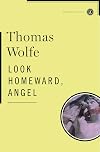
I spent a pleasant couple of weeks with this 500 page classic of American literature. I really enjoyed it, but then again I am a sucker for coming-of-age stories. This one is perhaps a bit loftier than most, and goes beyond just the coming-of-age theme, but at the heart of it all, that's what it is. It is also the story of a family, an odd and morbid Southern family full of quirky members, including my favorite, Ben Gant. I quickly became enamored with his constant scowling and stock show more response of "Oh, for God's sake. Listen to this, won't you?" as he nods to his invisible Angel. Wolfe's dense and fanciful prose represents a writing style not often seen in today's literature. Perhaps modern readers don't have the attention span necessary to cope with such detail. But it really resonated with me. I loved how he associated specific repetitive descriptions with different characters. The reader comes to expect certain words and phrases to pop up whenever a particular character appears in the narrative. It's both comforting and satisfying. Wolfe's writing is very self-indulgent, though, and when considering that his fiction is merely thinly-disguised autobiography, it makes me think that he was probably a pretty annoying guy in real life. There are more than a few self-important passages in this book, and he certainly goes off on some questionable tangents. But overall, this is a true American classic, and anyone who would deny it is probably just jealous. show less
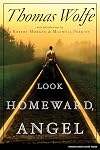
[Look Homeward, Angel] by Thomas Wolfe
[Max Perkins, Editor of Genius] by A. Scott Berg
“No leaf hangs for me in the forest; I shall lift no stone upon the heels; I shall find no door in any city. There is one voyage, the first, the last, the only one.”
Reading Thomas Wolfe is to mourn anew, each and every time. Forget the recent movement to abuse his writing as indulgent and overblown. Forget the neo-literary community, perched on a corpse they declare bloated, all the while picking and show more tearing with sour beaks. Attacking our heroes is the newest fad, and a distasteful one. And Wolfe isn’t the only classic that has suffered at the hands of revisionary criticism. Hemingway is now all too often considered boring and over simple and stereotypically uber-masculine; Fitzgerald’s work superficial and derivative, perhaps even plagiarized from his wife.
Thankfully, A. Scott Berg, with his [Editor of Genius], saw these men through the eyes of Max Perkins, the man who discovered them and midwifed their work. As the title suggests, Perkins saw them all as geniuses, particularly Wolfe. The editor had an intimidating task in distilling Wolfe’s mammoth text. Recent critics have tried to debunk the story about the manuscript’s delivery, but Berg quotes Wolfe’s agent, Madeline Boyd, requesting a truck to pick up the full work. As Perkins read, he was enchanted by the poetic and epic book. Working closely with the author, he reorganized and whittled, often foiled by Wolfe’s ability to replace several pages of new writing for the one or two cut. In the end, the book was an epic coming of age Southern tale. While the story still sags occasionally, the pay off in the last chapter is worth the effort. Eugene is ushered through his transformed hometown by the ghost of his deceased brother, assured that his journey is the only journey in life. It is easily one of the most perfect passages ever written.
Reading Berg’s history along with Wolfe’s debut, [Look Homeward, Angel] is a revelation. Seeing a photo of Wolfe standing next to a crate, filled with loose paper reaching up to knee-height, with a caption noting it’s one of three crates containing a manuscript, give Perkins’ the credit he’s due for translating the Wolfe’s beasts. But Wolfe is revealed, too. [Look Homeward, Angel]’s hero, Eugene Gant, is Wolfe himself – introverted, bookish, out of place in every circumstance except with a pen in his hand; overshadowed by a large and eccentric Southern family but a keen observer. In fact, the book was banned from Wolfe’s hometown after it was published because people were so angry with their fictionalized treatment. Reading about Gant’s youth and transformation into a writer is echoed in Perkins’ biography.
The most affecting passages in the biography are the ones detailing Perkins and Wolfe’s relationship. With five daughters, Perkins found the son he’d always wanted in Wolfe. And Wolfe had found a supportive and loving father. W.O. Gant, the substitute in [Look Homeward, Angel] for Wolfe’s real father, is an acerbic drunk with a piercing tongue. Nothing is ever good enough for W.O., and he casts himself as the eternal victim of the world’s conspiracies. Wolfe flourished under Perkins’ encouraging, and the two were easily one of the most creative partnerships ever seen.
Hemingway and Fitzgerald are showcased in Perkins’ story, as well. Not only the pugilistic bombast and the petulant child that have been substituted for their names over the years. But the secret creative zeal they both harbored, and the fragile egos that refuted the desperate need to create. Hemingway and Fitzgerald reacted in two very different ways during these battles. At one point in Perkins’ story, Fitzgerald is confined to bed with ‘grippe,’ sick to the bone over his financial situation, criticism of his work, and the progress of his next writing project. His treatment was to write about the illness, penning an article about all his daily aches and pains. Hemingway, on the other hand, was constantly on the defensive, raging against the world. Berg recounts him stringing up a tuna he’d caught and using it as a punching bag after someone told him tuna fishing was easy.
Given the genius Perkins corralled in just these three, it’s hard to believe he also edited Ring Lardner, Marjorie Kinnan Rawlings, James Jones, and Taylor Caldwell. And the biography is a rich source for other authors to seek out: Nancy Hale, Marcia Davenport, Martha Gellhorn, Will James, Etta Shiber, and Christine Watson – many would never have been known without Perkins’ eye for talent.
Though Perkins and Wolfe were estranged toward the end of Wolfe’s life, their love and admiration for one another never faltered. Wolfe’s last writing was a note from his deathbed remembering a climb to the top of a tall building with Perkins, the power and glory of life laid out before them. Perkins believed Wolfe was lost to the world much too early – and reading these two books is a testament to that obvious truth.
Bottom Line: The epitome of literary classics.
5 bones!!!!!
All time favorites. show less
[Max Perkins, Editor of Genius] by A. Scott Berg
“No leaf hangs for me in the forest; I shall lift no stone upon the heels; I shall find no door in any city. There is one voyage, the first, the last, the only one.”
Reading Thomas Wolfe is to mourn anew, each and every time. Forget the recent movement to abuse his writing as indulgent and overblown. Forget the neo-literary community, perched on a corpse they declare bloated, all the while picking and show more tearing with sour beaks. Attacking our heroes is the newest fad, and a distasteful one. And Wolfe isn’t the only classic that has suffered at the hands of revisionary criticism. Hemingway is now all too often considered boring and over simple and stereotypically uber-masculine; Fitzgerald’s work superficial and derivative, perhaps even plagiarized from his wife.
Thankfully, A. Scott Berg, with his [Editor of Genius], saw these men through the eyes of Max Perkins, the man who discovered them and midwifed their work. As the title suggests, Perkins saw them all as geniuses, particularly Wolfe. The editor had an intimidating task in distilling Wolfe’s mammoth text. Recent critics have tried to debunk the story about the manuscript’s delivery, but Berg quotes Wolfe’s agent, Madeline Boyd, requesting a truck to pick up the full work. As Perkins read, he was enchanted by the poetic and epic book. Working closely with the author, he reorganized and whittled, often foiled by Wolfe’s ability to replace several pages of new writing for the one or two cut. In the end, the book was an epic coming of age Southern tale. While the story still sags occasionally, the pay off in the last chapter is worth the effort. Eugene is ushered through his transformed hometown by the ghost of his deceased brother, assured that his journey is the only journey in life. It is easily one of the most perfect passages ever written.
Reading Berg’s history along with Wolfe’s debut, [Look Homeward, Angel] is a revelation. Seeing a photo of Wolfe standing next to a crate, filled with loose paper reaching up to knee-height, with a caption noting it’s one of three crates containing a manuscript, give Perkins’ the credit he’s due for translating the Wolfe’s beasts. But Wolfe is revealed, too. [Look Homeward, Angel]’s hero, Eugene Gant, is Wolfe himself – introverted, bookish, out of place in every circumstance except with a pen in his hand; overshadowed by a large and eccentric Southern family but a keen observer. In fact, the book was banned from Wolfe’s hometown after it was published because people were so angry with their fictionalized treatment. Reading about Gant’s youth and transformation into a writer is echoed in Perkins’ biography.
The most affecting passages in the biography are the ones detailing Perkins and Wolfe’s relationship. With five daughters, Perkins found the son he’d always wanted in Wolfe. And Wolfe had found a supportive and loving father. W.O. Gant, the substitute in [Look Homeward, Angel] for Wolfe’s real father, is an acerbic drunk with a piercing tongue. Nothing is ever good enough for W.O., and he casts himself as the eternal victim of the world’s conspiracies. Wolfe flourished under Perkins’ encouraging, and the two were easily one of the most creative partnerships ever seen.
Hemingway and Fitzgerald are showcased in Perkins’ story, as well. Not only the pugilistic bombast and the petulant child that have been substituted for their names over the years. But the secret creative zeal they both harbored, and the fragile egos that refuted the desperate need to create. Hemingway and Fitzgerald reacted in two very different ways during these battles. At one point in Perkins’ story, Fitzgerald is confined to bed with ‘grippe,’ sick to the bone over his financial situation, criticism of his work, and the progress of his next writing project. His treatment was to write about the illness, penning an article about all his daily aches and pains. Hemingway, on the other hand, was constantly on the defensive, raging against the world. Berg recounts him stringing up a tuna he’d caught and using it as a punching bag after someone told him tuna fishing was easy.
Given the genius Perkins corralled in just these three, it’s hard to believe he also edited Ring Lardner, Marjorie Kinnan Rawlings, James Jones, and Taylor Caldwell. And the biography is a rich source for other authors to seek out: Nancy Hale, Marcia Davenport, Martha Gellhorn, Will James, Etta Shiber, and Christine Watson – many would never have been known without Perkins’ eye for talent.
Though Perkins and Wolfe were estranged toward the end of Wolfe’s life, their love and admiration for one another never faltered. Wolfe’s last writing was a note from his deathbed remembering a climb to the top of a tall building with Perkins, the power and glory of life laid out before them. Perkins believed Wolfe was lost to the world much too early – and reading these two books is a testament to that obvious truth.
Bottom Line: The epitome of literary classics.
5 bones!!!!!
All time favorites. show less
Lists
Awards


You May Also Like


Associated Authors
Statistics
- Works
- 147
- Also by
- 59
- Members
- 8,966
- Popularity
- #2,683
- Rating
- 3.9
- Reviews
- 133
- ISBNs
- 270
- Languages
- 15
- Favorited
- 38


