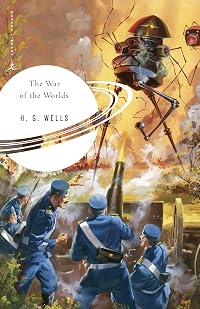
The War of the Worlds
by H. G. Wells
On This Page
Description
As life on Mars becomes impossible, Martians and their terrifying machines invade the earth.Tags
Recommendations

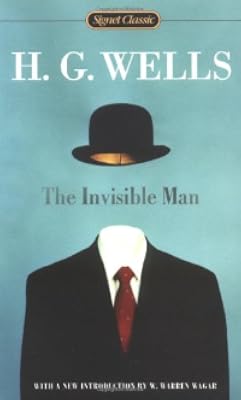

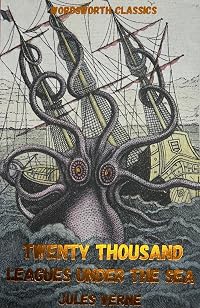
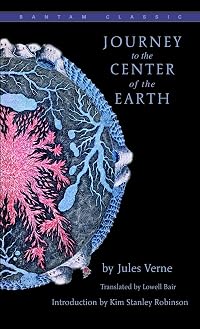
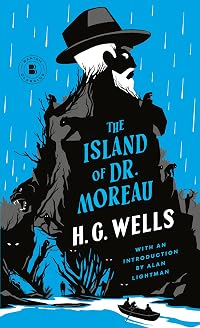





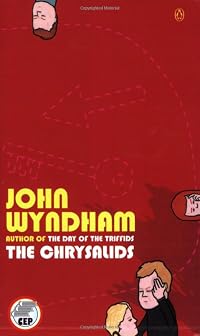



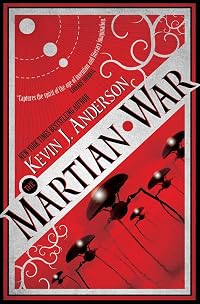

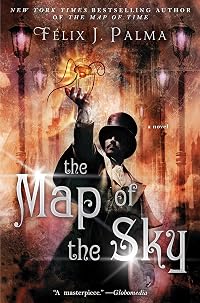
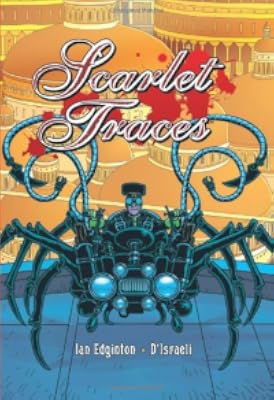

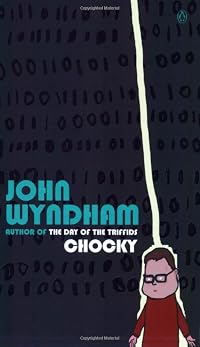
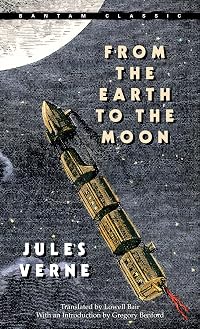
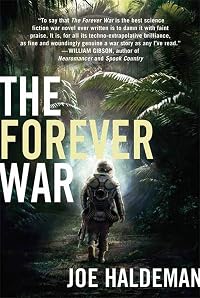
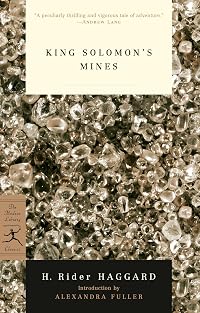

Member Recommendations



Member Reviews
4/5
It's a wonder to me that Wells wrote this book 130 years ago now, and that it's survived that time without aging as much as some books do in 30 years. Wells created an entire genre of literature that would otherwise not exist today in its same form.
Wells questions what he sees as the future of humanity in its technology and morality. He uses the martians as a future version of ourselves, one where our morality has continued to wither in the face of our increasing intellect, and our technology gives us full power to dispense our will on those living beings that share a planet with us. He questions the path that he sees our species heading towards, and warns that our ignorance in these matters will lead to our own destruction, as well show more as the destruction of all that we value.
The prose itself can sometimes leave you wanting for more. Wells writes in a stately and sometimes antiquated manner, that occasionally reads as a news broadcast rather than a personal account of genocide. That being said, Wells also finds moments of true humanity as he describes vivid and horrid scenes of human nativity and suffering. I found the depictions of hopeless mob mentality and the stoic silences that are left behind after destruction of the martians to be quite moving. His characters are rather flat and monotone, unfortunately, which may have set the stage for genre as a whole.
Though not without its flaws, I think that War of the Worlds feels more or less timeless in a sense. A piece of literature that is as much a time capsule of the moment, as well as something that will continue to be relevant in the present for a long time. show less
It's a wonder to me that Wells wrote this book 130 years ago now, and that it's survived that time without aging as much as some books do in 30 years. Wells created an entire genre of literature that would otherwise not exist today in its same form.
Wells questions what he sees as the future of humanity in its technology and morality. He uses the martians as a future version of ourselves, one where our morality has continued to wither in the face of our increasing intellect, and our technology gives us full power to dispense our will on those living beings that share a planet with us. He questions the path that he sees our species heading towards, and warns that our ignorance in these matters will lead to our own destruction, as well show more as the destruction of all that we value.
The prose itself can sometimes leave you wanting for more. Wells writes in a stately and sometimes antiquated manner, that occasionally reads as a news broadcast rather than a personal account of genocide. That being said, Wells also finds moments of true humanity as he describes vivid and horrid scenes of human nativity and suffering. I found the depictions of hopeless mob mentality and the stoic silences that are left behind after destruction of the martians to be quite moving. His characters are rather flat and monotone, unfortunately, which may have set the stage for genre as a whole.
Though not without its flaws, I think that War of the Worlds feels more or less timeless in a sense. A piece of literature that is as much a time capsule of the moment, as well as something that will continue to be relevant in the present for a long time. show less
Martian invasion!
You know what is truly remarkable about this classic? That it was written in 1898! Long before airplanes, satellites, WWI, and WWII. Written at time when viruses had only just been identified, and when the possibility an advanced intelligence might land on a foreign celestial body was merely the titillating purview of science fiction. (Even humans have now done that.)
The War of the Worlds is the Father of the Alien Invasion story, the originator of a whole series of tropes of overwhelming apocalypse. As I read, I kept thinking of McCormac's The Road, and also a recent read for me, Wyndham's The Day of the Triffids.
But Wells did it first.
The writing is so modern in its style, too, which is a bit of a surprise to me show more since this was a Victorian novel. I dislike the tendency to floridly overwrite that the Victorians so often did. Indeed, I often noticed, with delight, that Wells said what he had to say, and then left it. That is so much more powerful than explaining ad nauseum as if we readers are idiots. His prose was not florid, not verbose; it was brutal and lean. His only nod to the prevailing Victorian taste that I could see was the story's generally uplifting tone at the end. Definitely not a 2oth century invasion ending as in, say, Clarke's Childhood’s End.
I was pleasantly surprised with Wells' often made comparison of the Martians' unfeeling attitude toward humankind with humankind's own treatment toward our own fellow terrestrial species. Martians were cruelly indifferent and selfish. Humans are cruelly indifferent and selfish.
In the end,it wasn't humans' superior intelligence or might that overcame the Martians, it was one of those very low lower species , which was perfectly apt.
Listened via Librivox, https://librivox.org/the-war-of-the-worlds-version-3-by-h-g-wells/ narrated by Cori Samuel, with her wonderful voice and diction. show less
You know what is truly remarkable about this classic? That it was written in 1898! Long before airplanes, satellites, WWI, and WWII. Written at time when viruses had only just been identified, and when the possibility an advanced intelligence might land on a foreign celestial body was merely the titillating purview of science fiction. (Even humans have now done that.)
The War of the Worlds is the Father of the Alien Invasion story, the originator of a whole series of tropes of overwhelming apocalypse. As I read, I kept thinking of McCormac's The Road, and also a recent read for me, Wyndham's The Day of the Triffids.
But Wells did it first.
The writing is so modern in its style, too, which is a bit of a surprise to me show more since this was a Victorian novel. I dislike the tendency to floridly overwrite that the Victorians so often did. Indeed, I often noticed, with delight, that Wells said what he had to say, and then left it. That is so much more powerful than explaining ad nauseum as if we readers are idiots. His prose was not florid, not verbose; it was brutal and lean. His only nod to the prevailing Victorian taste that I could see was the story's generally uplifting tone at the end. Definitely not a 2oth century invasion ending as in, say, Clarke's Childhood’s End.
I was pleasantly surprised with Wells' often made comparison of the Martians' unfeeling attitude toward humankind with humankind's own treatment toward our own fellow terrestrial species. Martians were cruelly indifferent and selfish. Humans are cruelly indifferent and selfish.
In the end,
Listened via Librivox, https://librivox.org/the-war-of-the-worlds-version-3-by-h-g-wells/ narrated by Cori Samuel, with her wonderful voice and diction. show less
“No one would have believed in the last years of the nineteenth century that this world was being watched keenly and closely by intelligences greater than man's and yet as mortal as his own; that as men busied themselves about their various concerns they were scrutinised and studied, perhaps almost as narrowly as a man with a microscope might scrutinise the transient creatures that swarm and multiply in a drop of water.”
So opens what is H.G. Wells best known novel and the one that is regarded as the forerunner of much of the Sci-Fi novels and movies that we see today.
I don't intend to say too much about the plot as its already well known other than its a fairly simple one; the narrator sees the Martians land and tries to survive. show more Instead I would like to talk about the two characters with whom the narrator spends most of his time with during the invasion, the curate and the artilleryman.
I won't pretend that I know anything about Wells views on religion but if the curate is anything to go by it seems pretty obvious that he had little time for people who claim to be religious but fail to act and live by the teachings that they profess to follow. The curate is a whining selfish glutton who views the invasion as God's judgment and is unable to see what he has done to deserve it.
“‘Be a man!’ said I. ‘You are scared out of your wits! What good is religion if it collapses under calamity? Think of what earthquakes, and floods, wars and volcanoes, have done before to men! Did you think God had exempted Weybridge? He is not an insurance agent.’”
In contrast the narrator sees the invasion from a more scientific standpoint marvelling at how far advanced the Martian technology is. Whereas the curate is fatalistic about mankind's future and can only see things in the short-term, the artilleryman is far more optimistic, whilst admitting that the Martians have won this battle he believes that eventually mankind will overthrow the invaders and reclaim the world. The narrator is initially taken in by the artilleryman's bold predictions but soon comes to realise that he is a idle dreamer who will never accomplish anything and so leaves him.
In fact this to me is the over-riding message in this novel. If people act as individuals rather than in a coordinated manner then they will never overcome the worlds problems. Many may see the Martians' demise as an anti-climax but I fear that they may be missing the point. It wasn't mankind who defeated the Martians here rather microscopic, invisible germs working together and if humans cannot work together to solve the world's problems, global warming etc then Mother Nature will find a way; and that might not be to the benefit of mankind.
This book is a classic for a reason. Its wonderfully paced with some great characters and a simple story but not so simple message that still feels relevant today despite being first published well over a hundred years ago. I initially struggled to get the musical version of this story out of my mind and maybe for that reason alone I felt that this wasn't quite as good as 'The Time Machine'. show less
So opens what is H.G. Wells best known novel and the one that is regarded as the forerunner of much of the Sci-Fi novels and movies that we see today.
I don't intend to say too much about the plot as its already well known other than its a fairly simple one; the narrator sees the Martians land and tries to survive. show more Instead I would like to talk about the two characters with whom the narrator spends most of his time with during the invasion, the curate and the artilleryman.
I won't pretend that I know anything about Wells views on religion but if the curate is anything to go by it seems pretty obvious that he had little time for people who claim to be religious but fail to act and live by the teachings that they profess to follow. The curate is a whining selfish glutton who views the invasion as God's judgment and is unable to see what he has done to deserve it.
“‘Be a man!’ said I. ‘You are scared out of your wits! What good is religion if it collapses under calamity? Think of what earthquakes, and floods, wars and volcanoes, have done before to men! Did you think God had exempted Weybridge? He is not an insurance agent.’”
In contrast the narrator sees the invasion from a more scientific standpoint marvelling at how far advanced the Martian technology is. Whereas the curate is fatalistic about mankind's future and can only see things in the short-term, the artilleryman is far more optimistic, whilst admitting that the Martians have won this battle he believes that eventually mankind will overthrow the invaders and reclaim the world. The narrator is initially taken in by the artilleryman's bold predictions but soon comes to realise that he is a idle dreamer who will never accomplish anything and so leaves him.
In fact this to me is the over-riding message in this novel. If people act as individuals rather than in a coordinated manner then they will never overcome the worlds problems. Many may see the Martians' demise as an anti-climax but I fear that they may be missing the point. It wasn't mankind who defeated the Martians here rather microscopic, invisible germs working together and if humans cannot work together to solve the world's problems, global warming etc then Mother Nature will find a way; and that might not be to the benefit of mankind.
This book is a classic for a reason. Its wonderfully paced with some great characters and a simple story but not so simple message that still feels relevant today despite being first published well over a hundred years ago. I initially struggled to get the musical version of this story out of my mind and maybe for that reason alone I felt that this wasn't quite as good as 'The Time Machine'. show less
Humanity doesn’t always bring the apocalypse upon themselves, as shown in The War of the Worlds. Written as an allegorical interpretation of the colonization of Tasmania, Wells invaded planet Earth by Martians with vast technological superiority. The war is told through the eyes of Londoner who witnesses the arrival of the Martians, their battlefield victories, and the resulting devastation. Human science and bravery amount to nothing before the invaders. In the end, survival of the world will depend on the smallest of Earth’s inhabitants. Wells penned a thought provoking tale which cases the reader to re-examine the assumptions of the evolution of civilization and technology as well as mankind’s place in the cosmos. For another show more interesting story, investigate how Wells’ original radio broadcast of his novel was received! show less
I was sure I’d read The War of the Worlds, because it’s one of those really famous and perpetually-referenced works of fiction that eventually just seeps into your brain by osmosis. I’m pretty sure I did read an abridged version in primary school, and I’ve read the excellent 2006 graphic novel Dark Horse put out, and I’ve seen the (greatly underrated) 2005 Spielberg film, and I’ve read Christopher Priest’s bizarre mash-up of it in The Space Machine. I know the plot pretty much off by heart. So it was with surprise that I recently realised I’d never actually read the original, unabridged novel.
The Martians invade England, lay waste to the land with their tripod battle machines and deadly heat-ray, scatter the British show more military before them, and eventually die because of Terran bacteria. That’s the synopsis that everybody knows. But even if you think you know this story, it’s well worth reading, because unlike most 19th century classics it’s an absolute cracker of a book.
One of the things I was most impressed by was Wells’ ability to develop a dreadful suspense, even though I knew precisely what was coming – and, you know, I’m sure even the readers at the time figured it out from the title. The War of the Worlds begins on a beautiful midsummer night in the London commuter town of Woking, amidst the utterly ordinary environment of the Victorian suburbs. (Incidentally, I enjoyed how the summer itself seemed a visceral part of the events – what is it about apocalyptic stories and summer? The Stand and the TV series The Walking Dead come to mind.) Strange conflagrations are witnessed by astronomers on the surface of Mars, and shortly afterwards, a falling star lands on the common near Woking. This moment in time – the beautifully written warm twilight of a Friday evening – is merely the beginning of a terrible destruction that will be wrought upon southern England.
Alien invasion stories are a dime a dozen these days, but when Wells first wrote The War of the Worlds it was something completely new: one of the first hard science fiction novels, challenging notions about British (and indeed human) supremacy over the planet, and depicting the reactions of the characters to terrible events above and beyond them with stunning clarity. One the one hand, it’s fascinating to see how differently a apocalyptic event would have been a century ago, chiefly in how slowly the news travels – even the narrator remarks on how strange it is, a few hours after the first Martians incinerate dozens of people at the first landing site, for him to stumble terrified back into Woking and find that only a few miles away people are still going about their business. Likewise, the true gravity of the situation is slow to descend upon the citizens of the capital, chiefly because “the majority of people in London do not read Sunday papers.”
Yet on the other hand, when the reality of the danger does sink in, Wells’ description of the panicked evacuation of six million people from London – one of the finest scenes in the novel – is weirdly modern. One might have expected a Victorian writer to fill it with acts of bravery, chivalry and decorum, but instead we see an ugly mass of people trampling over each other in their haste to escape.
Had the Martians aimed only at destruction, they might on Monday have annihilated the entire population of London, as it spread itself slowly through the home counties. Not only along the road through Barnet, but also through Edgware and Waltham Abbey, and along the roads eastward to Southend and Shoeburyness, and south of the Thames to Deal and Broadstairs, poured the same frantic rout. If one could have hung that June morning in a balloon in the blazing blue above London every northward and eastward road running out of the tangled maze of streets would have seemed stippled black with the streaming fugitives, each dot a human agony of terror and physical distress. I have set forth at length in the last chapter my brother’s account of the road through Chipping Barnet, in order that my readers may realise how that swarming of black dots appeared to one of those concerned. Never before in the history of the world had such a mass of human beings moved and suffered together. The legendary hosts of Goths and Huns, the hugest armies Asia has ever seen, would have been but a drop in that current. And this was no disciplined march; it was a stampede–a stampede gigantic and terrible–without order and without a goal, six million people unarmed and unprovisioned, driving headlong. It was the beginning of the rout of civilisation, of the massacre of mankind.
The various acts of panicked violence which follow are, to use the word again, modern – a realistic point of view I would have expected from a mid-century writer, not a Victorian. It’s enthralling stuff.
It’s also an eerie book to read from a modern perspective, not least of all as we approach the centenary of World War I. That war was still sixteen years distant when The War of the Worlds was released, but it’s uncanny how many things Wells accurately predicted: the total warfare, the sacking of towns and cities, the armoured fighting machines, and – most disturbing of all – the indiscriminate use of chemical weapons. On the other hand, something a lot of people don’t know about The War of the Worlds is that in Wells’ fictional universe, there are actually humans living alongside the Martians on Mars, albeit as slaves and food sources. This is only mentioned once, and it’s hard to tell whether it’s poetic license on Wells’ part or whether he thought that might be a genuine scientific possibility. Either way, it seems odd compared to how prescient the rest of the book was.
It’s hard to overstate just how much of an impact this novel had on the rest of the century’s science fiction. Even the final chapters, as the narrator walks across a deserted London – a scene that feels almost cinematic in its use of noise and silence – no doubt influenced the opening of John Wyndham’s classic The Day of the Triffids, which in turn was the inspiration for the film 28 Days Later, and so on and so forth. And I can’t stress enough just how madly, horribly inventive and compelling every part of this book is: the crowd gathered around the first cylinder at sunset on a hot summer’s day, the image of a Martian tripod striding down the Thames past the Houses of Parliament, the panicked flight of millions of Londoners, the devastated countryside choked with alien red weed, the derelict tripod on Primrose Hill dripping with “lank shreds of brown.” The War of the Worlds is an absolute classic of literature, and if you think you know the story and don’t need to read the book, think again. And, of course, it’s in the public domain and you can read it for free, so there’s no excuse not to. show less
The Martians invade England, lay waste to the land with their tripod battle machines and deadly heat-ray, scatter the British show more military before them, and eventually die because of Terran bacteria. That’s the synopsis that everybody knows. But even if you think you know this story, it’s well worth reading, because unlike most 19th century classics it’s an absolute cracker of a book.
One of the things I was most impressed by was Wells’ ability to develop a dreadful suspense, even though I knew precisely what was coming – and, you know, I’m sure even the readers at the time figured it out from the title. The War of the Worlds begins on a beautiful midsummer night in the London commuter town of Woking, amidst the utterly ordinary environment of the Victorian suburbs. (Incidentally, I enjoyed how the summer itself seemed a visceral part of the events – what is it about apocalyptic stories and summer? The Stand and the TV series The Walking Dead come to mind.) Strange conflagrations are witnessed by astronomers on the surface of Mars, and shortly afterwards, a falling star lands on the common near Woking. This moment in time – the beautifully written warm twilight of a Friday evening – is merely the beginning of a terrible destruction that will be wrought upon southern England.
Alien invasion stories are a dime a dozen these days, but when Wells first wrote The War of the Worlds it was something completely new: one of the first hard science fiction novels, challenging notions about British (and indeed human) supremacy over the planet, and depicting the reactions of the characters to terrible events above and beyond them with stunning clarity. One the one hand, it’s fascinating to see how differently a apocalyptic event would have been a century ago, chiefly in how slowly the news travels – even the narrator remarks on how strange it is, a few hours after the first Martians incinerate dozens of people at the first landing site, for him to stumble terrified back into Woking and find that only a few miles away people are still going about their business. Likewise, the true gravity of the situation is slow to descend upon the citizens of the capital, chiefly because “the majority of people in London do not read Sunday papers.”
Yet on the other hand, when the reality of the danger does sink in, Wells’ description of the panicked evacuation of six million people from London – one of the finest scenes in the novel – is weirdly modern. One might have expected a Victorian writer to fill it with acts of bravery, chivalry and decorum, but instead we see an ugly mass of people trampling over each other in their haste to escape.
Had the Martians aimed only at destruction, they might on Monday have annihilated the entire population of London, as it spread itself slowly through the home counties. Not only along the road through Barnet, but also through Edgware and Waltham Abbey, and along the roads eastward to Southend and Shoeburyness, and south of the Thames to Deal and Broadstairs, poured the same frantic rout. If one could have hung that June morning in a balloon in the blazing blue above London every northward and eastward road running out of the tangled maze of streets would have seemed stippled black with the streaming fugitives, each dot a human agony of terror and physical distress. I have set forth at length in the last chapter my brother’s account of the road through Chipping Barnet, in order that my readers may realise how that swarming of black dots appeared to one of those concerned. Never before in the history of the world had such a mass of human beings moved and suffered together. The legendary hosts of Goths and Huns, the hugest armies Asia has ever seen, would have been but a drop in that current. And this was no disciplined march; it was a stampede–a stampede gigantic and terrible–without order and without a goal, six million people unarmed and unprovisioned, driving headlong. It was the beginning of the rout of civilisation, of the massacre of mankind.
The various acts of panicked violence which follow are, to use the word again, modern – a realistic point of view I would have expected from a mid-century writer, not a Victorian. It’s enthralling stuff.
It’s also an eerie book to read from a modern perspective, not least of all as we approach the centenary of World War I. That war was still sixteen years distant when The War of the Worlds was released, but it’s uncanny how many things Wells accurately predicted: the total warfare, the sacking of towns and cities, the armoured fighting machines, and – most disturbing of all – the indiscriminate use of chemical weapons. On the other hand, something a lot of people don’t know about The War of the Worlds is that in Wells’ fictional universe, there are actually humans living alongside the Martians on Mars, albeit as slaves and food sources. This is only mentioned once, and it’s hard to tell whether it’s poetic license on Wells’ part or whether he thought that might be a genuine scientific possibility. Either way, it seems odd compared to how prescient the rest of the book was.
It’s hard to overstate just how much of an impact this novel had on the rest of the century’s science fiction. Even the final chapters, as the narrator walks across a deserted London – a scene that feels almost cinematic in its use of noise and silence – no doubt influenced the opening of John Wyndham’s classic The Day of the Triffids, which in turn was the inspiration for the film 28 Days Later, and so on and so forth. And I can’t stress enough just how madly, horribly inventive and compelling every part of this book is: the crowd gathered around the first cylinder at sunset on a hot summer’s day, the image of a Martian tripod striding down the Thames past the Houses of Parliament, the panicked flight of millions of Londoners, the devastated countryside choked with alien red weed, the derelict tripod on Primrose Hill dripping with “lank shreds of brown.” The War of the Worlds is an absolute classic of literature, and if you think you know the story and don’t need to read the book, think again. And, of course, it’s in the public domain and you can read it for free, so there’s no excuse not to. show less
"For that moment I touched an emotion beyond the common range of men, yet one that the poor brutes we dominate know only too well." (pg. 144)
To read H. G. Wells is to read the father of science-fiction, perhaps rivalled only by Jules Verne, and if The War of the Worlds is to be read more out of respect than joy, it deserves a lot of respect. This is Genesis for sci-fi, the archetypal model of the genre: a short, speculative piece, low on characterization but bold on theme and ideas, rooted in what was known to science of the time but pushing that knowledge to its limits.
It's hard to appreciate just how original and inventive this piece must have been in 1898. Before space exploration, before even the Wright Brothers, Wells creates a show more scenario of invasion from another planet, convincing even if a modern reader necessarily notices some of the science has since proven to be in error. Wells anticipates societal breakdown long before the 'total war' of the Second World War, and poison gas sixteen years before the First (the passage on page 91 where Wells describes the people choking under the low, malignant cloud of 'Black Smoke' could, with very few changes, pass for an extract from Remarque's All Quiet on the Western Front). Similarly, the armoured vehicles the Martians use on London could be seen as precursors to tanks. Wells has his Martians harvesting humans for food, turning southern England into their own personal Chinese wet market, before they succumb to bacteria, a point not lost on me as I read the book under coronavirus lockdown in 2020. He creates the Heat-Ray – anticipating lasers. The space gun which launches the Martian invaders from their planet to ours, though scientifically implausible, was an inspiration to Robert Goddard, who created the first feasible rockets and ushered in the Space Age that led to man's landing on the Moon and, perhaps, one day, Mars. The footprint of this slight book is enormous.
With that in mind, it pains me to admit that, as a story, The War of the Worlds is quite average. It reads quickly, because it is so short, and because it engages with such inventive ideas it is never dull. And yet, there is little in the way of plot, characterization or narrative flair. It follows a nameless man who witnesses the arrival of the first Martians, but the reaction and the lack of incredulity leave much to be desired. This surprise, public extra-terrestrial attack, in what was at the time the world's premier city and hub of empire, did "not make the sensation that an ultimatum to Germany would have done" (pg. 35). This seems dubious. "Anyone coming along the road from Chobham or Woking would have been amazed at the sight," the narrator tells us on page 22. Well, quite. His subsequent narration of his survival under the Martian-induced apocalypse is very dry, with all the vim of an after-action report.
There is a provincialism to the story that is very jarring, along with a low energy, and it makes it hard to buy into the threat of the Martians even as they butcher the London populace en masse. "So greatly had the strength of the Martians impressed me," our narrator writes on page 56, "that I had determined to take my wife to Newhaven, and go with her out of the country forthwith." Such lines, which are the norm, read like a polite but negative restaurant review, or, in their excessive reserve and settings like Chobham, Woking and Horsell, like a comedy that never breaks character. Speaking of character, neither the nameless narrator, nor his beloved nameless 'my wife', emerge as people for the reader to invest in. This is an ideas book, and nothing else.
Which is why it is the book's saving grace that it actually tries to say something valuable with its ideas. Even if the technology and ideas can seem old-hat nowadays, Wells – through his narrator – explicitly compares the Martians' curb-stomp of the heart of the British Empire to that empire's domination of other lands, asking difficult questions of the then-dominant imperialism of the West. "The Tasmanians, in spite of their human likeness, were entirely swept out of existence in a war of extermination waged by European immigrants… Are we such apostles of mercy as to complain if the Martians warred in the same spirit?" (pg. 9). It is a bold challenge, and Wells, admirably, goes even further, juxtaposing the Martians' treatment of humans (like ants – pg. 152) to man's often-cruel dominion over the animals. It is surely no coincidence that mankind's eventual victory – or, more accurately, reprieve – at the end of the book comes not from force of arms or human ingenuity, but from bacteria, the "microscopic allies" that share our world, slaying the invaders (pg. 168).
In such ways, Wells proves to be modern not only in his technological ideas, but also somewhat in his morality. He moves beyond the Victorian gentleman-adventures of his own time, however enjoyable they still are to read, and provides one of the first and most enduring commentaries on the modern world. Even if, as I said at the start of my review, the book is better read out of respect than for storytelling joy, that respect is unending. show less
To read H. G. Wells is to read the father of science-fiction, perhaps rivalled only by Jules Verne, and if The War of the Worlds is to be read more out of respect than joy, it deserves a lot of respect. This is Genesis for sci-fi, the archetypal model of the genre: a short, speculative piece, low on characterization but bold on theme and ideas, rooted in what was known to science of the time but pushing that knowledge to its limits.
It's hard to appreciate just how original and inventive this piece must have been in 1898. Before space exploration, before even the Wright Brothers, Wells creates a show more scenario of invasion from another planet, convincing even if a modern reader necessarily notices some of the science has since proven to be in error. Wells anticipates societal breakdown long before the 'total war' of the Second World War, and poison gas sixteen years before the First (the passage on page 91 where Wells describes the people choking under the low, malignant cloud of 'Black Smoke' could, with very few changes, pass for an extract from Remarque's All Quiet on the Western Front). Similarly, the armoured vehicles the Martians use on London could be seen as precursors to tanks. Wells has his Martians harvesting humans for food, turning southern England into their own personal Chinese wet market, before they succumb to bacteria, a point not lost on me as I read the book under coronavirus lockdown in 2020. He creates the Heat-Ray – anticipating lasers. The space gun which launches the Martian invaders from their planet to ours, though scientifically implausible, was an inspiration to Robert Goddard, who created the first feasible rockets and ushered in the Space Age that led to man's landing on the Moon and, perhaps, one day, Mars. The footprint of this slight book is enormous.
With that in mind, it pains me to admit that, as a story, The War of the Worlds is quite average. It reads quickly, because it is so short, and because it engages with such inventive ideas it is never dull. And yet, there is little in the way of plot, characterization or narrative flair. It follows a nameless man who witnesses the arrival of the first Martians, but the reaction and the lack of incredulity leave much to be desired. This surprise, public extra-terrestrial attack, in what was at the time the world's premier city and hub of empire, did "not make the sensation that an ultimatum to Germany would have done" (pg. 35). This seems dubious. "Anyone coming along the road from Chobham or Woking would have been amazed at the sight," the narrator tells us on page 22. Well, quite. His subsequent narration of his survival under the Martian-induced apocalypse is very dry, with all the vim of an after-action report.
There is a provincialism to the story that is very jarring, along with a low energy, and it makes it hard to buy into the threat of the Martians even as they butcher the London populace en masse. "So greatly had the strength of the Martians impressed me," our narrator writes on page 56, "that I had determined to take my wife to Newhaven, and go with her out of the country forthwith." Such lines, which are the norm, read like a polite but negative restaurant review, or, in their excessive reserve and settings like Chobham, Woking and Horsell, like a comedy that never breaks character. Speaking of character, neither the nameless narrator, nor his beloved nameless 'my wife', emerge as people for the reader to invest in. This is an ideas book, and nothing else.
Which is why it is the book's saving grace that it actually tries to say something valuable with its ideas. Even if the technology and ideas can seem old-hat nowadays, Wells – through his narrator – explicitly compares the Martians' curb-stomp of the heart of the British Empire to that empire's domination of other lands, asking difficult questions of the then-dominant imperialism of the West. "The Tasmanians, in spite of their human likeness, were entirely swept out of existence in a war of extermination waged by European immigrants… Are we such apostles of mercy as to complain if the Martians warred in the same spirit?" (pg. 9). It is a bold challenge, and Wells, admirably, goes even further, juxtaposing the Martians' treatment of humans (like ants – pg. 152) to man's often-cruel dominion over the animals. It is surely no coincidence that mankind's eventual victory – or, more accurately, reprieve – at the end of the book comes not from force of arms or human ingenuity, but from bacteria, the "microscopic allies" that share our world, slaying the invaders (pg. 168).
In such ways, Wells proves to be modern not only in his technological ideas, but also somewhat in his morality. He moves beyond the Victorian gentleman-adventures of his own time, however enjoyable they still are to read, and provides one of the first and most enduring commentaries on the modern world. Even if, as I said at the start of my review, the book is better read out of respect than for storytelling joy, that respect is unending. show less
As I was reading this, two thoughts struck me.
The first was that this book was less about Martians than it was about how humanity views itself as the "Kings of the Earth". Mankind has always had this annoying tendency to think that whatever serves us is good and right, despite whatever injury is done to the Earth and any other living creature on it in obtaining whatever it is that we want. The Martian invasion served only to open our eyes to this blindness and willful ignorance.
I appreciated some of the artilleryman's ideas on cohabitation, in so far as he compared the surviving humans to rodents or small animals -- the Martians (as the "New Kings of the Earth") will let us be, as we mean them no harm-- unless they run out of food, show more that is. Isn't this really how animals must see us? I think so. Too bad that's not true... Humans will hunt, kill and exploit for the sport of it, not just for survival.
The invasion in the book awakens us to the fact that there is always someone bigger, badder and meaner out there to hunt humans as if we are now the animals.
But I digress!
My second thought was that it was really odd that all 7 of the mentioned Martian cylinders landed in England. I mean, even if we expand this to include Ireland, Scotland and Wales, we are talking about an area of 151,502 square miles. Compare this to Asia at 17,700,000 square miles or even Europe at 3,930,000 square miles. (Figures are from Google.)
About 3/4 through the book, it's mentioned that other cylinders are probably wreaking havoc on other parts of the world. I suppose it must be assumed that they had some trajectory and that the cylinders were shot at the same time each day to follow it, but then why only aim at one area if world domination is your goal?
In this one particular, I could not suspend my disbelief to allow for 7 out of 10 cylinders to hit such a small area of the planet.
I am probably over-thinking this... I feel better after getting all of that off of my chest though! I did really enjoy the story itself, and would definitely recommend it to anyone. It's short enough so that it is not a daunting read, but it contains such a large story that it is immensely entertaining. show less
The first was that this book was less about Martians than it was about how humanity views itself as the "Kings of the Earth". Mankind has always had this annoying tendency to think that whatever serves us is good and right, despite whatever injury is done to the Earth and any other living creature on it in obtaining whatever it is that we want. The Martian invasion served only to open our eyes to this blindness and willful ignorance.
I appreciated some of the artilleryman's ideas on cohabitation, in so far as he compared the surviving humans to rodents or small animals -- the Martians (as the "New Kings of the Earth") will let us be, as we mean them no harm-- unless they run out of food, show more that is. Isn't this really how animals must see us? I think so. Too bad that's not true... Humans will hunt, kill and exploit for the sport of it, not just for survival.
The invasion in the book awakens us to the fact that there is always someone bigger, badder and meaner out there to hunt humans as if we are now the animals.
But I digress!
My second thought was that it was really odd that all 7 of the mentioned Martian cylinders landed in England. I mean, even if we expand this to include Ireland, Scotland and Wales, we are talking about an area of 151,502 square miles. Compare this to Asia at 17,700,000 square miles or even Europe at 3,930,000 square miles. (Figures are from Google.)
About 3/4 through the book, it's mentioned that other cylinders are probably wreaking havoc on other parts of the world. I suppose it must be assumed that they had some trajectory and that the cylinders were shot at the same time each day to follow it, but then why only aim at one area if world domination is your goal?
In this one particular, I could not suspend my disbelief to allow for 7 out of 10 cylinders to hit such a small area of the planet.
I am probably over-thinking this... I feel better after getting all of that off of my chest though! I did really enjoy the story itself, and would definitely recommend it to anyone. It's short enough so that it is not a daunting read, but it contains such a large story that it is immensely entertaining. show less
Members
- Recently Added By
Published Reviews
ThingScore 100
Mr. Wells's dramatic power is of the strongest, and through "The War of the Worlds" deals with death, destruction, and ruin, he has known how to manage a terrible topic in a clever and ingenuous way.
added by Shortride
Lists

1001 Books You Must Read Before You Die
1,448 works; 1,136 members

Best Science Fiction Novels
816 works; 430 members

The Guardian's 1000 Novels Everyone Must Read
1,005 works; 551 members
Survey of Classic Science Fiction
171 works; 48 members

Classics you know you should have read but probably haven't
421 works; 407 members

Radcliffe's 100 Best Novel of the 20th Century
100 works; 32 members
BBC Big Read
191 works; 46 members

Read the book and saw the movie
1,170 works; 195 members

Best First Contact Stories
33 works; 16 members

Recommended Apocalyptic Novels
53 works; 23 members

S.F. Masterworks (Complete)
229 works; 15 members
Best of British Literature
226 works; 41 members
Le Monde - Les 100 livres du siècle
121 works; 25 members

Best Horror Books
281 works; 84 members

SF Masterworks
193 works; 8 members

Survey of Science Fiction and Fantasy
101 works; 13 members

Introduction to Fantasy and Science Fiction (Proposed Reading List)
28 works; 6 members

Dystopian and Apocalyptic Literature
350 works; 74 members
Science Fiction
42 works; 7 members

Survey of Classic Fantastic Fiction
36 works; 9 members

Jones and Newman's Horror: Another 100 Best Books
100 works; 7 members

Recommend the 20 best books you've read in the last five years
2,168 works; 607 members

Easton Press Masterpieces of Science Fiction
30 works; 2 members

75 Books Challenge Halloween Read "Official" Selections
71 works; 7 members
Unbound Worlds 100 Best SF Books
100 works; 8 members
SF Masterworks
22 works; 3 members

100 Best Thrillers of All Time
100 works; 6 members

LibraryThingers' 1001 Books You Must Read Before You Die
442 works; 29 members

Pleasant Surprises: Books That Exceeded Our Expectations
418 works; 143 members

Dystopian Novels you should read
25 works; 2 members

Top Five Books of 2015
811 works; 240 members

Best First Lines
133 works; 8 members

Isaac Arthur’s Book Recommendations
98 works; 3 members

Speculative Fiction to Read
706 works; 32 members
Best Books With Aliens
67 works; 10 members
Newark Public Library's 1904 List of a Thousand of the Best Novels
95 works; 5 members

Books Read in 2021
5,361 works; 114 members
Creatures of Various Kinds
15 works; 3 members
Favourite 19th century fiction
257 works; 62 members
Books available on Open Library
171 works; 4 members

Best books made into television
66 works; 4 members

Mensa for Kids Excellence in Reading Award Program (Grades 7-8)
62 works; 1 member
1,001 BYMRBYD Concensus
723 works; 27 members

Books Read in 2020
4,379 works; 124 members

BBC Top Books
78 works; 3 members
Mensa for Kids Excellence in Reading Award Program (Grades 7-8)
62 works; 3 members

Edward Gorey Covers
150 works; 8 members

Books mentioned in Fire and Hemlock by Diana Wynne Jones
33 works; 1 member

AbeBooks: 50 essential science fiction books
50 works; 6 members

Books Read in 2026
2,081 works; 69 members
Favorite Science Fiction
456 works; 219 members

Books referenced in the Astral Library
60 works; 1 member

.
396 works; 1 member

Books Finished in 2024
12 works; 1 member
Authors mentioned in The World of Yesterday
68 works; 1 member
Reading LIst
648 works; 1 member

DigitalDreamDoor top 300
300 works; 4 members

Best Horror Mega-List
342 works; 6 members

Recommended Reading : 600 Classics Reviewed, Editors of Salem Press, 2015
634 works; 6 members

La Bibliothèque idéale de la SF (Éditions Albin Michel, 1988)
52 works; 1 member

current
52 works; 1 member

science fiction
17 works; 1 member

Book club books
22 works; 1 member
Books With Our Favorite First Lines
168 works; 104 members
um actually
76 works; 3 members
Speculative Fiction
40 works; 2 members
Folio Society
831 works; 53 members
Books Read in 2011
684 works; 20 members

It Came From the Skies!
7 works; 3 members
Books Set on Mars
22 works; 7 members

Books Bought & Received as Gifts in 2014
81 works; 1 member

CCE 1000 Good Books List
1,033 works; 12 members
Books That Go Bump in the Night
42 works; 6 members
To Read
6 works; 1 member

Victorian Period
113 works; 10 members
Favourite Books
1,820 works; 316 members

SantaThing 2014 Gifts
299 works; 17 members
Retrospective of Horror and Thrillers
21 works; 2 members

Books I Own But Haven't Read
144 works; 2 members
A Novel Cure
742 works; 23 members

Best War Stories
87 works; 16 members

Great Books Favorites
71 works; 6 members

1890s
49 works; 6 members

Books Set in Great Britain
191 works; 13 members

War Literature
101 works; 19 members

Books Read in 2015
3,299 works; 126 members
Books Read in 2018
4,360 works; 110 members
Overdue Podcast
808 works; 9 members
United Kingdom
82 works; 5 members

Favorite Childhood Books
1,651 works; 519 members

Unread books
1,063 works; 87 members

Books Read in 2017
4,249 works; 130 members

19th Century
190 works; 16 members
Ambleside Books
459 works; 18 members
Out of Copyright
244 works; 14 members
Speculative Fiction: The Classics
36 works; 5 members

To Read - Horror
137 works; 14 members
Books read in 2015
213 works; 5 members

Watched the Movie, Probably Won't Read the Book
185 works; 34 members

Western World's Greatest Books - Project Gutenberg
295 works; 15 members

The League of Extraordinary Gentlemen
87 works; 4 members

Blue Pyramid 1,276 Best Books of All Time
1,248 works; 32 members

Allie's 2015 Reading List
33 works; 1 member
Works Referenced in The League of Extraordinary Gentlemen
122 works; 6 members

Books Read in 2025
4,128 works; 98 members
Author Information

H. G. Wells was born in Bromley, England on September 21, 1866. After a limited education, he was apprenticed to a draper, but soon found he wanted something more out of life. He read widely and got a position as a student assistant in a secondary school, eventually winning a scholarship to the Royal College of Science in South Kensington, where show more he studied biology. He graduated from London University in 1888 and became a science teacher. He also wrote for magazines. When his stories began to sell, he left teaching to write full time. He became an author best known for science fiction novels and comic novels. His science fiction novels include The Time Machine, The War of the Worlds, The Wonderful Visit, The Island of Doctor Moreau, The Invisible Man, The First Men in the Moon, and The Food of the Gods. His comic novels include Love and Mr. Lewisham, Kipps: The Story of a Simple Soul, The History of Mr. Polly, and Tono-Bungay. He also wrote several short story collections including The Stolen Bacillus, The Plattner Story, and Tales of Space and Time. He died on August 13, 1946 at the age of 79. (Bowker Author Biography) show less
Some Editions
Awards and Honors
Series
Belongs to Publisher Series
Work Relationships
Is contained in
The War of the Worlds A Dream of Armageddon The Land Ironclads. Heron Collected Works of Wells by H. G. Wells
Seven Famous Novels of H. G. Wells: Time Machine / Island of Dr. Moreau / Invisible Man / War of the Worlds / First Men in the Moon / Food of the Gods / In the Days of the Comet by H. G. Wells
The Time Machine / The Island of Doctor Moreau / The Invisible Man / The War of the Worlds / The First Men in the Moon by H. G. Wells
The Time Machine / The Invisible Man / The Island of Doctor Moreau / The War of the Worlds by H. G. Wells
The Time Machine / The Island of Dr. Moreau / The Invisible Man / The War of the Worlds / The First Men in the Moon / The Food of the Gods by H. G. Wells
90 Masterpieces You Must Read (Vol.1): Novels, Poetry, Plays, Short Stories, Essays, Psychology & Philosophy by Various
H.G. Wells - Gesammelte Werke (Die Zeitmaschine - Die Insel des Dr. Moreau - Der Krieg der Welten - Befreite Welt): Iris-Leinen mit Goldprägung by H. G. Wells
The Ultimate Science Fiction Mega Collection: 24 of the Best Sci-Fi Books of All Time: A Journey to the Center of the Earth, 20,000 Leagues Under the Sea, Around the World in 80 Days, John Carter of Mars Trilogy, The War of the Worlds, The Time Machine, Frankenstein, Dr. Jekyll and Mr. Hyde, 3 Ray Bradbury Stories, Flatland, & More by Jules Verne
Classic Tales of Science Fiction & Fantasy (Leather-bound Classics) by Editors of Canterbury Classics
The Time Machine / The Island of Doctor Moreau / The Invisible Man / The First Men in the Moon / The Food of the Gods by H. G. Wells
Is retold in
Has the (non-series) sequel
Has the adaptation
Is abridged in
Is parodied in
Is replied to in
Inspired
Has as a reference guide/companion
Has as a study
Has as a student's study guide
Common Knowledge
- Canonical title
- The War of the Worlds
- Original title
- The War of the Worlds
- Alternate titles*
- De strijd der werelden
- Original publication date
- 1898
- People/Characters
- The Journalist; Ogilvy; Martian; The Artilleryman; Mrs. Elphistone; Miss Elphistone (show all 12); Narrator; Narrator's Brother; The Curate; Henderson; Stent; Lord Garrick
- Important places
- Mars; Woking, Surrey, England, UK; Weybridge, Surrey, England, UK; Horsell Common, Horsell, Surrey, England, UK; Horsell, Surrey, England, UK; Surrey, England, UK (show all 8); London, England, UK; England, UK
- Important events
- Alien Invasion; Martian invasion of Earth; Victorian Era; 19th century; 1890s
- Related movies
- The War of the Worlds (1953 | IMDb | Byron Haskin); War of the Worlds (2005 | IMDb | Steven Spielberg); The War of the Worlds (2005 | IMDb | Timothy Hines); War of the Worlds (2005 | IMDb | David Michael Latt); War of the Worlds (1988 | IMDb); War of the Worlds 2: The Next Wave (2008 | IMDb | C. Thomas Howell) (show all 8); War of the Worlds (2019 | IMDb | FOX TV); The War of the Worlds (2019 | IMDb | BBC TV)
- Epigraph
- But who shall dwell in these worlds if they be inhabited? ... Are we or they Lords of the World? ... And how are all things made for man? – KEPLER (quoted in The Anatomy of Melancholy)
- Dedication
- TO
MY BROTHER
FRANK WELLS
THIS RENDERING
OF HIS IDEA - First words
- No one would have believed in the last years of the nineteenth century that this world was being watched keenly and closely by intelligences greater than man's and yet as mortal as his own; that as men busied themselves about... (show all) their various concerns they were scrutinised and studied, perhaps almost as narrowly as a man with a microscope might scrutinise the transient creatures that swarm and multiply in a drop of water.
- Last words
- (Click to show. Warning: May contain spoilers.)And strangest of all is it to hold my wife's hand again, and to think that I have counted her, and she has counted me, among the dead.
- Original language
- English
- Canonical DDC/MDS
- 823.0876231
- Canonical LCC
- PR5774
- Disambiguation notice
- This is the main work for The War of the Worlds by H. G. Wells. Please do not combine with any abridgements, adaptations, annotated editions, etc.
ISBN 1402552459 is an unabridged audio version of the novel
*Some information comes from Common Knowledge in other languages. Click "Edit" for more information.
Classifications
- Genres
- Science Fiction, Fiction and Literature
- DDC/MDS
- 823.0876231 — Literature & rhetoric English & Old English literatures English fiction By type Genre fiction Adventure fiction Speculative fiction Science fiction Military science fiction Alien invasion
- LCC
- PR5774 — Language and Literature English English Literature 19th century , 1770/1800-1890/1900
- BISAC
Statistics
- Members
- 21,643
- Popularity
- 255
- Reviews
- 358
- Rating
- (3.75)
- Languages
- 29 — Basque, Catalan, Chinese, Cornish, Czech, Danish, Dutch, English, Estonian, Finnish, French, German, Irish, Greek, Hungarian, Italian, Lithuanian, Norwegian (Bokmål), Polish, Romanian, Russian, Scots, Croatian, Slovak, Spanish, Swedish, Thai, Turkish, Portuguese (Portugal)
- Media
- Paper, Audiobook, Ebook
- ISBNs
- 914
- UPCs
- 8
- ASINs
- 311