On This Page
Description
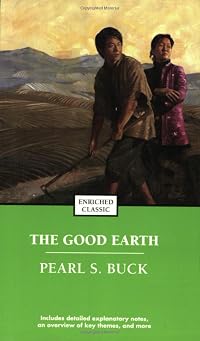
This Pulitzer Prize-winning classic tells the poignant tale of a Chinese farmer and his family in old agrarian China. The humble Wang Lung glories in the soil he works, nurturing the land as it nurtures him and his family. Nearby, the nobles of the House of Hwang consider themselves above the land and its workers; but they will soon meet their own downfall.Hard times come upon Wang Lung and his family when flood and drought force them to seek work in the city. The working people riot, show more breaking into the homes of the rich and forcing them to flee. When Wang Lung shows mercy to one noble and is rewarded, he begins to rise in the world, even as the House of Hwang falls.
. show less
Tags
Recommendations
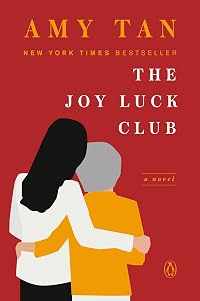
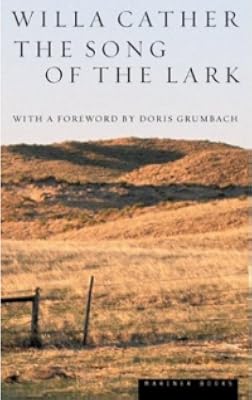

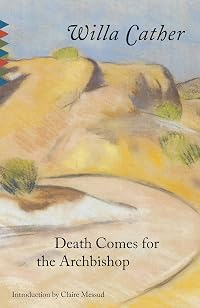

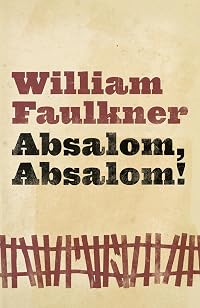




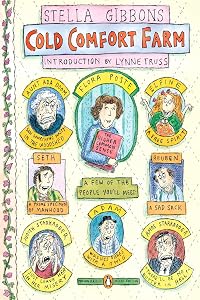
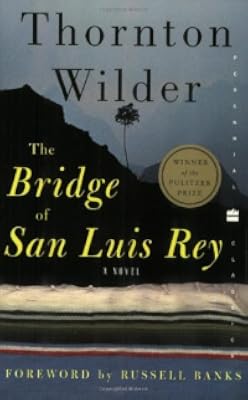
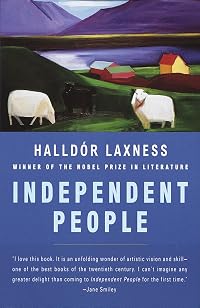
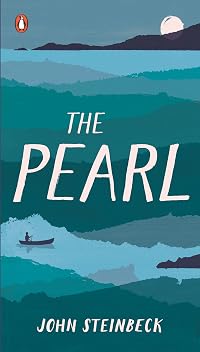

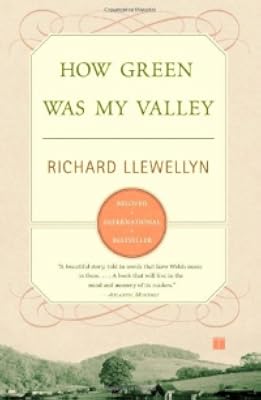
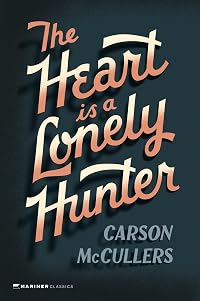
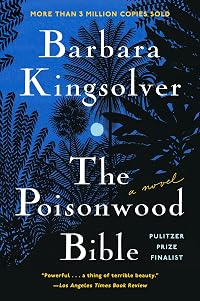
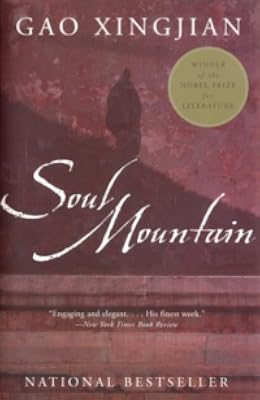


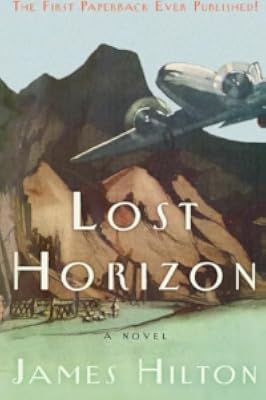
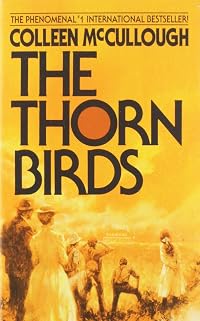
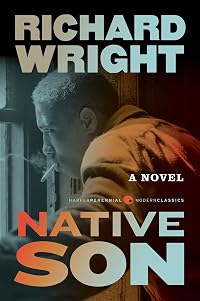
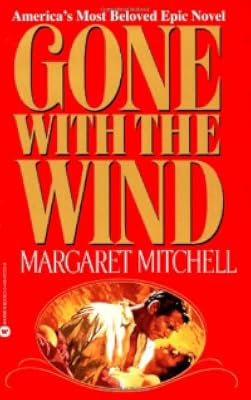
Member Recommendations
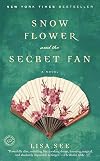
mcenroeucsb Both are well-written novels set in late 19th/early 20th century China.
80
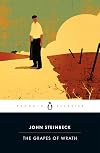
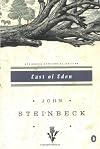
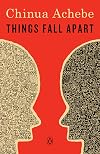
Ellen_Elizabeth Another classic, historical fiction novel that explores a traditional culture through the story of one man and his family. Both were written in English and illustrate the author's perceived strengths and weaknesses of the subject culture in a way that is accessible to western readers.
30

Authoress Families who go through times of both wealth and poverty are featured in both works
10


charlie68 Another book about the soul of China.
Member Reviews
This book was...exasperating. I didn't agree with most of what the characters did and got frustrated because I wanted to argue with them and tell Wang Lung how terrible he was. "Wow, I can't wait to get married so I can lay in bed and my wife can do everything for me!" What a way to introduce a protagonist. And he took the pearls. What a piece of shit.
Also, I want justice for O-Lan! She was visibly dying of a cancer for THREE YEARS before anyone bothered calling a doctor?? They never would have been successful without her, and that's the thanks she got?! What a terrible end, even for a "worthless slave." Ugh.
Apparently this is the first book in a trilogy, but I don't think I can get myself this worked up two more times.
Other show more things:
"Well, and" before EVERY piece of dialogue.
"THE LAND"
"With the passing of the flame out of him he was suddenly cold with an age and he was old man. Nevertheless, he was fond of her....and more and more his love for her was the love of father for daughter." Gross.
He. Took. The. Pearls. show less
Also, I want justice for O-Lan! She was visibly dying of a cancer for THREE YEARS before anyone bothered calling a doctor?? They never would have been successful without her, and that's the thanks she got?! What a terrible end, even for a "worthless slave." Ugh.
Apparently this is the first book in a trilogy, but I don't think I can get myself this worked up two more times.
Other show more things:
"Well, and" before EVERY piece of dialogue.
"THE LAND"
"With the passing of the flame out of him he was suddenly cold with an age and he was old man. Nevertheless, he was fond of her....and more and more his love for her was the love of father for daughter." Gross.
He. Took. The. Pearls. show less
Pearl Buck is one of those authors I've been meaning to read for years. I finally did, and I'm glad I started with The Good Earth. The story seems both familiar and strange. The book addresses universal themes of family conflict, poverty and wealth, wisdom and folly, love and hate, but its setting in provincial China in the early 20th century is very different. It was jarring for the female sex to be referred to as “slaves”, yet that's how the women were treated even in wealthy households.
One of the most curious passages in the book is Wang Lung's encounter with Christian missionaries in the city. They provide much-needed assistance for the poor when conditions are bad, but seem to abandon them to their fate when conditions are at show more their worst. They distribute literature that the uneducated Wang Lung can't understand. He can't read the letters, and the pictures don't make any sense to him. The family puts the papers to good use, but not in the way the missionaries intended. Knowing that Pearl Buck was the daughter of missionaries, I can't help but see this as a commentary on the futility of the work of Western missionaries.
The story is well-suited for audio, and Anthony Heald's reading is delightful. I'm not sure I would have liked the book quite as well if I had read it rather than listened to it. Warmly recommended. show less
One of the most curious passages in the book is Wang Lung's encounter with Christian missionaries in the city. They provide much-needed assistance for the poor when conditions are bad, but seem to abandon them to their fate when conditions are at show more their worst. They distribute literature that the uneducated Wang Lung can't understand. He can't read the letters, and the pictures don't make any sense to him. The family puts the papers to good use, but not in the way the missionaries intended. Knowing that Pearl Buck was the daughter of missionaries, I can't help but see this as a commentary on the futility of the work of Western missionaries.
The story is well-suited for audio, and Anthony Heald's reading is delightful. I'm not sure I would have liked the book quite as well if I had read it rather than listened to it. Warmly recommended. show less
This is the first in a trilogy of novels published in the 1930s about the lives of generations of a family of Chinese peasants in the late 19th and early 20th centuries. The author was American Pearl S Buck, daughter of Presbyterian missionaries and who spent much of the first 40 years of her life in China. This novel was, rather counter-intuitively, the best-selling novel in the US in 1931 and 1932, in which latter year it won the Pulitzer Prize, while Buck herself was the first American woman to win the Nobel Prize in Literature in 1938.
The beauty of the novel is that the land, the soil, the earth of the title is almost a character in its own right. It belongs to farmer Wang Lung and his family which early on in the novel consists of show more himself, his young wife O-Lan, and their two young sons, and Wang's father; with a feckless uncle, with his wife and son, lurking in the background. Wang works hard but struggles. Famine comes to the land and desperate times. His family moves to a southern city where, eventually they encounter political turbulence and Wang acquires a small fortune of gold coins. Back home in his village, he wisely buys land and grows his farm, becoming prosperous. There are sad and tragic scenes, humour, pathos and an interesting cast of characters. One shocking aspect is the way daughters are treated as opposed to sons, girls are described as "slaves" who are (though not in Wang's family) sold off (or even killed) during times of hardship to help the family.
Part of the overall allure and mystery of the novel is its seeming to take place outside time and place - we don't find out the names of most of Wang's family members, and the outside world rarely impinges on their lives, with unspecified references to wars and revolutions, which I thought must refer to the Boxer rebellion of 1901 and the revolution that overthrew the Manchus in 1911-12, though the the stretches of time in the family's lives seems longer than these events allow - Wang is about 20 at the novel's start and about 70 at its end. I love Buck's writing style and her deep empathy for her characters and their landscape and culture. show less
The beauty of the novel is that the land, the soil, the earth of the title is almost a character in its own right. It belongs to farmer Wang Lung and his family which early on in the novel consists of show more himself, his young wife O-Lan, and their two young sons, and Wang's father; with a feckless uncle, with his wife and son, lurking in the background. Wang works hard but struggles. Famine comes to the land and desperate times. His family moves to a southern city where, eventually they encounter political turbulence and Wang acquires a small fortune of gold coins. Back home in his village, he wisely buys land and grows his farm, becoming prosperous. There are sad and tragic scenes, humour, pathos and an interesting cast of characters. One shocking aspect is the way daughters are treated as opposed to sons, girls are described as "slaves" who are (though not in Wang's family) sold off (or even killed) during times of hardship to help the family.
Part of the overall allure and mystery of the novel is its seeming to take place outside time and place - we don't find out the names of most of Wang's family members, and the outside world rarely impinges on their lives, with unspecified references to wars and revolutions, which I thought must refer to the Boxer rebellion of 1901 and the revolution that overthrew the Manchus in 1911-12, though the the stretches of time in the family's lives seems longer than these events allow - Wang is about 20 at the novel's start and about 70 at its end. I love Buck's writing style and her deep empathy for her characters and their landscape and culture. show less
I first read The Good Earth fifty years ago, probably more. I recall nothing of that reading and so was very curious to know what I thought now. I was particularly curious since Pearl Buck, who received the Nobel Prize in 1938 for her body of work,* and The Good Earth are frequent targets of disdain and derision and I am as guilty as anyone. (Robert Frost is said to have commented, “If she can get it, then anybody can.” The irony is too great: Buck nominated Frost for the Nobel Prize in 1961.)
The Good Earth is the story of Wang Lung, a poor farmer in 1920s China. The novel opens with his marriage to O-Lan, a slave in the palatial home of the wealthy Hwang family. Next are years of hard work, a little cleverness and even a bit of show more wisdom on Wang Lung’s part. The story embraces his failures and achievements equally. Buck renders a deeply sensitive portrait of O-Lan and his children, and the concubine he buys once he becomes rich. She depicts his extended family, his relationships, and his values. Indeed, the book is above all Wang Lung’s book, and it is no surprise that Buck wanted his name as the book’s title.
Buck’s first language was Chinese. She spent the first half of her life in China (except for four years of college in the US). She grew up with Chinese playmates and friends, lived among ordinary Chinese rather than among other Westerners, and inhabited a thoroughly Chinese world. She was intent on recreating China in the book and crafted a detailed world of daily life, customs, practices, beliefs, and an extraordinary range of characters.
One of the most fascinating aspects of the book is its style. Buck’s prose is unmistakably and deeply evocative of Biblical cadences, syntax, and diction (word choice and use). That style is responsible not only for the unique feel of the book but for much of its depth and power. In comments made shortly after she won the Nobel Prize, Buck said: “I think in the Chinese idiom and translate. That may be why the result occasionally resembles scriptural English. The Chinese language, like King James's English, is simple and from the soil.” I think that her comment is both too glib and too modest.
But is it a good book? In many ways, The Good Earth reminds me of a work by another author who won the Nobel (in 1924), one also frequently accused of being a “lesser” choice. I opened my review of Władysław Reymont’s The Peasants by observing that “I think your reaction to it will depend largely on your willingness to be pleased with storytelling. Or, more precisely, storytelling alone…. [Reymont] is content to describe and, as good as he is at description, as good as he is at evoking a time and place, 900 pages later, there is not much more than that.” I complained that “Reymont describes [his characters’] behavior exhaustively but probes their motivations only marginally.” Buck spends more time examining the whys of peoples’ behavior than Reymont. She is particularly careful to portray Wang Lung’s motivations and his beliefs.
Like Reymont and Marcel Pagnol, Buck is strong on the natural world. One might well contend that the book is about nothing so much as Wang Lung’s relationship to the earth—his source of sustenance as a farmer and a human being. Perhaps the most heartrending section of The Good Earth describes a brutal famine, and Buck generally excels at portraying the color and texture of village life. Like Reymont and Pagnol, she creates “a world rich in the traditions and rhythms of life that is inextricably bound to the seasons.” I criticized The Peasants because “where Pagnol uses this [world] to fashion a masterful Greek tragedy, Reymont is content to tell a story.” I think that, like Pagnol, Buck does more than tell a story; she is more intentional and more successful than Reymont in posing important questions.
Yet I wish she had done more than she does. I wish she had given O-Lan, the moral center of the book, as much depth as she gave to Wang Lung. O-Lan has very little to say yet her influence is unmistakable. Had Buck chosen to make the book about O-Lan, she might have created a work comparable to Kristin Lavransdatter. But it was a matter of deep personal importance to her to introduce China and the Chinese people to her readers. Her goal, she wrote, was “putting China into people’s minds.” Indeed, the Nobel Presentation Speech opened with the telling line that “Pearl Buck once told how she had found her mission as interpreter to the West of the nature and being of China.”
The Good Earth is very much what Buck wanted it to be and it is therefore—perhaps unfortunately—very much a book of its times. The tension between a timeless story and a time-bound telling, is, I think, what has earned it some of the criticism it has received. Despite its many virtues, the book sometimes seems no more than a primer on the Chinese. Buck was uniquely qualified to write such a book but The Good Earth can be didactic and un-literary. I suspect that it has largely fallen out of the conversation for not entirely good reasons, though. Although it has its flaws and although it may not be a great work of literature, I think it has many undeniably powerful scenes and moving prose. I thought it well worth my time and am glad to have re-read it. I have been more than a little foolish all these years to condescend to Pearl Buck and The Good Earth. There is room at the table for both Woolf and Buck; those who disparage or mock this solid, if not truly exceptional, novel, owe the author, the book—and themselves—to read it again.
* Virginia Woolf, a writer often suggested as a “more deserving” choice, could not have won the Prize in 1938 because she was not nominated that year or—remarkably enough—any other year. The 1938 shortlist included Hermann Hesse (who would win in 1946), Johannes Jensen (who won in 1944), Aldous Huxley, and the Flemish master, Stijn Streuvels. show less
The Good Earth is the story of Wang Lung, a poor farmer in 1920s China. The novel opens with his marriage to O-Lan, a slave in the palatial home of the wealthy Hwang family. Next are years of hard work, a little cleverness and even a bit of show more wisdom on Wang Lung’s part. The story embraces his failures and achievements equally. Buck renders a deeply sensitive portrait of O-Lan and his children, and the concubine he buys once he becomes rich. She depicts his extended family, his relationships, and his values. Indeed, the book is above all Wang Lung’s book, and it is no surprise that Buck wanted his name as the book’s title.
Buck’s first language was Chinese. She spent the first half of her life in China (except for four years of college in the US). She grew up with Chinese playmates and friends, lived among ordinary Chinese rather than among other Westerners, and inhabited a thoroughly Chinese world. She was intent on recreating China in the book and crafted a detailed world of daily life, customs, practices, beliefs, and an extraordinary range of characters.
One of the most fascinating aspects of the book is its style. Buck’s prose is unmistakably and deeply evocative of Biblical cadences, syntax, and diction (word choice and use). That style is responsible not only for the unique feel of the book but for much of its depth and power. In comments made shortly after she won the Nobel Prize, Buck said: “I think in the Chinese idiom and translate. That may be why the result occasionally resembles scriptural English. The Chinese language, like King James's English, is simple and from the soil.” I think that her comment is both too glib and too modest.
But is it a good book? In many ways, The Good Earth reminds me of a work by another author who won the Nobel (in 1924), one also frequently accused of being a “lesser” choice. I opened my review of Władysław Reymont’s The Peasants by observing that “I think your reaction to it will depend largely on your willingness to be pleased with storytelling. Or, more precisely, storytelling alone…. [Reymont] is content to describe and, as good as he is at description, as good as he is at evoking a time and place, 900 pages later, there is not much more than that.” I complained that “Reymont describes [his characters’] behavior exhaustively but probes their motivations only marginally.” Buck spends more time examining the whys of peoples’ behavior than Reymont. She is particularly careful to portray Wang Lung’s motivations and his beliefs.
Like Reymont and Marcel Pagnol, Buck is strong on the natural world. One might well contend that the book is about nothing so much as Wang Lung’s relationship to the earth—his source of sustenance as a farmer and a human being. Perhaps the most heartrending section of The Good Earth describes a brutal famine, and Buck generally excels at portraying the color and texture of village life. Like Reymont and Pagnol, she creates “a world rich in the traditions and rhythms of life that is inextricably bound to the seasons.” I criticized The Peasants because “where Pagnol uses this [world] to fashion a masterful Greek tragedy, Reymont is content to tell a story.” I think that, like Pagnol, Buck does more than tell a story; she is more intentional and more successful than Reymont in posing important questions.
Yet I wish she had done more than she does. I wish she had given O-Lan, the moral center of the book, as much depth as she gave to Wang Lung. O-Lan has very little to say yet her influence is unmistakable. Had Buck chosen to make the book about O-Lan, she might have created a work comparable to Kristin Lavransdatter. But it was a matter of deep personal importance to her to introduce China and the Chinese people to her readers. Her goal, she wrote, was “putting China into people’s minds.” Indeed, the Nobel Presentation Speech opened with the telling line that “Pearl Buck once told how she had found her mission as interpreter to the West of the nature and being of China.”
The Good Earth is very much what Buck wanted it to be and it is therefore—perhaps unfortunately—very much a book of its times. The tension between a timeless story and a time-bound telling, is, I think, what has earned it some of the criticism it has received. Despite its many virtues, the book sometimes seems no more than a primer on the Chinese. Buck was uniquely qualified to write such a book but The Good Earth can be didactic and un-literary. I suspect that it has largely fallen out of the conversation for not entirely good reasons, though. Although it has its flaws and although it may not be a great work of literature, I think it has many undeniably powerful scenes and moving prose. I thought it well worth my time and am glad to have re-read it. I have been more than a little foolish all these years to condescend to Pearl Buck and The Good Earth. There is room at the table for both Woolf and Buck; those who disparage or mock this solid, if not truly exceptional, novel, owe the author, the book—and themselves—to read it again.
* Virginia Woolf, a writer often suggested as a “more deserving” choice, could not have won the Prize in 1938 because she was not nominated that year or—remarkably enough—any other year. The 1938 shortlist included Hermann Hesse (who would win in 1946), Johannes Jensen (who won in 1944), Aldous Huxley, and the Flemish master, Stijn Streuvels. show less
There have been many reviews written about "The Good Earth" so I doubt I will be able to rival those. I just have to say that this book had me hooked from beginning to end. I literally tried to hide from people while in the Amazon rain forest in Ecuador so I could finish this book. I don't know why it drew me in so much, but it did. I cared about this family that started off so poor, but the father (Wang Lung) who keeps his faith in the land (or Good Earth) is able to become a wealthy landowner over time. This of course leaves to a rift with him and his faithful wife (O-lan).
I don't know how realistic this book is. I am sure that Pearl S. Buck did some research. Since the author lived in China with her missionary parents one wonders show more how did that color her writing and observations though. I didn't get disdain from Buck while reading her words and there doesn't seem to be any elements that the Chinese people in this book are backwards. She is able to draw them as very developed characters for the most part I thought. I had a hard time with some of the characters, but that is because we didn't stay with them as much (the three sons of Wang Lung and O-lan).
I loved the ending which of course had me running to put "Sons" (House of Earth #2) on hold as soon as possible to see what becomes of Wang Lung's three sons who are so different from each other. show less
I don't know how realistic this book is. I am sure that Pearl S. Buck did some research. Since the author lived in China with her missionary parents one wonders show more how did that color her writing and observations though. I didn't get disdain from Buck while reading her words and there doesn't seem to be any elements that the Chinese people in this book are backwards. She is able to draw them as very developed characters for the most part I thought. I had a hard time with some of the characters, but that is because we didn't stay with them as much (the three sons of Wang Lung and O-lan).
I loved the ending which of course had me running to put "Sons" (House of Earth #2) on hold as soon as possible to see what becomes of Wang Lung's three sons who are so different from each other. show less
“But hers was a strange heart, sad in its very nature, and she could never weep and ease it as other women do, for her tears never brought her comfort.”
This Pulitzer Prize winning novel that is included in “1,000 Books to Read Before You Die” has been on my Read List for over a decade. After reading and loving “Peony” by Pearl S. Buck a few months ago, I finally got to it.
It's never easy to read about extreme poverty or the horrific plight of females in China (anywhere!) or the awful behavior of the men in charge. However, despite all of these things being central to this story, I liked it and I'm glad I read it.
The story is centered on a farming family living in a small Chinese village in the early 1900s. It gives deep show more insight into the tenuousness of life for China’s poorest citizens, the power of land ownership to completely shift the trajectory of a family, and how greed and power can corrupt even decent men.
And by “men,” I literally mean men. It is primarily the men who are corrupted (to varying degrees) by strife, good fortune, poverty and riches. Not all of the females are innocent, but they are all second class citizens. As soon as I would sigh with relief about a positive turn of events, Wang Lung (the main character) would find a way to screw things up. Although Wang Lung's wife, O-Lan is far more level-headed and wise, she is totally and unfortunately powerless.
I think because the story was written from a male's point of view, I didn't emotionally connect to it like I did to Peony, which had a strong female main character. Also, the men were annoying at best, completely maddening at worst. Although this was wholly intentional on behalf of Ms. Buck, I still found myself wishing that the story was told by O'Lan.
It's easy to forget that Ms. Buck is not Chinese. Her grasp of the history and culture is mind blowing. show less
This Pulitzer Prize winning novel that is included in “1,000 Books to Read Before You Die” has been on my Read List for over a decade. After reading and loving “Peony” by Pearl S. Buck a few months ago, I finally got to it.
It's never easy to read about extreme poverty or the horrific plight of females in China (anywhere!) or the awful behavior of the men in charge. However, despite all of these things being central to this story, I liked it and I'm glad I read it.
The story is centered on a farming family living in a small Chinese village in the early 1900s. It gives deep show more insight into the tenuousness of life for China’s poorest citizens, the power of land ownership to completely shift the trajectory of a family, and how greed and power can corrupt even decent men.
And by “men,” I literally mean men. It is primarily the men who are corrupted (to varying degrees) by strife, good fortune, poverty and riches. Not all of the females are innocent, but they are all second class citizens. As soon as I would sigh with relief about a positive turn of events, Wang Lung (the main character) would find a way to screw things up. Although Wang Lung's wife, O-Lan is far more level-headed and wise, she is totally and unfortunately powerless.
I think because the story was written from a male's point of view, I didn't emotionally connect to it like I did to Peony, which had a strong female main character. Also, the men were annoying at best, completely maddening at worst. Although this was wholly intentional on behalf of Ms. Buck, I still found myself wishing that the story was told by O'Lan.
It's easy to forget that Ms. Buck is not Chinese. Her grasp of the history and culture is mind blowing. show less
In my quest to read all the books in my inherited library, I finally decided to read this one. When I opened it, I found my grandfather's name written on the inside next to my mother's, so I know I'm the third generation in my family to enjoy this extraordinary masterpiece. The copy I have is very old—10th printing in 1942—and I had to hold it gently while reading since the pages are yellowed, thin, and easy to rip. It was a joy to read. The writing style is simple, yet each sentence tells two stories. The first one is about the life of the farmer, Wang Lung, and the second tells us about human nature.
Although the story gives us a fascinating view into old Chinese culture when just surviving was a struggle, it also tells the story show more of how success can warp a person's perception of what's essential and what is not. Wang Lung and his wife, O-Lan, work hard to feed their growing family, always believing the land is their most important possession. They sacrifice everything to give their children a better life. However, by taking the struggle out of life, their sons lose sight of what's important. They demonstrate this in the end by planning to sell the land their father struggled so hard to acquire—the very thing that gave them the wealthy life they now live. I suppose it's human nature for parents to want their kids' lives to be better than theirs. But, it sometimes backfires big time. show less
Although the story gives us a fascinating view into old Chinese culture when just surviving was a struggle, it also tells the story show more of how success can warp a person's perception of what's essential and what is not. Wang Lung and his wife, O-Lan, work hard to feed their growing family, always believing the land is their most important possession. They sacrifice everything to give their children a better life. However, by taking the struggle out of life, their sons lose sight of what's important. They demonstrate this in the end by planning to sell the land their father struggled so hard to acquire—the very thing that gave them the wealthy life they now live. I suppose it's human nature for parents to want their kids' lives to be better than theirs. But, it sometimes backfires big time. show less
Members
- Recently Added By
Lists

Pulitzer Prize Winners for Fiction
102 works; 54 members

Classics you know you should have read but probably haven't
421 works; 406 members

Best Historical Fiction
620 works; 261 members
Historical Fiction
889 works; 91 members

20th Century Literature
1,161 works; 54 members
Literature About Social Class
134 works; 19 members
Best Family Stories
241 works; 22 members

Female Author
1,235 works; 64 members

Top Five Books of 2013
1,562 works; 721 members

Best Fiction Set in China
43 works; 27 members

Oprah's Book Club (original and 2.0)
91 works; 21 members

Women's Stories
88 works; 13 members
TED 2013 Summer Reading List
190 works; 13 members

Best Love Stories
107 works; 14 members

Sense of place
156 works; 13 members

Unread books
1,063 works; 86 members
LibraryThingers' 1001 Books You Must Read Before You Die
442 works; 30 members

Best family sagas
244 works; 33 members

In or About the 1930s
198 works; 27 members

Nobel Price Winners
222 works; 20 members

Blue Pyramid 1,276 Best Books of All Time
1,248 works; 32 members

Best War Stories
87 works; 16 members

1964 College Preparatory Reading List
202 works; 8 members

Books You Read During High School (For School)
301 works; 53 members
Literature About Women and Girls
394 works; 39 members

Mensa for Kids Excellence in Reading Award Program (Grades 9-12)
116 works; 5 members

A Novel Cure
742 works; 23 members

Love and Marriage
93 works; 10 members
Love Triangles in Literature
108 works; 15 members
100 World Classics
99 works; 15 members
100 Best Books by American Women During the Past 100 Years, 1833-1933
27 works; 5 members

Best of American Literature
146 works; 9 members
Fiction For Men
142 works; 11 members
Amanda's Guaranteed Books
110 works; 5 members

Best books read in 2011
200 works; 50 members

Asia
178 works; 7 members

1930s
262 works; 5 members
Best Domestic Fiction
77 works; 6 members
Carole's List
445 works; 13 members

Most Depressing Books
69 works; 16 members
Books Featured on Readers' Review of the Diane Rehm Show
161 works; 8 members
Books tagged favorites
390 works; 30 members

Books where the women deserved better
6 works; 2 members
CCE 1000 Good Books List
1,033 works; 12 members
Mensa for Kids Excellence in Reading Award Program (Grades 9-12)
116 works; 3 members

Books Read in 2023
5,547 works; 145 members

feasting on fiction
24 works; 5 members

SHOULD Read Books!
354 works; 9 members
BOOKS READ IN 1980's and 1990's
52 works; 4 members

Fiction Set During a Revolution
55 works; 23 members
Trinity College Booklist (1951): Class Ten, English Literature
358 works; 5 members

For Further Reading: A List of 160 Novels from 15 Literatures
160 works; 4 members
American Lit for Eng 11 Research Project
368 works; 6 members

Reading Globally
136 works; 16 members

Bookshelf from Interstellar
62 works; 1 member

Recommended Reading : 600 Classics Reviewed, Editors of Salem Press, 2015
634 works; 6 members

Mustich's 1000 Books to Read Before You Die: A Life Changing List
1,001 works; 19 members

Publisher's Weekly Bestsellers Part I - 1895-1939
399 works; 8 members

The China Project Book List
100 works; 2 members
Books With Our Favorite First Lines
168 works; 104 members
NPR Books You Love: Books That Shaped You in High School
26 works; 1 member

Fiction Books Worthy of Reading Again
37 works; 1 member
School Made Us Read It
380 works; 196 members

BitLife
212 works; 4 members

Retrospective of 20th- and 21st-century literature
154 works; 1 member
BingoDOG - Books With Natural Disasters: Fiction
39 works; 11 members

Daniel S. Burt's recommended historical novels
8 works; 1 member
Books available on Open Library
171 works; 4 members
Classics Set in Foreign Countries
3 works; 2 members
Protagonists - Women
29 works; 2 members
Best Books of 1926-1935
403 works; 10 members
Tagged 20th Century
33 works; 4 members

Books Read in 2011
684 works; 19 members

Books Read in 2010
631 works; 11 members

Ambleside Books
459 works; 18 members

Global Reads: Books Set in East Asia
139 works; 12 members

Down on the Farm
17 works; 6 members

Books Read in 2012
816 works; 34 members

.
396 works; 1 member

Best of World Literature
434 works; 51 members

Favorite Long Books
330 works; 42 members
Author Information

433+ Works 37,116 Members
Pearl S. Buck, June 26, 1892 - March 6, 1973 Pearl Sydenstricker Buck was an American author, best know for her novels about China. Buck was born on June 26, 1892, in Hillsboro, West Virginia, but as the daughter of Presbyterian missionaries she was taken to China in infancy. She received her early education in Shanghai, but returned to the United show more States to attend college, and graduated from Randolph-Macon Woman's College in Virginia in 1914. Buck became a university teacher there and married John Lossing Buck, an agricultural economist, in 1917. Buck and her husband both taught in China, and she published magazine articles about life there. Her first novel East Wind, West Wind was published in 1930. Buck achieved international success with The Good Earth, which won the Pulitzer Prize in 1932. This story of a Chinese peasant family's struggle for survival was later made into a MGM film. Buck resigned from the Presbyterian Board of Foreign Missions after publishing an article that was critical of missionaries. She returned to the United States because of political unrest in China. Buck's novels during this period include Sons, A House Divided, and The Mother. She also wrote biographies of her father (Fighting Angel) and her mother (The Exile). She won the Nobel Prize for Literature in 1938. During her career, Buck published over 70 books: novels, nonfiction, story collections, children's books, and translations from the Chinese. She also wrote under the pseudonym John Sedges. In the United States, Buck was active in the civil rights and women's rights movements. In 1942 she founded the East and West Association to promote understanding between Asia and the West. In 1949, Buck established Welcome House, the first international interracial adoption agency. In 1964, she established the Pearl S. Buck foundation to sponsor support for Amerasian children who were not considered adoptable. Pearl Buck died in Danbury, Vermont, on March 6, 1973. (Bowker Author Biography) show less
Some Editions
Awards and Honors
Awards
Notable Lists
Series

Belongs to Publisher Series
Work Relationships
Is contained in
Contains
Has the adaptation
Is abridged in
Has as a reference guide/companion
Has as a student's study guide
Has as a teacher's guide
Common Knowledge
- Canonical title
- The Good Earth
- Original title
- The Good Earth
- Alternate titles*
- Op eigen grond
- Original publication date
- 1931-03-02
- People/Characters
- Wang Lung; O-Lan; Lotus; Cuckoo; Pear Blossom; Ching (show all 12); Ancient Mistress; Poor fool; Wang Lung's father; Wang Lung's uncle; Uncle's son; Uncle's wife
- Important places
- China
- Related movies
- The Good Earth (1937 | IMDb)
- Epigraph
- ...This was what Vinteuil had done for the little phrase. Swann felt that the composer had been content (with the instruments at his disposal) to draw aside its veil, to make it visible, following and respecting its outlines ... (show all)with a hand so loving, so prudent, so delicate and so sure, that the sound altered at every moment, blunting itself to indicate a shadow, springing back into life when it must follow the curve of some more bold projection. And one proof that Swann was not mistaken when believed in the real existence of this phrase was that anyone with an ear at all delicate for music would have at once detected the imposture had Vinteuil, endowed with less power to see and to render its forms, sought to dissemble (by adding a line, here and there, of his own invention) the dimness of his vision or the feebleness of his hand.
— Swann's Way, by Marcel Proust - First words
- It was Wang Lung's marriage day.
- Quotations
- He had no articulate thought of anything; there was only this perfect sympathy of movement, of turning this earth of theirs over and over to the sun, this earth which formed their home and fed their bodies and made their gods... (show all). The earth lay rich and dark, and fell apart lightly under the points of their hoes, Sometimes they turned up a bit of brick, a splinter of wood. It was nothing. Sometimes, in some age, bodies of men and women had been buried there, houses had stood there, had fallen, and gone back into the earth. So would also their house, sometime, return into the earth, their bodies also. Each had his turn at this earth. They worked on, moving together — together — producing the fruit of this earth — speechless in their movement together.
…he said nothing still, she looked at him piteously and sadly out of her strange dumb eyes that were like a beast’s eyes that cannot speak, and then she went away, creeping and feeling for the door because of her tears th... (show all)at blinded her.
Wang Lung watched her as she went and he was glad to be alone, but still he was ashamed and he was still angry that he was ashamed, and he said to himself, and he muttered the words aloud and restlessly, as though he quarreled with someone, “Well, and other men are so and I have been good enough to her, and there are men worse than I.” And he said at last that O-lan must bear it.
My house and my land it is, and if it were not for the land we should all starve as the others did, and you could not walk about in your dainty robes idle as a scholar. It is the good land that has made you something better ... (show all)than a farmer’s lad. - Last words
- (Click to show. Warning: May contain spoilers.)But over the old man's head they looked at each other and smiled.
- Original language
- English US
- Disambiguation notice
- This is the book; do not combine with the film.
Film ISBNs: 0792803825, 0790793083
*Some information comes from Common Knowledge in other languages. Click "Edit" for more information.
Classifications
- Genres
- General Fiction, Fiction and Literature, Historical Fiction
- DDC/MDS
- 813.52 — Literature & rhetoric American literature in English American fiction in English 1900-1999 1900-1945
- LCC
- PS3503 .U198 .G6 — Language and Literature American literature American literature Individual authors 1900-1960
- BISAC
Statistics
- Members
- 15,321
- Popularity
- 455
- Reviews
- 290
- Rating
- (4.01)
- Languages
- 24 — Arabic, Chinese, Czech, Danish, Dutch, English, Estonian, Finnish, French, German, Greek, Hungarian, Italian, Japanese, Korean, Latvian, Malay, Norwegian (Bokmål), Norwegian, Polish, Portuguese, Slovenian, Spanish, Swedish
- Media
- Paper, Audiobook, Ebook
- ISBNs
- 181
- UPCs
- 2
- ASINs
- 161