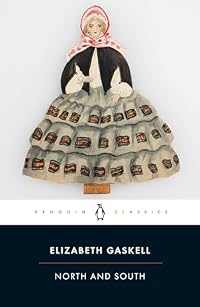
North and South
by Elizabeth Gaskell
On This Page
Description
North and South draws on Gaskell's own experiences of the poverty and hardship of life in the industrial north of England. Her heroine, Margaret Hale, is taken from the wealthy south by her nonconformist minister father, to live in a fictional northern town. The stark differences are explored through Margaret's abrupt change in circumstance, and her sympathetic reaction to the plight of the northerners. She comes into conflict with a local mill owner who proposes marriage to her. The two show more undergo a series of misunderstandings and changes of heart before they are reunited.. show less
Tags
Recommendations
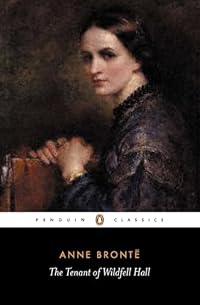
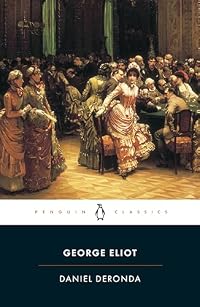
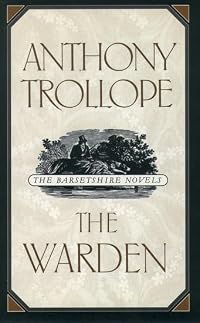









Member Recommendations
Shuffy2 Mr. Darcy and Mr. Thornton are both of the same cloth, a love story you can really sink into!
272
Cecrow Another Margaret who extends her sympathy across social strata.
20

Lapsus_Linguae A self-righteous heroine leaves the place where she lived for many years, gets wrongly accused of "immoral behavior", has strong Christian views, and so on.
21
Lapsus_Linguae Another sequel to the novel.
by KayCliff

kitzyl Woman inspired to tackle social issues and to stand with the workers against capitalist authority.

aprille Children who suffer from fathers' financial choices
Member Reviews
Margaret Hale and John Thornton are both too proud to admit to their mutual attraction and, what's worse, Thornton is in 'trade'. As a romance, North and South has a lot in common with Pride and Prejudice but it's somber where P&P can be a little superficial. Romance aside, Margaret's family is a study in conscientiousness: her father's crisis of faith, her brother's stand against a cruel captain, and her mother's marriage for love instead of wealth and position. Margaret's own involvement with the family of a factory mill hand shows the social impact of industrialization as the workers strike for a living wage. It's good enough that I want to revisit it, either in audiobook or miniseries form.
I've tried to read this before, when it was a book club pick, but at the time I just couldn't put the time into it. I've meant to get back to it and I'm glad I have now done so.
Written in the mid 1800s, this manages to combine a romance with social history and the industrial revolution. Margaret Hale is the female lead. A the start we find her living in her Aunt Shaw's house, one of an affluent class who don;t seem to have to do a great deal for their money and the women lead idle, pampered lives. Shortly after the opening, Margaret returns to her father's house. He's a vicar in the New Forest, and live in more reduced circumstances than her mother's sister and their family in London. Her mother seems to feel their situation and show more complains that she wishes to leave Helstone. And when her father suffers a crisis of confidence, they do move - to industrial Milton, Darkshire. This suits her mother no better she makes her feelings know. As things progress, Margaret's father increasingly relies on her. The family are a bit fish out of water in their new situation. They are not on a level with the working people in the mills, but they do not feel that they fit with the mill masters either. Margaret has a certain snobbery over the mill owners, implying that they are in trade, but she seems to feel more sympathy for the working men. She and her opinions provide a southern view to contrast with the northern situation that she finds herself in. I feel that the North/South divide is slightly artificial, a divide between industrial and rural would be more accurate.
In time Margaret develops human relationships with Bessy and her father, Higgins, and finds more understanding of the mill owners, in the figure of Mr Thornton. We discover more of him and he begins to be more human. Along the way he discovers feeling for Margaret. The life of the workers and masters does not run smooth, and there is a strike. This was, in part, arranged by Higgins, on the Union committee and Mr Thornton is one of the masters affected. There is a crowd and a riot ensues, with potentially more serious effects mitigated by Margaret's presence, although she maybe precipitated the events that preceded this. At times she still seems to misunderstand the complexities of the situation at play in the industrial landscape.
Along with the social history, there are more human threads of story. There is the unfortunate events surrounding Margaret's parents and then her God father. He seems to be introduced almost as a tool in order to set up the final portion of the book, but as a plot device he is unoffensive enough. There's the fate of Margaret's brother, Frederick. He arrives and leaves in short order and causes a certain amount of pain to those around him without knowing. There is the gradual humanisation of both Higgins and Thornton. Margaret interacts with both of them and by doing so she seems to act as a bridge between the,. They both come to understand each other's position more by her intervention in both of their lives. And then there is Margaret's romantic life. In 400 odd pages she receives 4 proposals from 2 men, and turns 3 of them down. The final one doesn't come as a surprise, but the contrast between it and its predecessor is quite marked. In Henry Lennox's proposal, she is being viewed as an asset to his professional life, he want to use her inheritance to further his career. He seems to view her as being interesting and will not disgrace him socially, but he barely seems to know her or her way of thinking. The second proposal from Mr Thornton seems far more a match of equals. He comes to her to renegotiate his rental of the mills, he ends up by being offered capital to recover the situation. I think the contrast between the two of them makes for a clear differential between the idle affluent class (as represented by Henry Lennox) and the working classes. Mr Thornton may be a mill master, but he still represents a more industrious attitude to life, he has risen to his current position and is not above returning to a lower position and carry on working in a way that Henry Lennox seems not to relate to. At times in these types of books I wonder what the main protagonists see in each other, or I doubt the happiness of the match. In this case my only concern is his mother - but I feel sure that Margaret would prove equal to the task.
I thoroughly enjoyed this. It had been described as Pride & prejudice meets the industrial revolution - I'm not sure that is fair. It felt to have more in common with some of the Bronte sister's writing (I'm thinking more strongly of Shirley) than the rather rarefied life of the Bennett sisters. This is far more gritty and it benefits from the various contrasts that are set up between the different factions at play. show less
Written in the mid 1800s, this manages to combine a romance with social history and the industrial revolution. Margaret Hale is the female lead. A the start we find her living in her Aunt Shaw's house, one of an affluent class who don;t seem to have to do a great deal for their money and the women lead idle, pampered lives. Shortly after the opening, Margaret returns to her father's house. He's a vicar in the New Forest, and live in more reduced circumstances than her mother's sister and their family in London. Her mother seems to feel their situation and show more complains that she wishes to leave Helstone. And when her father suffers a crisis of confidence, they do move - to industrial Milton, Darkshire. This suits her mother no better she makes her feelings know. As things progress, Margaret's father increasingly relies on her. The family are a bit fish out of water in their new situation. They are not on a level with the working people in the mills, but they do not feel that they fit with the mill masters either. Margaret has a certain snobbery over the mill owners, implying that they are in trade, but she seems to feel more sympathy for the working men. She and her opinions provide a southern view to contrast with the northern situation that she finds herself in. I feel that the North/South divide is slightly artificial, a divide between industrial and rural would be more accurate.
In time Margaret develops human relationships with Bessy and her father, Higgins, and finds more understanding of the mill owners, in the figure of Mr Thornton. We discover more of him and he begins to be more human. Along the way he discovers feeling for Margaret. The life of the workers and masters does not run smooth, and there is a strike. This was, in part, arranged by Higgins, on the Union committee and Mr Thornton is one of the masters affected. There is a crowd and a riot ensues, with potentially more serious effects mitigated by Margaret's presence, although she maybe precipitated the events that preceded this. At times she still seems to misunderstand the complexities of the situation at play in the industrial landscape.
Along with the social history, there are more human threads of story. There is the unfortunate events surrounding Margaret's parents and then her God father. He seems to be introduced almost as a tool in order to set up the final portion of the book, but as a plot device he is unoffensive enough. There's the fate of Margaret's brother, Frederick. He arrives and leaves in short order and causes a certain amount of pain to those around him without knowing. There is the gradual humanisation of both Higgins and Thornton. Margaret interacts with both of them and by doing so she seems to act as a bridge between the,. They both come to understand each other's position more by her intervention in both of their lives. And then there is Margaret's romantic life. In 400 odd pages she receives 4 proposals from 2 men, and turns 3 of them down. The final one doesn't come as a surprise, but the contrast between it and its predecessor is quite marked. In Henry Lennox's proposal, she is being viewed as an asset to his professional life, he want to use her inheritance to further his career. He seems to view her as being interesting and will not disgrace him socially, but he barely seems to know her or her way of thinking. The second proposal from Mr Thornton seems far more a match of equals. He comes to her to renegotiate his rental of the mills, he ends up by being offered capital to recover the situation. I think the contrast between the two of them makes for a clear differential between the idle affluent class (as represented by Henry Lennox) and the working classes. Mr Thornton may be a mill master, but he still represents a more industrious attitude to life, he has risen to his current position and is not above returning to a lower position and carry on working in a way that Henry Lennox seems not to relate to. At times in these types of books I wonder what the main protagonists see in each other, or I doubt the happiness of the match. In this case my only concern is his mother - but I feel sure that Margaret would prove equal to the task.
I thoroughly enjoyed this. It had been described as Pride & prejudice meets the industrial revolution - I'm not sure that is fair. It felt to have more in common with some of the Bronte sister's writing (I'm thinking more strongly of Shirley) than the rather rarefied life of the Bennett sisters. This is far more gritty and it benefits from the various contrasts that are set up between the different factions at play. show less
At publication, Elizabeth Gaskell was derided for wading into knowledge unfit for female consumption, with her depiction of the conflict between industry and labour. I think it's brilliantly done, and considering it's only incidental to the novel's focus, that makes it even more so. It is first and foremost a romance, with the labour relations playing as a grand metaphor and commentary in the background: two people of opposing backgrounds but similar character, greeting one another with poor assumptions based on first impressions and having to build towards better relations for arriving at mutual happiness. Maybe comparing a romance to labour negotiations isn't exactly romantic for some, but for me it makes perfect sense. And I do like show more things to make sense, especially in the confusing world of courtship.
I read this almost on the heels of Hard Times by Charles Dickens, which was published just before it and takes place in a similar setting. Dickens' depiction of an industrial town was like a watercolour, whereas Gaskell paints with acrylic. Everything is more grounded and relatable, whether it's descriptions of the buildings and factories or of the people who work in them. For a true, close examination of the place and period, this is the better of the two. Margaret seems like a Charlotte Bronte leading lady, as the introduction suggests, headstrong and independent. The novel gets off to a couple of false starts, required to give us an adequate background that will explain how she is able to relate to various layers of social strata and see all points of view, but also where her heart lies. It is also quick to establish how very far romance lies from her mind, and how much self-control means to her. She is more than just strong for those who depend on her (and there are many of those, orbiting around her), she is also being strong for her own sake as the correct way to be. The ending is pitch perfect, after causing me stress as the remaining page count rapidly petered out. I am full of superlatives. show less
I read this almost on the heels of Hard Times by Charles Dickens, which was published just before it and takes place in a similar setting. Dickens' depiction of an industrial town was like a watercolour, whereas Gaskell paints with acrylic. Everything is more grounded and relatable, whether it's descriptions of the buildings and factories or of the people who work in them. For a true, close examination of the place and period, this is the better of the two. Margaret seems like a Charlotte Bronte leading lady, as the introduction suggests, headstrong and independent. The novel gets off to a couple of false starts, required to give us an adequate background that will explain how she is able to relate to various layers of social strata and see all points of view, but also where her heart lies. It is also quick to establish how very far romance lies from her mind, and how much self-control means to her. She is more than just strong for those who depend on her (and there are many of those, orbiting around her), she is also being strong for her own sake as the correct way to be. The ending is pitch perfect, after causing me stress as the remaining page count rapidly petered out. I am full of superlatives. show less
This was a reread of this classic tale by Elizabeth Gaskell that deals with contrasts and misunderstandings. The first case is between the leading characters of Margaret Hale, a clergyman's daughter who was brought up between the rural parish where her parents lived, and fashionable London where her aunt and cousin lived and Mr. Thornton, a stern mill owner in the industrial town of Milton who brought himself up to his position from an impoverished start through the sheer strength of will of both himself and the mother who raised him. They are brought together when religious doubts lead her conscientious father to give up his position as a in the Church of England, and move to Milton to take work as a tutor, with Mr. Thornton as one of show more his first students. The other conflict is between labor and management, with labor represented by Thornton, and management by Higgins, a pro-Union worker. A strike looms with far reaching consequences for all.
It is a masterful story, and one close to Mrs. Gaskell's heart, as she was brought up in a rural village (similar to her fictional Cranford) but married a crusading clergyman and went with him to work among the industrial poor. She had an admirable way of seeing all sides of a question, and does not view any of them with rose colored glasses. For a Victorian novel, it is remarkably restrained in language and sentiment, and remains readable to this day. show less
It is a masterful story, and one close to Mrs. Gaskell's heart, as she was brought up in a rural village (similar to her fictional Cranford) but married a crusading clergyman and went with him to work among the industrial poor. She had an admirable way of seeing all sides of a question, and does not view any of them with rose colored glasses. For a Victorian novel, it is remarkably restrained in language and sentiment, and remains readable to this day. show less
This is a Victorian novel without any attempts to pace the exciting bits. It just plows ahead with plot, no pauses at all to drink tea or write a letter. If you've watched the BBC mini-series (and if you're reading this novel now, it's because you spent a few hours watching Richard Armitage stare off into the middle distance in a brooding sort of way, let's not pretend otherwise) you'll be familiar with the events of the novel. What is surprising is how closely the television adaptation follows the novel. With the exception of Bessy, who is rather cloying in the novel but a caustic breath of fresh air in the mini-series, the characters are on the page as they appear on screen.
Despite the way Gaskell keeps things moving along rapidly, show more she doesn't fail to create a cast of memorable characters. In this novel, the parents are a lot. Mrs. Thornton reacts to the world around her with a prickly defensiveness which is understandable given that her husband lost their money in a foolish bet, then committed suicide, leaving her to eke out a living for her two small children. But understandable doesn't mean that she isn't a hard person to be around. And the Hales, Margaret's parents, are both weak and whiny. And yet their children love them deeply and also manage to have become the kind of people who animate their morals with action, so that Margaret befriends a working family and sets out to help them in the ways they both need and can accept and Mr. Thornton postures and yells a lot, then works to improve the conditions for his employees.
This novel was clearly intended to illuminate what conditions were for textile workers, but did so with a certain, not unexpected belief in the need for bosses to call the shots. But Gaskell is also pushing against the caste system with her constant theme that men who make their fortunes in factories are the equals of those who inherit theirs and that working men are as intelligent and ingenious as those who supervise them. There are a number of digs at the moral and intellectual abilities of the Irish, I guess proving that humans will always manage to scapegoat somebody.
This novel was a lot of fun and was often hard to set aside and I'm sure I'll revisit it soon. show less
Despite the way Gaskell keeps things moving along rapidly, show more she doesn't fail to create a cast of memorable characters. In this novel, the parents are a lot. Mrs. Thornton reacts to the world around her with a prickly defensiveness which is understandable given that her husband lost their money in a foolish bet, then committed suicide, leaving her to eke out a living for her two small children. But understandable doesn't mean that she isn't a hard person to be around. And the Hales, Margaret's parents, are both weak and whiny. And yet their children love them deeply and also manage to have become the kind of people who animate their morals with action, so that Margaret befriends a working family and sets out to help them in the ways they both need and can accept and Mr. Thornton postures and yells a lot, then works to improve the conditions for his employees.
This novel was clearly intended to illuminate what conditions were for textile workers, but did so with a certain, not unexpected belief in the need for bosses to call the shots. But Gaskell is also pushing against the caste system with her constant theme that men who make their fortunes in factories are the equals of those who inherit theirs and that working men are as intelligent and ingenious as those who supervise them. There are a number of digs at the moral and intellectual abilities of the Irish, I guess proving that humans will always manage to scapegoat somebody.
This novel was a lot of fun and was often hard to set aside and I'm sure I'll revisit it soon. show less
delicious and slow; a perfect drowsy rainy-day book. (and lo, today it doth rain, and cast grey drops upon the window-screens.)
The creeping character advancement is the best part -- Margaret changing from a somewhat abrupt girl, Thornton developing alongside her, each in their own private grief and losses. (Speaking of which: poor Margaret! The people around her drop like flies. Someone should get her tested.)
Thornton was the only person fully drawn, I think; there's a bit too much Victorian Angel Of The Home clinging to Margaret, with the constant deaths and the whole handmaiden-to-the-poor bit; she never quite took breath for me. -- Except as she displaced her own needs again and again for other people, and finally found a place to show more express herself in quietness. There were so many tiny, tender views of her, but the most effective were always from an outsider: Thornton distracted by her bracelets as they fell down her arms; in deep mourning, palely upright on a sofa after someone died; her hands clasped in Frederick's hands as they waited at the train station. There's a power in these views, and Gaskell is very, very good at this sort of detail (at her best she is entirely modern and direct, like Katherine Mansfield) -- but she falls into didacticism, telling without showing; she doesn't seem to trust her own voice, or her own awareness & expression of it.
Still there are a million little things. Mrs Thornton and her different relationship to her children! Mrs Hale and her relationships! (When she tells a desolate Margaret something like "my first baby was prettier than you, and I prefer him even now" -- and later, Margaret's despair that she's lost her mother just when they were getting to understand and love each other ... I mean. Shit.
I never stopped wanting to punch Mr. Hale, though.
The romance is too brief and, yes, too delicate, to be stretched thin over such a framework (and WHAT IS WITH THAT ENDING WHAT). It's a damned shame. Loosen the reins, Gaskell. (I must read more of this.) show less
The creeping character advancement is the best part -- Margaret changing from a somewhat abrupt girl, Thornton developing alongside her, each in their own private grief and losses. (Speaking of which: poor Margaret! The people around her drop like flies. Someone should get her tested.)
Thornton was the only person fully drawn, I think; there's a bit too much Victorian Angel Of The Home clinging to Margaret, with the constant deaths and the whole handmaiden-to-the-poor bit; she never quite took breath for me. -- Except as she displaced her own needs again and again for other people, and finally found a place to show more express herself in quietness. There were so many tiny, tender views of her, but the most effective were always from an outsider: Thornton distracted by her bracelets as they fell down her arms; in deep mourning, palely upright on a sofa after someone died; her hands clasped in Frederick's hands as they waited at the train station. There's a power in these views, and Gaskell is very, very good at this sort of detail (at her best she is entirely modern and direct, like Katherine Mansfield) -- but she falls into didacticism, telling without showing; she doesn't seem to trust her own voice, or her own awareness & expression of it.
Still there are a million little things. Mrs Thornton and her different relationship to her children! Mrs Hale and her relationships! (When she tells a desolate Margaret something like "my first baby was prettier than you, and I prefer him even now" -- and later, Margaret's despair that she's lost her mother just when they were getting to understand and love each other ... I mean. Shit.
I never stopped wanting to punch Mr. Hale, though.
The romance is too brief and, yes, too delicate, to be stretched thin over such a framework (and WHAT IS WITH THAT ENDING WHAT). It's a damned shame. Loosen the reins, Gaskell. (I must read more of this.) show less
This is a delightful novel reminding one of George Eliot or Jane Austen mixed with a bit of Dickens. A story of the changing fortunes of a young country gentlewoman, Margaret Hale, who is forced to move with her family to the crass industrial city of Milton in the north of England. Here she befriends an impoverished mill working family as well as a successful mill-owner Mr. Thornton - who cannot be seen as a gentlemen as he is in "trade."
Who couldn't love Victorian notions of the gentry, courtship, maidenhood admixed with the more harsh realities of death, poverty and social injustice? Margaret is also a great heroine and her maturation and kindheartedness are well portrayed. The writing is fine, and actually given her contemporaries, show more Gaskell showed restraint in regards to verbosity.
My complaints are minor -- occasionally a bit long winded with the labor issues, and I agree with the author - the ending is a bit rushed. My other major complaint is entirely the fault of the publisher/editor 'Penguin.' Heinous spoilers in the footnotes! For shame! Why is it that no one at these publishing houses can conceive that there are readers of classics who don't know the story and are reading for pleasure?
Overall, quite good -- a must for lovers of 19th century English literature. show less
Who couldn't love Victorian notions of the gentry, courtship, maidenhood admixed with the more harsh realities of death, poverty and social injustice? Margaret is also a great heroine and her maturation and kindheartedness are well portrayed. The writing is fine, and actually given her contemporaries, show more Gaskell showed restraint in regards to verbosity.
My complaints are minor -- occasionally a bit long winded with the labor issues, and I agree with the author - the ending is a bit rushed. My other major complaint is entirely the fault of the publisher/editor 'Penguin.' Heinous spoilers in the footnotes! For shame! Why is it that no one at these publishing houses can conceive that there are readers of classics who don't know the story and are reading for pleasure?
Overall, quite good -- a must for lovers of 19th century English literature. show less
Members
- Recently Added By
Lists

1001 Books You Must Read Before You Die
1,448 works; 1,132 members

The Guardian's 1000 Novels Everyone Must Read
1,005 works; 546 members

Classics you know you should have read but probably haven't
421 works; 407 members
501 Must-Read Books
508 works; 71 members

Favourite 19th century fiction
257 works; 62 members

Favourite Books
1,817 works; 310 members
Best of British Literature
226 works; 41 members

Female Author
1,235 works; 67 members
Literature About Social Class
134 works; 19 members

Recommend the 20 best books you've read in the last five years
2,167 works; 606 members

Read the book and saw the movie
1,170 works; 192 members

Top Five Books of 2013
1,564 works; 716 members
Favorite Literary Love Stories
182 works; 100 members
Female Protagonist
1,056 works; 56 members

19th Century
190 works; 16 members
Best Family Stories
241 works; 22 members
Folio Society
831 works; 48 members
Harold Bloom - The Western Canon: C. The Democratic Age
336 works; 15 members

Pleasant Surprises: Books That Exceeded Our Expectations
418 works; 143 members

Top Five Books of 2014
1,064 works; 397 members

Best Love Stories
107 works; 14 members
Out of Copyright
244 works; 14 members

Western World's Greatest Books - Project Gutenberg
295 works; 15 members

Books Read in 2014
2,341 works; 89 members

1,001 BYMRBYD Concensus
723 works; 27 members

Best family sagas
244 works; 33 members
Victorian Period
113 works; 10 members

Movie Adaptations
111 works; 4 members

Fiction about the Working Class
74 works; 10 members
Five star books
1,755 works; 108 members

Watched the Movie, Probably Won't Read the Book
185 works; 34 members
All Things Great Britain
66 works; 1 member

Urban Fiction
74 works; 7 members

Books I've read
87 works; 2 members

covers with paintings / paintings as covers .
37 works; 1 member

Books Read in 2017
4,248 works; 130 members
Favourite Love Stories
53 works; 1 member

Books Read in 2022
5,164 works; 113 members
5 Best 5 Years
71 works; 4 members

2021 - List of books read
53 works; 1 member

Read in 1999–2000
24 works; 1 member

Books Read in 2024
4,623 works; 126 members
Reading LIst
648 works; 1 member

Books We Love to Reread
688 works; 296 members

Class mobility in fiction
18 works; 1 member

The Best Of
8 works; 1 member

The Five Books That Represent Us
390 works; 147 members

Books Read in 2025
4,090 works; 97 members

Libertarian Books
102 works; 18 members
Favorite Romance Fiction
247 works; 115 members

Books Read in 2021
5,361 works; 114 members

Books Read in 2018
4,360 works; 110 members

My TBR
371 works; 3 members
Alphabetical Books
211 works; 3 members

thinking of reading in 2016
99 works; 1 member

Read in 2014
334 works; 11 members

Books Read in 2013
1,629 works; 51 members
Most Popular Penguins
70 works; 5 members

In Our Time books
4,934 works; 2 members
Favorite Long Books
330 works; 41 members
Talk Discussions
Past Discussions
Victorian Q2 Read-Along: North and South in Club Read 2022 (September 2022)
Group Read, December 2021: North and South in 1001 Books to read before you die (December 2021)
North and South, Chapters 27-52 (Spoiler Thread) in 75 Books Challenge for 2011 (January 2012)
North and South, Chapters 1-26 (Spoiler Thread) in 75 Books Challenge for 2011 (December 2011)
North and South by Elizabeth Gaskell (Non-Spoiler Thread) in 75 Books Challenge for 2011 (December 2011)
Author Information

228+ Works 30,405 Members
Elizabeth Gaskell was born on September 29, 1810 to a Unitarian clergyman, who was also a civil servant and journalist. Her mother died when she was young, and she was brought up by her aunt in Knutsford, a small village that was the prototype for Cranford, Hollingford and the setting for numerous other short stories. In 1832, she married William show more Gaskell, a Unitarian clergyman in Manchester. She participated in his ministry and collaborated with him to write the poem Sketches among the Poor in 1837. Our Society at Cranford was the first two chapters of Cranford and it appeared in Dickens' Household Words in 1851. Dickens liked it so much that he pressed Gaskell for more episodes, and she produced eight more of them between 1852 and 1853. She also wrote My Lady Ludlow and Lois the Witch, a novella that concerns the Salem witch trials. Wives and Daughters ran in Cornhill from August 1864 to January 1866. The final installment was never written but the ending was known and the novel exists now virtually complete. The story centers on a series of relationships between family groups in Hollingford. Most critics agree that her greatest achievement is the short novel Cousin Phillis. Gaskell was also followed by controversy. In 1853, she offended many readers with Ruth, which explored seduction and illegitimacy that led the "fallen woman" into ostracism and inevitable prostitution. The novel presents the social conduct in a small community when tolerance and morality clash. Critics praised the novel's moral lessons but Gaskell's own congregation burned the book and it was banned in many libraries. In 1857, The Life of Charlotte Brontë was published. The biography was initially praised but angry protests came from some of the people it dealt with. Gaskell was against any biographical notice of her being written during her lifetime. After her death on November 12, 1865, her family refused to make family letters or biographical data available. (Bowker Author Biography) show less
Some Editions
Awards and Honors
Distinctions
Notable Lists
Series
Belongs to Publisher Series
Work Relationships
Is contained in
Has the (non-series) sequel
Has the adaptation
Is abridged in
Has as a study
Common Knowledge
- Canonical title
- North and South
- Original title
- North and South
- Original publication date
- 1855
- People/Characters
- Margaret Hale; John Thornton; Richard Hale; Maria Hale; Dixon; Nicholas Higgins (show all 11); Bessy Higgins; Hannah Thornton; Mr. Bell; Anna Shaw; Frederick Hale
- Important places
- Milton, Darkshire, England, UK (fictional); Hampshire, England, UK; England, UK
- Related movies
- North & South (2004 | IMDb); North & South (1975 | IMDb); North and South (1966 | IMDb)
- First words
- "Edith!" said Margaret, gently, "Edith!"
North and South is one of the most intricately structured novels of the Victorian age. (Introduction) - Quotations
- She had never come in contact with the taste that loves ornament, however bad, more than the plainness and simplicity which are of themselves the framework of elegance.
- Last words
- (Click to show. Warning: May contain spoilers.)"Hush!" said Margaret, "or I shall try and show you your mother's indignant tones as she says, 'That woman!' "
(Click to show. Warning: May contain spoilers.)The central question of how far individual 'freedom in the working' should be allowed to override 'obedience to authority' remains unanswered. (Introduction) - Original language
- English
Classifications
Statistics
- Members
- 8,613
- Popularity
- 1,266
- Reviews
- 262
- Rating
- (4.09)
- Languages
- 18 — Catalan, Danish, Dutch, English, French, German, Hungarian, Italian, Japanese, Lithuanian, Multiple languages, Polish, Portuguese, Romanian, Russian, Croatian, Spanish, Swedish
- Media
- Paper, Audiobook, Ebook
- ISBNs
- 257
- UPCs
- 1
- ASINs
- 107