
On This Page
Description
If historically tinged action-adventure is your genre of choice, hang on to your hat—you're in for a wild ride. In The Prisoner of Zenda , Anthony Hope relates the misadventures that befall the soon-to-be-crowned king of the fictional country of Ruritania in the days leading up to his coronation. An English tourist who just happens to be a dead ringer for the king is called into service as a decoy, and a string of increasingly perilous scrapes follow.Tags
Recommendations
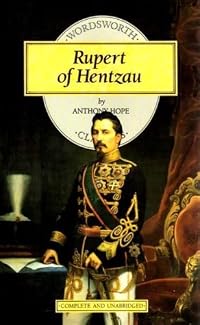

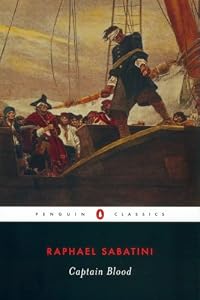


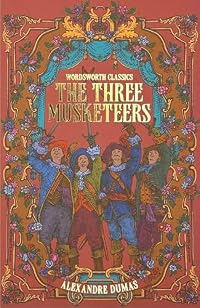
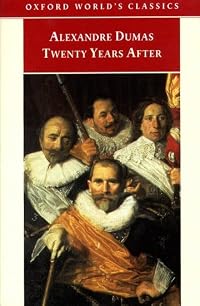


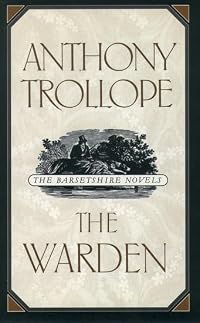












Member Recommendations
AlexBr Harry Flashman believes Anthony Hope got the idea for 'The Prisoner of Zenda' from him.
20

cf66 L'argomento ha dei punti in commune. Secondo me c'è una filiazione come genere di romanzo.


amaranthe For anyone who likes the story but finds the original protagonists a bit wet or generally implausible...
32

themulhern Two very different political impersonation novels. Zenda is a great deal more fun, and the impersonation is temporary, but the comparisons are interesting.
themulhern Two very different political impersonation novels. Zenda is a great deal more fun, but the comparisons are interesting.

atimco Both are stories of a young man thrown into a foreign culture and forced to survive on his wits. And the love stories both don't have the typical happy ending.

Member Reviews
[I was doing some maintenance and decided to add some of my older reviews. I had to guess at a rating for this, since I read this during a period when I wasn't even privately rating books.]
At first, I enjoyed this book. I could barely follow all the long paragraphs about the connection between Rudolph and the Ruritanian royal family, and Rudolph himself was a bit too driftless for my taste, but I got excited when more hints of the “impostor” storyline I knew was coming began to turn up. When Rudolph and the King finally met, I settled down for an adventure I was sure was going to be fun.
The problem was, it wasn't as fun as I expected. Rudolph seemed to love rushing into battles, the dashing hero doing his part to avenge fallen show more comrades and save Ruritania and the King from Black Michael. Unfortunately, all I could think was, “Why is he risking his life? And is the risk even worth it?”
Rudolph is not a Ruritanian. He had barely even met the King before he was suddenly enlisted to become the impostor King. I suppose I could see why he might have initially agreed. At first, all he was really agreeing to was being the King at the coronation – it was a short-term thing, and probably not too difficult. After the King was kidnapped, though, continuing to be the impostor King meant he was risking his life for a country that wasn't really his and for a man he hardly even knew. I'm guessing this was supposed to be admirable, dashing, and heroic. I just thought it was a bit stupid, in large part because I couldn't see why anyone, much less a near stranger, would want to risk their life for this particular king.
If I remember right, several Ruritanians sang Duke Michael's praises and commented that, although they felt like they knew him, they had barely even seen the King. In temperament, the King seemed similar to Rudolph: lacking in ambition and a sense of responsibility, but completely willing to take advantage of the perks his position gives him. In the small portion of the book in which the King is free, healthy, and conscious, he is having fun and drinking. He doesn't seem to realize (or, if he does, care) that his people don't necessarily like him. Yes, I know that people don't have to like their monarchs, but if a monarch with a rival wishes to stay alive and in power for long, it would probably help to have popular opinion on his side.
Several of the King's men made comments along the lines of, “Rudolph, you would have made a better king” - so, even the King's own men would have preferred someone else. The only thing that saved him was that they, at least, did not feel that Michael was the better option. I couldn't really see how Rudolph made any better of a king than the real King, though – the only vaguely kingly skills he exhibited were his ability to make Princess Flavia fall in love with him and his ability to dash fearlessly into thrilling battles without being killed.
Overall, the characters were weak. Like I said, I didn't particularly like Rudolph or the King – I have a feeling that Hope intended for readers to root for them and be on their side, but I didn't think that either of them would make good kings, unless we're talking figureheads. Although Black Michael seemed to have popular support, I didn't find him to be a more sympathetic character, what with drugging and imprisoning his half-brother and coldly dumping his mistress for Princess Flavia. Princess Flavia might as well have been a piece of cardboard for all the personality she exhibited. The only character that intrigued me even a little was Madame de Mauban. Unfortunately, the book was written from Rudolph's perspective, and he had, at best, a somewhat condescending view of women, which meant that he explained away Madame de Mauban's behavior as an example of feminine irrationality.
It's a good thing I kind of disliked Rudolph and found Princess Flavia to be completely uninteresting, or I might have been angrier about how things ended.I'm guessing that Hope meant to show how noble Flavia and Rudolph were, and how concerned they were with doing their duty (meaning that Rudolph has supposedly grown a bit since the beginning of the book?). While the ending Hope chose was probably more realistic than if Flavia had run away with Rudolph, I thought the execution of that ending was gag-worthy. Rudolph and Flavia had known each other for three months. In that time, Rudolph supposedly came to love Flavia so much that he, a 29-year-old male who previously seemed to enjoy chasing after women, decided to live out the rest of his life clutching his chaste, tragic love to his breast. Flavia of course had to do her duty and marry the King of Ruritania – so, what, for the rest of her life she'll only coldly tolerate the King because he's not Rudolph? Sounds like fun.
Overall, I wasn't a huge fan of this book. I enjoyed some of the action-filled parts as I was reading them, but the more I think about the book now that I've finished it, the less I like it. I have downloaded the sequel, Rupert of Hentzau, but I don't know when I'll get around to reading it. I can only hope that Hope has Rupert really work the whole mustache-twirling dashing villain thing, because then I might have more fun. Part of me hopes that Madame de Mauban will show up in the sequel (supposedly, Rupert loves her), but I have a feeling she'd be better in my mind than Hope could ever have written her.
(Original review, with read-alikes and watch-alikes, posted on A Library Girl's Familiar Diversions.) show less
At first, I enjoyed this book. I could barely follow all the long paragraphs about the connection between Rudolph and the Ruritanian royal family, and Rudolph himself was a bit too driftless for my taste, but I got excited when more hints of the “impostor” storyline I knew was coming began to turn up. When Rudolph and the King finally met, I settled down for an adventure I was sure was going to be fun.
The problem was, it wasn't as fun as I expected. Rudolph seemed to love rushing into battles, the dashing hero doing his part to avenge fallen show more comrades and save Ruritania and the King from Black Michael. Unfortunately, all I could think was, “Why is he risking his life? And is the risk even worth it?”
Rudolph is not a Ruritanian. He had barely even met the King before he was suddenly enlisted to become the impostor King. I suppose I could see why he might have initially agreed. At first, all he was really agreeing to was being the King at the coronation – it was a short-term thing, and probably not too difficult. After the King was kidnapped, though, continuing to be the impostor King meant he was risking his life for a country that wasn't really his and for a man he hardly even knew. I'm guessing this was supposed to be admirable, dashing, and heroic. I just thought it was a bit stupid, in large part because I couldn't see why anyone, much less a near stranger, would want to risk their life for this particular king.
If I remember right, several Ruritanians sang Duke Michael's praises and commented that, although they felt like they knew him, they had barely even seen the King. In temperament, the King seemed similar to Rudolph: lacking in ambition and a sense of responsibility, but completely willing to take advantage of the perks his position gives him. In the small portion of the book in which the King is free, healthy, and conscious, he is having fun and drinking. He doesn't seem to realize (or, if he does, care) that his people don't necessarily like him. Yes, I know that people don't have to like their monarchs, but if a monarch with a rival wishes to stay alive and in power for long, it would probably help to have popular opinion on his side.
Several of the King's men made comments along the lines of, “Rudolph, you would have made a better king” - so, even the King's own men would have preferred someone else. The only thing that saved him was that they, at least, did not feel that Michael was the better option. I couldn't really see how Rudolph made any better of a king than the real King, though – the only vaguely kingly skills he exhibited were his ability to make Princess Flavia fall in love with him and his ability to dash fearlessly into thrilling battles without being killed.
Overall, the characters were weak. Like I said, I didn't particularly like Rudolph or the King – I have a feeling that Hope intended for readers to root for them and be on their side, but I didn't think that either of them would make good kings, unless we're talking figureheads. Although Black Michael seemed to have popular support, I didn't find him to be a more sympathetic character, what with drugging and imprisoning his half-brother and coldly dumping his mistress for Princess Flavia. Princess Flavia might as well have been a piece of cardboard for all the personality she exhibited. The only character that intrigued me even a little was Madame de Mauban. Unfortunately, the book was written from Rudolph's perspective, and he had, at best, a somewhat condescending view of women, which meant that he explained away Madame de Mauban's behavior as an example of feminine irrationality.
It's a good thing I kind of disliked Rudolph and found Princess Flavia to be completely uninteresting, or I might have been angrier about how things ended.
Overall, I wasn't a huge fan of this book. I enjoyed some of the action-filled parts as I was reading them, but the more I think about the book now that I've finished it, the less I like it. I have downloaded the sequel, Rupert of Hentzau, but I don't know when I'll get around to reading it. I can only hope that Hope has Rupert really work the whole mustache-twirling dashing villain thing, because then I might have more fun. Part of me hopes that Madame de Mauban will show up in the sequel (supposedly, Rupert loves her), but I have a feeling she'd be better in my mind than Hope could ever have written her.
(Original review, with read-alikes and watch-alikes, posted on A Library Girl's Familiar Diversions.) show less
Excellent fluff. Very pulpy - the hero who's a double of the king, selflessly (aside from the excitement) taking his place when he's incapacitated. And then things get complicated - between unexpected True Love and the interference of a couple of villains (working slightly at cross-purposes, which is a good thing for Our Hero), Rudolf ends up in a much tougher place than he expected. And handles it well - both physically and emotionally. What surprised me (see: pulpy) was that the characters are quite rich and multi-layered; even the Princess is more than a prize for the winner, she has her own outlook on things and expresses her opinions a few times. Rudolf spends quite a bit of time thinking about what he wants to do versus what his show more honor (or honour) requires him to do, and choosing his next steps carefully. I thought I had read this before, but apparently not - it's one of those stories that permeate popular culture, I guess. The sequel, and a good many other books by Hope, are on Project Gutenberg - yay! This one might well be worth rereading, in a few years. show less
The story that started the genre! I find Ruritanian stories (where the country is made up, but the adventure is real) both fascinating and exciting. Hope's characters leap off the page and the action still grabs the reader by the lapels. I love how flawed everyone is in this, and yet so many of them make the choice to be good in spite of their temptations. The love each character holds for their companions holds them to a standard that the villains fail to meet. It's bittersweet Romance at its best.
{first of 2 + prequel in Ruritania series; Ruritanian romance, swashbuckling adventure} (1894)
Short and bittersweet but lighthearted and fun and full of non-stop action.
I searched for this (with the intention of buying it for my kids) because we met friends of friends who had named their son Rudolf after the hero of this story. I remembered when I read it in my salad days that it captured my heart - and broke it. I also remember being thrilled to discover the sequel, Rupert of Hentzau but, if I thought that my heart was already broken, that one completely devastated me (so I may not be too disappointed that I couldn’t find a copy in the bookshop to go with this one).
Rudolf Rassendyll, a rich English gentleman, decides to take a show more holiday in the small European country of Ruritania with whose monarchy his family have a scandalous connection (that his sister-in-law is sensitive about) which results, every few generations, in a Rassendyl showing Elphberg features.
Though an absolute monarchy, Ruritania is politically unstable with some of the country supporting Rudolph Elphberg and some supporting his illegitimate half brother, Black Michael, while their cousin Flavia, who is second in line to the throne, is universally popular. When the king is indisposed, and later kidnapped and held at Michael’s castle at the town of Zenda, Rassendyll is persuaded to stand in for him at his coronation, where he meets the Princess Flavia and gets into deeper waters maintaining his facade while falling in love with the princess.
Since no-one but a handful of the king’s trusted advisers and Black Michael and his henchmen know about the switch, will Rassendyll continue with the charade or do the honourable thing and rescue the king, all the while maintaining the delicate political balance between supporters of Rudolf and Michael?
Fast paced and full of derring-do and honour as Rassendyll is forced by circumstances from one intrepid adventure to another, trying to prevent the whole conceit from collapsing. This was the original ‘Ruritanian romance’ which spawned a new genre (according to Wikipedia) which is still going strong today with books such as The Princess Diaries series.
Princess Flavia doesn’t get much page time but she does show a strength of character which belies her young age. And, though we don't see very much interaction between Rassendyll and his brother, I liked the way that at the end of the story, despite Rudolph's lips being necessarily sealed, his brother could see through his flippant facade.
Partly for nostalgia, because this story haunted me for years:
(August 2023)
5 stars show less
Short and bittersweet but lighthearted and fun and full of non-stop action.
I searched for this (with the intention of buying it for my kids) because we met friends of friends who had named their son Rudolf after the hero of this story. I remembered when I read it in my salad days that it captured my heart - and broke it. I also remember being thrilled to discover the sequel, Rupert of Hentzau but, if I thought that my heart was already broken, that one completely devastated me (so I may not be too disappointed that I couldn’t find a copy in the bookshop to go with this one).
Rudolf Rassendyll, a rich English gentleman, decides to take a show more holiday in the small European country of Ruritania with whose monarchy his family have a scandalous connection (that his sister-in-law is sensitive about) which results, every few generations, in a Rassendyl showing Elphberg features.
For he fought a duel (it was considered highly well-bred of him to waive all question of his rank) with a nobleman, well known in the society of the day, not only for his own merits, but as the husband of a very beautiful wife. In that duel Prince Rudolf received a severe wound, and, recovering therefrom, was adroitly smuggled off by the Ruritanian ambassador, who had found him a pretty handful. The nobleman was not wounded in the duel; but the morning being raw and damp on the occasion of the meeting, he contracted a severe chill, and, failing to throw it off, he died some six months after the departure of Prince Rudolf, without having found leisure to adjust his relations with his wife--who, after another two months, bore an heir to the title and estates of the family of Burlesdon. This lady was the Countess Amelia, whose picture my sister-in-law wished to remove from the drawing-room in Park Lane; and her husband was James, fifth Earl of Burlesdon and twenty-second Baron Rassendyll, both in the peerage of England, and a Knight of the Garter. As for Rudolf, he went back to Ruritania, married a wife, and ascended the throne, whereon his progeny in the direct line have sat from then till this very hour- with one short interval. And, finally, if you walk through the picture-galleries at Burlesdon, among the fifty portraits or so of the last century-and-a-half, you will find five or six, including that of the sixth earl, distinguished by long, sharp, straight noses and a quantity of dark-red hair; these five or six have also blue eyes, whereas among the Rassendylls dark eyes are the commoner.Shortly after arriving in Ruritania, Rudolf bumps into the king and they are both startled by how alike they look.
Though an absolute monarchy, Ruritania is politically unstable with some of the country supporting Rudolph Elphberg and some supporting his illegitimate half brother, Black Michael, while their cousin Flavia, who is second in line to the throne, is universally popular. When the king is indisposed, and later kidnapped and held at Michael’s castle at the town of Zenda, Rassendyll is persuaded to stand in for him at his coronation, where he meets the Princess Flavia and gets into deeper waters maintaining his facade while falling in love with the princess.
Since no-one but a handful of the king’s trusted advisers and Black Michael and his henchmen know about the switch, will Rassendyll continue with the charade or do the honourable thing and rescue the king, all the while maintaining the delicate political balance between supporters of Rudolf and Michael?
Fast paced and full of derring-do and honour as Rassendyll is forced by circumstances from one intrepid adventure to another, trying to prevent the whole conceit from collapsing. This was the original ‘Ruritanian romance’ which spawned a new genre (according to Wikipedia) which is still going strong today with books such as The Princess Diaries series.
Princess Flavia doesn’t get much page time but she does show a strength of character which belies her young age. And, though we don't see very much interaction between Rassendyll and his brother, I liked the way that at the end of the story, despite Rudolph's lips being necessarily sealed, his brother could see through his flippant facade.
So pretty Rose left us in dudgeon; and Burlesdon, lighting a cigarette, looked at me still with that curious gaze.(Comparing a picture in the newspaper from an article about the coronation with a photograph of Rudolph Elphberg taken a few months earlier.)
'That picture in the paper -' he said.
'Well, what of it? It shows that the King of Ruritania and your humble servant are as like as two peas.'
My brother shook his head. 'I suppose so,' he said. But I should know you from the man in the photograph.'
'And not from the picture in the paper?'
'I should know the photograph from the picture: the picture's very like the photograph, but -'
'Well?
'It's more like you,' said my brother.
My brother is a good man and true so that, for all that he is a married man and mighty fond of his wife, he should know any secret of mine. But this secret was not mine, and I could not tell it to him.
'I don't think it's so much like me as the photograph,' said I boldly. 'But anyhow, Bob, I won't go to Strelsau.'
Partly for nostalgia, because this story haunted me for years:
(August 2023)
5 stars show less
The Prisoner of Zenda is the quintessential classic swashbuckler, a straight-up adventure story full of dashing gentlemen, blushing damsels, roguish villains and a lot of swordplay and riding under the cover of night. It follows an English nobleman who bears a striking physical resemblance to the soon-to-be-crowned king of the (fictional) country Ruritania. When the king is kidnapped by his fiendish brother Black Michael – seriously, that's his name – and imprisoned in his imposing castle at Zenda (hence the title), our hearty protagonist must pose as the king – falling in love with the queen-to-be in the process – before launching a bold assault on the castle, defeating the dastardly villains and returning triumphant to bold show more cheers all round. Huzzah!
It is, as you've probably guessed, very dated – with its attitudes to royalty (all for it), women (emotional and careless, one and all) and the upper-classes (superior breeding) – and written in an archaic formal-conversational style that reminded me of Arthur Conan Doyle's Sherlock Holmes stories. But its quaintness and simplicity is also its strength; not only does the style and the straightforwardness of the plot make it very easy to read, but an unashamedly romantic adventure like this does still have its charms in our modern, cynical era (perhaps even more so because of this). There's a lot of lofty speechifying, thigh-slapping and manly choking-back-of-tears, and people doing things for duty and honour and "for the King!" This is a world – so alien to us – in which a 'word of honour' from your most despicable villain is as binding as one from your sainted mother. Adventure stories such as this might have descended into parody nowadays, but sometimes you can't help but get swept up. At one point, a character even leaps onto a window ledge laughing, sword in hand, before diving out to escape. Come on, who doesn't love that?
And, speaking of parody, the main draw of the book for me was that my favourite author, George MacDonald Fraser, sent up The Prisoner of Zenda in his 1970 book Royal Flash (more of an affectionate homage, I must stress). I can now see where Fraser got his inspiration from in Anthony Hope's book, and why the former's imagination was captured by the roguish Rupert of Hentzau in particular.
I must also remember that this story was one of the codifiers of the classic adventure tropes, and deserves respect for that. It's a notable exception to the trend I have noticed in my reading that classics rarely match up to their reputation. This one did; it's an entertaining page-turner. The romance plot was also quite tragic – I am reluctant to say 'sub-plot' as it begins to take centre-stage towards the end – and its outcome is one bound up so completely in old-fashioned notions of honour and duty that I can't help but think of The Prisoner of Zenda as a time-capsule to be treasured; a story told with an innocence that would be all but impossible today. show less
It is, as you've probably guessed, very dated – with its attitudes to royalty (all for it), women (emotional and careless, one and all) and the upper-classes (superior breeding) – and written in an archaic formal-conversational style that reminded me of Arthur Conan Doyle's Sherlock Holmes stories. But its quaintness and simplicity is also its strength; not only does the style and the straightforwardness of the plot make it very easy to read, but an unashamedly romantic adventure like this does still have its charms in our modern, cynical era (perhaps even more so because of this). There's a lot of lofty speechifying, thigh-slapping and manly choking-back-of-tears, and people doing things for duty and honour and "for the King!" This is a world – so alien to us – in which a 'word of honour' from your most despicable villain is as binding as one from your sainted mother. Adventure stories such as this might have descended into parody nowadays, but sometimes you can't help but get swept up. At one point, a character even leaps onto a window ledge laughing, sword in hand, before diving out to escape. Come on, who doesn't love that?
And, speaking of parody, the main draw of the book for me was that my favourite author, George MacDonald Fraser, sent up The Prisoner of Zenda in his 1970 book Royal Flash (more of an affectionate homage, I must stress). I can now see where Fraser got his inspiration from in Anthony Hope's book, and why the former's imagination was captured by the roguish Rupert of Hentzau in particular.
I must also remember that this story was one of the codifiers of the classic adventure tropes, and deserves respect for that. It's a notable exception to the trend I have noticed in my reading that classics rarely match up to their reputation. This one did; it's an entertaining page-turner. The romance plot was also quite tragic – I am reluctant to say 'sub-plot' as it begins to take centre-stage towards the end – and its outcome is one bound up so completely in old-fashioned notions of honour and duty that I can't help but think of The Prisoner of Zenda as a time-capsule to be treasured; a story told with an innocence that would be all but impossible today. show less
Originally posted at Dream Maps.
Reviewers often use the phrase "cinematic" to describe high-concept stories with with choreographed action sequences, stock characters, and a loosey-goosey approach to plot. This 1894 classic is a reminder that such storytelling elements predated, and presumably shaped, cinema.
Zenda is an absolutely stupid novel, but in a good way. Hope leans the heck into his premise of an English flâneur* with royal blood who blunders into a Central European dynastic squabble and ends up impersonating the young King for Reasons (they are definitely identical, no one can tell them apart at all, after all the King just shaved his beard and who even knew what he looked like under there). Many implausible hijinks ensue, show more but we roll with it, because this book is undeniably a compelling read.
It is is a little less high-octane than I expected, perhaps because of its publication date. Our hero is passive at key moments. The ostensible villain is mostly off-screen, so he hardly ever gets to twirl his mustache at us. Still, the author excels at getting into the psychology of his (cartoonish) heroes and their internal struggles—DUTY versus DESIRE, as exemplified by the choice between serving the imprisoned King and following their own hearts. The romance arc is mostly hollow but there are some beautifully maudlin moments near the end. None of it has any nuance, but it is done well and with a lighter touch than might be expected.
Anthony Hope does not seem to believe that women are people. If I had the book in front of me I would quote some a few of the choicer passages, but instead I will leave the reader the pleasure of discovering them. The author is particularly fond of making off the cuff generalizations about women that he delivers with an avuncular air. Generally I am skeptical about claims that media portrayals cause sexism—more often I think they reinforce the sexism that's already there—but I 100% believe that some dumbass teenager in 1900 was shitty to his girlfriend because Anthony Hope wrote a book.
The politics of Zenda are equally unpleasant. Only an Englishman in 1894 could have written this novel. The project of the book is fascinatingly ambivalent, equally a send-up of pre-modern, divine-right Habsburg politics and a portrait of a duty-bound Brit who is nevertheless willing to sacrifice his life to restore the Rightful King to his throne, mostly out of a sense of schoolboy decency.
When read in light of the events of 1914 and afterward, it is an appalling book. Anthony Hope portrays the contradictions inherent in turn-of-the-century European politics, but he does not reckon with them. The novel's resolution is a return to the political status quo. Even by the standards of light adventure fiction, Hope is profoundly uninterested in his setting or in the concerns of ordinary people. The battle for the crown is a battle without stakes. If the "Ruritanian romance" has a legacy, maybe it is one of inventing unreal landscapes for solipsistic heroes to play at war.
That said, if anyone has written a Ruritania novel set during the First or Second World Wars I would read the hell out of it.
Now that I've ripped this poor book to shreds - should you read it? Absolutely, if you like old-fashioned adventure yarns or are interested in it as a social document. I may even read the other books Hope wrote in this setting, because it's a fun little novel and I want badly to believe that the worldbuilding gets more interesting.
*It's in my contract - when the word "flâneur" can be used, it must be used. show less
Reviewers often use the phrase "cinematic" to describe high-concept stories with with choreographed action sequences, stock characters, and a loosey-goosey approach to plot. This 1894 classic is a reminder that such storytelling elements predated, and presumably shaped, cinema.
Zenda is an absolutely stupid novel, but in a good way. Hope leans the heck into his premise of an English flâneur* with royal blood who blunders into a Central European dynastic squabble and ends up impersonating the young King for Reasons (they are definitely identical, no one can tell them apart at all, after all the King just shaved his beard and who even knew what he looked like under there). Many implausible hijinks ensue, show more but we roll with it, because this book is undeniably a compelling read.
It is is a little less high-octane than I expected, perhaps because of its publication date. Our hero is passive at key moments. The ostensible villain is mostly off-screen, so he hardly ever gets to twirl his mustache at us. Still, the author excels at getting into the psychology of his (cartoonish) heroes and their internal struggles—DUTY versus DESIRE, as exemplified by the choice between serving the imprisoned King and following their own hearts. The romance arc is mostly hollow but there are some beautifully maudlin moments near the end. None of it has any nuance, but it is done well and with a lighter touch than might be expected.
Anthony Hope does not seem to believe that women are people. If I had the book in front of me I would quote some a few of the choicer passages, but instead I will leave the reader the pleasure of discovering them. The author is particularly fond of making off the cuff generalizations about women that he delivers with an avuncular air. Generally I am skeptical about claims that media portrayals cause sexism—more often I think they reinforce the sexism that's already there—but I 100% believe that some dumbass teenager in 1900 was shitty to his girlfriend because Anthony Hope wrote a book.
The politics of Zenda are equally unpleasant. Only an Englishman in 1894 could have written this novel. The project of the book is fascinatingly ambivalent, equally a send-up of pre-modern, divine-right Habsburg politics and a portrait of a duty-bound Brit who is nevertheless willing to sacrifice his life to restore the Rightful King to his throne, mostly out of a sense of schoolboy decency.
When read in light of the events of 1914 and afterward, it is an appalling book. Anthony Hope portrays the contradictions inherent in turn-of-the-century European politics, but he does not reckon with them. The novel's resolution is a return to the political status quo. Even by the standards of light adventure fiction, Hope is profoundly uninterested in his setting or in the concerns of ordinary people. The battle for the crown is a battle without stakes. If the "Ruritanian romance" has a legacy, maybe it is one of inventing unreal landscapes for solipsistic heroes to play at war.
That said, if anyone has written a Ruritania novel set during the First or Second World Wars I would read the hell out of it.
Now that I've ripped this poor book to shreds - should you read it? Absolutely, if you like old-fashioned adventure yarns or are interested in it as a social document. I may even read the other books Hope wrote in this setting, because it's a fun little novel and I want badly to believe that the worldbuilding gets more interesting.
*It's in my contract - when the word "flâneur" can be used, it must be used. show less
A story with a hero: a handsome and accomplished layabout who travels in Europe and gets himself into a situation calling for all sorts of heroism and virtue. He's hot-blooded, cool-headed, courageous, and gallant, and in the end of the book goes into a sort of monastic martial training, awaiting his next adventure in the sequel. The sequel is cleverly titled after the hero's principal adversary in this book, who steals every scene that he is in.
The women in the book are all quite conventional in their separate ways. Princess Flavia is spirited, passionate, beautiful, and noble. Madame de Maubin is also passionate, and indeed has her virtues, but is basically a "fallen woman", with money. Countess Helga is a cheerful cypher. The show more inn-keeper's daughter is a kind, sexy, flirt. Every woman perfectly formed for her role and station in life.
This book is, among other things, ebullient English propaganda. Like Sherlock Holmes, Rudolf Rassendyl knows that he is the equal of any of the crowned heads of Europe for the simple reason that he is an English gentleman. Why does he take on the challenge of impersonating the king? Mostly because the king has been taken in by a dastardly and unsporting trick and he, Rudolf, is the only hope of his new friends and because he may not shirk the danger, and count himself a man. Why is he superior to the king in character and physiognomy, as Princess Flavia, Colonel Sapt, and Fritz von Tarlhenheim all, in their various ways, mention or notice? Well that is just the way it is, and as luck would have it.
This is a book that doesn't really have a proper place in a modern public library. Many themes --- ambition, sexual passion and jealousy, cruelty for its own sake --- are too mature for the children's section while the language is too difficult; duty and honor are understood to have no place in the YA section these days; and many adults will feel that the book is too juvenile for the adult section because their limited grasp of the language of the time in which it was written, and their learned lack of imagination, will cause them to pass over the grimmer and more mature parts of the books without even noticing them. Sigh. show less
The women in the book are all quite conventional in their separate ways. Princess Flavia is spirited, passionate, beautiful, and noble. Madame de Maubin is also passionate, and indeed has her virtues, but is basically a "fallen woman", with money. Countess Helga is a cheerful cypher. The show more inn-keeper's daughter is a kind, sexy, flirt. Every woman perfectly formed for her role and station in life.
This book is, among other things, ebullient English propaganda. Like Sherlock Holmes, Rudolf Rassendyl knows that he is the equal of any of the crowned heads of Europe for the simple reason that he is an English gentleman. Why does he take on the challenge of impersonating the king? Mostly because the king has been taken in by a dastardly and unsporting trick and he, Rudolf, is the only hope of his new friends and because he may not shirk the danger, and count himself a man. Why is he superior to the king in character and physiognomy, as Princess Flavia, Colonel Sapt, and Fritz von Tarlhenheim all, in their various ways, mention or notice? Well that is just the way it is, and as luck would have it.
This is a book that doesn't really have a proper place in a modern public library. Many themes --- ambition, sexual passion and jealousy, cruelty for its own sake --- are too mature for the children's section while the language is too difficult; duty and honor are understood to have no place in the YA section these days; and many adults will feel that the book is too juvenile for the adult section because their limited grasp of the language of the time in which it was written, and their learned lack of imagination, will cause them to pass over the grimmer and more mature parts of the books without even noticing them. Sigh. show less
Members
- Recently Added By
Lists

The Guardian's 1000 Novels Everyone Must Read
1,005 works; 549 members

Read the book and saw the movie
1,170 works; 195 members

Best Adventure Stories
66 works; 13 members

19th Century
190 works; 16 members

1001 Children's Books You Must Read Before You Grow Up
774 works; 101 members

Welcome to Ruritania!
22 works; 5 members

Carole's List
445 works; 13 members

Huxley's reading log 2016
84 works; 3 members

Books Read in 2017
4,249 works; 130 members

Books Read in 2016
4,666 works; 199 members

KayStJ's to-read list
1,616 works; 11 members
CCE 1000 Good Books List
1,033 works; 12 members

Fictional European countries
58 works; 2 members
Novels of Great Adventures
34 works; 6 members
Favorite Childhood Books
1,646 works; 517 members

Books Read in 2010
631 works; 10 members

Publisher's Weekly Bestsellers Part I - 1895-1939
399 works; 8 members

Books We Couldn't Put Down
443 works; 197 members

Books We Want To Read Again For The First Time
384 works; 160 members
Author Information

68+ Works 4,478 Members
Novelist Anthony Hope-Hawkins was born in London, England on February 9, 1863. After attending Marlborough College and Balliol College, he became a lawyer and wrote short stories. The Prisoner of Zenda, his best-known work, was published in 1894. Due to the book's success, he became a full-time writer. During World War I, he worked for the show more Ministry of Information to counteract German propaganda. He was knighted for his efforts in 1918. He died of throat cancer in Surrey, England on July 8, 1933. (Bowker Author Biography) show less
Some Editions
Awards and Honors
Distinctions
Notable Lists
Series

Belongs to Publisher Series
Zenda Aventuras (II)
Grandes Novelas de Aventuras (XXII)
El País Aventuras (41)
Limited Editions Club (S:34.04)
Doubleday Dolphin (C261)
Airmont Classics (139)
Work Relationships
Is contained in
Is retold in
Has the adaptation
Is abridged in
Is parodied in
Inspired
Has as a student's study guide
Common Knowledge
- Canonical title*
- El prisionero de Zenda
- Original title
- The Prisoner of Zenda
- Alternate titles
- The Prisoner of Zenda (Oxford World's Classics) (Oxford World's Classics)
- Original publication date
- 1894
- People/Characters
- Rudolf Rassendyll; Princess Flavia Elphberg; Michael Elphberg (Duke of Strelsau, Black Michael); Sapt (Colonel); Fritz von Tarlenheim; Rupert Hentzau (one of the Six) (show all 17); Rudolf Elphberg (King Rudolf V of Ruritania); Antoinette de Mauban; Helga von Strofzin; Bersonin (one of the Six); De Gautet (one of the Six); Detchard (one of the Six); Krafstein (one of the Six); Albert Lauengram (one of the Six); Robert Rassendyll (Lord Burlesdon); Rose Rassendyll (Lady Burlesdon); Marshal Strakencz
- Important places
- Strelsau, Ruritania; Zenda Castle, Ruritania; Europe; Ruritania
- Related movies
- The Prisoner of Zenda (1913 | IMDb); The Prisoner of Zenda (1915 | IMDb); The Prisoner of Zenda (1922 | IMDb); The Prisoner of Zenda (1937 | IMDb); The Prisoner of Zenda (1952 | IMDb); The Prisoner of Zenda (1979 | IMDb) (show all 9); The Prisoner of Zenda (1984 | IMDb); Prisoner of Zenda, Inc. (1996 | IMDb); Royal Flash (1975 | IMDb)
- First words
- 'I wonder when in the world you're going to do anything, Rudolf?' said my brother's wife.
- Quotations
- Look where I would, I saw nothing that made life sweet to me, and I took my life in my hand and carried it carelessly as a man dangles an old glove.
Thus he vanished --- reckless and wary, graceful and graceless, handsome, debonair, vile, and unconquered. - Last words
- (Click to show. Warning: May contain spoilers.)But if it be never - if I can never hold sweet converse again with her, or look upon her face, or know from her her love, why, then, this side the grave, I will live as becomes the man whom she loves; and for the other side I must pray a dreamless sleep.
(Click to show. Warning: May contain spoilers.)Thus he vanished --- reckless and wary, graceful and graceless, handsome, debonair, vile, and unconquered. - Original language
- English
- Disambiguation notice
- This is the main work for The Prisoner of Zenda by Anthony Hope.
*Some information comes from Common Knowledge in other languages. Click "Edit" for more information.
Classifications
Statistics
- Members
- 2,950
- Popularity
- 6,039
- Reviews
- 96
- Rating
- (3.71)
- Languages
- 14 — Catalan, Chinese, Danish, Dutch, English, French, German, Greek, Hebrew, Hungarian, Italian, Japanese, Spanish, Swedish
- Media
- Paper, Audiobook, Ebook
- ISBNs
- 293
- ASINs
- 125