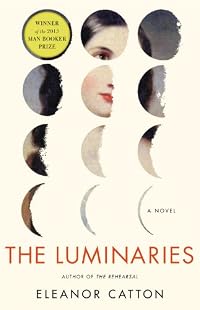
The Luminaries
by Eleanor Catton
On This Page
Description
The winner of the Man Booker Prize, this "expertly written, perfectly constructed" bestseller (The Guardian) is now a Starz miniseries.It is 1866, and Walter Moody has come to stake his claim in New Zealand's booming gold rush. On the stormy night of his arrival, he stumbles across a tense gathering of 12 local men who have met in secret to discuss a series of unexplained events: a wealthy man has vanished, a prostitute has tried to end her life, and an enormous cache of gold has been show more discovered in the home of a luckless drunk. Moody is soon drawn into a network of fates and fortunes that is as complex and exquisitely ornate as the night sky.
Richly evoking a mid-nineteenth-century world of shipping, banking, and gold rush boom and bust, The Luminaries is at once a fiendishly clever ghost story, a gripping page-turner, and a thrilling novelistic achievement. It richly confirms that Eleanor Catton is one of the brightest stars in the international literary firmament. show less
Tags
Recommendations
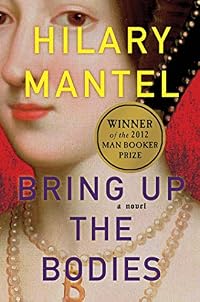
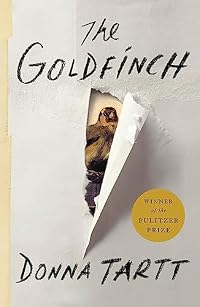
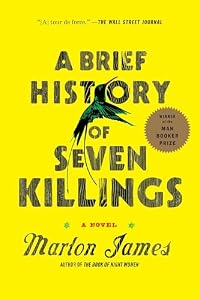
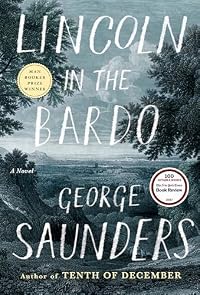

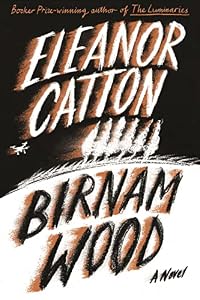
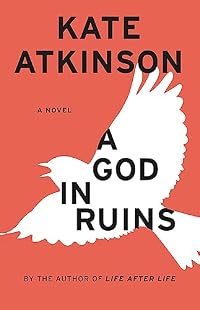
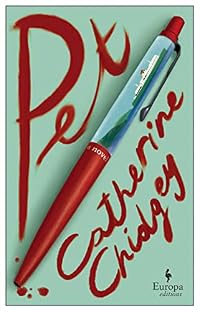
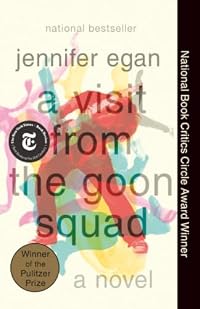
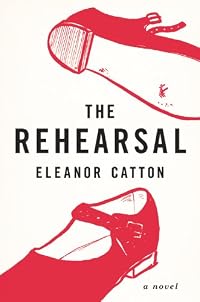
Member Recommendations

Member Reviews
'There's no charity in a gold town. If it looks like charity, look again.'
This astonishing historical novel opens in Hokitika, New Zealand in 1866, a gold mining town along the West Coast of the South Island. Founded two years previously, Hokitika is in the midst of a population boom, as prospectors, hoteliers and other businessmen have flocked there after news of its vast riches and promise of easy wealth has reached people living within and outside of New Zealand. One of those men is Walter Moody, a young Englishman who is trained in law but seeks gold to provide him with material comfort and the start of a new life. He arrives in town after a harrowing and emotionally distressing voyage at sea, and after he checks in at a local hotel show more he proceeds to its smoking room, where he hopes to unwind with a pipe and a stiff drink. Upon his arrival he notices that 12 men are already there, who appear to be from different backgrounds but also seem to have gathered in secret for a particular reason. The atmosphere in the room is tense and troubled upon his entry, but in his agitated state Moody doesn't sense that he has disturbed them. He is approached by one of the men, while the others appear to direct their attention toward their conversation, and after slowly gaining their confidence the men begin to share their intertwined stories with Moody, and the reason for their confidential meeting.
The story is centered around several mysterious and apparently interconnected occurrences that took place two weeks previously on a single night, including the death of a hermit in a shack overlooking town, the disappearance of a young man who has struck it rich in a gold mine, and the apparent near suicide of the town's most alluring prostitute. Every man in the room claims to be innocent of any direct involvement, yet they all appear to share some responsibility in the events that led up to these crimes, and each one fears that he may be accused and held accountable.
The reader learns more about these 12 men, Moody, and several other key players, as the story takes on a more defined shape. However, just as it seems to become more clear new twists arise and relationships emerge between previously unconnected characters, which made the tale more compelling and delightfully puzzling. I exclaimed out loud numerous times at various points ("Wait, what?" "Whoa!", etc.), and except for one relatively dead spot near the novel's midway point I was captivated from the first page to the last.
No review could adequately convey the intricacy and complexity of this novel, along with its numerous subplots and themes, and Catton's ability to maintain its momentum through 832 pages was akin to a performer riding a fast moving rollercoaster while juggling various objects of different sizes for hours on end. My biggest critique is its ending, which felt rushed and overly tidy, and despite its length I would have preferred for it to have been extended by another 50-100 pages.
The Luminaries is a masterful literary symphony, and a work of historical fiction that compares favorably with similarly superb novels such as The Children's Book, The Stranger's Child and The Glass Room. There are few books of this size that I would love to start reading again immediately after finishing it, but this is one of them, and young Ms Catton is to commended for a brilliant novel that should be a strong contender for this year's Booker Prize. show less
This astonishing historical novel opens in Hokitika, New Zealand in 1866, a gold mining town along the West Coast of the South Island. Founded two years previously, Hokitika is in the midst of a population boom, as prospectors, hoteliers and other businessmen have flocked there after news of its vast riches and promise of easy wealth has reached people living within and outside of New Zealand. One of those men is Walter Moody, a young Englishman who is trained in law but seeks gold to provide him with material comfort and the start of a new life. He arrives in town after a harrowing and emotionally distressing voyage at sea, and after he checks in at a local hotel show more he proceeds to its smoking room, where he hopes to unwind with a pipe and a stiff drink. Upon his arrival he notices that 12 men are already there, who appear to be from different backgrounds but also seem to have gathered in secret for a particular reason. The atmosphere in the room is tense and troubled upon his entry, but in his agitated state Moody doesn't sense that he has disturbed them. He is approached by one of the men, while the others appear to direct their attention toward their conversation, and after slowly gaining their confidence the men begin to share their intertwined stories with Moody, and the reason for their confidential meeting.
The story is centered around several mysterious and apparently interconnected occurrences that took place two weeks previously on a single night, including the death of a hermit in a shack overlooking town, the disappearance of a young man who has struck it rich in a gold mine, and the apparent near suicide of the town's most alluring prostitute. Every man in the room claims to be innocent of any direct involvement, yet they all appear to share some responsibility in the events that led up to these crimes, and each one fears that he may be accused and held accountable.
The reader learns more about these 12 men, Moody, and several other key players, as the story takes on a more defined shape. However, just as it seems to become more clear new twists arise and relationships emerge between previously unconnected characters, which made the tale more compelling and delightfully puzzling. I exclaimed out loud numerous times at various points ("Wait, what?" "Whoa!", etc.), and except for one relatively dead spot near the novel's midway point I was captivated from the first page to the last.
No review could adequately convey the intricacy and complexity of this novel, along with its numerous subplots and themes, and Catton's ability to maintain its momentum through 832 pages was akin to a performer riding a fast moving rollercoaster while juggling various objects of different sizes for hours on end. My biggest critique is its ending, which felt rushed and overly tidy, and despite its length I would have preferred for it to have been extended by another 50-100 pages.
The Luminaries is a masterful literary symphony, and a work of historical fiction that compares favorably with similarly superb novels such as The Children's Book, The Stranger's Child and The Glass Room. There are few books of this size that I would love to start reading again immediately after finishing it, but this is one of them, and young Ms Catton is to commended for a brilliant novel that should be a strong contender for this year's Booker Prize. show less
The setting is in the gold rush days of 19th century New Zealand. There is an intricate plot and a theatrical cast of characters whose passions, motivations, and desires bounce and reflect off each other in a dizzying kaleidoscope. But it is the method of spinning the story that has synergistically bumped up the complexity. Why choose A B C=D when E=MC2 can be so much more fun to work with? Or in this case, the architecture of astrology. “I previously had a rudimentary understanding of how astrology works,” the author says. “But I became really taken with the idea that what it is fundamentally about is there is no truth except for truth in relation: nothing is objectively true, something is only true compared to something else.” show more (From an interview with Tom Tivnan at WeLoveThisBook.com)
Twelve characters are based on signs of the zodiac, and several others are “planetary” characters. Just as astrology (which incidentally Catton regards as “silly”), represents the interaction of the planets and constellations, so goes the course of the story. Nothing is true except when compared to something else. (See Aaron's great review about the role of the astrology: http://www.typographicalera.com/luminaries-eleanor-catton/ ).
But this is a framing device well cloaked in the Victorian story-telling style. It is an old-fashioned yarn, taking part in the ‘olden days’, and is replete with reprobates, whores, greedy graspers, moralising bigots, and a fair share of pompous white guys representing the self-regarding pillars of society. One Maori fella (a surprisingly minor role for the Maori in this tale) and a couple of Chinese characters from Chinatown round out the cast. Someone dies, by fair or foul means? And who gets his gold?
The characters’ psychologies are richly drawn: “Moody was not unaware of the advantage his inscrutable grace afforded him. Like most excessively beautiful persons, he had studied his own reflection minutely and, in a way, knew himself from the outside best; he was always in some chamber of his mind perceiving himself from the exterior.”
Of the town whore Anna, and her clients: “If they spoke at all, they spoke about other women—the sweethearts they had lost, the wives they had abandoned, their mothers, their sisters, their daughters, their wards. They sought these women when they looked at Anna, but only partly, for they also sought themselves: she was a reflected darkness, just as she was a borrowed light. Her wretchedness was, she knew, extremely reassuring.” Anna knows that ‘A woman fallen has no future; a man risen has no past.’
It is the exceptional psychological portraits and lyrical prose which elevates this beyond a Victorian murder mystery dressed up in a gimmicky device.
It is a stellar achievement. show less
Twelve characters are based on signs of the zodiac, and several others are “planetary” characters. Just as astrology (which incidentally Catton regards as “silly”), represents the interaction of the planets and constellations, so goes the course of the story. Nothing is true except when compared to something else. (See Aaron's great review about the role of the astrology: http://www.typographicalera.com/luminaries-eleanor-catton/ ).
But this is a framing device well cloaked in the Victorian story-telling style. It is an old-fashioned yarn, taking part in the ‘olden days’, and is replete with reprobates, whores, greedy graspers, moralising bigots, and a fair share of pompous white guys representing the self-regarding pillars of society. One Maori fella (a surprisingly minor role for the Maori in this tale) and a couple of Chinese characters from Chinatown round out the cast. Someone dies, by fair or foul means? And who gets his gold?
The characters’ psychologies are richly drawn: “Moody was not unaware of the advantage his inscrutable grace afforded him. Like most excessively beautiful persons, he had studied his own reflection minutely and, in a way, knew himself from the outside best; he was always in some chamber of his mind perceiving himself from the exterior.”
Of the town whore Anna, and her clients: “If they spoke at all, they spoke about other women—the sweethearts they had lost, the wives they had abandoned, their mothers, their sisters, their daughters, their wards. They sought these women when they looked at Anna, but only partly, for they also sought themselves: she was a reflected darkness, just as she was a borrowed light. Her wretchedness was, she knew, extremely reassuring.” Anna knows that ‘A woman fallen has no future; a man risen has no past.’
It is the exceptional psychological portraits and lyrical prose which elevates this beyond a Victorian murder mystery dressed up in a gimmicky device.
It is a stellar achievement. show less
The Big Sleep is a great crime novel even though its author forgot to solve one of the murders. By contrast, this instant classic is intricately plotted - so many characters with so many secrets, each piecing together the jigsaw from different corners. It can seem impossible to keep track of who knows what about whom, but that's part of the fun in this expertly-written doorstopper - and that's just taking it as a basic Victorian pastiche. The astrology was mostly over my head (get it?), but I enjoyed the structural gymnastics of chapters waning like the moon. A superb shaggy dog story.
Despite its great length, I read this book over the course of four days, so it's not the kind of doorstop book that you'll have to set aside a month of your life to get through. It was a relatively quick and very pleasant read (I won't say easy, because it's very dense, but it's a rewarding kind of density that makes you want to keep reading). The plot is, as all others have mentioned, extremely intricate and the p-o-v shifting takes some getting used to. But the writing is extremely accomplished and the characters, setting, detail, and plot are rich and vivid.
However, I was left both impressed and underwhelmed. Impressed because it was unlike anything I've read before (including the nineteenth-century adventure/sensation novels that show more it's riffing on). Underwhelmed because I wanted it to end at about page 700, but there were still 130 pages to slog through, none of which added anything to my understanding or enjoyment. The backstory felt unnecessary and I lost the momentum. If it had ended with Moody finally partnering up and going off to make his fortune, I probably would have given it five stars. show less
However, I was left both impressed and underwhelmed. Impressed because it was unlike anything I've read before (including the nineteenth-century adventure/sensation novels that show more it's riffing on). Underwhelmed because I wanted it to end at about page 700, but there were still 130 pages to slog through, none of which added anything to my understanding or enjoyment. The backstory felt unnecessary and I lost the momentum. If it had ended with Moody finally partnering up and going off to make his fortune, I probably would have given it five stars. show less
This novel is set during a gold rush in New Zealand, where men (and a few women) come from all over to make their fortunes. One of these men is Walter Moody, a young man who arrives in the port town of Hokitika under stressful circumstances; the ship he sailed on ran aground near the harbor and so he arrives without his luggage, settling into a mediocre hotel and then heading to the public sitting room to relax. A group of men have already gathered there, intending to discuss some pressing issues and they are left to loiter unconvincingly when Moody shows up.
The pressing issues include the captain of the ship Moody sailed on, a prostitute with an addiction who attempted suicide and the disappearance of a young and successful miner. show more Catton takes her time here, not to stall the momentum of the novel, but to give it depth. Each man's point of view is accounted for, building a story that becomes more complex with every telling.
The Luminaries is not so much sweeping as it is thorough. It has the feel of a Victorian novel, not just in the length and setting, but in its willingness to take its time. It was a great deal of fun to read. show less
The pressing issues include the captain of the ship Moody sailed on, a prostitute with an addiction who attempted suicide and the disappearance of a young and successful miner. show more Catton takes her time here, not to stall the momentum of the novel, but to give it depth. Each man's point of view is accounted for, building a story that becomes more complex with every telling.
The Luminaries is not so much sweeping as it is thorough. It has the feel of a Victorian novel, not just in the length and setting, but in its willingness to take its time. It was a great deal of fun to read. show less
The luminaries in this huge novel are the heavenly bodies—the twelve signs of the Zodiac and the seven wandering stars (planets) that move through them. Or rather, they are nineteen characters who represent them and whose interactions form the complex plot. There is a twentieth person, Crosbie Wells. Like Marley, he is dead to begin with, and his death is, in effect, the inciting incident that sets the plot in motion (he does show up in flashbacks throughout the book). A chart listing these twenty characters at the beginning of the book identifies him as Terra Firma, that is, Earth. But since Earth is the standpoint we all share from which we look up to observe the heavenly spectacle (to the degree that we can in our light-polluted show more world), this is unsettling rather than helpful.
Given this overt astrological underpinning, the success of this book depends on whether it works for a reader like me who knows little and cares less about astrology. And in this, the novel succeeds. For me, Catton’s use of the lore of the stars is like the complex forms that a poet self-imposes as a spur to greater creativity. You don’t have to know what a villanelle is to enjoy ‘Do Not Go Gentle Into That Good Night”.
One particular challenge Catton has imposed on herself is that she has thereby created twenty central characters. She orchestrates this difficulty skillfully by shifting the narrative from one to another or from interactions between just two or a few of them. A problem remained for me, nonetheless, as I struggled to determine whether any of these was the protagonist. Was it Moody (Mercury), who stumbles uninvited into a council of the twelve, gathered to share what they know about the death of Crosbie, the disappearance of another character, and the near-death of a third? I was so glad, by the way, that Catton didn’t get heavy-handed and place this meeting in the Mount Olympus hotel.
It is these other two, Emery Staines (missing and presumed dead for most of the book) and the nearly-dead Anna Wetherell, astral twins (sun and moon), who share this role, I decided. Casting the antagonists was easier, by comparison. Although none of the characters is without sin, so to speak, there is a pair, representing Venus and Mars, who outshine the rest in evil-doing (and in keeping the plot moving). Francis Carver is presented in a relentlessly negative light throughout. He has wronged so many of the others that the reader is unsurprised when he is finally murdered. We had only been waiting to see who would do him in. Venus, on the other hand, has a different kind of malevolence; she can dissimulate so brazenly that she almost succeeds in convincing others of her good-heartedness. Her occult skills and business acumen lead her from one successful venture to another. Crucially, it is she—Lydia Greenway Wells Carver—whose hand is on the Wheel of Fortune and sets it spinning.
Oh, and the plot revolves around a fortune in gold. I lost track of all the ways it changed hands; this aspect reminded me of one of the shaggy-dog plots of a Marx Brothers film (“the picsh — whosa got the picsh?”). At the same time, the book reads like an extended meditation on one of the truest sentences in a book that serves as a crucial prop, used to hide a document that could affect the disposition of the treasure: “Avarice is a root of all evil.” Indeed. But it makes for an entertaining read. show less
Given this overt astrological underpinning, the success of this book depends on whether it works for a reader like me who knows little and cares less about astrology. And in this, the novel succeeds. For me, Catton’s use of the lore of the stars is like the complex forms that a poet self-imposes as a spur to greater creativity. You don’t have to know what a villanelle is to enjoy ‘Do Not Go Gentle Into That Good Night”.
One particular challenge Catton has imposed on herself is that she has thereby created twenty central characters. She orchestrates this difficulty skillfully by shifting the narrative from one to another or from interactions between just two or a few of them. A problem remained for me, nonetheless, as I struggled to determine whether any of these was the protagonist. Was it Moody (Mercury), who stumbles uninvited into a council of the twelve, gathered to share what they know about the death of Crosbie, the disappearance of another character, and the near-death of a third? I was so glad, by the way, that Catton didn’t get heavy-handed and place this meeting in the Mount Olympus hotel.
It is these other two, Emery Staines (missing and presumed dead for most of the book) and the nearly-dead Anna Wetherell, astral twins (sun and moon), who share this role, I decided. Casting the antagonists was easier, by comparison. Although none of the characters is without sin, so to speak, there is a pair, representing Venus and Mars, who outshine the rest in evil-doing (and in keeping the plot moving). Francis Carver is presented in a relentlessly negative light throughout. He has wronged so many of the others that the reader is unsurprised when he is finally murdered. We had only been waiting to see who would do him in. Venus, on the other hand, has a different kind of malevolence; she can dissimulate so brazenly that she almost succeeds in convincing others of her good-heartedness. Her occult skills and business acumen lead her from one successful venture to another. Crucially, it is she—Lydia Greenway Wells Carver—whose hand is on the Wheel of Fortune and sets it spinning.
Oh, and the plot revolves around a fortune in gold. I lost track of all the ways it changed hands; this aspect reminded me of one of the shaggy-dog plots of a Marx Brothers film (“the picsh — whosa got the picsh?”). At the same time, the book reads like an extended meditation on one of the truest sentences in a book that serves as a crucial prop, used to hide a document that could affect the disposition of the treasure: “Avarice is a root of all evil.” Indeed. But it makes for an entertaining read. show less
What I notice right away, from the Table of Contents and a review, is the chapters and parts are broken up mathematically, the length diminishing from part one -at 360 pages - to parts six through twelve which appear to occupy only a few pages each. And then the list of characters - each described by their Zodiac sign or planetary association.
The cryptic astronomical diagrams reveal that there is a lot going on here, beyond what the action of the book describes. The thrill of reading The Luminaries is this constant speculation around the mysterious plot, the bizarre relationship to the characters their astrological associations, and the construction of the book itself. The book is constantly morphing into something else, and it is show more never clear from where or to where this book will go. Look at the Night sky as pictured for each part, and we see the characters drift in and out of the tale, some completely disappearing from both chart and story.
The first section opened with several different tales from a variety of characters, all converging in a smoking room - bar. There are several mysteries and characters, all of whom we are given some details and each is potentially implicated or stands to gain or lose from the outcome. The details of the mysteries maybe not as intriguing as who is shady or not. Given the complexity of this mystery, with a whole city involved at some level in the crimes. The tale is set in a harbor town experiencing a gold rush in 1865-66. The actual dates correspond with certain astronomical patterns that were seen over New Zealand.
Historical novels need maps. One was not provided in my editions, would have been useful. But maybe the star charts are a more important clue to the more heavenly realms where the story really takes place.
I love exposition, and The Luminaries serves it up in hefty servings. I felt very much transported to this exotic old locale, as wild and odd as any fantasy planet. Catton's Hokitika is about as real as Moonrise Kingdoms's New Penzance. That is, it is less a real place than a literary ideal, the city we picture based on our descriptions of a past we never lived in. Anderson's sixties are a hyper-real literary ideal based on pop culture references. Catton's universe is equally distant from her, but just as full of life. This is a universe constructed between the author's and reader's agreement that it is a rich time to be written about.
We start with Walter Moody, but the narration jumps around a bit, but not in a jarring way. The author blatantly announces when the voice has changed, and who is now telling their version of the tale. The brief introduction at the beginning of each chapters are fun and make this enormous tome very digestable. The question I had after 200 pages, is will all the clever literary tricks add up to a great book, or just a bunch of clever ideas for a book? Either way, I was hooked.
The characters are not developed in a traditional way. Instead, when any of them come on the scene we get only the most pertinent details as related to the story, this being an economical way of acquainting us with the twenty main characters. Catton's descriptions sounded very much like how Wes Anderson gives us his characters, in a very matter-of-fact, cheeky manner. I wondered whether the lack of depth on characters would hurt the book. It doesn't, their personalities only matter as far as they make impressions upon other characters, and what their motivations are, and some of these can be assumed based on their Zodiac sign. I found this character list mighty helpful.
The Luminaries
This ends up being one of the themes. The characters can and do transform themselves based on their situation and their company. Our well-regarded Emery Staines is respected merely based on a single gold strike. His entire noble reputation rests on the fact that he found a piece of rock. Whereas his astrological counterpart suffers a reversal of fortune and livelihood at the same time.
The few turns of events did land with more heft than I expected. You could have been playing a piano cowboy saloon number through the first third, with the group sitting in the smoking room. Much of this felt like an old Western, or Sherlock Holmes' parlor. But instead of the Sheriff hunting down the outlaws or an investigator uncovering the crimes, there was no clear good or bad guys. No one was what they seemed. Every one had an angle, there was a lot of gold hidden in that cottage and someone was angling to get it by law or by force. The beauty of it is that all the clues are right there, and the first character who can put it together will be rich or redeemed. Moody is the original lens we see the story develop from, but his view is gradually narrowed as his planet (Mercury) leaves the Southern sky.
With chapters promising to get shorter, and reveal more as I read, I feel the weight of the enormous doorstop start to loosen, and make itself unravel in a perfect cacophony of all the stories and characters.
I was spellbound by this book. It was like a good record album; when I listen to it, it feels like there is no other music that matters. The Luminaries was this engrossing.
There are only twelve days of action in The Luminaries, but each reveals the story from different angles, each chapter reveals more, and alternatively obscures anything I was certain about. The confines, mathematical, astrologically. It provides the organized madness in which this deeply plotted murder mystery unfolds, and folds. Chapters halving themselves. Money halving itself in shares, loyalties moving with each turn and a sinister plot to destroy our heroes.
Magnificent. show less
The cryptic astronomical diagrams reveal that there is a lot going on here, beyond what the action of the book describes. The thrill of reading The Luminaries is this constant speculation around the mysterious plot, the bizarre relationship to the characters their astrological associations, and the construction of the book itself. The book is constantly morphing into something else, and it is show more never clear from where or to where this book will go. Look at the Night sky as pictured for each part, and we see the characters drift in and out of the tale, some completely disappearing from both chart and story.
The first section opened with several different tales from a variety of characters, all converging in a smoking room - bar. There are several mysteries and characters, all of whom we are given some details and each is potentially implicated or stands to gain or lose from the outcome. The details of the mysteries maybe not as intriguing as who is shady or not. Given the complexity of this mystery, with a whole city involved at some level in the crimes. The tale is set in a harbor town experiencing a gold rush in 1865-66. The actual dates correspond with certain astronomical patterns that were seen over New Zealand.
Historical novels need maps. One was not provided in my editions, would have been useful. But maybe the star charts are a more important clue to the more heavenly realms where the story really takes place.
I love exposition, and The Luminaries serves it up in hefty servings. I felt very much transported to this exotic old locale, as wild and odd as any fantasy planet. Catton's Hokitika is about as real as Moonrise Kingdoms's New Penzance. That is, it is less a real place than a literary ideal, the city we picture based on our descriptions of a past we never lived in. Anderson's sixties are a hyper-real literary ideal based on pop culture references. Catton's universe is equally distant from her, but just as full of life. This is a universe constructed between the author's and reader's agreement that it is a rich time to be written about.
We start with Walter Moody, but the narration jumps around a bit, but not in a jarring way. The author blatantly announces when the voice has changed, and who is now telling their version of the tale. The brief introduction at the beginning of each chapters are fun and make this enormous tome very digestable. The question I had after 200 pages, is will all the clever literary tricks add up to a great book, or just a bunch of clever ideas for a book? Either way, I was hooked.
The characters are not developed in a traditional way. Instead, when any of them come on the scene we get only the most pertinent details as related to the story, this being an economical way of acquainting us with the twenty main characters. Catton's descriptions sounded very much like how Wes Anderson gives us his characters, in a very matter-of-fact, cheeky manner. I wondered whether the lack of depth on characters would hurt the book. It doesn't, their personalities only matter as far as they make impressions upon other characters, and what their motivations are, and some of these can be assumed based on their Zodiac sign. I found this character list mighty helpful.
The Luminaries
This ends up being one of the themes. The characters can and do transform themselves based on their situation and their company. Our well-regarded Emery Staines is respected merely based on a single gold strike. His entire noble reputation rests on the fact that he found a piece of rock. Whereas his astrological counterpart suffers a reversal of fortune and livelihood at the same time.
The few turns of events did land with more heft than I expected. You could have been playing a piano cowboy saloon number through the first third, with the group sitting in the smoking room. Much of this felt like an old Western, or Sherlock Holmes' parlor. But instead of the Sheriff hunting down the outlaws or an investigator uncovering the crimes, there was no clear good or bad guys. No one was what they seemed. Every one had an angle, there was a lot of gold hidden in that cottage and someone was angling to get it by law or by force. The beauty of it is that all the clues are right there, and the first character who can put it together will be rich or redeemed. Moody is the original lens we see the story develop from, but his view is gradually narrowed as his planet (Mercury) leaves the Southern sky.
With chapters promising to get shorter, and reveal more as I read, I feel the weight of the enormous doorstop start to loosen, and make itself unravel in a perfect cacophony of all the stories and characters.
I was spellbound by this book. It was like a good record album; when I listen to it, it feels like there is no other music that matters. The Luminaries was this engrossing.
There are only twelve days of action in The Luminaries, but each reveals the story from different angles, each chapter reveals more, and alternatively obscures anything I was certain about. The confines, mathematical, astrologically. It provides the organized madness in which this deeply plotted murder mystery unfolds, and folds. Chapters halving themselves. Money halving itself in shares, loyalties moving with each turn and a sinister plot to destroy our heroes.
Magnificent. show less
Members
- Recently Added By
Published Reviews
ThingScore 83
It is complex in its design, yet accessible in its narrative and prose. Its plot is engrossing in own right, but an awareness of the structure working behind it deepens one’s pleasure and absorption. As a satisfying murder mystery, it wears its colours proudly, yet it is not afraid to subvert and critique the traditions and conventions of its genre. Best of all, while maintaining a wry show more self-awareness about its borrowings and constructions, it is never a cynical novel. At times, it can be unapologetically romantic, in both its narrative content and its attitude towards the literary tradition it emulates. It is a novel that can be appreciated on many different levels, but which builds into a consistent and harmonious whole. show less
added by souloftherose
Is Ms. Catton’s immense period piece, set in New Zealand, for readers who want to think about what they should be thinking? The book’s astrology-based structure does not exactly clarify anything. Its Piscean quality, she writes in an opening note, “affirms our faith in the vast and knowing influence of the infinite sky.”
added by ozzer
It’s easy to toss around words like “potential” and “promising” when a young author forges the kind of impression made by Eleanor Catton with her 2009 debut, The Rehearsal, a formally tricky but assured novel that hinged on teacher-student sexual relations. It won the Amazon.ca First Novel Award and the Betty Trask Award, and was a finalist for a handful of other plaudits, including show more the prestigious Dylan Thomas Prize for the best work by a writer under the age of 30. Making good on those expectations is another matter. With her ambitious second novel, Catton has accomplished that – and a great deal more.
[...]
The Luminaries is a novel that can be enjoyed for its engrossing entirety, as well as for the literary gems bestowed on virtually every page. show less
[...]
The Luminaries is a novel that can be enjoyed for its engrossing entirety, as well as for the literary gems bestowed on virtually every page. show less
added by monnibo
Lists

Top Five Books of 2013
1,564 works; 722 members

Best Historical Fiction
620 works; 261 members

Recommend the 20 best books you've read in the last five years
2,167 works; 605 members

Your favorite books from the 2014 Baileys Women's Prize for Fiction
20 works; 23 members
2014 Tournament of Books
17 works; 20 members

Best Contemporary Literary Fiction (Around the Last 30 Years)
388 works; 124 members

Historical Fiction
889 works; 89 members
Booker Prize
491 works; 62 members

Best 21st Century Books (So Far)
670 works; 86 members

Top Five Books of 2014
1,064 works; 398 members

Read the book and saw the movie
1,170 works; 192 members
CBC Books - Canada's 100 (+ bonus 10): Which have you read?
110 works; 23 members

Female Author
1,235 works; 67 members

Unread books
1,063 works; 87 members

Top Five Books of 2015
811 works; 241 members

Pleasant Surprises: Books That Exceeded Our Expectations
418 works; 143 members

Man Booker Prize Longlist 2013
13 works; 3 members

50 Books from the Past 50 Years
50 works; 8 members

Top Five Books of 2017
757 works; 231 members

Top 10 Historical Fiction
10 works; 4 members

Big Jubilee List
70 works; 3 members

Australia, New Zealand and Oceania
88 works; 20 members

Governor General of Canada's English Fiction Awards
89 works; 3 members
Contemporary Fiction
109 works; 7 members

Books Read in 2016
4,666 works; 197 members

Retrospective of Historical Fiction
48 works; 7 members
Books Read in 2015
3,298 works; 126 members

Booker Prize Shortlist: Titles Not Yet Read
161 works; 4 members
Kirkus Reviews Best Fiction of 2013
99 works; 6 members

Books Read in 2018
4,360 works; 110 members

Australia, Oceania, Antarctica
51 works; 5 members
Walter Scott Prize Winners and Shortlist
66 works; 6 members

Books Read in 2021
5,361 works; 114 members

SFF Down Under
59 works; 3 members
Books read in 2015
213 works; 5 members

Tagged 19th Century
104 works; 7 members

Canadian Historical Fiction 🇨🇦
157 works; 8 members

Best Mysteries With a Historical Setting
292 works; 160 members

Widely acclaimed, one book per year
105 works; 3 members

.
184 works; 1 member

Library List - Pulitzer Adjacent
39 works; 1 member
Talk Discussions
Past Discussions
2013 Booker longlist: The Luminaries by Eleanor Catton in Booker Prize (February 2016)
Author Information

9+ Works 8,521 Members
Eleanor Catton was born in Canada on September 24, 1985. She moved to New Zealand with her family when she was six years old. She studied English at the University of Canterbury and received a master's in creative writing at The Institute of Modern Letters, Victoria University of Wellington. Her debut novel, The Rehearsal, was published in 2008. show more Her second novel, The Luminaries, won the 2013 Man Booker Prize. In 2015 she ws made an Honorary Literary Fellows in the New Zealand Society of Authors' annual Waitangi Day Honours. In 2016, she was named as one of six, Arts New Zealand's Laureate Award winners. (Bowker Author Biography) show less
Some Editions
Awards and Honors
Awards
Distinctions
Series
Belongs to Publisher Series
Work Relationships
Has as a student's study guide
Common Knowledge
- Canonical title
- The Luminaries
- Original title
- The Luminaries
- Original publication date
- 2013-08-02
- People/Characters
- Walter Moody; Balfour
- Important places
- Hokitika, New Zealand; Dunedin, New Zealand
- Related movies
- The Luminaries (2020 | IMDb)
- Dedication
- for Pop, who sees the stars
and Jude, who hears their music - First words
- The twelve men congregated in the smoking room of the Crown Hotel gave the impression of a party accidentally met.
- Quotations
- 'There's no charity in a gold town. If it looks like charity, look again.'
- Last words
- (Click to show. Warning: May contain spoilers.)Hij plette een blad in zijn hand en bracht de hand naar zijn neus om het sap te ruiken.
(Click to show. Warning: May contain spoilers.)'Listen.'
'What is it?'
'The rain.' - Blurbers
- Murray, Paul; Hobbs, Peter
- Original language
- English
- Canonical DDC/MDS
- 823.92
- Canonical LCC
- PR9639.4.C39
Classifications
Statistics
- Members
- 5,880
- Popularity
- 2,187
- Reviews
- 269
- Rating
- (3.77)
- Languages
- 15 — Czech, Dutch, English, Finnish, French, German, Hungarian, Italian, Polish, Portuguese, Russian, Spanish, Swedish, Turkish, Ukrainian
- Media
- Paper, Audiobook, Ebook
- ISBNs
- 75
- UPCs
- 1
- ASINs
- 20