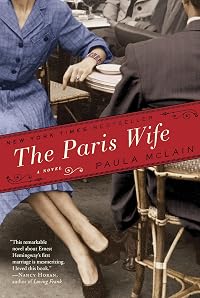
The Paris Wife
by Paula McLain
On This Page
Description
Meeting through mutual friends in Chicago, Hadley is intrigued by brash "beautiful boy" Ernest Hemingway, and after a brief courtship and small wedding, they take off for Paris, where Hadley makes a convincing transformation from an overprotected child to a game and brave young woman who puts up with impoverished living conditions and shattering loneliness to prop up her husband's career.Tags
Recommendations
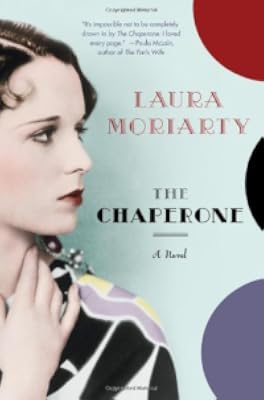
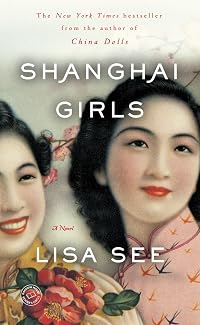
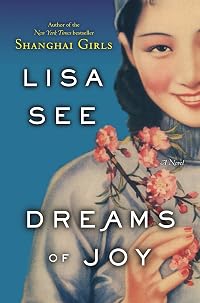
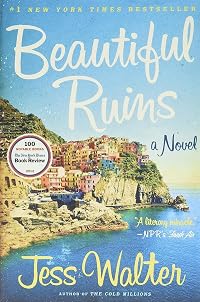
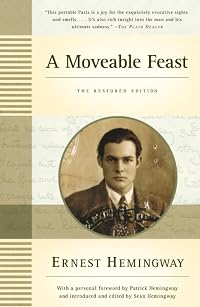

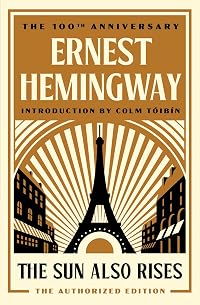

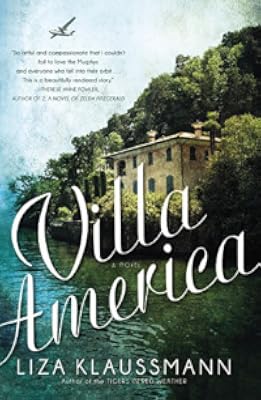
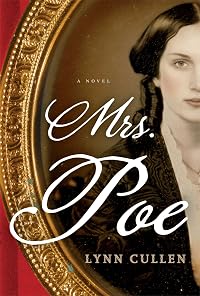
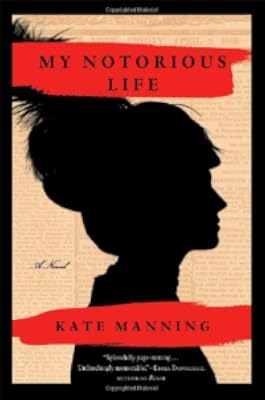
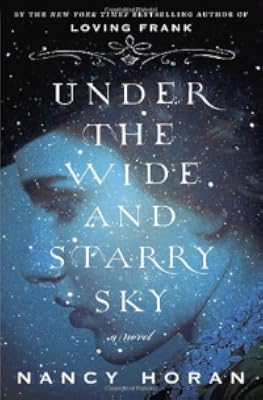
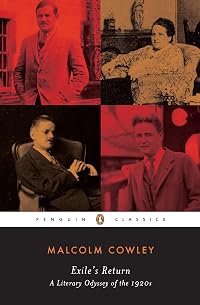
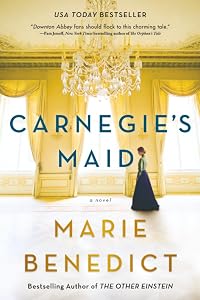
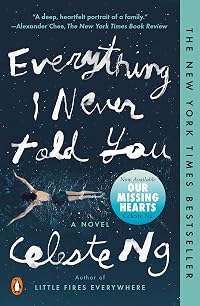
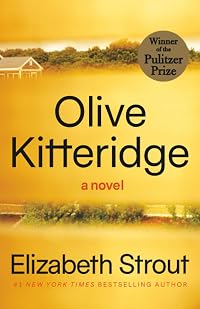
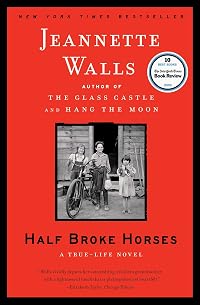

Member Recommendations
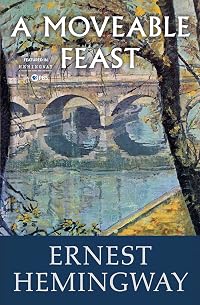
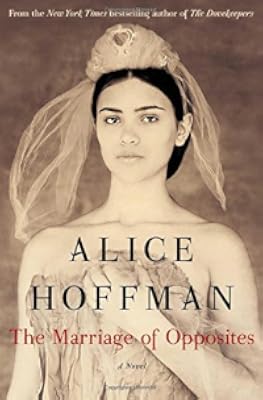
voracious A female perspective of a similar time period with a romantic, optimistic point of view. Similar as it describes the joy of love and finding the perfect words.
53
heatherlove Set in the same era but Garden on Sunset is set in Hollywood instead of Paris, like The Paris Wife.


Member Reviews
The Paris Wife deserves much kudos for its beautiful evocation of a place and an era. The Paris of the 1920s comes alive, from the grittiness of the streets to the life of the literary scene. McLain also does a supurb job of depicting Hadley Richardson's marriage to Ernest Hemingway, with all its faults, without condescending to a mere demonization of Hemingway and canonization of Hadley, which would have been a simplistic treatment of her material. Drawing boutifully on source material and weaving creative narrative seamlessly in, McLain creates an unforgettable portrait: many unforgettable portraits, actually, as even minor characters like Zelda Fitzgerald are memorably and finely crafted here.
We feel, in Hadley's narrative voice, the show more tensions and anxities that plague her from childhood through her marriage. She is a perceptive character, and through her eyes we see Hemingway's utter devotion to his craft and see presaged his eventual suicide. Though we know this is a love story that is doomed to end badly, the storyline is nonetheless compelling and thrusts you ever-forward. Knowing the end makes this story no less gripping, so well is it told and so many are the nuances that are gradually unveiled.
Readers will find themselves spellbound by the tale of the shy Hadley, who is smitten with the younger, dashing writer Ernest Hemingway. After a whirlwind romance, they spirit away to Paris and immerse themselves in the Left Bank atmosphere, where we begin to feel the weight of Hadley's increasing discomfort with the bohemian lifestyle and many open marriages. Motherhood ties her down further, leaving Ernest free to drift farther: their separation begins to feel like an inevitability, an event waiting only for the right woman to step in and drive the wedge between them. The chapters in which this wedge appears and the marriage begins to fall apart are positively grueling and painful; Hadley's agony is only too perceptible, but let me reiterate that it is not made out to be a simple case of a man with a wandering eye leaving behind his faithful wife without so much as a backward glance.
Emotions run high throughout the novel, but it is not angsty or weepy: this is no mere piece of throwaway "chick lit." McLain works her craft subtly and knows well the trick of driving the knife home with a particularly well-aimed sentence that reveals precisely how fragmented someone's world has become. In the midst of such an energized world, full of such animated (though often rather deplorable) people, McLain peels back all the layers of history and shows us the soul of one woman laid bare. show less
We feel, in Hadley's narrative voice, the show more tensions and anxities that plague her from childhood through her marriage. She is a perceptive character, and through her eyes we see Hemingway's utter devotion to his craft and see presaged his eventual suicide. Though we know this is a love story that is doomed to end badly, the storyline is nonetheless compelling and thrusts you ever-forward. Knowing the end makes this story no less gripping, so well is it told and so many are the nuances that are gradually unveiled.
Readers will find themselves spellbound by the tale of the shy Hadley, who is smitten with the younger, dashing writer Ernest Hemingway. After a whirlwind romance, they spirit away to Paris and immerse themselves in the Left Bank atmosphere, where we begin to feel the weight of Hadley's increasing discomfort with the bohemian lifestyle and many open marriages. Motherhood ties her down further, leaving Ernest free to drift farther: their separation begins to feel like an inevitability, an event waiting only for the right woman to step in and drive the wedge between them. The chapters in which this wedge appears and the marriage begins to fall apart are positively grueling and painful; Hadley's agony is only too perceptible, but let me reiterate that it is not made out to be a simple case of a man with a wandering eye leaving behind his faithful wife without so much as a backward glance.
Emotions run high throughout the novel, but it is not angsty or weepy: this is no mere piece of throwaway "chick lit." McLain works her craft subtly and knows well the trick of driving the knife home with a particularly well-aimed sentence that reveals precisely how fragmented someone's world has become. In the midst of such an energized world, full of such animated (though often rather deplorable) people, McLain peels back all the layers of history and shows us the soul of one woman laid bare. show less
A review on another site describes the book as “a love affair between two unforgettable people”. It’s also a love affair with an unforgettable place and time – Paris in the 1920’s – a literary golden age. War may have been responsible for a lost generation, but among the survivors it also stimulated a burgeoning of new life, creativity, revived appetites and a burning desire to grab it all while it was hot. It’s against this vibrant backdrop that the reader is introduced to a Hemingway vastly different from the celebrated persona of later years. Here we meet the young, impressionable budding novelist, grappling with fears, uncertainties and insecurities that ultimately, despite his success and cultivated braggadocio, show more overwhelmed him.
It is of course primarily the story of Hadley, his first wife. If all you knew of her was the more or less anonymous “my wife" of Hemingway’s "A Moveable Feast”, you'd see her as pretty much of an enigma, little more than a complementary, submissive counterpoint to the main event – the artist. In Paula McLain’s rendering of her, we get inside her skin, often to an uncomfortable degree. The betrayed wife is never a nice place to be. It’s even worse when she learns the truth but condones the betrayal, not because she forgives the straying husband, but because she can’t seem to think of anything else to do. Perhaps it was the age, after all women were only just coming into their own and those who had the resources to be independent were in the minority. But still, the wait while she grew a backbone was agonisingly slow.
Ernest’s character goes through a considerable transformation, from gorgeous young ingénue, seemingly oblivious to the raft of women falling at his feet, to selfish, self-important and insensitive cad. You can more or less forgive him all this because he became a great author and in the end, incapable of forgiving himself perhaps, committed suicide.
Despite my frustrations with the fictional Hadley’s gymnastic feats of accommodating her husband’s various exploitations of her good nature, I loved this story. It’s Romantic with a capital "R" and regardless of the giant and unavoidable spoiler of real life, kept me in there desperate to read the next chapter. Historical fiction is (for me at least) peculiarly engrossing, maybe because I feel like I’m being given a glimpse behind the public façade, even while knowing it’s a contrived one to a greater or lesser extent.
As Hemingway himself said in "A Moveable Feast", “…there is always the chance that … a book of fiction may throw some light on what has been written as fact”. This one shines the light very brightly on a mythical time when everyone seemed to be just slightly fantastical and utterly absorbing. show less
It is of course primarily the story of Hadley, his first wife. If all you knew of her was the more or less anonymous “my wife" of Hemingway’s "A Moveable Feast”, you'd see her as pretty much of an enigma, little more than a complementary, submissive counterpoint to the main event – the artist. In Paula McLain’s rendering of her, we get inside her skin, often to an uncomfortable degree. The betrayed wife is never a nice place to be. It’s even worse when she learns the truth but condones the betrayal, not because she forgives the straying husband, but because she can’t seem to think of anything else to do. Perhaps it was the age, after all women were only just coming into their own and those who had the resources to be independent were in the minority. But still, the wait while she grew a backbone was agonisingly slow.
Ernest’s character goes through a considerable transformation, from gorgeous young ingénue, seemingly oblivious to the raft of women falling at his feet, to selfish, self-important and insensitive cad. You can more or less forgive him all this because he became a great author and in the end, incapable of forgiving himself perhaps, committed suicide.
Despite my frustrations with the fictional Hadley’s gymnastic feats of accommodating her husband’s various exploitations of her good nature, I loved this story. It’s Romantic with a capital "R" and regardless of the giant and unavoidable spoiler of real life, kept me in there desperate to read the next chapter. Historical fiction is (for me at least) peculiarly engrossing, maybe because I feel like I’m being given a glimpse behind the public façade, even while knowing it’s a contrived one to a greater or lesser extent.
As Hemingway himself said in "A Moveable Feast", “…there is always the chance that … a book of fiction may throw some light on what has been written as fact”. This one shines the light very brightly on a mythical time when everyone seemed to be just slightly fantastical and utterly absorbing. show less
I wasn't really introduced to The Lost Generation until this year. Although I consider myself to be a widely read person, I had been afraid to tackle the majority of the people lumped into this group - in fact, all of them except for Fitzgerald, who I just read last year.
But this year I experienced Hemingway, Stein, Pound and Joyce. I dug deep into short stories and longer books. It gave me an appreciation for this era of literature, one that was not there a year ago. Yet, one year ago I received a copy of The Paris Wife to review and, not being familiar with most of the names held within it, I put it on the shelf to get to when I had time. Thank goodness I did, because I appreciated this book so much more as a result.
Although I've read show more some of Hemingway's works now, I wasn't familiar with his personal life. This is a very close and intimate look at him through the eyes of his first wife, "The Paris Wife," as she calls herself later on. It gives a very bleak picture of just how poor they were in Paris, how much was sacrificed for his work, and how dismal things were for this incredible writer. Not only that, but it painted a very human picture of Hemingway - not demonizing him but not yet making him out to be an incredible person. It's a fine balance when an author tackles a larger-than-life figure like Hemingway and gives us a picture of both his imperfect humanity contrasted with his genius talent.
I loved this book. I'd heard rave reviews of it from friends but, I'll be honest, I did not expect it to be as engrossing as it was. I read the entire book in an evening - and aside from one slight complaint (there really was a lot of name-dropping), I found it to be thoroughly entertaining and a fantastic resource when studying the life of Ernest Hemingway. show less
But this year I experienced Hemingway, Stein, Pound and Joyce. I dug deep into short stories and longer books. It gave me an appreciation for this era of literature, one that was not there a year ago. Yet, one year ago I received a copy of The Paris Wife to review and, not being familiar with most of the names held within it, I put it on the shelf to get to when I had time. Thank goodness I did, because I appreciated this book so much more as a result.
Although I've read show more some of Hemingway's works now, I wasn't familiar with his personal life. This is a very close and intimate look at him through the eyes of his first wife, "The Paris Wife," as she calls herself later on. It gives a very bleak picture of just how poor they were in Paris, how much was sacrificed for his work, and how dismal things were for this incredible writer. Not only that, but it painted a very human picture of Hemingway - not demonizing him but not yet making him out to be an incredible person. It's a fine balance when an author tackles a larger-than-life figure like Hemingway and gives us a picture of both his imperfect humanity contrasted with his genius talent.
I loved this book. I'd heard rave reviews of it from friends but, I'll be honest, I did not expect it to be as engrossing as it was. I read the entire book in an evening - and aside from one slight complaint (there really was a lot of name-dropping), I found it to be thoroughly entertaining and a fantastic resource when studying the life of Ernest Hemingway. show less
Well-written, but oh, so sad, this is the story of Ernest Hemingway's first marriage as told by Hadley herself, and I loved her voice. Even knowing it was all going to come to grief, I was rooting for Hadley and Ernest in their early years. I could feel her attraction to his charm and good looks; the yearning for love fed by his attention. And she was "right" for him then. Her unwavering support and encouragement, her willingness to put his needs ahead of her own gave him freedom to write. Together they were "the same guy", and inspired their friends to believe they did marriage like nobody else, that they were "tethered to something higher" that made them indestructible. Hadley was a woman slightly out-of-time, surrounded by early show more feminists, yet clinging to her own more traditional take on marriage and determined not to turn into the kind of woman who ruled the household "with iron fists", like her mother and Ernest's had done. Although she never quite fit in with Hemingway's hard-drinking free-loving crowd, she did make fast friends there, and ultimately sparked more loyalty among them than he did, precisely because true loyalty meant something to her that her platinum plated bastard of a husband could never quite grasp. In the end, she rose above the dual betrayal by Ernest and their friend Pauline, finding the strength to learn who she was and what she could bear. Despite a loss that she would never stop feeling, she made a new life for herself and faded into the background of his, where she became "just the early wife, the Paris wife" of the "most important writer of his generation". show less
I rarely read bestsellers, so I resisted THE PARIS WIFE for several years, until I found it at a library sale for just a buck. Even then it sat on my table for a couple months, unread. Well now I've finally read it and found that it lives up to all the praise it's gotten. Paula McClain has gotten inside the skin of Hemingway's first wife, Hadley Richardson, stolen her voice, and brought her magically to life as she lived it in 1920s Paris. She is in fact a much more sympathetic and likeable character than her self-centered, insecure and often boorish husband. Oh, don't get me wrong - I do love some of Hemingway's work. A FAREWELL TO ARMS is one of my favorite novels. But McClain saw him plain, and nailed it, when she had Hadley notice show more early in the marriage, "The way he was always out for himself, whatever the cost."
Or, years later, when Hadley reflects on Ernest's life -
"He was such an enigma, really - fine and strong and weak and cruel. An incomparable friend and a son of a bitch. In the end, there wasn't one thing about him that was truer than the rest. It was all true."
This is one damn fine book. It deserves its huge success. Bravo, Ms McLain. Very highly recommended.
- Tim Bazzett, author of the memoir, BOOKLOVER show less
Or, years later, when Hadley reflects on Ernest's life -
"He was such an enigma, really - fine and strong and weak and cruel. An incomparable friend and a son of a bitch. In the end, there wasn't one thing about him that was truer than the rest. It was all true."
This is one damn fine book. It deserves its huge success. Bravo, Ms McLain. Very highly recommended.
- Tim Bazzett, author of the memoir, BOOKLOVER show less
I started off reading this one fast and then I slowed down. In fact I went back and forward and reread more than a few things. Not for clarity but for enjoyment. Having read Hemingway's "A Moveable Feast" I quickly realized this was an excellent companion to it so I pulled that book off the shelf and read bits of it along the way. The Paris Wife is written in many small chapters (as is A Moveable Feast) and this makes it very easy to read small bits and be satisfied. Hadley Richardson, The Paris Wife, was Ernest Hemingway's first wife and some would say the great love of his life. One of, anyway. Maybe the one. She was, this book has convinced me, too good of a person for Hemingway, but they brought out the best of each other for an show more adventurous period of time, and for most of that time they were right and good for each other. Hemingway had to blow it in the worst possible way. I pretty much knew that before I read this, but now I know it better.
This is a wonderful piece of historical fiction that will transport you to another era in the 1920's, and give you a glimpse of the way it was. It is the rare book where I feel like I am inhabiting a real piece of someone's life. The author did an amazing job with this book and characters. Highly recommended. show less
This is a wonderful piece of historical fiction that will transport you to another era in the 1920's, and give you a glimpse of the way it was. It is the rare book where I feel like I am inhabiting a real piece of someone's life. The author did an amazing job with this book and characters. Highly recommended. show less
The story is known and the ending is not happy-ever-after and yet there is still a satisfying finish. I found Hadley to be such a sympathetic character which made the reading enjoyable. Ms McLain's imagining of Ernest & Hadley's marriage is complex and provides plausible explorations for what made it work and what broke it in the end. I finished the book feeling sorry for Ernest Hemingway and what he lost.
Members
- Recently Added By
Published Reviews
ThingScore 83
Paula McLain has built “The Paris Wife” around Hadley. Or at least she has planted Hadley in the midst of a lot of famous, ambitious people. The advantage to this technique is that it allows the reader to rub shoulders and bend elbows with celebrated literary types: the stay-at-home way of feeling like the soigné figure on the book cover. The drawback is that Ms. McLain’s Hadley, when show more not in big-league company that overshadows her, isn’t a subtly drawn character. She’s thick, and not just in physique. She’s slow on the uptake, and she can be a stodgy bore. show less
added by Shortride
Indeed, this book is a more risky affair than its sometimes sugary surface betrays. Taking up the Hemingway story inevitably means comparisons with Papa himself, and McLain courageously draws fire by including interludes written from his perspective: hard-bitten monologues with such lines as "You might as well bring yourself down and make yourself stinking sick with all you do because this is show more the only world there is." It's not exactly up there with John Cheever's classic parody, but it certainly does the job.
An appealing companion volume to A Moveable Feast, then, but once it's finished, turn back to the original, with its cool, impressionistic prose. It can hardly be said that the least interesting thing about Hemingway is the way he lived his life, but let's not forget that it's his writing that endures. show less
An appealing companion volume to A Moveable Feast, then, but once it's finished, turn back to the original, with its cool, impressionistic prose. It can hardly be said that the least interesting thing about Hemingway is the way he lived his life, but let's not forget that it's his writing that endures. show less
added by souloftherose
An imaginative, elegantly written look inside the marriage of Ernest Hemingway and Hadley Richardson.
added by Shortride
Lists

Recommend the 20 best books you've read in the last five years
2,168 works; 606 members

Female Author
1,235 works; 67 members

Historical Fiction
889 works; 91 members

Fiction Featuring Real People
81 works; 17 members

Top Five Books of 2017
757 works; 231 members

Writers as Characters in Fiction
120 works; 19 members

Five star books
1,757 works; 108 members

Vine Reads
60 works; 1 member

Books Set in France
13 works; 5 members
Independent Reading Suggestions
69 works; 3 members

Paris, City of Lights
103 works; 17 members
First Novels
373 works; 17 members

Pierce County READS
17 works; 1 member

To Read
617 works; 7 members

Global Reads: Books Set in Western Europe
186 works; 10 members

Left Bank Lit - Paris in the Interwar Decades
20 works; 2 members

Books Read in 2013
1,630 works; 51 members

Lives of the Poets (and Philosophers)
110 works; 5 members

Books Read in 2024
4,623 works; 126 members

Fictional Biographies
17 works; 3 members

Books We Discovered On LibraryThing
530 works; 130 members

The Five Books That Represent Us
391 works; 148 members
Author Information

14+ Works 11,730 Members
Paula McLain was born in Fresno, California in 1965. After being abandoned by both parents, she and her two sisters became wards of the California Court System and moved in and out of foster homes for the next 14 years. She received a MFA in poetry from the University of Michigan in 1996. She is the author of two collections of poetry entitled show more Less of Her and Stumble, Gorgeous and a memoir entitled Like Family: Growing up in Other People's Houses. She has also written several novels including A Ticket to Ride, The Paris Wife, and Circling the Sun. She has published individual poems and essays in numerous journals including the Gettysburg Review, Antioch Review, and The New York Times Sunday Magazine. (Bowker Author Biography) show less
Some Editions
Awards and Honors
Awards
Distinctions
Series
Belongs to Publisher Series
Aufbau Taschenbuch (2891)
Le livre de poche (32844)
Common Knowledge
- Canonical title
- The Paris Wife
- Original title
- The Paris Wife
- Original publication date
- 2011-02-22
- People/Characters
- Hadley Hemingway Mowrer; Ernest Hemingway; Gertrude Stein; Ezra Pound; James Joyce; F. Scott Fitzgerald (show all 25); Zelda Fitzgerald; Sara Murphy; Gerald Murphy; Ford Maddox Ford; Jack Hemingway; Pauline Pfeiffer; John Dos Passos; Agnes von Kurowsky; Sherwood Anderson; Kate Smith; Sylvia Beach; Alice B. Toklas; Harold Loeb; Lady Duff Twysden; Fonnie; Jinny Pfeiffer; Harold Loeb; Paul Mowrer; Marie Cocotte
- Important places
- Chicago, Illinois, USA; St. Louis, Missouri, USA; Paris, Île-de-France, France; Antibes, Alpes-Maritimes, Provence-Alpes-Côte d'Azur, France; Pamplona, Navarre, Spain; Toronto, Ontario, Canada (show all 13); Schruns, Vorarlberg, Austria; Oak Park, Illinois, USA; Wallonia, Belgium; Windermere, Cumbria, England, UK; Michigan, USA; Turkey; Switerland
- Important events
- Jazz Age
- Epigraph
- It is not what France gave you but what it did not take from you that was important. -Gertrude Stein
There's no one thing that's true. It's all true. -Ernest Hemingway - Dedication*
- /
- First words
- Though I often looked for one, I finally had to admit that there could be no cure for Paris.
- Quotations
- He wanted everything there was to have, and more than that.
We had the best of each other. - Last words
- (Click to show. Warning: May contain spoilers.)That girl, that impossibly lucky girl, needed nothing.
- Blurbers
- Horan, Nancy; Carpenter, Mary Chapin; Blake, Sarah
- Original language
- English
- Canonical DDC/MDS
- 813.54
- Canonical LCC
- PR823
*Some information comes from Common Knowledge in other languages. Click "Edit" for more information.
Classifications
Statistics
- Members
- 6,797
- Popularity
- 1,762
- Reviews
- 389
- Rating
- (3.69)
- Languages
- 14 — Chinese, Danish, Dutch, English, Estonian, Finnish, French, German, Italian, Polish, Portuguese, Romanian, Spanish, Swedish
- Media
- Paper, Audiobook, Ebook
- ISBNs
- 62
- ASINs
- 20
