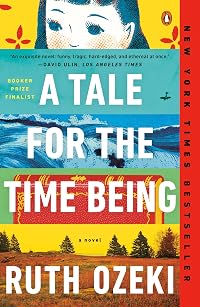
A Tale for the Time Being
by Ruth Ozeki
On This Page
Description
In Tokyo, sixteen-year-old Nao has decided there's only one escape from her aching loneliness and her classmates' bullying. But before she ends it all, Nao first plans to document the life of her great grandmother, a Buddhist nun who's lived more than a century. A diary is Nao's only solace--and will touch lives in ways she can scarcely imagine. Across the Pacific, we meet Ruth, a novelist living on a remote island who discovers a collection of artifacts washed ashore in a Hello Kitty show more lunchbox--possibly debris from the devastating 2011 tsunami. As the mystery of its contents unfolds, Ruth is pulled into the past, into Nao's drama and her unknown fate, and forward into her own future. Full of Ozeki's signature humor and deeply engaged with the relationship between writer and reader, past and present, fact and fiction, quantum physics, history, and myth, this is a brilliantly inventive, beguiling story of our shared humanity and the search for home. show lessTags
Recommendations



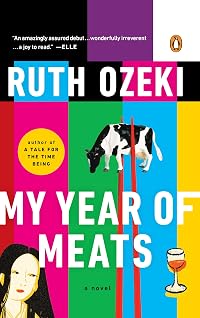

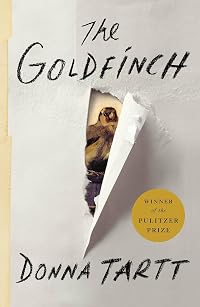
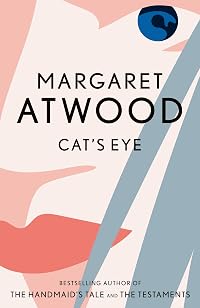
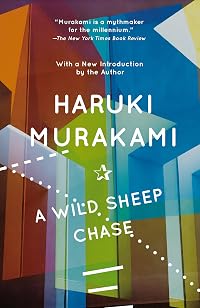
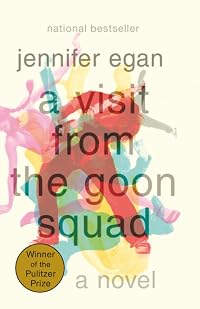
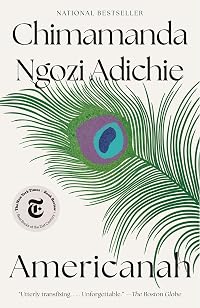


Member Recommendations
pamelahuffman In both books there are people in the present trying to make sense of journals and artifacts from the past. Loved both books.
31
susanbooks Ozeki' s novel and Rizzuto's memoir are about daughters of Japanese mothers & American fathers who are trying to come to terms with world war 2 in the aftermath of 9/11. They're very different books, but both explore issues of mothering, memory, and loss.
Member Reviews
A Tale for the Time Being will rivet you to the page. You will share in the lives - trials and triumphs, and cares and grievances, of two Japanese women. One - a teenage girl - has written a diary full of frightful bullying and soul searching; the other is a novelist afraid she is losing her memory, or worse, going mad. As these two heroines’ stories unfold in alternating streams, our clever author mixes in meditations on Zen Buddhism, Japanese imperial wartime excesses, the idea that ordinary people have superpowers, and the possibility we live in multiple universes at once. It’s a rich, heady mix, told in honest, understandable human emotion; Ms. Ozeki’s ineffable results match her lofty ambitions in this beautiful, multifarious show more novel. It was shortlisted for the 2013 Booker Prize.
Naoko, or Nao, a young Japanese girl about to turn 16, starts keeping a diary. Somehow, about ten years later, a backpack containing it and some letters washes up on the shore of an island in British Columbia. Its discoverer, a novelist named Ruth, picks it up, starts to read it, and quickly feels a bond with this girl and her father, both of whom are beaten down by life. We read Nao’s heartbreaking story alongside Ruth, and drama unfolds in each strand. Nao struggles with cruel beatings and ostracization, her imminent failure in her classes, and beloved dad’s attempted suicides. Ruth relates very closely with Nao, and becomes concerned about her and her dad’s welfare, even though the diary was written ten years before.
These narratives sparkle with philosophical learning and outré possibility. Nao’s voice is pitch-perfect in her portion of the proceedings. But to her also belong the deepest thoughts on philosophical conundrums. She goes on a retreat to visit her great aunt Jiko, 104 year-old Buddhist nun, and finally begins to learn about life, the universe, selflessness, and mysticism. She considers these lessons in a child’s honest voice - and this is one of Ms. Ozeki’s foremost achievements here: she places into this yearning, confused girl’s unsophisticated language the most challenging and most timeless human questions. What is life and death? How is a life to be lived? How can we most effectively serve others? Why is there so much cruelty in the world?
These considerations take us into the realms also of modern quantum physics; the author provides an appendix (one of several on various subjects) with a detailed explanation of Schrödinger’s cat, for example. And these speculations serve her plot - there’s nothing gratuitous about them. (There is also, as though anything more were needed, a reference to a brief flowering of literature and a liberalization of women’s rights in pre-imperial Japan; this book might also serve as an example of the I-book genre published at that time.)
All the layers, all the twists, all the philosophy, all the superpowers,the fascinating structure - these mix together into a work of genius. Prepare to open yourself to a new experience and take this piece up.
http://bassoprofundo1.blogspot.com/2016/01/a-tale-for-time-being-by-ruth-ozeki.h... show less
Naoko, or Nao, a young Japanese girl about to turn 16, starts keeping a diary. Somehow, about ten years later, a backpack containing it and some letters washes up on the shore of an island in British Columbia. Its discoverer, a novelist named Ruth, picks it up, starts to read it, and quickly feels a bond with this girl and her father, both of whom are beaten down by life. We read Nao’s heartbreaking story alongside Ruth, and drama unfolds in each strand. Nao struggles with cruel beatings and ostracization, her imminent failure in her classes, and beloved dad’s attempted suicides. Ruth relates very closely with Nao, and becomes concerned about her and her dad’s welfare, even though the diary was written ten years before.
These narratives sparkle with philosophical learning and outré possibility. Nao’s voice is pitch-perfect in her portion of the proceedings. But to her also belong the deepest thoughts on philosophical conundrums. She goes on a retreat to visit her great aunt Jiko, 104 year-old Buddhist nun, and finally begins to learn about life, the universe, selflessness, and mysticism. She considers these lessons in a child’s honest voice - and this is one of Ms. Ozeki’s foremost achievements here: she places into this yearning, confused girl’s unsophisticated language the most challenging and most timeless human questions. What is life and death? How is a life to be lived? How can we most effectively serve others? Why is there so much cruelty in the world?
These considerations take us into the realms also of modern quantum physics; the author provides an appendix (one of several on various subjects) with a detailed explanation of Schrödinger’s cat, for example. And these speculations serve her plot - there’s nothing gratuitous about them. (There is also, as though anything more were needed, a reference to a brief flowering of literature and a liberalization of women’s rights in pre-imperial Japan; this book might also serve as an example of the I-book genre published at that time.)
All the layers, all the twists, all the philosophy, all the superpowers,the fascinating structure - these mix together into a work of genius. Prepare to open yourself to a new experience and take this piece up.
http://bassoprofundo1.blogspot.com/2016/01/a-tale-for-time-being-by-ruth-ozeki.h... show less
The time being is a transient thing, a thing that changes completely with every moment. But it is also, as 16-year-old Naoko Yusitani explains in her diary, a being who lives in time, and the truth, she tells us, is that "very soon I will graduate from time...Time out. Exit my existence. I'm counting the moments." But for the time being, the reader has Nao's very present words and thoughts and Nao is just so amazing, you can't let her end her existence. She HAS to live.
Nao's diary has washed up on an island in the Pacific Northwest, carefully wrapped in a Hello Kitty lunchbox with some letters, a watch, and other papers. Ruth, married to Oliver and trying to adjust to living in the wild isolation of the island, wonders if Nao's diary is show more flotsam from the tsunami of 2011, a little time capsule of a young girl's life. Ruth quickly becomes obsessed with Nao's very present-sounding life: the brutal bullying she endures, her father's misery over not finding a job, her mother's urgent need for Nao to be okay when Nao is very obviously not okay.
Ruth Ozeki (who ALSO is married to a man named Oliver and also lives on an island) does a fantastic job of luring her reader into both Nao and Ruth's lives, of making every moment so present and powerful that I found myself unable to read at any pace but the pace Ozeki dictated - racing ahead as Nao hurtles toward disaster, slowing down as Ruth struggles to make sense of what she is reading. This is a book to savor, and think about, and think about some more. I will be re-reading. show less
Nao's diary has washed up on an island in the Pacific Northwest, carefully wrapped in a Hello Kitty lunchbox with some letters, a watch, and other papers. Ruth, married to Oliver and trying to adjust to living in the wild isolation of the island, wonders if Nao's diary is show more flotsam from the tsunami of 2011, a little time capsule of a young girl's life. Ruth quickly becomes obsessed with Nao's very present-sounding life: the brutal bullying she endures, her father's misery over not finding a job, her mother's urgent need for Nao to be okay when Nao is very obviously not okay.
Ruth Ozeki (who ALSO is married to a man named Oliver and also lives on an island) does a fantastic job of luring her reader into both Nao and Ruth's lives, of making every moment so present and powerful that I found myself unable to read at any pace but the pace Ozeki dictated - racing ahead as Nao hurtles toward disaster, slowing down as Ruth struggles to make sense of what she is reading. This is a book to savor, and think about, and think about some more. I will be re-reading. show less
Startlingly original, deeply engaging, emotionally challenging, conceptually complex but fundamentally human novel about our power to choose the life we lead.
It's normal to review a novel after you've finished reading it. Then you hold the whole book in your mind and decide what it meant to you: what you liked about it, what you didn't like about it, how it made you feel, what it made you think about and whether it was worth your time. It's a tried and trusted method that I'm going to abandon here because "A Tale For The Time Being" is not that kind of novel.
"A Tale For The Time Being" is as much about what you think with every page that you read as it is about what you will think when you've finished reading all the pages. Both views show more are not only valid and valuable but necessary. They reach into the heart of what this novel is about, how we are beings in time. This is simpler and more complex than it sounds. When I read a book, including this book of course, time is always on my mind. I pay attention not only to what I am being told by the page I'm reading but how that links to the pages that went before and what I think/hope/fear will happen next. I construct the narrative afresh with every page I read in a flicker of thought that I am no more conscious of than the refresh rate on my computer screen.
So I want to capture my reaction to "A Tale For The Time Being" as I go along. I'm about a third of the way through now and I already have a lot to think about.
The novel starts for the first time, with the fresh, unedited, first person, voice of Noa, a Japanese schoolgirl, capturing her thoughts in her diary. Except that, from the beginning we know two things that show the voice is disingenuous: she is writing the diary for her reader, not herself and she declares that these are the last days of her life but doesn't explain why.
The girl's voice took a while to get used to. I'd bought a novel. I was getting something else. I wasn't sure I liked it. The young girl wasn't sure I'd like it either but she'd decided that if I didn't like it, I wasn't the one for whom the novel was written and recommended that I give it to someone else..
That was the first idea to hit me between the eyes. I liked it a lot. I think that that is the perfect relationship for books and readers to have with one another.
The novel starts for the second time when Ruth (who seems to the be a version of Ruth Ozeki) finds Noa's diary in a Hello Kitty Lunch Box, washed up on the shore of the island she lives on in Canada. Ruth is written in the subjective third person as a linear narrative that interacts directly with her reading of the diary. Ruth seems a little lost, distant from her present, unable to write about her past, despite having spent ten years working on a memoir and slowly allowing herself to realize that her future may have to be very different from her now.
Nao and Ruth have a kind of Yin Yang feel to them. Nao was raised in California and feels that in her heart she is American. Ruth is an American of Japanese descent who has lived and worked in Japan and now finds herself on a Canadian island, carried there from Manhattan in the wake of her husband's need to return home. Noa's first person account and Ruth's reaction to it become a kind of dialogue across time.
About a quarter of the way through the novel, Noa explains that her 104 year old great-grandmother, once wrote an "I Novel". I wasn't sure what that was, except that I suspected that I was currently reading one, so I asked the great god Wikipedia for enlightenment. HERE'S what I was told.
Of course, Noa is writing an I Novel. It is autobiographical and it shows some things about her, like when she tortures a classmate for information, holding a knife against his throat, that are dark and damaging but it is struggling to be a truthful account of who she is. It's too early in the book for me to tell yet, but I think the whole thing, including the Ruth parts, are a form of I Novel. If this is the case, then having Ruth Ozeki read her own novel version to me in the audiobook is a master stroke.
So, the main things that have struck me so far.
This novel does something new and original with form, not in order to show how clever the author is, but to help the reader see things with fresh eyes. The blend of North American and Japanese thinking and story-telling produces a narrative alloy that is stronger than either. I want to find out what will happen next but I also want to go back, as new information and ideas emerge, and rethink my impressions of the things that have already happened in the novel.
OK. Time to read some more. Then I'll come back to this.
It's two days later and I've now read to the end of Part Two of the book and I want to take a pause to think about what I've read.
For much of Part Two, Ruth is in the background. She is working with others to understand the meaning of the artefacts she found, getting texts in Japanese and French translated but finding that it is as much the connections and the perspectives that the translators bring that surprise her than the words they produce. I wonder if this is reflection on the process of writing. The work that produces the words is solitary but the things that gives the words their meaning, being read by others who make connections that my not have been in the writer's mind but are none the less valid for that, is, if not collaborative than perhaps communal. Everyone on the island knows about the artefacts that Ruth has. They are public in the way that published text is public and their meaning emerges in a similar way.
Ruth's husband is a artist/botanist/science-geek who makes almost mystical connections between obscure climate data and day-to-day life. He speaks of gyres in the world's oceans, the migration of crows, and the physical movement of Japan towards Canada as a result of the Fukishima earthquake as if they were all things that shaped his day-to-day life. On his lips, science becomes just one of many competing and overlapping stories that try to give meaning to what is going on.
Ruth becomes more and more worried about holding on to herself : concerned that she may fall prey to Alzheimer's like her mother, wondering if how her life became so unreal to her, regretting that she cannot write. She funnels these concerns into a desire not just to understand Noa's story as a story, as you might expect a novelist to, but to confirm its reality, as if, by doing so, Ruth will confirm her own existence.
Most of Part Two is dominated by Noa's summer-long stay at her great grandmother's temple. Oddly, while I can easily and willing suspend my disbelief in other novels to accept the existence of vampires and witches and werewolves, I struggled to let myself accept the reality of Noa's encounters with the spirits of the dead in this novel. I WANT there to be an alternative explanation yet it is clear that Noa believes in her encounters.
Noa's time at the temple, the love she receives there and the strength she builds are evoked with an emotional clarity that tugged at me. This is how all children deserve to be treated. The insight's from Noa's great-grandmother are profound and kind, sometimes tinged with sadness and often lit with humour. The letter's from Noa's great-uncle, a philosophy student forced to become a soldier and then choosing to became a Kamikaze pilot to "regain agency over my life" a beautiful and sad and gave me a view of the Japanese side of this war that I've never seen before.
I'm going into Part Three of the book in a more sombre mood. I've started to share some of Ruth's anxieties to prove Noa's existence and understand how her diaries and the other contents of the Hello Kitty Lunch Box, left her possession.
I have stopped reading because I need time to recover before I continue.
The sections of the book that describe the final attack on Noa at her school and her reaction to it and the other things that happened on that day where tough to listen to but, somehow, the quieter, less dramatic account of how she spends her time at the French Maid Café were worse. The pressure of bullying, driven by contempt and hatred, the depravity that comes from treating people as things and not beings, the courage that it takes to live a life that has so little love and so much evil in it are hard to bear.
Then Ruth, a writer, a novelist, for whom fiction is a dream she can live in for months at a time, lives in fear that she has lost her grip on time and memory becoming lost and confused, something I find it very easy to imagine.
And then, finally the secret diary of the Sky Soldier, so full of cruelty and evil and yet told with such humanity that tears are the only possible response.
What started as a light book, written by a cheery schoolgirl with a precocious grasp of philosophy, has deepened into something serious and challenging, something that reminds me that we must choose how we will act in order to shape who we will become.
Writing like this leaves me in awe. What must it feel like to be able to see the world this way, to hold it in your mind for the months it takes to write a novel, to pass on your thoughts in a kind of hologram, where every fragment of narrative leads to the whole world view, and to wrap those thoughts in emotions so vivid that they feel lived, not just imagined?
So now I have finished reading the book (or rather, having it read to me by the author, which seems like a very privileged position to be in) but I have not finished thinking about it. That is a process that will run on for some time.
In the last part of the book, Ruth Ozeki makes a leap that will either make or spoil the book for many readers. She moves away from the "normal" narrative conventions of a novel, embracing the three unities of time, place and action, albeit with two different timelines, and allow her novel to embrace ideas that combines Zen mysticism with the quantum physics "multiverse" view of the world. She explores the boundaries of dream and memory and science and magic. She challenges us to think of ourselves as Time Beings with multiple concepts of time and complex and indirect means of exerting agency and taking choices.
Personally, I found the twist appealing. At the beginning of the novel, I saw Noa as problematic while I took Ruth for granted. Noa was a construct, first-person story that may or may not be real or true whereas Ruth, the reader is grounded in an unquestioned reality. Yet writing and reading brings together the imagination of two people and who is to say which one is more real.
I was also pleased that, having had her "Sliding Doors" moment, Ruth Ozeki took us back to Noa's narrative in a way that satisfied my need to know and left just enough unknown to keep me hungry.
When I first started to write this review, my draft headline, based on the first twenty percent of the book, read:
"A Tale For The Time Being" by Ruth Ozeki - Startlingly original, deeply engaging and yet easy to read this novel about - well - life and what it means to live one.
Now that I've completed the novel, I can't let that stand. "Startlingly original, deeply engaging" certainly. "Easy to read" not so much. It is at points painful, even repulsive to read. The content is uncompromising and the presentation is vivid. At other points, the author asks the reader to do some work, to think rather than just read, to add meaning, not just extract it.
It is a novel about life ad how to live it but dualism is fundamental to this novel. As our Buddhist nun explains: "Up. Down. Same. Note Same". So life cannot be described without death and both become a choice. Suicide is central to this novel but it is meant to be suicide as agency, not suicide as surrender.
So what should the headline be?
Go back to the beginning of this review and see :-) show less
It's normal to review a novel after you've finished reading it. Then you hold the whole book in your mind and decide what it meant to you: what you liked about it, what you didn't like about it, how it made you feel, what it made you think about and whether it was worth your time. It's a tried and trusted method that I'm going to abandon here because "A Tale For The Time Being" is not that kind of novel.
"A Tale For The Time Being" is as much about what you think with every page that you read as it is about what you will think when you've finished reading all the pages. Both views show more are not only valid and valuable but necessary. They reach into the heart of what this novel is about, how we are beings in time. This is simpler and more complex than it sounds. When I read a book, including this book of course, time is always on my mind. I pay attention not only to what I am being told by the page I'm reading but how that links to the pages that went before and what I think/hope/fear will happen next. I construct the narrative afresh with every page I read in a flicker of thought that I am no more conscious of than the refresh rate on my computer screen.
So I want to capture my reaction to "A Tale For The Time Being" as I go along. I'm about a third of the way through now and I already have a lot to think about.
The novel starts for the first time, with the fresh, unedited, first person, voice of Noa, a Japanese schoolgirl, capturing her thoughts in her diary. Except that, from the beginning we know two things that show the voice is disingenuous: she is writing the diary for her reader, not herself and she declares that these are the last days of her life but doesn't explain why.
The girl's voice took a while to get used to. I'd bought a novel. I was getting something else. I wasn't sure I liked it. The young girl wasn't sure I'd like it either but she'd decided that if I didn't like it, I wasn't the one for whom the novel was written and recommended that I give it to someone else..
That was the first idea to hit me between the eyes. I liked it a lot. I think that that is the perfect relationship for books and readers to have with one another.
The novel starts for the second time when Ruth (who seems to the be a version of Ruth Ozeki) finds Noa's diary in a Hello Kitty Lunch Box, washed up on the shore of the island she lives on in Canada. Ruth is written in the subjective third person as a linear narrative that interacts directly with her reading of the diary. Ruth seems a little lost, distant from her present, unable to write about her past, despite having spent ten years working on a memoir and slowly allowing herself to realize that her future may have to be very different from her now.
Nao and Ruth have a kind of Yin Yang feel to them. Nao was raised in California and feels that in her heart she is American. Ruth is an American of Japanese descent who has lived and worked in Japan and now finds herself on a Canadian island, carried there from Manhattan in the wake of her husband's need to return home. Noa's first person account and Ruth's reaction to it become a kind of dialogue across time.
About a quarter of the way through the novel, Noa explains that her 104 year old great-grandmother, once wrote an "I Novel". I wasn't sure what that was, except that I suspected that I was currently reading one, so I asked the great god Wikipedia for enlightenment. HERE'S what I was told.
Of course, Noa is writing an I Novel. It is autobiographical and it shows some things about her, like when she tortures a classmate for information, holding a knife against his throat, that are dark and damaging but it is struggling to be a truthful account of who she is. It's too early in the book for me to tell yet, but I think the whole thing, including the Ruth parts, are a form of I Novel. If this is the case, then having Ruth Ozeki read her own novel version to me in the audiobook is a master stroke.
So, the main things that have struck me so far.
This novel does something new and original with form, not in order to show how clever the author is, but to help the reader see things with fresh eyes. The blend of North American and Japanese thinking and story-telling produces a narrative alloy that is stronger than either. I want to find out what will happen next but I also want to go back, as new information and ideas emerge, and rethink my impressions of the things that have already happened in the novel.
OK. Time to read some more. Then I'll come back to this.
It's two days later and I've now read to the end of Part Two of the book and I want to take a pause to think about what I've read.
For much of Part Two, Ruth is in the background. She is working with others to understand the meaning of the artefacts she found, getting texts in Japanese and French translated but finding that it is as much the connections and the perspectives that the translators bring that surprise her than the words they produce. I wonder if this is reflection on the process of writing. The work that produces the words is solitary but the things that gives the words their meaning, being read by others who make connections that my not have been in the writer's mind but are none the less valid for that, is, if not collaborative than perhaps communal. Everyone on the island knows about the artefacts that Ruth has. They are public in the way that published text is public and their meaning emerges in a similar way.
Ruth's husband is a artist/botanist/science-geek who makes almost mystical connections between obscure climate data and day-to-day life. He speaks of gyres in the world's oceans, the migration of crows, and the physical movement of Japan towards Canada as a result of the Fukishima earthquake as if they were all things that shaped his day-to-day life. On his lips, science becomes just one of many competing and overlapping stories that try to give meaning to what is going on.
Ruth becomes more and more worried about holding on to herself : concerned that she may fall prey to Alzheimer's like her mother, wondering if how her life became so unreal to her, regretting that she cannot write. She funnels these concerns into a desire not just to understand Noa's story as a story, as you might expect a novelist to, but to confirm its reality, as if, by doing so, Ruth will confirm her own existence.
Most of Part Two is dominated by Noa's summer-long stay at her great grandmother's temple. Oddly, while I can easily and willing suspend my disbelief in other novels to accept the existence of vampires and witches and werewolves, I struggled to let myself accept the reality of Noa's encounters with the spirits of the dead in this novel. I WANT there to be an alternative explanation yet it is clear that Noa believes in her encounters.
Noa's time at the temple, the love she receives there and the strength she builds are evoked with an emotional clarity that tugged at me. This is how all children deserve to be treated. The insight's from Noa's great-grandmother are profound and kind, sometimes tinged with sadness and often lit with humour. The letter's from Noa's great-uncle, a philosophy student forced to become a soldier and then choosing to became a Kamikaze pilot to "regain agency over my life" a beautiful and sad and gave me a view of the Japanese side of this war that I've never seen before.
I'm going into Part Three of the book in a more sombre mood. I've started to share some of Ruth's anxieties to prove Noa's existence and understand how her diaries and the other contents of the Hello Kitty Lunch Box, left her possession.
I have stopped reading because I need time to recover before I continue.
The sections of the book that describe the final attack on Noa at her school and her reaction to it and the other things that happened on that day where tough to listen to but, somehow, the quieter, less dramatic account of how she spends her time at the French Maid Café were worse. The pressure of bullying, driven by contempt and hatred, the depravity that comes from treating people as things and not beings, the courage that it takes to live a life that has so little love and so much evil in it are hard to bear.
Then Ruth, a writer, a novelist, for whom fiction is a dream she can live in for months at a time, lives in fear that she has lost her grip on time and memory becoming lost and confused, something I find it very easy to imagine.
And then, finally the secret diary of the Sky Soldier, so full of cruelty and evil and yet told with such humanity that tears are the only possible response.
What started as a light book, written by a cheery schoolgirl with a precocious grasp of philosophy, has deepened into something serious and challenging, something that reminds me that we must choose how we will act in order to shape who we will become.
Writing like this leaves me in awe. What must it feel like to be able to see the world this way, to hold it in your mind for the months it takes to write a novel, to pass on your thoughts in a kind of hologram, where every fragment of narrative leads to the whole world view, and to wrap those thoughts in emotions so vivid that they feel lived, not just imagined?
So now I have finished reading the book (or rather, having it read to me by the author, which seems like a very privileged position to be in) but I have not finished thinking about it. That is a process that will run on for some time.
In the last part of the book, Ruth Ozeki makes a leap that will either make or spoil the book for many readers. She moves away from the "normal" narrative conventions of a novel, embracing the three unities of time, place and action, albeit with two different timelines, and allow her novel to embrace ideas that combines Zen mysticism with the quantum physics "multiverse" view of the world. She explores the boundaries of dream and memory and science and magic. She challenges us to think of ourselves as Time Beings with multiple concepts of time and complex and indirect means of exerting agency and taking choices.
Personally, I found the twist appealing. At the beginning of the novel, I saw Noa as problematic while I took Ruth for granted. Noa was a construct, first-person story that may or may not be real or true whereas Ruth, the reader is grounded in an unquestioned reality. Yet writing and reading brings together the imagination of two people and who is to say which one is more real.
I was also pleased that, having had her "Sliding Doors" moment, Ruth Ozeki took us back to Noa's narrative in a way that satisfied my need to know and left just enough unknown to keep me hungry.
When I first started to write this review, my draft headline, based on the first twenty percent of the book, read:
"A Tale For The Time Being" by Ruth Ozeki - Startlingly original, deeply engaging and yet easy to read this novel about - well - life and what it means to live one.
Now that I've completed the novel, I can't let that stand. "Startlingly original, deeply engaging" certainly. "Easy to read" not so much. It is at points painful, even repulsive to read. The content is uncompromising and the presentation is vivid. At other points, the author asks the reader to do some work, to think rather than just read, to add meaning, not just extract it.
It is a novel about life ad how to live it but dualism is fundamental to this novel. As our Buddhist nun explains: "Up. Down. Same. Note Same". So life cannot be described without death and both become a choice. Suicide is central to this novel but it is meant to be suicide as agency, not suicide as surrender.
So what should the headline be?
Go back to the beginning of this review and see :-) show less
It took me a long time to read A Tale for the Time Being, and that's mostly because there were days when I couldn't bring myself to pick it up. The triggering (for me at least) story of a badly bullied, suicidal Japanese girl Naoko is interspersed with the rather less vivid story of an author named Ruth who finds the girl's diary after it washes ashore on a Canadian island. The book has much to say about the relationship between writers and readers, and, thanks to Ruth’s know-it-all husband, there is also a lot about environmental disasters and quantum physics. A good book, perhaps even a great book, but not at all an easy read.
The diary of a young Japanese girl washes up on the beach in Vancouver and into the hands of a woman of Japanese descent who may or may not be the author of this very novel. The story alternates between Nao's diary and Ruth's experiences reading it, complete with footnotes explaining little bits of Japanese language and culture used by Nao. Nao's unflinching description of her life - from the horrific bullying by her classmates to her father's suicide attempts - can be hard to take at times, but her clearly affectionate descriptions of her great-grandmother and her quest for meaning make her quite sympathetic. I was especially interested to learn about some of the traditional rituals practiced by Buddhist nuns. The ending left me a bit show more cold, since I hadn't expected the story to turn all magical realism on me, but otherwise I really enjoyed it. I guess my issue was that the story leading up to that point felt so literal that it almost felt autobiographical, so the dream sequences and stuff caught me off guard. Sure, I would have liked a little bit more closure (Jiko's life story, anybody?), but maybe there's a sequel in store eventually. Even if not, this was still a really interesting novel. I may have to look up some more titles by Ozeki. show less
Basically a two timeline book with a teenage journal writer in 2001 Tokyo and her reader on a remote western Canadian island. Both are removed from places they thrived in and having difficulty moving ahead. The book takes a long time to really get going but somewhere about 2/3 of the way through it gets strangely and wonderfully entangling.
Ruth, an author, finds a Hello Kitty lunch box washed ashore. It is in a sealed bag that contains two diaries, a packet of letters, and an antique watch. She reads the diaries, one of which was written by Nao, a sixteen-year-old Japanese girl, a decade ago. The other diary and letters were written by Nao’s great-uncle, a WWII kamikaze pilot. Nao writes of her Buddhist nun great-grandmother, Jiko, and of her own plans to die by suicide when she completes the story. Ruth is troubled by Nao’s diary and becomes preoccupied with finding out whether or not she is still alive.
The narrative combines elements of Zen Buddhism, Japanese culture, environmentalism, and natural phenomena. The plot is intricate. The tsunami of 2011 is featured show more prominently. The book also explores suicidal ideation, bullying, unreliable parenting, and loneliness. It regularly refers to the writings of Marcel Proust. The character’s name, Nao (pronounced Now in English), is no coincidence. There are many discussions of the concepts surrounding time. Even Schrödinger's cat makes an appearance (so to speak).
This book considers humans to be time-beings, which is true, actually, but I never thought of a life in quite that way. I particularly enjoyed the author’s portrayal of the continuity in generations past and present. It took a while for the pieces of this story to gel for me, but once they did, I was enthralled. show less
The narrative combines elements of Zen Buddhism, Japanese culture, environmentalism, and natural phenomena. The plot is intricate. The tsunami of 2011 is featured show more prominently. The book also explores suicidal ideation, bullying, unreliable parenting, and loneliness. It regularly refers to the writings of Marcel Proust. The character’s name, Nao (pronounced Now in English), is no coincidence. There are many discussions of the concepts surrounding time. Even Schrödinger's cat makes an appearance (so to speak).
This book considers humans to be time-beings, which is true, actually, but I never thought of a life in quite that way. I particularly enjoyed the author’s portrayal of the continuity in generations past and present. It took a while for the pieces of this story to gel for me, but once they did, I was enthralled. show less
Members
- Recently Added By
Published Reviews
ThingScore 75
In clever and deeply affecting ways, Ruth Ozeki’s luminous new novel explores notions of duality, causation, honour, and time. ... Though [the character] Ruth is clearly intended as a semi-autobiographical portrait of the author, it’s the character of Nao, in all her angsty adolescent dismissiveness, that Ozeki truly pulls off (here’s an author who should be writing YA novels).
added by monnibo
A Tale for the Time Being by Ruth Ozeki is expansive, provocative and sometimes rather confusing. But that’s okay. It’s supposed to be....It can leave you scratching your head – for starters, the main character of the novel seems to be Ruth Ozeki herself, or at least, a fairly obvious facsimile of her – but ultimately, the effect of such riddles is charming, earnest and very much a show more departure from your typical literary novel....Like them, Ozeki manages to turn existential conundrums into a playful, joyful and pleasantly mind-bending dialogue between reader and writer. Here’s hoping that this book will find its way to an audience just as excited to participate in it. show less
added by zhejw
"A Tale for the Time Being"... is an exquisite novel: funny, tragic, hard-edged and ethereal at once.
[It's] heady stuff, but it hangs together for a couple of reasons — the exuberance of Ozeki's writing, the engaging nature of her characters and, not least, her scrupulous insistence that it doesn't have to hang together, that even as she ties up loose ends, others come unbound.
[It's] heady stuff, but it hangs together for a couple of reasons — the exuberance of Ozeki's writing, the engaging nature of her characters and, not least, her scrupulous insistence that it doesn't have to hang together, that even as she ties up loose ends, others come unbound.
added by zhejw
Lists

Top Five Books of 2013
1,562 works; 715 members

Best Contemporary Literary Fiction (Around the Last 30 Years)
388 works; 124 members

Recommend the 20 best books you've read in the last five years
2,168 works; 601 members
2014 Tournament of Books
17 works; 20 members

Best 21st Century Books (So Far)
670 works; 86 members
Booker Prize
491 works; 62 members
CBC Books - Canada's 100 (+ bonus 10): Which have you read?
110 works; 23 members
The Best of Canadian Literature
235 works; 33 members

Favourite Books
1,819 works; 316 members

Books Set in Canada
80 works; 16 members

Top Five Books of 2014
1,064 works; 398 members

Female Author
1,234 works; 67 members

Pleasant Surprises: Books That Exceeded Our Expectations
418 works; 143 members

50 Books by Women Authors
50 works; 10 members

Top Five Books of 2020
982 works; 348 members

magic realism novels
44 works; 11 members

Books featuring monks and/or nuns
166 works; 33 members
Female Protagonist
1,056 works; 57 members

Five star books
1,767 works; 110 members

Top Five Books of 2015
811 works; 241 members

Asia
178 works; 7 members

CBC's Great Canadian Reading List
149 works; 5 members

Books Set on Islands
190 works; 24 members

Man Booker Prize Longlist 2013
13 works; 3 members

Books Read in 2015
3,299 works; 129 members
Literature About Women and Girls
394 works; 39 members
Contemporary Fiction
109 works; 7 members

Books Set in Canada
57 works; 10 members

2014 Notable Books for Adults
26 works; 5 members

Books Read in 2017
4,249 works; 130 members
Books Read in 2016
4,666 works; 199 members
Overdue Podcast
806 works; 9 members

Books I read in 2014
13 works; 1 member

Reading Group 2013 Winter
5 works; 1 member
First Novels
373 works; 17 members

Books About Older People
50 works; 11 members
SantaThing 2014 Gifts
299 works; 17 members

Booker Prize Shortlist: Titles Not Yet Read
161 works; 4 members

Speculative Fiction to Read
706 works; 32 members

Books to Reread Someday
53 works; 7 members

SFFCat 2015
35 works; 1 member

Eastern Spirituality & Philosophy
53 works; 2 members

Books recommended by Calgary Public Library staff
1,588 works; 4 members

Canadian Women Writers
14 works; 1 member

Books Read in 2025
4,091 works; 97 members

The Five Books That Represent Us
391 works; 148 members

infjsarah's wishlist
408 works; 2 members
Kirkus Reviews Best Fiction of 2013
99 works; 6 members

Books With Time Words in the Title
160 works; 4 members
Protagonists - Women
29 works; 2 members
Canada
42 works; 3 members

To Read
617 works; 7 members

Women Writers
16 works; 2 members

Literature About Suicide
24 works; 4 members

Free Reading Month Book Club Selections
3 works; 1 member

KayStJ's to-read list
1,616 works; 11 members

Red Dot 2014-2015 - Mature Readers - Longlist
36 works; 5 members

Top Five Books of 2025
954 works; 303 members
Talk Discussions
Past Discussions
2013 Booker longlist: A Tale for the Time Being by Ruth Ozeki in Booker Prize (October 2015)
Author Information

10+ Works 10,253 Members
Ruth Ozeki received degrees in English literature and Asian studies from Smith College. She is a novelist, filmmaker, and Zen Buddhist priest. Her first novel, My Year of Meats, was published in 1998. Her other novels include All Over Creation and A Tale for the Time-Being, which was shortlisted for the Man Booker Prize. Her documentary and show more dramatic independent films, including Body of Correspondence and Halving the Bones, have been shown on PBS and at the Sundance Film Festival. (Bowker Author Biography) show less
Awards and Honors
Awards
Distinctions
Notable Lists
Series
Belongs to Publisher Series
Work Relationships
Is contained in
Has as a student's study guide
Common Knowledge
- Canonical title
- A Tale for the Time Being
- Original title
- A Tale for the Time Being
- Original publication date
- 2013-03-22
- People/Characters
- Ruth (author); Oliver; Naoko Yasutani; Hakuri Yasutani; Jiko Yasutani
- Important places
- Cortez Island, British Columbia, Canada; Tokyo, Japan; British Columbia, Canada
- Important events
- Tsunami (2011); World War II
- Dedication
- For Masako,
for now and forever - First words
- Hi! My name is Nao, and I am a time being. Do you know what a time being is? Well, if you give me a moment, I will tell you.
- Quotations*
- Een oude boeddha zei eens:
In de tijd, staan op de hoogste bergtop,
In de tijd, afdalen naar de bodem van de diepste zee,
In de tijd, een duivel met drie koppen en acht armen,
In de tijd, een vijf meter hoge ... (show all)boeddha van goud,
In de tijd, een monniksstaf of de vliegenmepper van een meester,
In de tijd, een pilaar of een lantaarn,
In de tijd, Jan en alleman,
In de tijd, de hele aarde en de eindeloze hemel.
- Dõgen Zenji, Bestaan in de tijd' - Last words
- (Click to show. Warning: May contain spoilers.)P.S. I do have a cat and he's sitting on my lap, and his forehead smells like cedar trees and fresh sweet air. How did you know?
- Blurbers
- Diaz, Junot; Sebold, Alice; Pullman, Philip; Miller, Madeline; Fowler, Karen Joy; Hamilton, Jane (show all 8); Harkness, Deborah; Gilbert, Elizabeth
- Original language
- English
- Canonical DDC/MDS
- 813.54
- Canonical LCC
- PS3565.Z45
*Some information comes from Common Knowledge in other languages. Click "Edit" for more information.
Classifications
Statistics
- Members
- 5,290
- Popularity
- 2,566
- Reviews
- 280
- Rating
- (4.07)
- Languages
- 17 — Chinese, Czech, Danish, Dutch, English, French, German, Greek, Hungarian, Italian, Romanian, Russian, Croatian, Spanish, Swedish, Turkish, Portuguese (Portugal)
- Media
- Paper, Audiobook, Ebook
- ISBNs
- 64
- UPCs
- 1
- ASINs
- 16