
Educated: A Memoir
by Tara Westover
On This Page
Description
Tara Westover was seventeen the first time she set foot in a classroom. Born to survivalists in the mountains of Idaho, she prepared for the end of the world by stockpiling home-canned peaches and sleeping with her "head-for-the-hills bag." In the summer she stewed herbs for her mother, a midwife and healer, and in the winter she salvaged in her father's junkyard. The family was so isolated from mainstream society that there was no one to ensure the children received an education, and no one show more to intervene when one of Tara's older brothers became violent. As a way out, Tara began to educate herself, learning enough mathematics and grammar to be admitted to Brigham Young University. Her quest for knowledge would transform her, taking her over oceans and across continents, to Harvard and to Cambridge. Only then would she wonder if she'd traveled too far, if there was still a way home. With the acute insight that distinguishes all great writers, Tara Westover has crafted a universal coming-of-age story that gets to the heart of what an education offers: the perspective to see one's life through new eyes, and the will to change it. show lessTags
Recommendations


Member Recommendations
tangledthread Memoir with similar themes
92

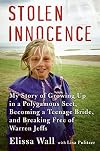
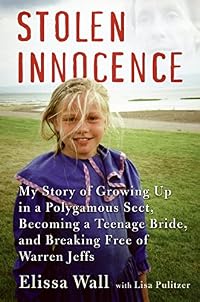
Stolen Innocence: My Story of Growing Up in a Polygamous Sect, Becoming a Teenage Bride, and Breaking Free of Warren Jeffs by Elissa Wall
Nickelini Quite different views of Mormon life, but both books are compelling reads of young women who suffered through horrific lives under the control of domineering and manipulative men.
42
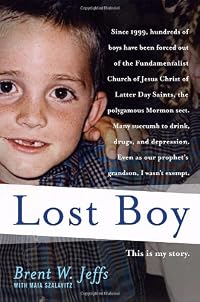
BookshelfMonstrosity These wrenching autobiographies examine how parents with fiercely held beliefs can damage their children on multiple fronts. Forbidden from engaging with the rest of society in normal ways, the authors endured shattering psychological abuse before their eventual escape.
20
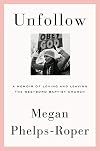
bjappleg8 Both books describe in intimate detail the supreme effort required to break free of fundamentalist beliefs and the pain of being cast out of their close-knit families as a result.
20
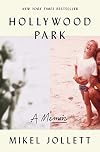
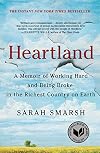
Carissa.Green Sarah Smarsh's memoir is about a similarly-aged girl growing up in a rural area on the economic fringes, but Smarsh's memoir is more analytical and deals much less in the sensationalism of having a violent, mentally ill parent.
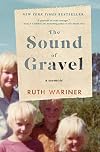
ReluctantTechie Another Mormon family that traumatized the children.
Also recommended by carriehh
11

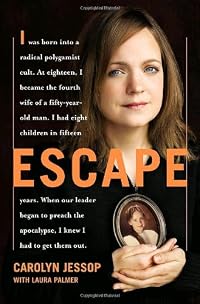
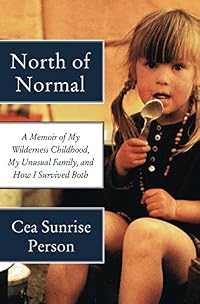
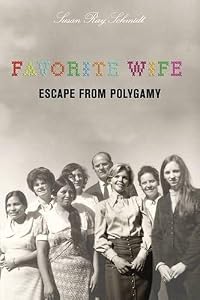
gypsysmom Author grew up in the polygamous community of Bountiful BC with experiences of abuse.
02
Pure: Inside the Evangelical Movement That Shamed a Generation of Young Women and How I Broke Free by Linda Kay Klein
sweetiegherkin Although Pure is a little more academic at times than Educated, there are similar themes and concerns held by the memoirists.
11
sweetiegherkin Different kinds of abuse, but both memoirs cover manipulative, controlling fathers and their negative impacts on family life.
andbirds Both books deal with trauma/abuse within the family.
Member Reviews
This book stems from a profoundly foundational family squabble. Westover’s parents practice a strictly conservative form of Mormonism in Idaho. They follow the virtue of self-reliance to the point that they did not put their children into school or get them birth certificates. However, some of their children, like the author, ended up making their ways into college and eventually graduate school. This memoir tells one daughter’s life from rural Idaho into BYU and eventually into Cambridge University. Like many who journey from religious fundamentalism towards higher education, her and her siblings’ experiences have sadly severed their family.
The author’s decade-long journey towards self-mastery is nothing but impressive. Her show more father likely had bipolar disorder, and this probably untreated mental illness fed into a deep paranoia about the world. This was further fueled by a cultural isolation in rural Idaho. Their family latched onto a fundamentalism form of Mormonism with apocalyptic and authoritarian tendencies. In addition, alleged physical abuse, not to mention neglect, intruded into their family dynamics. The author’s spiritual and intellectual journey consists of coming to terms with her upbringing. She lands on a reality-based understanding amidst rigorous academic studies about Mormonism’s place in wider modern history.
This story will attempt to trigger many family insecurities in readers, and understandably so. There are a lot of dynamics going on in this family. Be forewarned: There is no “happy ending” where everything comes together. It’s a story about a young woman coming to terms with her world and making informed choices amidst erudition and higher education. She asks herself important questions like, Is this worth it? She almost fails but eventually succeeds in graduating with a PhD in history.
This books speaks of the sacrifices that academic careers can require. It also speaks of deeply oppressive circumstances. It can encourage readers who wonder whether a professional career via education is worth it. To Westover, the answer seems to be yes, but the price of freedom is high and lonely. Interestingly, her mother, a naturopathic entrepreneur, wrote her own memoir of these experiences. I have not read it, but the contrast between these two camps seems stark. This author’s story is eloquent and expressive and leaves much to ponder in thought. show less
The author’s decade-long journey towards self-mastery is nothing but impressive. Her show more father likely had bipolar disorder, and this probably untreated mental illness fed into a deep paranoia about the world. This was further fueled by a cultural isolation in rural Idaho. Their family latched onto a fundamentalism form of Mormonism with apocalyptic and authoritarian tendencies. In addition, alleged physical abuse, not to mention neglect, intruded into their family dynamics. The author’s spiritual and intellectual journey consists of coming to terms with her upbringing. She lands on a reality-based understanding amidst rigorous academic studies about Mormonism’s place in wider modern history.
This story will attempt to trigger many family insecurities in readers, and understandably so. There are a lot of dynamics going on in this family. Be forewarned: There is no “happy ending” where everything comes together. It’s a story about a young woman coming to terms with her world and making informed choices amidst erudition and higher education. She asks herself important questions like, Is this worth it? She almost fails but eventually succeeds in graduating with a PhD in history.
This books speaks of the sacrifices that academic careers can require. It also speaks of deeply oppressive circumstances. It can encourage readers who wonder whether a professional career via education is worth it. To Westover, the answer seems to be yes, but the price of freedom is high and lonely. Interestingly, her mother, a naturopathic entrepreneur, wrote her own memoir of these experiences. I have not read it, but the contrast between these two camps seems stark. This author’s story is eloquent and expressive and leaves much to ponder in thought. show less
Usually, when I read a book in which the author records her professors and others telling her how brilliant she is, I’d put it down. Educated is an exception since that outside view is so out of sync with her inside view.
This book is about family—a very specific, even unusual family—yet it tells a universal story about how our family of origin and our physical environment (a mountain named Princess is an important character in the book) shape us.
When Educated was published, it generated publicity as the story of a girl whose first day in a classroom was when, at seventeen, she set foot on the campus of Brigham Young University. She told everyone she had been home-schooled, but there had been little of that. For the most part, show more since childhood, she had worked in her father’s scrapyard or assisted her mother in midwifery and concocting herbal remedies. Westover was the youngest child of parents at the survivalist fringe of Mormonism.
After fearing she wouldn’t last more than a semester at BYU, she graduated magna cum laude and went on to earn a Ph.D. in history at Cambridge University. This involved a psychologically painful reconfiguring of her mind and personality, no longer subservient to her father’s dicta, which she had largely internalized, nor in opposition to them, but based on her own reading and critical reflection. In essence, it’s a process we all go through in maturing, but for few of us does it mean such a radical break. As of the book’s publication, she no longer had contact with her parents or four siblings. In a final reflection on the book’s title, she notes that this correlates entirely along the lines of education: three left the valley and earned Ph. D.s, the other four remained in Idaho and never completed school.
She notes this without condemning anyone. I was struck by the amount of understanding and sympathy Westover shows toward all her family, despite abuse, betrayal, and life-threatening injury. She is proud of her education, but laments that it’s effect has been a chasm of separation. In a way, her family is emblematic of the red/blue divide of our society.
This is a book of courage and insight. In addition, it is well-written. show less
This book is about family—a very specific, even unusual family—yet it tells a universal story about how our family of origin and our physical environment (a mountain named Princess is an important character in the book) shape us.
When Educated was published, it generated publicity as the story of a girl whose first day in a classroom was when, at seventeen, she set foot on the campus of Brigham Young University. She told everyone she had been home-schooled, but there had been little of that. For the most part, show more since childhood, she had worked in her father’s scrapyard or assisted her mother in midwifery and concocting herbal remedies. Westover was the youngest child of parents at the survivalist fringe of Mormonism.
After fearing she wouldn’t last more than a semester at BYU, she graduated magna cum laude and went on to earn a Ph.D. in history at Cambridge University. This involved a psychologically painful reconfiguring of her mind and personality, no longer subservient to her father’s dicta, which she had largely internalized, nor in opposition to them, but based on her own reading and critical reflection. In essence, it’s a process we all go through in maturing, but for few of us does it mean such a radical break. As of the book’s publication, she no longer had contact with her parents or four siblings. In a final reflection on the book’s title, she notes that this correlates entirely along the lines of education: three left the valley and earned Ph. D.s, the other four remained in Idaho and never completed school.
She notes this without condemning anyone. I was struck by the amount of understanding and sympathy Westover shows toward all her family, despite abuse, betrayal, and life-threatening injury. She is proud of her education, but laments that it’s effect has been a chasm of separation. In a way, her family is emblematic of the red/blue divide of our society.
This is a book of courage and insight. In addition, it is well-written. show less
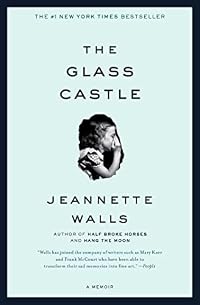
In a memoir reminiscent of Jeanette Walls' "The Glass Castle", Westover tells of growing up in a profoundly dysfunctional family where probable mental illness is left undiagnosed and untreated, where physical isolation from mainstream society leaves her and her siblings uneducated and unprotected from extremist rhetoric and paranoid fantasy.
That Westover is able to pull herself out of this environment and win academic honors is only half the story. The other half covers her less successful struggle to separate herself emotionally from a family that tolerated, ignored, and occasionally imposed the physical and mental abuse that defined her childhood and adolescence.
That Westover is able to pull herself out of this environment and win academic honors is only half the story. The other half covers her less successful struggle to separate herself emotionally from a family that tolerated, ignored, and occasionally imposed the physical and mental abuse that defined her childhood and adolescence.
Incredibly gripping and expertly told, Tara Westover's memoir of living in rural Idaho had me reading at break-neck speed. The way Westover organizes her chapters makes the book nearly impossible to put down. One chapter opens with scenes from a car wreck in which her mother, never hospitalized, suffers a traumatic brain injury. The rest of the chapter is spent revealing the fateful events leading up to the car crash.
Westover spends her youth barely surviving all kinds of scrapes and accidents while scrapping metal for her father. Her fundamentalist-Mormon family eschews grade school education in favor of a survivalist "education" at home. When Westover finally makes it to college, her painful naiveté is on full display and made me show more feel deeply grateful for the privilege of having a basic education. Can you imagine being a young adult in a college classroom and having no prior knowledge of segregation, Jim Crow...the Holocaust? This is a must-read. show less
Westover spends her youth barely surviving all kinds of scrapes and accidents while scrapping metal for her father. Her fundamentalist-Mormon family eschews grade school education in favor of a survivalist "education" at home. When Westover finally makes it to college, her painful naiveté is on full display and made me show more feel deeply grateful for the privilege of having a basic education. Can you imagine being a young adult in a college classroom and having no prior knowledge of segregation, Jim Crow...the Holocaust? This is a must-read. show less
This book may well be the most raved about book I've picked up this year, commended by Barack Obama, Bill Gates and everybody in between, this book had some serious hype behind it.
This is a memoir written by Tara Westover and follows her life as someone who grew up in a devout Mormon survivalist family without any formal education, Tara did not step foot in a class room until she was 17 and up to that point had very limited knowledge on the world and its history. Her and her six siblings grew up working on her fathers junkyard in a wildly unsafe environment.
Her upbringing was brutal at times and made for difficult reading - the family did not believe in using hospitals or doctors and some of the injuries depicted are truly horrific, show more how they managed to survive through most of them is beyond me.
Tara also suffered at the hands of an abusive older brother and in my opinion an abusive father. It would have been very easy to present these people and abusive situations with an obvious one dimensional villain however Westover manages to humanise them in a remarkable way. Reading from her perspective and experiencing her conflicting opinions was at once incredibly moving and unsettling.
Tara's love of education and her drive to do well shine in this memoir and when she finally became Dr Tara Westover i was truly elated. I don't think I've ever been prouder of someone I've never met!
I was engrossed by this story and found the writing to be excellent and captivating - I highly recommend this! A beautifully poignant book and one that I imagine will stick with me for a long time. show less
This is a memoir written by Tara Westover and follows her life as someone who grew up in a devout Mormon survivalist family without any formal education, Tara did not step foot in a class room until she was 17 and up to that point had very limited knowledge on the world and its history. Her and her six siblings grew up working on her fathers junkyard in a wildly unsafe environment.
Her upbringing was brutal at times and made for difficult reading - the family did not believe in using hospitals or doctors and some of the injuries depicted are truly horrific, show more how they managed to survive through most of them is beyond me.
Tara also suffered at the hands of an abusive older brother and in my opinion an abusive father. It would have been very easy to present these people and abusive situations with an obvious one dimensional villain however Westover manages to humanise them in a remarkable way. Reading from her perspective and experiencing her conflicting opinions was at once incredibly moving and unsettling.
Tara's love of education and her drive to do well shine in this memoir and when she finally became Dr Tara Westover i was truly elated. I don't think I've ever been prouder of someone I've never met!
I was engrossed by this story and found the writing to be excellent and captivating - I highly recommend this! A beautifully poignant book and one that I imagine will stick with me for a long time. show less
What is the value of an education? In the memoir Educated, it is an opportunity to free yourself from the shackles of repression. Raised by survivalists in the mountains of Idaho, Tara Westover is taught the ways of her father. Believing that God will take care of all their needs, hospitals and doctors are forbidden. Women are to be subservient to men. Her mother becomes a mid-wife and healer with home remedies, her father a self-proclaimed prophet. When an older brother becomes violent, there is no one to protect her.
But Tara decides to educate herself, slowly opening her eyes to a new world. She is accepted to Brigham Young University and against her father's wishes she goes to college, eventually earning scholarships to Harvard and show more Cambridge. But through it all, the calls from family are strong and she struggles for acceptance from her parents and six siblings. Educated is an amazing story of survival. In Tara we see the courage and strength to rise up from suppression in the face of ignorance. show less
But Tara decides to educate herself, slowly opening her eyes to a new world. She is accepted to Brigham Young University and against her father's wishes she goes to college, eventually earning scholarships to Harvard and show more Cambridge. But through it all, the calls from family are strong and she struggles for acceptance from her parents and six siblings. Educated is an amazing story of survival. In Tara we see the courage and strength to rise up from suppression in the face of ignorance. show less
This book has been reviewed to death, and I don't have much to add. It's horrifying and fascinating in a train wreck sort of way, but I found the early parts kind of boring in that reading about neglect and abuse in various forms for pages on end can just wear one down. When Westover moves away from home to pursue her education, I was more engaged in the story, but I just could not relate to her compulsive need to keep returning home. This is probably a good thing, as it means I myself never endured what she did and had to develop the "coping" mechanisms she did. The family dynamics on display in the book are completely f*cked up, and from I read in various media reports after I finished the book, not much has changed.
3.75 stars
3.75 stars
Members
- Recently Added By
Lists

Best Biographies, Autobiographies and Memoirs
464 works; 156 members

Best Autobiographies and Memoirs
370 works; 67 members

Top Five Books of 2018
802 works; 265 members

Favorite Memoirs
64 works; 13 members

Top-Rated Books on LibraryThing
272 works; 117 members

Books recommended by Barack Obama
295 works; 28 members
Read Next
5 works; 1 member
2019 Notable Books for Adults
26 works; 3 members

Book Club 2018
6 works; 1 member

Dysfunctional Families
133 works; 7 members

Phi Beta Kappa reading list
260 works; 8 members

Top Five Books on LibraryThing
24 works; 7 members

Books Set in Idaho
11 works; 5 members

Obama Reads
181 works; 3 members

Cults
22 works; 1 member

Healing resources for women
587 works; 1 member

storage
51 works; 1 member

Memoir / Literary Nonfiction Summer Reading 23
5 works; 1 member

Maybe This Year? Books to Look Forward To
409 works; 9 members
Club Read's Recommended Nonfiction Written by Women
618 works; 30 members
Not the NYT list of top 100 21st century books
100 works; 6 members

NYT Readers best of 21st C
100 works; 8 members

Top Five Books of 2024
795 works; 264 members
Barack Obama's Favorite Books of 2018
29 works; 2 members

Books Read in 2024
4,623 works; 126 members

Governerds Insider
32 works; 1 member

.
184 works; 1 member

My Favorite Books
26 works; 1 member

Favorite Books from the 2010s
75 works; 3 members

READ 2025
190 works; 1 member

FAB 2025
14 works; 1 member
Top Five Books of 2025
954 works; 303 members

Publishers Weekly Best Books of the Week / Starred Reviews 2018
78 works; 2 members

Memoirs Heal the Soul
22 works; 1 member
Favourite Books
1,817 works; 308 members

Most Disturbing Books
124 works; 27 members
Indie Next Picks
196 works; 4 members

Books Read in 2018
4,360 works; 110 members
Literature About Women and Girls
394 works; 39 members

Litsy Awards 2018
248 works; 9 members

Allie's List of Books I Want To Read
93 works; 1 member

Dim Sum Lunch Reading
43 works; 2 members

Books Read in 2019
4,052 works; 108 members

GAL Book Club
75 works; 3 members

Five star books
1,755 works; 107 members

Books Read in 2022
5,164 works; 113 members

Books Read in 2020
4,379 works; 123 members

Lit Lattes Ep 003
22 works; 1 member

Recommend the 20 best books you've read in the last five years
2,168 works; 606 members

2010s
241 works; 3 members

Spotted on ABC Book Club
19 works; 1 member

BookTok Adult
115 works; 2 members

Female Author
1,235 works; 67 members

Penguin Random House
458 works; 4 members

Mind Expanding Books by hackerkid
581 works; 8 members

Books We Resisted Reading
175 works; 106 members
Author Information

4+ Works 13,207 Members
Tara Westover is an American author, based in the U.K. She was born in Idaho in 1986 and led a sheltered childhood. Her father did not believe in public education. She worked with her parents, becoming a self-taught herbalist and midwife. She did not attend a school until age seventeen. From there, went on to graduate from Brigham Young show more University, magna cum laude (2008) and won a Gates Cambridge Scholarship. She graduated from Trinity College, Cambridge (2009) with a Master of Philosophy degree. She was a visiting fellow at Harvard University in 2010. Later, she went back to Cambridge University and earned a PhD in history (2014). Her first book is entitled, Educated: A Memoir. (Bowker Author Biography) show less
Some Editions
Awards and Honors
Series
Belongs to Publisher Series
Més llibres ficció (13)
Work Relationships
Is contained in
Common Knowledge
- Canonical title*
- Leerschool
- Original title
- Educated
- Original publication date
- 2018-02-18; 2018
- People/Characters
- Tara Westover; Faye Westover; Gene Westover; Tony Westover; Shawn Westover; Tyler Westover (show all 26); Luke Westover; Audrey Westover; Richard Westover; Charles; Nick; Drew Mecham; Myrna Moyle; Jay Moyle; Mary Moyle; Caroline Moyle; Rosa Parks; Emmett Till; Martin Luther King, Jr.; Randy Weaver; Sammy Weaver; Vicki Weaver; Emily Westover; Jonathan Steinberg; Anna Mathea; David Runciman
- Important places
- Idaho, USA; Cambridge, Cambridgeshire, England, UK; Harvard University, Cambridge, Massachusetts, USA; Buck's Peak; Brigham Young University, Utah, USA; Utah, USA (show all 13); Malad City, Idaho, USA; Worm Creek, Idaho, USA; Arizona, USA; Trinity College, University of Cambridge; King's College, Cambridge University, Cambridge, Cambridgeshire, UK; Ruby Ridge, Idaho, USA; Rome, Italy
- Important events
- Y2K; Siege at Ruby Ridge
- Epigraph
- The past is beautiful because one never realises an emotion at the time. It expands later, & thus we don't have complete emotions about the present, only about the past. - Virginia Woolf
I believe finally, that education must be conceived as a continuing reconstruction of experience; that the process and the goal of education are one and the same thing. - John Dewey - Dedication
- For Tyler
- First words
- My strongest memory is not a memory.
- Quotations
- ...I had finally begun to grasp something that should have been immediately apparent: that someone had opposed the great march toward equality; someone had been the person from whom freedom had been wrested. (p. 180)
...something shifted nonetheless. I had started on a path of awareness, had perceived something elemental about my brother, my father, myself. I had discerned the ways in which we had been sculpted by a tradition given to us ... (show all)by others, a tradition of which we were either willfully or accidentally ignorant. I had begun to understand that we had lent our voices to a discourse who sole purpose was to dehumanize and brutalize others--because nurturing that discourse was easier, because retaining power always feels like the way forward. (p. 180)
I had decided to study no history, but historians. I suppose my interest came from the sense of groundlessness I'd felt since learning about the Holocaust and the civil rights movement--since realizing that what a person know... (show all)s about the past is limited, and will always be limited, to what they are told by others. I knew what it was to have a misconception corrected--a misconception of such magnitude that shifting it shifted the world. Now I needed to understand how the great gatekeepers of history had come to terms with their own ignorance and partiality. I thought that if I could accept that what they had written was not absolute but was the result of a biased process of conversation and revision, maybe I could reconcile myself with the fact that the history of most people agreed upon was not the history I had been taught. Dad could be wrong, and the great historians Carlyle and Macauley and Trevelyan could be wrong, but from the ashes of their dispute I could construct a world to live in. In knowing the ground was not ground at all, I hoped I could stand on it. (p. 238)
It's strange how you give the people you love so much power over you, I had written in my journal. ... He had defined me to myself, and there's no greater power than that. (p. 199)
I had been taught to read the words of men like Madison as a cast into which I ought to pour the plaster of my own mind, to be reshaped according to the contours of their faultless model. I read them to learn what to think, n... (show all)ot how to think for myself. (p. 239)
I had begun to understand that we had lent our voices to a discourse whose sole purpose was to dehumanized and brutalized others--because nurturing that discourse was easier, because retaining power always feels like the way ... (show all)forward. (p. 180)
My life was narrated for me by others. Their voices were forceful, emphatic, absolute. It had never occurred to me that my voice might be as strong as theirs. (P. 197)
This moment would define my memory of that night, and of the many nights like it, for a decade. In it I saw myself as unbreakable, as tender as stone. At first I merely believed this, until one day it became the truth. Then I... (show all) was able to tell myself, without lying, that it didn’t affect me, that he didn’t affect me, because nothing affected me. I didn’t understand how morbidly right I was. How I had hollowed myself out. For all my obsessing over the consequences of that night, I had misunderstood the vital truth: that its not affecting me, that was its effect. (p. 111)
I believed then—and part of me will always believe—that my father’s words ought to be my own. (p. 172)
What was important to me wasn’t love or friendship, but my ability to lie convincingly to myself: to believe I was strong. I could never forgive Charles for knowing I wasn’t. (p. 189)
I wonder now if the day I set out to steal that tax return wasn’t the first time I left home to go to Buck’s Peak. That night I had entered my father’s house as an intruder. It was a shift in mental language, a surrende... (show all)ring of where I was from. My own words confirmed it. When other students asked where I was from, I said, “I’m from Idaho,” a phrase that, as many times as I’ve had to repeat it over the years, has never felt comfortable in my mouth. When you are part of a place, growing that moment in its soil, there’s never a need to say you’re from there. I never uttered the words “I’m from Idaho” until I’d left it. (p. 206)
I had to think before I could answer. “I can stand in this wind, because I’m not trying to stand in it,” I said. “The wind is just wind. You could withstand these gusts on the ground, so you can withstand them in the ... (show all)air. There is no difference. Except the difference you make in your head.” He stared at me blankly. He hadn’t understood. “I’m just standing,” I said. “You are all trying to compensate, to get your bodies lower because the height scares you. But the crouching and the sidestepping are not natural. You’ve made yourselves vulnerable. If you could just control your panic, this wind would be nothing.” “The way it is nothing to you,” he said. — I WANTED THE MIND of a scholar, but it seemed that Dr. Kerry saw in me the mind of a roofer. The other students belonged in a library; I belonged in a crane. (p. 237)
...vindication has no power over guilt. No amount of anger or rage directed at others can subdue it, because guilt is never about them. Guilt is the fear of one’s own wretchedness. It has nothing to do with other people. (p... (show all). 327)
I am not the child my father raised, but he is the father who raised her. (p. 328) - Last words
- (Click to show. Warning: May contain spoilers.)I call it an education.
- Publisher's editor
- Redmon, Hilary; Ward, Andy; Hamilton, Jocasta
- Blurbers
- Vance, J.D.; Cahalan, Susannah; Chua, Amy; Dederer, Claire; Corrigan, Kelly; Simpson, Mona (show all 8); Fry, Stephen; Person, Cea Sunrise
- Original language
- English
- Canonical DDC/MDS
- 270.092; 371.8092
- Canonical LCC
- CT3262.I2
*Some information comes from Common Knowledge in other languages. Click "Edit" for more information.
Classifications
- Genres
- Biography & Memoir, Nonfiction
- DDC/MDS
- 270.092 — Religion History of Christianity History, geographic treatment, biography of Christianity History of Christianity Biography And History Biography
- LCC
- CT3262 .I2 — Auxiliary Sciences of History Biography Biography Biography. By subject Biography of women (Collective)
- BISAC
Statistics
- Members
- 13,205
- Popularity
- 591
- Reviews
- 607
- Rating
- (4.31)
- Languages
- 18 — Catalan, Chinese, Danish, Dutch, English, Finnish, French, German, Italian, Korean, Norwegian, Polish, Portuguese, Romanian, Serbian, Spanish, Swedish, Turkish
- Media
- Paper, Audiobook, Ebook
- ISBNs
- 79
- ASINs
- 24