On This Page
Description
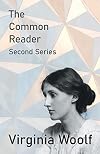
HarperCollins is proud to present its incredible range of best-loved, essential classics.The only advice, indeed, that one person can give another about reading is to take no advice, to follow your own instincts, to use your own reason, to come to your own conclusions.Tags
Recommendations
















Member Recommendations
Member Reviews
(joint review for both series)
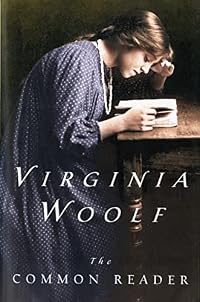
The two series of The common reader (published in 1925 and 1932) are the collections of Woolf's essays on books and writers published during her lifetime (further collections were compiled by her husband after her death). As the title implies, they concentrate on the pleasures to be found in books rather than the academic analysis of literary values. Woolf is happy to be eclectic, and whilst she visits most of the familiar lampposts of Eng Lit on her quasi-random walk, she doesn't mind going into rhapsodies about an obscure volume of 18th century memoirs that no-one has had out of the library in a century, or having fun exhuming the life of an almost forgotten country parson or an overlooked woman show more writer.
She is addressing English readers in English papers, of course, but still I was a bit surprised at how narrow her geographical range is here. "Literature", for the purposes of these books, seems to begin with Chaucer and the Paston Letters and end with Ulysses (still a work-in-progress when she was writing about it). Writers are, almost without exception, English - and when they are not, they are foreigners with some special claim to be recognised as English by adoption, like Swift and Joyce, Scott and RLS, or Conrad and James. There are passing references to the fact that a few Frenchmen may have written books, but this is not investigated further: it looks as though the only non-English books worth discussing are those of The Greeks and The Russians. And in both cases Woolf tells us that however much we may enjoy them, our cultural distance from them means that we will only ever appreciate them rather dimly. The famous essay "On not knowing Greek" isn't about linguistic difficulties. She assumes that we will have learnt Greek at least to the extent that we can read Homer and the Athenian dramatists, as she has. But she very sensibly warns us about the difficulty of making any assumptions about a culture where life is lived so differently from early-20th-century London, and a literature of which we read a handful of masterpieces without much knowledge of what came before or after, or indeed of contemporary works that were not preserved as masterpieces. Chaucer's England is a long way away too, but there we have so much more accessible context to help us to make sense of it. And Russia is even more of a problem, when seen from the vantage point of Bloomsbury: "Of all those who feasted upon Tolstoi, Dostoevsky, and Tchekov during the past twenty years, not more than one or two perhaps have been able to read them in Russian"(!)
Something else that came home to me about halfway through my reading is how hard it is to keep a sense of the flow of time when reading this sort of writing. Woolf talks about "The Victorians" in much the same way that we do, as representatives of a distant era, but actually she was born in Victoria's reign herself. When she talks about Tennyson, Thackeray and Trollope, they are people that her parents and grandparents knew (her father was previously married to one of Thackeray's daughters) - they're nearer to her (in time) than she would be from me. A sobering thought...
What most of us will dip into The common reader for are the wonderful essays on her real heroes, Jane Austen, George Eliot, Thomas Hardy, Joseph Conrad, Christina Rosetti, Mary Wollstonecraft and the Brontës, where Woolf expertly points us to the things we really need to know about those writers and the conditions they worked under, without obscuring in any way her own enormous (but never uncritical) enthusiasm for them. But we shouldn't neglect the backwaters. Woolf has great fun with all her subjects, and she can make Laetitia Pilkington or Geraldine Jewsbury (or Beau Brummell or Archbishop Thomson, for that matter) as interesting and extraordinary as Wollstonecraft, and make us feel - at least for the duration of the essay - that we really ought to go off and read more about those people. And occasionally, she can be delightfully brutal with some unfortunate modern writer, like the poor Miss Hill who wrote a ladylike little book about Mary Russell Mitford and her Surroundings, presumably unaware that Woolf knew all about Miss Mitford because of her research for Flush. But even faced with an undeniably bad book, Woolf admits that the simple pleasure of reading and being made to think about what the author should have said wins out "Yet, as one is setting out to speak the truth, one must own that there are certain books which can be read without the mind and without the heart, but still with considerable enjoyment."
The common reader is decidedly not a book to read without the mind and without the heart - both of those organs will be stimulated more than adequately as you read it - but the considerable enjoyment is still there all the same! show less
The two series of The common reader (published in 1925 and 1932) are the collections of Woolf's essays on books and writers published during her lifetime (further collections were compiled by her husband after her death). As the title implies, they concentrate on the pleasures to be found in books rather than the academic analysis of literary values. Woolf is happy to be eclectic, and whilst she visits most of the familiar lampposts of Eng Lit on her quasi-random walk, she doesn't mind going into rhapsodies about an obscure volume of 18th century memoirs that no-one has had out of the library in a century, or having fun exhuming the life of an almost forgotten country parson or an overlooked woman show more writer.
She is addressing English readers in English papers, of course, but still I was a bit surprised at how narrow her geographical range is here. "Literature", for the purposes of these books, seems to begin with Chaucer and the Paston Letters and end with Ulysses (still a work-in-progress when she was writing about it). Writers are, almost without exception, English - and when they are not, they are foreigners with some special claim to be recognised as English by adoption, like Swift and Joyce, Scott and RLS, or Conrad and James. There are passing references to the fact that a few Frenchmen may have written books, but this is not investigated further: it looks as though the only non-English books worth discussing are those of The Greeks and The Russians. And in both cases Woolf tells us that however much we may enjoy them, our cultural distance from them means that we will only ever appreciate them rather dimly. The famous essay "On not knowing Greek" isn't about linguistic difficulties. She assumes that we will have learnt Greek at least to the extent that we can read Homer and the Athenian dramatists, as she has. But she very sensibly warns us about the difficulty of making any assumptions about a culture where life is lived so differently from early-20th-century London, and a literature of which we read a handful of masterpieces without much knowledge of what came before or after, or indeed of contemporary works that were not preserved as masterpieces. Chaucer's England is a long way away too, but there we have so much more accessible context to help us to make sense of it. And Russia is even more of a problem, when seen from the vantage point of Bloomsbury: "Of all those who feasted upon Tolstoi, Dostoevsky, and Tchekov during the past twenty years, not more than one or two perhaps have been able to read them in Russian"(!)
Something else that came home to me about halfway through my reading is how hard it is to keep a sense of the flow of time when reading this sort of writing. Woolf talks about "The Victorians" in much the same way that we do, as representatives of a distant era, but actually she was born in Victoria's reign herself. When she talks about Tennyson, Thackeray and Trollope, they are people that her parents and grandparents knew (her father was previously married to one of Thackeray's daughters) - they're nearer to her (in time) than she would be from me. A sobering thought...
What most of us will dip into The common reader for are the wonderful essays on her real heroes, Jane Austen, George Eliot, Thomas Hardy, Joseph Conrad, Christina Rosetti, Mary Wollstonecraft and the Brontës, where Woolf expertly points us to the things we really need to know about those writers and the conditions they worked under, without obscuring in any way her own enormous (but never uncritical) enthusiasm for them. But we shouldn't neglect the backwaters. Woolf has great fun with all her subjects, and she can make Laetitia Pilkington or Geraldine Jewsbury (or Beau Brummell or Archbishop Thomson, for that matter) as interesting and extraordinary as Wollstonecraft, and make us feel - at least for the duration of the essay - that we really ought to go off and read more about those people. And occasionally, she can be delightfully brutal with some unfortunate modern writer, like the poor Miss Hill who wrote a ladylike little book about Mary Russell Mitford and her Surroundings, presumably unaware that Woolf knew all about Miss Mitford because of her research for Flush. But even faced with an undeniably bad book, Woolf admits that the simple pleasure of reading and being made to think about what the author should have said wins out "Yet, as one is setting out to speak the truth, one must own that there are certain books which can be read without the mind and without the heart, but still with considerable enjoyment."
The common reader is decidedly not a book to read without the mind and without the heart - both of those organs will be stimulated more than adequately as you read it - but the considerable enjoyment is still there all the same! show less
The second collection of literary essays published by Woolf during her lifetime, these 26 pieces take the reader into Woolf's entertaining reflections on famous writers, forgotten historical figures, literary criticism, and (in the most famous essay in the collection), the question of "How Should One Read a Book?" Through it all, Woolf's humor, sharp eye, and love of all types and eras of writing shine through. You won't know the writing or writers or historical figures that half of these essays are about, but that won't matter one bit. Woolf's writing is so compelling that it can carry any topic gracefully. I don't know that the English-speaking world has ever seen a better reader than Woolf (excepting, perhaps, Samuel Johnson, who show more inspired her title for these volumes), and how the heck she was able to read so much (and write so perfectly about her reading), while ALSO writing some of the best novels of all time is truly a mystery. If you want a taste beyond "How Should One Read a Book?," google around for "Dr. Burney's Evening Party" and "Jack Mytton," two of my faves in the collection. 🐌 show less
A book which is seductive as a box of chocolates, every essay intriguing and delicious
The second volume of Virginia Woolf's analysis of literary giants and styles. Always interesting with shafts of wry humour, the collection includes essays on John Donne, William Hazlitt, Christina Rossetti and Thomas Hardy.
A series of essays, several about little known or currently neglected authors and works. Entertaining.
Ratings
Members
- Recently Added By
Lists

Trinity College Booklist (1951): Class Ten, English Literature
358 works; 5 members

Best Books of 1926-1935
403 works; 10 members

Mustich's 1000 Books to Read Before You Die: A Life Changing List
1,001 works; 18 members

In Our Time books
4,934 works; 2 members
Author Information

646+ Works 118,813 Members
Virginia Woolf was born in London, England on January 25, 1882. She was the daughter of the prominent literary critic Leslie Stephen. Her early education was obtained at home through her parents and governesses. After death of her father in 1904, her family moved to Bloomsbury, where they formed the nucleus of the Bloomsbury Group, a circle of show more philosophers, writers, and artists. During her lifetime, she wrote both fiction and non-fiction works. Her novels included Jacob's Room, Mrs. Dalloway, To the Lighthouse, Orlando, and Between the Acts. Her non-fiction books included The Common Reader, A Room of One's Own, Three Guineas, The Captain's Death Bed and Other Essays, and The Death of the Moth and Other Essays. Having had periods of depression throughout her life and fearing a final mental breakdown from which she might not recover, Woolf drowned herself on March 28, 1941 at the age of 59. Her husband published part of her farewell letter to deny that she had taken her life because she could not face the terrible times of war. (Bowker Author Biography) show less
Some Editions
Awards and Honors
Notable Lists
Series

Work Relationships
Is contained in
Contains
Common Knowledge
- Canonical title
- The Common Reader: Second Series
- Alternate titles
- The Second Common Reader
- Original publication date
- 1932
- People/Characters
- Virginia Woolf; John Donne; Robinson Crusoe; Dorothy Osborne; Jonathan Swift; James Woodforde (show all 28); John Skinner; Jack Mytton; Thomas De Quincey; Beau Brummell; Mary Wollstonecraft; Dorothy Wordsworth; William Hazlitt; George Gissing; George Meredith; Christina Rossetti; Thomas Hardy; Daniel Defoe; Sir Philip Sidney; Esther Johnson; Laurence Sterne; Philip Stanhope, 4th Earl of Chesterfield; Fanny Burney; William Cowper; Ann Austen; Geraldine Jewsbury; Jane Welsh Carlyle; Elizabeth Barrett Browning
- Important places
- London, England, UK; England, UK
- Important events
- Elizabethan Era; English Renaissance; Renaissance; Georgian Era; Victorian Era; Pre-Raphaelites
Classifications
- Genres
- Nonfiction, Literature Studies and Criticism
- DDC/MDS
- 820.9 — Literature & rhetoric English & Old English literatures English and Old English (Anglo-Saxon) literatures History, description, critical appraisal of works in more than one form
- LCC
- PR99 .W78 — Language and Literature English English Literature
- BISAC
Statistics
- Members
- 656
- Popularity
- 43,809
- Reviews
- 5
- Rating
- (4.15)
- Languages
- 5 — Czech, Dutch, English, German, Italian
- Media
- Paper, Audiobook, Ebook
- ISBNs
- 20
- ASINs
- 28