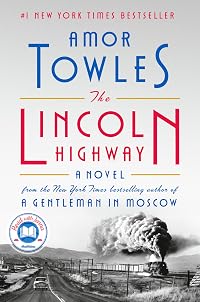
The Lincoln Highway
by Amor Towles
On This Page
Description
"The bestselling author of A Gentleman in Moscow and Rules of Civility and master of absorbing, sophisticated fiction returns with a stylish and propulsive novel set in 1950s America In June, 1954, eighteen-year-old Emmett Watson is driven home to Nebraska by the warden of the juvenile work farm where he has just served fifteen months for involuntary manslaughter. His mother long gone, his father recently deceased, and the family farm foreclosed upon by the bank, Emmett's intention is to show more pick up his eight-year-old brother, Billy, and head to California where they can start their lives anew. But when the warden drives away, Emmett discovers that two friends from the work farm have hidden themselves in the trunk of the warden's car. Together, they have hatched an altogether different plan for Emmett's future, one that will take them all on a fateful journey in the opposite direction-to the City of New York. Spanning just ten days and told from multiple points of view, Towles's third novel will satisfy fans of his multi-layered literary styling while providing them an array of new and richly imagined settings, characters, and themes"-- show lessTags
Recommendations


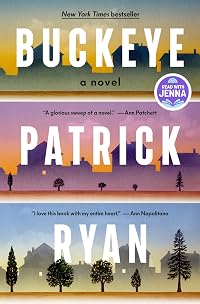
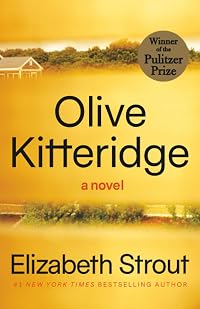
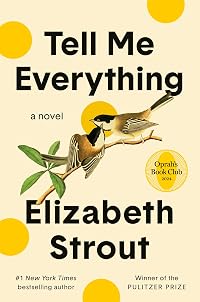
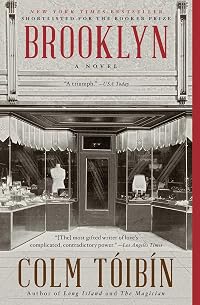
Member Recommendations
teelgee A rollicking buddy cross-country road trip with many misadventures and questionable characters.
Member Reviews
The ending of this book threw me for a loop and somewhat soured the entire rest of the novel for me. If you’ve read it you know what I’m talking about. Not only does our main character and moral compass of the story behave very out of character and put his erstwhile friend in a horrible Jigsaw-esque situation, leading directly to his death, the whole tone was completely at odds with the previous 98.5% of the book.
Throughout, the whole novel had the flavor of a Wes Anderson movie, nothing utterly unbelievable really happened but everything was so twee and the characters spent so long exchanging snappy, glittering dialogue and there was such an abundance of pithy maxims and purple prose, that you knew this wasn't quite the real show more world. It veered at times into a watered down sort of fantasy for me.
That this same book should end with a central character, whose perspective we’ve shared, whose backstory we know, and whose intentions, however misguided were almost always benign and usually thoughtful, should die, drowning after his former friend put him in a damaged rowboat without an oar, was a radical departure to say the least.
More confusing still, Emmet, our main protagonist, spent all book working through his guilt over accidentally killing another boy in a fight two years prior. He worked admirably on controlling his anger and has largely mastered it, although he will always feel guilt for the life he took, however unintentionally. For Emmet to make all that progress and then deliberately put Duchess in a damaged boat, knowing full well he can’t swim, strains credulity. That Emmet, who was shown to be practical and thoughtful, and who had hours in which to plan something to keep Duchess at bay, should decide on this course of action means, to me, he either took leave of his senses or else intended serious harm.
I know that it appears that the author was saying Duchess’ death is his own doing, really, since he couldn’t control his greed and jostled the leaky rowboat by reaching for the money in its bow as it scattered on the wind. I don’t really buy that. Authorial intent aside, that’s not enough justification for this to seem like anything other than manslaughter at best and murder at worst.
Maybe I’m missing the point. Maybe something the author was trying to say sailed right over my head. But based on my current impressions and understandings, this ending seems like something of a slap in the face and a terrific volte-face that leaves me feeling disoriented, unfulfilled, and not a little annoyed with the writer. show less
Throughout, the whole novel had the flavor of a Wes Anderson movie, nothing utterly unbelievable really happened but everything was so twee and the characters spent so long exchanging snappy, glittering dialogue and there was such an abundance of pithy maxims and purple prose, that you knew this wasn't quite the real show more world. It veered at times into a watered down sort of fantasy for me.
That this same book should end with a central character, whose perspective we’ve shared, whose backstory we know, and whose intentions, however misguided were almost always benign and usually thoughtful, should die, drowning after his former friend put him in a damaged rowboat without an oar, was a radical departure to say the least.
More confusing still, Emmet, our main protagonist, spent all book working through his guilt over accidentally killing another boy in a fight two years prior. He worked admirably on controlling his anger and has largely mastered it, although he will always feel guilt for the life he took, however unintentionally. For Emmet to make all that progress and then deliberately put Duchess in a damaged boat, knowing full well he can’t swim, strains credulity. That Emmet, who was shown to be practical and thoughtful, and who had hours in which to plan something to keep Duchess at bay, should decide on this course of action means, to me, he either took leave of his senses or else intended serious harm.
I know that it appears that the author was saying Duchess’ death is his own doing, really, since he couldn’t control his greed and jostled the leaky rowboat by reaching for the money in its bow as it scattered on the wind. I don’t really buy that. Authorial intent aside, that’s not enough justification for this to seem like anything other than manslaughter at best and murder at worst.
Maybe I’m missing the point. Maybe something the author was trying to say sailed right over my head. But based on my current impressions and understandings, this ending seems like something of a slap in the face and a terrific volte-face that leaves me feeling disoriented, unfulfilled, and not a little annoyed with the writer. show less
Emmett Watson returns from a juvenile detention center in Salina home to Nebraska after the death of his father. It's just him, his little brother Billy, and a pile of bills, so Emmett's plan is to pick up stakes and move. Billy wants to drive the Lincoln Highway to San Francisco in their mother's footsteps, but then two of Emmett's buddies from Salina show up with plans of their own, kicking off a road trip of epic proportions.
I am trying to wrap my hands around my sprawling thoughts after finishing this book to mold them into a semblance of a review that both does the book justice and doesn't give spoilers. The storyline is a cross between an epic and a tall tale. The narrative follows several different characters - primarily Emmett show more and Duchess and Woolly, the two friends who turn up on his doorstep with grand plans, but also of Billy, their neighbor Sally, and a few characters that the boys come across in the course of their travels. Duchess is a fast-talking son of an alcoholic actor who could have annoyed me but was really a rather lovable scamp that reminded me of Huck Finn. His buddy Woolly has some troubles and an addiction of his own, but is a generally kind and thoughtful young man. And Emmett, our hero, is setting off trying to make his way in the world. Billy was honestly my favorite. I loved his perspective and his innocence. Towles shows his skill in keeping such a complex narrative readable, creating unique voices for each character, and crafting a book so different from his last. I can see why it made so many best lists in 2021. show less
I am trying to wrap my hands around my sprawling thoughts after finishing this book to mold them into a semblance of a review that both does the book justice and doesn't give spoilers. The storyline is a cross between an epic and a tall tale. The narrative follows several different characters - primarily Emmett show more and Duchess and Woolly, the two friends who turn up on his doorstep with grand plans, but also of Billy, their neighbor Sally, and a few characters that the boys come across in the course of their travels. Duchess is a fast-talking son of an alcoholic actor who could have annoyed me but was really a rather lovable scamp that reminded me of Huck Finn. His buddy Woolly has some troubles and an addiction of his own, but is a generally kind and thoughtful young man. And Emmett, our hero, is setting off trying to make his way in the world. Billy was honestly my favorite. I loved his perspective and his innocence. Towles shows his skill in keeping such a complex narrative readable, creating unique voices for each character, and crafting a book so different from his last. I can see why it made so many best lists in 2021. show less
This is a hard book to review. The title and plot description would have readers believing that this is a light-hearted "road trip" story, and indeed many of the tropes of road trip novels are present: a gang of chums crossing the U.S. on a quest, encounters with eccentric characters, misadventures, etc. Towles has a particular gift for creating beguiling characters: a weary veteran endlessly riding the rails in a futile attempt to flee the consequences of his pride, a luminous constellation of washed-up burlesque performers, an Emerson-quoting farmer destroyed by the very "self-reliance" he covets. This is a literary feast of evocative descriptions and poignant interludes.
However, it doesn't take a degree in literature to see that show more Towles' tale is operating on multiple levels. Early in the novel Towles introduces "Professor Abacus Abernathe’s Compendium of Heroes, Adventurers, and Other Intrepid Travelers," complete with an empty chapter standing at ready for the Professor's young readers to record the tale of their own "hero's journey." Hard to imagine a more overt invitation to reflect upon the ways in which fate and hubris shape the lives of ordinary folk too! Certainly they shape the lives of the protagonists of this tale, each of whom is burdened by vagaries of fate (an unjust accusation, an accidental death, an ill-timed encounter with a police officer) as well as "fatal flaws" embedded in their natures: Emmett's quick temper, Billy's naivete, Duchess's cheerful immorality, Woolly's guilelessness. One by one, our protagonists are tested, some - a la Ulysses - achieving redemption, others tragically destroyed - a la Achilles or Caesar - by their fatal flaws.
I get that some are upset by perceived inconsistencies in the final chapters of the book, but one could argue that these resolutions merely hammer home the point that even those heroes who achieve redemption rarely emerge unchanged by their ordeal. In the words of Professor Abernathe: 'How easily we forget - we in the business of storytelling- that life was the point all along.”
By all means enjoy this book's many delights - the lucid storytelling, the beguiling characters, the evocative descriptions. But as you go along, you may wish to take Towles up on his invitation to reflect upon the fact that while none of us are immune from the manipulations of fate, the measure of our character is in how we respond to the adventures and perils that are set in our way. show less
However, it doesn't take a degree in literature to see that show more Towles' tale is operating on multiple levels. Early in the novel Towles introduces "Professor Abacus Abernathe’s Compendium of Heroes, Adventurers, and Other Intrepid Travelers," complete with an empty chapter standing at ready for the Professor's young readers to record the tale of their own "hero's journey." Hard to imagine a more overt invitation to reflect upon the ways in which fate and hubris shape the lives of ordinary folk too! Certainly they shape the lives of the protagonists of this tale, each of whom is burdened by vagaries of fate (an unjust accusation, an accidental death, an ill-timed encounter with a police officer) as well as "fatal flaws" embedded in their natures: Emmett's quick temper, Billy's naivete, Duchess's cheerful immorality, Woolly's guilelessness. One by one, our protagonists are tested, some - a la Ulysses - achieving redemption, others tragically destroyed - a la Achilles or Caesar - by their fatal flaws.
I get that some are upset by perceived inconsistencies in the final chapters of the book, but one could argue that these resolutions merely hammer home the point that even those heroes who achieve redemption rarely emerge unchanged by their ordeal. In the words of Professor Abernathe: 'How easily we forget - we in the business of storytelling- that life was the point all along.”
By all means enjoy this book's many delights - the lucid storytelling, the beguiling characters, the evocative descriptions. But as you go along, you may wish to take Towles up on his invitation to reflect upon the fact that while none of us are immune from the manipulations of fate, the measure of our character is in how we respond to the adventures and perils that are set in our way. show less
I drove to and from NC this past week and listened to this incredible book! I didn't even notice the miles as I listened to this amazing story. Brothers Emmett and Billy's father has died and their farm is in foreclosure. Emmett has just been released from Salina, a delinquent youth farm and wants to move to Texas and start over with his 8 year old brother. His brother, Billy wants to move to California to find their mother who left them years ago. But, before they can leave, Duchess and Woolly show up after going AWOL from Salina. And, the adventures begin! I laughed and cried (only a little) and held my breath while listening to this book! So highly recommended!
Summary: A westward trip of two bereaved brothers to start a new life is interrupted when two prison friends of the older brother turn up and hi-jack their plans.
I will say straight out that I think this is one of the best road novels I’ve ever read–leaving Kerouac’s On the Road in the metaphorical dust. Towles allows this journey to unfold rather than pursue the frenetic pace of Kerouac. The adolescent characters have dreams toward which they strive, despite the cards dealt them in life, and while not saints, evidence principles and loyalties not evident in Kerouac’s dissolute young adults who still act the like immature adolescents.
The novel opens in June of 1954 with a warden driving Emmett Watson home on early release from show more Salinas, a juvenile detention center to which he’d been sentenced for the accidental manslaughter of a young man who struck his head when knocked down by Emmett, retaliating for insults to his family. He has returned because his father had died of cancer, his mother had long ago abandoned the family, and he is the only one to care for his precocious, eight-year old brother Billy. Billy has been looked after by a young neighbor woman, Sally, who has spent her life looking after the men in her life and wants something more.
Emmett realizes staying in his small Nebraska town is not a good idea. He has enemies and a cloud over his head and his father’s farm has been seized by the bank. He envisions a new start with Billy, driving away in his powder blue Studebaker to use his construction skills somewhere that is growing. He thinks Texas, but Billy thinks California, where he hopes to find his mother, based on the trail of postcards she’d sent. Billy has mapped out the route that follows the coast-to-coast Lincoln Highway that runs close to their home. They hope to make it by the July 4 fireworks in San Francisco. Billy’s mother loved fireworks, having left the day after a local display.
Their plans are interrupted when two fellow inmates from Salinas, Duchess and “Woolly,” show up on Emmett’s doorstep. They had escaped in the trunk of the warden’s car. “Duchess” was the son of a theatrical performer who betrayed him to the authorities to escape arrest. “Woolly” suffers some form of cognitive impairment requiring medication to keep him mellow. They want Emmett and Billy to drive them to New York to retrieve a $150,000 trust fund that has been withheld from Woolly, that they offer to split three ways.
Emmett will have none of it. He and Billy pack their kit bags (Billy with Abacus Abernathe’s compendium of heroic stories that he has read 24 times already). They plan to drop the other two at a bus station, but Duchess, who always seems to have other ideas, creates a diversion at the orphanage he once lived in, then steals the Studebaker, and with Woolly takes off for New York, with $3,000 that Emmett’s father had left him, stowed behind the spare tire.
Emmett and Billy, nearly penniless, decide to pursue them the only way they can, by hopping a freight train, and the race is on to intercept them in New York, to retrieve the Studebaker, and hopefully the money, and then take the Lincoln Highway from coast to coast, fulfilling a dream of Billy’s. They make it to New York with the help and protection of a fellow hobo, Ulysses, who left his wife and son after the war and has been wandering ever since. Billy, reads him the story of Ulysses from Professor Abernathe’s book, and in a series of events, Professor Abernathe and Ulysses meet, discussing whether this Ulysses might be reunited with his wife as was the Ulysses of mythology. This encounter, catalyzed by Billy, was one of the high points of the book, capturing the arc of failure, struggle and hope each character pursues.
While all this happens, Emmett pursues Duchess and his car. But he’s not the only one pursuing. Sally, fed up with waiting for them to call to say they’ve arrived safely, and fed up with her domestic life, takes off in pursuit of them.
All of these characters are striving against thwarted destinies to make something of their lives. Billy wants to find the mother who left him. Emmett wants to use construction skills to make a life in a new place by re-habbing and flipping houses, not unlike what he’d been doing before prison. Sally is tired of doing for other men and wants to do for herself. Duchess envisions owning a restaurant like one in which he worked. And Woolly? It seems he would string together a life of “perfect days” untroubled by the demands of his station in life. The Lincoln Highway goes both east and west. Sometimes you have to go backward to go forward, as in the chapter numbering of this book. Sometimes, to get to California, you have to go through New York, uncertain whether you will make your way back, but continuing to hope. show less
I will say straight out that I think this is one of the best road novels I’ve ever read–leaving Kerouac’s On the Road in the metaphorical dust. Towles allows this journey to unfold rather than pursue the frenetic pace of Kerouac. The adolescent characters have dreams toward which they strive, despite the cards dealt them in life, and while not saints, evidence principles and loyalties not evident in Kerouac’s dissolute young adults who still act the like immature adolescents.
The novel opens in June of 1954 with a warden driving Emmett Watson home on early release from show more Salinas, a juvenile detention center to which he’d been sentenced for the accidental manslaughter of a young man who struck his head when knocked down by Emmett, retaliating for insults to his family. He has returned because his father had died of cancer, his mother had long ago abandoned the family, and he is the only one to care for his precocious, eight-year old brother Billy. Billy has been looked after by a young neighbor woman, Sally, who has spent her life looking after the men in her life and wants something more.
Emmett realizes staying in his small Nebraska town is not a good idea. He has enemies and a cloud over his head and his father’s farm has been seized by the bank. He envisions a new start with Billy, driving away in his powder blue Studebaker to use his construction skills somewhere that is growing. He thinks Texas, but Billy thinks California, where he hopes to find his mother, based on the trail of postcards she’d sent. Billy has mapped out the route that follows the coast-to-coast Lincoln Highway that runs close to their home. They hope to make it by the July 4 fireworks in San Francisco. Billy’s mother loved fireworks, having left the day after a local display.
Their plans are interrupted when two fellow inmates from Salinas, Duchess and “Woolly,” show up on Emmett’s doorstep. They had escaped in the trunk of the warden’s car. “Duchess” was the son of a theatrical performer who betrayed him to the authorities to escape arrest. “Woolly” suffers some form of cognitive impairment requiring medication to keep him mellow. They want Emmett and Billy to drive them to New York to retrieve a $150,000 trust fund that has been withheld from Woolly, that they offer to split three ways.
Emmett will have none of it. He and Billy pack their kit bags (Billy with Abacus Abernathe’s compendium of heroic stories that he has read 24 times already). They plan to drop the other two at a bus station, but Duchess, who always seems to have other ideas, creates a diversion at the orphanage he once lived in, then steals the Studebaker, and with Woolly takes off for New York, with $3,000 that Emmett’s father had left him, stowed behind the spare tire.
Emmett and Billy, nearly penniless, decide to pursue them the only way they can, by hopping a freight train, and the race is on to intercept them in New York, to retrieve the Studebaker, and hopefully the money, and then take the Lincoln Highway from coast to coast, fulfilling a dream of Billy’s. They make it to New York with the help and protection of a fellow hobo, Ulysses, who left his wife and son after the war and has been wandering ever since. Billy, reads him the story of Ulysses from Professor Abernathe’s book, and in a series of events, Professor Abernathe and Ulysses meet, discussing whether this Ulysses might be reunited with his wife as was the Ulysses of mythology. This encounter, catalyzed by Billy, was one of the high points of the book, capturing the arc of failure, struggle and hope each character pursues.
While all this happens, Emmett pursues Duchess and his car. But he’s not the only one pursuing. Sally, fed up with waiting for them to call to say they’ve arrived safely, and fed up with her domestic life, takes off in pursuit of them.
All of these characters are striving against thwarted destinies to make something of their lives. Billy wants to find the mother who left him. Emmett wants to use construction skills to make a life in a new place by re-habbing and flipping houses, not unlike what he’d been doing before prison. Sally is tired of doing for other men and wants to do for herself. Duchess envisions owning a restaurant like one in which he worked. And Woolly? It seems he would string together a life of “perfect days” untroubled by the demands of his station in life. The Lincoln Highway goes both east and west. Sometimes you have to go backward to go forward, as in the chapter numbering of this book. Sometimes, to get to California, you have to go through New York, uncertain whether you will make your way back, but continuing to hope. show less
Book on CD performed by Edoardo Ballerini, Marin Ireland, and Dion Graham.
This is a quest and a road trip, a saga of family and friendship, an exploration of morals and principles against temptations which are seemingly impossible to resist.
Emmett Watson is an 18-year-old who’s been released from his term at a youth correctional institution. But his father has died and during his long illness he’d lost the family farm. So now Emmett and his younger brother Billy decide to set out for California and a new start in life. But their plan gets derailed when two friends from the juvenile center show up and suggest that they first go to New York, where they can collect a large inheritance. The result is an odyssey worthy of Homer, but show more rather than ten years, THIS odyssey takes only ten days.
Towles structures the book with alternating points of view, so we hear from Emmett, Billy, Duchess, Woolly, Sally and Ulysses (and a few other minor characters) in sequence. Frequently the same scenario is related by different characters, switching points of view at a critical juncture and sometimes going back in time to explain how we got to this point.
I loved these characters, though I was wary of Duchess from the outset. What a snake oil salesman! But I have to admit he’s a charming bandit. I couldn’t figure out why Emmett didn’t just say “No,” but of course, he had to think of eight-year-old Billy who was beguiled by Duchess and Woolly and excited by the possibility of starting the Lincoln Highway from its beginning in NYC. And Billy, with his beloved Professor Abacus Abernathe’s Compendium of Heroes, Adventurers, and Other Intrepid Travels has the naïve trust of a child, but wisdom far beyond his years. He’s a keen observer and an astute judge of character.
Towles ends the book with a bit of a puzzle. Leaving the reader to imagine what will happen next, and hungry for more details of future adventures. I’m not sure I liked the ending; I’m left with a huge question abouthow Emmett can possibly get away from the law now that there is no one left to actually explain that he wasn’t involved . But it’s a fable, after all, and I guess I just have to take it on faith.
Edoardo Bellarini does the lion’s share of the narration on the audiobook, with Marin Ireland taking on the role of Sally and Dion Graham bringing Ulysses to life. It’s a marvelous, 5-star performance by all three! show less
This is a quest and a road trip, a saga of family and friendship, an exploration of morals and principles against temptations which are seemingly impossible to resist.
Emmett Watson is an 18-year-old who’s been released from his term at a youth correctional institution. But his father has died and during his long illness he’d lost the family farm. So now Emmett and his younger brother Billy decide to set out for California and a new start in life. But their plan gets derailed when two friends from the juvenile center show up and suggest that they first go to New York, where they can collect a large inheritance. The result is an odyssey worthy of Homer, but show more rather than ten years, THIS odyssey takes only ten days.
Towles structures the book with alternating points of view, so we hear from Emmett, Billy, Duchess, Woolly, Sally and Ulysses (and a few other minor characters) in sequence. Frequently the same scenario is related by different characters, switching points of view at a critical juncture and sometimes going back in time to explain how we got to this point.
I loved these characters, though I was wary of Duchess from the outset. What a snake oil salesman! But I have to admit he’s a charming bandit. I couldn’t figure out why Emmett didn’t just say “No,” but of course, he had to think of eight-year-old Billy who was beguiled by Duchess and Woolly and excited by the possibility of starting the Lincoln Highway from its beginning in NYC. And Billy, with his beloved Professor Abacus Abernathe’s Compendium of Heroes, Adventurers, and Other Intrepid Travels has the naïve trust of a child, but wisdom far beyond his years. He’s a keen observer and an astute judge of character.
Towles ends the book with a bit of a puzzle. Leaving the reader to imagine what will happen next, and hungry for more details of future adventures. I’m not sure I liked the ending; I’m left with a huge question about
Edoardo Bellarini does the lion’s share of the narration on the audiobook, with Marin Ireland taking on the role of Sally and Dion Graham bringing Ulysses to life. It’s a marvelous, 5-star performance by all three! show less
A Most Excellent Adventure! Perhaps it was the romp through 1954 which dazzled me, but Amor Towles can make any time in history seem captivating. I love his side roads to other topics as he takes you on the journey. This is off-putting to some readers, but I love it. I'm a couple weeks out from finishing it and I am still delighted by the scenes that keep coming back to me. Although I found Billy’s character annoying, his repetition of historical journeys helped provided a philosophical context for life journeys. Of course, as in any novel there are some tough times, so readers should not be lulled into thinking all is right in this fictional world.
Although I loved Gentleman in Moscow, I actually think this has surpassed it in terms show more of sheer enjoyment of the reading experience. Can't wait for his next book! show less
Although I loved Gentleman in Moscow, I actually think this has surpassed it in terms show more of sheer enjoyment of the reading experience. Can't wait for his next book! show less
Members
- Recently Added By
Lists

Recommend the 20 best books you've read in the last five years
2,168 works; 606 members

Best 21st Century Books (So Far)
670 works; 86 members

Top Five Books of 2021
604 works; 181 members

Top Five Books of 2022
736 works; 272 members

Pleasant Surprises: Books That Exceeded Our Expectations
418 works; 143 members

Books recommended by Barack Obama
295 works; 28 members

Anticipated 2021 Reads
231 works; 7 members

Books Read in 2023
5,547 works; 145 members

Books Read in 2022
5,166 works; 114 members

Phi Beta Kappa reading list
260 works; 8 members

Fiction: Historical
288 works; 3 members

Obama Reads
181 works; 3 members

Netgalley Reads
460 works; 3 members

Books I have Recommended
207 works; 1 member

Books Read in 2021
5,361 works; 113 members

NYT Readers best of 21st C
100 works; 8 members

Top Five Books of 2024
795 works; 264 members

Dublin Literary Award 2023 Longlist
67 works; 5 members

Books Read 2025
70 works; 2 members

Book of the Month Selections 2016 to Present
130 works; 5 members

Books We Couldn't Put Down
443 works; 197 members

Books Read in 2025
4,091 works; 97 members

Coming of Age
33 works; 1 member

Read with Jenna
91 works; 2 members

el
1,139 works; 1 member

Fiction With Familiar Settings
280 works; 93 members
Author Information

24+ Works 25,575 Members
Amor Towles grew up in Boston, Massachusetts. He graduated from Yale College and received an M.A. in English from Stanford University where he was a Scowcroft Fellow. His novel, "Rules of Civility" reached the bestseller lists of The New York Times, the Boston Globe and Los Angeles Times. The book was rated by The Wall Street Journal as one of the show more ten best works of fiction in 2011. The book has been published in 15 languages. In the fall of 2012, the novel was optioned to be made into a feature film. Viking/Penguin published Towles's next novel, A Gentleman in Moscow, on September 6, 2016. (Bowker Author Biography) show less
All Editions
Some Editions
Awards and Honors
Work Relationships
Common Knowledge
- Canonical title
- The Lincoln Highway
- Original title
- The Lincoln Highway
- Original publication date
- 2021
- People/Characters
- Emmett Watson; Billy Watson; Duchess Hewett; Wallace Wolcott "Woolly" Martin; Sally Ransom; Ulysses Dixon (show all 13); Pastor John; Warden Ackerly; Townhouse; Sarah Whitney; Harrison Hewett; Abacus Abernathe; Dennis Whitney
- Important places
- Morgen, Nebraska, USA; Illinois, USA; Ames, Iowa, USA; Indiana, USA; New York, USA; New York, New York, USA (show all 7); Lincoln Highway, USA
- Epigraph
- The miles of fresh-plowed soil,
Heavy and black, full of strength and harshness,
The growing wheat, the growing weeds,
The toiling horses, the tired men;
The long, empty roads,
Sullen fires of sunset, fading,
Against all this, Youth . . .
—O Pioneers, Willa Cather - Dedication
- My brother Stokly
And
My sister Kimbrough - First words
- JUNE 12, 1954—The drive from Salina to Morgen was three hours, and for much of it, Emmett hadn't said a word.
- Quotations
- He knew too that he had been an agent of misfortune rather than its author. But he didn't agree that his debt had been paid in full. For no matter how much chance had played a role, when by your hands you have brought another... (show all) man's time on earth to its end, to prove to the Almighty that you are worthy of his mercy, that shouldn't take any less time than the rest of your life.
... through our misdeeds we may put ourselves in another person’s debt, just as through their misdeeds they put themselves in ours. And since it’s these debts – those we’ve incurred and those we’re owed – that ke... (show all)ep us stirring and stewing in the early hours, the only way to get a good night’s sleep is to balance the accounts.
Regardless of who had been provoked by who, or whom by whom, when Emmett hit the Snyder kid at the county fair, he took on a debt just as surely as his father had when he had mortgaged the family farm.
I don’t blame Him. Whom I blame is Matthew, Mark, Luke, and John, and every other man who’s served as priest or preacher since.
To Emmett, all the houses in this part of the country looked like they'd been dropped from the sky. The Watson house just looked like it'd had a rougher landing. The roof line sagged on either side of the chimney and the wind... (show all)ow frames were slanted just enough that half the windows wouldn't quite open and the other half wouldn't quite shut.
Emmett could hear his father stirring in the next room, unable to sleep—and not without reason. Because a farmer with a mortgage was like a man walking on the railing of a bridge with his arms outstretched and his eyes clos... (show all)ed. It was a way of life in which the difference between abundance and ruin could be measured by a few inches of rain or a few nights of frost.
Boys, she would begin in her motherly way, in your time you shall do wrong unto others and others shall do wrong unto you. And these opposing wrongs will become your chains. The wrongs you have done unto others wil... (show all)l be bound to you in the form of guilt, and the wrongs that others have done unto you in the form of indignation. The teachings of Jesus Christ Our Savior are there to free you from both. To free you from your guilt through atonement and from your indignation through forgiveness. Only once you have freed yourself from both of these chains may you begin to live your life with love in your heart and serenity in your step.
What wisdom the Lord does not see fit to endow us with at birth, He provides through the gift of experience.
—In that man's heart, said Ulysses, sliding the door shut, there is more treachery than preachery.
Oh, he enjoyed delivering that little speech. Standing there with his legs apart and his feet planted firmly on the ground, he acted as if he could draw his strength straight from the land because he owned it.
I felt bad for him. Not man enough to be a man, or child enough to be a child, not black enough to be black, or white enough to be white, Maurice just couldn't seem to find his place in the world.
—Questions can be so tricky, he said, like forks in the road. You can be having such a nice conversation and someone will raise a question, and the next thing you know you're headed off in a whole new direction. In all prob... (show all)ability, this new road will lead you to places that are perfectly agreeable, but sometimes you just want to go in the direction you were already headed.
—Have you ever noticed, he said, have you ever noticed how so many questions begin with the letter W?
He counted them off on his fingers.
—Who. What. Why. When. Where. Which.
He could see his sister's conc... (show all)ern and uncertainty lifting for a moment as she smiled at this fascinating little fact.
—Isn't that interesting? he continued. I mean, how do you think that happened? All those centuries ago when words were first being coined, what was it about the sound of the W that made the word coiners use it for all of the questions? As opposed to say, the T or the P? It makes you feel sort of sorry for W, doesn't it? I mean, it's a pretty big burden to carry. Especially since half the time when someone asks you a question with a W, they aren't really asking you a question. They're making a statement in disguise. Like, like ...
—When are you going to grow up! And Why would you do such a thing! And What in God's name were you thinking!
Well, imagine all you like. It won't cost you nothing, and it'll cost me less. But later that night, after I'd served the chili, cleaned the kitchen, and switched off the lights, I knelt at the side of my bed, clasped my hand... (show all)s together, and prayed. Dear Lord, I said, please give my father the wisdom to be gracious, the heart to be generous, and the courage to ask for this woman's hand in holy matrimony—so that someone else can do his cooking and cleaning for a change.
Billy and Woolly both had big smiles on their faces, while Emmett, per usual, was acting like smiles were a precious resource.
Wouldn't it have been wonderful, thought Woolly, if everybody's life was like a piece in a jigsaw puzzle. Then no one person's life would ever be an inconvenience to anyone else's. It would just fit snugly in its very own, sp... (show all)ecially designed spot, and in so doing, would enable the whole intricate picture to become complete.
Many years before, Abacus had come to the conclusion that the greatest of heroic stories have the shape of a diamond on its side.
As Emmett walked out the door and climbed into his bright yellow car, I thought to myself that there are surely a lot of big things in America. The Empire State Building and the Statue of Liberty are big. The Mississippi Rive... (show all)r and the Grand Canyon are big. The skies over the prairie are big. But there is nothing bigger than a man's opinion of himself.
Plain speaking and common sense. In my book, there's just no substitute. - Last words
- (Click to show. Warning: May contain spoilers.)And when the final chime sounded, I turned to them all in order to utter with my very last breath, The rest is silence, just as Hamlet had.
Or was that Iago?
I never could remember. - Blurbers
- French, Tana
- Original language
- English US
Classifications
Statistics
- Members
- 4,426
- Popularity
- 3,350
- Reviews
- 204
- Rating
- (4.11)
- Languages
- 12 — Danish, Dutch, English, French, German, Italian, Korean, Polish, Portuguese, Spanish, Swedish, Turkish
- Media
- Paper, Audiobook, Ebook
- ISBNs
- 43
- ASINs
- 10