On This Page
Description
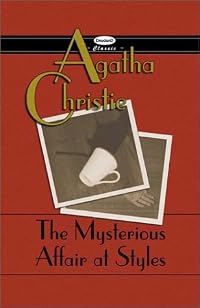
Set in the summer of 1917, the story follows the war-wounded Hastings to the Styles St. Mary estate of his friend John Cavendish. The Cavendish household is wrought with tension due to the marriage of John's widowed mother to a suspicious younger man. In the village, Hastings runs into his old friend Hercule Poirot and, when the estate's trouble turns deadly, the friends unite to solve a most baffling case.Tags
Recommendations














Member Recommendations

ed.pendragon Both are set in the twenties at a country house.
sturlington Cozy mysteries set in villages.

Cecrow For his last case, Poirot returns to the scene of his first case.
Member Reviews
First off: I liked this book alright. It was definitely a good read, with plenty of twists and turns that you'd expect from a widely hailed whodunnit. The characters are interesting, the primary directive of sussing out the killer was never lost, and the story is told very engagingly.
That said. God, I do not like Hastings. Had to take some time after completing my read to really percolate on my feelings here, and I've arrived at intense dislike for the narrator. Arthur Hastings is a self-satisfied all-important blowhard that spends more time eyefucking his old friend's pretty wife than he does actually considering the "facts" of the mystery. His personal speculations are all over the place, rooted in prejudice or complete show more misunderstandings, and always turn back towards his blatant disregard for certain people.
In between random accusations— none of which really involve the pretty woman he's orbiting around for most of the tale —and fundamental misunderstandings of interview procedure? Arthur has cemented himself as a character I would hate to be associated with. Truth be told, I can't think of a single point in the book where he was actually helpful to Poirot. In any capacity. He stood around, said "Well, what!" when ignored, and thought highly inappropriately about his friend's wife. Didn't like him from the second he started chatting with Mary Cavendish, because he had to assure the reader he was a much better conversationalist than the man she married.
Whatever. I'm not a prude; it's just annoying when a character's worth is defined by whether or not the narrator wants to bang her. This comes up a lot, actually, since Hastings has a constant need to rate the women he interacts with on a scale of "would have an affair with" to "weirdly handsome [ew] unfuckable maid beast" and I find that annoying to read. Over and over again. I thought we were solving a mystery? My God.
The racist and misogynistic points are simply a matter of fact in this book, harped on unnecessarily to pad out time between crime procedure and information withheld from the reader. Usually, I can slog through quite a bit of this stuff to reach the meat of a story, but I think Christie's approach here being so dialogue heavy made it more unpleasant. The approach is perfectly fine, but she relies heavily on characters talking back and forth, speaking their whole minds and then meandering off when she's done having them yammer together. Mary Cavendish especially often just existed in a scene to say a plot relevant thing, then drift into Hastings' personal fantasies before fading away altogether so Poirot could actually work.
That said, loved Poirot. After multiple chapters of slogging through Hastings' bullshit, Hercule Poirot was a breath of freshest air. His mannerisms and eccentricities are genuinely fun to read, almost jumping off the page in an attempt to sit in your heart. I totally understand Christie's letter about him— included in my library's copy of the book —working his way into her mind like a chubby little unwelcome bug. A stellar detective too, actually poking around at the right things and immediately endearing himself to the layperson as well as the highbrow elite of the story. It was nice to see him speak candidly on the troubles of womanhood after sitting through Hastings' personal theories of feminine sensibility. Honestly, I'm surprised to not see as much discussion on Hercule Poirot being queer-coded, given... Well, everything about him.
Didn't bother reading the "true ending" included in this copy of the book. The court scenes that were included were fundamentally boring, probably the worst written part of the whole story, and I'm glad an editor stepped in to have things move away from the proceedings there. The parlor reveal is a classic, coined here by necessity, leaned on heavily in many a novel since. Which is baller. Did I guess the villain of this tale? Yeah, unfortunately, it was pretty obvious. There was a little too much racist foreshadowing, and in a first mystery, it's usually the first suspect with foreign machinations. Eyeroll. I'm looking forward to my next Christie novel. There's a good foundation here, and one can only go up from here.
If anyone cares, I thought Poirot's need to sit weirdly in chairs was very cute. Reminds me of a big chubby cat that wants to be held like a baby in your lap. Excellent visualization. show less
That said. God, I do not like Hastings. Had to take some time after completing my read to really percolate on my feelings here, and I've arrived at intense dislike for the narrator. Arthur Hastings is a self-satisfied all-important blowhard that spends more time eyefucking his old friend's pretty wife than he does actually considering the "facts" of the mystery. His personal speculations are all over the place, rooted in prejudice or complete show more misunderstandings, and always turn back towards his blatant disregard for certain people.
In between random accusations— none of which really involve the pretty woman he's orbiting around for most of the tale —and fundamental misunderstandings of interview procedure? Arthur has cemented himself as a character I would hate to be associated with. Truth be told, I can't think of a single point in the book where he was actually helpful to Poirot. In any capacity. He stood around, said "Well, what!" when ignored, and thought highly inappropriately about his friend's wife. Didn't like him from the second he started chatting with Mary Cavendish, because he had to assure the reader he was a much better conversationalist than the man she married.
Whatever. I'm not a prude; it's just annoying when a character's worth is defined by whether or not the narrator wants to bang her. This comes up a lot, actually, since Hastings has a constant need to rate the women he interacts with on a scale of "would have an affair with" to "weirdly handsome [ew] unfuckable maid beast" and I find that annoying to read. Over and over again. I thought we were solving a mystery? My God.
The racist and misogynistic points are simply a matter of fact in this book, harped on unnecessarily to pad out time between crime procedure and information withheld from the reader. Usually, I can slog through quite a bit of this stuff to reach the meat of a story, but I think Christie's approach here being so dialogue heavy made it more unpleasant. The approach is perfectly fine, but she relies heavily on characters talking back and forth, speaking their whole minds and then meandering off when she's done having them yammer together. Mary Cavendish especially often just existed in a scene to say a plot relevant thing, then drift into Hastings' personal fantasies before fading away altogether so Poirot could actually work.
That said, loved Poirot. After multiple chapters of slogging through Hastings' bullshit, Hercule Poirot was a breath of freshest air. His mannerisms and eccentricities are genuinely fun to read, almost jumping off the page in an attempt to sit in your heart. I totally understand Christie's letter about him— included in my library's copy of the book —working his way into her mind like a chubby little unwelcome bug. A stellar detective too, actually poking around at the right things and immediately endearing himself to the layperson as well as the highbrow elite of the story. It was nice to see him speak candidly on the troubles of womanhood after sitting through Hastings' personal theories of feminine sensibility. Honestly, I'm surprised to not see as much discussion on Hercule Poirot being queer-coded, given... Well, everything about him.
Didn't bother reading the "true ending" included in this copy of the book. The court scenes that were included were fundamentally boring, probably the worst written part of the whole story, and I'm glad an editor stepped in to have things move away from the proceedings there. The parlor reveal is a classic, coined here by necessity, leaned on heavily in many a novel since. Which is baller. Did I guess the villain of this tale? Yeah, unfortunately, it was pretty obvious. There was a little too much racist foreshadowing, and in a first mystery, it's usually the first suspect with foreign machinations. Eyeroll. I'm looking forward to my next Christie novel. There's a good foundation here, and one can only go up from here.
If anyone cares, I thought Poirot's need to sit weirdly in chairs was very cute. Reminds me of a big chubby cat that wants to be held like a baby in your lap. Excellent visualization. show less
Agatha Christie's first novel, my first Agatha experience, and the inception of Poirot, is just perfection. Agatha's novels have been raved about for years and years, and now I see why. Her storytelling captures the very essence of a great detective novel, and has been the inspiration for hundreds of mysteries for decades. She was able to break away from the dominating Sherlock Holmes detective persona, and create a new detective genre (and character) of her own. For a book that was originally published in 1921, this story still holds up. The characters are perfectly developed and examined, the setting is painted with just enough description to be imagined without too much narrative, and the actual mystery is clever enough that I didn't show more guess the murderer until pretty much the end. Christie manages to do everything with a light hand, so that nothing is overbearing, obnoxious, or unrealistic. She keeps it simple yet complex, intriguing enough to make you want to think, without being so suspenseful that you don't want to take your time with the story. A ! I can't wait to read more of her novels. show less
This was the first Christie I've ever read, and overall, I liked it. My brain loved the story and the plot twists throughout that made me keep questioning my assumptions. Nicely done mystery. However, I was annoyed by John Hasting, who I thought was arrogant, impulsive, and useless... Too bad he was the narrator. I'll keep reading through the Poirot series and hope that Hastings becomes less tiresome.
Audible drama edition. Audio notes: immersive radio drama rendition with lots of ambient sounds (almost too much) and good acting.
Christie's first introduction of the Belgian detective reads a lot like the imitation of Holmes it really is. From the dunce cap on Hastings to the superhuman deductive skills of Poirot, he doesn't really come into his own until later. Christie offers a lot more red herrings and dead ends than Doyle however.
Christie's first introduction of the Belgian detective reads a lot like the imitation of Holmes it really is. From the dunce cap on Hastings to the superhuman deductive skills of Poirot, he doesn't really come into his own until later. Christie offers a lot more red herrings and dead ends than Doyle however.
I've read other Poirot mysteries in a random order, so there was some fun to be had in seeing where it all began. Christie is very sharp at introducing all of her characters in the first chapter, setting up the murder in the second chapter, executing it (pardon the pun) in the third, etc. It's a bit mechanical but not absurdly so, and very efficient. Hastings initially presents himself as the story's potential detective but then immediately goes running to recruit his friend Poirot. The description of the little Belgian is complete from the get-go, lacking nothing from his later appearances; he was born fully-formed, as it were. Poirot's put-downs of Hastings are absolutely priceless, as is Hastings' total obliviousness. I can see how show more this first book took fire and launched one of the world's most famous fictional detectives. show less
How have I managed to get this far in life without reading ANY Agatha Christie? Came across this lovely audiobook quite by chance at the library and set about to rectify the omission. So glad that I did.
The first of the Hercule Poirot novels, we meet the fastidious Belgian detective and his upright friend, Arthur Hastings. Hastings is visiting his good friend John Cavendish and his lovely wife Mary. Of course, nothing is ever as it seems. In typical country house mystery fashion, the doyenne of the manor is apparently poisoned, right before the appalled family's eyes leaving a house full of suspects. The Cavendish family quickly enlists Arthur's little foreign detective friend to investigate.
Charmingly narrated by Penelope Dellaporta, show more the mystery rips right along. Her clipped English tones helped keep David Suchet's voice out of my head. show less
The first of the Hercule Poirot novels, we meet the fastidious Belgian detective and his upright friend, Arthur Hastings. Hastings is visiting his good friend John Cavendish and his lovely wife Mary. Of course, nothing is ever as it seems. In typical country house mystery fashion, the doyenne of the manor is apparently poisoned, right before the appalled family's eyes leaving a house full of suspects. The Cavendish family quickly enlists Arthur's little foreign detective friend to investigate.
Charmingly narrated by Penelope Dellaporta, show more the mystery rips right along. Her clipped English tones helped keep David Suchet's voice out of my head. show less
The first book Agatha Christie published was also her first Hercule Poirot mystery, my favorite of all her detectives. Captain Alfred Hastings narrates the story, and he also is a familiar figure in Christie mysteries, as a confidante and sidekick to Poirot. At the start of this novel, he is recently returned to England, invalided from battle and home to recuperate. He happens to run into John Cavendish, an old friend, and is invited to spend some time at the Cavendish country home, Styles Court.
When Hastings arrives, he quickly realizes that Styles Court in not a peaceful place. Emily Cavendish, the matriarch of the family and wealthy widow who owns the whole estate, has recently married a much younger man. The rest of the family show more greatly dislikes Alfred Inglethorp, the new husband. John and his brother, Lawrence, are Emily's stepsons. Nonetheless, she has the power to determine how the money will be distributed at her death, even if it was the will of John's father that John as his eldest son would inherit the estate upon his stepmother's death. Emily changes her will on a regular basis; currently, her will ensures that the money will go to the new husband, Alfred. Clearly, the tension is high in the family. To make matters worse, Emily's friend Evelyn Howard is also staying with the family, and she detests Alfred and regularly has altercations with him.
The mystery kicks in when the household is awakened in the middle of the night, hearing sounds of struggle in Emily Cavendish's room. They rush to her aid, but the door is locked. By the time they break in to the room, they find Emily alone but in dire straights. At first, she seems to be recuperating, but another attack seizes her while they are there. The doctor declares that she is dying. He explains it away as natural causes, but Hastings suspects poison, as does the doctor. Hastings asks John for his permission to contact an old friend of his, Hercule Poirot. While the family is divided as to whether a detective is even needed, John agrees, and Poirot soon arrives on the scene.
Working with his usual brilliant and meticulous care, Poirot begins uncovering the secrets of the household. The number of people staying at the house means that the suspect count is high. Christie clearly describes the clues, and Poirot's attention to them, but doesn't explain their meaning until the great reveal at the end. As this is Poirot's first appearance in print, the story makes a great point of the first impression he makes on people, of a rather foolish and foppish foreigner, in contrast with his incredible mind and deft skill at unraveling mysteries. The solution to this particular puzzler is delightful, twisting the reader's expectations around and around again, and will delight mystery lovers.
Truly, Agatha Christie is the Grand Dame of mysteries, and this book is a wonderful place to start. It introduces her most famous detective, it also introduces the familiar figure Captain Hastings, and it is a fantastic mystery that demonstrates Christie's gift for defying expectations. Her stories are generally self-contained, even if they do frequently use the same characters, so it actually is not necessary for someone new to Christie or Hercule Poirot to start with this book. However, it's not a bad idea, because this book is prime Christie, and immensely fun. I recommend people read all the Hercule Poirot mysteries, including The Mysterious Affair at Styles. show less
When Hastings arrives, he quickly realizes that Styles Court in not a peaceful place. Emily Cavendish, the matriarch of the family and wealthy widow who owns the whole estate, has recently married a much younger man. The rest of the family show more greatly dislikes Alfred Inglethorp, the new husband. John and his brother, Lawrence, are Emily's stepsons. Nonetheless, she has the power to determine how the money will be distributed at her death, even if it was the will of John's father that John as his eldest son would inherit the estate upon his stepmother's death. Emily changes her will on a regular basis; currently, her will ensures that the money will go to the new husband, Alfred. Clearly, the tension is high in the family. To make matters worse, Emily's friend Evelyn Howard is also staying with the family, and she detests Alfred and regularly has altercations with him.
The mystery kicks in when the household is awakened in the middle of the night, hearing sounds of struggle in Emily Cavendish's room. They rush to her aid, but the door is locked. By the time they break in to the room, they find Emily alone but in dire straights. At first, she seems to be recuperating, but another attack seizes her while they are there. The doctor declares that she is dying. He explains it away as natural causes, but Hastings suspects poison, as does the doctor. Hastings asks John for his permission to contact an old friend of his, Hercule Poirot. While the family is divided as to whether a detective is even needed, John agrees, and Poirot soon arrives on the scene.
Working with his usual brilliant and meticulous care, Poirot begins uncovering the secrets of the household. The number of people staying at the house means that the suspect count is high. Christie clearly describes the clues, and Poirot's attention to them, but doesn't explain their meaning until the great reveal at the end. As this is Poirot's first appearance in print, the story makes a great point of the first impression he makes on people, of a rather foolish and foppish foreigner, in contrast with his incredible mind and deft skill at unraveling mysteries. The solution to this particular puzzler is delightful, twisting the reader's expectations around and around again, and will delight mystery lovers.
Truly, Agatha Christie is the Grand Dame of mysteries, and this book is a wonderful place to start. It introduces her most famous detective, it also introduces the familiar figure Captain Hastings, and it is a fantastic mystery that demonstrates Christie's gift for defying expectations. Her stories are generally self-contained, even if they do frequently use the same characters, so it actually is not necessary for someone new to Christie or Hercule Poirot to start with this book. However, it's not a bad idea, because this book is prime Christie, and immensely fun. I recommend people read all the Hercule Poirot mysteries, including The Mysterious Affair at Styles. show less
Members
- Recently Added By
Lists

The Guardian's 1000 Novels Everyone Must Read
1,005 works; 549 members

Favorite Series
238 works; 93 members

Top Cops (Detectives in Fiction)
86 works; 24 members

Crime and Mysteries to Read
746 works; 31 members

British Mystery
469 works; 14 members

Survey of Classic Crime
39 works; 7 members

Best Private Eye stories
28 works; 7 members

Books I've Read More Than Once
602 works; 49 members
Agatha Christie Poirot
43 works; 2 members

Haycraft Queen Cornerstones
181 works; 3 members

Books About Murder
313 works; 7 members

Female Author
1,235 works; 65 members

Detective Stories
343 works; 5 members

Books mentioned in Julian Symons’ Bloody Murder
438 works; 6 members

Top Five Books of 2021
604 works; 181 members

Books about World War I
80 works; 14 members

Agatha Christie Poirot Books
6 works; 1 member
Agatha Christie Chronology
93 works; 1 member
Art Bourgeau's Favorites [Mystery Lovers Companion, 1986]
124 works; 2 members

Books Read in 2024
4,623 works; 126 members

Stealth- and Posthumously- Edited Books
15 works; 1 member

Books Read in 2022
5,164 works; 113 members

Books Read in 2023
5,547 works; 145 members

In and About the 1920s
181 works; 31 members
20th Century Literature
1,161 works; 55 members

Books Read in 2020
4,379 works; 123 members
1920s
141 works; 6 members

New York Public Library's Books of the Century - All
170 works; 14 members

Books Read in 2019
4,052 works; 110 members
New York Public Library's Books of the Century
120 works; 20 members

Books Read in 2018
4,360 works; 110 members

Books Read in 2017
4,249 works; 129 members

Books Read in 2012
815 works; 34 members

Authors from England
147 works; 4 members

First Novels
373 works; 17 members

Books Read in 2016
4,666 works; 199 members
Books Read in 2015
3,298 works; 129 members

Books referenced in the Astral Library
60 works; 1 member
Author Information

2,129+ Works 438,686 Members
One of the most successful and beloved writer of mystery stories, Agatha Mary Clarissa Christie was born in 1890 in Torquay, County Devon, England. She wrote her first novel, The Mysterious Affair at Styles, in 1920, launching a literary career that spanned decades. In her lifetime, she authored 79 crime novels and a short story collection, 19 show more plays, and six novels written under the name of Mary Westmacott. Her books have sold over a billion copies in the English language with another billion in 44 foreign languages. Some of her most famous titles include Murder on the Orient Express, Mystery of the Blue Train, And Then There Were None, 13 at Dinner and The Sittaford Mystery. Noted for clever and surprising twists of plot, many of Christie's mysteries feature two unconventional fictional detectives named Hercule Poirot and Miss Jane Marple. Poirot, in particular, plays the hero of many of her works, including the classic, The Murder of Roger Ackroyd (1926), and Curtain (1975), one of her last works in which the famed detective dies. Over the years, her travels took her to the Middle East where she met noted English archaeologist Sir Max Mallowan. They married in 1930. Christie accompanied Mallowan on annual expeditions to Iraq and Syria, which served as material for Murder in Mesopotamia (1930), Death on the Nile (1937), and Appointment with Death (1938). Christie's credits also include the plays, The Mousetrap and Witness for the Prosecution (1953; film 1957). Christie received the New York Drama Critics' Circle Award for 1954-1955 for Witness. She was also named Dame Commander of the Order of the British Empire in 1971. Christie died in 1976. (Bowker Author Biography) show less
Some Editions
Awards and Honors
Awards
Series

Belongs to Publisher Series
Work Relationships
Is contained in
Agatha Christie Crime Collection: And Then There Were None, Dumb Witness, The Mysterious Affair at Styles by Agatha Christie
The Mysterious Affair at Styles / Peril at End House / The A.B.C. Murders / One, Two Buckle My Shoe by Agatha Christie
The Murder of Roger Ackroyd / The Mysterious Affair at Styles / A Murder Is Announced by Agatha Christie
1920's Agatha Christie, Vol. 1: The Mysterious Affair at Styles / The Secret Adversary / Murder on the Links by Agatha Christie
Hercule Poirot Bundle: The Mysterious Affair at Styles, Murder on the Links, Poirot Investigates by Agatha Christie
British Mystery Megapack Volume 3: The Mysterious Affair At Styles, The Secret Agent, The Man Who Would Be King, A Christmas Tragedy and The Dead Secret by Agatha Christie
The Mysterious Affair at Styles / Murder on the Orient Express / The A.B.C. Murders / Death on the Nile by Agatha Christie
El misterioso caso de Styles ; Los cuatro grandes ; El templete de Nasse House ; El misterio de Pale Horse ; El misterio de Listerdale by Agatha Christie
90 Masterpieces You Must Read (Vol.1): Novels, Poetry, Plays, Short Stories, Essays, Psychology & Philosophy by Various
The Mysterious Affair at Styles, The Secret Adversary, The Murder on the Links, The Cornish Mystery, Hercule Poirot's Cases by Agatha Christie
The Mysterious Affair at Styles | Murder Is Easy | The Murder at the Vicarage | The Man in the Brown Suit by Agatha Christie
Three Act Tragedy / The Mysterious Affair at Styles / The Girl in the Train / A Fruitful Sunday / Jane in Search of a Job by Agatha Christie
Poirot : parcerias célebres com capitão Hastings (Volume 1): O misterioso caso de Styles, Assassinato no campo de golfe, Os Quatro Grandes e A casa do penhasco (Portuguese Edition) by Agatha Christie
Murder Mysteries: The Secret Adversary / The Mysterious Affair at Styles / The Maelstrom / The Wisdom of Father Brown / Hunted Down by Various
Has the adaptation
Poirot Collection #2 - 4-disc set - The Cornish Mystery / The Disappearance of Mr Davenheim / Double Sin / The Adventure of the Cheap Flat / The Kidnapped Prime Minister / The Adventure of the Western Star / The Mysterious Affair at Styles / How Does Your Garden Grow? / The Million Dollar Bond Robbery / The Plymouth Express / Wasp's Nest / The Tragedy at Marsden Manor / The Double Clue by David Suchet
Inspired
Common Knowledge
- Canonical title
- The Mysterious Affair at Styles
- Original title
- The Mysterious Affair at Styles
- Original publication date
- 1920-10-01
- People/Characters
- Hercule Poirot; Arthur Hastings (Captain); Mary Cavendish; Lawrence Cavendish; James Japp (Inspector); John Cavendish (show all 13); Alfred Inglethorp; Emily Inglethorp; Evelyn Howard; Cynthia Murdoch; Mrs. Raikes; Dorcas; Dr. Bauerstein
- Important places
- Styles Court, England, UK; London, England, UK; England, UK
- Important events
- World War I (1914 | 1918)
- Related movies
- The Mysterious Affair at Styles (1990 | IMDb)
- Dedication
- To my Mother
- First words
- The intense interest aroused in the public by what was known at the time as "The Styles Case" has now somewhat subsided.
- Quotations
- "You see," he said sadly, "you have no instincts". "It was intelligence you were requiring just now," I pointed out. "The two often go together," said Poirot enigmatically.
- Last words
- (Click to show. Warning: May contain spoilers.)"And then—"
- Original language
- English
- Canonical DDC/MDS
- 823.912
- Canonical LCC
- PR6005.H66
Classifications
Statistics
- Members
- 10,921
- Popularity
- 849
- Reviews
- 351
- Rating
- (3.76)
- Languages
- 30 — Catalan, Chinese, Czech, Danish, Dutch, English, Estonian, Finnish, French, German, Greek, Hindi, Hungarian, Indonesian, Italian, Japanese, Latvian, Norwegian (Bokmål), Norwegian, Polish, Portuguese, Romanian, Russian, Serbian, Croatian, Sinhalese, Slovak, Spanish, Swedish, Turkish
- Media
- Paper, Audiobook, Ebook
- ISBNs
- 579
- UPCs
- 5
- ASINs
- 265