
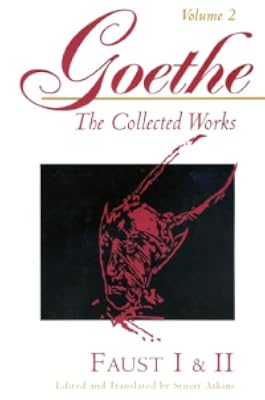
Faust I & II
by Johann Wolfgang von Goethe
On This Page
Description
"A poet, playwright, novelist, memoirist, and aphorist, Goethe was the German equivalent of Dante plus Shakespeare, a multifaceted universal genius. He put everything he had into this version of the famous myth of Faust, the man who sold his soul to the devil for worldly fame and riches. People face such choices every day - in this volume, Prof. Thomas Wayne presents the story in a contemporary voice." --Tags
Recommendations



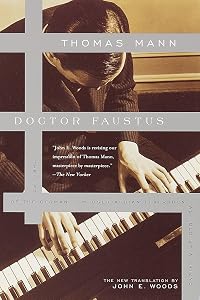

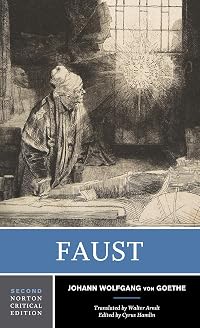

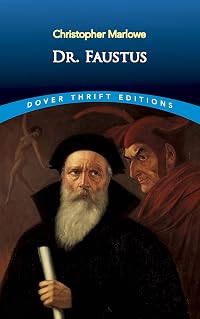

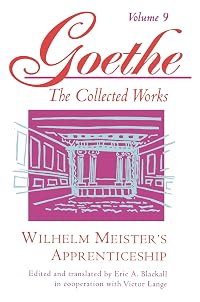











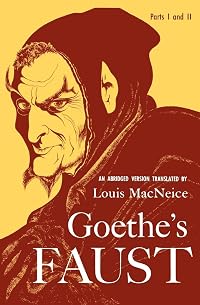






Member Recommendations

Member Reviews
Önce halk efsanelerinde, adı meçhule karışmış ozanlar söylediler bu âteşîn hikâyeyi. Sonra edebiyatçılar keşfettiler, eski kroniklerin içinde ilginç öyküler ararlarken. Kimler kalemini sivriltmedi ki şeytanla insanın gizli mukavelesini ademoğluna fısıldamak için. Ama içlerinde en ölümsüz olanı, müjdeyi ve lâneti tüm ruhları sarsarcasına haykıranı, Goethe'nin Faust'uydu.
Faust, modernitenin trajedisini haber veren ilk büyük yapıt oldu. Kimin kazandığı ve kimin kimi kandırdığı belli olmayan bir irade savaşıydı anlatılan.
Hikâyenin özeti şuydu: Şeytan Tanrı'ya meydan okudu, savaşın sonunu bile bile. Çünkü yaratılış öyküsünü bilmeyen melek olamazdı. Lâkin kendi öyküsünü show more unutan insan devreye girdiğinde bu meydan okuma, büyük bir soru işaretine dönüştü. Belki şeytan için değil, ama kesinlikle insan için...
Şeytan bir soru işareti, ruh bir soru işareti, insan: ardı sıra dizili soru işaretleri... Ve insanın yeryüzündeki devr-i dâimi başladığı anda, ruhun üzerine yapılan pazarlıklar ve olası mukavelelerin de dönemi açıldı. Bu mukaveleden habersiz bir ademoğlu olmadı. O, her zaman, pazarlığın bir tarafıydı. Belki de bu yüzden, kendini okumak isteyen herkes pür dikkat, kulak kesildi bu hikâyeye: "Kimdir Faust? Şeytan'a mı verdi ruhunu? Nasıl bir sözleşmeydi bu?"
Kendimizi başkalarından dinlemek, en sevdiğimiz mesleğimiz değil midir? O halde herkesin vâkıf olduğu bir temayı, yaşamı efsaneleşmiş bir karakterin omuzlarına yükleyerek anlatan Goethe'ye kulak verelim... Tüm yaşamını adadığı ölümsüz eseri Faust'a... show less
Faust, modernitenin trajedisini haber veren ilk büyük yapıt oldu. Kimin kazandığı ve kimin kimi kandırdığı belli olmayan bir irade savaşıydı anlatılan.
Hikâyenin özeti şuydu: Şeytan Tanrı'ya meydan okudu, savaşın sonunu bile bile. Çünkü yaratılış öyküsünü bilmeyen melek olamazdı. Lâkin kendi öyküsünü show more unutan insan devreye girdiğinde bu meydan okuma, büyük bir soru işaretine dönüştü. Belki şeytan için değil, ama kesinlikle insan için...
Şeytan bir soru işareti, ruh bir soru işareti, insan: ardı sıra dizili soru işaretleri... Ve insanın yeryüzündeki devr-i dâimi başladığı anda, ruhun üzerine yapılan pazarlıklar ve olası mukavelelerin de dönemi açıldı. Bu mukaveleden habersiz bir ademoğlu olmadı. O, her zaman, pazarlığın bir tarafıydı. Belki de bu yüzden, kendini okumak isteyen herkes pür dikkat, kulak kesildi bu hikâyeye: "Kimdir Faust? Şeytan'a mı verdi ruhunu? Nasıl bir sözleşmeydi bu?"
Kendimizi başkalarından dinlemek, en sevdiğimiz mesleğimiz değil midir? O halde herkesin vâkıf olduğu bir temayı, yaşamı efsaneleşmiş bir karakterin omuzlarına yükleyerek anlatan Goethe'ye kulak verelim... Tüm yaşamını adadığı ölümsüz eseri Faust'a... show less
Call a book “great literature” and I’m intimidated. But I’m at the now-or-never stage of life, and so I finally cracked open this, my father’s favorite book. Once again, I find what makes great literature great. Letters on a page magically evoke words and epochs; even the sounds of the words and the rhythm of the phrases delight. Throw in a protagonist in whom, I suspect, Goethe poured more than a little autobiography, and you have a book that gripped me from cover to cover.
Among the many pleasures are dozens of memorable aphorisms, including near the end, the one I invariably heard from my father after presenting yet another unsatisfactory report card. These lines are spoken by the angels carrying Faust’s soul upwards. show more More often, as in Paradise Lost, it is the devil who gets many of the best lines, including speeches that express his distaste of church bells and angelic choirs. Even though my opinion is another, I still enjoyed them.
As is often the case with the greats, this book does not stand alone. The core is an old fable, already memorably used by Christopher Marlowe, but Goethe also draws on Homer, Dante, and – over and over again – the Bible. He also incorporates much of the science of his day, especially geology and mining engineering.
It is said that Goethe and Humboldt, contemporaries, were the last two people to know everything that was worth knowing in their lifetime. Goethe not only knew it, he distilled it into the two parts of this book. By the time I reached Faust’s apotheosis and the paean to the eternal feminine, I felt as if I, too, had been dragged over the earth as well as down below and up above.
Books such as this are the reason I often give a "good" book three stars; were I to award them five, what would I do when I read a book like this? show less
Among the many pleasures are dozens of memorable aphorisms, including near the end, the one I invariably heard from my father after presenting yet another unsatisfactory report card. These lines are spoken by the angels carrying Faust’s soul upwards. show more More often, as in Paradise Lost, it is the devil who gets many of the best lines, including speeches that express his distaste of church bells and angelic choirs. Even though my opinion is another, I still enjoyed them.
As is often the case with the greats, this book does not stand alone. The core is an old fable, already memorably used by Christopher Marlowe, but Goethe also draws on Homer, Dante, and – over and over again – the Bible. He also incorporates much of the science of his day, especially geology and mining engineering.
It is said that Goethe and Humboldt, contemporaries, were the last two people to know everything that was worth knowing in their lifetime. Goethe not only knew it, he distilled it into the two parts of this book. By the time I reached Faust’s apotheosis and the paean to the eternal feminine, I felt as if I, too, had been dragged over the earth as well as down below and up above.
Books such as this are the reason I often give a "good" book three stars; were I to award them five, what would I do when I read a book like this? show less
Доктор Иоганн Фаустус - немецкий алхимик первой половины XVI века, чья слава "великого чернокнижника" была столь грандиозна, что народная молва создала о нем причудливую легенду. Это предание стало частью европейского фольклора и вдохновило множество писателей - как периода Ренессанса, так и современных, - но никому из них не удалось подняться до высот Гете.Фауст Гете - не просто человек, продавший душу show more дьяволу (хотя писатель полностью сохранил почти все сюжетные особенности легенды), а великий ученый, интеллектуал и гуманист, мечтающий о счастье всего человечества и неустанно ищущий пути его достижения. Он сомневается, совершает ошибки, терпит неудачи, но продолжает свой подвижнический труд."Фауст" - произведение, которое Гете писал почти всю жизнь, при всей своей сложности, многоплановости, при всем том, что в нем нашли отражение и античные мифы, и немецкий фольклор, и философские и... show less
This weird, beautiful, complicated play was the work of Goethe's entire life; he wrote it over 60 years, and I doubt he was done when he died. Part II was published posthumously in 1832; it had his, uh, prehumous approval, but that doesn't mean he wouldn't have been happy to spend another ten years tweaking it. To call it an exploration of the Faust myth seems almost like an insult; it's more the distillation of everything he knew and believed, framed loosely by Faust. (And I do mean loosely.)
That's undoubtedly part of why it's so complicated. It abruptly switches scenes, themes, tone and meter; sometimes I was halfway through a scene before I even figured out what was going on. It's one of the few works where, at the halfway mark, I show more was already imagining what it would be like when I read it again.
That's a way of saying I didn't get it, and I didn't get it, at least not fully. Hell, it's the entire life of one of our greatest thinkers; I'm not ashamed to admit it. It's also a way of saying that I'm not sure I picked the right translation. I have nothing to compare it to, but Atkins' felt matter-of-fact - plodding - unpoetic. As well, the endnotes and introduction were cursory. show less
That's undoubtedly part of why it's so complicated. It abruptly switches scenes, themes, tone and meter; sometimes I was halfway through a scene before I even figured out what was going on. It's one of the few works where, at the halfway mark, I show more was already imagining what it would be like when I read it again.
That's a way of saying I didn't get it, and I didn't get it, at least not fully. Hell, it's the entire life of one of our greatest thinkers; I'm not ashamed to admit it. It's also a way of saying that I'm not sure I picked the right translation. I have nothing to compare it to, but Atkins' felt matter-of-fact - plodding - unpoetic. As well, the endnotes and introduction were cursory. show less
Un'avventura dello spirito, come la Commedia di Dante, l'Ulisse di Joyce, Goethe tende a disegnare in forma simbolica una rappresentazione universale delle cose della vita. Un poema drammatico e favoloso, una rielaborazione dotta e popolare di un gruppo di leggende fiorite intorno alla figura veramente esistita di un mago, il "Faust".
Un vecchio sapiente pattuisce con Mefistofele la sua anima, protetto da un punto di vista trascendente e soprannaturale, avvolto nella sua natura fiabesca. Goethe costruisce il suo dramma secondo le rappresentazioni sceniche medioevali, sacre e carnevalesche. Mette in scena fatti e figure in diversi quadri staccati al di fuori del tempo.
Mescola farsa e tragedia, mascherata e idillio, storia sacra e show more profana, situazioni reali e fantastiche, personaggi storici e mitologici. Il destino di Faust si compie in tempi, luoghi e civiltà lontane e recenti: Medio Evo e Grecia classica, Rinascimento e età borghese. Il viaggio e la rappresentazione sono quelli di tutta l'umanità.
Possiamo dire che la morale del libro è sempre la stessa: la sete forte e romantica di sapere il tutto, la smania di identificare la propria personale esperienza con tutto il teatro dell'universo. Ma Goethe era un romantico, di tempra tutta speciale, naturalistica e illuministica, umanistica e classica.
Egli afferma prepontemente la necessità della interiore attività umana e l'uso delle proprie energie che tutti gli uomini posseggono. Lui sostiene che le cose, nel bene e nel male bisogna viverle, che è inumano rinunziare alla vita e vivere da parassiti. Questa è la lezione che ci offre il suo Faust. show less
Un vecchio sapiente pattuisce con Mefistofele la sua anima, protetto da un punto di vista trascendente e soprannaturale, avvolto nella sua natura fiabesca. Goethe costruisce il suo dramma secondo le rappresentazioni sceniche medioevali, sacre e carnevalesche. Mette in scena fatti e figure in diversi quadri staccati al di fuori del tempo.
Mescola farsa e tragedia, mascherata e idillio, storia sacra e show more profana, situazioni reali e fantastiche, personaggi storici e mitologici. Il destino di Faust si compie in tempi, luoghi e civiltà lontane e recenti: Medio Evo e Grecia classica, Rinascimento e età borghese. Il viaggio e la rappresentazione sono quelli di tutta l'umanità.
Possiamo dire che la morale del libro è sempre la stessa: la sete forte e romantica di sapere il tutto, la smania di identificare la propria personale esperienza con tutto il teatro dell'universo. Ma Goethe era un romantico, di tempra tutta speciale, naturalistica e illuministica, umanistica e classica.
Egli afferma prepontemente la necessità della interiore attività umana e l'uso delle proprie energie che tutti gli uomini posseggono. Lui sostiene che le cose, nel bene e nel male bisogna viverle, che è inumano rinunziare alla vita e vivere da parassiti. Questa è la lezione che ci offre il suo Faust. show less
Johann Wolfgang von Goethe’s Faust begins with a prologue set in Heaven. The scene is modeled on the opening of the Book of Job in the Old Testament. While the angels Raphael, Gabriel, and Michael praise the Lord, Mephistopheles mocks human beings as failed creations because reason makes them worse than brutes. God tells Mephistopheles that he will illuminate his servant Faust. Mephistopheles wagers with god that he can corrupt Faust instead. With the assent of god Mephistopheles goes into action.
In the next scene, Faust appears in acute despair because his intellectual studies have left him ignorant and without worldly gain and fame. In order to discover the inner secrets and creative powers of nature, he turns to black magic. Thus, show more he conjures up the Earth Spirit, the embodiment of the forces of nature. However, the Earth Spirit mocks Faust’s futile attempts to understand him. As he despairs of understanding nature, he prepares to poison himself.
At that moment, church bells and choral songs announcing that “Christ is arisen” distract Faust from killing himself. Celestial music charms Faust out of his dark and gloomy study for a walk in the countryside on a beautiful spring day in companionship with his fellow human beings. Observing the springtime renewal of life in nature, Faust experiences ecstasy. At this moment, Faust yearns for his soul to soar into celestial spheres.
This Easter walk foreshadows Faust’s ultimate spiritual resurrection. However, he must first undergo a pilgrimage through the vicissitudes and depths of human life. In a famous moment he proclaims that "two souls are dwelling in my breast". It is in this battle within himself that he becomes emblematic of modern man. As he battles Mephistopheles offers him a wager for his everlasting soul that will provide him a fleeting moment of satisfaction in this world. Mephistopheles commands a witch to restore Faust’s youth so that he is vulnerable to sensuous temptations. When Faust sees the beautiful young girl Margaret, he falls into lust and commands Mephistopheles to procure her. Mephistopheles devises a deadly scheme for seduction. Faust convinces Margaret, who is only fourteen years old, to give her mother a sleeping potion, prepared by Mephistopheles, so that they can make love. Mephistopheles makes poison instead; the mother never awakens.
Unwittingly, Margaret has murdered her mother. Furthermore, she is pregnant by Faust and alone. When Faust comes to visit Margaret, he finds her brother, Valentine, ready to kill him for violating his sister. Mephistopheles performs trickery so that Faust is able to stab Valentine in a duel. Dying, Valentine curses Margaret before the entire village as a harlot. Even at church, Margaret suffers extreme anguish as an evil spirit pursues her.
In contrast, Faust escapes to a witches’ sabbath on Walpurgis Night. He indulges in orgiastic revelry and debauchery with satanic creatures and a beautiful witch until an apparition of Margaret haunts him. Faust goes looking for Margaret and finds her, in a dungeon, insane and babbling. At this moment, Faust realizes that he has sinned against innocence and love for a mere moment of sensual pleasure. Even though it is the very morning of her execution, Margaret refuses to escape with Faust and Mephistopheles. Instead, she throws herself into the hands of God. As Faust flees with Mephistopheles, a voice from above proclaims, “She is saved!”
Goethe will continue his drama with a second part, but the narrative from this first section has become one of the markers for the beginning of the modern era of human culture. I have previously written about some of the ideas in this drama in my discussion of "Active vs. Reactive Man". Translated by many over the two centuries since its original publication it has become a touchstone for the study of the development of the human spirit. It has also inspired other artists to create operas and novels based on the characters from Goethe's drama. show less
In the next scene, Faust appears in acute despair because his intellectual studies have left him ignorant and without worldly gain and fame. In order to discover the inner secrets and creative powers of nature, he turns to black magic. Thus, show more he conjures up the Earth Spirit, the embodiment of the forces of nature. However, the Earth Spirit mocks Faust’s futile attempts to understand him. As he despairs of understanding nature, he prepares to poison himself.
At that moment, church bells and choral songs announcing that “Christ is arisen” distract Faust from killing himself. Celestial music charms Faust out of his dark and gloomy study for a walk in the countryside on a beautiful spring day in companionship with his fellow human beings. Observing the springtime renewal of life in nature, Faust experiences ecstasy. At this moment, Faust yearns for his soul to soar into celestial spheres.
This Easter walk foreshadows Faust’s ultimate spiritual resurrection. However, he must first undergo a pilgrimage through the vicissitudes and depths of human life. In a famous moment he proclaims that "two souls are dwelling in my breast". It is in this battle within himself that he becomes emblematic of modern man. As he battles Mephistopheles offers him a wager for his everlasting soul that will provide him a fleeting moment of satisfaction in this world. Mephistopheles commands a witch to restore Faust’s youth so that he is vulnerable to sensuous temptations. When Faust sees the beautiful young girl Margaret, he falls into lust and commands Mephistopheles to procure her. Mephistopheles devises a deadly scheme for seduction. Faust convinces Margaret, who is only fourteen years old, to give her mother a sleeping potion, prepared by Mephistopheles, so that they can make love. Mephistopheles makes poison instead; the mother never awakens.
Unwittingly, Margaret has murdered her mother. Furthermore, she is pregnant by Faust and alone. When Faust comes to visit Margaret, he finds her brother, Valentine, ready to kill him for violating his sister. Mephistopheles performs trickery so that Faust is able to stab Valentine in a duel. Dying, Valentine curses Margaret before the entire village as a harlot. Even at church, Margaret suffers extreme anguish as an evil spirit pursues her.
In contrast, Faust escapes to a witches’ sabbath on Walpurgis Night. He indulges in orgiastic revelry and debauchery with satanic creatures and a beautiful witch until an apparition of Margaret haunts him. Faust goes looking for Margaret and finds her, in a dungeon, insane and babbling. At this moment, Faust realizes that he has sinned against innocence and love for a mere moment of sensual pleasure. Even though it is the very morning of her execution, Margaret refuses to escape with Faust and Mephistopheles. Instead, she throws herself into the hands of God. As Faust flees with Mephistopheles, a voice from above proclaims, “She is saved!”
Goethe will continue his drama with a second part, but the narrative from this first section has become one of the markers for the beginning of the modern era of human culture. I have previously written about some of the ideas in this drama in my discussion of "Active vs. Reactive Man". Translated by many over the two centuries since its original publication it has become a touchstone for the study of the development of the human spirit. It has also inspired other artists to create operas and novels based on the characters from Goethe's drama. show less
Faust, Goethe's great dramatic poem in two parts, is his crowning work. Even though it is based on the medieval legend of a man who sold his soul to the devil, it actually treats modern man's sense of alienation and his need to come to terms with the world in which he lives.
This theme has always been an important one in western literature, but it has gained in urgency during our own century. Each generation must explore anew the problems of human estrangement and fulfillment — the best way to begin such a search is to see what the past has to offer. Goethe's vision may not provide the perfect or the only answer, but it has been a source of inspiration to many readers for more than a hundred years and reflects the thoughts and show more experiences of one of the 19th century's most active and gifted minds. show less
This theme has always been an important one in western literature, but it has gained in urgency during our own century. Each generation must explore anew the problems of human estrangement and fulfillment — the best way to begin such a search is to see what the past has to offer. Goethe's vision may not provide the perfect or the only answer, but it has been a source of inspiration to many readers for more than a hundred years and reflects the thoughts and show more experiences of one of the 19th century's most active and gifted minds. show less
Members
- Recently Added By
Published Reviews
ThingScore 100
(specifically reviews the illustrations by Harry Clarke)
Clarke’s unmistakable aesthetic, which became a centerpiece of the Irish Arts and Crafts movement and which he had applied to Edgar Allan Poe’s Tales of Mystery and Imagination just a few years earlier, lends the Goethe masterpiece an additional dimension of haunting beauty ....
Clarke’s unmistakable aesthetic, which became a centerpiece of the Irish Arts and Crafts movement and which he had applied to Edgar Allan Poe’s Tales of Mystery and Imagination just a few years earlier, lends the Goethe masterpiece an additional dimension of haunting beauty ....
added by elenchus
Lists

Unread books
1,063 works; 84 members

100 World Classics
99 works; 15 members

.
396 works; 1 member

Works referenced in Welcome to the Hyunam-Dong Bookshop
19 works; 1 member

My Play Collection
769 works; 3 members

New Lifetime Reading Plan by Fadiman and Major
225 works; 5 members

Books Referenced by Izetbegovic's Islam Between East and West
233 works; 2 members

Will Durant's 100 Books: An Update
46 works; 4 members

Literature which inspired Pop songs
85 works; 9 members

Harold Bloom - The Western Canon: B. The Aristocratic Age
231 works; 13 members

Western World's Greatest Books - Project Gutenberg
295 works; 15 members
Blue Pyramid 1,276 Best Books of All Time
1,248 works; 32 members
The Greatest Books
99 works; 5 members

Best Books Involving Satan
63 works; 26 members

1001 Books You Must Read Before You Die
1,448 works; 1,131 members

Nonhuman Protagonists
235 works; 34 members

100 Books to Read in a Lifetime (That Are Older Than 200 Years)
415 works; 173 members
Philip Ward's Lifetime Reading Plan
592 works; 22 members
The 100 Best Books of All Time by Norwegian Book Club (World Library)
104 works; 21 members

Books Set in Germany
74 works; 11 members

Lovecraft's 'Supernatural Horror in Literature' Reading List
216 works; 8 members

German Literature
518 works; 50 members

Favourite 19th century fiction
257 works; 60 members
Plays I Like
230 works; 31 members

In Our Time books
4,934 works; 2 members
Talk Discussions
Past Discussions
Faust in Fine Press Forum (March 2023)
Author Information

Johann Wolfgang von Goethe, 1749-1832 Johann Wolfgang von Goethe was born in Frankfurt am Main. He was greatly influenced by his mother, who encouraged his literary aspirations. After troubles at school, he was taught at home and gained an exceptionally wide education. At the age of 16, Goethe began to study law at Leipzig University from 1765 to show more 1768, and he also studied drawing with Adam Oeser. After a period of illness, he resumed his studies in Strasbourg from 1770 to 1771. Goethe practiced law in Frankfurt for two years and in Wetzlar for a year. He contributed to the Frankfurter Gelehrte Anzeigen from 1772 to 1773, and in 1774 he published his first novel, self-revelatory Die Leiden des Jungen Werthers. In 1775 he was welcomed by Duke Karl August into the small court of Weimar, where he worked in several governmental offices. He was a council member and member of the war commission, director of roads and services, and managed the financial affairs of the court. Goethe was released from day-to-day governmental duties to concentrate on writing, although he was still general supervisor for arts and sciences, and director of the court theatres. In the 1790s Goethe contributed to Friedrich von Schiller´s journal Die Horen, published Wilhelm Meister's Apprenticeship, and continued his writings on the ideals of arts and literature in his own journal, Propyläen. The first part of his masterwork, Faust, appeared in 1808, and the second part in 1832. Goethe had worked for most of his life on this drama, and was based on Christopher Marlowe's Faust. From 1791 to 1817, Goethe was the director of the court theatres. He advised Duke Carl August on mining and Jena University, which for a short time attracted the most prominent figures in German philosophy. He edited Kunst and Altertum and Zur Naturwissenschaft. Goethe died in Weimar on March 22, 1832. He and Duke Schiller are buried together, in a mausoleum in the ducal cemetery. (Bowker Author Biography) show less
Some Editions
Awards and Honors
Distinctions
Notable Lists
Schecks Bücher (85)
Series
Belongs to Publisher Series
Deutsche Bibliothek (Bd. 1)
Goethe: The Collected Works (volume 2)
Perpetua reeks (4)
Gouden Reeks (5)
Letras Universales (77)
The German Library (18)
Colecção História da Literatura (Livro 85)
Modern Library (177)
Everyman's Library (335)
dtv (12400)
Work Relationships
Is contained in
Has as a study
Has as a supplement
Has as a commentary on the text
Has as a student's study guide
Common Knowledge
- Canonical title
- Faust I & II
- Original title
- Faust
- Alternate titles
- Faust
- Original publication date
- 1808: Part One; 1790; 1832: Part Two
- People/Characters
- Faust (Faustus); Mephistopheles; Gretchen
- Important places*
- Duitsland
- Related movies
- Wishbone" Fleabitten Bargain (1995 | IMDb); Faust - Eine deutsche Volkssage (1926 | IMDb); Faust (1994 | IMDb); 666 - Traue keinem, mit dem Du schläfst! (2002 | IMDb)
- First words
- Ye wavering forms draw near again as ever / When ye long since moved past my clouded eyes.
- Quotations*
- Hab nun, ach! die Philosophei,
Medizin und Juristerei
Und leider auch die Theologie
Durchaus studiert mit heißer Müh.
Da steh ich nun, ich armer Tor,
Und bin so klug als wie zuvor. - Last words
- (Click to show. Warning: May contain spoilers.)Chorus Mysticus. All earth comprises / Is symbol alone; / What there ne'er suffices / As fact here is known; / All past the humanly / Wrought here in love; / The Eternal-Womanly / Draws us above.
- Original language
- German
- Disambiguation notice
- Contains Faust: A Tragedy, Parts 1 AND 2. Please distinguish this LT work from: (a) either Part 1 or Part 2 alone; (b) any editions containing more than Parts 1 and 2 (such as the Urfaust, commentaries, or "No... (show all)rton Critical Editions"); (c) any abridged version; or (d) any adaptations or other derivative works. Thank you.
1870259114 1988 Oberon Classics, English translation by Robert David MacDonald
3406047238 1978 Beck hardcover
3406312349 1995 Beck hardcover
3406452140 Beck 1999 softcover
*Some information comes from Common Knowledge in other languages. Click "Edit" for more information.
Classifications
- Genres
- Poetry, Fiction and Literature
- DDC/MDS
- 832.6 — Literature & rhetoric German & related literatures German drama 1750–1832 : 18th century; classical period; romantic period
- LCC
- PT2026 .F2 — Language and Literature German, Dutch and Scandinavian literatures German literature Individual authors or works 1700-ca. 1860/70 Goethe Translations
- BISAC
Statistics
- Members
- 6,116
- Popularity
- 2,043
- Reviews
- 44
- Rating
- (3.94)
- Languages
- 31 — Catalan, Chinese, Czech, Danish, Dutch, English, Esperanto, Estonian, Finnish, French, German, Greek, Hebrew, Hungarian, Italian, Japanese, Korean, Latvian, Lithuanian, Norwegian (Nynorsk), Norwegian (Bokmål), Polish, Romanian, Russian, Serbian, Slovenian, Spanish, Swedish, Turkish, Portuguese (Portugal), Portuguese (Brazil)
- Media
- Paper, Audiobook, Ebook
- ISBNs
- 452
- UPCs
- 3
- ASINs
- 268