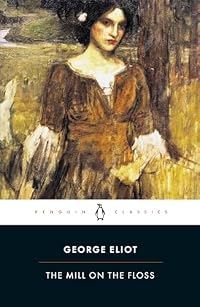
The Mill on the Floss
by George Eliot
On This Page
Description
Maggie Tulliver has two lovers; Philip Wakem, son of her father's enemy; and Stephen Guest, already promised to her cousin. But the love she wants most in the world is that of her brother Tom. Maggie's struggle against her passionate and sensual nature leads her to a deeper understanding and to eventual tragedy.Tags
Recommendations









Member Recommendations
ncgraham Two Victorian heroines approach the question of how to reconcile passion and morality in very different ways.
140
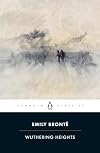
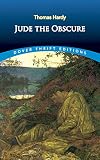
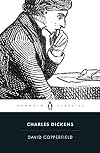
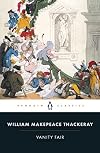
Morryman84 Female Protagonists were polar opposites
aprille Children who suffer from fathers' financial choices
Member Reviews
After beautiful opening descriptions, an energetic plot, beginning and concluding with an embrace in the Floss,
is slowed to tedium by the endless Tulliver and Dodson womens' conversations and their fixations.
Maggie Tulliver showed a wonderful rebellious strength in a family with an often cruel older brother, a flighty mother,
and an over indulgent father. Unfortunately for her and George Eliot's readers, she descends into a pointless chasm
of self-chastising morality, broken only when she overcomes pity to agree to marry one man, then falls in love with
her cousin's boyfriend.
The only mystery in the predictable plot comes when Maggie and Tom, river people who knew better, take a rowboat out into a flood.
is slowed to tedium by the endless Tulliver and Dodson womens' conversations and their fixations.
Maggie Tulliver showed a wonderful rebellious strength in a family with an often cruel older brother, a flighty mother,
and an over indulgent father. Unfortunately for her and George Eliot's readers, she descends into a pointless chasm
of self-chastising morality, broken only when she overcomes pity to agree to marry one man, then falls in love with
her cousin's boyfriend.
The only mystery in the predictable plot comes when Maggie and Tom, river people who knew better, take a rowboat out into a flood.
This novel was Eliot’s follow-up to her successful Adam Bede. While I didn’t feel it was consistently as strong as that book, and my attention wavered at times, I enjoyed it overall. In particular, the crisis that destroys Maggie Tulliver’s reputation while at the same time strengthening her moral conviction, as well as the denouement that followed, swept me along like the raging waters of the Humber (sorry, Floss).
As for what bothered me: I felt the relationship between Maggie and her beloved, implacable brother Tom was too closely modeled on that of Eliot and her brother Isaac, who never reconciled with her after she set up house with George Henry Lewes. And the depiction of Maggie’s four aunts was, to me, overdone; I felt the show more same effect could have been achieved with fewer pen strokes. In addition, the juxtaposition of satire and pathos pulled the narrative in opposite directions. And the repeated foreshadowing of Maggie’s eventual fate was, to my taste, heavy-handed.
Balanced against that is the lovingly detailed realism of rural life evident in every one of her works I’ve read so far. In addition, there is her characteristic analysis of the dynamics of small-town society. For me, the contrast of the demands of competing modes of “morality” — Christian and societal — in the wake of Maggie’s ordeal is a strong point of the book. The ground had been prepared for it at the midpoint, the opening chapter of Book 4, “A Variation of Protestantism Unknown to Bossuet.” I continue to be struck by Eliot’s “post-anti-evangelicalism,” her sympathetic depiction of a faith she no longer shares. In this book, this is not only embodied by Maggie but also by the local vicar, Dr. Kenn (well-named; he is the one who truly knows).
As a child, Maggie is so impetuous and clumsy that it’s hard to imagine, given her precocious intelligence, that she can’t foresee the consequences of her actions.
This trait of the childhood Maggie returns at the book’s climax, when she awakens to the reality of having allowed herself to be swept away with the tide (literally) in the company of her cousin’s intended, Stephen Guest. At this book’s heart, as in most of Eliot’s work, is the theme of the restricted life chances for women in early nineteenth-century England. Her behavior throughout this episode must be read in the context of the options of a young woman in her time. When so read, it’s clear that alongside her acquiescence to her fate is the fierce struggle to support herself and achieve self-determination. At heart is a profound ethical resolve. show less
As for what bothered me: I felt the relationship between Maggie and her beloved, implacable brother Tom was too closely modeled on that of Eliot and her brother Isaac, who never reconciled with her after she set up house with George Henry Lewes. And the depiction of Maggie’s four aunts was, to me, overdone; I felt the show more same effect could have been achieved with fewer pen strokes. In addition, the juxtaposition of satire and pathos pulled the narrative in opposite directions. And the repeated foreshadowing of Maggie’s eventual fate was, to my taste, heavy-handed.
Balanced against that is the lovingly detailed realism of rural life evident in every one of her works I’ve read so far. In addition, there is her characteristic analysis of the dynamics of small-town society. For me, the contrast of the demands of competing modes of “morality” — Christian and societal — in the wake of Maggie’s ordeal is a strong point of the book. The ground had been prepared for it at the midpoint, the opening chapter of Book 4, “A Variation of Protestantism Unknown to Bossuet.” I continue to be struck by Eliot’s “post-anti-evangelicalism,” her sympathetic depiction of a faith she no longer shares. In this book, this is not only embodied by Maggie but also by the local vicar, Dr. Kenn (well-named; he is the one who truly knows).
As a child, Maggie is so impetuous and clumsy that it’s hard to imagine, given her precocious intelligence, that she can’t foresee the consequences of her actions.
This trait of the childhood Maggie returns at the book’s climax, when she awakens to the reality of having allowed herself to be swept away with the tide (literally) in the company of her cousin’s intended, Stephen Guest. At this book’s heart, as in most of Eliot’s work, is the theme of the restricted life chances for women in early nineteenth-century England. Her behavior throughout this episode must be read in the context of the options of a young woman in her time. When so read, it’s clear that alongside her acquiescence to her fate is the fierce struggle to support herself and achieve self-determination. At heart is a profound ethical resolve. show less
I think I would take George Eliot over Jane Austen any day. Her writing just seems much more realistic and she deals with real problems that would face people today.
My St. Vital library book club chose this for our January 2009 read. I decided to start at the beginning of January and read approximately 25 pages a day. That's a departure from my regular reading style as I usually start one book and finish it and then move on to another. I think it was the right approach to take with this book because I pondered the development of the story more thoroughly.
Maggie Tulliver is the younger child in the Tulliver family. Her father owns Dorlcote Mill (which isn't strictly on the Floss but on a tributary called the Ripple) and the family earns show more a comfortable living. However, her father constantly "goes to the law" and when he loses a claim regarding water rights he is bankrupt. Maggie's brother Tom, whom Maggie adores, is away at school at this time because Mr. Tulliver wants him to do something better than run a mill and he thinks a good education will improve his chances. Maggie was also away at school but it is generally considered a waste to educate girls even though Maggie is much more clever than Tom. Tom's classmate, Philip Wakem, is the son of the lawyer who opposed Mr. Tulliver and who eventually takes over the mill. Philip has a hunch back but when Maggie meets him as a young girl visiting her brother she promises to always kiss him when they meet. Philip falls in love and continues to love Maggie even when the family is destitute. Tom finds out that Maggie and Philip are meeting clandestinely and forbids them to continue. When Mr. Tulliver, who has been managing the mill, horsewhips Wakem senior and then dies there doesn't seem to be any future for Maggie and Philip. However, years pass and circumstances change. Maggie, who has been teaching away from St. Ogg's, is brought back for a rest and vacation by her cousin Lucy. Lucy is seriously involved with Stephen, the son of St. Ogg's foremost family, and they enjoy singing in the evening quite often with Philip Wakem. Lucy is worried that Maggie will not want to meet Philip but Maggie assures her that she is quite willing to do so if Tom will consent. Tom doesn't exactly consent but he acknowledges that Maggie has a right to do as she pleases so the way seems clear for Maggie and Philip to resume their romance. Lucy dreams of a future with her and Stephen and Maggie and Philip spending evenings together. Unbeknownst to her, Stephen has fallen in love with Maggie and Maggie is attracted to him but doesn't want to hurt either Lucy or Philip. Stephen convinces Maggie to elope with him but before they can go too far Maggie realizes they can never be happy having hurt Philip and Lucy so she leaves him and returns to St. Ogg's. There she is spurned by Tom and reviled by all the other townspeople. Lucy takes to her bed and Philip disappears. Even when Stephen writes a letter absolving Maggie of any fault most of the people in St. Ogg's will have nothing to do with her. When the minister takes Maggie in as a governess to his own children rumours are spread about them and he finally has to let her go. Philip writes to Maggie saying he still wants to marry her and all she has to do is send him a one-word letter ("Come") and he will speed to her side. Maggie is trying to determine how to respond when she realizes the river has flooded and there is water in her room. She awakens her landlord and manages to get into one of the boats he owns but the boat is spun away from the house before anyone else can join her. Through a long stormy night she is tossed about in the boat but with the dawn and a cessation of the rain Maggie is able to get her bearings. She is determined to get to the mill and check on her brother and mother. When she gets there the mill has been destroyed but her brother is still in the house and her mother is probably safe with another relative. Tom and Maggie get in the boat to try to go to safety but they are capsized and drown. When they are found they are clasped in each other's arms. Their tomb bears the inscription "In their death they were not divided."
One online review I read was by a young man who said after he read this he treated his sister much better. Tom was a harsh and dictatorial brother but Maggie never ceased to love him. I can relate to this as I had a quarrel with one of my brothers that damaged our relationship but I never ceased to care for him. When he died a few years after our quarrel I was so sad that we had never managed to make amends. It is an important lesson that we never know when we will last see a loved one so we should take good care of them each and every time. show less
My St. Vital library book club chose this for our January 2009 read. I decided to start at the beginning of January and read approximately 25 pages a day. That's a departure from my regular reading style as I usually start one book and finish it and then move on to another. I think it was the right approach to take with this book because I pondered the development of the story more thoroughly.
Maggie Tulliver is the younger child in the Tulliver family. Her father owns Dorlcote Mill (which isn't strictly on the Floss but on a tributary called the Ripple) and the family earns show more a comfortable living. However, her father constantly "goes to the law" and when he loses a claim regarding water rights he is bankrupt. Maggie's brother Tom, whom Maggie adores, is away at school at this time because Mr. Tulliver wants him to do something better than run a mill and he thinks a good education will improve his chances. Maggie was also away at school but it is generally considered a waste to educate girls even though Maggie is much more clever than Tom. Tom's classmate, Philip Wakem, is the son of the lawyer who opposed Mr. Tulliver and who eventually takes over the mill. Philip has a hunch back but when Maggie meets him as a young girl visiting her brother she promises to always kiss him when they meet. Philip falls in love and continues to love Maggie even when the family is destitute. Tom finds out that Maggie and Philip are meeting clandestinely and forbids them to continue. When Mr. Tulliver, who has been managing the mill, horsewhips Wakem senior and then dies there doesn't seem to be any future for Maggie and Philip. However, years pass and circumstances change. Maggie, who has been teaching away from St. Ogg's, is brought back for a rest and vacation by her cousin Lucy. Lucy is seriously involved with Stephen, the son of St. Ogg's foremost family, and they enjoy singing in the evening quite often with Philip Wakem. Lucy is worried that Maggie will not want to meet Philip but Maggie assures her that she is quite willing to do so if Tom will consent. Tom doesn't exactly consent but he acknowledges that Maggie has a right to do as she pleases so the way seems clear for Maggie and Philip to resume their romance. Lucy dreams of a future with her and Stephen and Maggie and Philip spending evenings together. Unbeknownst to her, Stephen has fallen in love with Maggie and Maggie is attracted to him but doesn't want to hurt either Lucy or Philip. Stephen convinces Maggie to elope with him but before they can go too far Maggie realizes they can never be happy having hurt Philip and Lucy so she leaves him and returns to St. Ogg's. There she is spurned by Tom and reviled by all the other townspeople. Lucy takes to her bed and Philip disappears. Even when Stephen writes a letter absolving Maggie of any fault most of the people in St. Ogg's will have nothing to do with her. When the minister takes Maggie in as a governess to his own children rumours are spread about them and he finally has to let her go. Philip writes to Maggie saying he still wants to marry her and all she has to do is send him a one-word letter ("Come") and he will speed to her side. Maggie is trying to determine how to respond when she realizes the river has flooded and there is water in her room. She awakens her landlord and manages to get into one of the boats he owns but the boat is spun away from the house before anyone else can join her. Through a long stormy night she is tossed about in the boat but with the dawn and a cessation of the rain Maggie is able to get her bearings. She is determined to get to the mill and check on her brother and mother. When she gets there the mill has been destroyed but her brother is still in the house and her mother is probably safe with another relative. Tom and Maggie get in the boat to try to go to safety but they are capsized and drown. When they are found they are clasped in each other's arms. Their tomb bears the inscription "In their death they were not divided."
One online review I read was by a young man who said after he read this he treated his sister much better. Tom was a harsh and dictatorial brother but Maggie never ceased to love him. I can relate to this as I had a quarrel with one of my brothers that damaged our relationship but I never ceased to care for him. When he died a few years after our quarrel I was so sad that we had never managed to make amends. It is an important lesson that we never know when we will last see a loved one so we should take good care of them each and every time. show less
Here is a book that creates conflicting emotions, lots of them.
The description of the mill in chapter 1 almost made me miss my stop during my commute. There is a peculiar magic in the writing. It’s lyrical and sharp all at once.
I loved Maggie so much. Oh, how I felt for her. All these people telling her what books not to read, and wishing she was a boy (too clever for a girl, you know…), and reminding her at every turn that there are things you cannot do because you are a girl. George Eliot sees this so clearly. How I wish that Maggie had been loved *enough* when she was a child. How I wish she had a brother that knew that showing affection did not mean being a narrow-minded misogynic idiot.
“She loved Tom very dearly, but she show more often wished that he cared more about her loving him.”
Here is Maggie, saying no to a gift and breaking readers’ hearts:
“It would make me in love with this world again, as I used to be, it would make me long to see and know many things; it would make me long for a full life.”
George Eliot’s insights into human nature, relationships, and society are wonderful and often funny, it was a bit like talking to a good friend in a cozy place, nodding “I know! I know! You’re so right!”
“It is always chilling, in a friendly intercourse, to say you have no opinion to give. And if you deliver an opinion at all, it is mere stupidity not to do it with an air of conviction and well-founded knowledge. You make it your own in uttering it, and naturally get fond of it.”
“...but incompetent gentlemen must live, and without private fortune it is difficult to see how they could all live genteelly if they had nothing to do with education or government.”
The thing that was woven with great skill and that impressed me the most, was the story of two people who have no idea how to handle a sudden and strong sexual attraction (this is exactly what it is and all it is, Eliot does everything but scream at the reader).
I certainly wish that Elliot would do less Victorian moralizing; fewer sentimental and very long Victorian asides. These either bored me to tears or made me react in all the wrong (cynical) ways. Also, the story keeps coming apart at the seams when you look at the novel from a distance, having finished it. The plot meanders, it goes every which way, gets predictable at times, drowns in details and aforementioned asides. If it weren’t for the ending, it might still have been a four star read, because the book had grown on me. But what was that ending for, where did it come from? Nobody knows and out of nowhere! It seems like the author said, “I have no idea how to get my characters out of this situation and finish my story, so let me just…”. Oh, PLEASE. show less
The description of the mill in chapter 1 almost made me miss my stop during my commute. There is a peculiar magic in the writing. It’s lyrical and sharp all at once.
I loved Maggie so much. Oh, how I felt for her. All these people telling her what books not to read, and wishing she was a boy (too clever for a girl, you know…), and reminding her at every turn that there are things you cannot do because you are a girl. George Eliot sees this so clearly. How I wish that Maggie had been loved *enough* when she was a child. How I wish she had a brother that knew that showing affection did not mean being a narrow-minded misogynic idiot.
“She loved Tom very dearly, but she show more often wished that he cared more about her loving him.”
Here is Maggie, saying no to a gift and breaking readers’ hearts:
“It would make me in love with this world again, as I used to be, it would make me long to see and know many things; it would make me long for a full life.”
George Eliot’s insights into human nature, relationships, and society are wonderful and often funny, it was a bit like talking to a good friend in a cozy place, nodding “I know! I know! You’re so right!”
“It is always chilling, in a friendly intercourse, to say you have no opinion to give. And if you deliver an opinion at all, it is mere stupidity not to do it with an air of conviction and well-founded knowledge. You make it your own in uttering it, and naturally get fond of it.”
“...but incompetent gentlemen must live, and without private fortune it is difficult to see how they could all live genteelly if they had nothing to do with education or government.”
The thing that was woven with great skill and that impressed me the most, was the story of two people who have no idea how to handle a sudden and strong sexual attraction (this is exactly what it is and all it is, Eliot does everything but scream at the reader).
I certainly wish that Elliot would do less Victorian moralizing; fewer sentimental and very long Victorian asides. These either bored me to tears or made me react in all the wrong (cynical) ways. Also, the story keeps coming apart at the seams when you look at the novel from a distance, having finished it. The plot meanders, it goes every which way, gets predictable at times, drowns in details and aforementioned asides. If it weren’t for the ending, it might still have been a four star read, because the book had grown on me. But what was that ending for, where did it come from? Nobody knows and out of nowhere! It seems like the author said, “I have no idea how to get my characters out of this situation and finish my story, so let me just…”. Oh, PLEASE. show less
Tom was a heartless, self-righteous ass. Maggie was an insipid sop of a fool, self-righteous in her own way. The one was a mindless roar, the other a detestable whimper. Such wonderful writing, but I ceased caring about any of these hateful characters at least halfway through the book. I had to force myself to finish it. By the end, I was earnestly hoping that Maggie would fling herself into the Floss and make a pleasing end of things for everyone. It isn't hard to imagine how happy I was about the ending, at least, though no auto de fé could suffice to redeem these two obnoxious characters.
Why did you do this to me, George Eliot? I won't soon forgive this offense.
Why did you do this to me, George Eliot? I won't soon forgive this offense.
George Eliot paints people in a way that brings them to life. This book, is all about the contrast of personalities, the resonating effects of prejudice, and the challenges of conflicting ties. I loved it, even as I cringed at the behavior of many of the characters.
I did not like the ending.Not because Maggie died. I had been expecting her death from the moment she woke up on the boat, fleeing with her lover. What I hated was that in the end, it was the acceptance and love of her emotionally abusive brother Tom that brought Maggie peace. He didn't change at all, and I have no doubt that if he hadn't died, it would have only a matter of time before he was pushing her away and condemning her excessively once again.
My happy world ending show more would have had Maggie eventually realize how to navigate the narrow space between severing any tie that seems onerous, as Stephen Guest would have her do, and severing those that are truly unhealthy, as Maggie herself is unable to do, and thus finding happiness. But even an ending where Maggie dies miserable because she is trying to be true to a set of conflicting demands would have been preferable to giving way before the slightest friendly look from her brother.
All that said, I don't think we're supposed to be satisfied with the ending. I think this is supposed to be a tragedy, a tragedy not just because of death, but because Maggie, in the end, is never able to overcome the weakness that has haunted her from her earliest days. Eliot does not, I think, expect us to like or forgive Tom. show less
I did not like the ending.
My happy world ending
All that said, I don't think we're supposed to be satisfied with the ending. I think this is supposed to be a tragedy, a tragedy not just because of death, but because Maggie, in the end, is never able to overcome the weakness that has haunted her from her earliest days. Eliot does not, I think, expect us to like or forgive Tom.
I enjoyed this. The opening chapters are very funny and Maggie is adorable. I like it when she pushes Lucy into the pond and how this and other early things pre-figure events later in the novel. Very clever. I liked how the aunts act as a Greek chorus early on, later replaced by the authorial voice. It must have been a very personal novel for Eliot to write. I heard that her brother refused to speak to her for 20 years, but she never let's herself be overcome by emotion. My sister refused to speak to me for 12 years for the same reasons.
Members
- Recently Added By
Published Reviews
ThingScore 75
added by souloftherose
Lists

The Guardian's 1000 Novels Everyone Must Read
1,005 works; 549 members

1001 Books You Must Read Before You Die
1,448 works; 1,132 members
Best of British Literature
226 works; 41 members

Favourite 19th century fiction
257 works; 62 members

Female Author
1,235 works; 67 members

Classics you know you should have read but probably haven't
421 works; 407 members

The Top Ten: Writers Pick Their Favorite Books
240 works; 31 members

Favorite Long Books
330 works; 42 members

Read the book and saw the movie
1,170 works; 195 members

Literature About Social Class
134 works; 19 members

Best Psychological Fiction
81 works; 16 members

Unread books
1,063 works; 82 members

Women's Stories
88 works; 13 members

Recommend the 20 best books you've read in the last five years
2,167 works; 606 members
Folio Society
831 works; 53 members
Best Family Stories
241 works; 22 members
Love and Marriage
93 works; 10 members
150 Best Novels Selected by Brander Matthews (1883)
150 works; 7 members

Western World's Greatest Books - Project Gutenberg
295 works; 15 members
LibraryThingers' 1001 Books You Must Read Before You Die
442 works; 30 members

Pleasant Surprises: Books That Exceeded Our Expectations
418 works; 143 members

Best Revenge Stories
69 works; 9 members
Women's reading list
50 works; 7 members
Harold Bloom - The Western Canon: C. The Democratic Age
336 works; 15 members

100 Most Recommended Works
100 works; 11 members

Novels featuring siblings
133 works; 8 members

Best books read in 2011
200 works; 50 members
Literature About Women and Girls
391 works; 39 members

Books Set in Great Britain
191 works; 13 members

A Novel Cure
742 works; 23 members

19th Century
190 works; 16 members
Newark Public Library's 1904 List of a Thousand of the Best Novels
95 works; 5 members

Global Reads: Books Set in the United Kingdom and Ireland
109 works; 5 members
Victorian Period
113 works; 10 members

1,001 BYMRBYD Concensus
723 works; 27 members
Out of Copyright
244 works; 14 members

Troublesome bodies
110 works; 7 members
Best Domestic Fiction
77 works; 6 members

Fiction about the Working Class
74 works; 10 members
Five star books
1,755 works; 108 members
The College Board: 101 Great Books Recommended for College-Bound Readers
111 works; 7 members
1860s
25 works; 4 members

Authors from England
147 works; 4 members
Good, Smart, Clean Fiction
46 works; 4 members
United Kingdom
82 works; 5 members
F. B. Perkins' List of 100 Best Fiction
100 works; 5 members
Books Read in 2015
3,298 works; 129 members
Trinity College Booklist (1951): Class Ten, English Literature
358 works; 5 members

Books Read in 2020
4,379 works; 124 members

Books Read in 2022
5,164 works; 113 members

Shelf 101
60 works; 1 member

The 150 Greatest Novels of All Time
150 works; 6 members
Reading LIst
648 works; 1 member

Books Read in 2025
4,090 works; 97 members

Fières de lettres
85 works; 1 member

DigitalDreamDoor top 300
300 works; 4 members

Recommended Reading : 600 Classics Reviewed, Editors of Salem Press, 2015
634 works; 6 members

Tagged 19th Century
104 works; 7 members
New Lifetime Reading Plan by Fadiman and Major
225 works; 5 members

AP Lit
363 works; 6 members

Biggest Disappointments
606 works; 168 members

Books Read in 2019
4,052 works; 110 members

My TBR
371 works; 3 members

Literary Classics To Read (pre 1900)
19 works; 2 members

Literary Works Read in College
316 works; 15 members
Ten Books That Have Stayed With Me
160 works; 30 members

bound
100 works; 1 member
Talk Discussions
Past Discussions
Group Read, September 2014: The Mill on the Floss in 1001 Books to read before you die (September 2014)
Author Information

George Eliot was born Mary Ann Evans on a Warwickshire farm in England, where she spent almost all of her early life. She received a modest local education and was particularly influenced by one of her teachers, an extremely religious woman whom the novelist would later use as a model for various characters. Eliot read extensively, and was show more particularly drawn to the romantic poets and German literature. In 1849, after the death of her father, she went to London and became assistant editor of the Westminster Review, a radical magazine. She soon began publishing sketches of country life in London magazines. At about his time Eliot began her lifelong relationship with George Henry Lewes. A married man, Lewes could not marry Eliot, but they lived together until Lewes's death. Eliot's sketches were well received, and soon after she followed with her first novel, Adam Bede (1859). She took the pen name "George Eliot" because she believed the public would take a male author more seriously. Like all of Eliot's best work, The Mill on the Floss (1860), is based in large part on her own life and her relationship with her brother. In it she begins to explore male-female relations and the way people's personalities determine their relationships with others. She returns to this theme in Silas Mariner (1861), in which she examines the changes brought about in life and personality of a miser through the love of a little girl. In 1863, Eliot published Romola. Set against the political intrigue of Florence, Italy, of the 1490's, the book chronicles the spiritual journey of a passionate young woman. Eliot's greatest achievement is almost certainly Middlemarch (1871). Here she paints her most detailed picture of English country life, and explores most deeply the frustrations of an intelligent woman with no outlet for her aspirations. This novel is now regarded as one of the major works of the Victorian era and one of the greatest works of fiction in English. Eliot's last work was Daniel Deronda. In that work, Daniel, the adopted son of an aristocratic Englishman, gradually becomes interested in Jewish culture and then discovers his own Jewish heritage. He eventually goes to live in Palestine. Because of the way in which she explored character and extended the range of subject matter to include simple country life, Eliot is now considered to be a major figure in the development of the novel. She is buried in Highgate Cemetery, North London, England, next to her common-law husband, George Henry Lewes. (Bowker Author Biography) show less
Some Editions
Awards and Honors
Notable Lists
Series
Belongs to Publisher Series
Alba Clásica Maior (XVII)
Penguin English Library, 2012 series (2012-04)
Collins Classics (13)
Doubleday Dolphin (C21)
The World's Classics (31)
Airmont Classics (43)
Prisma Klassieken (54)
The Pocket Library (PL-509)
Everyman's Library (325)
Work Relationships
Is contained in
The Best-Known Novels of George Eliot: Adam Bede, The Mill on the Floss, Silas Marner, Romola by George Eliot
The Works of George Eliot: Vol. I - Adam Bede, The Mill on the Floss, Romola; Vol. II -- Middlemarch: A Study of Provincial life, Daniel Deronda; Vol. III -- Felix Holt, The Radical, Silas Marner, The Lifted Veil, Brother Jacob,Scenes from Clerical Life by George Eliot (indirect)
90 Masterpieces You Must Read (Vol.1): Novels, Poetry, Plays, Short Stories, Essays, Psychology & Philosophy by Various
Classic British Fiction: Six novels by George Eliot, in a single file, improved 8/23/2010 by George Eliot
George Eliot Six Pack - Middlemarch, Daniel Deronda, Silas Marner, The Lifted Veil, The Mill on the Floss and Adam Bede (Illustrated with links to free ... all six books) (Six Pack Classics Book 8) by George Eliot
Works of George Eliot. The Mill on the Floss, Daniel Deronda, Adam Bede, Middlemarch, The Lifted Veil & more. (mobi) by George Eliot
George Eliot's Works: Adam Bede/Daniel Deronda/Felix Holt and Clerical Life/Middlemarch/Mill on the Floss/Romola (6 vols) by George Eliot
Novels of George Eliot in Five Volumes with Illustrations: Adam Bede; The Mill in the Floss; Silas Marner; Clerical Life; Felix Holt; Middlemarch by George Eliot
George Eliot Collection: The Complete Novels, Short Stories, Poems and Essays (Middlemarch, Daniel Deronda, Scenes of Clerical Life, Adam Bede, The Lifted Veil...) by George Eliot
George Eliot's Works (Six Volumes): Adam Bede, Scenes of Clerical Life, Middlemarch, The Mill On the Floss, Daniel Deronda, Felix Holt (The Radical), The Spanish Gypsy, Jubal and Other Poems, Romola, Theophrastus Such by George Eliot
The Complete Novels of George Eliot - All 9 Novels in One Edition: Adam Bede, The Lifted Veil, The Mill on the Floss, Silas Marner, Romola, Brother Jacob, ... the Radical, Middlemarch & Daniel Deronda by George Eliot
The Complete Works of George Eliot: St. James Edition:; Volume II:; The Mill on the Floss, Brother Jacob, and Leaves from a Notebook by George Eliot
Has the adaptation
Is abridged in
Has as a study
Has as a commentary on the text
Has as a student's study guide
Common Knowledge
- Canonical title
- The Mill on the Floss
- Original title
- The Mill on the Floss
- Alternate titles*
- El molino junto al Floss
- Original publication date
- 1860
- People/Characters
- Maggie Tulliver; Tom Tulliver; Bessy Tulliver; Mr Tulliver; Bob Jakin; Philip Wakem (show all 8); Stephen Guest; Lucy Deane
- Important places
- Dorlcote Mill; St Ogg's; England, UK
- Important events
- 19th century; 1820s; 1830s
- Related movies
- The Mill on the Floss (1915 | IMDb); The Mill on the Floss (1937 | IMDb); The Mill on the Floss (1965 | IMDb); The Mill on the Floss (1978 | IMDb); The Mill on the Floss (1997 | IMDb)
- First words
- A wide plain, where the broadening Floss hurries on between its green banks to the sea, and the loving tide, rushing to meet it, checks its passage with an impetuous embrace. On this mighty tide the black ships -laden with th... (show all)e fresh-scented fir-planks, with rounded sacks of oil-bearing seed, or with the dark glitter of coal—are borne along to the town of St. Ogg's, which shows its aged, fluted red roofs and the broad gables of its wharves between the low wooded hill and the river-brink, tingeing the water with a soft purple hue under the transient glance of this February sun. Far away on each hand stretch the rich pastures, and the patches of dark earth made ready for the seed of broad-leaved green crops, or touched already with the tint of the tender-bladed autumn-sown corn. There is a remnant still of last year's golden clusters of beehive-ricks rising at intervals beyond the hedgerows; and everywhere the hedgerows are studded with trees; the distant ships seem to be lifting their masts and stretching their red-brown sails close among the branches of the spreading ash. Just by the red-roofed town the tributary Ripple flows with a lively current into the Floss. How lovely the little river is, with its dark changing wavelets! It seems to me like a living companion while I wander along the bank, and listen to its low, placid voice, as to the voice of one who is deaf and loving. I remember those large dipping willows. I remember the stone bridge.
- Quotations
- Such things as these are the mother-tongue of our imagination, the language that is laden with all the subtle, inextricable associations the fleeting hours of our childhood left behind them. Our delight in the sunshine on the... (show all) deep-bladed grass to-day might be no more than the faint perception of wearied souls, if it were not for the sunshine and the grass in the far-off years which still live in us, and transform our perception into love.
There is no feeling, except the extremes of fear and grief, that does not find relief in music. - Last words
- (Click to show. Warning: May contain spoilers.)The boat reappeared, but brother and sister had gone down in an embrace never to be parted, living through again in one supreme moment the days when they had clasped their little hands in love and roamed the daisied fields together.
- Original language
- English
- Disambiguation notice
- This work is the book. Please do not combine with any of the movies in any format.
*Some information comes from Common Knowledge in other languages. Click "Edit" for more information.
Classifications
Statistics
- Members
- 9,723
- Popularity
- 1,040
- Reviews
- 131
- Rating
- (3.80)
- Languages
- 17 — Dutch, English, Estonian, Finnish, French, German, Hungarian, Italian, Norwegian (Bokmål), Polish, Portuguese, Romanian, Russian, Serbian, Slovenian, Spanish, Swedish
- Media
- Paper, Audiobook, Ebook
- ISBNs
- 402
- UPCs
- 5
- ASINs
- 299