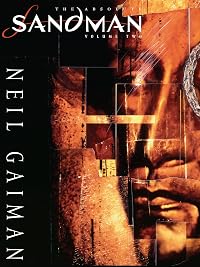
The Absolute Sandman Volume Two
by Neil Gaiman
The Sandman (The Absolute Sandman — Issues 21-39, Winter's Edge 1), The Sandman {1989-1996} (Absolute — Absolute, issues 21-39)
On This Page
Description
Chronicles the doings of Morpheus, the Lord of Dreams, and his siblings, each the embodiment of one of the dark forces of nature.Tags
Recommendations

Member Reviews
Volume II of this series is as gorgeous as Volume I. There are two main stories, only one of which I'd read before. The first, about Lucifer abdicating as ruler of Hell, did not appeal to me as much as the second, about The Cuckoo, with its cast of characters from under-represented groups and very mysterious goings on. Apparently I'm unusual in liking it more than the other. I still feel Sandman is at its best when it relies on Gaiman's own invented mythology of the Endless more than on any connections to the wider DC universe or obvious borrowings from elsewhere.
I keep forgetting the strong horror sensibility that Sandman has - it's not prominent in Gaiman's prose fiction. I like it.
There's heaps of bonus material in the back, most of show more which has not been collected before, including a very short piece featuring Desire. Presumably the original comic is quite valuable now. It's all worth reading, including the script for the issue in which Sandman returns to Hell. Hilariously, we find out what Gaiman was watching on a B&W TV whilst writing it and that if you're not fully paying attention one might mistake Boorman's self-aware, ironic and hilarious film Excalibur for rubbish...
Bring me Volume III ! show less
I keep forgetting the strong horror sensibility that Sandman has - it's not prominent in Gaiman's prose fiction. I like it.
There's heaps of bonus material in the back, most of show more which has not been collected before, including a very short piece featuring Desire. Presumably the original comic is quite valuable now. It's all worth reading, including the script for the issue in which Sandman returns to Hell. Hilariously, we find out what Gaiman was watching on a B&W TV whilst writing it and that if you're not fully paying attention one might mistake Boorman's self-aware, ironic and hilarious film Excalibur for rubbish...
Bring me Volume III ! show less
Three years after getting Absolute Sandman 2 from Amber as a Christmas present, I finally sat down and flew through it. It's not that its a difficult graphic novel to read, quite the contrary actually. It's that its so good and there are only 5 of them. You got to pace them out. Gaiman doesn't produce a lot of long reads so if you like him like I do, you have to make him last. This second volume contains a number of great story lines including Dream's descent into hell and Lucifer basically giving up hell to go on vacation. We also get treated to some historical fiction with the French Revolution, Augustus Caesar, Marco Polo, and turn of the century San Francisco. Pure fantasy is dished up with the "A Game of You" series and "The Hunt". show more All are quite original, finely written and illustrated, and all a bit dark and mysterious. The volume closes with some great "extras" at the end like the facsimile of Gaiman's script to the illustrators with his captions for "A Game of You". show less
And here it is. Season Of Mists was the first Sandman storyline I was in on from the start. By now I'd read Doll's House in collected form, and the stories in Dream Country in their issues. It would be a while yet before Preludes And Nocturnes got collected, but I didn't appreciate then what a neat piece of writing the summary at the start of the Doll's House collection was. I was thrilled to see Mike Dringenberg back on art - I'd formed the idea of him as the definitive Sandman artist, but i wasn't to know he was only doing the prologue and epilogue. I didn't love Kelley Jones' art, but I wouldn't deny his artistry, and of course we also got Matt Wagner for that unexpected boarding-school story, complete with Death in jogging get-up show more trying to cope with the sudden influx of dad people.
Season Of Mists sets out the overall theme of the whole Sandman epic had we but eyes to see it. A lord of a domain gets fed up of his responsibilities and decides to quit. As simple as that. Of course, Lucifer is not a good person and once he makes up his mind he goes ahead and does it, never mind the consequences. Morpheus, though, we are reminded, is not a good person either. A good person does not sentence a woman he loves to thousands of years in hell because she rejects him. But because he has changed, once this has been pointed out to him, he tries to, belatedly, do the right thing. it is this new-born sense of a right thing and the seriousness he treats his own responsibilities that makes what Lucifer does unthinkable for him. Nonetheless what has been set in motion will have consequences, not all of them good or fair. Rules and consequences are hugely important in Sandman, and they can seem arbitrary, unfair and even evil to people caught up in them. Dream might have improved in some ways since his imprisonment, but he is not always a nice person, nor would he want to be.
A Game Of You reinforces this idea. Barbie, lost and adrift in new York, her identity shifting, dreamless while the Cuckoo takes over the world she created. The Cuckoo does terrible things, but is not evil - it's dangerous. She is what she is. Like Thessaly and Dream, she doesn't change and acts according to her nature, unlike Barbie and Wanda, who are shifting their identities in different ways. But we know Dream has changed too, ins spite of himself - and what does that imply?
So the evil villain of the story gets what she wants and escapes having done terrible things. Meanwhile, because of seemingly arbitrary rules of Thessaly's witchcraft, Wanda remains in the apartment to face the storm. How can any of that be fair? It isn't. It's just the way things work out. There will be more of this.
All of these are thoughts on rereading the series from the start (so far) for the first time since it came to an end. I don't know if I ever reread the whole thing in one go - my copy of Season Of Mists isn't on the shelf, maybe I was waiting to replace it before tackling it from the start. Who knows? I get the impression A Game Of You isn't the most popular story in the Sandman epic, but I like it a lot, in part because it seems to grow out of Barbie's unexpectedly rich, vibrant and beautiful dream in A Doll's House, but Colleen Doran's reworking of part three, which was, frankly, terrible in the original issue, is a revelation, and the whole story reads beautifully in one sitting, though you have to roll your eyes at the fates of the trans and the black character, which sticks out a mile now.
The stand-alone stories are uniformly excellent. I love the historical tales, particularly Thermidor, a real favourite for me. Johanna Constatine trying to smuggle a head out of Revolutionary France at the height of the Terror. Genius. (For some reason the issue didn't ship to my comic shop and I never got a copy and it was long time before I read it - it might even have been after the Orpheus special came out.)
Also here are the Death and Sandman galleries, a Desire story drawn lividly by John Bolton, the story that accompanied the Dream statue and the script for an issue of Season Of Mists, in which Gaiman remarks offhandedly that Lucifer deserved his own comic. Mike Carey went and proved him right on that count. show less
Season Of Mists sets out the overall theme of the whole Sandman epic had we but eyes to see it. A lord of a domain gets fed up of his responsibilities and decides to quit. As simple as that. Of course, Lucifer is not a good person and once he makes up his mind he goes ahead and does it, never mind the consequences. Morpheus, though, we are reminded, is not a good person either. A good person does not sentence a woman he loves to thousands of years in hell because she rejects him. But because he has changed, once this has been pointed out to him, he tries to, belatedly, do the right thing. it is this new-born sense of a right thing and the seriousness he treats his own responsibilities that makes what Lucifer does unthinkable for him. Nonetheless what has been set in motion will have consequences, not all of them good or fair. Rules and consequences are hugely important in Sandman, and they can seem arbitrary, unfair and even evil to people caught up in them. Dream might have improved in some ways since his imprisonment, but he is not always a nice person, nor would he want to be.
A Game Of You reinforces this idea. Barbie, lost and adrift in new York, her identity shifting, dreamless while the Cuckoo takes over the world she created. The Cuckoo does terrible things, but is not evil - it's dangerous. She is what she is. Like Thessaly and Dream, she doesn't change and acts according to her nature, unlike Barbie and Wanda, who are shifting their identities in different ways. But we know Dream has changed too, ins spite of himself - and what does that imply?
So the evil villain of the story gets what she wants and escapes having done terrible things. Meanwhile, because of seemingly arbitrary rules of Thessaly's witchcraft, Wanda remains in the apartment to face the storm. How can any of that be fair? It isn't. It's just the way things work out. There will be more of this.
All of these are thoughts on rereading the series from the start (so far) for the first time since it came to an end. I don't know if I ever reread the whole thing in one go - my copy of Season Of Mists isn't on the shelf, maybe I was waiting to replace it before tackling it from the start. Who knows? I get the impression A Game Of You isn't the most popular story in the Sandman epic, but I like it a lot, in part because it seems to grow out of Barbie's unexpectedly rich, vibrant and beautiful dream in A Doll's House, but Colleen Doran's reworking of part three, which was, frankly, terrible in the original issue, is a revelation, and the whole story reads beautifully in one sitting, though you have to roll your eyes at the fates of the trans and the black character, which sticks out a mile now.
The stand-alone stories are uniformly excellent. I love the historical tales, particularly Thermidor, a real favourite for me. Johanna Constatine trying to smuggle a head out of Revolutionary France at the height of the Terror. Genius. (For some reason the issue didn't ship to my comic shop and I never got a copy and it was long time before I read it - it might even have been after the Orpheus special came out.)
Also here are the Death and Sandman galleries, a Desire story drawn lividly by John Bolton, the story that accompanied the Dream statue and the script for an issue of Season Of Mists, in which Gaiman remarks offhandedly that Lucifer deserved his own comic. Mike Carey went and proved him right on that count. show less
Summary: Volume 2 of the Absolute Sandman collection includes issues #21-39 of the original Sandman comics, enlarged and re-inked, as well as reprints of some miscellaneous Sandman-related things, including afterwords and contributer notes from the original trade paperback compilations, the story “The Flowers of Romance” featuring Dream’s sister Desire, some merchandising from the first Sandman month, a collection of Sandman-inspired artwork from a variety of artists, and the original script and sketches from issue #23.
The bulk of the book is taken up by two main story arcs - “Season of Mists”, in which Lucifer decides to close down Hell, and give the key to Morpheus, who is then immediately set upon by delegates from a show more variety of factions, all wanting to claim Hell for themselves; and “A Game of You”, in which Barbie (first introduced in “A Doll’s House”) is being pursued by a creature called The Cuckoo, and must go into her childhood Dreaming to save her friends there… while in the real world, her friends and neighbors are doing what they can to protect her. In addition to these two main arcs, there are also five single-issue stories (labelled as “Distant Mirrors” and “Convergence”), which take place in the French Revolution, ancient Rome, 1800s San Francisco, a desert in China, and eastern Europe, and encompass Robspierre, Orpheus, Augustus Caesar, the only Emperor of America, Marco Polo, gypsies, Baba Yaga and werewolves.
Review: Oh. I get it now.
What, you want more? Well, okay. Whereas the first volume of the Sandman collection interested me but didn’t bowl me over, this one drew me in, rolled me around in a stew of mythology and pathos and poignancy, and spat me out a Fan. (Maybe not enough of a Fan to drop the several hundred dollars to get a full set of them for my own, but a Fan nevertheless.)
The Season of Mists was a great, layered story, drawing on more mythologies than I can count. Read into this what you will, but I think the story of Lucifer is one of the more fascinating parts of Judeo-Christian mythology, and Gaiman delivers a doozy of a story here. The idea of the devil being tired of hell is not particularly a new idea, but the direction Gaiman takes it in this arc is incredible. A Game of You is different, existing in a new and unique metaphysical space - one which I’m still not sure I’ve got my head entirely around - but filling it with a moving story and a horde of outlandish but immediately recognizable and sympathetic characters.
While I really enjoyed both of the main story arcs, I really loved the stand-alone stories. They’re Sandman stories only tangentially - Morpheus moves through most of them only at the periphery. But still Gaiman pulls elements from across the world and throughout history, and makes each of them into a hauntingly moving story, which can be enjoyed on a superficial level, but simultaneously gets deeper the more you examine it. “Haunting” is good word for the collection as a whole - it has certainly set its hooks into my psyche. 4.5 out of 5 stars.
Recommendation: With the stories in this collection, Gaiman achieves the depth for which the earlier Sandman stories were grasping. I wouldn’t recommend reading them out of order, but for anyone ambivalent after Volume 1: It gets better. Much better. Keep going. show less
The bulk of the book is taken up by two main story arcs - “Season of Mists”, in which Lucifer decides to close down Hell, and give the key to Morpheus, who is then immediately set upon by delegates from a show more variety of factions, all wanting to claim Hell for themselves; and “A Game of You”, in which Barbie (first introduced in “A Doll’s House”) is being pursued by a creature called The Cuckoo, and must go into her childhood Dreaming to save her friends there… while in the real world, her friends and neighbors are doing what they can to protect her. In addition to these two main arcs, there are also five single-issue stories (labelled as “Distant Mirrors” and “Convergence”), which take place in the French Revolution, ancient Rome, 1800s San Francisco, a desert in China, and eastern Europe, and encompass Robspierre, Orpheus, Augustus Caesar, the only Emperor of America, Marco Polo, gypsies, Baba Yaga and werewolves.
Review: Oh. I get it now.
What, you want more? Well, okay. Whereas the first volume of the Sandman collection interested me but didn’t bowl me over, this one drew me in, rolled me around in a stew of mythology and pathos and poignancy, and spat me out a Fan. (Maybe not enough of a Fan to drop the several hundred dollars to get a full set of them for my own, but a Fan nevertheless.)
The Season of Mists was a great, layered story, drawing on more mythologies than I can count. Read into this what you will, but I think the story of Lucifer is one of the more fascinating parts of Judeo-Christian mythology, and Gaiman delivers a doozy of a story here. The idea of the devil being tired of hell is not particularly a new idea, but the direction Gaiman takes it in this arc is incredible. A Game of You is different, existing in a new and unique metaphysical space - one which I’m still not sure I’ve got my head entirely around - but filling it with a moving story and a horde of outlandish but immediately recognizable and sympathetic characters.
While I really enjoyed both of the main story arcs, I really loved the stand-alone stories. They’re Sandman stories only tangentially - Morpheus moves through most of them only at the periphery. But still Gaiman pulls elements from across the world and throughout history, and makes each of them into a hauntingly moving story, which can be enjoyed on a superficial level, but simultaneously gets deeper the more you examine it. “Haunting” is good word for the collection as a whole - it has certainly set its hooks into my psyche. 4.5 out of 5 stars.
Recommendation: With the stories in this collection, Gaiman achieves the depth for which the earlier Sandman stories were grasping. I wouldn’t recommend reading them out of order, but for anyone ambivalent after Volume 1: It gets better. Much better. Keep going. show less
The Season of Mists is one of my favourite story arcs and if, for sure, my favourite arc in this book.
I also enjoyed the Game of You arc.
The other arc was a bit too disconnected for me to even see it as an arc.
I also love the Desire story. Death and Dream are my favourite Endless, but Desire and Delirium go for a pretty close 3rd place.
But the thing I like the most about this book is the paper, unlike the trades I read the paper is glossy and that makes the colours vibrate. That's the reason I bought it in its Absolute form and I drool over the art (not literally, I was actually more careful with greasy fingerprints than I usually am).
The Dream gallery at the end of the book is also a nice bonus I love some of the portraits, others not show more so much, but that's the nice thing about art, I can appreciate that even though I don't like some of the drawings that doesn't make them better or worse than the ones I like, they are a different view on Dream (or Death). I tend to like Dream drawn is dark cold colours (blacks and blues), with a slightly Gothic feeling because that is how I see him in my head...
And the cherry on top of the cake was the script and pencils in the end. Because it's from one of my favourite issues. And seeing the notes Gaiman wrote made me realise that the art is so well drawn that it made me feel what he wanted.
The moment almost at the end of the Chapter when Lucifer kisses Mazikeen I really thought he was going to kill her, even when I read it by the second time
I find that I usually prefer when Sandman stories feature one of the Endless and they are not just some guide on the main quest in the issue. I also like stories featuring ancient mythology (I'm partial to the Greek mythology, but I would like to see more of Loki, not so much the other Asgards).
On other level I'm geek enough that I love the little Easter Eggs that Gaiman likes to drop here and there, the way the stories in Sandman touch each other (like in Game of You, we find what happens to Barbie from the DollHouse arc, and we meet the girlfriend from the girl in the diner of the Master of Dreams arc, actually in that arc there are lots of those little connections) and other characters in the DC Universe. And on top of that there are the literary references (Paradise Lost and Alice in Wonderland seem to be some of Gaiman's favourites) and the mythological references. I particularly like the remark that the gods die and go to Dream's realm. show less
I also enjoyed the Game of You arc.
The other arc was a bit too disconnected for me to even see it as an arc.
I also love the Desire story. Death and Dream are my favourite Endless, but Desire and Delirium go for a pretty close 3rd place.
But the thing I like the most about this book is the paper, unlike the trades I read the paper is glossy and that makes the colours vibrate. That's the reason I bought it in its Absolute form and I drool over the art (not literally, I was actually more careful with greasy fingerprints than I usually am).
The Dream gallery at the end of the book is also a nice bonus I love some of the portraits, others not show more so much, but that's the nice thing about art, I can appreciate that even though I don't like some of the drawings that doesn't make them better or worse than the ones I like, they are a different view on Dream (or Death). I tend to like Dream drawn is dark cold colours (blacks and blues), with a slightly Gothic feeling because that is how I see him in my head...
And the cherry on top of the cake was the script and pencils in the end. Because it's from one of my favourite issues. And seeing the notes Gaiman wrote made me realise that the art is so well drawn that it made me feel what he wanted.
I find that I usually prefer when Sandman stories feature one of the Endless and they are not just some guide on the main quest in the issue. I also like stories featuring ancient mythology (I'm partial to the Greek mythology, but I would like to see more of Loki, not so much the other Asgards).
On other level I'm geek enough that I love the little Easter Eggs that Gaiman likes to drop here and there, the way the stories in Sandman touch each other (like in Game of You, we find what happens to Barbie from the DollHouse arc, and we meet the girlfriend from the girl in the diner of the Master of Dreams arc, actually in that arc there are lots of those little connections) and other characters in the DC Universe. And on top of that there are the literary references (Paradise Lost and Alice in Wonderland seem to be some of Gaiman's favourites) and the mythological references. I particularly like the remark that the gods die and go to Dream's realm. show less
There's two big storylines collected in this volume of The Absolute Sandman. The first is Seasons of Mists, which opens with a meeting between Dream and the rest of the Endless. They suggest that Dream was a bit of a jerk for exiling his lover to Hell ten thousand years ago (described in a side story in Volume One), and that he should get her back. Apparently that's all it takes to change someone's mind, because Dream launches himself into Hell to reclaim her soul. Why? No one knows. Upon getting there, he finds out that Lucifer has opened the Gates of Hell and let everyone go because he's tired of the whole thing, and Lucifer hands the place over to Dream and promptly absconds, leaving Dream with the question of what to do with Hell. show more Various claimants come to petition Dream, and I was initially excited-- who Dream chose would give me some insight into his character surely, or even just watching him deliberate would-- but the whole storyline just stops with a literal divine intervention. Seeing Gaiman's depictions of the various claimants is fun, though; I think my favorites were Thor and the Lord of Order. His Loki is pretty underwhelming for the ultimate trickster, though. The best part of the storyline, however, is the side story about the boy left behind at a boarding school when all the souls are released from Hell.
The second story, A Game of You, is much better for the reason that it doesn't focus on Dream at all, but rather Barbie, a human who previously appeared in Volume One. Her dreams are starting to spill over into the real world and into the lives of those who share her apartment building. We see almost everything from the perspective of Barbie, her transvestite friend Wanda, the lesbian couple Hazel and Foxglove (one of whom is pregnant!), and a witch named Thessaly. Barbie soon becomes lost in her dreams, which are a little girl's depiction of a fantasy land, with herself as the princess, surrounded by a cast of goofy animal characters. Watching these characters try to make sense of the weird world they've been projected into, as well as their own personal lives, is great, and I was totally on board with every moment of it. The ending is a bit underwhelming, however, as Dream just shows up all of a sudden and takes care of everything. But other than that (and the epilogue), this was my favorite Sandman storyline yet.
There's also a quality side story about Emperor Norton I of the United States, which I just loved. A fun look at a fun historical personage.
My reviews of the first two volumes of The Absolute Sandman might make it seem like I'm down on the series, and I'm not-- I think the writing is usually sharp, most of the characters are fully-fledged people, the tone and atmosphere are great, the Dreaming is a fantastic mythology, and Matthew the Raven is pretty much awesome. But it's hard to get too enthused about a series whose protagonist leaves you so little to connect to, even at supposedly defining moments.
Neil Gaiman's The Sandman: « Previous in sequence | Next in sequence » show less
The second story, A Game of You, is much better for the reason that it doesn't focus on Dream at all, but rather Barbie, a human who previously appeared in Volume One. Her dreams are starting to spill over into the real world and into the lives of those who share her apartment building. We see almost everything from the perspective of Barbie, her transvestite friend Wanda, the lesbian couple Hazel and Foxglove (one of whom is pregnant!), and a witch named Thessaly. Barbie soon becomes lost in her dreams, which are a little girl's depiction of a fantasy land, with herself as the princess, surrounded by a cast of goofy animal characters. Watching these characters try to make sense of the weird world they've been projected into, as well as their own personal lives, is great, and I was totally on board with every moment of it. The ending is a bit underwhelming, however, as Dream just shows up all of a sudden and takes care of everything. But other than that (and the epilogue), this was my favorite Sandman storyline yet.
There's also a quality side story about Emperor Norton I of the United States, which I just loved. A fun look at a fun historical personage.
My reviews of the first two volumes of The Absolute Sandman might make it seem like I'm down on the series, and I'm not-- I think the writing is usually sharp, most of the characters are fully-fledged people, the tone and atmosphere are great, the Dreaming is a fantastic mythology, and Matthew the Raven is pretty much awesome. But it's hard to get too enthused about a series whose protagonist leaves you so little to connect to, even at supposedly defining moments.
Neil Gaiman's The Sandman: « Previous in sequence | Next in sequence » show less
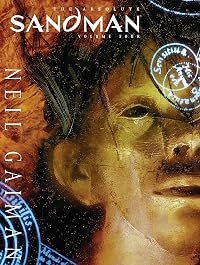
The second volume of The Absolute Sandman brings together issues twenty-one through thirty-nine of Neil Gaiman's famous Sandman comic series (the issues were first reprinted in the trade collections Seasons of Mists, A Game of You and Fables and Reflections) in addition to a wonderful array of extra materials. A new introduction, afterword, and section of contribute biographies are included along with those from the original trade collections. Other extras feature the merchandising and marketing efforts from the September 1991 "Sandman Month," the creation of the first Sandman collectible statue, and the script and pencils from issue twenty-three--the closing of Hell. The reprinting of the artwork collection The Sandman: Gallery of show more Dreams (more than thirty full-page works with Dream as the inspiration) is absolutely gorgeous and is probably my favorite addition to the volume.
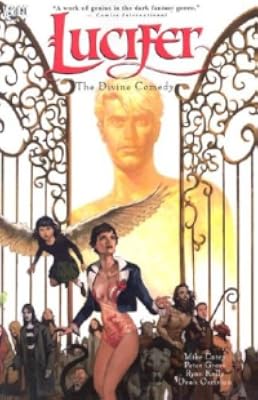
Season of Mists is among my favorite story arcs in the entirety of the original Sandman comics. One of Gaiman's greatest skills lies in adapting and retelling traditional myths, legends, and histories to suit the needs of his story--all while adding his own concepts and creations to the mix. Seasons of Mists, which features many figures from world mythology, allows him all sorts of room to play around in this way. Gaiman's version of Lucifer Morningstar was even compelling enough to earn him his own comic series (Lucifer, written by Mike Carey).
The other major story arc in this volume, A Game of You, has never really been a fan favorite. But, at least according to Gaiman's afterword, it was his "favorite of the Sandman storylines, perhaps because it didn't seem to be anyone else's favorite." I don't find it to be as horrible as many people seem to make it out and am quite fond of some the the characters, particularly Wanda. The volume is filled out by several shorter, one-shot stories that tend to focus on historical figures and events. Although it wasn't technically a part of the Sandman comics, "The Flowers of Romance," featuring Dream's sibling Desire and originally published in the first issue of Vertigo: Winter's Edge, can be found among the extra materials and makes a magnificent addition for the art alone if nothing else.
One of the advantages of DC Comic's Absolute editions is that the pages are physically larger, allowing the artwork and lettering to be seen in more detail. In some instances the coloring is either restored or otherwise reworked to better represent the artist' original intent and vision. Not every issue gets this treatment. Unfortunately, this means that some of the shadowing techniques that work adequately well for the original issues don't carry over as nicely to the larger format. This can actually be rather distracting and I'm somewhat surprised that the affected panels remained untouched. Overall though, the artwork is good and I enjoy the various moods and interpretations that the different artists bring to the series.
The Absolute Sandman is definitely the best edition of Sandman currently available. The second volume more than lives up to the precedent set by the first one. By this point in the comic, the series is really coming into its own. Not as much effort is put into tying the comic to the rest of the DC Universe, which allows it to be more itself (that's not to say the DC connections aren't there--they just aren't as blatant). Fans looking into purchasing the entire series should really consider the magnificent, albeit pricey, Absolute editions--so far, the presentation, production, and extra materials have been worth it.
Issues included: "Seasons of Mists: A Prologue"; "Seasons of Mists: Chapter One"; "Seasons of Mists: Chapter Two"; "Seasons of Mists: Chapter Three"; "Seasons of Mists: Chapter Four"; "Seasons of Mists: Chapter Five"; "Seasons of Mists: Chapter Six"; "Seasons of Mists: Epilogue"; "Distant Mirrors: Thermidor"; "Distant Mirrors: August"; "Distant Mirrors: Three Septembers and a January"; "A Game of You, Chapter One: Slaughter on Fifth Avenue"; "A Game of You, Chapter Two: Lullabies of Broadway"; "A Game of You, Chapter Three: Bad Moon Rising"; "A Game of You, Chapter Four: Beginning to See the Light"; "A Game of You, Chapter Five: Over the Sea to Sky"; "A Game of You, Chapter Six: I Woke Up and One of Us Was Crying"; "Convergence: The Hunt"; "Convergence: Soft Places"
Experiments in Reading show less
Season of Mists is among my favorite story arcs in the entirety of the original Sandman comics. One of Gaiman's greatest skills lies in adapting and retelling traditional myths, legends, and histories to suit the needs of his story--all while adding his own concepts and creations to the mix. Seasons of Mists, which features many figures from world mythology, allows him all sorts of room to play around in this way. Gaiman's version of Lucifer Morningstar was even compelling enough to earn him his own comic series (Lucifer, written by Mike Carey).
The other major story arc in this volume, A Game of You, has never really been a fan favorite. But, at least according to Gaiman's afterword, it was his "favorite of the Sandman storylines, perhaps because it didn't seem to be anyone else's favorite." I don't find it to be as horrible as many people seem to make it out and am quite fond of some the the characters, particularly Wanda. The volume is filled out by several shorter, one-shot stories that tend to focus on historical figures and events. Although it wasn't technically a part of the Sandman comics, "The Flowers of Romance," featuring Dream's sibling Desire and originally published in the first issue of Vertigo: Winter's Edge, can be found among the extra materials and makes a magnificent addition for the art alone if nothing else.
One of the advantages of DC Comic's Absolute editions is that the pages are physically larger, allowing the artwork and lettering to be seen in more detail. In some instances the coloring is either restored or otherwise reworked to better represent the artist' original intent and vision. Not every issue gets this treatment. Unfortunately, this means that some of the shadowing techniques that work adequately well for the original issues don't carry over as nicely to the larger format. This can actually be rather distracting and I'm somewhat surprised that the affected panels remained untouched. Overall though, the artwork is good and I enjoy the various moods and interpretations that the different artists bring to the series.
The Absolute Sandman is definitely the best edition of Sandman currently available. The second volume more than lives up to the precedent set by the first one. By this point in the comic, the series is really coming into its own. Not as much effort is put into tying the comic to the rest of the DC Universe, which allows it to be more itself (that's not to say the DC connections aren't there--they just aren't as blatant). Fans looking into purchasing the entire series should really consider the magnificent, albeit pricey, Absolute editions--so far, the presentation, production, and extra materials have been worth it.
Issues included: "Seasons of Mists: A Prologue"; "Seasons of Mists: Chapter One"; "Seasons of Mists: Chapter Two"; "Seasons of Mists: Chapter Three"; "Seasons of Mists: Chapter Four"; "Seasons of Mists: Chapter Five"; "Seasons of Mists: Chapter Six"; "Seasons of Mists: Epilogue"; "Distant Mirrors: Thermidor"; "Distant Mirrors: August"; "Distant Mirrors: Three Septembers and a January"; "A Game of You, Chapter One: Slaughter on Fifth Avenue"; "A Game of You, Chapter Two: Lullabies of Broadway"; "A Game of You, Chapter Three: Bad Moon Rising"; "A Game of You, Chapter Four: Beginning to See the Light"; "A Game of You, Chapter Five: Over the Sea to Sky"; "A Game of You, Chapter Six: I Woke Up and One of Us Was Crying"; "Convergence: The Hunt"; "Convergence: Soft Places"
Experiments in Reading show less
Members
- Recently Added By
Lists

Recommended Comics / Graphic Novels
595 works; 119 members

70 of the Best Horror Comics
178 works; 5 members

Books Read in 2012
816 works; 34 members

Top-Rated Books on LibraryThing
272 works; 117 members

Five star books
1,767 works; 110 members
Author Information

847+ Works 450,314 Members
Neil Gaiman was born in Portchester, England on November 10, 1960. He worked as a journalist and freelance writer for a time, before deciding to try his hand at comic books. Some of his work has appeared in publications such as Time Out, The Sunday Times, Punch, and The Observer. His first comic endeavor was the graphic novel series The Sandman. show more The series has won every major industry award including nine Will Eisner Comic Industry Awards, three Harvey Awards, and the 1991 World Fantasy Award for best short story, making it the first comic ever to win a literary award. He writes both children and adult books. His adult books include The Ocean at the End of the Lane, which won a British National Book Awards, and the Locus Award for Best Fantasy Novel for 2014; Stardust, which won the Mythopoeic Award as best novel for adults in 1999; American Gods, which won the Hugo, Nebula, Bram Stoker, SFX, and Locus awards; Anansi Boys; Trigger Warning: Short Fictions and Disturbances; and The View from the Cheap Seats: Selected Nonfiction, which is a New York Times Bestseller. His children's books include The Day I Swapped My Dad for Two Goldfish; Coraline, which won the Elizabeth Burr/Worzalla, the BSFA, the Hugo, the Nebula, and the Bram Stoker awards; The Wolves in the Walls; Odd and the Frost Giants; The Graveyard Book, which won the Newbery Award in 2009 and The Sandman: Overture which won the 2016 Hugo Awards Best Graphic Story. (Bowker Author Biography) show less
All Editions
Some Editions
Awards and Honors
Awards
Series

The Sandman
11 works (The Absolute Sandman — Issues 21-39, Winter's Edge 1)

The Sandman {1989-1996}
76 works (Absolute — Absolute, issues 21-39)
Belongs to Publisher Series
Work Relationships
Is contained in
Contains
Is an abridged version of
Inspired
Common Knowledge
- Canonical title
- The Absolute Sandman Volume Two
- Original publication date
- 1990 - 1997 (original issues) (original issues); 2007-10-31
- People/Characters
- Ah How; Alichino; Anubis (deity); Augustus Caesar (Caius Octavius Thurinus); Azazel; Barbie (show all 73); Bast (deity); Bes; Julius Caesar; Cain; Choronzon; Cluracan; Lady Johanna Constantine; Death of the Endless; Delirium of the Endless; Desire of the Endless; Despair of the Endless; Destiny of the Endless; Dream (Morpheus); Livia Drusilla; Duma; Eve [of Genesis]; Fiddler's Green; Foxglove (Donna Cavanagh); Fury (Hippolyta "Lyta" Trevor Hall); Hob Gadling; Grizzel; Daniel Hall; The Hecateae; Huginn; Ketele; Lord Kilderkin; Kublai Khan; Loki; Lords of Chaos; Lords of Order; Lucien [Sandman]; Lucifer Morningstar; Lycius; Matthew the Raven (Matthew Cable); Mazikeen; Hazel McNamara; The Merkin; Muninn; Nada; Joshua Abraham Norton (Emperor of the United States); Nuala [Sandman]; Odin (deity); Susano-O-No-Mikoto; Orpheus; King of Pain; Edwin Paine; Thomas Paine; Rustichello da Pisa; Marco Polo; Niccolò Polo; Mervyn Pumpkinhead; Remiel; Rimmon; Maximilien de Robespierre; Charles Rowland; Louis Antoine de Saint-Just; Shivering Jemmy of the Shallow Brigade; Sigyn; Tangrisni; Tanngnost; Thessaly; Thor (deity); Samuel Langhorne Clemens (Mark Twain); Vassily; Wanda (Alvin Robert Caleb Mann); Abe Warner; Baba Yaga
- Important places
- Asgard; Desert of Lop, China; The Dreaming; Garden of Forking Paths; Hell; Hong Kong, China (show all 19); Limbo; Naxos, Cyclades Islands, Greece; New York, New York, USA; Paris, France; Perth, Western Australia, Australia; Rome, Italy; Russia; St. Hilarion's School for Boys, England, UK; San Francisco, California, USA; The Silver City; East Sussex, England, UK; Western Australia, Australia; Wych Cross, East Sussex, England, UK
- Quotations
- You don't have to stay anywhere forever.
We do what we must . . . Sometimes we can choose the path we follow. Sometimes our choices are made for us. And sometimes we have no choice at all.
And if there's a moral there, I don't know what it is, save maybe that we should take our goodbyes whenever we can. And that's all.
Classifications
- Genres
- Graphic Novels & Comics, Horror
- DDC/MDS
- 741.5973 — Arts & recreation Drawing & decorative arts Drawing Comic books, graphic novels, fotonovelas, cartoons, caricatures, comic strips History, geographic treatment, biography North American United States (General)
- LCC
- PN6728 .S26 .G243 — Language and Literature Literature (General) Literature (General) Collections of general literature Comic books, strips, etc.
- BISAC
Statistics
- Members
- 1,300
- Popularity
- 18,698
- Reviews
- 21
- Rating
- (4.68)
- Languages
- 5 — English, Hungarian, Italian, Portuguese, Spanish
- Media
- Paper, Ebook
- ISBNs
- 6
- ASINs
- 3