On This Page
Description
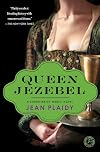
"The aging Catherine de' Medici and her sickly son King Charles are hoping to end the violence between the feuding Catholics and Huguenots. When Catherine arranges the marriage of her beautiful Catholic daughter Margot to Huguenot king Henry of Navarre, France's subjects hope there will finally be peace. But shortly after the wedding, when many of the most prominent Huguenots are still celebrating in Paris, King Charles gives an order that could only have come from his mother: rid France of show more its "pestilential Huguenots forever." In this bloody conclusion to the Catherine de' Medici trilogy, Jean Plaidy shows the demise of kings and skillfully exposes Catherine's lifetime of depraved scheming"--P. [4] of cover. show lessTags
Recommendations




















Member Reviews
Last in the Catherine de' Medici trilogy. After the St. Bartholomew's Day massacre of the Huguenots, the Serpent Queen is fighting a losing battle to keep her weak and mad children on the throne of France. Daughter Margot, married to Henry of Navarre, would have been a queen after Catherine's own heart, but France was forced to live through the reign of her crazy son and his cross-dressing brother first. Luckily, all the Valois men were of poor stock and died prematurely (of natural and unnatural means). Added to that the persecution of the Huguenots by the Catholics, the fighting over the throne between aristocratic families, and the influence of Spain and England - it's surprising that France waited another two hundred years for a show more revolution!
This is a slow novel because the history is well-known and the politics too involved. Plaidy's Catherine becomes a rather pathetic figure once her rebellious children start to cut her out of the loop, and her sons are presented almost as imbeciles. Only Navarre and Margot are worth reading about, and their story is told properly in 'Evergreen Gallant'.
Factually interesting, but a plodding account. show less
This is a slow novel because the history is well-known and the politics too involved. Plaidy's Catherine becomes a rather pathetic figure once her rebellious children start to cut her out of the loop, and her sons are presented almost as imbeciles. Only Navarre and Margot are worth reading about, and their story is told properly in 'Evergreen Gallant'.
Factually interesting, but a plodding account. show less
I gave this final book in the series a 5 star rating because I enjoyed this book as much as the first one. A great conclusion to the three part book series. I will say this - I am glad Catherine de Medici wasn't my mother! I am also glad that I wasn't her - what effort it took to be her. Her desire for power was her entire life and I got exhausted just reading about it. The series, overall, is crowded with people, however, it never gets too confusing. In my humble opinion, Jean Plaidy, who wrote this novel, as well as the majority of her books in the early to mid 1950's, can have her books hold right up there with today's modern historical fiction writers such as Philippa Gregory, Anne Easter Smith and others. I love her writing!
Like Book Two in the Catherine de Medici trilogy, this final instalment features many more characters and follows events in their lives. Thus, in a sense it’s better to have more variation, but I still prefer Book One – “Madame Serpent” – for its more limited yet more engrossing themes. Catherine is even less to the fore in this third novel than in the previous one. She’s more like the central character, rather than the main one.
Catherine only cares for her third-oldest son, who becomes France’s Henry III. The rest of her children are scared of their mother – a mother who’d readily see them dead if it meant advancement for her favourite son, though he strikes me as a complete and utter waste of space.
It’s hard to show more feel any warmth for someone of Catherine’s nature, but she nevertheless is the best-drawn character of the book. She, like the real Catherine de Medici, is a fascinating woman. Much of her reputation is based on rumours and on the reputation that sixteenth-century Italians had for poisoning those who stood in their way. Even so, there’s evidence enough to show she was no saint.
My favourite character is Margot, Catherine’s daughter who married Henry of Navarre, France’s future Henry IV, founder of the Bourbon monarchy.
Although I like the first in the trilogy best, while also preferring the second instalment above this third one, “Queen Jezebel” still proved to be an entertaining read. show less
Catherine only cares for her third-oldest son, who becomes France’s Henry III. The rest of her children are scared of their mother – a mother who’d readily see them dead if it meant advancement for her favourite son, though he strikes me as a complete and utter waste of space.
It’s hard to show more feel any warmth for someone of Catherine’s nature, but she nevertheless is the best-drawn character of the book. She, like the real Catherine de Medici, is a fascinating woman. Much of her reputation is based on rumours and on the reputation that sixteenth-century Italians had for poisoning those who stood in their way. Even so, there’s evidence enough to show she was no saint.
My favourite character is Margot, Catherine’s daughter who married Henry of Navarre, France’s future Henry IV, founder of the Bourbon monarchy.
Although I like the first in the trilogy best, while also preferring the second instalment above this third one, “Queen Jezebel” still proved to be an entertaining read. show less
The novel Queen Jezebel by Jean Plaidy recounts the details of Catherine de Medici's later life. This is the third and final book of her life. Of the three novels, this is the most turbulent. It depicts her incredibly shrewdness, calculating mind, and mistrust of everyone around her, including her sons. Determined to end the hostility between the Catholics and Huguenots, Catherine arranges a political marriage between her Catholic daughter Margot and the Huguenot King Henry of Navarre. But this marriage failed to bring about the peace between the rival groups. As her control over her son, the king, wanes, she convinces him that there is a plot to assassinate him. This prompts Charles to launch the St Bartholomew day massacre to rid show more France of Huguenots.
The dreadful murders of Henry Guise and Jeanne Navarre play a pivotal role in this book, giving readers insight and a deeper understanding of her sordid motivations and craftiness of this formidable and cunning queen.
Like the previous two books in this series, Catherine's life is brought to life with vivid details and includes all the main characters of the period. Powerful liaisons, treachery, debauchery, hate, love, and cunning machinations to gain power unfold with clarity and excitement in this final installment. If you are intrigued with Catherine de Medici, then this is a novel not to be overlooked. It is the most comprehensively detailed book about her life. Highly recommended. show less
The dreadful murders of Henry Guise and Jeanne Navarre play a pivotal role in this book, giving readers insight and a deeper understanding of her sordid motivations and craftiness of this formidable and cunning queen.
Like the previous two books in this series, Catherine's life is brought to life with vivid details and includes all the main characters of the period. Powerful liaisons, treachery, debauchery, hate, love, and cunning machinations to gain power unfold with clarity and excitement in this final installment. If you are intrigued with Catherine de Medici, then this is a novel not to be overlooked. It is the most comprehensively detailed book about her life. Highly recommended. show less
3.5 stars
This is the third book in Jean Plaidy's series on Catherine de Medici. At the start of this one, her third son, Charles is the King of France, and her daughter Margot is getting married to Henry, the King of Navarre, against her wishes.
I'm not sure I liked this one as much as the first two, but it got more interesting as I got further into it. It's also difficult with these royal families and keeping straight who everyone is (and I tend to go months or years between books in a series, so I need some kind of reminder). However, in the end, I still enjoyed it.
This is the third book in Jean Plaidy's series on Catherine de Medici. At the start of this one, her third son, Charles is the King of France, and her daughter Margot is getting married to Henry, the King of Navarre, against her wishes.
I'm not sure I liked this one as much as the first two, but it got more interesting as I got further into it. It's also difficult with these royal families and keeping straight who everyone is (and I tend to go months or years between books in a series, so I need some kind of reminder). However, in the end, I still enjoyed it.
Ratings
Members
- Recently Added By
Lists

al.vick-wishlist-historical fiction
130 works; 1 member
Author Information

257+ Works 37,476 Members
Jean Plaidy was a British writer who wrote under various pen names. Her real name is Eleanor Alice Burford Hibbert. She was born in London on September 1, 1906. Most of the books written as Jean Plaidy are historical romances based on English history featuring historical figures. The first, Beyond the Blue Mountains, was published in 1947. Hibbert show more also wrote five nonfiction histories and two children's books. Besides Jean Plaidy, Hibbert wrote under Victoria Holt, Phillipa Carr, Elbur Ford, Kathleen Kellow, Ellalice Tate, and her maiden name, Eleanor Burford. Hibbert died on January 18, 1993. (Bowker Author Biography) show less
Some Editions
Series

Belongs to Publisher Series
Harlequin (269)
Work Relationships
Common Knowledge
- Original publication date
- 1953
- People/Characters
- Catherine de Medici; Margot; Henry of Navarre
- Important places
- France
- Dedication
- To G.P.H. whose practical help and advice have been invaluable
Classifications
- Genres
- Fiction and Literature, General Fiction, Historical Fiction, Romance
- DDC/MDS
- 823.914 — Literature & rhetoric English & Old English literatures English fiction 1900- 1901-1999 1945-1999
- LCC
- PZ3 .H5212 — Language and Literature Fiction and juvenile belles lettres Fiction and juvenile belles lettres Fiction in English
- BISAC
Statistics
- Members
- 201
- Popularity
- 163,748
- Reviews
- 6
- Rating
- (3.52)
- Languages
- Dutch, English, German, Spanish
- Media
- Paper, Ebook
- ISBNs
- 18
- ASINs
- 4