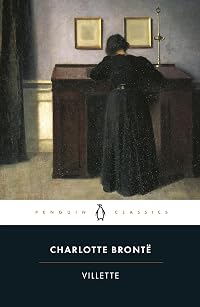
Villette
by Charlotte Brontë
On This Page
Description
Lucy Snowe flees an unhappy past in England to teach at a boarding school in the French town of Villette. There, she becomes romantically entangled with both an English doctor and a schoolmaster. These romances lead Lucy to question her ability to be tied to a man while also maintaining her beloved independence.Tags
Recommendations

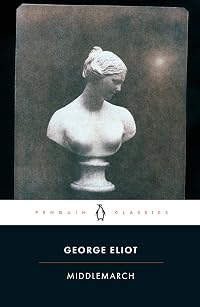
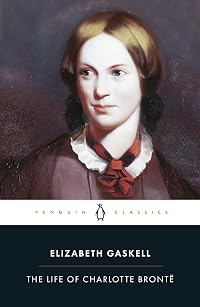
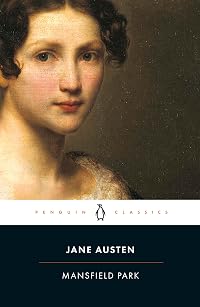
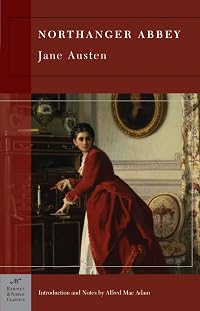





Member Recommendations

Member Reviews
Considered Charlotte Brontë's most autobiographical novel, Villette follows the story of Lucy Snow, perhaps one of the most self-contained heroines in all of nineteenth-century literature. Penniless and alone in the world, Lucy pursues her fortune abroad, teaching at a girls' school in the French city of Villette. Her experiences there, her encounters with both her fellow countrymen and the French natives of the city in which she has settled, and the relations she forms with her colleagues and students, are all chronicled in this gradually unfolding character study.
Readers expecting something more along the lines of Jane Eyre, with its strong narrative flow, will be somewhat disappointed, I believe. Villette is a far more cerebral show more text, less plot-driven than is it character-centric. This has both advantages and disadvantages, in that it allows Brontë to plumb the psychological depths of her heroine in a way not seen in her earlier work, but also causes the story to drag somewhat, especially in the middle sections.
Highly principled, somewhat prejudiced, and terribly lonely, Lucy Snow has always struck me as a flawed, more human version of Jane Eyre. Or perhaps it might be more accurate to say that she is what Jane would be, in the absence of hope. Her unrequited (possibly?) love for M. Paul, who is himself a deeply flawed individual, has something of the strength of despair in it at times, and the novel in general has a darker tone.
As an aside, I should mention that Villette has numerous, and sometimes extensive, passages in French. The reader who is unacquainted with that language would do well to obtain a version in which translations are given in the rear notes. show less
Readers expecting something more along the lines of Jane Eyre, with its strong narrative flow, will be somewhat disappointed, I believe. Villette is a far more cerebral show more text, less plot-driven than is it character-centric. This has both advantages and disadvantages, in that it allows Brontë to plumb the psychological depths of her heroine in a way not seen in her earlier work, but also causes the story to drag somewhat, especially in the middle sections.
Highly principled, somewhat prejudiced, and terribly lonely, Lucy Snow has always struck me as a flawed, more human version of Jane Eyre. Or perhaps it might be more accurate to say that she is what Jane would be, in the absence of hope. Her unrequited (possibly?) love for M. Paul, who is himself a deeply flawed individual, has something of the strength of despair in it at times, and the novel in general has a darker tone.
As an aside, I should mention that Villette has numerous, and sometimes extensive, passages in French. The reader who is unacquainted with that language would do well to obtain a version in which translations are given in the rear notes. show less
"A sorrowful indifference to existence often pressed on me.",, 21 July 2015
This review is from: Villette (Penguin English Library) (Paperback)
Other reviews have delineated the storyline; I'm just going to say that I was within five pages of the end (on tenterhooks as to whether our narrator, Lucy Snowe, ends up with a happy or unutterably wretched life) when I had to stop and go to work. I was yearning to come home and find out all the time I was there - must be the proof of a compelling work.
Charlotte Bronte's descriptions of utter loneliness and inner, but hidden, torment make for a moving and unforgettable read. While her friends remark on "steady little Lucy...so quietly pleased, so little moved yet so content", she observes show more "little knew they the rack of pain which had driven Lucy almost into fever, and brought her out, guideless and reckless, urged and drugged to the brink of frenzy".
Superb read. show less
This review is from: Villette (Penguin English Library) (Paperback)
Other reviews have delineated the storyline; I'm just going to say that I was within five pages of the end (on tenterhooks as to whether our narrator, Lucy Snowe, ends up with a happy or unutterably wretched life) when I had to stop and go to work. I was yearning to come home and find out all the time I was there - must be the proof of a compelling work.
Charlotte Bronte's descriptions of utter loneliness and inner, but hidden, torment make for a moving and unforgettable read. While her friends remark on "steady little Lucy...so quietly pleased, so little moved yet so content", she observes show more "little knew they the rack of pain which had driven Lucy almost into fever, and brought her out, guideless and reckless, urged and drugged to the brink of frenzy".
Superb read. show less
I understood Lucy and her plight, from her loneliness and aloneness to her irrational impulse to get up and flee from what she wants. If not out loud, I was mentally coaxing her to "Just DO such-and-such! Go for it! Who cares what those other folks think? Who are they, anyway?"--all the while understanding why she wouldn't do as I coaxed and realizing the probability that, if I was in her position, I might not do as I coaxed either. (Ha! Show us ourselves, Brontë, and we'll accordingly see where and how we can become something better.)
I don't know if it was the author's intention to make anything "cute" about her characters, but her style of writing often breeds cuteness in the characters and their relations with one another. Lucy and show more M. Paul grow into such a cute pair, likely, I think, already stuck on each other long before they recognize it, or at least long before Lucy does.
Toward the end of the novel, I began reading in a passionate rush, the climax goading me forward faster than I moved through the majority of the story, even drawing an audible groan or something akin to a vindictive growl from me at one point (though I had to check it, since I was reading in a public place at the time.) Earlier details which could easily have been arbitrary turned out not to be, as a purpose was ultimately brought out of these details. Throughout the book, I was pleased by Brontë's ability to surprise me, to handle the character development, the plot, and the execution in ways I would not have foreseen. Sometimes I thought her choices strange; but then, who wants to read a book for which you can accurately predetermine every turn the plot will take and exactly how the characters will be in every respect? That wouldn't leave much of a need for the author's work or imagination--you could have just written the book yourself and saved the trouble of procuring it from elsewhere. Hence, the "strange" choices served to strengthen the book as a whole, and while I would have assumed there'd be a need for me to rate this book below Jane Eyre, now a favorite novel of mine that would be hard to match, saying this book didn't amaze me wouldn't be an accurate statement. I appreciate it differently than Brontë's most popular novel, but not unequally. A wonderful read! show less
I don't know if it was the author's intention to make anything "cute" about her characters, but her style of writing often breeds cuteness in the characters and their relations with one another. Lucy and show more M. Paul grow into such a cute pair, likely, I think, already stuck on each other long before they recognize it, or at least long before Lucy does.
Toward the end of the novel, I began reading in a passionate rush, the climax goading me forward faster than I moved through the majority of the story, even drawing an audible groan or something akin to a vindictive growl from me at one point (though I had to check it, since I was reading in a public place at the time.) Earlier details which could easily have been arbitrary turned out not to be, as a purpose was ultimately brought out of these details. Throughout the book, I was pleased by Brontë's ability to surprise me, to handle the character development, the plot, and the execution in ways I would not have foreseen. Sometimes I thought her choices strange; but then, who wants to read a book for which you can accurately predetermine every turn the plot will take and exactly how the characters will be in every respect? That wouldn't leave much of a need for the author's work or imagination--you could have just written the book yourself and saved the trouble of procuring it from elsewhere. Hence, the "strange" choices served to strengthen the book as a whole, and while I would have assumed there'd be a need for me to rate this book below Jane Eyre, now a favorite novel of mine that would be hard to match, saying this book didn't amaze me wouldn't be an accurate statement. I appreciate it differently than Brontë's most popular novel, but not unequally. A wonderful read! show less
Lucy is one of the most coy narrators I've encountered, almost annoyingly so. She seems almost to enjoy subterfuge: "There is a perverse mood of the mind which is rather soothed than irritated by misconstruction." She indulges this mood more than a little, not just with other characters but with the reader as well. She doesn't want to talk at all about what drives her out of England on an aimless path to Brussels - pardon, Villette - only referring vaguely to an unhappy home life she could no longer tolerate. There's some strange withholding of information that would normally irritate me, but here I find forgivable because it's such of a piece with the portrayal of Lucy's character. So far as narrators go, she's untrustworthy but not show more always through meaning to be; she is, rather, deeply engaged in hiding things from herself.
I find it strange to say, then, that Lucy emerges as a character with incredible depth. Charlotte Bronte was brilliant at writing grounded women who have their emotional struggles but reason through and past them. Lucy's struggle is with her avoidance of feeling or desiring anything too intensely. Strong emotion overwhelms her and she keeps all of it at bay, the good together with the bad. When she does release it, it tends to come forward in emphatic bursts. Otherwise she maintains her inner and outer peace, often at great cost to herself and confusion for those around her. She presents differently to each person (a very real phenomena) such that all of the secondary characters almost know her as being different people. She is satisfied to play these various roles for these various audiences, an actor in life even while proving she has no interest in the stage.
The romantic pairing comes as a total surprise, and is a reverse of what Bronte did with Jane: there, the obvious match proved less than ideal (at first). Here, a seemingly far from ideal match proves otherwise. As a reader I was both pleased and amused by it. Were Lucy my daughter, however much he redeems himself I might still have cautioned her against the match. A man of sudden temper who indulges in extreme verbal abuses without warning? And his first physical touch is to pull her ear? The conclusion is as equally surprising, and brave. show less
I find it strange to say, then, that Lucy emerges as a character with incredible depth. Charlotte Bronte was brilliant at writing grounded women who have their emotional struggles but reason through and past them. Lucy's struggle is with her avoidance of feeling or desiring anything too intensely. Strong emotion overwhelms her and she keeps all of it at bay, the good together with the bad. When she does release it, it tends to come forward in emphatic bursts. Otherwise she maintains her inner and outer peace, often at great cost to herself and confusion for those around her. She presents differently to each person (a very real phenomena) such that all of the secondary characters almost know her as being different people. She is satisfied to play these various roles for these various audiences, an actor in life even while proving she has no interest in the stage.
The romantic pairing comes as a total surprise, and is a reverse of what Bronte did with Jane: there, the obvious match proved less than ideal (at first). Here, a seemingly far from ideal match proves otherwise. As a reader I was both pleased and amused by it. Were Lucy my daughter, however much he redeems himself I might still have cautioned her against the match. A man of sudden temper who indulges in extreme verbal abuses without warning? And his first physical touch is to pull her ear? The conclusion is as equally surprising, and brave. show less
A very enjoyable read - though it is a bit of a 'typical' Charlotte Brontë it also held some surprises.
Lucy, a young woman with no family who can take care of her, travels abroad and finds a position as English teacher at a girls' school. Though her situation is difficult at first, she encounters some old friends and begins to find her place in Villette, with old friends and new friends helping her through her troubles.
The novel is in some ways typical, a story of a female teacher and her hardships, with some obligatory gothic elements and female hysteria, but at the same time Brontë gives the novel an original twist.
The book focuses very much on the interpersonal relations in the school, where the headmistress spies on her pupils and show more employees, and where there are intrigues going on that influence Lucy's position and future. Brontë weaves an intricate web of relationships, in which new acquaintances of Lucy turn out to be intimately connected to old acquaintances.
In the midst of the intrigues and manipulations at the school, Lucy has to find her way to stay true to herself, whilst simultaneously maintaining her position in the school.
Apart from this, Brontë plays with the narration, turning Lucy at times into an unreliable narrator, giving an extra dimension to the novel.
Definitely more rich than I had expected, and a novel I'd like to re-read in the future. show less
Lucy, a young woman with no family who can take care of her, travels abroad and finds a position as English teacher at a girls' school. Though her situation is difficult at first, she encounters some old friends and begins to find her place in Villette, with old friends and new friends helping her through her troubles.
The novel is in some ways typical, a story of a female teacher and her hardships, with some obligatory gothic elements and female hysteria, but at the same time Brontë gives the novel an original twist.
The book focuses very much on the interpersonal relations in the school, where the headmistress spies on her pupils and show more employees, and where there are intrigues going on that influence Lucy's position and future. Brontë weaves an intricate web of relationships, in which new acquaintances of Lucy turn out to be intimately connected to old acquaintances.
In the midst of the intrigues and manipulations at the school, Lucy has to find her way to stay true to herself, whilst simultaneously maintaining her position in the school.
Apart from this, Brontë plays with the narration, turning Lucy at times into an unreliable narrator, giving an extra dimension to the novel.
Definitely more rich than I had expected, and a novel I'd like to re-read in the future. show less
SPOILERS THROUGHOUT THIS REVIEW
TL;DR: There are a few things I liked about this book, but overall, to me, this is an instance where changing times and mores have rendered earlier centuries’ attitudes too distasteful to be ignored.
I liked the main character. Miss Snowe is clever, resourceful, and knows what she wants (even if her ambitions are low). Her snarkiness plays a big role in her charm. She’s a wonderfully complex character. There were enough interesting musings and general bird’s-eye views on life mixed in with the text, too. It drags in places, but overall the narrative maintains a pleasant momentum.
However.
The attitudes espoused in the book and held up by the characters as “how things ought to be” I found too show more distasteful to overlook: there’s aggressive patriarchal abuse, there’s sanctimonious posturing with religious credentials, and there’s colonial-style racism aplenty. They may make the text a rich field to explore intellectually, but they annoyed much of the reading pleasure out of me.
First, there’s the gender issues. Viewed as a romance novel, Villette presents the main character, introverted expat teacher Lucy Snowe, with the choice between two love interests. One is an ideal (English)man, whose ideal spouse is one who is his intellectual partner. And on the other hand there is M. Emanuel, a domineering, exacting brute with frightening anger management issues and temper tantrums, who will not tolerate contradiction or even imagined disobedience. His ideal woman is one who obeys him absolutely (an arch eyebrow will trigger a “know your place, woman” speech), who immerses herself in him, lives up to his exacting yet unspoken standards, and who successfully navigates his moving-the-goalposts scrutiny. Spoiler: This is the one Miss Snowe ends up choosing.
Brontë “redeems” M. Emanuel in true battered-woman form: his exactitude, tyranny and temper tantrums merely stem from genuine, full-on passion and honesty, dontcha see? That’s just who he is. Also, he’s been hurt before: doesn’t that earn him indulgence and compassion? That time he scolded her for wearing clothes that weren’t mouse-grey and wildly (and knowingly) exaggerated their showiness because even a mild “transgression” is a transgression? That’s not domineering, it just shows you he cares. His constantly lording his academic superiority over her, well he only means the best for her, and his expectations are high! Don’t you see that he needs to test her, to be sure she’ll live up to his standards? It’s for her own good. Really, he means well. That time he showed her some much-needed affection and then went completely incommunicado for two weeks, well, that was necessary because he was preparing a surprise, and he would not be able to keep it from her if she subjected him to her sincere and irresistible feminine questions. So you see, it really was her own fault. Also, her emotional despair during the interval is irrelevant, this really was about his emotions.
Lucy Snowe (and the reader) is not to notice the systematic pattern of denigration and abuse. We are invited to see him as a poor, suffering victim who needs fixing by a special woman who can see the real person underneath the abuse and tyranny.
This is where the religious hypocrisy comes in: M. Emanuel is, after all, a very pious man -- surely that will vouch for his decency?
Much is made of Emanuel’s strongly held Roman Catholicism: to illustrate that, it is revealed that he has been spending his last twenty years in self-imposed mortification, near-poverty and deprivation, in order to benefit people who kinda sorta wronged him. Brontë presents that as laudable and redeem-worthy because isn’t he just sooo pious? I thought it was merely perverse, a case of ostentatious and downright pathological Catholic guilt taken to extremes. Especially because the revelation about his mortification is presented to the reader as an invitation to reconsider the quality of his character: it takes principles and lofty morality and strength of resolve to commit to this course of action. Well, no. To me, this turns the whole affair into a case of ostentatious flagellation, calculated to trigger goodwill: showy Catholic suffering used as emotional manipulation while pretending to high morality. Somebody is suffering beyond necessity; therefore the issue is deep and admirable and worthwhile. No, it really, really isn’t. (It is true that it is Brontë who sets it up like this, but in-universe it is M. Emanuel who expects the revelation to change Miss Snowe’s opinion of him, too.)
And finally, there is the racism. The main cast consists mostly of smug, impossibly arrogant English expats looking down on both the locals and the immigrants -- except other Englishmen, and the occasional Frenchman, who, after all, represents a prestigious and long-standing High Culture. They are so smug they do not realize they are immigrants too -- and do not realize their smugness. The native people of Labassecour/Belgium are generally described as too rural, ugly and stupid to merit any interest, except for a few of the ones who’ve mastered enough French to not sound like a local. Anyone who’s worth noticing is either a French or an English expat/immigrant; even the indigenous royalty, nobility and bourgeoisie is dismissed haughtily, not to be taken seriously as company or one’s intellectual equals.
(Disclaimer: I myself am Belgian.)
It’s not as though these issues are mainly located in the background as (well, the racism is, usually): the patriarchal abuse is held up front and center, and the main focus of the book, and this made it too hard for me to give the book the benefit of the doubt. The fact that pretentious religious posturing is presented as a redeeming factor did not help. show less
TL;DR: There are a few things I liked about this book, but overall, to me, this is an instance where changing times and mores have rendered earlier centuries’ attitudes too distasteful to be ignored.
I liked the main character. Miss Snowe is clever, resourceful, and knows what she wants (even if her ambitions are low). Her snarkiness plays a big role in her charm. She’s a wonderfully complex character. There were enough interesting musings and general bird’s-eye views on life mixed in with the text, too. It drags in places, but overall the narrative maintains a pleasant momentum.
However.
The attitudes espoused in the book and held up by the characters as “how things ought to be” I found too show more distasteful to overlook: there’s aggressive patriarchal abuse, there’s sanctimonious posturing with religious credentials, and there’s colonial-style racism aplenty. They may make the text a rich field to explore intellectually, but they annoyed much of the reading pleasure out of me.
First, there’s the gender issues. Viewed as a romance novel, Villette presents the main character, introverted expat teacher Lucy Snowe, with the choice between two love interests. One is an ideal (English)man, whose ideal spouse is one who is his intellectual partner. And on the other hand there is M. Emanuel, a domineering, exacting brute with frightening anger management issues and temper tantrums, who will not tolerate contradiction or even imagined disobedience. His ideal woman is one who obeys him absolutely (an arch eyebrow will trigger a “know your place, woman” speech), who immerses herself in him, lives up to his exacting yet unspoken standards, and who successfully navigates his moving-the-goalposts scrutiny. Spoiler: This is the one Miss Snowe ends up choosing.
Brontë “redeems” M. Emanuel in true battered-woman form: his exactitude, tyranny and temper tantrums merely stem from genuine, full-on passion and honesty, dontcha see? That’s just who he is. Also, he’s been hurt before: doesn’t that earn him indulgence and compassion? That time he scolded her for wearing clothes that weren’t mouse-grey and wildly (and knowingly) exaggerated their showiness because even a mild “transgression” is a transgression? That’s not domineering, it just shows you he cares. His constantly lording his academic superiority over her, well he only means the best for her, and his expectations are high! Don’t you see that he needs to test her, to be sure she’ll live up to his standards? It’s for her own good. Really, he means well. That time he showed her some much-needed affection and then went completely incommunicado for two weeks, well, that was necessary because he was preparing a surprise, and he would not be able to keep it from her if she subjected him to her sincere and irresistible feminine questions. So you see, it really was her own fault. Also, her emotional despair during the interval is irrelevant, this really was about his emotions.
Lucy Snowe (and the reader) is not to notice the systematic pattern of denigration and abuse. We are invited to see him as a poor, suffering victim who needs fixing by a special woman who can see the real person underneath the abuse and tyranny.
This is where the religious hypocrisy comes in: M. Emanuel is, after all, a very pious man -- surely that will vouch for his decency?
Much is made of Emanuel’s strongly held Roman Catholicism: to illustrate that, it is revealed that he has been spending his last twenty years in self-imposed mortification, near-poverty and deprivation, in order to benefit people who kinda sorta wronged him. Brontë presents that as laudable and redeem-worthy because isn’t he just sooo pious? I thought it was merely perverse, a case of ostentatious and downright pathological Catholic guilt taken to extremes. Especially because the revelation about his mortification is presented to the reader as an invitation to reconsider the quality of his character: it takes principles and lofty morality and strength of resolve to commit to this course of action. Well, no. To me, this turns the whole affair into a case of ostentatious flagellation, calculated to trigger goodwill: showy Catholic suffering used as emotional manipulation while pretending to high morality. Somebody is suffering beyond necessity; therefore the issue is deep and admirable and worthwhile. No, it really, really isn’t. (It is true that it is Brontë who sets it up like this, but in-universe it is M. Emanuel who expects the revelation to change Miss Snowe’s opinion of him, too.)
And finally, there is the racism. The main cast consists mostly of smug, impossibly arrogant English expats looking down on both the locals and the immigrants -- except other Englishmen, and the occasional Frenchman, who, after all, represents a prestigious and long-standing High Culture. They are so smug they do not realize they are immigrants too -- and do not realize their smugness. The native people of Labassecour/Belgium are generally described as too rural, ugly and stupid to merit any interest, except for a few of the ones who’ve mastered enough French to not sound like a local. Anyone who’s worth noticing is either a French or an English expat/immigrant; even the indigenous royalty, nobility and bourgeoisie is dismissed haughtily, not to be taken seriously as company or one’s intellectual equals.
(Disclaimer: I myself am Belgian.)
It’s not as though these issues are mainly located in the background as (well, the racism is, usually): the patriarchal abuse is held up front and center, and the main focus of the book, and this made it too hard for me to give the book the benefit of the doubt. The fact that pretentious religious posturing is presented as a redeeming factor did not help. show less
How had I never read Villette before? This is Charlotte Brontë's third and final novel (although the first novel she wrote, The Professor, was published posthumously). Like Jane Eyre it is told through the eyes of a single female protagonist who has a lot of Brontë's characteristics -- Lucy Snow is a small, quiet, plain British woman who has suffered an undescribed family tragedy, is alone, and has to take care of herself. She takes big chances and has big emotions, but generally comes off as very meek and reserved to those around her. After the old woman who she had been serving as a nurse / companion dies, Lucy impulsively decides to sail to Villette (a fictional version of Brussels), despite knowing no one there and not speaking show more French, where through a series of accidents she ends up at a girl's school serving first as a nurse to the children of the director, Madame Beck, and later as the English teacher. The novel takes us through the next 18 months of Lucy's life in Villette where she reconnects with her godmother and Dr. John Breton, her godmother's son, who she used to stay with frequently as a child. The group is reunited with the delicate and rather intense and slightly annoying Polly Home (who is now a countess) who stayed with them when she was a young and very odd child. Lucy secretly falls in love with Dr. John and thinks he may have feelings for her as well until Polly confides in her that the two of them are in love, which cracks her heart but meets with her approval. She then leans into her frenemy, the mercurial M. Emanuel, a professor at the local college who is a kinsman of Madame Beck and who teaches literature at the girl's school. Their friendship becomes more and more intense until both Madame Beck (who has her eye on M. Emanuel) and M. Emanuel's confessor, the kindly (?) priest Peter Silas both get concerned about his developing interest in a PROTESTANT! I won't give away much more since everyone should read this amazing book except to say that Brontë nails the ending -- much more satisfying than the ending of Jane Eyre, which I love even though it does not stick the landing. Charlotte and her sister Emily studied in Brussels in their 20s and Charlotte later came back to serve as a teacher at their same school where she developed a one-sided romance with M. Hegar, the husband of the director. Lucy's other love interest was closely modeled on another close friend / love interest of Charlotte's, George Smith, her publisher. Charlotte had an intense epistolary relationship with both men and those explosive emotions really color the world of the novel. This review is getting rather long, but I also have to mention that Lucy is haunted by a potentially real ghost nun throughout the book and at one point is given an opiate drink that gets her all jazzed up so she goes to wander the city alone late at night having adventures. This is a weird and wonderful book -- much more mature than Jane Eyre, but with the same fire. Highly recommended. show less
Members
- Recently Added By
Lists

1001 Books You Must Read Before You Die
1,448 works; 1,135 members

The Guardian's 1000 Novels Everyone Must Read
1,005 works; 548 members

Favourite 19th century fiction
257 works; 62 members

Female Author
1,234 works; 67 members

Favorite Long Books
330 works; 42 members

Unread books
1,063 works; 86 members
Best School Stories
219 works; 22 members

Favourite Books
1,820 works; 316 members

Books That Made Me Cry
199 works; 105 members

Best Books Set in Boarding Schools
160 works; 57 members
Female Protagonist
1,056 works; 57 members

Books featuring monks and/or nuns
166 works; 33 members
Books I've Read More Than Once
602 works; 49 members
Books That Changed Me
158 works; 47 members
Harold Bloom - The Western Canon: C. The Democratic Age
336 works; 15 members
Women's reading list
50 works; 7 members

Western World's Greatest Books - Project Gutenberg
295 works; 15 members

Unreliable Narrators
170 works; 43 members

Pleasant Surprises: Books That Exceeded Our Expectations
418 works; 143 members
Readable Classics
110 works; 15 members

Mensa for Kids Excellence in Reading Award Program (Grades 9-12)
116 works; 5 members

Top Five Books of 2022
736 works; 272 members

Newark Public Library's 1904 List of a Thousand of the Best Novels
95 works; 5 members

The One Book That Changed You
15 works; 16 members
19th Century
190 works; 16 members
Books tagged favorites
390 works; 30 members
Out of Copyright
244 works; 14 members

did I say that I didn't mean that (unreliable narrators)
34 works; 7 members

One Book, Many Authors
441 works; 40 members
Mensa for Kids Excellence in Reading Award Program (Grades 9-12)
116 works; 3 members
Literature About Women and Girls
394 works; 39 members

A's favorite novels
100 works; 3 members

Academia in Fiction
158 works; 23 members
A Novel Cure
742 works; 23 members
Ten Books That Have Stayed With Me
160 works; 30 members
Five star books
1,767 works; 110 members

Welcome to Ruritania!
22 works; 5 members
Victorian Period
113 works; 10 members

1850s
17 works; 2 members

SHOULD Read Books!
354 works; 9 members

Books Featured on Readers' Review of the Diane Rehm Show
161 works; 8 members

Books Read in 2007
326 works; 8 members
Scolaire
11 works; 1 member

What are your favourite books?
121 works; 11 members

Europe
205 works; 6 members

Books Read in 2022
5,226 works; 115 members

Romans
49 works; 1 member

Mooie titels
80 works; 1 member

Fiction With Familiar Settings
280 works; 93 members
Junky Paperbacks
15 works; 1 member
Reading LIst
648 works; 1 member

Books We Discovered On LibraryThing
530 works; 130 members
Books That Made Us Cry
278 works; 145 members

The 150 Greatest Novels of All Time
150 works; 6 members
Books We Want To Read Again For The First Time
384 works; 160 members
Books available on Open Library
171 works; 4 members

Undiscovered Classics to Read
70 works; 15 members
Favorite Romance Fiction
247 works; 115 members

Tagged 19th Century
104 works; 7 members

le donne raccontano
116 works; 1 member

Alphabetical Books
211 works; 3 members

Global Reads: Books Set in Western Europe
186 works; 10 members
Most Popular Penguins
70 works; 5 members
Oh no, my house burnt down ...
20 works; 14 members

My TBR
371 works; 3 members

Books Read in 2019
4,052 works; 110 members
The Five Books That Represent Us
391 works; 149 members
Talk Discussions
Past Discussions
1001 Group Read, Oct. 12: Villette in 1001 Books to read before you die (November 2012)
Villette Question in The Brontës (May 2012)
Author Information

358+ Works 98,275 Members
Charlotte Bronte, the third of six children, was born April 21, 1816, to the Reverend Patrick Bronte and Maria Branwell Bronte in Yorkshire, England. Along with her sisters, Emily and Anne, she produced some of the most impressive writings of the 19th century. The Brontes lived in a time when women used pseudonyms to conceal their female identity, show more hence Bronte's pseudonym, Currer Bell. Charlotte Bronte was only five when her mother died of cancer. In 1824, she and three of her sisters attended the Clergy Daughter's School in Cowan Bridge. The inspiration for the Lowood School in the classic Jane Eyre was formed by Bronte's experiences at the Clergy Daughter's School. Her two older sisters died of consumption because of the malnutrition and harsh treatment they suffered at the school. Charlotte and Emily Bronte returned home after the tragedy. The Bronte sisters fueled each other's creativity throughout their lives. As young children, they wrote long stories together about a complex imaginary kingdom they created from a set of wooden soldiers. In 1846, Charlotte Bronte, with her sisters Emily and Anne published a thin volume titled Poems by Currer, Ellis, and Acton Bell. In the same year, Charlotte Bronte attempted to publish her novel, The Professor, but was rejected. One year later, she published Jane Eyre, which was instantly well received. Charlotte Bronte's life was touched by tragedy many times. Despite several proposals of marriage, she did not accept an offer until 1854 when she married the Reverend A. B. Nicholls. One year later, at the age of 39, she died of pneumonia while she was pregnant. Her previously rejected novel, The Professor, was published posthumously in 1857. (Bowker Author Biography) show less
Some Editions
Awards and Honors
Series
Belongs to Publisher Series
Collins Classics (64)
Dean's Classics (41)
The World's Classics (47)
Penguin Clothbound Classics (2016)
Amstelboeken (110-111)
Doubleday Dolphin (C66)
Penguin English Library, 2012 series (2012-10)
Fischer Taschenbuch (4307)
Everyman's Library (351)
Virago Modern Classics (357)
insel taschenbuch (1447)
Work Relationships
Is contained in
The Complete Novels: Agnes Grey / Jane Eyre / The Professor / Shirley / The Tenant of Wildfell Hall / Villette / Wuthering Heights by Charlotte Brontë
Vilette / Jane Eyre / Shirley / The Tenant of Wildfell Hall / Agnes Grey / Wuthering Heights by Charlotte Brontë
The Brontë Collection: Includes Jane Eyre, The Professor, Shirley, Villette, Wuthering Heights, Agnes Grey, The Tenant of Wildfell Hall, Cottage Poems and More by Charlotte Brontë
6 Volume Set Jane Eyre, Tenant of Wildfell Hall, Wuthering Heights, Agnes Grey, Professor, Poems, Miscellanea, Shirley, Villete by Charlotte Brontë
Brontë Sisters: The Professor / Angrian Tales and Poems / The Tenant of Wildfell Hall / Agnes Grey / Wuthering Heights / Jane Eyre / Villette / Shirley by Anne Brontë
Agnes Grey / The Tenant of Wildfell Hall / Jane Eyre / The Professor / Villette / Wuthering Heights / Poems by Currer, Ellis, and Acton Bell by Anne Brontë
Is abridged in
Has as a commentary on the text
Common Knowledge
- Canonical title
- Villette
- Original title
- Villette
- Original publication date
- 1853-01
- People/Characters
- Lucy Snowe (a.k.a. Timon, Ourson, Grandmother); Dr John Graham Bretton (a.k.a. Escu lapius); Madame Modest Maria Beck née Kint; Ginevra Fanshawe; M. Paul Emanuel; Dr Bretton Snr (show all 38); Mrs Home; Mr Home; Paulina Mary Home de Bassompierre a.k.a. Polly/Missy/Dear Little Mousie; Dr Digby; Maria Marchmont; Louise Vanderkelkov; Alfred de Hamal; Madame la Baronne de Dorlodot; Marie Broc; Louisa Lucy Bretton; Pere Silas; M. Josef Emanuel; Madame Beck; Madame Kint; Madame Aigredoux; Fraulein Anna Braun; Zelie St. Pierre; Mademoiselle Sauveur; Justine Marie Sauveur; Madame Magloire Walravens; Alfred Fanshawe de Bassompierre de Hamal; Ginevra Laura de Hamal nee Fanshawe; Heinrich Muhler; Mr Jones the Bookseller; Augusta Fanshawe; Madame Svini; Anglice Sweeny; Hibernice Sweeny; Rosine Matou the Portress; Désirée Beck; Fifine Beck; Blanche de Melcy
- Important places
- Villette, Labassecour (fictional, based on Brussels, Belgium); Bretton; London, England, UK; St Paul's Cathedral, London, England, UK; Labassecour (fictional kingdom modelled on Belgium); St. Jean Baptiste Church (show all 14); Rue Fossette; Boue Marine; 10, Rue des Mages; La Terrasse; The Pensionnat; The Hotel Crecy, Rue Crecy; Basseterre, Guadaloupe; St. Ann's Street, Bretton
- First words
- My godmother lived in a handsome house in the clean and ancient town of Bretton.
Charlotte Bronte was born at Thornton, Yorkshire, on April 21, 1816. (Biography) - Quotations
- I believe in some blending of hope and sunshine sweetening the worst lots. I believe that this life is not all; neither the beginning nor the end. I believe while I tremble; I trust while I weep.
No mockery in this world ever sounds to me so hollow as that of being told to cultivate happiness. What does such advice mean? Happiness is not a potato, to be planted in mould, and tilled with manure.
“Do you like him much?'
"I told you I liked him a little. Where is the use of caring for him so very much: he is full of faults.'
"Is he?'
"All boys are.”
Life is so constructed, that the event does not, cannot, will not, match the expectation
Besides, I seemed to hold two lives—the life of thought, and that of reality; and, provided the former was nourished with a sufficiency of the strange necromantic joys of fancy, the privileges of the latter might remain lim... (show all)ited to daily bread, hourly work, and a roof of shelter.
While I looked, my inner self moved; my spirit shook its always-fettered wings half loose; I had a sudden feeling as if I, who never yet truly lived, were at last about to taste life.
Picture me then idle, basking, plump, and happy, stretched on a cushioned deck, warmed with constant sunshine, rocked by breezes indolently soft.
Good-night, Dr. John; you are good, you are beautiful; but you are not mine. Good-night and God bless you!
Is that the summit of earthly happiness, the end of life - to love? I don't think it is. It may be the extreme of mortal misery, it may be sheer waste of time, and fruitless torture of feeling - Last words
- (Click to show. Warning: May contain spoilers.)Farewell!
(Click to show. Warning: May contain spoilers.)Charlotte married her father's curate, Arthur Bell Nicholls, in 1854, and died on March 31, 1855. (Biography) - Blurbers
- Millett, Kate
- Original language
- English
- Canonical DDC/MDS
- 823.8
Classifications
Statistics
- Members
- 10,106
- Popularity
- 982
- Reviews
- 159
- Rating
- (3.86)
- Languages
- 19 — Czech, Danish, Dutch, English, Finnish, French, German, Greek, Hebrew, Hungarian, Italian, Norwegian (Bokmål), Polish, Russian, Spanish, Swedish, Turkish, Ukrainian, Portuguese (Portugal)
- Media
- Paper, Audiobook, Ebook
- ISBNs
- 330
- UPCs
- 6
- ASINs
- 145