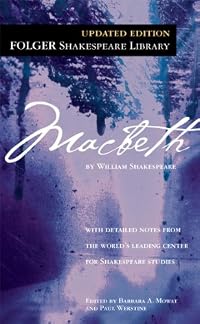
Macbeth
by William Shakespeare
On This Page
Description
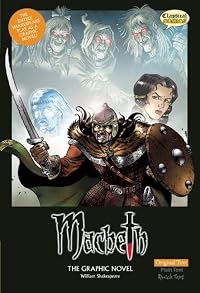
The classic story of all-consuming ambition, madness, and tyranny. When three witches share a prophecy with Macbeth that foretells he will sit on the throne of Scotland, he does not wait for destiny to run its course. Instead, he and his wife plot to kill the presiding king-an act that will lead them not to greatness but to ruin. This play, extraordinary in its intrigue and psychological insight, has cast a powerful spell on audiences and readers since the beginning of the seventeenth century.Tags
Recommendations





Member Recommendations
Pattty Si te gustó Hamlet seguro te gustará Macbeth, que es una historia buena y mucho más "macabra"
121
Tallulah_Rose "Wyrd Sisters" is a parody of "Macbeth", so everyone who enjoyed "Macbeth" might also like "Wyrd Sisters". On the other hand it's essential to have read "Macbeth" before reading "Wyrd Sisters".
72


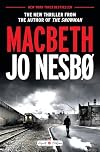
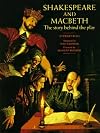
themulhern Shakespeare and Macbeth is a serious book for intelligent juvenile readers about the history, in both senses of the word, that inspired the play, and about the political circumstances that likely influenced Shakespeare's subject and his plot.
themulhern The crucial murder of one old person bring a sequence of additional murders in its stead.
Member Reviews
La tragedia de Macbeth, un violento y sanguinario mapa de la ambición humana, empieza en el preciso instante en que las hermanas fatídicas le revelan el esplendoroso futuro que le aguarda. Sus palabras parecen un canto de sirena surgido de las profundidades del infierno, una seducción que cualquier hombre sensato desoiría. Pero cuando se cumple la primera predicción y el rey Duncan le nombra barón de Cáudor para recompensar su inteligencia y destreza en el campo de batalla, las dudas, la codicia y la obsesión se apoderan de Macbeth y de su ávida esposa.
One of Shakespeare's darkest plays, the main draw of Macbeth is the atmosphere of gloom, darkness and evil which oozes out of every line. It is not for nothing that some actors remain superstitious of it, and famously refer to it only as 'the Scottish play'. Indeed, it is remarkable just how much Shakespeare managed to pack into this short play, and one can marvel at well-developed themes on good and evil, light and dark, ambition and guilt, nature and the unnatural, as well as admittedly rather dated tropes regarding superstition and religiosity. There are books of enormous length which have covered these themes with less power than Shakespeare's mere five-act play. The poetry of the play is often gorgeous - this is Shakespeare after show more all - and you've never heard murder plotted so eloquently.
It is always interesting (at least to me) to note the influences on Shakespeare's writing. The play was written for King James I and many aspects of it (the witches, the righteousness of Scottish rule, the divine right of kings, even the length of the play itself - apparently, King James preferred shorter plays) reflect this, as Cedric Watts notes in his illuminating introduction. Indeed, I would recommend the Wordsworth Classics edition as Watts' introduction is very interesting. He traces out enough of the major themes (good/evil, natural/unnatural, etc.) so you do not get lost, whilst still leaving you enough to discover for yourself when you read the actual play. As Watts notes, you can 'read against the grain': Shakespeare's plays can be interpreted in many ways (pg. 20). Yes, the nature of the play means that, in its own time, it unhelpfully reinforced the divine right of kings, celebrated superstition and aided intolerance in its portrayal of evil witches (pg. 14). But, for the modern reader, there is much to immerse yourself in, and I particularly enjoyed the gray morality of the play. As Watts notes, when Macduff carries Macbeth's severed head at the end, this "casts an ironic shadow on the claim that God and divine providence have prevailed." (pg. 20).
Shakespeare's characters are also commendably modern, as Macbeth the regicide retains some crumb of sympathy from the audience due to his doubt and his torturous guilt. Watts further notes the "general resonance" of the play to our daily lives; not in its tale of witches and the supernatural, of course, but in the feelings of "inner division, pangs of conscience, the pain of being ambushed by events, and desperate defiance" (pg. 9). It appeals to the emotions that we experience, usually in "times of bereavement, depression, weariness or tedium." (pg. 19). If Macbeth remains one of the most darkly seductive of Shakespeare's plays, it is because of this subtle resonance with our own darker thoughts and fears. show less
It is always interesting (at least to me) to note the influences on Shakespeare's writing. The play was written for King James I and many aspects of it (the witches, the righteousness of Scottish rule, the divine right of kings, even the length of the play itself - apparently, King James preferred shorter plays) reflect this, as Cedric Watts notes in his illuminating introduction. Indeed, I would recommend the Wordsworth Classics edition as Watts' introduction is very interesting. He traces out enough of the major themes (good/evil, natural/unnatural, etc.) so you do not get lost, whilst still leaving you enough to discover for yourself when you read the actual play. As Watts notes, you can 'read against the grain': Shakespeare's plays can be interpreted in many ways (pg. 20). Yes, the nature of the play means that, in its own time, it unhelpfully reinforced the divine right of kings, celebrated superstition and aided intolerance in its portrayal of evil witches (pg. 14). But, for the modern reader, there is much to immerse yourself in, and I particularly enjoyed the gray morality of the play. As Watts notes, when Macduff carries Macbeth's severed head at the end, this "casts an ironic shadow on the claim that God and divine providence have prevailed." (pg. 20).
Shakespeare's characters are also commendably modern, as Macbeth the regicide retains some crumb of sympathy from the audience due to his doubt and his torturous guilt. Watts further notes the "general resonance" of the play to our daily lives; not in its tale of witches and the supernatural, of course, but in the feelings of "inner division, pangs of conscience, the pain of being ambushed by events, and desperate defiance" (pg. 9). It appeals to the emotions that we experience, usually in "times of bereavement, depression, weariness or tedium." (pg. 19). If Macbeth remains one of the most darkly seductive of Shakespeare's plays, it is because of this subtle resonance with our own darker thoughts and fears. show less
Never in a million years did I think I'd ever get caught up in a Shakespeare play. Especially after my less-than-positive experiences of being required to read Shakespeare for school. At that point, I found them boring and difficult to understand, and I didn't touch Shakespeare for years afterwards. So...let me repeat that I got caught up in a Shakespeare play and didn't want to stop reading. The language made more sense and parts were even beautiful and there was a lot of action. And it made me think, and keep thinking.
And the famous phrases:
"By the pricking of my thumbs, something wicked this way comes" - Of course I've heard "something wicked this way comes" before, but I had no idea this came from Macbeth. And I had never heard of show more the thumb-pricking part before.
"Double, double, toil and trouble; fire burn, and cauldron bubble" - again, a famous phrase I didn't know appeared in this play.
And of course, "Out damn spot!" and references to Lady Macbeth that come up when handling laundry with particularly tough stains. Not to mention the scrubbing that results from dealing with large dead insects, overflowing toilets, or the use of permanent markers on whiteboards.
Among my few complaints:
1. Macbeth should have been killed by a woman.
2. The lack of Ents. THIS PLAY NEEDS ENTS.
In other words, a Shakespeare/Tolkien mashup done right would be absolutely awesome. These two need each other.
I also would have liked an explanation of how Banquo's descendants came to power. But really, that's about it.
Incidentally, I think my experience here is why "being forced to read books for school" shouldn't be a thing (or at least should be very rare). When I was in middle school, we were required to read "Romeo and Juliet," and I didn't like it. The language was difficult to follow, and it just didn't seem interesting at the time. When I was in high school, "Julius Caesar" was required reading, and the language was still difficult to follow, I still felt apathetic about it, and I hated the assignment to write our own iambic pentameter. So as soon as I wasn't required to read it, I didn't. For years. It wasn't until well over a decade later that I decided to read a Shakespeare play on my own, and then discover that at least one of Shakespeare's plays (a) is written in reasonably comprehensible English, (b) contains some beautifully written lines, and (c) is interesting and even exciting.
Now I am considering reading more of them. show less
And the famous phrases:
"By the pricking of my thumbs, something wicked this way comes" - Of course I've heard "something wicked this way comes" before, but I had no idea this came from Macbeth. And I had never heard of show more the thumb-pricking part before.
"Double, double, toil and trouble; fire burn, and cauldron bubble" - again, a famous phrase I didn't know appeared in this play.
And of course, "Out damn spot!" and references to Lady Macbeth that come up when handling laundry with particularly tough stains. Not to mention the scrubbing that results from dealing with large dead insects, overflowing toilets, or the use of permanent markers on whiteboards.
Among my few complaints:
1. Macbeth should have been killed by a woman.
2. The lack of Ents. THIS PLAY NEEDS ENTS.
In other words, a Shakespeare/Tolkien mashup done right would be absolutely awesome. These two need each other.
I also would have liked an explanation of how Banquo's descendants came to power. But really, that's about it.
Incidentally, I think my experience here is why "being forced to read books for school" shouldn't be a thing (or at least should be very rare). When I was in middle school, we were required to read "Romeo and Juliet," and I didn't like it. The language was difficult to follow, and it just didn't seem interesting at the time. When I was in high school, "Julius Caesar" was required reading, and the language was still difficult to follow, I still felt apathetic about it, and I hated the assignment to write our own iambic pentameter. So as soon as I wasn't required to read it, I didn't. For years. It wasn't until well over a decade later that I decided to read a Shakespeare play on my own, and then discover that at least one of Shakespeare's plays (a) is written in reasonably comprehensible English, (b) contains some beautifully written lines, and (c) is interesting and even exciting.
Now I am considering reading more of them. show less
What in the world can anyone say about one of Shakespeare's most famous tragedies? That it is a bloodbath. No poisonings. No smotherings or stranglings. No shootings. Every death brings the killer face to face with his victim. The killer must thrust the knife or swing the sword, feeling the flesh resist then tear, hearing viscera and fluids gush then drip, and heed the shrieks and groans of the injured, the rattle of death from the dying. Few are spared, not women and children, not the elderly. Inevitably, blood flows freely, staining murdered and murderer alike.
And why?
Macbeth, a warrior, is played like a fiddle by three creepy, scuzzy gorgons. First, they tell him of an honor he knows he bears. Then they tell him of an honor he'll show more soon learn has been settled on him. And finally, they hook him with the notion that he could be king. Here is a warrior, by profession a killer. He can apply his job skills, make the king dead, and assume a new role. Except the King has two healthy sons (also warriors), one of whom could reasonably expect to succeed Dad in the family business. Then too, there are Macbeth's brethren in the warrior fraternity who would rightfully desire to avenge the murder of their king.
In the final scene of Act I, Macbeth has it out with himself, concluding "I have no spur/To prick the sides of my intent, but only/Vaulting ambition, which o'erleaps itself/And falls on the other." In plainer terms, the only motivation for this murder is ambition. To him, it's not enough. "We will proceed no further in this business…" he tells his wife. But she plays that fiddle too, questioning his manhood, accusing him of cowardice. "I have given suck," she says, "and know/How tender 'tis to love the babe that milks me:/I would, while it was smiling in my face,/Have pluck'd my nipple from his boneless gums,/And dash'd the brains out, had I so sworn as you/Have done to this."
Yow! His goose is cooked.
[Macbeth] is one of Shakespeare's last works. First performed four hundred years ago, in 1606, it has been performed regularly every year since (probably). Here are some famous lines:
You ought to read it, methinks. I dodged it for more than a half-century, but now I'm content. I'd suggest reading an edition that pairs Shakespeare's text with a contemporary "translation". The Spark Notes version I read has the original text on the left, a modern text on the facing page. Worked for me. show less
And why?
Macbeth, a warrior, is played like a fiddle by three creepy, scuzzy gorgons. First, they tell him of an honor he knows he bears. Then they tell him of an honor he'll show more soon learn has been settled on him. And finally, they hook him with the notion that he could be king. Here is a warrior, by profession a killer. He can apply his job skills, make the king dead, and assume a new role. Except the King has two healthy sons (also warriors), one of whom could reasonably expect to succeed Dad in the family business. Then too, there are Macbeth's brethren in the warrior fraternity who would rightfully desire to avenge the murder of their king.
In the final scene of Act I, Macbeth has it out with himself, concluding "I have no spur/To prick the sides of my intent, but only/Vaulting ambition, which o'erleaps itself/And falls on the other." In plainer terms, the only motivation for this murder is ambition. To him, it's not enough. "We will proceed no further in this business…" he tells his wife. But she plays that fiddle too, questioning his manhood, accusing him of cowardice. "I have given suck," she says, "and know/How tender 'tis to love the babe that milks me:/I would, while it was smiling in my face,/Have pluck'd my nipple from his boneless gums,/And dash'd the brains out, had I so sworn as you/Have done to this."
Yow! His goose is cooked.
[Macbeth] is one of Shakespeare's last works. First performed four hundred years ago, in 1606, it has been performed regularly every year since (probably). Here are some famous lines:
WITCHES: Fair is foul, and foul is fair.
(Act 1 Scene 1)
MACBETH: Is this a dagger which I see before me,
The handle toward my hand? Come, let me clutch thee:
I have thee not, and yet I see thee still.
(Act 2 Scene 1)
MACBETH: Methought I heard a voice cry, "Sleep no more!
Macbeth does murder sleep: the innocent sleep,
Sleep that knits up the ravelled sleeve of care,
The death of each day’s life, sore labor’s bath,
Balm of hurt minds, great nature’s second course,
Chief nourisher in life’s feast.”
(Act 2 Scene 2)
WITCHES: Double, double toil and trouble:
Fire burn, and cauldron bubble.
(Act 4 Scene 1)
SECOND WITCH: By the pricking of my thumbs,
Something wicked this way comes.
(Act 4 Scene 1)
LADY MACBETH: Out! damned spot! One, two, — why, then ‘tis time to do’t. Hell is murky. Fie, my lord, fie, a soldier and afeard? What need we fear who knows it, when none can call our power to account? – Yet who would have thought the old man to have had so much blood in him.
(Act 5, Scene 1)
LADY MACBETH: All the perfumes of Arabia will not sweeten this little hand.
(Act 5, Scene 1)
LADY MACBETH: What’s done cannot be undone.
(Act 5, Scene 1)
MACBETH: To-morrow, and to-morrow, and to-morrow,
Creeps in this petty pace from day to day
To the last syllable of recorded time,
And all our yesterdays have lighted fools
The way to dusty death. Out, out, brief candle!
Life’s but a walking shadow, a poor player
That struts and frets his hour upon the stage
And then is heard no more: it is a tale
Told by an idiot, full of sound and fury,
Signifying nothing.
(Act 5 Scene 5)
You ought to read it, methinks. I dodged it for more than a half-century, but now I'm content. I'd suggest reading an edition that pairs Shakespeare's text with a contemporary "translation". The Spark Notes version I read has the original text on the left, a modern text on the facing page. Worked for me. show less
‘’There’s husbandry in heaven; Their candles are all out.’’
This is a text that has been brewing inside my mind for quite some times. I started reading Jo Nesbø’s retelling of Macbeth two days ago (quite interesting so far, by the way…) and it gave me the chance to reflect on a masterpiece that isn’t just a play but a psychological study of power, ambition and the darkest recesses of the human soul. I don’t presume I am able to write a ‘’review’’ on Shakespeare’s works. Goodness, no! This is just my take on the reasons why Macbeth shaped Literature’s dark themes and imagery, having a plethora of the Bard’s most beautiful and darkest quotes, being the most realistic depiction of the human tendency to show more destroy and violate all that is sacred and honest.
‘’Can the devil speak true?’’
Macbeth -more than any other play, in my opinion- has the power to form images of distinct horror and brutality in our minds. Let us not forget that it is loaded with superstitions and weird phenomena have been recorded during theatre runs throughout centuries of performances. I would take it one step further and say that Macbeth initiated the Gothic elements in Literature, although they wouldn’t have been named thus at the time. This is obvious in the presence of the Three Witches, the characters I’ve always been most fascinated with than any other in the play. Imagine the audience during the reign of James I, the first Stuart king, watching spells and curses unfolding on stage, right before their eyes? How did they perceive their presence in the play? How do we perceive it? Are they merely the harbingers of things to come or do they have an influential role in the fate of Macbeth and the characters? In every production of Macbeth I’ve watched, the Three Witches can make or break the whole performance for me. One of the reasons I adore Polanski’s vision of the play is his choice to end his outstanding 1971 film version with Donalbain coming across the Witches’ lair, bitten by the harsh Scottish rain, as the vicious circle goes on and on…
‘’Now o’er the one half of the world nature seems dead, and wicked dreams abuse the curtained sleep; witchcraft celebrates pale Hecate’s offerings; and withered Murder, alarmed by his sentinel, the wolf, whose howl’s his watch…’’
Darkness is everywhere. This is a country that is slowly finding herself in a deep sleep of deceit and death. Ravens croak, owls shriek, bats signify the end and Hecate walks the Earth with her ominous escort. Rain is the introductory dark omen of what is to come and the wind is filled with lamentations. The strange screams of death and the knockings out of nowhere are signs of the utter violation between two human beings, between kinsmen and friends.
‘’...and nothing is but what is not.’’
Macbeth and his wife put on their most sincere smiles and act like the perfect hosts. He calls Banquo his dearest friend, invites him to his royal feast. Macbeth is brave, unyielding even when his world crumbles, firmly determined until the very end. And yet, his soul hides extreme antitheses. Throughout the action, he knows that his deeds will lead to nowhere. ‘’Blood will have blood’’, he says in sadness. And he is right. What he succeeds in is the murder of trust and every sacred value our world holds dear. The endless course of murder that desires more and more...Regicide, the killing of relatives, dear friends and compatriots and comrades. The slaughter of women, children and servants. He knows that once he starts, he cannot stop.
‘’I have supped full with horrors.’’
Each and every time Macbeth decides to pluck away one more thorn of threat to his reign, he tries to find the arguments for and against the coming deed. The sense of duty doesn’t seem to abandon him altogether but is always in a brutal fight with his burning ambition. Guilt plagues him even before he starts the bloody chain of events, he ‘’murders sleep’’ and, in my opinion, the moment he raises his hand to slaughter Duncan, he first murders himself and his principles. Do I see his wife as the utter solicitor to his bloody future? Definitely yes. Lady Macbeth is by far my favourite Shakespearean heroine but as hard as I try, I cannot find any redeeming qualities in her character. Her remorse is madness, and is it even remorse or the unbearable burden of guilt? These two aren’t one and the same. While Macbeth’s end is as brave as it can be, her end is lonely, honoured only by Macbeth’s quiet sorrow expressed in an achingly beautiful soliloquy. Macbeth isn’t Iago. He’s not a lunatic villain who kills just because. I’ve always considered him an anti-hero. A man who can't survive the fight between his weak will to do what is right and the darkness of his desires.
In Macbeth, Shakespeare created one of the most controversial characters in Literature. While the historical Macbeth was the exact opposite of his theatrical counterpart, the Scottish play became one of the most recognizable works of Art, even to the few uninitiated to the greatness that is the Bard. It became a synonym for conspiracy, treason, murder echoing, among other themes, the Gunpowder Plot that threatened the very essence of the British reign at the time. It became a metaphor of the limits a human can bend in order to achieve the absolute control. A token of lacking faith in everyone and everything. When a man who was considered valiant and loyal becomes devoid of any humanity, what kind of good can be sustained in a world governed by petty leaders and corrupted sovereigns? Do not tell me this doesn’t apply to our current times. I will not try to convince anyone to love this play. Its strength in overcoming prejudices and the fact that it remains one of the most beloved and performed works of Shakespeare speaks for itself. For me, this work of dark beauty and nightmarish brilliance is the best example of how Shakespeare managed to know the human nature more than any other writer...
I leave you with what I consider to be the finest lines about the futility of chasing unattainable ambitions and the most beautiful soliloquy ever written…
‘’Tomorrow and tomorrow and tomorrow,
Creeps in this petty pace from day to day,
To the last syllable of recorded time;
And all our yesterdays have lighted fools
The way to dusty death. Out, out, brief candle!
Life’s but a walking shadow, a poor player
That struts and frets his way upon the stage
And then is heard no more. It is a tale
Told by an idiot, full of sound and fury,
Signifying nothing.’’
My reviews can also be found on https://theopinionatedreaderblog.wordpress.com show less
This is a text that has been brewing inside my mind for quite some times. I started reading Jo Nesbø’s retelling of Macbeth two days ago (quite interesting so far, by the way…) and it gave me the chance to reflect on a masterpiece that isn’t just a play but a psychological study of power, ambition and the darkest recesses of the human soul. I don’t presume I am able to write a ‘’review’’ on Shakespeare’s works. Goodness, no! This is just my take on the reasons why Macbeth shaped Literature’s dark themes and imagery, having a plethora of the Bard’s most beautiful and darkest quotes, being the most realistic depiction of the human tendency to show more destroy and violate all that is sacred and honest.
‘’Can the devil speak true?’’
Macbeth -more than any other play, in my opinion- has the power to form images of distinct horror and brutality in our minds. Let us not forget that it is loaded with superstitions and weird phenomena have been recorded during theatre runs throughout centuries of performances. I would take it one step further and say that Macbeth initiated the Gothic elements in Literature, although they wouldn’t have been named thus at the time. This is obvious in the presence of the Three Witches, the characters I’ve always been most fascinated with than any other in the play. Imagine the audience during the reign of James I, the first Stuart king, watching spells and curses unfolding on stage, right before their eyes? How did they perceive their presence in the play? How do we perceive it? Are they merely the harbingers of things to come or do they have an influential role in the fate of Macbeth and the characters? In every production of Macbeth I’ve watched, the Three Witches can make or break the whole performance for me. One of the reasons I adore Polanski’s vision of the play is his choice to end his outstanding 1971 film version with Donalbain coming across the Witches’ lair, bitten by the harsh Scottish rain, as the vicious circle goes on and on…
‘’Now o’er the one half of the world nature seems dead, and wicked dreams abuse the curtained sleep; witchcraft celebrates pale Hecate’s offerings; and withered Murder, alarmed by his sentinel, the wolf, whose howl’s his watch…’’
Darkness is everywhere. This is a country that is slowly finding herself in a deep sleep of deceit and death. Ravens croak, owls shriek, bats signify the end and Hecate walks the Earth with her ominous escort. Rain is the introductory dark omen of what is to come and the wind is filled with lamentations. The strange screams of death and the knockings out of nowhere are signs of the utter violation between two human beings, between kinsmen and friends.
‘’...and nothing is but what is not.’’
Macbeth and his wife put on their most sincere smiles and act like the perfect hosts. He calls Banquo his dearest friend, invites him to his royal feast. Macbeth is brave, unyielding even when his world crumbles, firmly determined until the very end. And yet, his soul hides extreme antitheses. Throughout the action, he knows that his deeds will lead to nowhere. ‘’Blood will have blood’’, he says in sadness. And he is right. What he succeeds in is the murder of trust and every sacred value our world holds dear. The endless course of murder that desires more and more...Regicide, the killing of relatives, dear friends and compatriots and comrades. The slaughter of women, children and servants. He knows that once he starts, he cannot stop.
‘’I have supped full with horrors.’’
Each and every time Macbeth decides to pluck away one more thorn of threat to his reign, he tries to find the arguments for and against the coming deed. The sense of duty doesn’t seem to abandon him altogether but is always in a brutal fight with his burning ambition. Guilt plagues him even before he starts the bloody chain of events, he ‘’murders sleep’’ and, in my opinion, the moment he raises his hand to slaughter Duncan, he first murders himself and his principles. Do I see his wife as the utter solicitor to his bloody future? Definitely yes. Lady Macbeth is by far my favourite Shakespearean heroine but as hard as I try, I cannot find any redeeming qualities in her character. Her remorse is madness, and is it even remorse or the unbearable burden of guilt? These two aren’t one and the same. While Macbeth’s end is as brave as it can be, her end is lonely, honoured only by Macbeth’s quiet sorrow expressed in an achingly beautiful soliloquy. Macbeth isn’t Iago. He’s not a lunatic villain who kills just because. I’ve always considered him an anti-hero. A man who can't survive the fight between his weak will to do what is right and the darkness of his desires.
In Macbeth, Shakespeare created one of the most controversial characters in Literature. While the historical Macbeth was the exact opposite of his theatrical counterpart, the Scottish play became one of the most recognizable works of Art, even to the few uninitiated to the greatness that is the Bard. It became a synonym for conspiracy, treason, murder echoing, among other themes, the Gunpowder Plot that threatened the very essence of the British reign at the time. It became a metaphor of the limits a human can bend in order to achieve the absolute control. A token of lacking faith in everyone and everything. When a man who was considered valiant and loyal becomes devoid of any humanity, what kind of good can be sustained in a world governed by petty leaders and corrupted sovereigns? Do not tell me this doesn’t apply to our current times. I will not try to convince anyone to love this play. Its strength in overcoming prejudices and the fact that it remains one of the most beloved and performed works of Shakespeare speaks for itself. For me, this work of dark beauty and nightmarish brilliance is the best example of how Shakespeare managed to know the human nature more than any other writer...
I leave you with what I consider to be the finest lines about the futility of chasing unattainable ambitions and the most beautiful soliloquy ever written…
‘’Tomorrow and tomorrow and tomorrow,
Creeps in this petty pace from day to day,
To the last syllable of recorded time;
And all our yesterdays have lighted fools
The way to dusty death. Out, out, brief candle!
Life’s but a walking shadow, a poor player
That struts and frets his way upon the stage
And then is heard no more. It is a tale
Told by an idiot, full of sound and fury,
Signifying nothing.’’
My reviews can also be found on https://theopinionatedreaderblog.wordpress.com show less
It wasn't in my reading plans, but today when I came across "the Scottish play" I couldn't resist. What can I say that hasn't already been said? It is astonishing just how far ambition can push a person, and how difficult it is to live with the results. This is one of my favourites from Shakespeare. It never fails to entertain whether on the stage or on paper.
http://nwhyte.livejournal.com/1188199. html
Macbeth is the last of the Shakespeare plays that I know well. It really is a good one: actually rather tightly plotted, with both lead roles undergoing transitions of character, in Macbeth's case egged on by the witches (who are memorable but a bit superfluous). The pivotal moments are in Act 3, where Macbeth thinks he is securng his rule by Banquo's murder but in fact finds his ability to operate as a king destroyed by Banquo's ghost. It's as if Shakespeare is returning to the themes of the first quadrilogy, but fictionally this time, and perhaps with a perspective of the reign of King James rather than Queen Elizabeth.
Lots of good lines - the reason they stick in the mind is that they are show more actually memorable images or juxtapositions of words, like the seeds of time, the milk of human kindness, screwing one's courage to the sticking-place, Out, Damned Spot! and Lay On, Macduff!
Arkangel have done very well here, by taking the rare but very obvious course of setting the play in, er, Scotland, with appropriate accents and skirling of bagpipes; this gives the whole play an extra edge that I had never really considered properly before. Hugh Ross is OK in the title role, but Harriet Walter is absolutely superb as Lady Macbeth and really carries the rest; I was not surprised to discover that she had played the part memorably for the RSC a few years before.. (David Tennant looks in as the Porter.) It's not quite as stellar as some of the best Arkangel productions, but it's certainly good enough for me. show less
Macbeth is the last of the Shakespeare plays that I know well. It really is a good one: actually rather tightly plotted, with both lead roles undergoing transitions of character, in Macbeth's case egged on by the witches (who are memorable but a bit superfluous). The pivotal moments are in Act 3, where Macbeth thinks he is securng his rule by Banquo's murder but in fact finds his ability to operate as a king destroyed by Banquo's ghost. It's as if Shakespeare is returning to the themes of the first quadrilogy, but fictionally this time, and perhaps with a perspective of the reign of King James rather than Queen Elizabeth.
Lots of good lines - the reason they stick in the mind is that they are show more actually memorable images or juxtapositions of words, like the seeds of time, the milk of human kindness, screwing one's courage to the sticking-place, Out, Damned Spot! and Lay On, Macduff!
Arkangel have done very well here, by taking the rare but very obvious course of setting the play in, er, Scotland, with appropriate accents and skirling of bagpipes; this gives the whole play an extra edge that I had never really considered properly before. Hugh Ross is OK in the title role, but Harriet Walter is absolutely superb as Lady Macbeth and really carries the rest; I was not surprised to discover that she had played the part memorably for the RSC a few years before.. (David Tennant looks in as the Porter.) It's not quite as stellar as some of the best Arkangel productions, but it's certainly good enough for me. show less
Members
- Recently Added By
Lists

Favorite Shakespeare plays?
37 works; 45 members

Books Mentioned in The Wedding Planner's Daughter series
107 works; 2 members

Greatest Books, allegedly
484 works; 9 members

College Reads (Lit Edition)
75 works; 5 members

1:28 p.m.'s 350 Stage Plays Challenge
94 works; 3 members

Fake Top 100 Fiction
81 works; 4 members

My 100 Favorite Books of All Time
57 works; 2 members

Rory Gilmore Book Club
193 works; 5 members

Literary Works Read in College
316 works; 15 members

Books Read in 2021
5,361 works; 114 members

Books Read in 2004
196 works; 7 members

AP Lit
363 works; 6 members
r/acting on Reddit - Essential Plays
44 works; 2 members
Stage Plays/Screenplays/Dialogues/Anything Dialogue-Storytelling Related
81 works; 2 members

Best Horror Mega-List
342 works; 6 members

Uni
9 works; 1 member

Books I read in high school
52 works; 1 member

1964 College Preparatory Reading List
202 works; 8 members

Shelf 101
60 works; 1 member
The Great Courses: Shakespeare's Tragedies
35 works; 1 member

Books available on Open Library
171 works; 4 members

Book Titles Mentioned In Newberry Medal And Honor Books
884 works; 3 members
Mustich's 1000 Books to Read Before You Die: A Life Changing List
1,001 works; 18 members

Books About Murder
313 works; 7 members

The 150 Greatest Novels of All Time
150 works; 6 members
.
396 works; 1 member
School Made Us Read It
380 works; 196 members
Vlogbrothers Book Recommendations
307 works; 4 members

.
194 works; 2 members

The Complete Rory Gilmore Reading List
506 works; 5 members
My Favorite Plays
25 works; 1 member
My Play Collection
769 works; 3 members
Books in Riverdale
123 works; 3 members

Javier Marías: 10 libros que me han cambiado la vida
12 works; 1 member

Recommended Reading : 600 Classics Reviewed, Editors of Salem Press, 2015
634 works; 6 members
Essential/Recognized Stage Plays
115 works; 4 members
'Books You Can't Live Without: The Top 100', The Guardian, 2007
156 works; 7 members

Top Five Books of 2022
736 works; 272 members

1970s
657 works; 23 members

Books You Read For University
184 works; 3 members

Western Canon
24 works; 1 member

Witchy Fiction
253 works; 126 members
Daria
8 works; 1 member
Classical Conversations Challenge III Exposition
8 works; 1 member

Books Read in 2023
5,547 works; 145 members

Books Featured on Gilmore Girls
307 works; 21 members

Best of World Literature
431 works; 51 members

Unread books
1,063 works; 86 members

Edward Gorey Covers
150 works; 8 members

Ambleside Books
459 works; 18 members
Anti-heroines in fiction
59 works; 9 members
Top-Rated Books on LibraryThing
272 works; 116 members
Great Books Favorites
71 works; 6 members
The Top Ten: Writers Pick Their Favorite Books
240 works; 31 members
Literature About Social Class
134 works; 19 members

Lovecraft's 'Supernatural Horror in Literature' Reading List
216 works; 8 members
Books tagged favorites
390 works; 30 members

Merrill's English Texts
59 works; 3 members

Classics you know you should have read but probably haven't
421 works; 407 members
Folio Society
831 works; 50 members

Read the book and saw the movie
1,170 works; 193 members

Books You Read During High School (For School)
301 works; 53 members

17th Century
14 works; 6 members
Favourite Books
1,817 works; 308 members

One Book, Many Authors
441 works; 40 members

Best Horror Books
281 works; 85 members
Best of British Literature
226 works; 41 members
Plays I Like
230 works; 31 members

100 Books to Read in a Lifetime (That Are Older Than 200 Years)
415 works; 175 members
Books I've Read More Than Once
602 works; 48 members

Daria Morgendorffer's Bookshelf
70 works; 5 members

Books I've read
87 works; 2 members

United Kingdom
82 works; 5 members

Books Set in Scotland
19 works; 5 members

mediocre books by authors i otherwise adore
10 works; 1 member
Jones and Newman's Horror: The 100 Best Books
100 works; 4 members
LibraryThingers' 1001 Books You Must Read Before You Die
442 works; 29 members
The College Board: 101 Great Books Recommended for College-Bound Readers
111 works; 7 members

75 Books Challenge Halloween Read "Official" Selections
71 works; 7 members

Western World's Greatest Books - Project Gutenberg
295 works; 15 members
Dark Books for Winter Reading
71 works; 11 members
Early Modern (Shakesperean)
64 works; 2 members
1001 Books You Must Read Before You Die
1,448 works; 1,132 members
Ghosts
278 works; 16 members
Blue Pyramid 1,276 Best Books of All Time
1,248 works; 32 members
Five star books
1,755 works; 107 members

Read
293 works; 4 members
100 World Classics
99 works; 15 members
Most Popular Books Tagged Scotland
35 works; 2 members
BingoDOG - Prophecy, Signs, or Portents are part of the plot
18 works; 9 members

CCE 1000 Good Books List
1,033 works; 12 members

University literature
145 works; 5 members
In Our Time books
4,934 works; 2 members
Talk Discussions
Past Discussions
Macbeth by William Shakespeare – LIMITED EDITIONS CLUB 1939 in George Macy devotees (October 2023)
Author Information

5,940+ Works 439,789 Members
William Shakespeare, 1564 - 1616 Although there are many myths and mysteries surrounding William Shakespeare, a great deal is actually known about his life. He was born in Stratford-Upon-Avon, son of John Shakespeare, a prosperous merchant and local politician and Mary Arden, who had the wealth to send their oldest son to Stratford Grammar School. show more At 18, Shakespeare married Anne Hathaway, the 27-year-old daughter of a local farmer, and they had their first daughter six months later. He probably developed an interest in theatre by watching plays performed by traveling players in Stratford while still in his youth. Some time before 1592, he left his family to take up residence in London, where he began acting and writing plays and poetry. By 1594 Shakespeare had become a member and part owner of an acting company called The Lord Chamberlain's Men, where he soon became the company's principal playwright. His plays enjoyed great popularity and high critical acclaim in the newly built Globe Theatre. It was through his popularity that the troupe gained the attention of the new king, James I, who appointed them the King's Players in 1603. Before retiring to Stratford in 1613, after the Globe burned down, he wrote more than three dozen plays (that we are sure of) and more than 150 sonnets. He was celebrated by Ben Jonson, one of the leading playwrights of the day, as a writer who would be "not for an age, but for all time," a prediction that has proved to be true. Today, Shakespeare towers over all other English writers and has few rivals in any language. His genius and creativity continue to astound scholars, and his plays continue to delight audiences. Many have served as the basis for operas, ballets, musical compositions, and films. While Jonson and other writers labored over their plays, Shakespeare seems to have had the ability to turn out work of exceptionally high caliber at an amazing speed. At the height of his career, he wrote an average of two plays a year as well as dozens of poems, songs, and possibly even verses for tombstones and heraldic shields, all while he continued to act in the plays performed by the Lord Chamberlain's Men. This staggering output is even more impressive when one considers its variety. Except for the English history plays, he never wrote the same kind of play twice. He seems to have had a good deal of fun in trying his hand at every kind of play. Shakespeare wrote 154 sonnets, all published on 1609, most of which were dedicated to his patron Henry Wriothsley, The Earl of Southhampton. He also wrote 13 comedies, 13 histories, 6 tragedies, and 4 tragecomedies. He died at Stratford-upon-Avon April 23, 1616, and was buried two days later on the grounds of Holy Trinity Church in Stratford. His cause of death was unknown, but it is surmised that he knew he was dying. (Bowker Author Biography) show less
Some Editions
Awards and Honors
Notable Lists
Series
Belongs to Publisher Series
Clarendon Press series Shakespeare (Select plays)
New Penguin Shakespeare (NS5)
RSC scripts (Shakespeare)
Signet Classic Shakespeare (CD161)
Reclam Fremdsprachentexte (9220)
Penguin Shakespeare (B12)
William Shakespeare, Theatralische Werke in 21 Einzelbänden, übersetzt von Christoph Martin Wieland (15)
The Yale Shakespeare (31)
L&PM Pocket (203)
Reader's Enrichment Series (RE 322)
GF Flammarion (1295)
The Pocket Library (PL-70)
Little Blue Books (247)
Centopaginemillelire (200)
Work Relationships
Is contained in
The complete works of William Shakespeare : reprinted from the First Folio (volume 11 of 13) by William Shakespeare
The Annotated Shakespeare: The Comedies, Histories, Sonnets and Other Poems, Tragedies and Romances Complete by William Shakespeare (indirect)
A Clockwork Orange / Glengarry Glen Ross / Massage / Kvetch / Macbeth / The Maids / Disco Pigs by Marcel Otten
90 Masterpieces You Must Read (Vol.1): Novels, Poetry, Plays, Short Stories, Essays, Psychology & Philosophy by Various
Schillers Werke Vierter Band (Wilhelm Tell / Die Huldigung der Künste / Iphigenie in Aulis / Scenen aus den Phönicierinnen des Euripides / Macbeth / Turandot / Der Neffe als Onkel / Phädra) - Illustrierte Ausgabe by Friedrich Schiller
Is retold in
Has the adaptation
Is abridged in
Is parodied in
Was inspired by
Inspired
Shakespeare Overtures: The Tempest - Othello - Macbeth - Romeo and Juliet / Elegie for Orchestra, WoO 48 / Fest-Ouvertüre, Op. 117 [sound recording] by Joseph Joachim Raff
Has as a reference guide/companion
Has as a study
Has as a supplement
Has as a commentary on the text
Has as a student's study guide
Has as a teacher's guide
Common Knowledge
- Canonical title
- Macbeth
- Original title
- The Tragedy of Macbeth
- Alternate titles*
- Die Tragödie des Macbeth
- Original publication date
- 1606
- People/Characters
- Macbeth; Lady Macbeth; Duncan, King of Scots; Macduff, Thane of Fife; Banquo; Malcolm (show all 19); Donalbain; The Three Witches (Weird Sisters); Thane of Ross; Thane of Lennox; Thane of Angus; Fleance; Siward, Earl of Northumberland; Young Siward; Thane of Caithness; Thane of Menteith; Seyton; Lady Macduff; Hecate
- Important places
- Iverness Castle, Iverness, Highland, Scotland, UK; Iverness, Highland, Scotland, UK; Highland, Scotland, UK; Dunsinane Hill, Perth and Kinross, Scotland, UK; Birnam Wood, Perth and Kinross, Scotland, UK; Perth and Kinross, Scotland, UK (show all 8); Scotland, UK; Albion
- Important events
- 11th century; Middle Ages
- Related movies
- Macbeth (1948 | IMDb); Hallmark Hall of Fame: Macbeth (1954 | IMDb); Throne of Blood (1957 | IMDb); Hallmark Hall of Fame: Macbeth (1960 | IMDb); The Tragedy of Macbeth (1971 | IMDb); A Performance of Macbeth (1979 | IMDb) (show all 12); Macbeth (1981 | IMDb); Scotland, Pa. (2001 | IMDb); Maqbool (2003 | IMDb); Macbeth (2006 | IMDb); Great Performances: Macbeth (2010 | IMDb); Macbeth (2015 | IMDb)
- First words
- When shall we three meet again
In thunder, lightning, or in rain? - Quotations
- Double, double toil and trouble;
Fire burn and cauldron bubble.
By the pricking of my thumbs,
Something wicked this way comes.
Out, damned spot! out, I say!
Yet do I fear thy nature;
It is too full o' the milk of human kindness.
The attempt and not the deed
Confounds us.
Lay on, Macduff,
And damn'd be him that first cries, "Hold, enough!" - Last words
- (Click to show. Warning: May contain spoilers.)What's more to do
Which would be planted newly with the time,
As calling home our exiled friends abroad
That fled the snares of watchful tyranny,
Producing forth the cruel ministers
Of this dead butcher and his fiend-like queen,
Who, as 'tis thought, by self and violent hands
Took off her life; this, and what needful else
That calls upon us, by the grace of Grace
We will perform in measure, time and place.
So, thanks to all at once and to each one,
Whom we invite to see us crown'd at Scone. - Publisher's editor
- Barnet, Sylvan; Spencer, T. J. B.; Wells, Stanley; Edmondson, Paul; Muir, Kenneth; Hunter, G. K. (show all 7); Durband, Alan
- Original language
- English
- Disambiguation notice
- Please distinguish between this work, which is Shakespeare's original play, from any of its many adaptations (audio, video, reworking, etc.).
3458331409 1992 softcover German insel taschenbuch 1440
*Some information comes from Common Knowledge in other languages. Click "Edit" for more information.
Classifications
Statistics
- Members
- 30,116
- Popularity
- 116
- Reviews
- 264
- Rating
- (4.00)
- Languages
- 38 — Arabic, Bosnian, Catalan, Chinese, Czech, Danish, Dutch, English, Esperanto, Finnish, French, German, Irish, Greek, Hebrew, Hindi, Hungarian, Icelandic, Italian, Japanese, Malayalam, Malay, Niger-Kordofanian (Other), Norwegian (Nynorsk), Norwegian (Bokmål), Norwegian, Panjabi, Farsi/Persian, Polish, Romanian, Russian, Scots, Spanish, Swedish, Tamil, Turkish, Welsh, Portuguese (Portugal)
- Media
- Paper, Audiobook, Ebook
- ISBNs
- 1,105
- UPCs
- 19
- ASINs
- 414