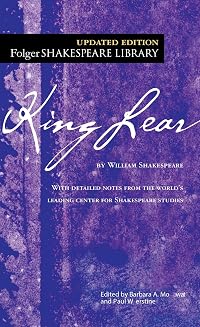
King Lear
by William Shakespeare, Bristol Walker, F. H. Pritchard, William James Rolfe (Editor)
The Hollow Crown {BBC television series} (1)
On This Page
Description
King Lear is considered one of Shakespeare's greatest plays. King Lear decides to step down and divide his kingdom between his three daughters. When his youngest and favorite daughter refuses to compete and perform her love for him, he is enraged and disowns her. She remains loyal to him, however, though he slides into madness and his other children betray him..
Tags
Recommendations
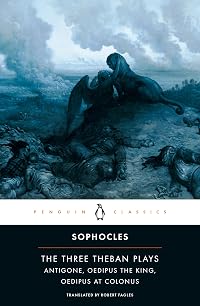
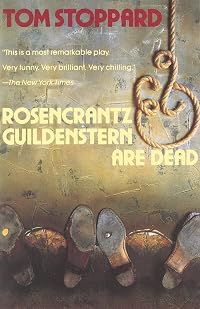
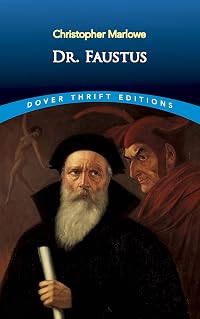

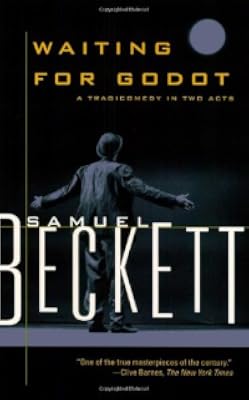







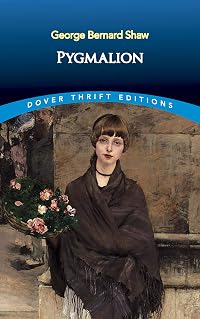
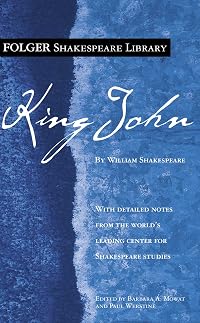

Member Recommendations


Member Reviews
King Lear decides to divide his kingdom between his three daughters based on how clearly they express their love for him with words and flattery. Cordelia, who loves him best, refuses to participate in the charade, because her actions over the years should be testament enough. Because of this Lear gives his other two selfish daughters his entire kingdom. They quickly strip him of power and he realizes his mistake, but it's too late to avoid the horrible consequences.
This is a tragedy in every possibly way. The characters make horrible decisions, which lead to their inevitable downfall. The thing I found fascinating about this play is the family dynamics. Relationships between a father and his daughters, sisters, brothers, a father and show more his sons; these are the real heartbeat of the story. More than Hamlet, Romeo & Juliet or Othello, King Lear dives deep into families and wonders why we do these things to the people we're suppose to love. show less
This is a tragedy in every possibly way. The characters make horrible decisions, which lead to their inevitable downfall. The thing I found fascinating about this play is the family dynamics. Relationships between a father and his daughters, sisters, brothers, a father and show more his sons; these are the real heartbeat of the story. More than Hamlet, Romeo & Juliet or Othello, King Lear dives deep into families and wonders why we do these things to the people we're suppose to love. show less
Edition: Arkangel Shakespeare
King Lear had been one of my favorite Shakespeare dramas ever since I read it for the first time in my early teens in Bulgarian (I read it a few years later in English as well) Back then I never realized that there is a problem with its texts - for all intents and purposes, there are two separate King Lear plays - while most of the plays suffer from this, Kind Lear has the largest differences (or one of the largest) between its Quatro1 and Folio texts (in addition to the inevitable changes and rewrites the Q has 285 lines that the F does not have and F has 115 completely new lines). And they are not just fillers - there are crucial differences between the two - including the end (oh, Lear dies - that does show more not change but what he believes when he dies is a different story). Each editor picks up their own way through the two texts although a conflated text had become the norm -- but that conflation can be very different between editions.
But let's talk about the play itself: Shakespeare takes a existing story from various sources (including Holinshed's Chronicles) and gives it a new life - and a new ending.
The king of Britain is getting old and has no sons so he decides to split the kingdom between his three daughters: Goneril, Regan and Cordelia - nothing unusual in this and for anyone in 1606 that would have sounded absolutely correct - primogeniture had been the law of the land and when there is no son, the daughters are equal heiresses under the law. Except that Lear decides to test his daughters and asks them how much they love him - and as his youngest, Cordelia, refuses to pay lip service to him, she is disinherited and leaves with her new husband for France. Except that as usual, lip service and real attachment are different things and as soon as they get the power, the two older daughters try to take away everything else from Lear - who is not very happy about that and flees.
But the play is not just the story of one family - it is the story of two of them - Gloucester and his sons (the legitimate Edgar and the illegitimate Edmund) and the dynamic between them is parallel to the dissolving of Lear's family. The two sons of Gloucester and the 3 daughters of Lear exist in parallel but scarily similar lines. Evil and choices become important for the downfalls of both men - the betrayals always having their own blood. But so do the redeemers.
And that's where the story of the two men diverge - Gloucester gets his son back early on (even if he does not know it), Lear needs to wait a lot longer. Both learn about their mistakes before they die and both try to make up for them but at the end just one of the children will be still standing.
I used to think of King Lear as the play where everyone dies. Not that this does not happen in other Shakespeare dramas but here the number of the survivors at the end is extremely low, even for Shakespeare and a lot lower than it is in the sources of this play.
The double end I was talking about earlier comes almost at the end - when Lear dies. In one version he is the cause for Cordelia's death, he knows and he knows that he had not managed to save her; in the other he dies before the final confirmation that she is dead, just when he thinks he sees her moving. One of the ends hints at redemption (Lear is the one who saves her even if he is also the reason for her being killed to start it), the other one is eternal damnation. While this may mean like not much of a difference now, the 17th century drama goer would have considered that a huge difference. The rest of the differences between the versions of the play are less impactful (even though some well known scenes such as the fake trial of the daughters is nowhere to be seen in the later versions). And then there is of course the Victorian version of the play that decided that the play is too dark so gave it a happy end...
The two older sisters and Edmund are evil personified - and in the case of the sisters, it has no explanation. The sources do - so one wonders if Shakespeare had relied on people knowing the story so decided not to add the scenes needed to explain it. And at the same time some of the positive characters (Kent, Edgar and even the Fool (who is the moral compass of the story for the first part of it... and then disappears altogether)) are almost one-tone as well - too good to be true. But then... it is a play, what more can you do in such a short time. The play works -- especially because being good or bad does not spell your end - you are as likely to have a "he dies" queue regardless of where you are on the good/bad scale...
Almost 3 centuries later, a novel will begin with a now well known sentence: "All happy families are alike; each unhappy family is unhappy in its own way". King Lear makes me think about that exact sentiment.
The Arkangel Shakespeare version of the play uses the Pelican text of the play (the one from the now older edition - they are reissuing again and I am not sure how much the current text is changed compared to the old one). It is a conflated text so most of the missing scenes are added and the end is the one with hope - Lear thinks that Cordelia may be alive. It is a masterful performance led by Trevor Peacock and with a host of other known actors including David Tennant as Edgar, Samantha Bond as Regan and Clive Merrison as Gloucester. If you had never listened to the play before, this is a good version although if you do not know the play, it can get a bit confusing - too many characters with somewhat intersecting goals can lead to confusion.
And if you are going to listen and read along, picking up the correct version of the printed play is crucial, especially in this play - or you may get a bit lost. show less
King Lear had been one of my favorite Shakespeare dramas ever since I read it for the first time in my early teens in Bulgarian (I read it a few years later in English as well) Back then I never realized that there is a problem with its texts - for all intents and purposes, there are two separate King Lear plays - while most of the plays suffer from this, Kind Lear has the largest differences (or one of the largest) between its Quatro1 and Folio texts (in addition to the inevitable changes and rewrites the Q has 285 lines that the F does not have and F has 115 completely new lines). And they are not just fillers - there are crucial differences between the two - including the end (oh, Lear dies - that does show more not change but what he believes when he dies is a different story). Each editor picks up their own way through the two texts although a conflated text had become the norm -- but that conflation can be very different between editions.
But let's talk about the play itself: Shakespeare takes a existing story from various sources (including Holinshed's Chronicles) and gives it a new life - and a new ending.
The king of Britain is getting old and has no sons so he decides to split the kingdom between his three daughters: Goneril, Regan and Cordelia - nothing unusual in this and for anyone in 1606 that would have sounded absolutely correct - primogeniture had been the law of the land and when there is no son, the daughters are equal heiresses under the law. Except that Lear decides to test his daughters and asks them how much they love him - and as his youngest, Cordelia, refuses to pay lip service to him, she is disinherited and leaves with her new husband for France. Except that as usual, lip service and real attachment are different things and as soon as they get the power, the two older daughters try to take away everything else from Lear - who is not very happy about that and flees.
But the play is not just the story of one family - it is the story of two of them - Gloucester and his sons (the legitimate Edgar and the illegitimate Edmund) and the dynamic between them is parallel to the dissolving of Lear's family. The two sons of Gloucester and the 3 daughters of Lear exist in parallel but scarily similar lines. Evil and choices become important for the downfalls of both men - the betrayals always having their own blood. But so do the redeemers.
And that's where the story of the two men diverge - Gloucester gets his son back early on (even if he does not know it), Lear needs to wait a lot longer. Both learn about their mistakes before they die and both try to make up for them but at the end just one of the children will be still standing.
I used to think of King Lear as the play where everyone dies. Not that this does not happen in other Shakespeare dramas but here the number of the survivors at the end is extremely low, even for Shakespeare and a lot lower than it is in the sources of this play.
The double end I was talking about earlier comes almost at the end - when Lear dies. In one version he is the cause for Cordelia's death, he knows and he knows that he had not managed to save her; in the other he dies before the final confirmation that she is dead, just when he thinks he sees her moving. One of the ends hints at redemption (Lear is the one who saves her even if he is also the reason for her being killed to start it), the other one is eternal damnation. While this may mean like not much of a difference now, the 17th century drama goer would have considered that a huge difference. The rest of the differences between the versions of the play are less impactful (even though some well known scenes such as the fake trial of the daughters is nowhere to be seen in the later versions). And then there is of course the Victorian version of the play that decided that the play is too dark so gave it a happy end...
The two older sisters and Edmund are evil personified - and in the case of the sisters, it has no explanation. The sources do - so one wonders if Shakespeare had relied on people knowing the story so decided not to add the scenes needed to explain it. And at the same time some of the positive characters (Kent, Edgar and even the Fool (who is the moral compass of the story for the first part of it... and then disappears altogether)) are almost one-tone as well - too good to be true. But then... it is a play, what more can you do in such a short time. The play works -- especially because being good or bad does not spell your end - you are as likely to have a "he dies" queue regardless of where you are on the good/bad scale...
Almost 3 centuries later, a novel will begin with a now well known sentence: "All happy families are alike; each unhappy family is unhappy in its own way". King Lear makes me think about that exact sentiment.
The Arkangel Shakespeare version of the play uses the Pelican text of the play (the one from the now older edition - they are reissuing again and I am not sure how much the current text is changed compared to the old one). It is a conflated text so most of the missing scenes are added and the end is the one with hope - Lear thinks that Cordelia may be alive. It is a masterful performance led by Trevor Peacock and with a host of other known actors including David Tennant as Edgar, Samantha Bond as Regan and Clive Merrison as Gloucester. If you had never listened to the play before, this is a good version although if you do not know the play, it can get a bit confusing - too many characters with somewhat intersecting goals can lead to confusion.
And if you are going to listen and read along, picking up the correct version of the printed play is crucial, especially in this play - or you may get a bit lost. show less
The play begins with Lear relinquishing his crown, resigning from his position as ruler, and dividing up his kingdom between his three daughters; in other words, the play begins with the title character’s retirement. Although Lear seeks to ‘unburden’ himself of responsibility through this act, it leaves him uncertain of his place and identity. He wants to ‘retain/ The name, and all th’additions to a king’, but as he quickly discovers, this is easier said than done. Lear finds himself suddenly powerless, at the mercy of his cruel daughters Goneril and Regan. He travels between them, dependent upon them for food and shelter, until he is eventually forced out into the rain, weathering a terrible storm on a bare heath because show more his daughters will not let him keep his train of knights.
As well as charting the aftermath of Lear’s retirement, King Lear also explores the character’s mental and emotional instability. Throughout the play, Lear fluctuates between extreme anger and childish vulnerability; as Goneril comments to her sister Regan, ‘You see how full of changes his age is’. In the very opening scene, Lear demonstrates his irrational rage by banishing his youngest daughter, Cordelia, because she refuses to elaborate her filial affection in exchange for a portion of the kingdom. Following his night on the heath, meanwhile, Lear’s vulnerability is touchingly apparent, as he awakens in Cordelia’s care confused and afraid, seeking forgiveness, reassurance and support from his loving daughter. King Lear tells the story of a disintegrating identity, and of a man who fears he is going mad: ‘Who is it that can tell me who I am?’ he asks at one point in the play, later adding ‘O, let me not be mad, not mad, sweet heaven!’.
King Lear is such a powerful play on so many levels - it explores all the negative relationships we humans experience and exposes them in a very raw way - from jealousy, cruelty and hatred through abandonment, loss and desolation leading to ultimately a loss of what makes us human. Lear's journey can be seen as an illustration of what it is like to lose all mentally and spiritually and physically and makes one wonder what Shakespeare had seen and endured to tap into in such depth the human condition. show less
As well as charting the aftermath of Lear’s retirement, King Lear also explores the character’s mental and emotional instability. Throughout the play, Lear fluctuates between extreme anger and childish vulnerability; as Goneril comments to her sister Regan, ‘You see how full of changes his age is’. In the very opening scene, Lear demonstrates his irrational rage by banishing his youngest daughter, Cordelia, because she refuses to elaborate her filial affection in exchange for a portion of the kingdom. Following his night on the heath, meanwhile, Lear’s vulnerability is touchingly apparent, as he awakens in Cordelia’s care confused and afraid, seeking forgiveness, reassurance and support from his loving daughter. King Lear tells the story of a disintegrating identity, and of a man who fears he is going mad: ‘Who is it that can tell me who I am?’ he asks at one point in the play, later adding ‘O, let me not be mad, not mad, sweet heaven!’.
King Lear is such a powerful play on so many levels - it explores all the negative relationships we humans experience and exposes them in a very raw way - from jealousy, cruelty and hatred through abandonment, loss and desolation leading to ultimately a loss of what makes us human. Lear's journey can be seen as an illustration of what it is like to lose all mentally and spiritually and physically and makes one wonder what Shakespeare had seen and endured to tap into in such depth the human condition. show less
Well i read this instead of watching it but i really don't think any acting could improve it. I was quite enjoying it for the first half though.
We're really dropped into the deep end with the opening, Lear comes across like a comedy version of a mafia boss. I was routing for his daughters most of the time. Since we get no background on Lear he just seems incredibly capricious even if you considered his daughters to be the bad guys it certainly feels like they learned their behavior from him.
The scene changes felt a bit all over the place at least on the page. The various characters meandered about a bit too much and a lot of action took place off stage. Also the love-triangle just seemed to come from nowhere and there were too many show more deaths byheart attack .
Finally, between the mad characters and the fool, it really felt more of a black comedy than a tragedy. I weep not for Lear :) . show less
We're really dropped into the deep end with the opening, Lear comes across like a comedy version of a mafia boss. I was routing for his daughters most of the time. Since we get no background on Lear he just seems incredibly capricious even if you considered his daughters to be the bad guys it certainly feels like they learned their behavior from him.
The scene changes felt a bit all over the place at least on the page. The various characters meandered about a bit too much and a lot of action took place off stage. Also the love-triangle just seemed to come from nowhere and there were too many show more deaths by
Finally, between the mad characters and the fool, it really felt more of a black comedy than a tragedy. I weep not for Lear :) . show less
The story of a foolish king, who ultimately looses everything in his folly of wanting his ego stroked. In some ways, it reminds of the current political situation - choosing heirs and handing out favors based on who says the best things. As for the play, as always with Shakespeare, its a well written play, that manages to entertain but has an undercurrent of morality.
Wow. Finally got to this, glad I waited, since one of the facets of the plot is the difficulty of aging with dignity. I'm impressed with the way the play got me engaged, since it opens with the old man rashly making the most foolish decisions of his long reign, as he himself quickly learns. For me the Gloucester subplot worked, too, offering a variant on the theme of inter-generational ingratitude. It ends bleakly, yet I felt ennobled through the experience; I realize I'm not the first one to feel that way. Unreservedly recommended.
This is especially devastating because (sorry, Aristotle's Poetics, but indeed because) it departs from the conventions of good Greek tragedy. Nobody's led astray slickly by their tragic flaw;* Lear's ennobled by suffering perhaps but at the start he's no philosopher king (as I'd envisioned) but a belching, beer can crushing Dark Ages thug lord who definitely brings it on himself, but not in any exquisite "his virtue was his fall" way. Cordelia is, not an ungrateful, but an ungracious child whose tongue is a fat slab of ham and who can't even manage the basic level of social graces to not spark a family feud that leaves everyone killed (surely a low bar!!). Goneril and Regan are straight-up venial malice, Shakespeare's Pardoner and show more Summoner; Edmund, obviously, charismatic, but a baaaad man; and the default good guys, the ones with the chance to win the day and transform this blood-filled torture show into two hours' pleasing traffic of the stage, obviously fumble it bigly (Albany, unbrave and too subtle; Kent, brave and too unsubtle; Gloucester, a spineless joke; and what is Edgar doing out in that wilderness when he should be teaming up with Cordelia and Kent to plan an invasion that's a MacArthuresque comeback and not a disaster, to go down as the plucky band of good friends who renewed the social compact with their steel and founded a second Camelot, a new England). They're not all monsters, and there are frequent glimmers of greatness, but they fuck it all up; in other words, they're us.
And then Lear's madness has much too much of, like, an MRA drum circle meeting, with the Fool and Kent and Edgar/John o'Bedlam (that's a name, that) farting around the wastes going "Fuckin' bitches, can't live with em, can't smack em one like they deserve" (though of course this is a Shakespearean tragedy, so everyone pretty much gonna get smacked one sooner or later). Not tragic flaws, in other words, but just flaws, with only glimmers of the good, and all the more devastating for that because all the more real. It's haaard to keep it together for a whole lifetime and not degenerate into a sad caricature of you at your best, or you as you could have been, and I wonder how many families start out full of love and functional relations and wind up kind of hating each other in a low key way just because of the accretion of mental abrasions plus the occasional big wound and because life is long.
This seems like a family that just got tired of not hating each other, standing in for a social order that's gotten tired of basically working from day to day, and everyone's just itching to flip the table and ruin Thanksgiving. I have little faith, post-play, that Edgar or Albany in charge will salvage the day--historically, of course, their analogues did not--and it's gonna be a long hard road to a fresh start (we don't of course try to find one such in the actual history--I mean, 1066?--pretty sure fresh starts don't happen in actual history--but I trust the general point is clear). This seems like the most plausible/least arbitrary of Shakespeare's tragedies, I am saying here, and thus also the most desolate, and one with lessons for any family (cf., say, Hamlet, with its very important lessons for families where the mother kills the dad and marries his brother and the dad's ghost comes back to tell the son to kill his uncle, a niche market to say the least), and one that I'll revisit again and again.
*Side note, my friend Dan calls me "My favourite Hamartian," and I'm recording that here because we may grow apart and I may forget that but I never want to forget really and so, hope to find it here once more show less
And then Lear's madness has much too much of, like, an MRA drum circle meeting, with the Fool and Kent and Edgar/John o'Bedlam (that's a name, that) farting around the wastes going "Fuckin' bitches, can't live with em, can't smack em one like they deserve" (though of course this is a Shakespearean tragedy, so everyone pretty much gonna get smacked one sooner or later). Not tragic flaws, in other words, but just flaws, with only glimmers of the good, and all the more devastating for that because all the more real. It's haaard to keep it together for a whole lifetime and not degenerate into a sad caricature of you at your best, or you as you could have been, and I wonder how many families start out full of love and functional relations and wind up kind of hating each other in a low key way just because of the accretion of mental abrasions plus the occasional big wound and because life is long.
This seems like a family that just got tired of not hating each other, standing in for a social order that's gotten tired of basically working from day to day, and everyone's just itching to flip the table and ruin Thanksgiving. I have little faith, post-play, that Edgar or Albany in charge will salvage the day--historically, of course, their analogues did not--and it's gonna be a long hard road to a fresh start (we don't of course try to find one such in the actual history--I mean, 1066?--pretty sure fresh starts don't happen in actual history--but I trust the general point is clear). This seems like the most plausible/least arbitrary of Shakespeare's tragedies, I am saying here, and thus also the most desolate, and one with lessons for any family (cf., say, Hamlet, with its very important lessons for families where the mother kills the dad and marries his brother and the dad's ghost comes back to tell the son to kill his uncle, a niche market to say the least), and one that I'll revisit again and again.
*Side note, my friend Dan calls me "My favourite Hamartian," and I'm recording that here because we may grow apart and I may forget that but I never want to forget really and so, hope to find it here once more show less
Members
- Recently Added By
Lists

Favourite Books
1,820 works; 310 members

The Great Courses: Shakespeare's Tragedies
35 works; 1 member
1:28 p.m.'s 350 Stage Plays Challenge
94 works; 3 members

Fake Top 100 Fiction
81 works; 4 members

My 100 Favorite Books of All Time
57 works; 2 members

Shaykh Hamza's Book Recommendations
439 works; 3 members

DELETE
48 works; 1 member
Stage Plays/Screenplays/Dialogues/Anything Dialogue-Storytelling Related
81 works; 2 members

Mensa for Kids Excellence in Reading Award Program (Grades 9-12)
116 works; 3 members

Books Referenced by Izetbegovic's Islam Between East and West
233 works; 2 members

Books available on Open Library
171 works; 4 members

Novels featuring siblings
133 works; 8 members

End of Your Life Book Club
134 works; 4 members

Top Five Books of 2018
802 works; 264 members

Best of World Literature
437 works; 52 members
Mensa for Kids Excellence in Reading Award Program (Grades 9-12)
116 works; 5 members

Greatest Books, allegedly
484 works; 9 members

Books Read in 2023
5,638 works; 147 members

Books Read in 2015
3,299 works; 129 members
My Play Collection
769 works; 3 members

In Our Time books
4,934 works; 2 members
.
396 works; 1 member

Works Cited in The Life and Death of Democracy by John Keane
278 works; 1 member
School Made Us Read It
380 works; 196 members

.
194 works; 2 members

Books That Changed Our Perspective
423 works; 168 members
Books in Riverdale
123 works; 3 members

1001 Books You Must Read Before You Die
1,448 works; 1,136 members

The 150 Greatest Novels of All Time
150 works; 6 members
Recommended Reading : 600 Classics Reviewed, Editors of Salem Press, 2015
634 works; 6 members
'Books You Can't Live Without: The Top 100', The Guardian, 2007
156 works; 7 members
Essential/Recognized Stage Plays
115 works; 4 members

Mustich's 1000 Books to Read Before You Die: A Life Changing List
1,001 works; 20 members

AP Lit
363 works; 6 members

United Kingdom
82 works; 5 members

Alphabetical Books
211 works; 3 members

Favorite Shakespeare plays?
37 works; 45 members
The 100 Best Books of All Time by Norwegian Book Club (World Library)
104 works; 23 members
Books I've Read More Than Once
602 works; 49 members

100 Books to Read in a Lifetime (That Are Older Than 200 Years)
415 works; 176 members

Ambleside Books
459 works; 18 members

Great Books Favorites
71 works; 6 members
The Top Ten: Writers Pick Their Favorite Books
240 works; 33 members
Newsweek's Top 100 Books: The Meta-List
100 works; 18 members
Folio Society
831 works; 50 members

Inheritance and Succession Literature
24 works; 5 members

Books You Read During High School (For School)
301 works; 53 members

Recommend the 20 best books you've read in the last five years
2,168 works; 608 members
Best of British Literature
226 works; 41 members
Plays I Like
230 works; 31 members

Unread books
1,063 works; 87 members

Fiction Featuring Cranky, Eccentric Old Folks
80 works; 35 members
The Greatest Books
99 works; 5 members

University literature
145 works; 5 members

Books Read in 2017
4,249 works; 130 members

the old and the restless
62 works; 14 members
Books with Noble Titles
179 works; 11 members

Favourite Books by Male Authors
29 works; 2 members
Books Read in 2016
4,666 works; 199 members
http://thegreatestbooks.org's Greatest Fiction Books
59 works; 1 member
Overdue Podcast
808 works; 9 members

Western World's Greatest Books - Project Gutenberg
295 works; 15 members
Early Modern (Shakesperean)
64 works; 2 members

My favourite books
96 works; 3 members

Best Antiheroes and Antiheroines
119 works; 7 members
Blue Pyramid 1,276 Best Books of All Time
1,248 works; 32 members
Five star books
1,767 works; 109 members

Read
293 works; 4 members

100 World Classics
99 works; 15 members
Books mentioned in The Diary of a Provincial Lady
59 works; 4 members

Yet another list
69 works; 1 member
Talk Discussions
Past Discussions
January ShakespeareCAT: King Lear and Its Themes in 2022 Category Challenge (February 2022)
Author Information

6,179+ Works 444,355 Members
William Shakespeare, 1564 - 1616 Although there are many myths and mysteries surrounding William Shakespeare, a great deal is actually known about his life. He was born in Stratford-Upon-Avon, son of John Shakespeare, a prosperous merchant and local politician and Mary Arden, who had the wealth to send their oldest son to Stratford Grammar School. show more At 18, Shakespeare married Anne Hathaway, the 27-year-old daughter of a local farmer, and they had their first daughter six months later. He probably developed an interest in theatre by watching plays performed by traveling players in Stratford while still in his youth. Some time before 1592, he left his family to take up residence in London, where he began acting and writing plays and poetry. By 1594 Shakespeare had become a member and part owner of an acting company called The Lord Chamberlain's Men, where he soon became the company's principal playwright. His plays enjoyed great popularity and high critical acclaim in the newly built Globe Theatre. It was through his popularity that the troupe gained the attention of the new king, James I, who appointed them the King's Players in 1603. Before retiring to Stratford in 1613, after the Globe burned down, he wrote more than three dozen plays (that we are sure of) and more than 150 sonnets. He was celebrated by Ben Jonson, one of the leading playwrights of the day, as a writer who would be "not for an age, but for all time," a prediction that has proved to be true. Today, Shakespeare towers over all other English writers and has few rivals in any language. His genius and creativity continue to astound scholars, and his plays continue to delight audiences. Many have served as the basis for operas, ballets, musical compositions, and films. While Jonson and other writers labored over their plays, Shakespeare seems to have had the ability to turn out work of exceptionally high caliber at an amazing speed. At the height of his career, he wrote an average of two plays a year as well as dozens of poems, songs, and possibly even verses for tombstones and heraldic shields, all while he continued to act in the plays performed by the Lord Chamberlain's Men. This staggering output is even more impressive when one considers its variety. Except for the English history plays, he never wrote the same kind of play twice. He seems to have had a good deal of fun in trying his hand at every kind of play. Shakespeare wrote 154 sonnets, all published on 1609, most of which were dedicated to his patron Henry Wriothsley, The Earl of Southhampton. He also wrote 13 comedies, 13 histories, 6 tragedies, and 4 tragecomedies. He died at Stratford-upon-Avon April 23, 1616, and was buried two days later on the grounds of Holy Trinity Church in Stratford. His cause of death was unknown, but it is surmised that he knew he was dying. (Bowker Author Biography) show less
1 Work 17,210 Members
27+ Works 17,296 Members
Some Editions
Awards and Honors
Awards
Notable Lists
Series

Belongs to Publisher Series
白水Uブックス (28)
Little Blue Books (255)
William Shakespeare, Theatralische Werke in 21 Einzelbänden, übersetzt von Christoph Martin Wieland (2)
Penguin Shakespeare (B4)
Signet Classic Shakespeare (CD160)
New Penguin Shakespeare (NS24)
The Yale Shakespeare (30)
The Pocket Library (PL-57)
Signet Classics (CD160)
Centopaginemillelire (205)
Work Relationships
Is contained in
The complete works of William Shakespeare : reprinted from the First Folio (volume 11 of 13) by William Shakespeare
[Dramatische Werke] Shakespeare's dramatische Werke 11 König Lear. Troilus und Cressida. Ende gut, alles gut by William Shakespeare
The Annotated Shakespeare: The Comedies, Histories, Sonnets and Other Poems, Tragedies and Romances Complete by William Shakespeare (indirect)
Is retold in
Is an adaptation of
Has the adaptation
Is parodied in
Was inspired by
Inspired
Has as a reference guide/companion
Has as a study
Has as a supplement
Has as a commentary on the text
Has as a student's study guide
Common Knowledge
- Canonical title
- King Lear
- Original title
- The Tragedy of King Lear
- Original publication date
- 1608
- People/Characters
- King Lear; Cordelia; Regan; Goneril; The Fool; Duke of Burgundy (show all 15); Duke of Cornwall; Duke of Albany; Earl of Kent; Earl of Gloucester; Edgar; Edmund (bastard son to Gloucester); Curan; Oswald; King of France
- Important places
- Palace of Lear; Palace of Albany; Castle of Gloucester; Albion
- Related movies
- King Lear (1971 | IMDb); Korol Lir (1971 | IMDb); Great Performances: King Lear (1982 | IMDb); King Lear (1983 | IMDb); Ran (1985 | IMDb); A Thousand Acres (1997 | IMDb) (show all 10); King Lear (1999 | IMDb); King of Texas (2002 | IMDb); Great Performances: King Lear (2008 | IMDb); King Lear (2018 | IMDb)
- First words
- I thought the king had more affected the Duke of Albany than Cornwall.
- Quotations
- Although the last, not least.
Nothing will come of nothing.
How sharper than a serpent's tooth it is
To have a thankless child!
Oh, that way madness lies; let me shun that.
The worst is not
So long as we can say, "This is the worst."
Pray you now, forget and forgive. (show all 7)
The gods are just, and of our pleasant vices
Make instruments to plague us. - Last words
- (Click to show. Warning: May contain spoilers.)The oldest hath borne most: we that are young
Shall never see so much or live so long. - Publisher's editor
- Hunter, G. K. (New Penguin Shakespeare)
- Original language
- English
- Disambiguation notice
- This entry is for the complete King Lear only. Do not combine it with abridgements, simplified adaptations or modernizations, Cliffs Notes or similar, or videorecordings of performances, and please separate any that a... (show all)re here.
It should go without saying that this work should also not be combined with any other plays or combinations of plays, or any of its many adaptations (audio, video, reworking, etc.).
Classifications
Statistics
- Members
- 17,236
- Popularity
- 386
- Reviews
- 168
- Rating
- (4.06)
- Languages
- 37 — Arabic, Bosnian, Catalan, Chinese, Czech, Danish, Dutch, English, Esperanto, Estonian, Finnish, French, German, Galician, Greek, Hebrew, Hindi, Hungarian, Icelandic, Indonesian, Italian, Japanese, Korean, Malay, Multiple languages, Norwegian (Nynorsk), Norwegian (Bokmål), Farsi/Persian, Polish, Russian, Croatian, Spanish, Swahili, Swedish, Turkish, Ukrainian, Portuguese (Portugal)
- Media
- Paper, Audiobook, Ebook
- ISBNs
- 752
- UPCs
- 10
- ASINs
- 321
