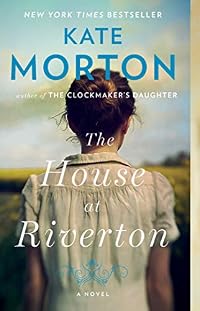
The House at Riverton
by Kate Morton
On This Page
Description
Grace Bradley went to work at Riverton House as a servant when she was just a girl, before the First World War. For years her life was inextricably tied up with the Hartford family, most particularly the two daughters, Hannah and Emmeline. In the summer of 1924, at a glittering society party held at the house, a young poet shot himself. The only witnesses were Hannah and Emmeline and only they--and Grace--know the truth. In 1999, when Grace is ninety-eight years old and living out her last show more days in a nursing home, she is visited by a young director who is making a film about the events of that summer. She takes Grace back to Riverton House and reawakens her memories--From publisher description. show lessTags
Recommendations
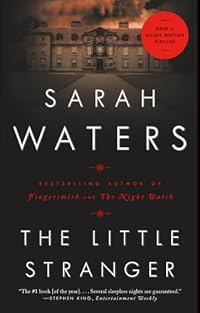
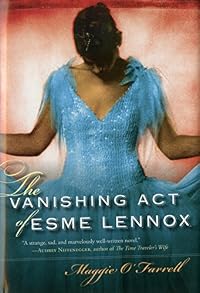
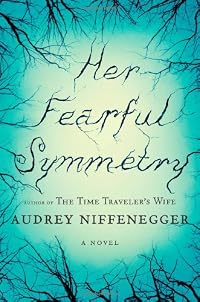
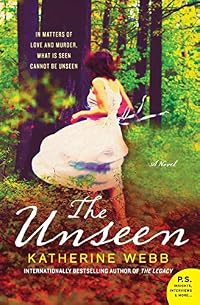



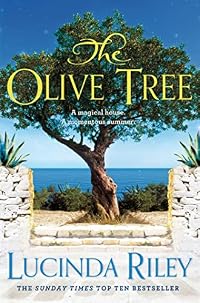
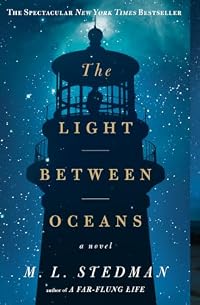
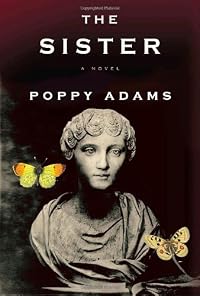
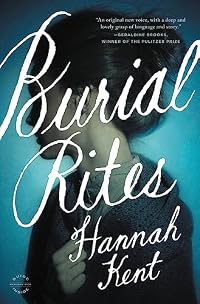

Member Recommendations


kitzyl There is a passage in The Shifting Fog which describes the relationship between Hannah and Emmeline as a "string that bends, it will eventually snap and the points will separate; if elastic, they will continue to part, further and further, until the strain reaches its limits and they are pulled back with such speed that they cannot help but collide with devastating force." In The Dark-Adapted Eye, the sisters are Vera and Eden whose inexplicably interdependent-but-destructive relationship embody the aforementioned elastic string. The story is told from the perspective of their niece who accompanies the reader on the events leading up to the devastation.
Member Reviews
Morton’s novels are always fun reads for me and this one didn’t disappoint. With shades of du Maurier’s Rebecca and the BBC’s Downton Abbey, the book was a wonderful mystery.
We meet Grace at the end of her life. She is living out her days at a retirement home when she finds out a movie is being made about a dramatic event that happened in her youth. As a teenager Grace worked as a house maid at a large manor, Riverton, in the English countryside. A young poet committed suicide at the home one night and the mystery surrounding the evening has always left people wanting to know more. Grace decides it might be time to finally reveal the truth of what happened.
Like all of Morton’s novels, this one has themes of mother/daughter show more relationships, long-kept secrets and the English countryside. Grace’s mother used to work at Riverton and we slowly learn bits of her history as well.
After a few years at Riverton Grace becomes a lady’s maid for the Hartford sisters, Hannah and Emmeline. Their close relationship allows Grace to give us a wide-view of the happenings in the house. As the years pass and relationships become more complicated the story reminds us that one man’s happiness is another man’s prison.
I thought the relationship between Hannah and Emmeline was one of the most fascinating elements of the story. The relationship between sisters is like no other. It tends to be fraught with both love and jealousy, creating a strange and precarious balance. Morton captured this perfectly, allowing us to understand and sympathize with both sisters throughout the novel.
BOTTOM LINE: I really enjoyed it. The Forgotten Garden is my favorite of her’s so far, but I have a theory that your first Morton is always your favorite. This one was the perfect book to give me a Downton Abbey fix until I can watch the third season.
“Reading is one of life’s great pleasures; talking about books keeps their worlds alive for longer.”
“‘No. Not a mystery. Just a nice safe history.’ Ah my darling. But there is no such thing.”
“…for home is a magnet that lures back even its most abstracted children.”
“It is an uncanny feeling, that rare occasion when one catches a glimpse of oneself in repose. An unguarded moment, stripped of artifice, when one forgets to fool even oneself.” show less
We meet Grace at the end of her life. She is living out her days at a retirement home when she finds out a movie is being made about a dramatic event that happened in her youth. As a teenager Grace worked as a house maid at a large manor, Riverton, in the English countryside. A young poet committed suicide at the home one night and the mystery surrounding the evening has always left people wanting to know more. Grace decides it might be time to finally reveal the truth of what happened.
Like all of Morton’s novels, this one has themes of mother/daughter show more relationships, long-kept secrets and the English countryside. Grace’s mother used to work at Riverton and we slowly learn bits of her history as well.
After a few years at Riverton Grace becomes a lady’s maid for the Hartford sisters, Hannah and Emmeline. Their close relationship allows Grace to give us a wide-view of the happenings in the house. As the years pass and relationships become more complicated the story reminds us that one man’s happiness is another man’s prison.
I thought the relationship between Hannah and Emmeline was one of the most fascinating elements of the story. The relationship between sisters is like no other. It tends to be fraught with both love and jealousy, creating a strange and precarious balance. Morton captured this perfectly, allowing us to understand and sympathize with both sisters throughout the novel.
BOTTOM LINE: I really enjoyed it. The Forgotten Garden is my favorite of her’s so far, but I have a theory that your first Morton is always your favorite. This one was the perfect book to give me a Downton Abbey fix until I can watch the third season.
“Reading is one of life’s great pleasures; talking about books keeps their worlds alive for longer.”
“‘No. Not a mystery. Just a nice safe history.’ Ah my darling. But there is no such thing.”
“…for home is a magnet that lures back even its most abstracted children.”
“It is an uncanny feeling, that rare occasion when one catches a glimpse of oneself in repose. An unguarded moment, stripped of artifice, when one forgets to fool even oneself.” show less
90-yr-old Grace was once in service with the Hartford family at Riverton. Her life is deeply entwined with the family, especailly with the independent Hannah and her glittering, butterfly sister, Emmeline.
Out of loyalty, Grace has kept the family's secrets, including the secret of what really happened on the fateful night that a poet died at Riverton.
Now, many decades later, a film producer who is making a film about Riverton approaches Grace, which prompts her to reminisce about her days with the family. Riverton is now open to tourists, and the family has long since passed, but Grace saves the last, deeply held, dark secret until she nears the very end of her life.
Morton is a wonderful storyteller. I was swooped up and carried away on show more the wings of this tale.
Not that there weren't a few flaws. For instance, the denouement was signalled far to early and too obviously. The storytelling was so fabulous, though, who cares?
I loved this book! show less
Out of loyalty, Grace has kept the family's secrets, including the secret of what really happened on the fateful night that a poet died at Riverton.
Now, many decades later, a film producer who is making a film about Riverton approaches Grace, which prompts her to reminisce about her days with the family. Riverton is now open to tourists, and the family has long since passed, but Grace saves the last, deeply held, dark secret until she nears the very end of her life.
Morton is a wonderful storyteller. I was swooped up and carried away on show more the wings of this tale.
Not that there weren't a few flaws. For instance, the denouement was signalled far to early and too obviously. The storytelling was so fabulous, though, who cares?
I loved this book! show less
If I had to select an author that I hope to emulate it is Kate Morton. Her writing style is naturalistic, her plots are complex without being confusing and her characters are the perfect blend of strengths and weaknesses. In fact, the only complaint I have about Kate Morton’s writing is that she doesn’t do it fast enough! Though, I try to be happy with her one book a year pace.
The House at Riverton was originally published in Morton’s native Australia under the title The Shifting Fog, which is the title of a poem written by the doomed character in the novel. I discovered the re-named The House at Riverton through Library Thing or Book Browse and received an ARC to read and review. I fell in love immediately with the time, place show more and characters. Everyone I have recommended this book, as well as Morton’s other two books, to has loved them (well, besides one friend who isn’t much of a reader).
What appeals to me about Morton’s novels, including The Forgotten Garden and The Distant Hours, both of which I will re-read and review, is how she blends the past and present. As a history lover, it fascinates me how we are shaped by our experiences as well as the experiences of our ancestors, including people that we might not know exist. As inundated as we are with information and take for granted the ease of getting information, there are millions of events, ideas and decisions our ancestors made that affected our life and we will never, ever know about. As a writer, that idea has been a fount of inspiration and I have to thank Grace Bradley’s innocent lie to Hannah in The House at Riverton as my ‘a-ha!’ moment.
For those of you that are fans of Downton Abbey, The House at Riverton would be an excellent summer reading choice. Honestly, though you could not go wrong with reading any of them. Go ahead and buy all three because trust me, you will want to read them all. show less
The House at Riverton was originally published in Morton’s native Australia under the title The Shifting Fog, which is the title of a poem written by the doomed character in the novel. I discovered the re-named The House at Riverton through Library Thing or Book Browse and received an ARC to read and review. I fell in love immediately with the time, place show more and characters. Everyone I have recommended this book, as well as Morton’s other two books, to has loved them (well, besides one friend who isn’t much of a reader).
What appeals to me about Morton’s novels, including The Forgotten Garden and The Distant Hours, both of which I will re-read and review, is how she blends the past and present. As a history lover, it fascinates me how we are shaped by our experiences as well as the experiences of our ancestors, including people that we might not know exist. As inundated as we are with information and take for granted the ease of getting information, there are millions of events, ideas and decisions our ancestors made that affected our life and we will never, ever know about. As a writer, that idea has been a fount of inspiration and I have to thank Grace Bradley’s innocent lie to Hannah in The House at Riverton as my ‘a-ha!’ moment.
For those of you that are fans of Downton Abbey, The House at Riverton would be an excellent summer reading choice. Honestly, though you could not go wrong with reading any of them. Go ahead and buy all three because trust me, you will want to read them all. show less
I seem to really enjoy stories that flip back and forth from the past to present day. This one was an example of that. Grace, a servant as her mother before her and lady's maid to Hannah. The story gives us the back drop of the early 1900's and leading up to the suicide of a young aspiring poet at Riverton which in present day is under production by a young woman who is seeking Grace's insight of the time she was in service at Riverton. Grace now nearing 100 yrs old is the only one left to share her knowledge. She has kept secrets, lots of secrets. As the story unfolds, we learn her relationship to the family, the consequences of the war, lies and the secrets that bind a servant to her lady. The mystery unfolds, although, it takes a show more long time it seems, the story is very descriptive and you can definitely walk with the characters as they grow up. However, I am never brought to tears, although there is more sadness to this story than happiness. I do think there is a sequel, that is waiting to be told! show less
After reading Kate Morton's sensational novel The Forgotten Garden - and giving it 5 stars - I couldn't wait to sink my teeth into The Shifting Fog, also known (and printed in other countries) as The House at Riverton.
In the beginning of the novel, the reader is aware that there is going to be a shooting at the lake at Riverton Manor and a famous young poet will die - presumably by suicide - but we're not quite sure why. We meet Grace, who was employed as a servant at Riverton Manor at the young age of 14 and was ensconced in the household during this period. When Grace is in her late 90's and living in a nursing home, she is contacted by a film maker looking to make a film of the events leading up to the suicide. The film maker has show more researched the characters and the period, and asks Grace for her input to ensure the sets are an accurate portrayal of the manor during the roaring 1920's.
Grace begins to reflect on her time at the manor; observing sisters Hannah and Emmeline and the secrets she has protected since then. We are taken back to the period in long vivid flashbacks, and become immersed in the house and entranced by the characters. The book is very gothic in its setting and rich in secrets, long kept loyalties and a sense of tradition. We also witness the slow decline of Riverton Manor and the changing social landscape following World War I and the devastation that came with it.
Grace reveals the truth about the young poet's death at the end of the book, and for me it came as a complete surprise and I'd go so far as to say it was even haunting. As a result, we learn why sisters Hannah and Emmeline never spoke to each other again after that night.
Kate Morton has used a similar plot design as she did in The Forgotten Garden - two different time periods, characters haunted by the past, family drama, mystery and secrets slowly revealed - however it's such a magical and effective concoction and I enjoyed it very much. I have to say I preferred The Forgotten Garden, however the suspense and mystery in this novel had me completely gripped. I would highly recommend The Shifting Fog to other readers. show less
In the beginning of the novel, the reader is aware that there is going to be a shooting at the lake at Riverton Manor and a famous young poet will die - presumably by suicide - but we're not quite sure why. We meet Grace, who was employed as a servant at Riverton Manor at the young age of 14 and was ensconced in the household during this period. When Grace is in her late 90's and living in a nursing home, she is contacted by a film maker looking to make a film of the events leading up to the suicide. The film maker has show more researched the characters and the period, and asks Grace for her input to ensure the sets are an accurate portrayal of the manor during the roaring 1920's.
Grace begins to reflect on her time at the manor; observing sisters Hannah and Emmeline and the secrets she has protected since then. We are taken back to the period in long vivid flashbacks, and become immersed in the house and entranced by the characters. The book is very gothic in its setting and rich in secrets, long kept loyalties and a sense of tradition. We also witness the slow decline of Riverton Manor and the changing social landscape following World War I and the devastation that came with it.
Grace reveals the truth about the young poet's death at the end of the book, and for me it came as a complete surprise and I'd go so far as to say it was even haunting. As a result, we learn why sisters Hannah and Emmeline never spoke to each other again after that night.
Kate Morton has used a similar plot design as she did in The Forgotten Garden - two different time periods, characters haunted by the past, family drama, mystery and secrets slowly revealed - however it's such a magical and effective concoction and I enjoyed it very much. I have to say I preferred The Forgotten Garden, however the suspense and mystery in this novel had me completely gripped. I would highly recommend The Shifting Fog to other readers. show less
Got lost in this book, thoroughly enjoyed it. The author lead me down the drive to Riverton and kept me guessing til almost the last page. Was a fine portrait of life below stairs and above.
I wanted more backstory on Florence & Ursula. I wanted less details on the duties of a servant and more details of the life that Grace had after Riverton. We can't always get what we want, right?
This book wasn't horrible. The writing was good and the story captivating. I just really didn't like how it ended
Members
- Recently Added By
Lists

Best Historical Fiction
620 works; 261 members

Top Five Books of 2013
1,564 works; 716 members

Historical Fiction
889 works; 89 members

Best 21st Century Books (So Far)
670 works; 86 members

Best Downton Abbey-esqe books to read
17 works; 7 members

Best family sagas
244 works; 33 members

Historical Fiction Lovers
88 works; 4 members

Fiction about the Working Class
74 works; 10 members

Authors from Australia
9 works; 2 members

Love Triangles in Literature
108 works; 15 members
England
19 works; 1 member

Books Read in 2017
4,248 works; 130 members
First Novels
373 works; 17 members

Books Read in 2015
3,298 works; 129 members

I Could Live There
185 works; 12 members

Books Read in 2021
5,361 works; 114 members

Secret Histories
28 works; 6 members

KayStJ's to-read list
1,616 works; 11 members

Which house?
423 works; 16 members

Best Mysteries With a Historical Setting
292 works; 160 members

Books read in 2014
66 works; 1 member

Books Read in 2025
4,090 works; 97 members

Great Audiobooks
96 works; 10 members
Author Information

18+ Works 30,966 Members
Kate Morton was born in South Australia in 1976. She earned a degree in speech and drama from Trinity College London, an English literature degree from the University of Queensland, and a master's degree focusing on tragedy in Victorian literature from the University of Queensland. She also completed a summer Shakespeare course at the Royal show more Academy of Dramatic Art in London. She is currently enrolled in a Ph.D. program researching contemporary novels that marry elements of gothic and mystery fiction. She won the Australian Book Industry Award for General Fiction Book of the Year in 2007 for her debut novel, The Shifting Fog, also known as The House at Riverton. Her other books include The Distant Hours, and The Forgotten Garden, which won the Australian Book Industry Award for General Fiction Book of the Year in 2009. Her books The Secret Keeper and The Lake House were New York Times bestsellers. (Bowker Author Biography) show less
Some Editions
Awards and Honors
Awards
Distinctions
Series
Belongs to Publisher Series
Diana (29031)
Work Relationships
Common Knowledge
- Canonical title
- The House at Riverton
- Original title
- The Shifting Fog
- Alternate titles*
- The House at Riverton
- Original publication date
- 2006
- People/Characters
- Grace Reeves Bradley; Emmeline Hartford; Hannah Hartford; Robert "Robbie" Hunter; David Hartford; Ruth Bradley McCourt (show all 23); Sylvia; Ursula Ryan; Marcus McCourt; Nancy; Lady Clementine de Welton; Fanny Dawkins; Jonathan Hartford; Jemima Hartford; Keira Parker; John Bradley; Lucy Starling; Estella Luxton; Theodore "Teddy" Luxton; Simion Luxton; Deborah Luxton; Frederick Hartford; Alfred Steeple
- Important places
- Riverton; London, England, UK
- Important events
- World War I
- Epigraph*
- Een onvergetelijk verhaal over liefde, verlies en geheimen.
'In heel Europa worden de lampen gedoofd. Onze generatie zal ze niet meer zien branden.'
Lord Grey, minister van Buitenlandse Zaken van Groot-Brittannië
3 augutus 1914 - Dedication
- For Davin, who holds my hand on the roller-coaster
- First words
- Last November I had a nightmare.
- Quotations
- I agreed, touched by the way little untruths told to the very young are believed so implicitly.
I am interested—intrigued even—by the way time erases real lives, leaving only vague imprints. Blood and spirit fade away so that only names and dates remain.
But of course, those who live in memories are never really dead.
It is our habit, after church, to walk the short distance to the High Street for morning tea at Maggie's. We always go to Maggie's, though Maggie herself left town with a suitcase and her best friend's husband many years ago.
I understand well the peculiar guilt of tragedy's survivors.
The young, I have learned, are embarrassed by tales of long ago. This morning he smiled over his glasses and told me how well I was looking. When I was younger, still in my eighties, vanity would have had me believe him. Now ... (show all)I recognize such comments as kindly expressions of surprise I'm still alive.
He will return one day, of that I've little doubt, for home is a magnet that lures even its most abstracted children. But whether tomorrow or years from now, I cannot guess. And I haven't time to wait. I find myself in time's... (show all) cold waiting room, shivering as ancient ghosts and echoing voices recede.
Reluctance to begin is quick to befriend procrastination, and the view of the room below was tremendous. It is a universal truth that no matter how well one knows a scene, to observe it from above is something of a revelation... (show all).
Alone in the room, his dark eyes grave beneath a line of dark brows, he gave the impression of sorrow past, deeply felt and poorly mended.
Regardless how peripheral one's connection to calamity, it would appear that to live long enough is to be rendered an object of interest.
Wars make history seem deceptively simple. They provide clear turning points, easy distinctions: before and after, winner and loser, right and wrong. True history, the past, is not like that. It isn't flat or linear. It has n... (show all)o outline. It is slippery, like liquid; infinite and unknowable, like space. And it is changeable: just when you think you see a pattern, perspective shifts, an alternative version is proffered, a long-forgotten memory resurfaces.
In real life turning points are sneaky. They pass by unlabeled and unheeded. Opportunities are missed, catastrophes unwittingly celebrated. Turning points are only uncovered later, by historians who seek to bring order to a l... (show all)ifetime of tangled moments.
The light is bright. I feel like a bird in an oven. Hot, plucked, and watched. - Last words
- (Click to show. Warning: May contain spoilers.)I know how good you are with secrets.
- Original language
- English
- Disambiguation notice
- Originally published in Australia as "The Shifting Fog." Name changed to "The House at Riverton" for publication in the UK and US.
*Some information comes from Common Knowledge in other languages. Click "Edit" for more information.
Classifications
- Genres
- Fiction and Literature, Historical Fiction, General Fiction, Romance, Mystery
- DDC/MDS
- 823.92 — Literature & rhetoric English & Old English literatures English fiction 1900- 2000-
- LCC
- PR9619.4 .M74 .S55 — Language and Literature English English Literature English literature: Provincial, local, etc.
- BISAC
Statistics
- Members
- 6,014
- Popularity
- 2,105
- Reviews
- 264
- Rating
- (3.82)
- Languages
- 19 — Catalan, Chinese, Czech, Danish, Dutch, English, Finnish, French, German, Greek, Italian, Norwegian (Bokmål), Norwegian, Romanian, Russian, Spanish, Swedish, Turkish, Portuguese (Portugal)
- Media
- Paper, Audiobook, Ebook
- ISBNs
- 131
- UPCs
- 1
- ASINs
- 31