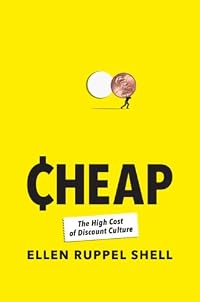
Cheap: The High Cost of Discount Culture
by Ellen Ruppel Shell
On This Page
Description
From the shuttered factories of the rust belt to the look-alike strip malls of the sun belt---and almost everywhere in between---America has been transformed by its relentless fixation on low price. This pervasive yet little examined obsession is arguably the most powerful and devastating market force of our time---the engine of globalization, outsourcing, planned obsolescence, and economic instability in an increasingly unsettled world.Low price is so alluring that we may have forgotten show more how thoroughly we once distrusted it. Ellen Ruppel Shell traces the birth of the bargain as we know it from the Industrial Revolution to the assembly line and beyond, homing in on a number of colorful characters, such as Gene Verkauf (his name is Yiddish for "to sell"), founder of E. J. Korvette, the discount chain that helped wean customers off traditional notions of value. The rise of the chain store in post-Depression America led to the extolling of convenience over quality, and big-box retailers completed the reeducation of the American consumer by making them prize low price in the way they once prized durability and craftsmanship.
The effects of this insidious perceptual shift are vast: a blighted landscape, escalating debt (both personal and national), stagnating incomes, fraying communities, and a host of other socioeconomic ills. That's a long list of charges, and it runs counter to orthodox economics, which argues that low price powers productivity by stimulating a brisk free market. But Shell marshals evidence from a wide range of fields---history, sociology, marketing, psychology, even economics itself---to upend the conventional wisdom. Cheap also unveils the fascinating and unsettling illogic that underpins our bargain-hunting reflex and explains how our deep-rooted need for bargains colors every aspect of our psyches and social lives. In this myth-shattering, closely reasoned, and exhaustively reported investigation, Shell exposes the astronomically high cost of cheap.
. show less
Tags
Recommendations







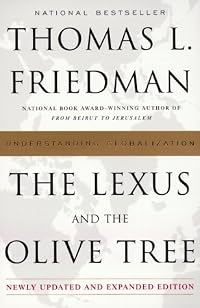
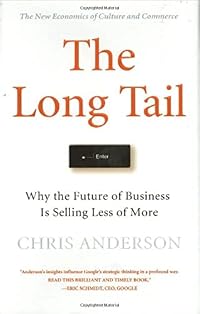

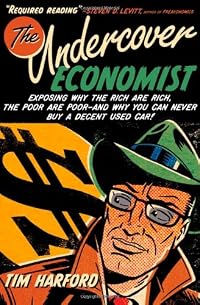
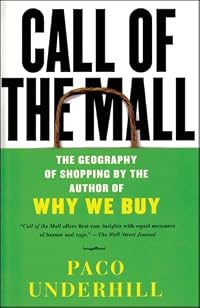

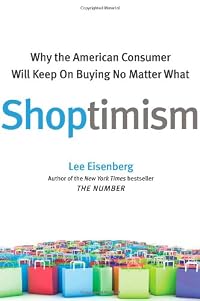
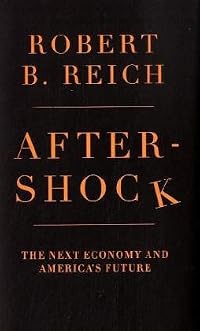

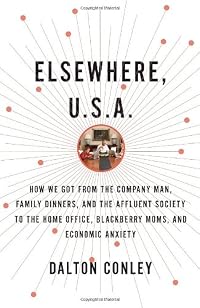


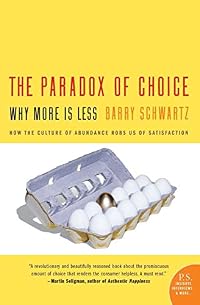



Member Recommendations


grizzly.anderson Cheap and No Logo come at the consumer market from two distinct, yet complimentary, perspectives. No Logo examines the impact of the power and marketing of "the brand" while Cheap takes up the brand-less (except for the discount stores themselves) quest for discount "deals"
Member Reviews
About a year and a half after acquiring this book I finally read it! The reason for my reluctance was that I feared learning too much about some of my favorite retailers, especially Ikea. I had heard an interview with the author on the radio and decided I should read the book, which is why I put it on my wish list. But I kept remembering the author's comments and thinking that I am like so many today - wanting to pay the least amount I can get away with. KNOWING that there are reasons this is not a good thing, but not yet ready to face those reasons. Finally the day came.
It wasn't as hard to read as I'd expected. Certainly it is written well and the clear style alone makes the pages fly by. It is thoroughly researched but the show more references are at the end. As I do with many other nonfiction works, I will be keeping this one in my permanent collection for the references especially, but also for the many tidbits I gleaned while reading.
I did not know, for example, that most of today's shrimp comes from Thailand, where it is farm-raised. Farm-raising wipes out the mangrove forests and pollutes the land and water so that it cannot be used to grow rice again. Shrimp has edged out the rice that used to be the main export of Thailand and rice has become more expensive for those who can least afford it. The shrimp is fed a nutrient mix, antibiotics, and chemicals. All this so that Red Lobster can offer all-you-can-eat shrimp.
I did not know that Ikea lives under the umbrella of a Dutch nonprofit! It isn't a Swedish company at all, even though its buildings are there. The nonprofit ruse allows it to skip paying taxes, of course. Ikea prides itself on insisting on sustainable lumber from its suppliers yet its inspectors do not begin to be able to inspect all of the locations - because it would be too expensive to hire more inspectors. Further, the furniture is so cheaply made that it can hardly be used for anything else and when parts break there is little recourse than to recycle. Buying new is not the way to sustainability. Ikea has been called the producer (although it does not produce most of its products itself; instead it encourages suppliers to undercut the prices of others...) of the least sustainable furniture in the world.
The lack of worker protections worldwide, Shell notes, threatens workers at home here in the U.S. What happens in China doesn't, in fact, stay in China. It emigrates here. Thus workers are let go when their wages get too high, and new people with no skills come in the door. Thus went Circuit City and see how much good it did them?
All across the board, the insistence on price as the most important attribute means we are cheating ourselves of variety, quality, and craftsmanship that was available not much more than 50 years ago. We are getting inferior goods, from our food to our furniture to our clothing. Only if we start to see our way toward supporting a fair price for a good product will we be able to make our way back. show less
It wasn't as hard to read as I'd expected. Certainly it is written well and the clear style alone makes the pages fly by. It is thoroughly researched but the show more references are at the end. As I do with many other nonfiction works, I will be keeping this one in my permanent collection for the references especially, but also for the many tidbits I gleaned while reading.
I did not know, for example, that most of today's shrimp comes from Thailand, where it is farm-raised. Farm-raising wipes out the mangrove forests and pollutes the land and water so that it cannot be used to grow rice again. Shrimp has edged out the rice that used to be the main export of Thailand and rice has become more expensive for those who can least afford it. The shrimp is fed a nutrient mix, antibiotics, and chemicals. All this so that Red Lobster can offer all-you-can-eat shrimp.
I did not know that Ikea lives under the umbrella of a Dutch nonprofit! It isn't a Swedish company at all, even though its buildings are there. The nonprofit ruse allows it to skip paying taxes, of course. Ikea prides itself on insisting on sustainable lumber from its suppliers yet its inspectors do not begin to be able to inspect all of the locations - because it would be too expensive to hire more inspectors. Further, the furniture is so cheaply made that it can hardly be used for anything else and when parts break there is little recourse than to recycle. Buying new is not the way to sustainability. Ikea has been called the producer (although it does not produce most of its products itself; instead it encourages suppliers to undercut the prices of others...) of the least sustainable furniture in the world.
The lack of worker protections worldwide, Shell notes, threatens workers at home here in the U.S. What happens in China doesn't, in fact, stay in China. It emigrates here. Thus workers are let go when their wages get too high, and new people with no skills come in the door. Thus went Circuit City and see how much good it did them?
All across the board, the insistence on price as the most important attribute means we are cheating ourselves of variety, quality, and craftsmanship that was available not much more than 50 years ago. We are getting inferior goods, from our food to our furniture to our clothing. Only if we start to see our way toward supporting a fair price for a good product will we be able to make our way back. show less
If prices are so damn low, why are we all just scraping by?
Shell writes an in-depth exploration of the current state of affairs, ie. globalization, beautifully explained. The consumer has a greater variety of items to choose from than ever before: but each of the choices is identically 'cheap'. Each item is manufactured by what amounts to slave labor; each is built to fall apart again. The only difference is price. - But Shell is far from taking the easy way and squaring the blame on Wal-Mart. We are all culpable - but some are more guilty than others. The average consumer hasn't the time or the knowledge (or, let's face it, the drive) to sort through the sheer amount of information that making one well-informed choice would require: show more and the retailers are working to make sure the consumer stays ignorant.
But if the retailers are wicked, the consumers been willing to be fooled. And now we're paying the price.
I'm predicting it: this book will be The Jungle for the 21st century. (The chapters on labor conditions in China won't bother most Americans nearly as much as those on the food we eat - or the lead-coated Thomas The Tank Engine trains for their children. No matter that thousands of Chinese workers are inhaling lead paint fumes day after day after day in much higher concentrations than most American children will ever come across; no matter that women in Mexico are doing piecework for a pittance, attaching sleeves to 1200 shirts each day, so that we can have buy it at a deep discount. No matter that a 30% increase in their wages would cost the consumer 24 cents more at checkout. No matter. Keep those prices low, boys!)
My one quibble is that, although it's primarily about current events and current stores (and touches on the current recession), Shell writes in such a way as to make "October, 2008" seem soooo long ago, and "researchers predict that by 2010" seems impossibly distant. At times I actually had to remind myself of the date (July of 2009). Yikes.
And now I never want to buy anything ever again. show less
Shell writes an in-depth exploration of the current state of affairs, ie. globalization, beautifully explained. The consumer has a greater variety of items to choose from than ever before: but each of the choices is identically 'cheap'. Each item is manufactured by what amounts to slave labor; each is built to fall apart again. The only difference is price. - But Shell is far from taking the easy way and squaring the blame on Wal-Mart. We are all culpable - but some are more guilty than others. The average consumer hasn't the time or the knowledge (or, let's face it, the drive) to sort through the sheer amount of information that making one well-informed choice would require: show more and the retailers are working to make sure the consumer stays ignorant.
But if the retailers are wicked, the consumers been willing to be fooled. And now we're paying the price.
I'm predicting it: this book will be The Jungle for the 21st century. (The chapters on labor conditions in China won't bother most Americans nearly as much as those on the food we eat - or the lead-coated Thomas The Tank Engine trains for their children. No matter that thousands of Chinese workers are inhaling lead paint fumes day after day after day in much higher concentrations than most American children will ever come across; no matter that women in Mexico are doing piecework for a pittance, attaching sleeves to 1200 shirts each day, so that we can have buy it at a deep discount. No matter that a 30% increase in their wages would cost the consumer 24 cents more at checkout. No matter. Keep those prices low, boys!)
My one quibble is that, although it's primarily about current events and current stores (and touches on the current recession), Shell writes in such a way as to make "October, 2008" seem soooo long ago, and "researchers predict that by 2010" seems impossibly distant. At times I actually had to remind myself of the date (July of 2009). Yikes.
And now I never want to buy anything ever again. show less
Well, after reading this book you'll never shop at Target, Whole Foods, Walmart, Ikea, or eat shrimp or pork ever again. Shell offers some compelling insights in the psychology of why we as consumers are attracted to the 'deal' as well as chronicling the rise of our modern shopping experience. The author shows some occasional bias (bio-diesel is a 'fad', the two Ikea chapters are quite venomous) throughout, but it doesn't take away from the impact of her analysis of how manipulated we are by corporations. Certainly an eye-opening and even unsettling book.
Cheap is an intriguing expose on the modern American desire for bargains fed by discount stores and discount ideology in more areas of commerce than one would realize. Ruppel Shell offers a fascinating history of discount stores from the late 19th-century to present. Interestingly, many of the originators went under by the 1980s to be absorbed by the more ruthless corporations of today. The hidden costs of inexpensive purchases are then detailed from environmental destruction, human rights violations of the employees who manufacture, distribute, and sell the products, the dangers of poor quality goods to the consumer, the erosion of the middle class, and the fact that a lot of this cheap stuff isn't even worth what we pay for it. Ruppel show more Shell makes the interesting point that we now live in a world where there are high-end goods and discount goods, but no reliable in-between. IKEA, Wal-Mart, and outlet malls are singled out as some actors in the discount culture, but the closing "hope-for-the-future" chapter also details companies like Wegmans and Costco that are thriving despite adopting strategies that go against the grain of discount culture. While the essence of this book is not likely to be surprising to most readers, it is still eye-opening in its details. show less
All my nonfiction recently seems to be about This Mess We’re In in varying ways. This book is loosely organized around the concept of low price, starting with the cognitive challenges it presents: we mistakenly think that discounts from originally high prices are somehow better than beginning with the ultimate price, even when that’s the same amount. But we also devalue cheap. Shell argues that the relentless pursuit of cheapness has led American producers and consumers to discount quality, and that quality has decreased a lot faster than price, so we’re not getting the benefit of our bargains. She looks at the environmental and social costs of cheapness—deforestation for disposable Ikea furniture, deskilling and lost jobs for show more products that used to require craft to make well, environmental devastation for cheap Asian shrimp, labor abuses for all sorts of goods made in China, and so on. Sometimes Shell’s tone crosses over into distaste for people who are willing to accept the knockoff over the original, especially when the product is fashion-based, but at core she’s arguing that almost everyone is harmed by cheapness, which has destroyed the good-quality middle that used to prevail. And cheap paperclips, she points out, can’t make up for the collapse in buying power many Americans have suffered with increasing income inequality, fewer high-paying jobs, and Wal-Mart as the pioneer of business practices; food may absorb less of a percentage of our budgets, but housing, education, and other things have become so much more expensive that we haven’t become wealthier, just busier and more ill-served by our buying habits. show less
Having only recently bathed in the glow of rosy optimism that is Chris Anderson's Free, Cheap is the cold shower guaranteed to give the reader pause for thought. Many things are certainly a lot cheaper in America than they have ever been, but it's not all affordable. For example, on page 157: Average household income in 2003 was higher than it was in 1971, Americans spent 32% less on clothes, 52% less on appliances, and 18% less on food. However, over the same period mortgage payments have increased 76%, health insurance 74%.
Things are not cheap where it counts, and those things that are cheap are not sustainably so. Chapters 4 to 9 reveal the hidden costs - to skills, wages, the environment, human rights & culture - of cheap.
Let me add show more another statistic not cited by the author: In 2007, 62% of all bankruptcies were medical ; 75% of these medical debtors had health insurance. Staggering.
You would need half a dozen books or more to do this subject justice (for example, Eric Schlosser's Fast Food Nation represents a fuller treatment of the issues raised in chapter 8, "Cheap Eats"). Thankfully, Ellen Ruppel Shell provides extensive footnotes and references for those wanting to explore, say, the fascinating insights gained from the psychological studies of consumer behaviour in the excellent chapter 3, "Winner Take Nothing".
But is there a solution? How to arrest price's race to the bottom, dragging living wages and the environment with it? Even if the huge economies of the developing world do become bastions of democracy and rule of law, there is still human nature to contend with (again, see chapter 3).
By way of a remedy of sorts, Shell takes her cue from Adam Smith's ideal of "enlightened self interest" , and gives us the closest to a working example - on a large scale - in Wegmans Food Market. The key to company profits seems to be investment in well remunerated and looked after staff, which in turns attracts and keeps customers. Qualities beyond the number on the price tag that support wages and profits. And I love the idea that not all Wegman stores strive to be identical in look and layout.
A more subtle point is made which, again, is worthy of further exposition. In contrast to the local marketplace of Smith's time (but still in existence in local markets such as the example of Haymarket on p. 220) -
"Discounters shroud their offerings, selling virtually identical products as different brands, and B-grade versions of national brands. Or, like IKEA, they hide shoddy construction - and questionable practices - with clever image making and design. The cheaper the goods, it seems, the harder retailers work to keep us from knowing about them, And the more narrowly we focus on price, the easier we are to fool."
I must agree with her on IKEA - on my first and last visit to an IKEA store, a particle board storage shelf snapped in two under gentle pressure from my hand.
Enlightened self interest, in other words, is impossible in a world of commerce where it is difficult to know where a product came from or the conditions under which it was manufactured. Therefore, if consumers cannot buy based on knowledge of product, then price alone becomes the determinate.
An excellent read, even if the ideal marketplace of Smith seems unattainable. Perhaps the user generated revolution of web 2.0 will assist in greater product awareness amongst consumers. Or does the promise of instant gratification via online bargains just compound the problem?
Either way, I hope this book stimulates some serious comment from the economists and consumers alike.
Quotes:
"The key to economic prosperity is the organized creation of dissatisfaction". Charles Kettering, GM researcher and inventor, cited pp.22-23
"Television advertising was particularly vital for the low service discount chains that, with no experienced salesforce to push product, relied on the customer to come to their stores pre-loaded with wants." p.26
"Economics is a religion. It assumes rational behavior and that people will do what is best for them. But like religion, this is only a belief; there is no proof." Daniel Ariely, cited p.69 show less
Things are not cheap where it counts, and those things that are cheap are not sustainably so. Chapters 4 to 9 reveal the hidden costs - to skills, wages, the environment, human rights & culture - of cheap.
Let me add show more another statistic not cited by the author: In 2007, 62% of all bankruptcies were medical ; 75% of these medical debtors had health insurance. Staggering.
You would need half a dozen books or more to do this subject justice (for example, Eric Schlosser's Fast Food Nation represents a fuller treatment of the issues raised in chapter 8, "Cheap Eats"). Thankfully, Ellen Ruppel Shell provides extensive footnotes and references for those wanting to explore, say, the fascinating insights gained from the psychological studies of consumer behaviour in the excellent chapter 3, "Winner Take Nothing".
But is there a solution? How to arrest price's race to the bottom, dragging living wages and the environment with it? Even if the huge economies of the developing world do become bastions of democracy and rule of law, there is still human nature to contend with (again, see chapter 3).
By way of a remedy of sorts, Shell takes her cue from Adam Smith's ideal of "enlightened self interest" , and gives us the closest to a working example - on a large scale - in Wegmans Food Market. The key to company profits seems to be investment in well remunerated and looked after staff, which in turns attracts and keeps customers. Qualities beyond the number on the price tag that support wages and profits. And I love the idea that not all Wegman stores strive to be identical in look and layout.
A more subtle point is made which, again, is worthy of further exposition. In contrast to the local marketplace of Smith's time (but still in existence in local markets such as the example of Haymarket on p. 220) -
"Discounters shroud their offerings, selling virtually identical products as different brands, and B-grade versions of national brands. Or, like IKEA, they hide shoddy construction - and questionable practices - with clever image making and design. The cheaper the goods, it seems, the harder retailers work to keep us from knowing about them, And the more narrowly we focus on price, the easier we are to fool."
I must agree with her on IKEA - on my first and last visit to an IKEA store, a particle board storage shelf snapped in two under gentle pressure from my hand.
Enlightened self interest, in other words, is impossible in a world of commerce where it is difficult to know where a product came from or the conditions under which it was manufactured. Therefore, if consumers cannot buy based on knowledge of product, then price alone becomes the determinate.
An excellent read, even if the ideal marketplace of Smith seems unattainable. Perhaps the user generated revolution of web 2.0 will assist in greater product awareness amongst consumers. Or does the promise of instant gratification via online bargains just compound the problem?
Either way, I hope this book stimulates some serious comment from the economists and consumers alike.
Quotes:
"The key to economic prosperity is the organized creation of dissatisfaction". Charles Kettering, GM researcher and inventor, cited pp.22-23
"Television advertising was particularly vital for the low service discount chains that, with no experienced salesforce to push product, relied on the customer to come to their stores pre-loaded with wants." p.26
"Economics is a religion. It assumes rational behavior and that people will do what is best for them. But like religion, this is only a belief; there is no proof." Daniel Ariely, cited p.69 show less
This book had a strong impact on me. It presents a history of pricing and discounting and suggests that cheap products and discount pricing have a negative effect. Paradoxically, the cheapest price might not represent the best value, for society (cheap is built on cheap labour which can have negative effects) and even for the individual (maybe a smaller quantity of better quality items would be better).
Members
- Recently Added By
Published Reviews
ThingScore 100
Author Information

9 Works 799 Members
Ellen Ruppel Shell is associate professor and co-director of the Program in Science Journalism at Boston University.
Some Editions
Common Knowledge
- Original publication date
- 2009
- People/Characters
- George Akerlof; On Amir; Thomas Aquinas (1225-1274); Martin Neil Baily; George Baldanzi; Letitia Baldridge (show all 184); David Barboza; Mark Barenberg; Emek Baskar; Henri Bazin; Sofie Beckham; Henry Bernstein; Jared Bernstein; Ivan Boesky; Lisa Bolton; Sara Bongiorni; Christian Broda; Nathan Brown; Robert Bruno; Bidisha Burman; George W. Bush; Lilliam Cahn; Miles Cahn; Benjamin L. Cardin; Jimmy Carter; Marcus Tullius Cicero (106-43 BC); Nancy Cleeland; Lizabeth Cohen; Marianne Conroy; Anne J. Coughlan; Matthew B. Crawford; Michael Cullen; Stanislas Dahaene; Anders Dahlvig; Antonio Damasio; Erica Dawson; Peter Doerringer; Michael Douglas; Adam Drewnowski; Arindrajit Dube; Fuschia Dunlop; Anna Efverlund; Dwight D. Eisenhower; Elizabeth II, Queen of the United Kingdom; Souha Ezzedeen; S. S. Fair; Estelle Ferkauf; Eugene Ferkauf; Harry Ferkauf; Kathryn Fitzgerald; Henry Ford; Benjamin Franklin; Richard Freeman; Sigmund Freud; Jason Furman; James Galbraith; John Kenneth Galbraith; Mary Gallagher; Clifford Geertz; Sylvan Goldman; Alan Greenspan; Sir Thomas Gresham; Mike Griswold; Victor Gruen; Julie Guthman; Walton Hamilton; John Hargreaves; Jerry Hausman; William K. Henderson; Alfred Hitchcock; David Hounshell; Lee Jones; Spike Jonze; Julie Jordan; Daniel Kahneman; Ira Kalish; Ingvar Kamprad; Robert Kanigel; John F. Kennedy; Charles Kettering; John Maynard Keynes; Brian Knutson; Nicholas Kristof; Elsie Krummeck; Janet Landsman; Christopher Lasch; Robert Lawrence; George Lawrie; David Leonhardt; Alfred Levitt; William Levitt; Leon Levy; Donald Lichtenstein; Nelson Lichtenstein; Jens Lindell; Charlotte Lindgren; Carolus Linnaeus; Richard Locke; Huey Long (Huey P. Long); George Lowenstein; Gillis Lundgren; Michael Madoff; Ulrike Malmendier; Gregory Mankiw; Jayne Mansfield; Larry Matlock; Sarah Maxwell; David McDonald; Charles McGovern; William McKinley; Malcolm P. McNair; John Stuart Mill; Kent Monroe; Michael Morris; Lewis Mumford; Joe Natale; Gilliam Naylor; Simeon North; Martin Nowak; William L. Nunn; Barack Obama; James W. Owens; Wright Patman; Simon Nelson Patten; J. C. Penney; Tom Peters; Michael Pollan; Robert Pollin; Barry Prevor; Sir Walter Raleigh; Rama Ramakrishnan; Isabel Reyes; David Ricardo; Jeff Riedinger; Paul Robert; Franklin Delano Roosevelt; Elmo Roper; Rick Rubin; William Safire; Yves Saint-Laurent; Charles Saunders; Robert Schindler; Joseph Schumpeter; H. Lee Scott Jr; Richard Sennett; Harley Shaiken; Steve Shore; Tim Silk; Christopher H. Smith; Merit Roe Smith; David A. Soberman; Rajneesh Suri; Frederick Winslow Taylor; Richard Thaler; Dana Thomas; Petter Timmer; Harry S. Truman; Donald Trump; Amos Tversky; Maria Vinka; Paul Volcker; Georges Vuitton; Luis Vuitton; Sam Walton; John Wanamaker; Wang Chang Chu; Elizabeth Warren; George Washington; James Watt; Danny Wegman; Jack Wegman; Robert Wegman; Walter Wegman; Eli Whitney; Chuck Wilburn; Eric Wilson; Robert E. Wood; Frank W. Woolworth; Siva Yam; Andrew Young; Gerald Zaltman; Wig Zamore; Zhen Xiaoyu; Émile Zola
- Important places
- Burma; China; Ethiopia; Haiti; Ireland; Sedona, Arizona, USA (show all 9); Sudan; Thailand; Vietnam
- Important events
- American Revolution; Black Friday (1929); Great Depression; Fair Labor Standards Act of 1938; Irish Potato Famine; Miller-Tydings Act (show all 10); New Deal; Recession of 2008; Robinson-Patman Act; Triangle Shirtwaist Factory Fire
- Epigraph
- I do not prize the word "cheap." It is not a badge of honor.
PRESIDENT WILLIAM MCKINLEY - Dedication
- TO JO, ALI, AND MART ... PRICELESS
- First words
- This book is about America's dangerous liaison with Cheap.
- Last words
- (Click to show. Warning: May contain spoilers.)As individuals and as a nation we can turn our attention to what matters, secure in the knowledge that what matters has never been and will never be cheap.
- Blurbers
- McKibben, Bill; Thomas, Dana; Cohen, Lizabeth; Fallows, James; Mann, Charles C.
Classifications
Statistics
- Members
- 565
- Popularity
- 51,990
- Reviews
- 24
- Rating
- (3.58)
- Languages
- Chinese, English
- Media
- Paper, Audiobook, Ebook
- ISBNs
- 12
- ASINs
- 8