On This Page
Description
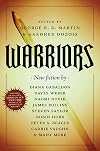
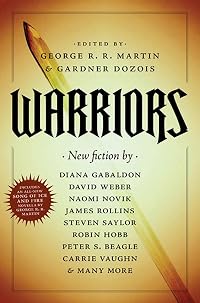
From George R. R. Martin's Introduction to Warriors: "People have been telling stories about warriors for as long as they have been telling stories. Since Homer first sang the wrath of Achilles and the ancient Sumerians set down their tales of Gilgamesh, warriors, soldiers, and fighters have fascinated us; they are a part of every culture, every literary tradition, every genre. All Quiet on the Western Front, From Here to Eternity, and The Red Badge of Courage have become part of our show more literary canon, taught in classrooms all around the country and the world. Our contributors make up an all-star lineup of award-winning and bestselling writers, representing a dozen different publishers and as many genres. We asked each of them for the same thing-a story about a warrior. Some chose to write in the genre they're best known for. Some decided to try something different. You will find warriors of every shape, size, and color in these pages, warriors from every epoch of human history, from yesterday and today and tomorrow, and from worlds that never were. Some of the stories will make you sad, some will make you laugh, and many will keep you on the edge of your seat." Included are a long novella from the world of Song of Ice and Fire by George R. R. Martin, a new tale of Lord John by Diana Gabaldon, and an epic of humanity at bay by David Weber. Also present are original tales by David Ball, Peter S. Beagle, Lawrence Block, Gardner Dozois, Joe Haldeman, Robin Hobb, Cecelia Holland, Joe R. Lansdale, David Morrell, Naomi Novik, James Rollins, Steven Saylor, Robert Silverberg, S.M. Stirling, Carrie Vaughn, Howard Waldrop, and Tad Williams. Many of these writers are bestsellers. All of them are storytellers of the highest quality. Together they make a volume of unforgettable reading. At the Publisher's request, this title is being sold without Digital Rights Management Software (DRM) applied. show lessTags
Recommendations








Member Recommendations
Member Reviews
Overall Summary and Review: I bought this collection for two reasons: 1) New Lord John and Dunk & Egg stories, and 2) I absolutely loved Martin & Dozois's previous anthology, Songs of Love & Death. (Actually, looking at the publication dates, Warriors came out first, but I didn't know about it until after I'd read and loved Songs of Love & Death.) So I was hoping Warriors would be just as good of an anthology… it certainly had an equally impressive line-up of authors. And while I didn't wind up loving this one quite as much as SoL&D, I think that was more down to the subject matter rather than anything having to do with the quality of the stories or the anthology itself. (I clearly prefer star-crossed lovers to warriors, which I show more probably could have told you before I started.) The theme carries through the anthology nicely, with the different authors each taking a different perspective on what it means to be a warrior - some were war stories, some were after-the-war-is-over stories, some protagonists were soldiers, some were fighting very personal wars of their own, some were men, some were women, some were not even human. There's also a nice blend of genres here - contemporary and historical fiction of different eras bump up against fantasy and science fiction, and some stories contain a mix of multiple genres. Overall, it's a really solid collection - some stories I liked more than others, of course, but like SoL&D, I don't think there was a single weak story in the bunch. 4 out of 5 stars.
Individual Stories:
"The King of Norway" by Cecelia Holland is a Viking story, about a man who makes an ill-timed and ill-judged boast, and must then follow through. This story put an emphasis on the fighting, which was well-written, but it could have used some development of the rest of the story. I never understood the protagonist's antagonism towards his former king, for example.
"Forever Bound" by Joe Haldeman involves a man who is recruited to be part of a specialist army unit - one where ten people link together, sharing each other's minds to control fighting robots from afar. I think this is technically part of the Forever War series, but I liked this story better than I did the book, since it doesn't really focus on the fighting hardly at all, but much more on the interpersonal relations between the soldiers who were mind-linked.
In "The Triumph" by Robin Hobb, a Roman general who has been caged, and left to die by the Carthagenians, refuses to give his captors what they want… after all, he'd survived in the face of much worse enemies. I liked this story - Hobb's a good writer and I really should read some of her longer fiction - but it took too long to get to the dragon.
"Clean Slate" by Lawrence Block is the story of a damaged woman, and just how far she's willing to go to set her past to rights. It's debatable how well this story and this protagonist fits the definition of "Warriors", but taken on its own merits, it's really effective. Really dark and sharp-edged and bitter, but effective.
"And Ministers of Grace" by Tad Williams involves a religious warrior, bioengineered to be an avenging angel, sent to infiltrate the secular world of his enemies and assassinate their leader. I thought this story had a really good blend between character development and worldbuilding and action sequences, although the ending felt a little too pat for my tastes.
"Soldierin'" by Joe R. Lansdale is historical, rather than SF/F, and features buffalo soldiers - freed slaves who joined the US Army fighting the Native Americans - in a scouting expedition gone disastrously wrong. I enjoyed this story mostly for its perspective - I'd known of the existence of the buffalo soldiers, but not much about them - and also for its touches of humor, which was needed in between some pretty bleak stories.
"Dirae" by Peter S. Beagle is a fractured piece involving a warrior who emerges from darkness in order to right wrongs and protect the helpless, only to fade back into forgetfulness once her task is through. I'd read it before, in Sleight of Hand, but it was even more rewarding the second time through, once I had an idea of how the pieces fit together.
"The Custom of the Army" by Diana Gabaldon is a Lord John Grey story, in which Lord John is sent to Canada to serve as a character witness but winds up involved in the siege of Quebec. I like Gabaldon's writing, obviously, and I like Lord John as a character, but this story didn't quite come together for me - too many pieces, and the character pieces didn't blend smoothly into the action pieces the way I would have wanted.
"Seven Years from Home" by Naomi Novik involves a diplomat/spy who is sent to live among the people who are forming one half of a nascent civil war, between a people who have genetically engineered themselves to live in peace with their surroundings, and a more technological people who covet their resources. This was a cool world, and a cool story, although it occasionally veered smidge too close to preachiness, even though I agreed with the message.
"The Eagle and the Rabbit" by Steven Saylor is another Carthage/Rome story, except in this case it's the Romans who are taking the Carthagenians as slaves, and the torments they inflict upon them - not only physical, but mental as well. This story was well told, and I liked the writing style, but it was fairly predictable, and it didn't really break any new ground in the "how far can a captor push a captive, and by what means" field.
In "The Pit" by James Rollins, the warrior in question is not human, but canine, a pit bull who was stolen as a puppy and brought up in the dog fighting ring. This was a hard one to read, although just as effective and poignant as many of the others, which makes me wonder: why am I okay reading about brutal battles between humans, but not dogs?
"Out of the Dark" by David Weber is one of the longer stories in the collection, about an invading alien fleet that attempts to conquer Earth, and is surprised by the resistance it meets. I really liked the idea for this story, and the way Weber told it in switching back-and-forth viewpoints from the humans' vs. the aliens' perspective. (And although the description of the aliens is essentially feline, I couldn't stop picturing them as the rhino-headed Judoon from Doctor Who, which made me giggle.) But there was a lot of military-speak, lots of acronyms and descriptions of tanks and guns, that turned me off a little. And the ending, while effectively surprising, felt too much like a Deus ex Machina cop-out to be entirely satisfying.
"The Girls from Avenger" by Carrie Vaughn is a story about female WASP pilots during World War II, and the investigations undertaken by one into the hushed-up death of another. I really enjoyed this one, although the resolution was maybe a little predictable. I like Vaughn's writing in general, although I wonder how much was the writing, and how much was the fact that Code Name Verity has predisposed me to like anything involving female WW II pilots?
"Ancient Ways" by S. M. Stirling involves a young Russian man who comes across a foreign warrior being chased by Tartars. They become unlikely allies, and then set off on an even more unlikely quest. A fun story of warriors on horseback, armed with bows and arrows and swords, and a rescue attempt of an unusual princess. I'm glad I'd read Stirling's Dies the Fire previously - the story contains enough clues to piece together what the Change was without having read the novels, and the main plot doesn't depend on that element of the worldbuilding at all, but it was nice to have the background.
"Ninieslando" by Howard Waldrop takes place during World War I, where a soldier trapped in No Man's Land is given the chance to envision a better world rising from the ashes of the war. This story was well told, but its central conceit (a group of Esperanto-speaking idealists living underground beneath the Maginot Line) struck me as too improbable for me to take the rest of the story entirely seriously.
"Recidivist" by Gardner Dozois is a story of a last band of humans fighting back against the AI machines that have taken over and begun to play, god-like, with reality. This story had a lot of cool pieces (like "what would happen if continental drift were sped up to a matter of days instead of eons?", and the capricious nature of the gods when dealing with mortals), and I liked the ending, but it didn't all quite gel together for me.
"My Name is Legion" by David Morrell is the story of the French Foreign Legion during World War II, when some Legionnaires were fighting alongside the British, and others were helping the German-occupied French government. I didn't know much about the French Foreign Legion, so that part was interesting, but I felt like some of the time devoted to the history of the group could have been used to beef up the characters and the story itself.
"Defenders of the Frontier" by Robert Silverberg involves a group of soldiers in a far-flung fort, reduced in number and with no encounters with the enemy and no communication from their own side, who must decide whether to stay or go. I thought this one was interesting; I particularly liked the ambiguity of the setting - it could be another planet, or a fantasy world, or some far-future Earth, and the protagonist could be human or alien - and the fact that it didn't really matter to the story he wanted to tell.
"The Scroll" by David Ball involves an engineer who is taken prisoner by a mad emperor of Morocco, and is subject to his murderous whims. Like "The Eagle and the Rabbit", this is more of a captor/captive story, a story of how far you can push a man before he breaks, than a warrior story proper, although the idea held by the protagonist that the builder of weapons is not responsible for the deaths they cause does seat it neatly with the theme of the collection.
"The Mystery Knight" by George R. R. Martin is a Dunk and Egg story, set in the world of A Song of Ice and Fire roughly ninety years before A Game of Thrones. Dunk, a hedge knight, and Egg, his squire (and also Aegon Targaryen, nephew to the king), find themselves at a wedding, where they hope nothing more than to partake of the feasting before they continue their journey northwards towards the wall. But at the jousting to celebrate the wedding, it becomes clear that there is more to this tourney that might be apparent on the surface, and Dunk and Egg have found themselves squarely in the middle of it once again. I always like the Dunk and Egg stories, and this one was no exception, although they're always a little heavily focused on heraldry and family ties and who fought for whom during the First Blackfyre Rebellion… and even though I'm a big fan of the series, they always send me running to the ASoIaF wiki. But Dunk and Egg are such great characters, and the worldbuilding is quite compelling despite all the time spent on heraldry, that I bought this book primarily for this story, and it was absolutely worth it. show less
Individual Stories:
"The King of Norway" by Cecelia Holland is a Viking story, about a man who makes an ill-timed and ill-judged boast, and must then follow through. This story put an emphasis on the fighting, which was well-written, but it could have used some development of the rest of the story. I never understood the protagonist's antagonism towards his former king, for example.
"Forever Bound" by Joe Haldeman involves a man who is recruited to be part of a specialist army unit - one where ten people link together, sharing each other's minds to control fighting robots from afar. I think this is technically part of the Forever War series, but I liked this story better than I did the book, since it doesn't really focus on the fighting hardly at all, but much more on the interpersonal relations between the soldiers who were mind-linked.
In "The Triumph" by Robin Hobb, a Roman general who has been caged, and left to die by the Carthagenians, refuses to give his captors what they want… after all, he'd survived in the face of much worse enemies. I liked this story - Hobb's a good writer and I really should read some of her longer fiction - but it took too long to get to the dragon.
"Clean Slate" by Lawrence Block is the story of a damaged woman, and just how far she's willing to go to set her past to rights. It's debatable how well this story and this protagonist fits the definition of "Warriors", but taken on its own merits, it's really effective. Really dark and sharp-edged and bitter, but effective.
"And Ministers of Grace" by Tad Williams involves a religious warrior, bioengineered to be an avenging angel, sent to infiltrate the secular world of his enemies and assassinate their leader. I thought this story had a really good blend between character development and worldbuilding and action sequences, although the ending felt a little too pat for my tastes.
"Soldierin'" by Joe R. Lansdale is historical, rather than SF/F, and features buffalo soldiers - freed slaves who joined the US Army fighting the Native Americans - in a scouting expedition gone disastrously wrong. I enjoyed this story mostly for its perspective - I'd known of the existence of the buffalo soldiers, but not much about them - and also for its touches of humor, which was needed in between some pretty bleak stories.
"Dirae" by Peter S. Beagle is a fractured piece involving a warrior who emerges from darkness in order to right wrongs and protect the helpless, only to fade back into forgetfulness once her task is through. I'd read it before, in Sleight of Hand, but it was even more rewarding the second time through, once I had an idea of how the pieces fit together.
"The Custom of the Army" by Diana Gabaldon is a Lord John Grey story, in which Lord John is sent to Canada to serve as a character witness but winds up involved in the siege of Quebec. I like Gabaldon's writing, obviously, and I like Lord John as a character, but this story didn't quite come together for me - too many pieces, and the character pieces didn't blend smoothly into the action pieces the way I would have wanted.
"Seven Years from Home" by Naomi Novik involves a diplomat/spy who is sent to live among the people who are forming one half of a nascent civil war, between a people who have genetically engineered themselves to live in peace with their surroundings, and a more technological people who covet their resources. This was a cool world, and a cool story, although it occasionally veered smidge too close to preachiness, even though I agreed with the message.
"The Eagle and the Rabbit" by Steven Saylor is another Carthage/Rome story, except in this case it's the Romans who are taking the Carthagenians as slaves, and the torments they inflict upon them - not only physical, but mental as well. This story was well told, and I liked the writing style, but it was fairly predictable, and it didn't really break any new ground in the "how far can a captor push a captive, and by what means" field.
In "The Pit" by James Rollins, the warrior in question is not human, but canine, a pit bull who was stolen as a puppy and brought up in the dog fighting ring. This was a hard one to read, although just as effective and poignant as many of the others, which makes me wonder: why am I okay reading about brutal battles between humans, but not dogs?
"Out of the Dark" by David Weber is one of the longer stories in the collection, about an invading alien fleet that attempts to conquer Earth, and is surprised by the resistance it meets. I really liked the idea for this story, and the way Weber told it in switching back-and-forth viewpoints from the humans' vs. the aliens' perspective. (And although the description of the aliens is essentially feline, I couldn't stop picturing them as the rhino-headed Judoon from Doctor Who, which made me giggle.) But there was a lot of military-speak, lots of acronyms and descriptions of tanks and guns, that turned me off a little. And the ending, while effectively surprising, felt too much like a Deus ex Machina cop-out to be entirely satisfying.
"The Girls from Avenger" by Carrie Vaughn is a story about female WASP pilots during World War II, and the investigations undertaken by one into the hushed-up death of another. I really enjoyed this one, although the resolution was maybe a little predictable. I like Vaughn's writing in general, although I wonder how much was the writing, and how much was the fact that Code Name Verity has predisposed me to like anything involving female WW II pilots?
"Ancient Ways" by S. M. Stirling involves a young Russian man who comes across a foreign warrior being chased by Tartars. They become unlikely allies, and then set off on an even more unlikely quest. A fun story of warriors on horseback, armed with bows and arrows and swords, and a rescue attempt of an unusual princess. I'm glad I'd read Stirling's Dies the Fire previously - the story contains enough clues to piece together what the Change was without having read the novels, and the main plot doesn't depend on that element of the worldbuilding at all, but it was nice to have the background.
"Ninieslando" by Howard Waldrop takes place during World War I, where a soldier trapped in No Man's Land is given the chance to envision a better world rising from the ashes of the war. This story was well told, but its central conceit (a group of Esperanto-speaking idealists living underground beneath the Maginot Line) struck me as too improbable for me to take the rest of the story entirely seriously.
"Recidivist" by Gardner Dozois is a story of a last band of humans fighting back against the AI machines that have taken over and begun to play, god-like, with reality. This story had a lot of cool pieces (like "what would happen if continental drift were sped up to a matter of days instead of eons?", and the capricious nature of the gods when dealing with mortals), and I liked the ending, but it didn't all quite gel together for me.
"My Name is Legion" by David Morrell is the story of the French Foreign Legion during World War II, when some Legionnaires were fighting alongside the British, and others were helping the German-occupied French government. I didn't know much about the French Foreign Legion, so that part was interesting, but I felt like some of the time devoted to the history of the group could have been used to beef up the characters and the story itself.
"Defenders of the Frontier" by Robert Silverberg involves a group of soldiers in a far-flung fort, reduced in number and with no encounters with the enemy and no communication from their own side, who must decide whether to stay or go. I thought this one was interesting; I particularly liked the ambiguity of the setting - it could be another planet, or a fantasy world, or some far-future Earth, and the protagonist could be human or alien - and the fact that it didn't really matter to the story he wanted to tell.
"The Scroll" by David Ball involves an engineer who is taken prisoner by a mad emperor of Morocco, and is subject to his murderous whims. Like "The Eagle and the Rabbit", this is more of a captor/captive story, a story of how far you can push a man before he breaks, than a warrior story proper, although the idea held by the protagonist that the builder of weapons is not responsible for the deaths they cause does seat it neatly with the theme of the collection.
"The Mystery Knight" by George R. R. Martin is a Dunk and Egg story, set in the world of A Song of Ice and Fire roughly ninety years before A Game of Thrones. Dunk, a hedge knight, and Egg, his squire (and also Aegon Targaryen, nephew to the king), find themselves at a wedding, where they hope nothing more than to partake of the feasting before they continue their journey northwards towards the wall. But at the jousting to celebrate the wedding, it becomes clear that there is more to this tourney that might be apparent on the surface, and Dunk and Egg have found themselves squarely in the middle of it once again. I always like the Dunk and Egg stories, and this one was no exception, although they're always a little heavily focused on heraldry and family ties and who fought for whom during the First Blackfyre Rebellion… and even though I'm a big fan of the series, they always send me running to the ASoIaF wiki. But Dunk and Egg are such great characters, and the worldbuilding is quite compelling despite all the time spent on heraldry, that I bought this book primarily for this story, and it was absolutely worth it. show less
The Warriors anthology, edited by George R.R. Martin and his long-time associate Gardner Dozois, was at first something that most people wouldn’t think to associate with me. Despite my love of fantasy, and anthologies for that matter, Warriors isn’t just that. It would be fair to say that each genre is represented at least once and that the talent pool is a heady mix of known names and relatively unknowns. Of the twenty authors who contributed, I knew twelve names but had only read five of those. Anyone who reads anthologies on a regular basis understands that even if you got nothing but best-sellers for your contributor list, that doesn’t guarantee a strong collection as a whole. Anthologies are often regarded as the sum of their show more parts, instead.
Martin’s introduction gave me a much better insight into the type of anthology he wanted to create than the information on the cover. His recollections of finding books as a child at the store on a spinner rack had me grinning; I’m almost forty years younger then he is, but I have fond recollections of going to the flea market or one of the Summer Malls (a collection of stores that set up on the first day of summer in collapsible tents in the area where my grandparents lived) and rooting through the bins of books. I didn’t much care what genre a book was; if the cover interested me and I had the spare change, I bought it. His intro reminded me how fun and enlightening it was just choosing a book because it looked interesting, not because it was something I knew I might like.
The five authors who I had previously read were part of the reason why I chose to read this anthology. S.M. Stirling, who writes the Emberverse (or Change) novels I enjoy, has a short story in here called “Ancient Ways.” The story, which is part of the Emberverse, is separate from the main series and follows the adventures of two different warriors on the same mission–to save a Princess. It sounds cliche, but what works is that the two warriors have a wonderful dynamic. They both acknowledge that the mission is rather ridiculous, but proceed with a humor I appreciated. Their banter is priceless.
“The Eagle and the Rabbit” by Steven Saylor, a historical fiction author, surprised me only in that it wasn’t what I was expecting. I read Saylor’s Roman mystery series (Roma Sub Rosa) and expected a story in that vein. Instead I was given a story about Ancient Carthage, or rather a wrecked Carthage and a vividly horrifying story centered around a group of slaves who have to participate in a game called temptatio. Saylor’s Roma books aren’t happy times, but “The Eagle and the Rabbit” takes things to a new level of unhappy. Its not a story for the faint of heart, but, for historical fiction fans, this short is not to be missed.
“The Girls From Avenger” by Carrie Vaughn was about one WASP (Women Airforce Service Pilots) pilot’s mission to find out the truth about a friend’s death. WASP-related fiction is hard to come by, at least good WASP related fiction, and I have always had a special interest in the subject. Vaughn, whose urban fantasies I normally read, writes a straight historical mystery fiction story that is respectful, well-researched, and welcoming even if you have no idea who the WASP’s were.
Naomi Novik’s “Seven Years From Home” is not set in her Temeraire universe, but set in space (or, rather, on a different planet). Diplomat Ruth is sent as a negotiator to get the faction to stop opposing the Confederacy and to join with them. Of the twists the story took, I was expecting the very end, and Ruth’s actions, the least. The style was more of a journal entry sort than straight prose, but I found I enjoyed it quite a bit, which was a surprise to me since I’m not a fan of her Temeraire books at all.
The last author I had read previously was Diana Gabaldon. Her story “The Custom of the Army” is set in her Lord John books, which I have not read (I’ve previously read her Outlander books). Unfortunately, since I have no previous knowledge of the series, nor is there much by way of explanation in the story as set-up, I was lost and confused throughout most of this story.
Of the remaining fifteen stories, I think Robin Hobb’s “The Triumph” was the most entertaining (set in Ancient Rome, so it was a weird precursor to Saylor’s story in a way), and Tad Williams’ “And Ministers of Grace” made me want to read his novels the most. Though, as his story was more of a dramatic science fiction story and not epic fantasy, I almost feel like that would be a waste if I were looking for more of what I found here.
As a mixed-genre anthology, I think this collection worked fantastically. Not only did it present quite a few authors outside of their native genres (Carrie Vaughn and Tad Williams, especially), but it also proved that Martin’s “spinner rack theory” has some basis of truth. When given the opportunity to read in genres that were outside my norm, I found that I enjoyed them and wanted to read more of them. show less
Martin’s introduction gave me a much better insight into the type of anthology he wanted to create than the information on the cover. His recollections of finding books as a child at the store on a spinner rack had me grinning; I’m almost forty years younger then he is, but I have fond recollections of going to the flea market or one of the Summer Malls (a collection of stores that set up on the first day of summer in collapsible tents in the area where my grandparents lived) and rooting through the bins of books. I didn’t much care what genre a book was; if the cover interested me and I had the spare change, I bought it. His intro reminded me how fun and enlightening it was just choosing a book because it looked interesting, not because it was something I knew I might like.
The five authors who I had previously read were part of the reason why I chose to read this anthology. S.M. Stirling, who writes the Emberverse (or Change) novels I enjoy, has a short story in here called “Ancient Ways.” The story, which is part of the Emberverse, is separate from the main series and follows the adventures of two different warriors on the same mission–to save a Princess. It sounds cliche, but what works is that the two warriors have a wonderful dynamic. They both acknowledge that the mission is rather ridiculous, but proceed with a humor I appreciated. Their banter is priceless.
“The Eagle and the Rabbit” by Steven Saylor, a historical fiction author, surprised me only in that it wasn’t what I was expecting. I read Saylor’s Roman mystery series (Roma Sub Rosa) and expected a story in that vein. Instead I was given a story about Ancient Carthage, or rather a wrecked Carthage and a vividly horrifying story centered around a group of slaves who have to participate in a game called temptatio. Saylor’s Roma books aren’t happy times, but “The Eagle and the Rabbit” takes things to a new level of unhappy. Its not a story for the faint of heart, but, for historical fiction fans, this short is not to be missed.
“The Girls From Avenger” by Carrie Vaughn was about one WASP (Women Airforce Service Pilots) pilot’s mission to find out the truth about a friend’s death. WASP-related fiction is hard to come by, at least good WASP related fiction, and I have always had a special interest in the subject. Vaughn, whose urban fantasies I normally read, writes a straight historical mystery fiction story that is respectful, well-researched, and welcoming even if you have no idea who the WASP’s were.
Naomi Novik’s “Seven Years From Home” is not set in her Temeraire universe, but set in space (or, rather, on a different planet). Diplomat Ruth is sent as a negotiator to get the faction to stop opposing the Confederacy and to join with them. Of the twists the story took, I was expecting the very end, and Ruth’s actions, the least. The style was more of a journal entry sort than straight prose, but I found I enjoyed it quite a bit, which was a surprise to me since I’m not a fan of her Temeraire books at all.
The last author I had read previously was Diana Gabaldon. Her story “The Custom of the Army” is set in her Lord John books, which I have not read (I’ve previously read her Outlander books). Unfortunately, since I have no previous knowledge of the series, nor is there much by way of explanation in the story as set-up, I was lost and confused throughout most of this story.
Of the remaining fifteen stories, I think Robin Hobb’s “The Triumph” was the most entertaining (set in Ancient Rome, so it was a weird precursor to Saylor’s story in a way), and Tad Williams’ “And Ministers of Grace” made me want to read his novels the most. Though, as his story was more of a dramatic science fiction story and not epic fantasy, I almost feel like that would be a waste if I were looking for more of what I found here.
As a mixed-genre anthology, I think this collection worked fantastically. Not only did it present quite a few authors outside of their native genres (Carrie Vaughn and Tad Williams, especially), but it also proved that Martin’s “spinner rack theory” has some basis of truth. When given the opportunity to read in genres that were outside my norm, I found that I enjoyed them and wanted to read more of them. show less
I always feel pretty safe in the editorial hands of Gardner Dozois, and Warriors justified that feeling. It's a solid, cross-genre collection of stories (some ranging towards novella length) by notable authors working to their own strengths. The "warrior" theme, while stretched a bit in places, is flexible enough to encompass quite a range of themes, and they ranged in my opinion from sturdy to really excellent. Nice to see some non-dragon-related work by Naomi Novik, a bit of hard scifi from Tad Williams, a fun steppes adventure from S.M. Stirling, and of course a welcome Dunk and Egg tale from Mr. Martin himself. Good stuff all the way around.
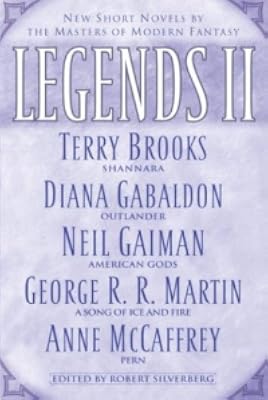
I choose to view this as a pseudo-successor to Robert Silverberg's fantastic "Legends" anthologies. But it only rarely visits established worlds, and it is much broader in the genres it covers:
(3/5) The King of Norway (Cecelia Holland): liked the Viking setting but the characters didn't engage me. The action was nothing special and the ending was too easy.
(4/5) Forever Bound (Joe Haldeman): based on the novel "Forever Peace". Glances off the warrior theme, a story centered on passion versus love.
(4/5) The Triumph (Robin Hobb): a tale of the ancient Rome we know, or so it seems until a dragon's tooth is mentioned.
(3.5/5) Clean Slate (Lawrence Block): contemporary setting and a very different definition of warrior. Carried me nicely to show more the end, but in hindsight I don't find the central character's arc very convincing.
(4/5) And Ministers of Grace (Tad Williams): sci-fi often plays metaphor with our current society. In this tale of a fundamentalist terrorist, that veil is uncomfortably thin. Thoughtful ending.
(5/5) Soldierin' (Joe Lansdale): a Western featuring buffalo soldiers, in which a black man signs up with the U.S. Army to battle the Apaches in 1870; hilarious and well done throughout.
(4/5) Dirae (Peter S. Beagle): it takes a few pages to understand the perspective, but a solid story once you've grasped it.
(3.5/5) The Custom of the Army (Diana Gabaldon): "one for the fans" of her Outlander series I couldn't get past the first entry in, so it's not for me and overlong. But being Canadian and knowing a thing or two about history, I did appreciate the setting.
(5/5) Seven Years from Home (Naomi Novick): sci-fi tale about a galactic confederacy interfering in the civil affairs of planets they want to bring on board. Good morality theme, doesn't take any easy ways out, and the quality of this story is a step up. It's my first encounter with Novick and maybe not my last.
(4/5) The Eagle and the Rabbit (Steven Saylor): adequate Rome vs Carthage tale about men become prisoners and the tough choices set before them.
(3/5) The Pit (James Rollins): a dog story that falls a long way from the Jack London and Richard Adams trees.
(4/5) Out of the Dark (David Weber): the usual story about aliens invading Earth and getting more than they bargained for, with one extra twist. Longer than necessary and heavy on the military jargon, but it goes down fast.
(4/5) The Girl from Avenger (Carrie Vaughn): not much story here, but it sheds welcome light on the WASP program of WW2.
(4/5) Ancient Ways (S.M. Stirling): an updated rescue-the-princess story in the year 2055 of an alternate-history timeline. Thoughtful worldbuilding.
(3.5/5) Ninieslando (Howard Waldrop): preposterous premise with little to say, but possibly what I'd be daydreaming about as a soldier in the trenches of WW1.
(4/5) Recidivist (Gardner Dozois): distant future AI become god-like, with some great throwaway ideas that make this story memorable.
(4/5) My Name is Legion (David Morrell): a story of the French Foreign Legion that sent me to Wikipedia. Feels a bit thin but nothing's wrong with it.
(5/5) Defenders of the Frontier (Robert Silverberg): sparely told tale of frontier soldiers who have served so long that all has become nameless - the enemy, the Empire they serve and where they come from, even themselves. Happy/sad ending. This author's still got what it takes and then some.
(4/5) The Scroll (David Ball): fantastic hook that totally had me engaged and favourably comparing it to short fiction literary classics, but then the story became rushed and the ending is just all wrong. Too bad.
(4/5) The Mystery Knight (George R. R. Martin): the reason I'd expect 90%+ of us bought this anthology, and now you're better served by "A Knight of the Seven Realms" if this is all you wanted. I found it harder to get into than the previous D&E stories, and there's little mystery about where the story is headed. show less
(3/5) The King of Norway (Cecelia Holland): liked the Viking setting but the characters didn't engage me. The action was nothing special and the ending was too easy.
(4/5) Forever Bound (Joe Haldeman): based on the novel "Forever Peace". Glances off the warrior theme, a story centered on passion versus love.
(4/5) The Triumph (Robin Hobb): a tale of the ancient Rome we know, or so it seems until a dragon's tooth is mentioned.
(3.5/5) Clean Slate (Lawrence Block): contemporary setting and a very different definition of warrior. Carried me nicely to show more the end, but in hindsight I don't find the central character's arc very convincing.
(4/5) And Ministers of Grace (Tad Williams): sci-fi often plays metaphor with our current society. In this tale of a fundamentalist terrorist, that veil is uncomfortably thin. Thoughtful ending.
(5/5) Soldierin' (Joe Lansdale): a Western featuring buffalo soldiers, in which a black man signs up with the U.S. Army to battle the Apaches in 1870; hilarious and well done throughout.
(4/5) Dirae (Peter S. Beagle): it takes a few pages to understand the perspective, but a solid story once you've grasped it.
(3.5/5) The Custom of the Army (Diana Gabaldon): "one for the fans" of her Outlander series I couldn't get past the first entry in, so it's not for me and overlong. But being Canadian and knowing a thing or two about history, I did appreciate the setting.
(5/5) Seven Years from Home (Naomi Novick): sci-fi tale about a galactic confederacy interfering in the civil affairs of planets they want to bring on board. Good morality theme, doesn't take any easy ways out, and the quality of this story is a step up. It's my first encounter with Novick and maybe not my last.
(4/5) The Eagle and the Rabbit (Steven Saylor): adequate Rome vs Carthage tale about men become prisoners and the tough choices set before them.
(3/5) The Pit (James Rollins): a dog story that falls a long way from the Jack London and Richard Adams trees.
(4/5) Out of the Dark (David Weber): the usual story about aliens invading Earth and getting more than they bargained for, with one extra twist. Longer than necessary and heavy on the military jargon, but it goes down fast.
(4/5) The Girl from Avenger (Carrie Vaughn): not much story here, but it sheds welcome light on the WASP program of WW2.
(4/5) Ancient Ways (S.M. Stirling): an updated rescue-the-princess story in the year 2055 of an alternate-history timeline. Thoughtful worldbuilding.
(3.5/5) Ninieslando (Howard Waldrop): preposterous premise with little to say, but possibly what I'd be daydreaming about as a soldier in the trenches of WW1.
(4/5) Recidivist (Gardner Dozois): distant future AI become god-like, with some great throwaway ideas that make this story memorable.
(4/5) My Name is Legion (David Morrell): a story of the French Foreign Legion that sent me to Wikipedia. Feels a bit thin but nothing's wrong with it.
(5/5) Defenders of the Frontier (Robert Silverberg): sparely told tale of frontier soldiers who have served so long that all has become nameless - the enemy, the Empire they serve and where they come from, even themselves. Happy/sad ending. This author's still got what it takes and then some.
(4/5) The Scroll (David Ball): fantastic hook that totally had me engaged and favourably comparing it to short fiction literary classics, but then the story became rushed and the ending is just all wrong. Too bad.
(4/5) The Mystery Knight (George R. R. Martin): the reason I'd expect 90%+ of us bought this anthology, and now you're better served by "A Knight of the Seven Realms" if this is all you wanted. I found it harder to get into than the previous D&E stories, and there's little mystery about where the story is headed. show less
The main reason to read this anthology is for George R. R. Martin's The Mystery Knight. It's a good story, not as good as The Hedge Knight but better than The Sworn Sword.
The remaining 19 stories are by different authors and range in setting from ancient Rome to the future. They are generally OK in quality. The ones that stood out to me are:
The Triumph by Robin Hobb: A Roman commander is slowly executed by the Carthaginians while his childhood friend helplessly watches. It's an awesome story with Hobb's characteristic richness of relationship and emotion until a flashback sequence goes on for way too many pages.
Dirae by Peter S. Beagle: a badass story in modern times.
Seven Years from Home by Naomi Novik: A diplomat is sent to a planet show more where people have voluntarily undergone mutation to live in ecoharmony. I loved this story.
Recidivist by Gardner Dozois: When robots become sentient and omnipotent, they won't set out to exterminate humanity. Instead, they'll toy with us and our planet in cruelly creative ways.
The Scroll by David Ball: An evil sultan in 17th century Morocco tests his Christian slave's beliefs, particularly the one against murder.
Also, Warriors begins with a nice intro by GRRM about how the reading material of his childhood came mostly from the haphazardly arranged books on a spinner rack at the local candy store. He therefore experienced books of various genres before knowing that there were genres. The point of Warriors is to get away from genre categorization and bring back the spinner rack experience. show less
The remaining 19 stories are by different authors and range in setting from ancient Rome to the future. They are generally OK in quality. The ones that stood out to me are:
The Triumph by Robin Hobb: A Roman commander is slowly executed by the Carthaginians while his childhood friend helplessly watches. It's an awesome story with Hobb's characteristic richness of relationship and emotion until a flashback sequence goes on for way too many pages.
Dirae by Peter S. Beagle: a badass story in modern times.
Seven Years from Home by Naomi Novik: A diplomat is sent to a planet show more where people have voluntarily undergone mutation to live in ecoharmony. I loved this story.
Recidivist by Gardner Dozois: When robots become sentient and omnipotent, they won't set out to exterminate humanity. Instead, they'll toy with us and our planet in cruelly creative ways.
The Scroll by David Ball: An evil sultan in 17th century Morocco tests his Christian slave's beliefs, particularly the one against murder.
Also, Warriors begins with a nice intro by GRRM about how the reading material of his childhood came mostly from the haphazardly arranged books on a spinner rack at the local candy store. He therefore experienced books of various genres before knowing that there were genres. The point of Warriors is to get away from genre categorization and bring back the spinner rack experience. show less
It's rare for me to finish an anthology and be unable to decide which is my favorite, unable to point out the handful of weak stories. This collection was so strong that I don't think any of the twenty stories fell into the latter category, and I would be hard pressed to choose one for the former.
I enjoyed how many different types of warriors the collection presented, likely and unlikely, stereotypical and anything-but. My biggest criticism is that many of the stories left me wanting more, longing for the next part of the story of that extra bit of depth. But like a meal with twenty small courses, I soon found my attention distracted by the next morsel. Saving the novella-length GRRM story for the end was a wise move, because that tale show more satisfied my appetite and left me content. show less
I enjoyed how many different types of warriors the collection presented, likely and unlikely, stereotypical and anything-but. My biggest criticism is that many of the stories left me wanting more, longing for the next part of the story of that extra bit of depth. But like a meal with twenty small courses, I soon found my attention distracted by the next morsel. Saving the novella-length GRRM story for the end was a wise move, because that tale show more satisfied my appetite and left me content. show less
This is one of the better short story collections I've read lately. It does not measure up to Legends or Legends 2, despite the long list of accomplished contributors. Unfortunately, the editors took liberties with the subject of 'Warriors', and judging from the introduction, they did so deliberately. However, that leaves a collection that is only loosely associated with the title and purpose of the anthology, so what exactly is the purpose? I understand the idea that this was intended to be cross-genre and it accomplished that, but I would have preferred if it was more on topic. I am not usually a big fan of random collections of short stories, though I will admit this is for the most part, a good one.
Some highlights and lowlights:
"The show more King of Norway" by Cecilia Holland - a realistic historical fiction story about Viking warriors. A great way to kick off the anthology.
"Forever Bound" by Joe Haldeman - its hard to go wrong with a Haldeman story, and this isn't an exception.
"Clean Slate" by Lawrence Block - this one I didn't think belonged at all. A female serial killer story?
"Dirae" by Peter S. Beagle - not really a warrior story, more of a comic book hero type story with a twist, but excellent.
"The Eagle and the Rabbit" by Steven Saylor - not really a warrior story, and the 2nd story about Carthage in the collection (??), but good.
"The Pit" by James Rollins - pit fighting dogs. Completely unnecessary.
'Out of the Dark" by David Weber - humans kick alien butt, with a twist. Great stuff.
The last 5 stories are all excellent. "The Mystery Knight" by Martin is maybe the best. I think fans of historical fiction, sci-fi and fantasy will find this collection good to excellent. show less
Some highlights and lowlights:
"The show more King of Norway" by Cecilia Holland - a realistic historical fiction story about Viking warriors. A great way to kick off the anthology.
"Forever Bound" by Joe Haldeman - its hard to go wrong with a Haldeman story, and this isn't an exception.
"Clean Slate" by Lawrence Block - this one I didn't think belonged at all. A female serial killer story?
"Dirae" by Peter S. Beagle - not really a warrior story, more of a comic book hero type story with a twist, but excellent.
"The Eagle and the Rabbit" by Steven Saylor - not really a warrior story, and the 2nd story about Carthage in the collection (??), but good.
"The Pit" by James Rollins - pit fighting dogs. Completely unnecessary.
'Out of the Dark" by David Weber - humans kick alien butt, with a twist. Great stuff.
The last 5 stories are all excellent. "The Mystery Knight" by Martin is maybe the best. I think fans of historical fiction, sci-fi and fantasy will find this collection good to excellent. show less
Members
- Recently Added By
Author Information

George R. R. Martin was born on September 20, 1948 in Bayonne, New Jersey. He began writing at an early age, selling monster stories for pennies to neighborhood children. He received B.S. and M.S. degrees in Journalism from Northwestern University. In 1986, he worked as a story editor for the CBS series The Twilight Zone. He was also an executive show more story consultant, producer and co-supervising producer for CBS's Beauty and the Beast. In 1970, he sold the story The Hero to Galaxy magazine. Since becoming a full-time writer in 1979, he has written many novels, stories, and series including A Song for Lya, Portraits of His Children, The Pear-Shaped Man, and the Song of Ice and Fire series. He has won numerous awards including five Locus Awards, three Hugo Awards and two Nebula awards. In 2013 he made The New York Times Best Seller List with his titles A Dance with Dragons and A Game of Thrones: a Clash of Kings, a Storm of Swords, a Feast for Crows. His title's Rogues and The Ice Dragon made the New York Times List in 2014. Martin's title, A Knight of Seven Kingdoms, A Song of Fire and Ice novel, made the New York Times bestseller list in 2015. He is number 4 on the Hollywood Reporter's '25 Most Powerful Authors' 2016 list. (Bowker Author Biography) show less

Gardner Dozois was born in Salem, Massachusetts on July 23, 1947. After working as an Army journalist, he became a science fiction and fantasy editor and author. He was the founding editor of The Year's Best Science Fiction anthologies and editor of Asimov's from 1984 until 2004. His work as an editor received more than 40 Hugo Awards, 40 Nebula show more Awards, and 30 Locus Awards. He received the Hugo Award for Best Professional Editor 15 times between 1988 and his retirement from Asimov's in 2004. He wrote books including Strangers and short stories including The Peacemaker and Morning Child, which won the Nebula Award for Short Story in 1983 and 1984, respectively. He also collaborated with George R. R. Martin on a series of themed anthologies including Songs of the Dying Earth, Old Mars, Dangerous Women, and Rogues. In 2011, Dozois was inducted into the Science Fiction Hall of Fame. He died on May 27, 2018 at the age of 70. (Bowker Author Biography) show less
All Editions
Awards and Honors
Awards
Series

Work Relationships
Is contained in
Contains
Common Knowledge
- Canonical title
- Warriors
- Alternate titles
- The King of Norway / Cecelia Holland; Forever Bound / Joe Haldeman; The Triumph / Robin Hobb; Clean Slate / Lawrence Block; And Ministers of Grace / Tad Williams; Soldierin' / Joe R. Lansdale (show all 20); Dirae / Peter S. Beagle; The Custom of the Army / Diana Gabaldon; Seven Years from Home / Naomi Novik; The Eagle and the Rabbit / Steven Saylor; The Pit / James Rollins; Out of the Dark / David Weber; The Girls from Avenger / Carrie Vaughn; Ancient Ways / S.M. Stirling; Ninieslando / Howard Waldrop; Recidivist / Gardner Dozois; My Name is Legion / David Morrell; Defenders of the Frontier / Robert Silverberg; The Scroll / David Ball; The Mystery Knight / George R.R. Martin
- Original publication date
- 2010-03-16
- People/Characters
- Duncan the Tall (Dunk); Aegon Targaryen (Egg); Lord John Grey; Brynden Rivers (Lord Bloodraven); Walder Frey; Uthor Underleaf (show all 11); Glendon Ball; Gorman Peake; John the Fiddler (Daemon Targaryen); Maynard Plumm; Aemon Targaryen
- Dedication
- To Lauren and Jeff,
to Tyler and Isabella,
to Sean and Dean,
may you be strangers to war - Original language
- English
Classifications
Statistics
- Members
- 703
- Popularity
- 40,429
- Reviews
- 24
- Rating
- (3.77)
- Languages
- English
- Media
- Paper, Audiobook, Ebook
- ISBNs
- 10
- ASINs
- 7