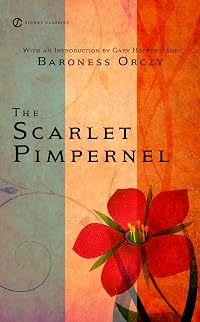
The Scarlet Pimpernel
by Baroness Orczy
The Scarlet Pimpernel, French Publication Order (1), The Scarlet Pimpernel (1)
On This Page
Description
In 1792, during the French Revolution's Reign of Terror, an English aristocrat known to be an ineffectual fop is actually a master of disguises who, with a small band of dedicated friends, undertakes dangerous missions to save members of the French nobility from the guillotine.Tags
Recommendations


















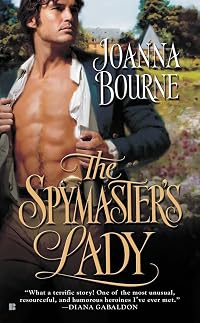
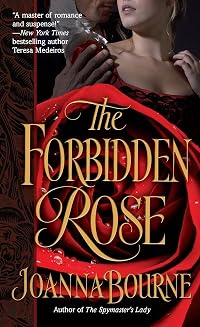

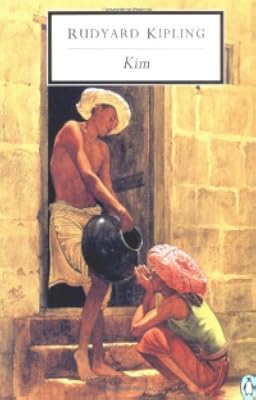
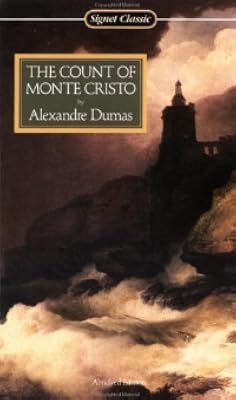



Member Recommendations


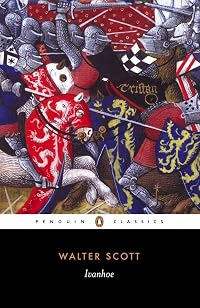
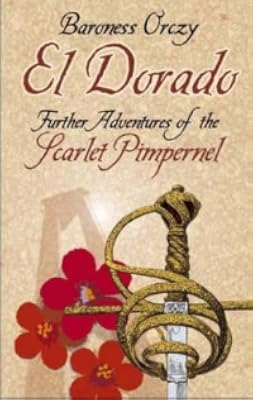
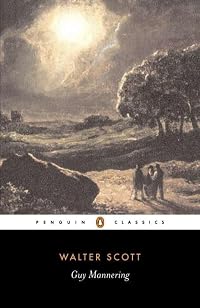
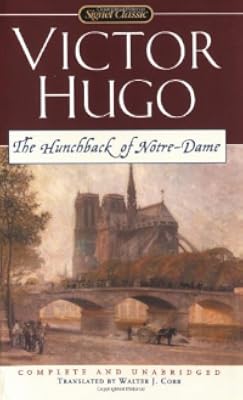
Morryman84 Both involve the French Revolution
Also recommended by MarcusBrutus, Morryman84
81

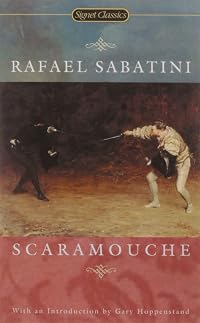
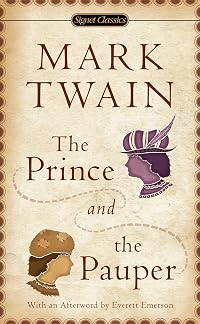
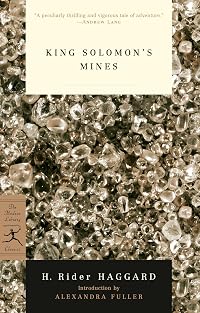
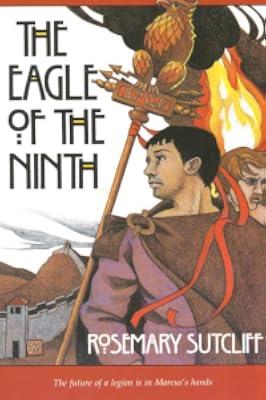
Morryman84 Both are swashbuckling adventures
Also recommended by morryb
50


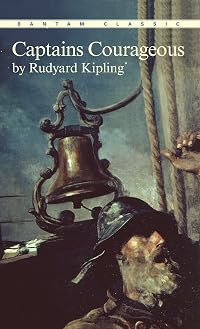
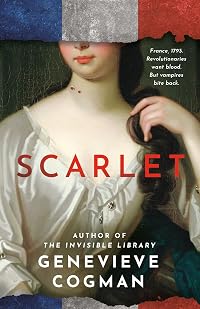
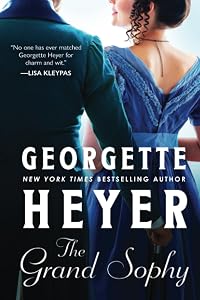
Caramellunacy A young adult historical fantasy set during the breathless build-up to the French Revolution/the Terror. A dastardly villain, a string of creepy murders & an intriguing psychic gift make this a lot of fun.



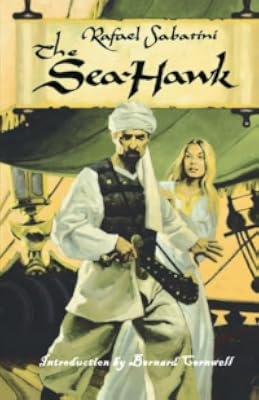
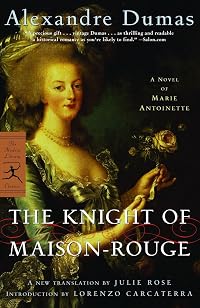
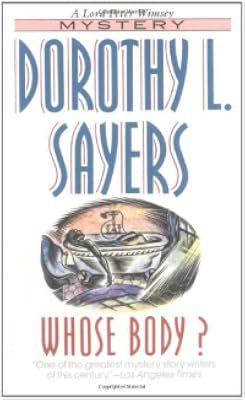
EECarter Set during the French Revolution. A romance. A guest appearance by Sir Percy Blakeney.

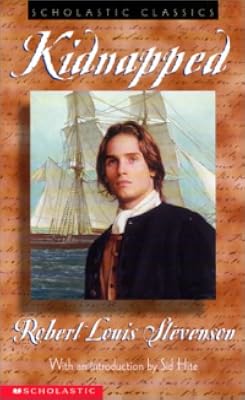
AbigailAdams26 This work of historical fiction for children is another tale of French aristocrats being rescued during the Terror, and even features Baron de Batz, who appears in some of the later Scarlet Pimpernel books.
Member Reviews
Marguerite St. Just was a beautiful, anti-Monarchist, French actress who fell in love with and married Sir Percy Blakeney, a handsome, rich, stupid, English aristocrat. Her brother, Armand, fell in love with a French Marquis’ daughter and was beaten almost to death for daring to love above his class. In revenge, Marguerite exposed the Marquis’ plot with Austria to overthrow the French government, resulting in the execution of the Marquis and his family. Now, Marguerite feels terrible guilt and is lightly resented by her husband and her wealthy peers over it. (But she mostly doesn't care because she's busy telling anyone who will listen how stupid her husband is, and also because no one actually shuns her because that would be show more common.)
Meanwhile, a League of wealthy English aristocrats are secretly working together to rescue wealthy French aristocrats from the common people of Paris, led by a mysterious man who signs his correspondence with a red flower (scarlet pimpernel). A French envoy to England, Chauvelin, discovers that Armand is helping the Scarlet Pimpernel (why would he do that? no reason given) and blackmails Marguerite into giving him information about the Pimpernel’s identity. Marguerite discovers that her husband is the Scarlet Pimpernel and is only pretending to be stupid and so now she loves him again, but it's almost too late. She races to France to warn Percy before Chauvelin captures him, but only finds an incredibly racist stereotype of a Jewish man. After hours of hiding in the back of an inn and then in the back of a wagon waiting for her husband, Marguerite is surprised to learn that the Jewish man was the Pimpernel all along! No one recognized him because Percy is super hot and the incredibly racist Jewish stereotype was so ugly. He has already tricked Chauvelin and rescued Armand, and Marguerite was so brave to hide in the back of that wagon so he forgives her for, uh, calling out a traitor.
It's really hard to put into words how much I hated this. The entire premise of the story relies on the “truth” that aristocrats are unquestionably superior to everyone else. The one non-aristocratic character whose thoughts we are privy to, an innkeeper, sincerely believes that he is privileged to be allowed to serve the members of the League who visit his business. The evidence that the commoners of France are bad people is that a similar French innkeeper only provides room and board in exchange for money without being deferential enough to the “well-born” customers. Quelle horreur! The only interesting dynamic here is that the English hate the French so much that it's almost subversive to care about even their most privileged elite. Nothing brings sworn enemies together like class war, I guess.
The age of the book is no excuse. 1905 is fifty years after Dickens was writing about social justice and over a century is plenty of hindsight to write about the French Revolution. Even Shakespeare managed to tell stories about aristocrats while writing their servants as fleshed-out human beings with their own thoughts and opinions. The book is only a “product of its time” in that the author was desperately clinging to the empire that gave her barony its power as it was about to decline and fall.
There is no doubt that the French Revolution and the Reign of Terror far overreached its original objective and executed many clergy and commoners accused of crimes without evidence or trial. However, the Scarlet Pimpernel does not care about them. There is no discussion among the members of the League about stopping the Reign of Terror, rescuing anyone else, or even destroying a guillotine or two. He only rescues wealthy and powerful aristocrats (whom the book repeatedly calls “innocents”).
The alleged cultural value of this story is as the prototype of a swashbuckling hero with a secret identity and a love triangle where two of the sides are the same person in disguise. However, I wouldn't consider rescuing aristocrats to be particularly heroic, and the only swashbuckling actions we see the Pimpernel take are disguising himself as an old woman and a gross stereotype. The doltish Percy is admittedly a great ruse, but Marguerite never has strong feelings about the Pimpernel one way or the other until after she discovers he's really her husband. I did enjoy that the book was so close on Marguerite's point of view throughout, so we always know her thoughts and the story is revealed to the audience at the same time as her, but that becomes a detriment in the second half of the book when she spends hours hiding in small spaces so she can watch the real action happen.
There could be some purpose in teaching this book in school literature class to show how the values and beliefs of an artist are reflected in their art, but there doesn't seem to be much critical analysis to that end around the internet. The story is culturally beloved but I didn't find anything to appreciate here aside from the audiobook narrator's hilarious foppish accent. show less
Meanwhile, a League of wealthy English aristocrats are secretly working together to rescue wealthy French aristocrats from the common people of Paris, led by a mysterious man who signs his correspondence with a red flower (scarlet pimpernel). A French envoy to England, Chauvelin, discovers that Armand is helping the Scarlet Pimpernel (why would he do that? no reason given) and blackmails Marguerite into giving him information about the Pimpernel’s identity. Marguerite discovers that her husband is the Scarlet Pimpernel and is only pretending to be stupid and so now she loves him again, but it's almost too late. She races to France to warn Percy before Chauvelin captures him, but only finds an incredibly racist stereotype of a Jewish man. After hours of hiding in the back of an inn and then in the back of a wagon waiting for her husband, Marguerite is surprised to learn that the Jewish man was the Pimpernel all along! No one recognized him because Percy is super hot and the incredibly racist Jewish stereotype was so ugly. He has already tricked Chauvelin and rescued Armand, and Marguerite was so brave to hide in the back of that wagon so he forgives her for, uh, calling out a traitor.
It's really hard to put into words how much I hated this. The entire premise of the story relies on the “truth” that aristocrats are unquestionably superior to everyone else. The one non-aristocratic character whose thoughts we are privy to, an innkeeper, sincerely believes that he is privileged to be allowed to serve the members of the League who visit his business. The evidence that the commoners of France are bad people is that a similar French innkeeper only provides room and board in exchange for money without being deferential enough to the “well-born” customers. Quelle horreur! The only interesting dynamic here is that the English hate the French so much that it's almost subversive to care about even their most privileged elite. Nothing brings sworn enemies together like class war, I guess.
The age of the book is no excuse. 1905 is fifty years after Dickens was writing about social justice and over a century is plenty of hindsight to write about the French Revolution. Even Shakespeare managed to tell stories about aristocrats while writing their servants as fleshed-out human beings with their own thoughts and opinions. The book is only a “product of its time” in that the author was desperately clinging to the empire that gave her barony its power as it was about to decline and fall.
There is no doubt that the French Revolution and the Reign of Terror far overreached its original objective and executed many clergy and commoners accused of crimes without evidence or trial. However, the Scarlet Pimpernel does not care about them. There is no discussion among the members of the League about stopping the Reign of Terror, rescuing anyone else, or even destroying a guillotine or two. He only rescues wealthy and powerful aristocrats (whom the book repeatedly calls “innocents”).
The alleged cultural value of this story is as the prototype of a swashbuckling hero with a secret identity and a love triangle where two of the sides are the same person in disguise. However, I wouldn't consider rescuing aristocrats to be particularly heroic, and the only swashbuckling actions we see the Pimpernel take are disguising himself as an old woman and a gross stereotype. The doltish Percy is admittedly a great ruse, but Marguerite never has strong feelings about the Pimpernel one way or the other until after she discovers he's really her husband. I did enjoy that the book was so close on Marguerite's point of view throughout, so we always know her thoughts and the story is revealed to the audience at the same time as her, but that becomes a detriment in the second half of the book when she spends hours hiding in small spaces so she can watch the real action happen.
There could be some purpose in teaching this book in school literature class to show how the values and beliefs of an artist are reflected in their art, but there doesn't seem to be much critical analysis to that end around the internet. The story is culturally beloved but I didn't find anything to appreciate here aside from the audiobook narrator's hilarious foppish accent. show less
Every now and again, I check for retellings of my favourite classic books, but instead of a fresh take on The Scarlet Pimpernel, I found this and my mind boggled. 'Translated in modern English'? The original novel (1905) is written in modern English! Orczy is hardly Shakespeare or Chaucer. Anyway, with the 'translation' was free on Kindle Unlimited, how could I resist the experiment?
As the old folks on Facebook say, LOL. Did somebody get paid for ruining a 120 year old classic story, or was AI involved? Random words are changed to either no purpose - 'Ugh!' for 'Bah!' - or with the effect of inadvertently changing the meaning ('the bays had transformed into the massive gates of her beautiful English home' - neat trick!) Some French show more terms are taken out, others left alone. Historical terms relative to the eighteenth century era of the story are hilariously modernised, so that 'Jellyband switched off the vintage lamp', Chauvelin's spies have 'radar', and Marguerite's 'car' is waiting outside.
But oy vey, the dialogue surely wins the 'WTF?' award here. I knew I was in trouble when Marguerite announced 'Leave the poor guy alone!' and asked 'What's got you riled up?' instead of her original cutting remark of, 'What fly stings you, pray?' Chauvelin gushes, 'Oh wow! Is it really that bad?' like a teenager, and apparently Lord Hastings visited Suzanne's 'Mom' with an update about her 'Dad'. The most heinous transgression, however, is this:
We search for him here, we search for him there,
Those French folks hunt for him everywhere.
Is he in heaven? Or is he in hell?
That damned, elusive Pimpernel!
COME ON! Even those who haven't read the novel, and can't read in general, know 'They seek him here ...' Mucking up the national anthem ("May he reign over us for a long time, God save the King!) was forgivable compared to that disaster.
If you're so ridiculously dense that a 'translation' of a twentieth century novel is required, please stay away from my favourite novels. I'm not even ranking this one in case one star drags down the original title.
A crime against fiction. show less
As the old folks on Facebook say, LOL. Did somebody get paid for ruining a 120 year old classic story, or was AI involved? Random words are changed to either no purpose - 'Ugh!' for 'Bah!' - or with the effect of inadvertently changing the meaning ('the bays had transformed into the massive gates of her beautiful English home' - neat trick!) Some French show more terms are taken out, others left alone. Historical terms relative to the eighteenth century era of the story are hilariously modernised, so that 'Jellyband switched off the vintage lamp', Chauvelin's spies have 'radar', and Marguerite's 'car' is waiting outside.
But oy vey, the dialogue surely wins the 'WTF?' award here. I knew I was in trouble when Marguerite announced 'Leave the poor guy alone!' and asked 'What's got you riled up?' instead of her original cutting remark of, 'What fly stings you, pray?' Chauvelin gushes, 'Oh wow! Is it really that bad?' like a teenager, and apparently Lord Hastings visited Suzanne's 'Mom' with an update about her 'Dad'. The most heinous transgression, however, is this:
We search for him here, we search for him there,
Those French folks hunt for him everywhere.
Is he in heaven? Or is he in hell?
That damned, elusive Pimpernel!
COME ON! Even those who haven't read the novel, and can't read in general, know 'They seek him here ...' Mucking up the national anthem ("May he reign over us for a long time, God save the King!) was forgivable compared to that disaster.
If you're so ridiculously dense that a 'translation' of a twentieth century novel is required, please stay away from my favourite novels. I'm not even ranking this one in case one star drags down the original title.
A crime against fiction. show less
They seek him here,
They seek him there,
Those Frenchies seek him everywhere.
What fun! An old-fashioned rollicking romance, with dashing young cavaliers and twisted misunderstandings between lovers, set against the horrors of the French Reign of Terror. The Scarlet Pimpernel himself is slightly more daring and strong than his followers and clever enough to be an Oscar Wilde character.
I admit to not being surprised by a single turn of the storyline. I suspect that I saw this in movie form back in my childhood. But that hardly mattered. I loved the horrible predicaments Marguerite found herself in, the dastardly nature of Chevelin, and the unassailable British character of Sir Percy. Truth is, when we are young girls we dream of a man who show more is strong, handsome, owns a yacht, and will have eyes for no one but ourselves. Reading this novel made me feel young again. show less
They seek him there,
Those Frenchies seek him everywhere.
What fun! An old-fashioned rollicking romance, with dashing young cavaliers and twisted misunderstandings between lovers, set against the horrors of the French Reign of Terror. The Scarlet Pimpernel himself is slightly more daring and strong than his followers and clever enough to be an Oscar Wilde character.
I admit to not being surprised by a single turn of the storyline. I suspect that I saw this in movie form back in my childhood. But that hardly mattered. I loved the horrible predicaments Marguerite found herself in, the dastardly nature of Chevelin, and the unassailable British character of Sir Percy. Truth is, when we are young girls we dream of a man who show more is strong, handsome, owns a yacht, and will have eyes for no one but ourselves. Reading this novel made me feel young again. show less
Lady Blakeney, the sine qua non of fashionable English society, hides behind her quick wit the secret sorrow of a husband who is no longer the man she fell in love with. Little does she know the secret pain behind her husband's own mask...
Also there is dashing derring-dos - but really (if you've ever seen the movie) it's quite startling how nearly-entirely the novel is from Marguerite's point of view and how focused it is on their marriage.
This book isn't really "good literature" but it is awfully fun.
Also there is dashing derring-dos - but really (if you've ever seen the movie) it's quite startling how nearly-entirely the novel is from Marguerite's point of view and how focused it is on their marriage.
This book isn't really "good literature" but it is awfully fun.
I am a few chapters into the book and noticing that the narrative tone is very pro-aristocrat, which feels odd for my time. I guess the Baroness lived at a time when wealth and education were less morally compromised in our imagination. The story is more adventurous, less philosophical.
Further on the story becomes more engrossing. The action is attention-grabbing, and the machinations of Chauvelin, the compromised position of Lady Marguerite, combine to create a higher level of tension. I also notice that the identity of the Scarlet Pimpernel remains hidden, unlike the film. In fact, the point of view stays almost exlusively with Marguerite, which adds to the layer of mystery, but sometimes detracts from the sense of plot.
As I finish show more the story, it seems that the best part was in the middle: Marguerite's climactic confrontation with Percy, her discovery, and then her rapid adventure to France. I see all the elements that made the Leslie Howard film so powerful and atmospheric. But the final heroic act stretches the imagination a little too far. show less
Further on the story becomes more engrossing. The action is attention-grabbing, and the machinations of Chauvelin, the compromised position of Lady Marguerite, combine to create a higher level of tension. I also notice that the identity of the Scarlet Pimpernel remains hidden, unlike the film. In fact, the point of view stays almost exlusively with Marguerite, which adds to the layer of mystery, but sometimes detracts from the sense of plot.
As I finish show more the story, it seems that the best part was in the middle: Marguerite's climactic confrontation with Percy, her discovery, and then her rapid adventure to France. I see all the elements that made the Leslie Howard film so powerful and atmospheric. But the final heroic act stretches the imagination a little too far. show less
This was my classics book club's first pick for the new year, and I confess that I did not finish it nor did I feel like finishing it was necessary. The prose is very, very repetitive just to make sure that the reader doesn't get confused on what is really a quite simplistic plot. With all that padding--and so much of it is so purple, my eyes couldn't roll any harder--the book seems more meaty than it actually is. There really is no there there. And can I say that it feels extremely odd to read something in this particular time that glorifies a rich, well-born, privileged hero rescuing other rich, well-born, privileged people from the consequences of their actions? So this possibly is the first appearance of the trope of the superhero show more with a secret identity in popular culture, but certainly, I don't need to read all that overstuffed prose to figure that out. show less
I first read The Scarlet PImpernel over ten years ago, after catching half of the 1982 film and being intrigued by the characters, and have revisited Blakeney Manor and Paris on a regular basis ever since then. I also own many copies of the Baroness' definitive secret hero novel, thanks to my rule of 'new copy, new read'! And who could resist the beautiful hardback editions of the Macmillan Collector's Library?
'A book will live by the characters that people its story, characters that make the story real; it will never live by the story alone, however well constructed or interesting it may be. Do not be afraid about the future of your Scarlet Pimpernel. It will live because of its character long after far finer books have gone the way of show more oblivion.'
So the novelist Arnold Bennett once told the Baroness, with withering sarcasm - and he was bang on! Any reader who doesn't know about Orczy's original novel will no doubt be able to quote at least a line of Sir Percy Blakeney's verse: 'They seek him here ...' Blakeney and his alter ego - ironic spoiler alert! - are what maketh the book, leaving finer details like plot, historical setting and possibly even Marguerite, the Pimpernel's beautiful wife, for new generations of fans to discover via stage and screen productions. Orczy claimed that the personality of the Scarlet Pimpernel came to her while waiting on the Underground for a train to Kensington - 'I saw him in his exquisite clothes, his slender hands holding up his spy-glass: I heard his lazy drawling speech, his quaint laugh' - and that she promptly went home and dashed off the novel in five weeks. Apparently a 'round dozen' of publishers rejected her inspired manuscript, until one publisher sent the book to his mother for approval ('she is quite unsophisticated but knows what she likes'), after which Greening and Co. accepted The Scarlet Pimpernel, and the rest is history. (Undaunted by the negative treatment of her novel, Orczy also rewrote the story as a play, hoping to release both versions at the same time, but Fred Terry and Julia Neilson tweaked and promoted the stage production into a success two years before Mr Greening's mother gave the printed version the go-ahead.)
For those not in the know, the precis of the Baroness' magnum opus is probably more enticing than the actual novel, although I love the book dearly. While France is 'seething' in revolution, Marguerite Blakeney, a French actress lately married to tall, handsome but intellectually challenged English fop, is approached in Dover by a former acquaintance, the ex-Ambassador Armand Chauvelin, and blackmailed into helping him discover the identity of the mysterious and - yes - elusive Scarlet Pimpernel, who has been saving aristocrats from the guillotine across the Channel. I'm not sure if anyone is really surprised by the supposed secret identity of the Pimpernel these days, but for me, the heart of the story - and the reason why I fell in love with Orczy's novels nearly ten years ago - is the captivating heroine, Marguerite St Just, and the troubled, passionate, soul-deep OTP of her love for her husband, the Scarlet Pimpernel. I'm really that much of a girl.
Marguerite, Lady Blakeney, the oft misguided, always impulsive wife of Sir Percy, tends to drive modern readers mad. The first novel claims that she is 'the cleverest woman in Europe' - which I take to mean verbally witty, not overly intelligent or even very perceptive, but hey ho - yet Marguerite seems to spend the bulk of the series getting herself into trouble and waiting for her husband to rescue her. She is kidnapped or blackmailed in at least four novels, and probably only escapes in the others because she is reduced to walk-on roles. The Lady Blakeney version of being an 'active' heroine is to repeatedly take off across the Channel after her husband, whether he wants her with him or not. And not only is she forever falling into Chauvelin's cunning traps, but the trap is rarely more than a variation on a theme - she never learns!
But the same man passionately in love with such a woman as Marguerite Blakeney would count the world well lost for her sake.
In an age of retroactive gender equality in historical novels, Marguerite is surely an anachronism. But her charm for me is exactly that - she's a woman, she's weak, but she is also believable - the modern reader might want the heroine to get herself out of trouble every once in a while, but Marguerite can only do the best she can with what she has. Her wealth, status and reputation belong to Sir Percy - she gave up her own independence when she married and left Paris for England. So if enforced domesticity, beauty over brawn, and the occasional swoon work better for this heroine than shooting her way out of a tight corner, then who are her twenty-first century readers to argue? I love Marguerite for being a complete Mary Sue - beautiful, alluring, a man's woman who knows how to get what she wants, and an adored French actress to boot - but brave enough to risk all for those she loves. Granted, she is at her sharp-tongued, vivacious best in The Scarlet Pimpernel, taunting the haughty old Comtesse and flirting with her husband's friends and the Prince of Wales, but she remains a class act throughout the series.
Sir Percy has been captured in the lazy humour of Leslie Howard, the underlying intensity of Anthony Andrews, and the - (ahem) stature - of Douglas Sills. He is, to borrow a phrase, a riddle wrapped in a mystery inside an enigma - raised on the lonely childhood of all romance heroes, brought up by an 'imbecile mother and a distracted father', only to inherit a fortune and marry the most revered actress in Paris after a whirlwind courtship. Sir Percy is handsome, well dressed, stinking rich and popular. The Scarlet Pimpernel is a brave and noble hero, who is constantly placing the lives of others before his own. What's not to love? Admittedly, Blakeney can become a little tiring, because he must always be right to the point of omniscience, but he is so demmed loveable with his 'six foot odd of gorgeousness' and supernatural good fortune. He and Marguerite are (literally) made for each other - consummate performers, they are both attractive, passionate and secretive.
If there is anyone who hasn't read The Scarlet Pimpernel, I can only recommend that they do so immediately! show less
'A book will live by the characters that people its story, characters that make the story real; it will never live by the story alone, however well constructed or interesting it may be. Do not be afraid about the future of your Scarlet Pimpernel. It will live because of its character long after far finer books have gone the way of show more oblivion.'
So the novelist Arnold Bennett once told the Baroness, with withering sarcasm - and he was bang on! Any reader who doesn't know about Orczy's original novel will no doubt be able to quote at least a line of Sir Percy Blakeney's verse: 'They seek him here ...' Blakeney and his alter ego - ironic spoiler alert! - are what maketh the book, leaving finer details like plot, historical setting and possibly even Marguerite, the Pimpernel's beautiful wife, for new generations of fans to discover via stage and screen productions. Orczy claimed that the personality of the Scarlet Pimpernel came to her while waiting on the Underground for a train to Kensington - 'I saw him in his exquisite clothes, his slender hands holding up his spy-glass: I heard his lazy drawling speech, his quaint laugh' - and that she promptly went home and dashed off the novel in five weeks. Apparently a 'round dozen' of publishers rejected her inspired manuscript, until one publisher sent the book to his mother for approval ('she is quite unsophisticated but knows what she likes'), after which Greening and Co. accepted The Scarlet Pimpernel, and the rest is history. (Undaunted by the negative treatment of her novel, Orczy also rewrote the story as a play, hoping to release both versions at the same time, but Fred Terry and Julia Neilson tweaked and promoted the stage production into a success two years before Mr Greening's mother gave the printed version the go-ahead.)
For those not in the know, the precis of the Baroness' magnum opus is probably more enticing than the actual novel, although I love the book dearly. While France is 'seething' in revolution, Marguerite Blakeney, a French actress lately married to tall, handsome but intellectually challenged English fop, is approached in Dover by a former acquaintance, the ex-Ambassador Armand Chauvelin, and blackmailed into helping him discover the identity of the mysterious and - yes - elusive Scarlet Pimpernel, who has been saving aristocrats from the guillotine across the Channel. I'm not sure if anyone is really surprised by the supposed secret identity of the Pimpernel these days, but for me, the heart of the story - and the reason why I fell in love with Orczy's novels nearly ten years ago - is the captivating heroine, Marguerite St Just, and the troubled, passionate, soul-deep OTP of her love for her husband, the Scarlet Pimpernel. I'm really that much of a girl.
Marguerite, Lady Blakeney, the oft misguided, always impulsive wife of Sir Percy, tends to drive modern readers mad. The first novel claims that she is 'the cleverest woman in Europe' - which I take to mean verbally witty, not overly intelligent or even very perceptive, but hey ho - yet Marguerite seems to spend the bulk of the series getting herself into trouble and waiting for her husband to rescue her. She is kidnapped or blackmailed in at least four novels, and probably only escapes in the others because she is reduced to walk-on roles. The Lady Blakeney version of being an 'active' heroine is to repeatedly take off across the Channel after her husband, whether he wants her with him or not. And not only is she forever falling into Chauvelin's cunning traps, but the trap is rarely more than a variation on a theme - she never learns!
But the same man passionately in love with such a woman as Marguerite Blakeney would count the world well lost for her sake.
In an age of retroactive gender equality in historical novels, Marguerite is surely an anachronism. But her charm for me is exactly that - she's a woman, she's weak, but she is also believable - the modern reader might want the heroine to get herself out of trouble every once in a while, but Marguerite can only do the best she can with what she has. Her wealth, status and reputation belong to Sir Percy - she gave up her own independence when she married and left Paris for England. So if enforced domesticity, beauty over brawn, and the occasional swoon work better for this heroine than shooting her way out of a tight corner, then who are her twenty-first century readers to argue? I love Marguerite for being a complete Mary Sue - beautiful, alluring, a man's woman who knows how to get what she wants, and an adored French actress to boot - but brave enough to risk all for those she loves. Granted, she is at her sharp-tongued, vivacious best in The Scarlet Pimpernel, taunting the haughty old Comtesse and flirting with her husband's friends and the Prince of Wales, but she remains a class act throughout the series.
Sir Percy has been captured in the lazy humour of Leslie Howard, the underlying intensity of Anthony Andrews, and the - (ahem) stature - of Douglas Sills. He is, to borrow a phrase, a riddle wrapped in a mystery inside an enigma - raised on the lonely childhood of all romance heroes, brought up by an 'imbecile mother and a distracted father', only to inherit a fortune and marry the most revered actress in Paris after a whirlwind courtship. Sir Percy is handsome, well dressed, stinking rich and popular. The Scarlet Pimpernel is a brave and noble hero, who is constantly placing the lives of others before his own. What's not to love? Admittedly, Blakeney can become a little tiring, because he must always be right to the point of omniscience, but he is so demmed loveable with his 'six foot odd of gorgeousness' and supernatural good fortune. He and Marguerite are (literally) made for each other - consummate performers, they are both attractive, passionate and secretive.
If there is anyone who hasn't read The Scarlet Pimpernel, I can only recommend that they do so immediately! show less
Members
- Recently Added By
Lists

The Guardian's 1000 Novels Everyone Must Read
1,005 works; 551 members

Classics you know you should have read but probably haven't
421 works; 409 members

Best Historical Fiction
620 works; 261 members

Read the book and saw the movie
1,170 works; 193 members

Favourite Books
1,820 works; 316 members

Best Spy Fiction
153 works; 102 members

Recommend the 20 best books you've read in the last five years
2,168 works; 607 members

1900s (Decade, not century)
73 works; 17 members

Best Adventure Stories
66 works; 15 members

Unread books
1,063 works; 87 members
Folio Society
831 works; 53 members

Books Set in Great Britain
191 works; 13 members

Movie Adaptations
111 works; 4 members

Books You Read During High School (For School)
301 works; 53 members

1920s
141 works; 6 members

Fiction Set During a Revolution
55 works; 24 members

Books Mentioned In The Chalet School Series
9 works; 1 member

Carole's List
445 works; 13 members
Revolutions
72 works; 5 members

Books Read in 2023
5,638 works; 147 members

Books with Colourful Titles
171 works; 8 members
CCE 1000 Good Books List
1,033 works; 12 members
Overdue Podcast
808 works; 9 members

Books Read in 2016
4,666 works; 197 members
Paris, City of Lights
103 works; 17 members

Best Books Read in 2016
12 works; 1 member

Generation Joshua
115 works; 3 members

Books I've read
87 works; 2 members

Books Read in 2017
4,249 works; 130 members

Books I Own But Haven't Read
144 works; 2 members
Haycraft Queen Cornerstones
181 works; 3 members
Set in the 18th century
13 works; 4 members

Books Read in 2004
212 works; 7 members

Favourite Books
50 works; 1 member

Art Bourgeau's Favorites [Mystery Lovers Companion, 1986]
124 works; 2 members

Books With the Most Memorable Titles
478 works; 158 members

Books Read in 2024
4,727 works; 128 members

TBR of Books I Don't Own
132 works; 1 member

Dishonorable Mentions of 2024
8 works; 2 members
Classics Book Club 2025
11 works; 1 member

Book wishlist
78 works; 1 member

Books We Couldn't Put Down
443 works; 197 members

Books With Trees and Plants in the Title
27 works; 2 members
Books mentioned in Julian Symons’ Bloody Murder
438 works; 6 members

Book Titles Mentioned In Newberry Medal And Honor Books
884 works; 3 members

Ambleside Books
459 works; 18 members

Books Read in 2021
5,361 works; 114 members

Women of Intelligence
27 works; 1 member
The League of Extraordinary Gentlemen
87 works; 4 members
Works Referenced in The League of Extraordinary Gentlemen
122 works; 6 members

A Rainbow of Books: Colors in the Title
570 works; 24 members

Sonlight Books
1,487 works; 25 members
Swashbucklers
29 works; 6 members

Books referenced in the Astral Library
60 works; 1 member

Blue Pyramid 1,276 Best Books of All Time
1,248 works; 32 members
20th Century Literature
1,161 works; 55 members
Author Information

214+ Works 14,689 Members
Some Editions
Awards and Honors
Notable Lists
Series


Belongs to Publisher Series
Bolsillo (52)
Airmont Classics (28)
Penguin English Library, 2012 series (2018-06)
Work Relationships
Is contained in
Is retold in
Has the adaptation
Is abridged in
Is parodied in
Inspired
Has as a reference guide/companion
Has as a student's study guide
Common Knowledge
- Canonical title
- The Scarlet Pimpernel
- Original title
- The Scarlet Pimpernel
- Alternate titles*
- Zoektocht naar gerechtigdheid; De Roode Pimpernel; De Rode Pimpernel. Dl. 1: Zoektocht naar gerechtigdheid
- Original publication date
- 1905
- People/Characters
- Sir Percy Blakeney / The Scarlet Pimpernel; Marguerite St. Just Blakeney; Armand Chauvelin (Ex-Ambassador); Suzanne de Tournay; Lord Anthony Dewhurst; Sir Andrew Ffoulkes (show all 9); Armand St. Just; George IV, King of the United Kingdom (as George, Prince of Wales); Lord Edward Hastings
- Important places
- Dover, Kent, England, UK; London, England, UK; Paris, France; Calais, France
- Important events
- French Revolution (1789-1799); Reign of Terror (1793-1794)
- Related movies
- The Scarlet Pimpernel (1917 | IMDb); The Scarlet Pimpernel (1934 | IMDb); The Scarlet Pimpernel (1955 | IMDb); The Scarlet Pimpernel (1982 | IMDb); The Scarlet Pimpernel (1999 | IMDb)
- First words
- A surging, seething, murmuring crowd of beings that are human only in name, for to the eye and ear they seem naught but savage creatures, animated by vile passions and by the lust of vengeance and of hate.
- Quotations
- We seek him here,
we seek him there,
Those Frenchies seek him everywhere.
Is he in heaven? -
Is he in hell?
That damned, elusive Pimpernel!
A surging, seething, murmuring crowd of beings that are human only in name, for to the eye and ear they seem naught but savage creatures, animated by vile passions and by the lust of vengeance and of hate. The hour, some litt... (show all)le time before sunset, and the place, the West Barricade, at the very spot where, a decade later, a proud tyrant raised an undying monument to the nation's glory and his own vanity.
(Chapter 1) - Last words
- (Click to show. Warning: May contain spoilers.)It is also a fact that M. Chauvelin, the accredited agent of the French Republican Government, was not present at that or any other social function in London, after that memorable evening at Lord Grenville's ball.
- Original language
- English
*Some information comes from Common Knowledge in other languages. Click "Edit" for more information.
Classifications
Statistics
- Members
- 10,081
- Popularity
- 985
- Reviews
- 211
- Rating
- (3.98)
- Languages
- 16 — Catalan, Chinese, Danish, Dutch, English, Finnish, French, German, Hungarian, Italian, Japanese, Korean, Norwegian (Bokmål), Spanish, Swedish, Turkish
- Media
- Paper, Audiobook, Ebook
- ISBNs
- 388
- UPCs
- 4
- ASINs
- 193