On This Page
Description
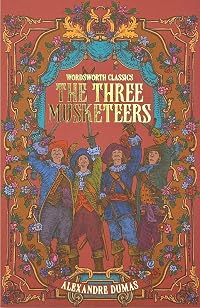
The Three Musketeers follows the young d'Artagnan in his quest to become a musketeer. He befriends the three musketeers Athos, Porthos and Aramis, whose motto is "all for one, one for all."The novel is the first in Dumas' d'Artagnan Romances trilogy.
.
Tags
Recommendations























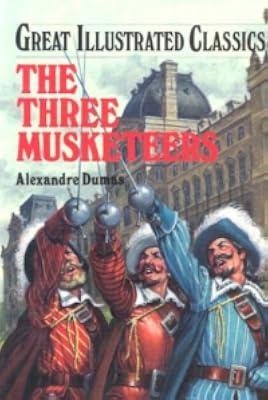
Member Recommendations




by anonymous user
Member Reviews
This is so absurd, it has to be a satire. Most characters demonstrate how deplorable humans can be to each other. Even among this cast, Athos is the clear winner for most terrifying psychopath. But, I like dark - particularly how the casual cruelty was often more horrific than the intentional. And gotta love that after all that violence, death, and destruction - the "hero" ends up in bed with the "villain". But what an endearing story of adventure and friendship! ROFLMAO.
---
Then, casting a last glance at the handsome young man, who was barely twenty-five years old, and whom he left lying there, insensible and perhaps dead, d'Artagnan heaved a sigh over the strange destiny that leads men to destroy each other for the interests of people show more who are strangers to them and who often do not even know that they exist.
And Planchet burst into tears, we will not venture to say whether from terror, on account of the threats made against him, or from the emotion of seeing four friends so closely united. [… in threatening him]
The two women embraced each other for a moment. To be sure, if Milady's strength had been equal to her hatred, Mme Bonacieux would never have left that embrace alive. But, not being able to smother her, she smiled at her. show less
---
Then, casting a last glance at the handsome young man, who was barely twenty-five years old, and whom he left lying there, insensible and perhaps dead, d'Artagnan heaved a sigh over the strange destiny that leads men to destroy each other for the interests of people show more who are strangers to them and who often do not even know that they exist.
And Planchet burst into tears, we will not venture to say whether from terror, on account of the threats made against him, or from the emotion of seeing four friends so closely united. [… in threatening him]
The two women embraced each other for a moment. To be sure, if Milady's strength had been equal to her hatred, Mme Bonacieux would never have left that embrace alive. But, not being able to smother her, she smiled at her. show less
Good fun. I feel after nearly 900 pages I should have something more to say about this, but it's really one of those books where Story and Event is everything and literary quality is secondary. It held my interest the whole way, though, with plenty of dashing cavaliers, heaving bosoms, secret lovers, dastardly plots, coded messages, mistaken identities, and the rest of the ingredients for an early-Romantic pot-boiler. Make no mistake, derring will be done and swashes will be buckled!
Our scene is the mid-seventeenth century, as France is trying to repair the wounds of the Wars of Religion, and building up to the famous Siege of La Rochelle, the last stronghold of French Protestantism. King Louis XIII is somewhat estranged from his young, show more beautiful wife, who is suspected of having an affair with an English nobleman; and behind the king is the original eminence grise, his first minister Cardinal Richelieu, whose network of spies covers all of Europe.
Don't expect too much historical accuracy here – Dumas changes dates and invents characters pretty much whenever he feels like it, and the text is so full of historical anachronisms (references to Botany Bay for instance) that I gave up keeping track of them all. Anyway, who cares about historical accuracy when you're having this much fun? Our titular musketeers, as well as wannabe musketeer and hotheaded provincial d'Artagnan, blunder through this world, tangling themselves up in political intrigues, romantic liaisons, and generally causing or resolving international incidents.
Their values are not our own. ‘Bad guys’ are killed left and right without a second thought, and d'Artagnan's great love interest is a married woman. His behaviour during the seduction of poor chambermaid Ketty would probably have been described as ‘masterful’ once; nowadays, ‘rapey’ seems like a better word. But these sorts of WTF moments are all part of the fun of this kind of novel.
As everyone I think acknowledges, the greatest character in the book, stealing every scene she appears in, is Milady, one of the cardinal's chief agents and a thoroughly bad-ass femme fatale. She has been poorly served by film adaptations – as has the book in general, for that matter. It would make a great TV series. The action is naturally episodic anyway, with two distinct story arcs – the second building to the siege of La Rochelle, and the first centring on the theft of the Queen's ferrets de diamants (which I imagine must have given translators a bit of trouble – I would say ‘diamond aiguillettes’ but I'm curious as to how published English versions render this).
If you grew up in the time and place I did, it's impossible to read this without a certain theme tune going through your head—
One of all and all for one!
Muskahounds are always ready,
One for all and all for one!
Helping everybody…
and honestly, the book was just as much fun for me as a grown-up as Dogtanian was when I was a kid. show less
Our scene is the mid-seventeenth century, as France is trying to repair the wounds of the Wars of Religion, and building up to the famous Siege of La Rochelle, the last stronghold of French Protestantism. King Louis XIII is somewhat estranged from his young, show more beautiful wife, who is suspected of having an affair with an English nobleman; and behind the king is the original eminence grise, his first minister Cardinal Richelieu, whose network of spies covers all of Europe.
Don't expect too much historical accuracy here – Dumas changes dates and invents characters pretty much whenever he feels like it, and the text is so full of historical anachronisms (references to Botany Bay for instance) that I gave up keeping track of them all. Anyway, who cares about historical accuracy when you're having this much fun? Our titular musketeers, as well as wannabe musketeer and hotheaded provincial d'Artagnan, blunder through this world, tangling themselves up in political intrigues, romantic liaisons, and generally causing or resolving international incidents.
Their values are not our own. ‘Bad guys’ are killed left and right without a second thought, and d'Artagnan's great love interest is a married woman. His behaviour during the seduction of poor chambermaid Ketty would probably have been described as ‘masterful’ once; nowadays, ‘rapey’ seems like a better word. But these sorts of WTF moments are all part of the fun of this kind of novel.
As everyone I think acknowledges, the greatest character in the book, stealing every scene she appears in, is Milady, one of the cardinal's chief agents and a thoroughly bad-ass femme fatale. She has been poorly served by film adaptations – as has the book in general, for that matter. It would make a great TV series. The action is naturally episodic anyway, with two distinct story arcs – the second building to the siege of La Rochelle, and the first centring on the theft of the Queen's ferrets de diamants (which I imagine must have given translators a bit of trouble – I would say ‘diamond aiguillettes’ but I'm curious as to how published English versions render this).
If you grew up in the time and place I did, it's impossible to read this without a certain theme tune going through your head—
One of all and all for one!
Muskahounds are always ready,
One for all and all for one!
Helping everybody…
and honestly, the book was just as much fun for me as a grown-up as Dogtanian was when I was a kid. show less
Traveling en route to Paris from his home in the provinces, young d'Artagnan is dismayed when his letter of recommendation is stolen by a scoundrel. He nevertheless calls upon his contact, the captain of the Kings Musketeers, to plead his case for a position in the city, but following the meeting a handful of missteps causes him to be challenged to three successive duels by three well-known musketeers: Athos, Porthos and Aramis. The event proves to be merely the first of many storied, swashbuckling adventures for the four young men.
I'm just going to say right now that Dumas, whom I had never read in my life prior to 2024, is today without a doubt my favorite classic author. This novel is delightfully readable for being 150+ years old, show more which I'm guessing is owed in large part to Ellsworth's translation (kudos!). It is also funny! There were scenes in which I could easily visualize comedic beats adapted for stage or screen. There is a fair amount of violence, which is no surprise given the setting and zeitgeist. Despite its length (the edition I read was 750 pages), I highly recommend it to anyone who usually finds "the classics" dry and boring. show less
I'm just going to say right now that Dumas, whom I had never read in my life prior to 2024, is today without a doubt my favorite classic author. This novel is delightfully readable for being 150+ years old, show more which I'm guessing is owed in large part to Ellsworth's translation (kudos!). It is also funny! There were scenes in which I could easily visualize comedic beats adapted for stage or screen. There is a fair amount of violence, which is no surprise given the setting and zeitgeist. Despite its length (the edition I read was 750 pages), I highly recommend it to anyone who usually finds "the classics" dry and boring. show less
Built on the ridiculous, the humorous, the exciting, and deeply in the characters, this work creates a world of romance (in that oh-so-classic sense) and adventure which conscripts the reader and delivers him to the front lines. I am alway amazed by this book's ability to invoke lust, pity, wonder, respect, scorn, and hatred, all while driving along a plot filled with new events and characters.
Should there be any future for Fantasy, it lies not in the hands of Tolkien-copying machines, nor even in Moorecock's 'un-fantasy', but in whatever writer can capture Beowulf, The Aeneid, The Three Musketeers, or The White Company and make a world which is exciting not because everything is magical and strange, but because everything is entirely show more recognizable, but much stranger. Of course, one may want to avoid going Mervyn Peake's route with this, and take a lesson from the driving plot and carefree frivolity that Dumas Pere and his innumerable ghostwriters adhered to.
It is amusing here to note that Dumas has accredited to his name far more books than he is likely to have ever written. As he was paid for each book with his name on it, he made a sort of 'writing shop' where he would dictate plots, characters, or sometimes just titles to a series of hired writers and let them fill in the details.
So, praises be to Dumas or whichever of his unrecognized hirees wrote such a work. show less
Should there be any future for Fantasy, it lies not in the hands of Tolkien-copying machines, nor even in Moorecock's 'un-fantasy', but in whatever writer can capture Beowulf, The Aeneid, The Three Musketeers, or The White Company and make a world which is exciting not because everything is magical and strange, but because everything is entirely show more recognizable, but much stranger. Of course, one may want to avoid going Mervyn Peake's route with this, and take a lesson from the driving plot and carefree frivolity that Dumas Pere and his innumerable ghostwriters adhered to.
It is amusing here to note that Dumas has accredited to his name far more books than he is likely to have ever written. As he was paid for each book with his name on it, he made a sort of 'writing shop' where he would dictate plots, characters, or sometimes just titles to a series of hired writers and let them fill in the details.
So, praises be to Dumas or whichever of his unrecognized hirees wrote such a work. show less
Grand story full of swashbuckling and derring-do, with memorable villains and flawed heroes. Dumas style is very readable, although he was paid by the line and perhaps it is too wordy for its own good sometimes.
As I read, I was impressed by how some of the actions of d'Artagnan and company are less that commendable. They are not as perfect as many cinematographic adaptations might make us think. They can be larger than life, they are loyal, brave and generous, but also too eager to kill or be killed for trivial matters of honor, they don't treat their servants that well, they can be vain, superficial and less than honest in certain dealings of the heart. In the beginning I thought that it was because of how long ago the book was show more written that some of the actions of the protagonists struck me as less than heroic. Later, however, I realized that this moral ambiguity was intended, and the book rose in my estimation because of that.
It has, of course, several moments that are forever engraved in the collective imagination of all who love adventure stories, scenes of enormous melodramatic intensity. show less
As I read, I was impressed by how some of the actions of d'Artagnan and company are less that commendable. They are not as perfect as many cinematographic adaptations might make us think. They can be larger than life, they are loyal, brave and generous, but also too eager to kill or be killed for trivial matters of honor, they don't treat their servants that well, they can be vain, superficial and less than honest in certain dealings of the heart. In the beginning I thought that it was because of how long ago the book was show more written that some of the actions of the protagonists struck me as less than heroic. Later, however, I realized that this moral ambiguity was intended, and the book rose in my estimation because of that.
It has, of course, several moments that are forever engraved in the collective imagination of all who love adventure stories, scenes of enormous melodramatic intensity. show less
One of the most iconic and influential adventure stories of all time, Alexandre Dumas' The Three Musketeers at first suffers from a struggle to ascend through the gears. Dumas was paid by the word (or by the line) and this has a negative effect on a reader first trying to grapple with his story. Like Charles Dickens, Dumas will not use ten words when a hundred will do, and whilst his plotting is strong, it makes the first half of the book rather turgid. This supposedly romantic adventure is at first an exercise in grim endurance and, despite my literary purism, for perhaps the first time I would not blame someone for reading an abridged version. This would be a fierce two-hundred-pager.
Indeed, many readers may have given up by the time show more The Three Musketeers becomes genuinely good; that is, about halfway through this sizeable tome. The thick prosing and dialogue remain a problem throughout, but the reader learns – for their own sanity, if nothing else – to self-edit. More importantly, the bland, scattergun court intrigues of the first half give way to the ascension of Milady (the Lady de Winter) to a starring role. One of the great female villains of literature, her presence gives the story a real shot in the arm. The exercise in endurance becomes a gripping page-turner; Milady's seduction of the gaoler Felton and her final comeuppance on the banks of the Lys are both masterly examples of storytelling. I'm not sure how far some readers will be willing to forgive the book's unnecessary density in order to reach its rewards but, for me, I felt my perseverance was rewarded. By the end, it had become the glorious, arresting adventure I had loved from the abridged swashbuckler stories of my childhood. show less
Indeed, many readers may have given up by the time show more The Three Musketeers becomes genuinely good; that is, about halfway through this sizeable tome. The thick prosing and dialogue remain a problem throughout, but the reader learns – for their own sanity, if nothing else – to self-edit. More importantly, the bland, scattergun court intrigues of the first half give way to the ascension of Milady (the Lady de Winter) to a starring role. One of the great female villains of literature, her presence gives the story a real shot in the arm. The exercise in endurance becomes a gripping page-turner; Milady's seduction of the gaoler Felton and her final comeuppance on the banks of the Lys are both masterly examples of storytelling. I'm not sure how far some readers will be willing to forgive the book's unnecessary density in order to reach its rewards but, for me, I felt my perseverance was rewarded. By the end, it had become the glorious, arresting adventure I had loved from the abridged swashbuckler stories of my childhood. show less
Like the action and circumstances in Monte Cristo, everything in the Musketeers is done in a big way. There isn’t anything subtle about the personalities or their doings. It’s styled as a romance and boy is it ever. Tres romantique. d’Artangnan himself is a man of extremes as is everyone else in it.
The last few chapters of this very long book show what a juggernaut of suspense it could have been all along. Wow. So great. I could hardly read fast enough to find out what happened next. Milady is like Count Fosco in The Woman in White; a villain we love to hate. As always, serendipity and most excellent luck put our heroes in a position to thwart the Cardinal and his plot. It’s completely beyond the pale, but a delight to read show more anyway.
For the modern reader, much of the heroes' actions, motivations and sheer lack of accountability are shocking. They are truly of another time and place and although on the side of right, don’t always act responsibly or morally. The ends justifies the means is pretty clearly what they all believe. Their honor trumps all and any action taken on its behalf is completely justified and warranted. Sometimes it was done for the greater good, but most of the time it resulted in some poor sap getting cheated or killed. Great drama though.
For a more complete "review" check out my blog -
http://thebookmarque.blogspot.com/search/label/The%20Three%20Musketeers%20Journa... show less
The last few chapters of this very long book show what a juggernaut of suspense it could have been all along. Wow. So great. I could hardly read fast enough to find out what happened next. Milady is like Count Fosco in The Woman in White; a villain we love to hate. As always, serendipity and most excellent luck put our heroes in a position to thwart the Cardinal and his plot. It’s completely beyond the pale, but a delight to read show more anyway.
For the modern reader, much of the heroes' actions, motivations and sheer lack of accountability are shocking. They are truly of another time and place and although on the side of right, don’t always act responsibly or morally. The ends justifies the means is pretty clearly what they all believe. Their honor trumps all and any action taken on its behalf is completely justified and warranted. Sometimes it was done for the greater good, but most of the time it resulted in some poor sap getting cheated or killed. Great drama though.
For a more complete "review" check out my blog -
http://thebookmarque.blogspot.com/search/label/The%20Three%20Musketeers%20Journa... show less
Members
- Recently Added By
Lists

1001 Books You Must Read Before You Die
1,448 works; 1,134 members

The Guardian's 1000 Novels Everyone Must Read
1,005 works; 550 members

Classics you know you should have read but probably haven't
421 works; 406 members

Best Historical Fiction
620 works; 261 members

Read the book and saw the movie
1,170 works; 192 members

1898 C.K. Shorter List of Best 100 Novels
100 works; 34 members

Historical Fiction
889 works; 91 members

Favourite 19th century fiction
257 works; 62 members

Unread books
1,063 works; 87 members

Favorite Long Books
330 works; 42 members
Books I've Read More Than Once
602 works; 49 members

Best of French Literature
138 works; 27 members

Best Adventure Stories
66 works; 15 members

The Top Ten: Writers Pick Their Favorite Books
240 works; 31 members

French Books
102 works; 15 members

Best Friendship Stories
205 works; 16 members
19th Century
190 works; 16 members

Works with inappropriate subject headings on LibraryThing
35 works; 5 members

Books featuring alcoholics
103 works; 18 members
Folio Society
831 works; 53 members

1001 Children's Books You Must Read Before You Grow Up
774 works; 101 members

A High School Trip to France
57 works; 5 members

Best Revenge Stories
69 works; 9 members
BBC Big Read
100 works; 10 members

One Book, Many Authors
441 works; 40 members

Year 9 Reading List
29 works; 3 members
LibraryThingers' 1001 Books You Must Read Before You Die
442 works; 30 members
Books tagged favorites
390 works; 30 members

Best African and African diaspora books
111 works; 4 members

Literature by People of Color
81 works; 9 members

Publisher's Weekly Bestsellers Prior to 1895 in Chronological Order
95 works; 6 members

1,001 BYMRBYD Concensus
723 works; 27 members

Books Read in 2023
5,547 works; 145 members
Five star books
1,767 works; 110 members
Blue Pyramid 1,276 Best Books of All Time
1,248 works; 32 members

W. S. Maugham's Reading Suggestions for Spiritual Enrichment: Continental
19 works; 3 members

Books With Numbers in the Title
308 works; 13 members

CCE 1000 Good Books List
1,033 works; 12 members

Books Read in 2020
4,379 works; 124 members

Fifty Representative Historical Novels
50 works; 2 members
The College Board: 101 Great Books Recommended for College-Bound Readers
111 works; 7 members

All Things France
100 works; 8 members
Paris, City of Lights
103 works; 17 members
Works That Inspired Disney Movies
119 works; 13 members

Trinity College Booklist (1951): Class Nine, Foreign Literatures
161 works; 3 members

Books in The Club Dumas
72 works; 1 member

Biggest Disappointments
606 works; 164 members

Book Titles Mentioned In Newberry Medal And Honor Books
884 works; 3 members
Books We Love to Reread
688 works; 296 members
'Books You Can't Live Without: The Top 100', The Guardian, 2007
156 works; 7 members

The 150 Greatest Novels of All Time
150 works; 6 members
Favorite Books in Translation
320 works; 133 members
Books in Riverdale
123 works; 3 members

Childhood Favorites
427 works; 24 members

DigitalDreamDoor top 300
300 works; 4 members
Our Favorite Comfort Reads
334 works; 200 members

Wishlist
99 works; 1 member

Books We Loved As Children
603 works; 252 members
Reading LIst
648 works; 1 member
.
396 works; 1 member

Mustich's 1000 Books to Read Before You Die: A Life Changing List
1,001 works; 19 members

Found manuscripts
35 works; 2 members

r/History Recommended Reading List
603 works; 12 members

Global Reads: Books Set in Western Europe
186 works; 10 members
French Fiction of the 18th and 19th Centuries in English Translation
169 works; 3 members

Read on.... from Kwame Alexander's book \ BOOKED
31 works; 1 member

My TBR
371 works; 3 members

Books Read in 2019
4,052 works; 110 members

Best War Fiction Books
41 works; 4 members
Honey For a Child's Heart
1,152 works; 25 members

Set in the 1600s
15 works; 5 members
F. B. Perkins' List of 100 Best Fiction
100 works; 5 members

Hayao Miyazaki's 50 Recommended Children's Books
48 works; 6 members
Favorite Childhood Books
1,646 works; 518 members
150 Best Novels Selected by Brander Matthews (1883)
150 works; 7 members

Books Read in 2021
5,361 works; 114 members
Books mentioned in Fire and Hemlock by Diana Wynne Jones
33 works; 1 member

Historical Figures in Fiction
51 works; 5 members

Swashbucklers
29 works; 6 members

Books referenced in the Astral Library
60 works; 1 member
Talk Discussions
Past Discussions
The Three Musketeers DLE in Easton Press Collectors (August 2023)
Three Musketeers DLE (Facsimile Edition) in Easton Press Collectors (November 2022)
March Group Read: The Three Musketeers in 2014 Category Challenge (April 2014)
Author Information

1,609+ Works 98,567 Members
All Editions
Some Editions
Awards and Honors
Distinctions
Notable Lists
Series

Belongs to Publisher Series
Romances of Alexandre Dumas (Volume 10)
Amstelboeken (16-17)
KOD (23)
#Clássicos (18)
Dean's Classics (10)
Библиотека приключений (I, 19)
Geração Público (26)
Pocket Books (36-37)
Tus libros (87)
ET Tascabili [Einaudi] (512)
Everyman's Library (81)
Airmont Classics (127)
Le livre de poche (0667)
Corticelli [Mursia] (182)
Modern Library (143)
insel taschenbuch (1131)
dtv (13766)
A tot vent (775)
Penguin Classics (L025)
Work Relationships
Is contained in
Contains
Is retold in
Has the (non-series) sequel
Has the adaptation
Is abridged in
Is parodied in
Inspired
Has as a commentary on the text
Has as a student's study guide
Has as a teacher's guide
Common Knowledge
- Canonical title
- The Three Musketeers
- Original title
- Les Trois Mousquetaires
- Alternate titles
- The Three Guardsmen
- Original publication date
- 1844-03
- People/Characters*
- D'Artagnan; Athos; Porthos; Aramis; Milady de Winter; Cardinal Richelieu (show all 18); Louis XIII, King of France; Anne of Austria; George Villiers, 1st Duke of Buckingham; Piessis (duc de); Comte de Rocheforte; Constance Bonacieux; Planchet; Grimaud; Mousqueton; Bazin; Kitty; Monsieur de Tréville
- Important places
- Paris, Île-de-France, France; London, England, UK; La Rochelle, Charente-Maritime, Nouvelle-Aquitaine, France; Arras, Pas-de-Calais, Hauts-de-France, France; Meung-sur-Loire, Centre-Val de Loire, France
- Related movies
- The Three Musketeers (2023 | IMDb); The Three Musketeers (2011 | IMDb); The Three Musketeers (1993 | IMDb); The Three Musketeers (1973 | IMDb); The Three Musketeers (1948 | IMDb)
- First words
- On the first Monday of April 1625, the market town of Meung, the birthplace of the author of the Roman de la Rose, was in a wild state of excitement.
[Author's Preface] It is about a year ago, that in making researches in the Bibliotheque Nationale for my History of Louis the Fourteenth, I by chance met with the Memoirs of Monsieur d'Artagnan, printed by Peter the Red at A... (show all)msterdam – as the principal works of that period, when authors could not adhere to the truth without running the risk of the Bastile, generally were.
[Epilogue] La Rochelle, deprived of the assistance of the English fleet, and of the succour which had been promised by Buckingham, surrendered after a year's siege. - Last words
- (Click to show. Warning: May contain spoilers.)'You're young,' replied Athos. 'Your bitter memories will soon change into happy ones.'
(Click to show. Warning: May contain spoilers.)[Author's Preface] In the meantime, as the godfather is a second father, we invite our readers to look to us, and not to the Comte de la Fere, for his amusement or his ennui.
(Click to show. Warning: May contain spoilers.)[Epilogue] The opinion of those who thought themselves the best informed was, that he was boarded and lodged in some royal castle, at the expense of his generous eminence. - Publisher's editor
- Baudry, Paris
- Blurbers
- Robert Louis Stevenson
- Original language
- French
- Disambiguation notice
- This is the main work for The Three Musketeers by Alexandre Dumas père. It should not be combined with any adaptation, abridgement, etc.
This work has also been published (complete and unabridged) under the ISB... (show all)N 1-55902-983-8 by Aerie Publications, which apparently decided to break the rules and publish multiple classics under the same ISBN.
*Some information comes from Common Knowledge in other languages. Click "Edit" for more information.
Classifications
- Genres
- Fiction and Literature, General Fiction, Historical Fiction
- DDC/MDS
- 843.7 — Literature & rhetoric French Literature French fiction Constitutional monarchy 1815–48
- LCC
- PQ2228 — Language and Literature French, Italian, Spanish and Portuguese literatures French literature Modern literature 19th century
- BISAC
Statistics
- Members
- 24,598
- Popularity
- 196
- Reviews
- 270
- Rating
- (4.06)
- Languages
- 28 — Catalan, Chinese, Czech, Danish, Dutch, English, Estonian, Finnish, French, German, Greek, Hungarian, Italian, Japanese, Latvian, Lithuanian, Norwegian (Bokmål), Polish, Romanian, Russian, Serbian, Slovak, Spanish, Swedish, Turkish, Ukrainian, Vietnamese, Portuguese (Portugal)
- Media
- Paper, Audiobook, Ebook
- ISBNs
- 1,106
- UPCs
- 13
- ASINs
- 555