
Henri Barbusse (1873–1935)
Author of Under Fire
About the Author
Works by Henri Barbusse
Four Dramatic War Novels — Contributor — 5 copies
Hartsgeheimen 5 copies
Die Kette 4 copies
Jesus 4 copies
Russie 4 copies
Cours rationnel et complet 3 copies
Ce qui fut sera 2 copies
I Saw It Myself 2 copies
Klarheit Roman 1 copy
FATALIDAD 1 copy
Les Judas de Jésus. 5e mille 1 copy
Elevació 1 copy
Oheň : román 1 copy
Quelques Coins du Coeur 1 copy
Tatsachen 1 copy
Нежность 1 copy
Het liedje van den soldaat 1 copy
Il silenzio dei morti 1 copy
La straniera 1 copy
Manifeste aux intellectuels 1 copy
Novellen 1 copy
Огонь : [роман] 1 copy
Associated Works
The Masterpiece Library of Short Stories Vol. XX: The War (with Index) — Contributor — 4 copies
Tagged
Common Knowledge
- Legal name
- Barbusse, Adrien Gustave Henri
- Birthdate
- 1873-05-17
- Date of death
- 1935-08-30
- Gender
- male
- Education
- Université de Paris (Licence, Lettres)
Collège Rollin, Paris (Baccalauréat) - Occupations
- soldier
novelist
writer
author
poet - Organizations
- French Army (WWI)
- Relationships
- Mallarmé, Stéphane (Professeur)
Janet, Pierre (Professeur)
Bergson, Henri (Professeur)
Mendès, Catulle (Beau-père)
Holmès, Augusta (Belle-mère) - Nationality
- France
- Birthplace
- Asnières-sur-Seine, Seine, France
- Places of residence
- Asnieres, France (birth)
USSR (Russia)
Russia (Soviet Union) - Place of death
- Moscow, Russia, USSR
- Burial location
- Cimetière du Père-Lachaise, Paris, France
- Map Location
- France
- Associated Place (for map)
- France
Members
Reviews
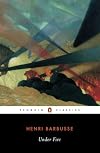
Barbusse’s novel has more memorable images and incidents than Ernst Jűnger’s World War One memoir Storm of Steel which I looked at recently.
Barbusse wasn’t writing down memories in a whirling, quick voice with a sometimes cold tone like Jűnger. Barbusse was crafting a message, propagandistic in parts, not for fellow veterans but the home front. And the war was not settled history when this novel was published.
Writing a novel, Barbusse can linger on his horrors and details, invent show more incidents if necessary. Indeed, he insists on the horror because he is trying to tell the French public what life in the trenches is really like for the French soldier, the poilu. Are they dressed adequately? Do they have enough to eat? Is war glorious and honorable?
No, answers Barbusse, to all the questions except, maybe, that there is an honor in the war’s purpose.
Barbusse was a French socialist and pacifist who volunteered for the French Army at age 41. He was not the only volunteer with such leanings. Adrien Bertrand, before. Socialists in every belligerent country on the eve of the war had to decide whether they were going to follow through with their talk of an international brotherhood of workers or fight for their country. En masse, they did the latter.
Barbusse saw combat over a period of seventeen months before an ailment of the lungs, dysentery, and exhaustion took him out of front line service and into a desk job. He was cited twice for bravery and during his convalescence in 1915 he wrote Under Fire, Le Feu in French.
It was first published in serialized form in 1916 in L’Oeuvre, a monthly literary journal. Such journals were not heavily scrutinized by wartime censors. When the installments were bound together as a book and published in January 1917, Barbusse reasonably argued it was too late to censor his message now.
The novel sold quite well, and it’s a gripping story seeming to drag only at its endcaps.
It opens, like Thomas Mann’s The Magic Mountain did eight years later, in a Swiss sanitarium. On the eve of the war, “rich and independent men” have a vision of strange creatures, mud covered “shipwrecked men” on a plain “vast, riven by long parallel canals and pitted with waterholes”.
From that vision, Barbusse glides down, with the opening of the second chapter, onto the battlefield and to his narrator. It’s the literary equivalent of a descending crane shot in a movie but before writers thought in those cinematic terms.
That muddy plain becomes “a maze of long trenches” where, echoing the novel’s concluding vision of a new order being forged in the furnace of war, where “borders are eaten away”, the narrator and his comrades crawl “like bears”, and Barbusse evokes all the senses in his account with the flash of shells, the smells of latrine, the sticky mud.
Many chapters are thematic where Barbusse explains the war to the home front. One fellow soldier, Cocon, is something of a stats freak and he digresses on the logistics of war, the vast material shipped by rail and the timetables, and the layout of trenches.
In the “Kit” chapter, soldiers talk about the possessions of their packs: standard equipment and scavenged additions and the letters and photos of loved ones.
There is, as in Albert Robida’s extrapolation of the war, The Engineer von Satanas, and Arthur Machen’s “The Dazzling Light”, the notion that human society and human progress regressing in the trenches to medieval times when Barbusse talks about the animal skins they are dressed in. Sometimes the regression is even further back. One soldier has abandoned his regulation axe for a primitive bone-handled one he’s found. He brandishes it “like some Neanderthal decked in tatters, lurking in the bowels of our earth.”
Barbusse vividly describes being under artillery bombardment, first aid stations, the notion of the “good wound” which will not kill or maim a man but take him home. Most of this occurs in the novel’s centerpiece, the “Fire” chapter. which starts on page 204 page of this 319 page book and runs for 50 pages.
We hear of truces to bury the dead and the letters the poilu send home and the lethal confusion of battle in the “International Trench” so close to the chaotic front that it is occupied by both sides at once.
Barbusse creates his most vivid and memorable effects in three incidents.
A young war orphan, Eudoxie, wanders the front lines and follows the poilu when they rotate to the rear. The narrator knows she is fascinated by Fouillade, a fellow soldier, but another soldier, Lamuse thinks she is interested in him. But, like so much else here, the matter ends in horror when Lamuse discovers her decomposed body at the front and tells of the “ghastly kiss” she tries to bestow on him.
At another time, the light of dawn shows the tree trunks at the top of a trench are really the decomposing bodies of Lamuse and three other soldiers who disappeared in another action.
Most memorable is when the troops are finally rotated from the firing trench. Relief is in sight as they make their way through the muddy, crowded trenches to the rear while shells explode around them.
“Suddenly a tremendous explosion hits us. I shudder from head to foot and a metallic resonance fills my ears, while a burning, suffocating smell of sulphur enters my nostrils. The ground has opened up in front of me. I feel myself lifted up and thrown to one side, bent, stifled and half blinded in this flash of lightning. And yet I remember clearly: in the second when, vaguely, instinctively, I searched for my comrade-in-arms I saw his body rising, upright, black, his two arms fully outstretched and a flame in place of his head!”
The soldiers speak of their loved ones and leaves sabotaged by circumstances.
And they speak with deep resentment about those not at the front, the men they have met who claim to have wanted to share their misery but are working well-paid jobs in factories or that they can better serve in the rear. They are the “rich and well-connected those who shouted: “Save France! – and let’s start by saving ourselves!”
The soldiers have vowed that they will not lie when they return to the rear on leave. They will tell of their hardships and poor provisions. They will not tell stories of bravery and honor to calm the conscience of the government and civilians.
Yet, when they return home they find themselves doing just that. I wonder if Edmond Hamilton, author of “What’s It Like Out There?” where the survivor of a doomed Mars mission finds himself unable to tell the truth of what he suffered, read this book and was inspired by that chapter.
Barbusse tries to show us the war and the life of the poilu and implicitly claims realism. One chapter, where his fellow soldiers, finding out he’s writing an account of their life, tell him that he will never be allowed to realistically portray their profanity-laced speech (and, indeed, there is little profanity) ironically bolsters that claim.
The novel feels true in its depiction of the French soldier’s in World War One. But is it?
Certainly Barbusse’s fellow soldiers thought it was. His novel was popular with them. One proclaimed it a book “for the dead … for those who do not go over the top with a ‘smile on their lips’.”
One French soldier did not.
Norton Cru was a French citizen who taught French literature in America. When war broke out, he joined the French Army and served in combat until the end of the war. After the war he made a catalogue of 300 some books on the war and wrote Witnesses: An Analytical and Critical Essay on War Memoirs Published in French from 1915 to 1928. He shared Barbusse’s disillusionment with the war, but he was particularly critical of Under Fire. He thought it mixture of truth, lies, and half-truths with Barbusse getting even basic details of French military life, like uniforms, wrong.
I can think of at least three incidents which seem improbable. A dugout is collapsed with a single blow from a rifle butt. Insects alight on the bodies of a snow covered battlefield. Artillerymen run out to examine unexploded German shells to look at their fuses and patterns of impact to deduce the location of German artillery. (It’s an interesting idea, but I’ve never seen another reference to it and seems improbable in its details.)
For his part, translator Robin Buss, in his introduction, says Barbusse is a moral witnesses to the horrors of the Great War and does tell a truth. However, he also throws Rigoberta Menchú in the same category of “moral witnesses” who have a “special kind of memory and make special claims on our attention”. If, in 2003, he is still defending the fraud Menchú, his opinion doesn’t carry much weight with me.
The book winds down with a flooding, drenched battlefield that reminds one of Passenchendaele, a battle that Barbusse never served in and lay in the future after this book was published.
The final chapter, “Dawn”, indicts priests, financiers, banks, tradtionalists, lawyers, historians in their support of the war and the old order.
“A soldier’s glory is a lie like everything in war that seems to be beautiful. In reality the sacrifice of soldiers is a dark repression. … If this present war had advanced progress by a single step, its miseries and massacres will count for little.”
Barbusse talks his comrades around to the notion that a new order will be born out of the war, and, for the remainder, they must be “executioners”, “honest killers” of the old order and “choke it to death.”
It’s a naïve vision, little more than a continuation of the international socialist dream that was rejected in the warring countries at the beginning of the war. But it’s an understandable dream from a citizen of the country with the first modern revolution and its talk of remaking man in the Year Zero.
It’s also an understandable dream for those in the trenches, for those who have to believe their exceptional suffering must lead to an exceptional outcome, and Barbusse was to pursue it after the war when he emigrated to the Soviet Union where he died in 1935. I do not know if he died disappointed or if he thought that a new and better order was being forged in the blood and starvation of Stalin’s regime. show less
Barbusse wasn’t writing down memories in a whirling, quick voice with a sometimes cold tone like Jűnger. Barbusse was crafting a message, propagandistic in parts, not for fellow veterans but the home front. And the war was not settled history when this novel was published.
Writing a novel, Barbusse can linger on his horrors and details, invent show more incidents if necessary. Indeed, he insists on the horror because he is trying to tell the French public what life in the trenches is really like for the French soldier, the poilu. Are they dressed adequately? Do they have enough to eat? Is war glorious and honorable?
No, answers Barbusse, to all the questions except, maybe, that there is an honor in the war’s purpose.
Barbusse was a French socialist and pacifist who volunteered for the French Army at age 41. He was not the only volunteer with such leanings. Adrien Bertrand, before. Socialists in every belligerent country on the eve of the war had to decide whether they were going to follow through with their talk of an international brotherhood of workers or fight for their country. En masse, they did the latter.
Barbusse saw combat over a period of seventeen months before an ailment of the lungs, dysentery, and exhaustion took him out of front line service and into a desk job. He was cited twice for bravery and during his convalescence in 1915 he wrote Under Fire, Le Feu in French.
It was first published in serialized form in 1916 in L’Oeuvre, a monthly literary journal. Such journals were not heavily scrutinized by wartime censors. When the installments were bound together as a book and published in January 1917, Barbusse reasonably argued it was too late to censor his message now.
The novel sold quite well, and it’s a gripping story seeming to drag only at its endcaps.
It opens, like Thomas Mann’s The Magic Mountain did eight years later, in a Swiss sanitarium. On the eve of the war, “rich and independent men” have a vision of strange creatures, mud covered “shipwrecked men” on a plain “vast, riven by long parallel canals and pitted with waterholes”.
From that vision, Barbusse glides down, with the opening of the second chapter, onto the battlefield and to his narrator. It’s the literary equivalent of a descending crane shot in a movie but before writers thought in those cinematic terms.
That muddy plain becomes “a maze of long trenches” where, echoing the novel’s concluding vision of a new order being forged in the furnace of war, where “borders are eaten away”, the narrator and his comrades crawl “like bears”, and Barbusse evokes all the senses in his account with the flash of shells, the smells of latrine, the sticky mud.
Many chapters are thematic where Barbusse explains the war to the home front. One fellow soldier, Cocon, is something of a stats freak and he digresses on the logistics of war, the vast material shipped by rail and the timetables, and the layout of trenches.
In the “Kit” chapter, soldiers talk about the possessions of their packs: standard equipment and scavenged additions and the letters and photos of loved ones.
There is, as in Albert Robida’s extrapolation of the war, The Engineer von Satanas, and Arthur Machen’s “The Dazzling Light”, the notion that human society and human progress regressing in the trenches to medieval times when Barbusse talks about the animal skins they are dressed in. Sometimes the regression is even further back. One soldier has abandoned his regulation axe for a primitive bone-handled one he’s found. He brandishes it “like some Neanderthal decked in tatters, lurking in the bowels of our earth.”
Barbusse vividly describes being under artillery bombardment, first aid stations, the notion of the “good wound” which will not kill or maim a man but take him home. Most of this occurs in the novel’s centerpiece, the “Fire” chapter. which starts on page 204 page of this 319 page book and runs for 50 pages.
We hear of truces to bury the dead and the letters the poilu send home and the lethal confusion of battle in the “International Trench” so close to the chaotic front that it is occupied by both sides at once.
Barbusse creates his most vivid and memorable effects in three incidents.
A young war orphan, Eudoxie, wanders the front lines and follows the poilu when they rotate to the rear. The narrator knows she is fascinated by Fouillade, a fellow soldier, but another soldier, Lamuse thinks she is interested in him. But, like so much else here, the matter ends in horror when Lamuse discovers her decomposed body at the front and tells of the “ghastly kiss” she tries to bestow on him.
At another time, the light of dawn shows the tree trunks at the top of a trench are really the decomposing bodies of Lamuse and three other soldiers who disappeared in another action.
Most memorable is when the troops are finally rotated from the firing trench. Relief is in sight as they make their way through the muddy, crowded trenches to the rear while shells explode around them.
“Suddenly a tremendous explosion hits us. I shudder from head to foot and a metallic resonance fills my ears, while a burning, suffocating smell of sulphur enters my nostrils. The ground has opened up in front of me. I feel myself lifted up and thrown to one side, bent, stifled and half blinded in this flash of lightning. And yet I remember clearly: in the second when, vaguely, instinctively, I searched for my comrade-in-arms I saw his body rising, upright, black, his two arms fully outstretched and a flame in place of his head!”
The soldiers speak of their loved ones and leaves sabotaged by circumstances.
And they speak with deep resentment about those not at the front, the men they have met who claim to have wanted to share their misery but are working well-paid jobs in factories or that they can better serve in the rear. They are the “rich and well-connected those who shouted: “Save France! – and let’s start by saving ourselves!”
The soldiers have vowed that they will not lie when they return to the rear on leave. They will tell of their hardships and poor provisions. They will not tell stories of bravery and honor to calm the conscience of the government and civilians.
Yet, when they return home they find themselves doing just that. I wonder if Edmond Hamilton, author of “What’s It Like Out There?” where the survivor of a doomed Mars mission finds himself unable to tell the truth of what he suffered, read this book and was inspired by that chapter.
Barbusse tries to show us the war and the life of the poilu and implicitly claims realism. One chapter, where his fellow soldiers, finding out he’s writing an account of their life, tell him that he will never be allowed to realistically portray their profanity-laced speech (and, indeed, there is little profanity) ironically bolsters that claim.
The novel feels true in its depiction of the French soldier’s in World War One. But is it?
Certainly Barbusse’s fellow soldiers thought it was. His novel was popular with them. One proclaimed it a book “for the dead … for those who do not go over the top with a ‘smile on their lips’.”
One French soldier did not.
Norton Cru was a French citizen who taught French literature in America. When war broke out, he joined the French Army and served in combat until the end of the war. After the war he made a catalogue of 300 some books on the war and wrote Witnesses: An Analytical and Critical Essay on War Memoirs Published in French from 1915 to 1928. He shared Barbusse’s disillusionment with the war, but he was particularly critical of Under Fire. He thought it mixture of truth, lies, and half-truths with Barbusse getting even basic details of French military life, like uniforms, wrong.
I can think of at least three incidents which seem improbable. A dugout is collapsed with a single blow from a rifle butt. Insects alight on the bodies of a snow covered battlefield. Artillerymen run out to examine unexploded German shells to look at their fuses and patterns of impact to deduce the location of German artillery. (It’s an interesting idea, but I’ve never seen another reference to it and seems improbable in its details.)
For his part, translator Robin Buss, in his introduction, says Barbusse is a moral witnesses to the horrors of the Great War and does tell a truth. However, he also throws Rigoberta Menchú in the same category of “moral witnesses” who have a “special kind of memory and make special claims on our attention”. If, in 2003, he is still defending the fraud Menchú, his opinion doesn’t carry much weight with me.
The book winds down with a flooding, drenched battlefield that reminds one of Passenchendaele, a battle that Barbusse never served in and lay in the future after this book was published.
The final chapter, “Dawn”, indicts priests, financiers, banks, tradtionalists, lawyers, historians in their support of the war and the old order.
“A soldier’s glory is a lie like everything in war that seems to be beautiful. In reality the sacrifice of soldiers is a dark repression. … If this present war had advanced progress by a single step, its miseries and massacres will count for little.”
Barbusse talks his comrades around to the notion that a new order will be born out of the war, and, for the remainder, they must be “executioners”, “honest killers” of the old order and “choke it to death.”
It’s a naïve vision, little more than a continuation of the international socialist dream that was rejected in the warring countries at the beginning of the war. But it’s an understandable dream from a citizen of the country with the first modern revolution and its talk of remaking man in the Year Zero.
It’s also an understandable dream for those in the trenches, for those who have to believe their exceptional suffering must lead to an exceptional outcome, and Barbusse was to pursue it after the war when he emigrated to the Soviet Union where he died in 1935. I do not know if he died disappointed or if he thought that a new and better order was being forged in the blood and starvation of Stalin’s regime. show less

Hell by Henri Barbusse was originally published in 1908. I found it a rather unusual book as the unnamed narrator, a young man staying in a Paris boarding house, spies on his fellow house guests through a peephole in his wall and after he has studied the private moments and secret activities he then makes assessments on their behaviour and their motivation.
I found being locked inside this voyeur’s head was a very claustrophobic experience. It appears this young man drifts through life show more without making a huge impression yet his morbid curiosity encourages him to watch others and then philosophize about human behaviour. But does he have the right to make these judgments or is he simply projecting his views on others.
I have seen reviews that give this book a very high rating but frankly, it creeped me out. The young man is annoying and arrogant and all his fancy musings cannot change the fact that he is a peeping tom taking advantage of the hole in his wall to leer at others. Obviously Hell is not a book that I enjoyed or even could see a lot of merit in. show less
I found being locked inside this voyeur’s head was a very claustrophobic experience. It appears this young man drifts through life show more without making a huge impression yet his morbid curiosity encourages him to watch others and then philosophize about human behaviour. But does he have the right to make these judgments or is he simply projecting his views on others.
I have seen reviews that give this book a very high rating but frankly, it creeped me out. The young man is annoying and arrogant and all his fancy musings cannot change the fact that he is a peeping tom taking advantage of the hole in his wall to leer at others. Obviously Hell is not a book that I enjoyed or even could see a lot of merit in. show less
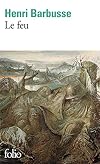
In Hemingway's A Farewell to Arms, the central character, having been wounded on the Italian Front, escapes from the army and takes refuge in a hotel in the Alps. While there he meets an old acquaintance who interrogates him on the subject of war literature:
‘What have you been reading?’
‘Nothing,’ I said. ‘I'm afraid I am very dull.’
‘No. But you should read.’
‘What is there written in war-time?’
‘There is Le Feu by a Frenchman, Barbusse.’
[…] ‘Those books were at the show more hospital.’
‘Then you have been reading?’
‘Yes, but nothing any good.’
I don't know if A Farewell to Arms can really be considered a war novel proper, but to the extent that it is one, it's a less successful one than Le Feu – and Hemingway, who drove ambulances in Italy, has got a goddamn nerve criticising the experiences of Henri Barbusse, who was a front-line footsoldier in the trenches.
This book, pace Papa, is good. It is really good, and not just in a documentary sense – which I had expected – but also in a literary sense, which I had not. The First World War was of course the first major conflict to field hordes of men that had benefited from a systematic education – hence the wealth of poetry and journals – and Barbusse is a case in point. Before being a poilu he'd been a literature graduate; at university, his tutor had been Mallarmé. Le Feu, which won the Prix Goncourt, shows a steady literary intelligence every step of the way.
The reason I had expected it to be of primarily documentary interest is, I suppose, because of its uniquely early appearance. Barbusse wrote the novel while on convalescent leave in 1915, and somehow managed to publish it (albeit in heavily censored form) the following year, when the war was still at its height. So these are dispatches from the very heart of the maelstrom, however fictionalised they may be.
You wouldn't call it enjoyable. It is oppressive and I found it often a slow read – but I've never before been given such a visceral idea of daily life in the trenches. The dreadful monotony of forced marches, the constant tiredness, the misery of trying to find your way through knee-high mud in the dark, of trying to sleep on wet mud while dressed in sodden clothes, negotiating the ever-changing labyrinth of trenches and boyaux, the exhaustion of heaving yourself up over the muddy parapet to charge at banks of barbed wire with mortar shells landing all around you – it's just so undramatically, so realistically described.
Some of the details are truly extraordinary. I hope never to gain a comparable understanding of the changes undergone by a friend's face after they drown in mud, or the exact pressure needed to pull the boot off an old corpse without also pulling off the foot. At one point the narrator's company, lost in the trenches in the middle of the night, is led through a sewage channel to try and find the front lines, so that they are literally marching ankle-deep in shit (‘dont on sent, parmi la bourbe terreuse, les fléchissements mous’). On another occasion, lost in the driving rain, he is about to lower himself into a trench when he hears German voices walk past and realises he's inadvertently wandered up to the enemy lines – an incredible reminder that the French and German positions were barely forty metres apart at some points.
Barbusse's most interesting tool though is dialogue: the earthy patois of the poilus, a rich mix of slang and regionalisms, is central here, and must make translating this novel an unusually challenging prospect. I certainly learnt a lot of vocab reading it. With the proviso that I am not a native speaker, to me it all had a deep ring of truth to it, and the many long conversational scenes are as close as you'll ever get to eavesdropping on the trenches of 1915. Here, for example, the men are bitching about all those officers that dress up in flash uniforms but stay well behind the lines:
— On les connaît, ceux-là ! I's diront, en f'sant l' gracieux dans leur monde : « J' m'ai engagé pour la guerre. — Ah ! comme c'est beau, c' que vouz avez fait ; vous avez, de votre propre volonté, affronté la mitraille ! — Mais oui, madame la marquise, j' suis comme ça. » Eh, va donc, fumiste !
[“We know all about their sort! They'll talk it up in company, putting on airs: ‘I signed up for the war.’ — ‘Oh! How noble you are! Facing the bullets, of your own free will!’ — ‘Well, you know, my lady – that's just the kind of guy I am.’ Well go on then, arsehole!”]
These are the kind of people back in society whose attitude is neatly summed up by Barbusse as ‘Sauvons la France! – et commençons par nous sauver!’ But talking about them is just comic relief, for us and for the men involved. More often they struggle with what the war is for, how it has turned normal people into brute machines that sleep on their feet and kill strangers, and how it could ever hope to be justified by some brighter potential future.
—L'avenir ! L'avenir ! L'œuvre de l'avenir sera d'effacer ce présent-ci, et de l'effacer plus encore qu'on ne pense, de l'effacer comme quelque chose d'abominable et d'honteux. Et pourtant, ce présent, il le fallait, il le fallait !
[“The future, the future! The work of the future will be to erase this present, and to erase it even more than we realise – to erase it as something abominable and shameful. And yet, this present – we needed it, we needed it!”]
He is trying to convince himself, of course. The gritty details in this book are the more powerful for being set alongside equally representative scenes of inactivity and soul-destroying monotony – monotony for the soldiers, I hasten to add, not for the readers. The readers are in for something altogether different.
Barbusse is the real deal and I feel changed for reading this remarkable document. I'll leave the final analysis on the mess we're presented with to one of his mud-encrusted colleagues: Deux armées qui se battent, c'est comme une grande armée qui se suicide! Two armies fighting each other is just one big army committing suicide. show less
‘What have you been reading?’
‘Nothing,’ I said. ‘I'm afraid I am very dull.’
‘No. But you should read.’
‘What is there written in war-time?’
‘There is Le Feu by a Frenchman, Barbusse.’
[…] ‘Those books were at the show more hospital.’
‘Then you have been reading?’
‘Yes, but nothing any good.’
I don't know if A Farewell to Arms can really be considered a war novel proper, but to the extent that it is one, it's a less successful one than Le Feu – and Hemingway, who drove ambulances in Italy, has got a goddamn nerve criticising the experiences of Henri Barbusse, who was a front-line footsoldier in the trenches.
This book, pace Papa, is good. It is really good, and not just in a documentary sense – which I had expected – but also in a literary sense, which I had not. The First World War was of course the first major conflict to field hordes of men that had benefited from a systematic education – hence the wealth of poetry and journals – and Barbusse is a case in point. Before being a poilu he'd been a literature graduate; at university, his tutor had been Mallarmé. Le Feu, which won the Prix Goncourt, shows a steady literary intelligence every step of the way.
The reason I had expected it to be of primarily documentary interest is, I suppose, because of its uniquely early appearance. Barbusse wrote the novel while on convalescent leave in 1915, and somehow managed to publish it (albeit in heavily censored form) the following year, when the war was still at its height. So these are dispatches from the very heart of the maelstrom, however fictionalised they may be.
You wouldn't call it enjoyable. It is oppressive and I found it often a slow read – but I've never before been given such a visceral idea of daily life in the trenches. The dreadful monotony of forced marches, the constant tiredness, the misery of trying to find your way through knee-high mud in the dark, of trying to sleep on wet mud while dressed in sodden clothes, negotiating the ever-changing labyrinth of trenches and boyaux, the exhaustion of heaving yourself up over the muddy parapet to charge at banks of barbed wire with mortar shells landing all around you – it's just so undramatically, so realistically described.
Some of the details are truly extraordinary. I hope never to gain a comparable understanding of the changes undergone by a friend's face after they drown in mud, or the exact pressure needed to pull the boot off an old corpse without also pulling off the foot. At one point the narrator's company, lost in the trenches in the middle of the night, is led through a sewage channel to try and find the front lines, so that they are literally marching ankle-deep in shit (‘dont on sent, parmi la bourbe terreuse, les fléchissements mous’). On another occasion, lost in the driving rain, he is about to lower himself into a trench when he hears German voices walk past and realises he's inadvertently wandered up to the enemy lines – an incredible reminder that the French and German positions were barely forty metres apart at some points.
Barbusse's most interesting tool though is dialogue: the earthy patois of the poilus, a rich mix of slang and regionalisms, is central here, and must make translating this novel an unusually challenging prospect. I certainly learnt a lot of vocab reading it. With the proviso that I am not a native speaker, to me it all had a deep ring of truth to it, and the many long conversational scenes are as close as you'll ever get to eavesdropping on the trenches of 1915. Here, for example, the men are bitching about all those officers that dress up in flash uniforms but stay well behind the lines:
— On les connaît, ceux-là ! I's diront, en f'sant l' gracieux dans leur monde : « J' m'ai engagé pour la guerre. — Ah ! comme c'est beau, c' que vouz avez fait ; vous avez, de votre propre volonté, affronté la mitraille ! — Mais oui, madame la marquise, j' suis comme ça. » Eh, va donc, fumiste !
[“We know all about their sort! They'll talk it up in company, putting on airs: ‘I signed up for the war.’ — ‘Oh! How noble you are! Facing the bullets, of your own free will!’ — ‘Well, you know, my lady – that's just the kind of guy I am.’ Well go on then, arsehole!”]
These are the kind of people back in society whose attitude is neatly summed up by Barbusse as ‘Sauvons la France! – et commençons par nous sauver!’ But talking about them is just comic relief, for us and for the men involved. More often they struggle with what the war is for, how it has turned normal people into brute machines that sleep on their feet and kill strangers, and how it could ever hope to be justified by some brighter potential future.
—L'avenir ! L'avenir ! L'œuvre de l'avenir sera d'effacer ce présent-ci, et de l'effacer plus encore qu'on ne pense, de l'effacer comme quelque chose d'abominable et d'honteux. Et pourtant, ce présent, il le fallait, il le fallait !
[“The future, the future! The work of the future will be to erase this present, and to erase it even more than we realise – to erase it as something abominable and shameful. And yet, this present – we needed it, we needed it!”]
He is trying to convince himself, of course. The gritty details in this book are the more powerful for being set alongside equally representative scenes of inactivity and soul-destroying monotony – monotony for the soldiers, I hasten to add, not for the readers. The readers are in for something altogether different.
Barbusse is the real deal and I feel changed for reading this remarkable document. I'll leave the final analysis on the mess we're presented with to one of his mud-encrusted colleagues: Deux armées qui se battent, c'est comme une grande armée qui se suicide! Two armies fighting each other is just one big army committing suicide. show less
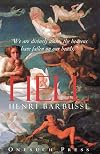
This book is a work of solipsistic philosophy. Solipsism is basically the idea that the only thing of which a person can be certain is the existence of his own mind. The reality of anything outside of himself is up for debate. The final paragraph of the novel is a good summation of this philosophy, or at least a good summation of the implications of this philosophy:
The "hell" that the title refers to is apparently the hell of "man's longing to live," which Barbusse claims is the only Hell there is. As is apparent from the above excerpt, this is much less a novel than a vehicle for Barbusse to expound his philosophy and his attempt to create something that is True and Beautiful. And one of the most annoying things about this book is how the author is so gosh darn pleased with himself. He constantly asserts his special status as the only person with True Knowledge of life and beauty and poetry, etc.
In an almost unbelievable and (unintentionally?) hilarious bit at the end, the protag eavesdrops on a conversation with a famous writer in which the writer announces his intention to write a book about a man who makes a hole in the wall of his hotel room so he can spy on his neighbors. The protag reacts with disgust and contempt, mocking the writer's efforts at presenting the truth of human life. I found this scene sort of bizarre, as it seems totally sincere, and it would seem out of character with the rest of the book for the author to be poking fun at himself. Anyway, I don't know what to make of it; if I were this book, I wouldn't want to call attention to how ridiculously overblown I am.
There are good and beautiful moments in this book, but a lot of it is way overblown. The conversations between his neighbors are often florid and maudlin, mind-numbingly so. Characters will go on for pages and pages about tumors, bugs, and the decomposition of corpses, but not in an interestingly morbid way. Rather, it's all very dry and scientific (and a lot of the science is wrong, anyhow). Barbusse's sex scenes are pretty painful -- I can happily go the rest of my life without hearing a woman's bits referred to as a red and/or bleeding wound. There's a doctor who is apparently an infantile commie; he pops in to espouse the evils of property and patriotism. And there's a priest who is obviously in the book to fulfill an almost villainous role, that of the Big Bad Organized Religion. He doesn't talk like any priest I've ever heard; Barbusse's supposed devotion to truth obviously flags a bit in that scene.
What I found most interesting is how often the protag refers to the powerlessness or uselessness of God in the face of human life, even as he is setting himself up as an immensely impotent little deity -- an observer who influences nothing and no one and ruins himself so doing. In this case, I think the book does contain some perhaps inadvertent truth because the way I see it, whenever men set themselves up as gods, things really do go to Hell. show less
I believe that confronting the human heart and the human mind, which are composed of imperishable longings, there is only theshow more
mirage of what they long for. I believe that around us there is only one word on all sides, one immense word which reveals our solitude and extinguishes our radiance: Nothing! I believe that that word does not point to our insignificance or our unhappiness, but on the contrary to our fulfilment and our divinity, since everything is in ourselves.
The "hell" that the title refers to is apparently the hell of "man's longing to live," which Barbusse claims is the only Hell there is. As is apparent from the above excerpt, this is much less a novel than a vehicle for Barbusse to expound his philosophy and his attempt to create something that is True and Beautiful. And one of the most annoying things about this book is how the author is so gosh darn pleased with himself. He constantly asserts his special status as the only person with True Knowledge of life and beauty and poetry, etc.
In an almost unbelievable and (unintentionally?) hilarious bit at the end, the protag eavesdrops on a conversation with a famous writer in which the writer announces his intention to write a book about a man who makes a hole in the wall of his hotel room so he can spy on his neighbors. The protag reacts with disgust and contempt, mocking the writer's efforts at presenting the truth of human life. I found this scene sort of bizarre, as it seems totally sincere, and it would seem out of character with the rest of the book for the author to be poking fun at himself. Anyway, I don't know what to make of it; if I were this book, I wouldn't want to call attention to how ridiculously overblown I am.
There are good and beautiful moments in this book, but a lot of it is way overblown. The conversations between his neighbors are often florid and maudlin, mind-numbingly so. Characters will go on for pages and pages about tumors, bugs, and the decomposition of corpses, but not in an interestingly morbid way. Rather, it's all very dry and scientific (and a lot of the science is wrong, anyhow). Barbusse's sex scenes are pretty painful -- I can happily go the rest of my life without hearing a woman's bits referred to as a red and/or bleeding wound. There's a doctor who is apparently an infantile commie; he pops in to espouse the evils of property and patriotism. And there's a priest who is obviously in the book to fulfill an almost villainous role, that of the Big Bad Organized Religion. He doesn't talk like any priest I've ever heard; Barbusse's supposed devotion to truth obviously flags a bit in that scene.
What I found most interesting is how often the protag refers to the powerlessness or uselessness of God in the face of human life, even as he is setting himself up as an immensely impotent little deity -- an observer who influences nothing and no one and ruins himself so doing. In this case, I think the book does contain some perhaps inadvertent truth because the way I see it, whenever men set themselves up as gods, things really do go to Hell. show less
Lists
Awards


You May Also Like


Associated Authors
Statistics
- Works
- 51
- Also by
- 5
- Members
- 1,618
- Popularity
- #15,920
- Rating
- 3.7
- Reviews
- 42
- ISBNs
- 207
- Languages
- 7
- Favorited
- 4

