
Ethan Hawke
Author of Ash Wednesday
About the Author
Ethan Hawke is best known for his starring roles in the motion pictures Dead Poets Society, Reality Bites, Gattaca, Before Sunrise, Hamlet, and Training Day, for which he was nominated for an Academy Award. He is the cofounder and artistic director of the Malaparte Theater Company, based in New show more York, and the author of the novel The Hottest State. He lives in New York with his wife and two children. show less
Image credit: Photographed at BookPeople in Austin, Texas by Frank Arnold
Works by Ethan Hawke
The Purge: 4-Movie Collection 14 copies
Indigent 4 Film DVD Collection 2 copies
The Eyes and the Impossible 1 copy
Sinister & Insidious 1 copy
Associated Works
4-Movie Collection: Sci Fi — Actor — 11 copies
Hebbes7: 10 nieuwe smaakmakers voor het najaar — Contributor — 3 copies
Tagged
Common Knowledge
- Birthdate
- 1970-11-06
- Gender
- male
- Education
- Carnegie Mellon University
- Occupations
- actor
director
screenwriter
novelist - Relationships
- Thurman, Uma (ex-wife)
Hawke, Maya (child) - Nationality
- USA
- Birthplace
- Austin, Texas, USA
- Places of residence
- New York, New York, USA
West Windsor Township, New Jersey, USA - Associated Place (for map)
- USA
Members
Reviews
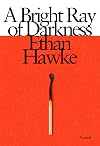
I had no idea Ethan Hawke was a novelist. I was acquainted with his acting, his terrific small screen adaptation of James McBride’s The Good Lord Bird, and his brilliant narration of Jack Kerouac’s The Dharma Bums, which I listened to last year, but when I was searching for a book a related to the word “dark” I stumbled on this gem. What a treat. His writing evokes the best of Tom Wolfe, Hunter S. Thompson, and David Foster Wallace, with snappy dialogue, grossly flawed characters, show more and a protagonist who seems likely to be drawn largely from Mr. Hawke’s own experiences in acting. Heck, I even became invested in the extensive Shakespearean scenes of the Broadway play in which he was cast (Henry IV), and I am not a huge fan of Shakespeare (gasp!), and which is at the center of the novel, the action spanning the duration of the play's well-received limited run. I was surprised to learn this was Mr. Hawke’s fourth novel, and that the earlier ones were not so well receive. Perhaps he was honing his craft in this genre. Whatever the explanation, the novel was a Halloween treat and a nice way for me to end a month of excellent reads. If I had any nit at all, it is that some of the characters’ soliloquies (off the stage) were a tad long, but hardly ever dull. show less
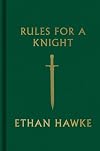
Surprisingly sweet and deeply enjoyable, even for someone who is not a big fan of Ethan Hawke, the actor.
This short novel shares the wisdom of a knight on the eve of a battle in which he expects to be killed. He leaves this letter to his young children - to help guide them through their lives on topics including gratitude, pride, courage, patience, grace, discipline, faith, love, and death. Each turns out to be a life lesson still applicable to us all. Woven into the chapters are stories of show more the knight growing up under the guidance of his wise grandfather.
It's a super quick and upbeat read, a wonderful book for adults and ideal for sharing with children. It could spark lots of productive family conversations. show less
This short novel shares the wisdom of a knight on the eve of a battle in which he expects to be killed. He leaves this letter to his young children - to help guide them through their lives on topics including gratitude, pride, courage, patience, grace, discipline, faith, love, and death. Each turns out to be a life lesson still applicable to us all. Woven into the chapters are stories of show more the knight growing up under the guidance of his wise grandfather.
It's a super quick and upbeat read, a wonderful book for adults and ideal for sharing with children. It could spark lots of productive family conversations. show less
Full Disclosure: I got this book for free from a Goodreads Giveaway in exchange for an honest review.
Second disclosure: I didn't really read the description of the book before I entered the giveaway. I saw that it was a history book, and clicked. As such, I was immensely surprised when a beautifully illustrated graphic novel showed up on my doorstep a few days later.
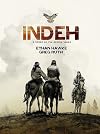
Indeh is a work of art. Greg Ruth's black and white images are beautifully done and arrestingly composed. There is so much show more detail to each panel, whether in the subtleties of expression in a character close up, or in the grim background details of a two page spread depicting a massacre. You feel yourself lingering on each page, soaking in as much as you can.
As to the story, Ethan Hawke (yes, that one. No "Gattaca" jokes, please) brings us the story of Goyahkla, later to be known as Geronimo, as the Apache people struggle to survive a war against the grinding machine of the American Army. The story is based on real events, though I am (I'm ashamed to say) unfamiliar with the Apache Wars. For those history-minded folks like me, Hawke provides a decent bibliography at the end of the book, allowing the reader to dive deeper in the story if they want. I expect I'll be reading quite a few of these books in the future. (As an aside, I love it when authors do this, even in fiction. The most recent example that comes to mind is the gloriously dark The Trench Angel by Michael Keenan Gutierrez)
The narrative of "Indeh" is told primarily from the Apache point of view, focusing primarily on the deeds of Geronimo and Naiches (son of the Apache Chief). There are occasional flips over to the point of view of the American army officers tasked with subduing and "pacifying" the Apache, but this story is meant to be a primarily Apache one. In my view, the central Apache characters are treated well by Hawke. The Apache are eminently sympathetic; after all, their land, culture, and people are being systematically crushed by an armed force that considers them nuisances and savages. But Hawke doesn't fall into the trap of resting with the "noble savage" or "spiritual warrior" trope that so many (white) authors seem to. His Apache characters are sympathetic, and they are brutal. They are heroes, and they are ruthless. In other words, they are fully, simply, human. They are not perfect, but they are doing all they can to preserve their people and way of life.
In the afterword, Hawke tells us that Indeh started as a failed screenplay. It seems that Hollywood felt that a movie about the Apache Wars, with a primarily Native American cast, would never get off the ground. From this disappointment, the book was born. I am glad this story is out there in this form. The visceral style of Ruth's illustrations paired well with the brutal realities of war, and the story, advanced through dialogue rather than exposition, is engaging. After reading "Indeh," I think there might be a market for narrative historical graphic novels (raise your hand if you'd like to see The Devil in the White City turned into a graphic novel). I also wonder if this would be a good medium for native artists to get these histories out in the public sphere. As I've said, Hawke does a wonderful job of telling this story from an Apache viewpoint, but I do wonder how an Apache author or artist would have told it.
In sum, this is a great afternoon's read (and on top of that, you'll probably learn something). If you're into history, graphic novels, or war stories, this is probably a good bet for you. Just be warned that due to the limitations of the medium, Hawke has to simplify or skip over some bits, so you'll probably find yourself moving to the bibliography afterward, looking for more. show less
Second disclosure: I didn't really read the description of the book before I entered the giveaway. I saw that it was a history book, and clicked. As such, I was immensely surprised when a beautifully illustrated graphic novel showed up on my doorstep a few days later.
Indeh is a work of art. Greg Ruth's black and white images are beautifully done and arrestingly composed. There is so much show more detail to each panel, whether in the subtleties of expression in a character close up, or in the grim background details of a two page spread depicting a massacre. You feel yourself lingering on each page, soaking in as much as you can.
As to the story, Ethan Hawke (yes, that one. No "Gattaca" jokes, please) brings us the story of Goyahkla, later to be known as Geronimo, as the Apache people struggle to survive a war against the grinding machine of the American Army. The story is based on real events, though I am (I'm ashamed to say) unfamiliar with the Apache Wars. For those history-minded folks like me, Hawke provides a decent bibliography at the end of the book, allowing the reader to dive deeper in the story if they want. I expect I'll be reading quite a few of these books in the future. (As an aside, I love it when authors do this, even in fiction. The most recent example that comes to mind is the gloriously dark The Trench Angel by Michael Keenan Gutierrez)
The narrative of "Indeh" is told primarily from the Apache point of view, focusing primarily on the deeds of Geronimo and Naiches (son of the Apache Chief). There are occasional flips over to the point of view of the American army officers tasked with subduing and "pacifying" the Apache, but this story is meant to be a primarily Apache one. In my view, the central Apache characters are treated well by Hawke. The Apache are eminently sympathetic; after all, their land, culture, and people are being systematically crushed by an armed force that considers them nuisances and savages. But Hawke doesn't fall into the trap of resting with the "noble savage" or "spiritual warrior" trope that so many (white) authors seem to. His Apache characters are sympathetic, and they are brutal. They are heroes, and they are ruthless. In other words, they are fully, simply, human. They are not perfect, but they are doing all they can to preserve their people and way of life.
In the afterword, Hawke tells us that Indeh started as a failed screenplay. It seems that Hollywood felt that a movie about the Apache Wars, with a primarily Native American cast, would never get off the ground. From this disappointment, the book was born. I am glad this story is out there in this form. The visceral style of Ruth's illustrations paired well with the brutal realities of war, and the story, advanced through dialogue rather than exposition, is engaging. After reading "Indeh," I think there might be a market for narrative historical graphic novels (raise your hand if you'd like to see The Devil in the White City turned into a graphic novel). I also wonder if this would be a good medium for native artists to get these histories out in the public sphere. As I've said, Hawke does a wonderful job of telling this story from an Apache viewpoint, but I do wonder how an Apache author or artist would have told it.
In sum, this is a great afternoon's read (and on top of that, you'll probably learn something). If you're into history, graphic novels, or war stories, this is probably a good bet for you. Just be warned that due to the limitations of the medium, Hawke has to simplify or skip over some bits, so you'll probably find yourself moving to the bibliography afterward, looking for more. show less
This mostly autobiographical, first-person story with an emphasis on the interior life shows that the actor Ethan Hawke is a talented writer more than capable of constructing a good, readable novel. Too many people, afflicted by the puzzlingly common desire for fame and blinded by envy of those who have attained it, seem to believe that if people of privilege are unhappy, it's their own reprehensible fault--and sometimes it is, but the same is true of the unhappiness in all of our lives. show more Maybe those people would learn a little empathy were they to read this book. For myself, I felt sorry for the narrator, who is nearly torn apart by a divorce brought on by his own actions, as he well knows. But because the narrator is obviously a fictional version of Ethan Hawke himself approximately twenty years ago, I knew that he would survive, continue to produce excellent work, and start a new family. That knowledge took some of the narrative tension out of the tale and centered the interest it holds to its descriptions of the drawbacks of being recognizable to strangers at the very worst time of your life, and on the vivid descriptions of the narrator' tortured emotional state. show less
Lists
Awards


You May Also Like


Associated Authors
Statistics
- Works
- 22
- Also by
- 75
- Members
- 2,408
- Popularity
- #10,652
- Rating
- 3.6
- Reviews
- 60
- ISBNs
- 111
- Languages
- 15
- Favorited
- 2

