
Günter Grass (1927–2015)
Author of The Tin Drum
About the Author
Günter Wilhelm Grass was born on October 16, 1927 in the Free City of Danzig, which is now Gdansk, Poland. He was a member of the Hitler Youth and at the age of 17, he was drafted into the German army. Near the end of the war, he served as a tank gunner in the 10th SS Panzer Division. He was show more captured by the Americans and forced to visit the newly liberated Dachau concentration camp. After his release from a POW camp in 1946, he worked in a potash mine and as a stonemason's apprentice and studied painting and sculpture in Düsseldorf. His first novel, The Tin Drum, was published in 1959. It was adapted into a film and won the Academy Award for Best Foreign Film in 1979. His other works included Cat and Mouse, Dog Years, From the Diary of a Snail, The Flounder, The Rat, and Crabwalk. He also wrote a memoir entitled Peeling the Onion. He received the Nobel Prize for Literature in 1999. He was also a political activist and liberal provocateur. He advocated for environmental conservation, debt relief for poor countries, and generous policies regarding political asylum. He died on April 13, 2015 at the age of 87. (Bowker Author Biography) show less
Image credit: Gunter Grass on September 2, 2013 in Berlin, Germany
Series
Works by Günter Grass
The Plebeians Rehearse the Uprising: A German Tragedy (Harvest Book) (1966) — Author — 133 copies, 1 review
Das Treffen in Telgte: Eine Erzählung und dreiundvierzig Gedichte aus dem Barock (1986) — Author — 37 copies
Just Yesterday, Fifty Years Ago: A critical dialogue on the anniversary of the end of the Second World War (1995) 12 copies
Örtlich betäubt / Aus dem Tagebuch einer Schnecke (Werkausgabe in 10 Bänden, Band 4) — Author — 6 copies
Blikktromman II 5 copies
Das Treffen in Telgte / Kopfgeburten oder Die Deutschen sterben aus (Werkausgabe in 10 Bänden, Band 6) (1987) — Author — 4 copies
Günter Grass und Peter Rühmkorf lesen Komm, Trost der Nacht : Barocklyrik ; Live-Mitschnitt (2004) 4 copies
Blikktromman III 4 copies
The Tin Drum: : A New Translation by Breon Mitchell (Part 2 of 2 parts)(Library Edition) (2009) — Author — 4 copies
Blikktromman I 4 copies
O Susanna. Ein JAZZbilderbuch. Blues, Balladen, Spirituals-Jazz. - GELDMACHER Horst (Illustrationen) - WILSON Herman, Musikarbeit (1959) 3 copies
Lebenslang: Ausgewählte Gedichte. Mit einer Radierung von Günter Grass (Insel Bücherei) (2012) 3 copies
Schrijver, burger, sociaal-democraat opstellen en toespraken over literatuur en politiek (1976) 2 copies
Dialogo con Praga 2 copies
Toba de tinichea 1 copy
Kinderlied 1 copy
Katt och rt̄ta : roman 1 copy
Γάτα καί ποντίκι: Νουβέλλα 1 copy
המאה שלי 1 copy
Four plays: Flood; Onkel, onkel; Only ten minutes to Buffalo; The wicked cooks / Günter Grass; introduced by Martin Esslin. (1972) 1 copy
Die Blechtrommen 1 copy
Lumbur 1 copy
Der Butt : Günter 1 copy
Hardcover Set of three Günter Grass First Editions: The Rat, Local Anaesthetic, The Call of the Toad (1986) 1 copy
Wróżby kumaka 1 copy
Ein weites Feld. 1 copy
Dog Years (m963) 1 copy
O TAMBOR - SEGUNDO VOLUME 1 copy
Αυτός που διάβαζε τη σκέψη 1 copy
Manzi Manzi 1 copy
O TAMBOR - PRIMEIRO VOLUME 1 copy
Fünf Grass'sche Jahreszeiten 1 copy
Años de perro 1 copy
O gato e o rato 1 copy
Κατακλυσμός 1 copy
Tutto il teatro 1 copy
"In the Egg" (in SF 12) 1 copy
Günter Grass in Aarschot 1 copy
Örtlich betäubt und Lyrik 1 copy
Podganka 1 copy
Tabl-i halabi/ 1 copy
Nobel Prize Lecture — Author — 1 copy
1979 1 copy
1997 1 copy
Freiheit nach Börsenmaß 1 copy
Grafika 1 copy
Под местным наркозом 1 copy
Associated Works
Against Forgetting: Twentieth-Century Poetry of Witness (1993) — Contributor — 377 copies, 2 reviews
Albrecht Dürer and His Legacy: The Graphic Work of a Renaissance Artist (2002) — Contributor — 73 copies
Nobel Lectures: 20 Years of the Nobel Prize for Literature Lectures (2007) — Contributor — 14 copies
Meesters der vertelkunst : zevenendertig verhalen uit de moderne wereldliteratuur (1975) — Contributor — 2 copies
"... ich werde deinen Schatten essen : Theater des Fernen Ostens. (1985) — Foreword, some editions — 1 copy
Winterzeit : eine fotografisch-poetische Betrachtung — Contributor — 1 copy
Tagged
Common Knowledge
- Legal name
- Grass, Günter Wilhelm
- Birthdate
- 1927-10-16
- Date of death
- 2015-04-13
- Gender
- male
- Education
- Conradinum, Danzig (Gymnasium)
Kunstakademie Düsseldorf
Universität der Künste, Berlin - Occupations
- monumental mason
sculptor
miner
novelist
poet
playwright (show all 9)
graphic artist
essayist
political spokesman - Organizations
- Gruppe 47
- Awards and honors
- Nobel Prize ( [1999])
Georg Büchner Preis (1965)
Premio Príncipe de Asturias ( [1999])
Thomas-Mann-Preis (1996)
Man Booker International Prize Finalist (2005)
Aristeion (Translation, 1998) - Relationships
- Figes, Eva (vriendin)
- Cause of death
- lung infection
- Nationality
- Germany
- Birthplace
- Danzig, Free City of Danzig
- Places of residence
- Danzig (Free City ∙ now Gdansk ∙ Poland)
Berlin, Germany
Düsseldorf, North Rhine-Westphalia, Germany - Place of death
- Lübeck, Schleswig-Holstein, Germany
- Map Location
- Germany
Members
Discussions
The Tin Drum - Günter Grass. in Book talk (October 2013)
Reviews

Woof!
Grass's second big novel, from 1963. Calling it the third book in the "Danziger Trilogie" seems to be just a marketing thing - the story overlaps in time and space with the story of Blechtrommel, and there are a couple of brief mentions of people and incidents from the earlier novel, but what links the books is really the same thing that links all the rest of Grass's fiction and non-fiction: German history as he experienced it in his own life.
There's less uncontrolled rage here than in show more Blechtrommel. He still hits hard when he needs to, but the general mood is rather more ambiguous. Matern, the "antifascist" protagonist, finds that the war criminals he is hunting down are all good and decent people who turn out to have had perfectly plausible reasons for doing what they did; he himself has a dark secret in his past that he isn't prepared to face - something that becomes extra poignant now that Grass has revealed in his memoirs the corresponding dark secret in his own war experience. There's a clear warning that it's all too easy to deceive ourselves about our own faults, but that judging other people is equally hazardous, especially if we weren't there.
Grass is never less than entertaining, of course, even when he's lecturing you or going off into an abstruse discussion of the finer points of German shepherd dogs, technicalities of classical ballet, or the different qualities of cereal crops. There are some very plain, sober bits of writing, and some incredibly flashy passages, like the famous account of the closing days of the battle for Berlin as a search for a lost dog, written in language that's a clever cross between the style of Heidegger and that of military communiqués. Occasionally it all seems a bit too clever, but there mostly turns out to have been a good reason for it.
Grass is very conscious of the power of stories, and he makes a lot of use of story-telling tricks - repetition, looping narrative, interruption, verbal tags (Leitmotifs, really) linked to particular characters or ideas. A lot of well-known stories from literature, mythology and folklore come up, implicitly or explicitly. Walter and Eddie are sometimes Faust and Mephistopheles, sometimes Narziß and Goldmund, sometimes Siegfried and Loge. The book opens with a treasure being thrown into a river; it closes with a fire and a tour of the underworld.
As well as the big stuff, there's also a lot of wonderful detail. We get a few more deliciously repulsive entries in the Grass cookbook of meals you really wouldn't like to share: raw jellyfish, boiled animal entrails, soup made from replete leaches... Nothing quite as nightmarish as the eels in Blechtrommel, but it's a close run thing. show less
Grass's second big novel, from 1963. Calling it the third book in the "Danziger Trilogie" seems to be just a marketing thing - the story overlaps in time and space with the story of Blechtrommel, and there are a couple of brief mentions of people and incidents from the earlier novel, but what links the books is really the same thing that links all the rest of Grass's fiction and non-fiction: German history as he experienced it in his own life.
There's less uncontrolled rage here than in show more Blechtrommel. He still hits hard when he needs to, but the general mood is rather more ambiguous. Matern, the "antifascist" protagonist, finds that the war criminals he is hunting down are all good and decent people who turn out to have had perfectly plausible reasons for doing what they did; he himself has a dark secret in his past that he isn't prepared to face - something that becomes extra poignant now that Grass has revealed in his memoirs the corresponding dark secret in his own war experience. There's a clear warning that it's all too easy to deceive ourselves about our own faults, but that judging other people is equally hazardous, especially if we weren't there.
Grass is never less than entertaining, of course, even when he's lecturing you or going off into an abstruse discussion of the finer points of German shepherd dogs, technicalities of classical ballet, or the different qualities of cereal crops. There are some very plain, sober bits of writing, and some incredibly flashy passages, like the famous account of the closing days of the battle for Berlin as a search for a lost dog, written in language that's a clever cross between the style of Heidegger and that of military communiqués. Occasionally it all seems a bit too clever, but there mostly turns out to have been a good reason for it.
Grass is very conscious of the power of stories, and he makes a lot of use of story-telling tricks - repetition, looping narrative, interruption, verbal tags (Leitmotifs, really) linked to particular characters or ideas. A lot of well-known stories from literature, mythology and folklore come up, implicitly or explicitly. Walter and Eddie are sometimes Faust and Mephistopheles, sometimes Narziß and Goldmund, sometimes Siegfried and Loge. The book opens with a treasure being thrown into a river; it closes with a fire and a tour of the underworld.
As well as the big stuff, there's also a lot of wonderful detail. We get a few more deliciously repulsive entries in the Grass cookbook of meals you really wouldn't like to share: raw jellyfish, boiled animal entrails, soup made from replete leaches... Nothing quite as nightmarish as the eels in Blechtrommel, but it's a close run thing. show less
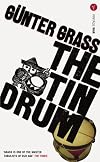
The Tin Drum is undoubtedly a very important book. It earned its place on the pedestal among the greatest works of literature of the 20th century and it does belong on that pedestal. Its influence runs deep and wide, reaches far beyond Danzig, Germany, Europe, beyond the war and the peace that followed it.
An acclaimed book Midnight's Children by Salman Rushdie and his host of quirky characters are mere shadows cast by Oskar - the mighty dwarf, mere echoes of the sound of his tin drum. I show more would not imply that Rushdie copied Grass's greatest work, let's say he transposed it, cast it in a different time and place.
It's all fine for a book to be important and all that but I personally struggled with it quite a bit. The Tin Drum comes sliced up into three parts and I fittingly allocated my reading time spaced over three years roughly along the lines of this partition. Each time I started or restarted reading it was a delight! The irony, the humor, the minute details and the impressive breadth, the turns of the plot and the caprices of fate, the magical and the real fused together- how could one not enjoy this book! Then, after some time the dark side of the book would take over, behind that façade of fun and laughter the horror lurks, "where peace ... can never dwell, hope never comes ..., but torture without end". The absence of hope is probably the toughest part to take: every human endeavor, every ambition, worthy or not, every thought and feeling gets dissected by Grass's scalpel, turned inside out, revealed for what it is, magnified in its ugliness. The satire becomes unbearable eventually, you no longer laugh, you get suspicious of every form of humor and look at people with worry when they tell you a joke.
It was a relief to finish The Tin Drum and switch to Faulkner's As I Lay Dying - equally dark and disturbing but fully devoid of humor, a book that is honestly and straightforwardly miserable but one that does not serve the human misery in the rich sauce of laughter.
Update: I should say that a couple of years later I hardly remember Faulkner's As I Lay Dying, while Grass's mighty dwarf is still fresh in my memory. show less
An acclaimed book Midnight's Children by Salman Rushdie and his host of quirky characters are mere shadows cast by Oskar - the mighty dwarf, mere echoes of the sound of his tin drum. I show more would not imply that Rushdie copied Grass's greatest work, let's say he transposed it, cast it in a different time and place.
It's all fine for a book to be important and all that but I personally struggled with it quite a bit. The Tin Drum comes sliced up into three parts and I fittingly allocated my reading time spaced over three years roughly along the lines of this partition. Each time I started or restarted reading it was a delight! The irony, the humor, the minute details and the impressive breadth, the turns of the plot and the caprices of fate, the magical and the real fused together- how could one not enjoy this book! Then, after some time the dark side of the book would take over, behind that façade of fun and laughter the horror lurks, "where peace ... can never dwell, hope never comes ..., but torture without end". The absence of hope is probably the toughest part to take: every human endeavor, every ambition, worthy or not, every thought and feeling gets dissected by Grass's scalpel, turned inside out, revealed for what it is, magnified in its ugliness. The satire becomes unbearable eventually, you no longer laugh, you get suspicious of every form of humor and look at people with worry when they tell you a joke.
It was a relief to finish The Tin Drum and switch to Faulkner's As I Lay Dying - equally dark and disturbing but fully devoid of humor, a book that is honestly and straightforwardly miserable but one that does not serve the human misery in the rich sauce of laughter.
Update: I should say that a couple of years later I hardly remember Faulkner's As I Lay Dying, while Grass's mighty dwarf is still fresh in my memory. show less

Alexander and Alexandra are strangers who get into conversation after they bump into each other at a flower stall in the Dominican market hall in Gdánsk on All Souls' Day 1989. One thing leads to another, a cemetery visit is followed by a mushroom (Steinpilz/porcini) supper, and the two of them also cook up, first, an interesting business idea, and second, what turns into a serious relationship. They are both widowed and around sixty, and they were both exiled in their teens by the show more border-changes of 1945, he as a German from Danzig/Gdánsk and she as a Pole from Wilno/Vilnius. Their sharing of family memories leads them to the grand scheme: a service to allow exiles like their parents and themselves to profit from the end of the Cold War and seek burial in the places where they came from.
The German-Polish-Lithuanian Funeral Company soon becomes a reality: they are clearly tapping into a serious demand, and the money starts rolling in. And of course it soon starts going wrong, the idealistic notions of reconciliation in death are overtaken by the demands of free-market capitalism, and Alexander and Alexandra find themselves repelled by the monster they have created.
Grass, of course, enjoys nothing more than being the lonely pessimistic toad raining on the West German parade of reunification and the end of the iron curtain. He had great fun in those days, when he was being attacked in editorials and political speeches practically non-stop. And it probably gave him a certain satisfaction to have been largely right about all the things that the free market was going to smash up in the former socialist states. He didn't quite manage to predict the rise of populist nationalism in places like Poland and Hungary, but he did put his finger on a lot of the external causes of that trend. And this is also a lively story, with a lot of detail about Gdánsk and the way its German and Polish sides come together, and some entertaining characters like the octogenarian Erna Brakup with her felt hat and antediluvian Danzig-German dialect, or the British-Bengali Mr Chatterjee, who is developing a pedal-rickshaw empire across Polish cities and takes over part of the Lenin Shipyard to build his own rickshaws. show less
The German-Polish-Lithuanian Funeral Company soon becomes a reality: they are clearly tapping into a serious demand, and the money starts rolling in. And of course it soon starts going wrong, the idealistic notions of reconciliation in death are overtaken by the demands of free-market capitalism, and Alexander and Alexandra find themselves repelled by the monster they have created.
Grass, of course, enjoys nothing more than being the lonely pessimistic toad raining on the West German parade of reunification and the end of the iron curtain. He had great fun in those days, when he was being attacked in editorials and political speeches practically non-stop. And it probably gave him a certain satisfaction to have been largely right about all the things that the free market was going to smash up in the former socialist states. He didn't quite manage to predict the rise of populist nationalism in places like Poland and Hungary, but he did put his finger on a lot of the external causes of that trend. And this is also a lively story, with a lot of detail about Gdánsk and the way its German and Polish sides come together, and some entertaining characters like the octogenarian Erna Brakup with her felt hat and antediluvian Danzig-German dialect, or the British-Bengali Mr Chatterjee, who is developing a pedal-rickshaw empire across Polish cities and takes over part of the Lenin Shipyard to build his own rickshaws. show less

The Grimms' tale of "The fisherman and his wife" counts as a notorious piece of misogyny: in the published version of the tale (there are others, of course), the wife Ilsebill keeps demanding more and more from the magic flounder until her greed has destroyed their happiness altogether. So, naturally, Grass uses it as an ironic central motif for this novel, his definitive analysis of the History of Women. Which is also — incidentally — a history of cooking, and of human settlement in the show more Danzig/Gdansk city and region, from matriarchal clans of neolithic times to the 1970 strike in the Lenin Shipyard.
Grass clearly means well, and his conclusion isn't very favourable to the way men have run the world, but even as far back as 1977, it's still quite an arrogant task for a male writer to set himself. With hindsight, there are probably roles that his proletarian strong women of history could have filled other than as cooks, nurturers and bed-warmers, and he doesn't really do himself any favours by his gently ironic treatment of the modern women in the feminist tribunal that is trying the flounder for his crimes against womanhood. Especially since the narrator, constantly reincarnated in new male characters, seems to have slept with all of the women in the book...
As always, a tour-de-force piece of writing, clever, witty and knowledgeable, but maybe not the Grass novel you should be rushing to re-read 45 years on. Unless you are fascinated by Baltic cuisine, in which case you can just read it for the recipes (not suitable for vegetarians!). show less
Grass clearly means well, and his conclusion isn't very favourable to the way men have run the world, but even as far back as 1977, it's still quite an arrogant task for a male writer to set himself. With hindsight, there are probably roles that his proletarian strong women of history could have filled other than as cooks, nurturers and bed-warmers, and he doesn't really do himself any favours by his gently ironic treatment of the modern women in the feminist tribunal that is trying the flounder for his crimes against womanhood. Especially since the narrator, constantly reincarnated in new male characters, seems to have slept with all of the women in the book...
As always, a tour-de-force piece of writing, clever, witty and knowledgeable, but maybe not the Grass novel you should be rushing to re-read 45 years on. Unless you are fascinated by Baltic cuisine, in which case you can just read it for the recipes (not suitable for vegetarians!). show less
Lists
German Literature (11)
1950s (1)
Five star books (1)
Nifty Fifties (1)
Read (1)
1970s (1)
Franklit (1)
THE WAR ROOM (1)
Unread books (1)
War Literature (1)
Metafiction (1)
Europe (2)
My TBR (3)
Magic Realism (1)
100 knjiga (1)
Best Satire (1)
First Novels (1)
A Novel Cure (1)
. (1)
1990s (1)
Best First Lines (1)
Favourite Books (1)
Awards


You May Also Like


Associated Authors
Statistics
- Works
- 209
- Also by
- 32
- Members
- 22,812
- Popularity
- #928
- Rating
- 3.8
- Reviews
- 281
- ISBNs
- 1,126
- Languages
- 33
- Favorited
- 75


