

Lou Andreas-Salomé (1861–1937)
Author of Looking Back: Memoirs
About the Author
Lou Andreas-Salome is an author and psychoanalyst. She was born in St. Petersburg, Russia, on February 12, 1861. Andreas-Salome studied theology at the University of Zurich. Andreas-Salome has been linked to German philosopher Friedrich Nietzsche and poet Rainer Maria Rilke. She was also a follower show more of Sigmund Freud. Andreas-Salome moved to Vienna in 1912 to study psychoanalysis and began her own practice. Andreas-Salome wrote novels and works of nonfiction, including Friedrich Nietzche in His Works and My Thanks to Freud. Her correspondence with Rilke was published in 1952. Andreas-Salome died on February 5, 1937. (Bowker Author Biography) show less
Works by Lou Andreas-Salomé
You Alone Are Real to Me: Remembering Rainer Maria Rilke (American Readers Series) (1988) 64 copies, 1 review
Ce qui découle du fait que ce n'est pas la femme qui a tué le père et autres textes psychanalytiques (Folio Sagesses) (2020) 5 copies
Correspondance avec Sigmund Freud: suivi du Journal d'une année: 1912-1936: 1912-1913 (1970) 5 copies
"--als käm ich heim zu Vater und Schwester" : Lou Andreas-Salome-Anna Freud : Briefwechsel 1919-1937 (2013) 2 copies
Strindberg & de vrouw 1 copy
نيتشه: سيرة فكرية 1 copy
La alegría propia de un verdadero encuentro: Correspondencia Lou Andreas-Salomé y Sigmund Freud (2025) 1 copy
Il mito di una donna 1 copy
Salomè Lou 1 copy
Ma : Ein Porträt 1 copy
L'erotismo 1 copy
UM DESVARIO 1 copy
Associated Works
A History of Women in the West, Volume IV: Emerging Feminism from Revolution to World War (1993) — Contributor — 247 copies, 2 reviews
Tagged
Common Knowledge
- Canonical name
- Andreas-Salomé, Lou
- Legal name
- Саломе, Луиза Густавовна
- Other names
- Salomé, Louise von
Salomé, Luíza Gustavovna - Birthdate
- 1861-02-12
- Date of death
- 1937-02-15
- Gender
- female
- Education
- University of Zürich
- Occupations
- writer
psychoanalyst
memoirist
novelist
poet
essayist (show all 9)
playwright
short story writer
biographer - Relationships
- Ree, Paul (friend)
Nietzsche, Friedrich (friend)
Rilke, Rainer Maria (lover)
Andreas, Friedrich Carl (husband)
Freud, Sigmund (colleague)
Druskowitz, Helene von (friend) - Short biography
- Lou Andreas-Salomé was born in St. Petersburg, Russia. Her parents were Louise Wilm and Gustav Ludwig von Salomé, a German-born Russian army officer of French Huguenot descent. As a teenager, she studied philosophy, world religions, and French and German literature privately with a Dutch pastor, Hendrik Gillot. In 1879, after her father's death, she moved to Zurich, Switzerland with her mother and enrolled at the University of Zürich, one of the few European universities that accepted women. Lou and her mother traveled in 1882 to Rome, where the philosopher Friedrich Nietzsche fell in love with her, but she rejected his marriage proposal as well as that of his friend, Paul Rée. In 1887, she married Friedrich Carl Andreas, a professor of linguistics at the University of Göttingen, but continued to see other men; the couple separated by 1898 but stayed married until his death. In 1897, she and the poet Rainer Maria Rilke, 14 years her junior, fell in love; she became his lover, muse, and one of the greatest influences on his life and work. Her own literary career began in 1885 with the publication of a well-received autobiographical novel, Im Kampf um Gott. She went on to publish more novels, short stories, plays, essays, poetry, criticism, philosophy, and biographies. In 1911, at age 50, she started on a second career as a psychoanalyst after joining Sigmund Freud's circle in Vienna. By the early 1920s she was widely recognized as an analyst, and wrote essays on the relationship between psychology and creativity. She wrote her memoirs, published posthumously in 1951, and translated into English for the first time in 1991 as Looking Back. Her correspondence with Rilke was published in 1952.
- Nationality
- Russia (birth)
Germany - Birthplace
- St Petersburg, Russian Empire
- Places of residence
- Rome, Italy
Leipzig, Germany - Place of death
- Göttingen, Germany
- Burial location
- Göttingen, Germany
- Map Location
- Germany
Members
Reviews

This book is principally a 1988 translation of Lou Salome's Friedrich Nietzsche in seinen Werken ("Friedrich Nietzsche in His Works," 1894). The original text is one of the earliest pieces of scholarship on Nietzsche, but is curiously hybridized with elements of memoir, since Salome was a personal student of Nietzsche's during his late "formerly professor, and now a wandering fugitive" phase of work. This circumstance, amplified by Nietzsche's affection for her (he proposed a marriage which show more she declined) entitles her to a certain privileged perspective on the ideas of a thinker whose paradoxical core involved a vigorous interplay of the objective and the idiosyncratic. "Unforgettable for me are those hours in which he first confided to me his secret, whose inevitable fulfillment and validation he anticipated with shudders." (130)
Salome identifies "the conflict between the need for God and the compulsive need to deny God" as the cornerstone of Nietzsche's struggle, which made him into a "sacrificial animal," the remains of which were then "a dual figure--half-sick and suffering; half-saved, a laughing and superior human." (89) In all of this, however, she surprisingly takes him to have missed his destiny rather than realized it. Writing of the break with Wagner and Nietzsche's academic resignation, she remarks, "One cannot escape the feeling that the greatness reserved for him passed him by." (56)
Translator Siegfried Mandel provides a lengthy introduction, focused on a late-20th-century appreciation of Nietzsche's biography, both prior to and during his association with Salome. In particular, Mandel takes some pains to arrive at conclusions about Nietzsche's sexual identity and experiences. Mandel also repudiates the allegations that Nietzsche was syphilitic, and works to dissociate the actual man from the rumors that helped to inspire Thomas Mann's Doktor Faustus. (xli)
The translation leaves out many of Salome's original annotations, a considerable portion of which consisted solely of extensive quotes from Neitzsche's published works. But Mandel also reinserts [in brackets] some omitted language in correspondence reproduced within Salome's text. Mandel's own endnotes are largely explanatory, and imply that he is addressing himself to a readership with little prior familiarity with Nietzsche. Indeed, as a basic introduction to Nietzsche's thought, the book is serviceable, although its peculiar perspective and unique judgments also give it great interest to those who have already studied Nietzsche at length. show less
Salome identifies "the conflict between the need for God and the compulsive need to deny God" as the cornerstone of Nietzsche's struggle, which made him into a "sacrificial animal," the remains of which were then "a dual figure--half-sick and suffering; half-saved, a laughing and superior human." (89) In all of this, however, she surprisingly takes him to have missed his destiny rather than realized it. Writing of the break with Wagner and Nietzsche's academic resignation, she remarks, "One cannot escape the feeling that the greatness reserved for him passed him by." (56)
Translator Siegfried Mandel provides a lengthy introduction, focused on a late-20th-century appreciation of Nietzsche's biography, both prior to and during his association with Salome. In particular, Mandel takes some pains to arrive at conclusions about Nietzsche's sexual identity and experiences. Mandel also repudiates the allegations that Nietzsche was syphilitic, and works to dissociate the actual man from the rumors that helped to inspire Thomas Mann's Doktor Faustus. (xli)
The translation leaves out many of Salome's original annotations, a considerable portion of which consisted solely of extensive quotes from Neitzsche's published works. But Mandel also reinserts [in brackets] some omitted language in correspondence reproduced within Salome's text. Mandel's own endnotes are largely explanatory, and imply that he is addressing himself to a readership with little prior familiarity with Nietzsche. Indeed, as a basic introduction to Nietzsche's thought, the book is serviceable, although its peculiar perspective and unique judgments also give it great interest to those who have already studied Nietzsche at length. show less

There is a lovely collection of the letters between Rilke and Salomé, (Rainer Maria Rilke and Lou Andreas-Salomé: The Correspondence) that, unlike most collections of letters between friends is remarkable for its lack of the little mundane details of life. The weather is rarely mentioned, and only then to some purpose (“Today it is raining,” writes Rilke in a farewell sentence, “No doubt also on Kufstein and Pushkin.”). The reader who is curious about the progression of either show more writer’s outer life will find very little to satisfy him here. But as a record of their inner lives, it is remarkably complex and captivating. . .read full review show less
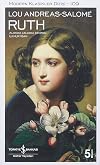
Ach, so eine schöne Geschichte über totale emotionale Abhängigkeit. Ein bisschen langsam erzählt vielleicht.
You Alone Are Real to Me: Remembering Rainer Maria Rilke (American Readers Series) by Lou Andreas-Salomé
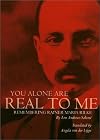
Read the introduction by Angela von der Lippe but could not get into the right mindset to read the text. May return at some point.
Lists
You May Also Like


Associated Authors
Statistics
- Works
- 78
- Also by
- 1
- Members
- 918
- Popularity
- #27,945
- Rating
- 3.9
- Reviews
- 12
- ISBNs
- 201
- Languages
- 10
- Favorited
- 3
