
Dalia Sofer
Author of The Septembers of Shiraz
About the Author
Works by Dalia Sofer
Associated Works
Tagged
Common Knowledge
- Canonical name
- Sofer, Dalia
- Birthdate
- 1972
- Gender
- female
- Education
- Sarah Lawrence College (MFA)
Lycée Français de New York
New York University - Occupations
- writer
- Awards and honors
- Whiting Writers' Award (2007)
- Short biography
- Dalia Sofer was born in Tehran, Iran, where she lived until the age of ten. After time in Israel, she arrived in New York, where she attended the Lycée Français de New York and later, New York University. Dalia received an MFA in Fiction from Sarah Lawrence College and has been a resident at Yaddo. She is the recipient of a Whiting Writers' Award and the 2008 PEN/Robert Bingham Fellowship. Her novel, The Septembers of Shiraz, was selected as a 2007 New York Times "Notable Book of the Year" and was a finalist for the Jewish Book Award in 2008.It has been, or is in the process of being, translated and published in fifteen countries, including France, Germany, Italy, Holland, Spain, Portugal, Russia, Israel, and Brazil. She has published essays in various anthologies, and has been a contributor to Poets & Writers magazine, the New York Times Book Review, the Academy of American Poets’ National Poetry Almanac, and NPR. She lives in New York City. [from www.ci.austin.tx.us]
- Nationality
- Iran (birth)
USA (residence) - Birthplace
- Tehran, Iran
- Places of residence
- New York, New York, USA
- Associated Place (for map)
- New York, New York, USA
Members
Reviews
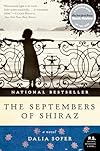
I wanted to like this book much more than I actually did, but I'm not exactly sure why. The subject matter of the book is interesting, the fate of a wealthy Jewish family after the fall of the Shah and the rise of the Republican Guard in Iran, and the writing has poetic moments.
The book has a strong opening. When Isaac Amin sees two men with rifles walk into his office at half past noon on a warm autumn day in Tehran, his first thought is that he won't be able to join his wife and daughter show more for lunch, as promised. Imprisoned for having accumulated wealth under the Shah, and the vague accusation of spying for Israel, Isaac suffers the vagaries and brutality of the new regime.
In alternating chapters we experience the viewpoints of other members of Isaac's family. His wife, Farnaz, is dissatisfied with her life, but rather unthinkingly enjoys the privileges of her position. Through her relationship with the family's housekeeper, Farnaz is made aware of the gap between her perceptions of class relationships and that of others. Parvis, Isaac's son, has been sent to New York in order to avoid being drafted into the army and fighting in the war with Iraq. Unhappy and adrift, Parvis contemplates his lack of direction and his apathy towards Judaism. The youngest member of the family, Shirin, is struggling to understand her father's disappearance.
I found the characters of Isaac and Parvis to be the most compelling. Isaac is reflective and honest, and Parvis is well-depicted as a young man in search of himself. Farnaz, however, fails to undergo any significant character development, which leaves her character rather flat. Shirin, on the other hand, seems to change too much too fast, from a rather naive little girl to the most daring member of her family in her resistance to the regime.
Based loosely on the author's own experiences, I thought the novel had a lot of potential. I just wasn't as engaged as the plot required. Perhaps because this is a first novel, perhaps because I wasn't in the right frame of mind when reading it, I was vaguely dissatisfied with what had the makings of a great novel. show less
The book has a strong opening. When Isaac Amin sees two men with rifles walk into his office at half past noon on a warm autumn day in Tehran, his first thought is that he won't be able to join his wife and daughter show more for lunch, as promised. Imprisoned for having accumulated wealth under the Shah, and the vague accusation of spying for Israel, Isaac suffers the vagaries and brutality of the new regime.
In alternating chapters we experience the viewpoints of other members of Isaac's family. His wife, Farnaz, is dissatisfied with her life, but rather unthinkingly enjoys the privileges of her position. Through her relationship with the family's housekeeper, Farnaz is made aware of the gap between her perceptions of class relationships and that of others. Parvis, Isaac's son, has been sent to New York in order to avoid being drafted into the army and fighting in the war with Iraq. Unhappy and adrift, Parvis contemplates his lack of direction and his apathy towards Judaism. The youngest member of the family, Shirin, is struggling to understand her father's disappearance.
I found the characters of Isaac and Parvis to be the most compelling. Isaac is reflective and honest, and Parvis is well-depicted as a young man in search of himself. Farnaz, however, fails to undergo any significant character development, which leaves her character rather flat. Shirin, on the other hand, seems to change too much too fast, from a rather naive little girl to the most daring member of her family in her resistance to the regime.
Based loosely on the author's own experiences, I thought the novel had a lot of potential. I just wasn't as engaged as the plot required. Perhaps because this is a first novel, perhaps because I wasn't in the right frame of mind when reading it, I was vaguely dissatisfied with what had the makings of a great novel. show less
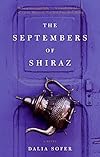
From the first page of The Septembers of Shiraz, you know it’s not going to be a fun or easy read. In September, 1981 in the midst of his work day, Isaac Amin, a Jew living in Tehran, is apprehended at gunpoint by two members of the Revolutionary Guards. They transport him for interrogation and imprisonment. His crime? Being a Jew and benefiting from the reign of the Shah; officially he is accused of being an Israeli spy.
Isaac is a gem trader and jewelry designer in Tehran and has led a show more very comfortable lifestyle, amassing a fortune under the rule of the Shah. His wife Farnaz and ten year old daughter Shirin live with him in a sprawling house with servants and a gardener. His son, Parviz, attends architectural school in Brooklyn. The novel’s chapters alternate between these four characters from a third person POV.
After the fall of the Shah, they realize that their lifestyle, if not their lives, are in jeopardy. The revolution post-Shah has changed life in Iran drastically. No longer is music or dancing allowed, any person of wealth is suspect, and anyone not loyal to Islam is considered immoral and subject to harsh punishment. A list of executions is frequently posted in the newspaper, and the Amins sometimes read of friends being killed. It is difficult to know whom to trust and conversations and letters are often peppered with code words and phrases.
“The Septembers” refers to Isaac’s idyllic time spent in Shiraz in his youth and young adulthood. It is in stark contrast to the September in which he begins his imprisonment. Some of the prison scenes reminded me of The Lizard Cage, a remarkable book about a Burmese prisoner. Conditions are unimaginable, torture is frequent, survival is tenuous.
As difficult as the subject matter is, I found this a very readable book. The author, Dalia Sofer, was ten when she and her family fled Iran, so I assume that Shirin is a partially autobiographical character. Sofer’s prose is beautiful – for example, when Farnaz picks up a forgotten pair of Isaac’s shoes from a shoemaker while he is in prison, “…she takes them, like a widow leaving a morgue. She walks home with the bag looped around her wrist, the shoes banging against her thigh, as if kicking her for interrupting their repose.” There are many such lovely turns of phrase in this astounding debut novel.
Highly recommended. show less
Isaac is a gem trader and jewelry designer in Tehran and has led a show more very comfortable lifestyle, amassing a fortune under the rule of the Shah. His wife Farnaz and ten year old daughter Shirin live with him in a sprawling house with servants and a gardener. His son, Parviz, attends architectural school in Brooklyn. The novel’s chapters alternate between these four characters from a third person POV.
After the fall of the Shah, they realize that their lifestyle, if not their lives, are in jeopardy. The revolution post-Shah has changed life in Iran drastically. No longer is music or dancing allowed, any person of wealth is suspect, and anyone not loyal to Islam is considered immoral and subject to harsh punishment. A list of executions is frequently posted in the newspaper, and the Amins sometimes read of friends being killed. It is difficult to know whom to trust and conversations and letters are often peppered with code words and phrases.
“The Septembers” refers to Isaac’s idyllic time spent in Shiraz in his youth and young adulthood. It is in stark contrast to the September in which he begins his imprisonment. Some of the prison scenes reminded me of The Lizard Cage, a remarkable book about a Burmese prisoner. Conditions are unimaginable, torture is frequent, survival is tenuous.
As difficult as the subject matter is, I found this a very readable book. The author, Dalia Sofer, was ten when she and her family fled Iran, so I assume that Shirin is a partially autobiographical character. Sofer’s prose is beautiful – for example, when Farnaz picks up a forgotten pair of Isaac’s shoes from a shoemaker while he is in prison, “…she takes them, like a widow leaving a morgue. She walks home with the bag looped around her wrist, the shoes banging against her thigh, as if kicking her for interrupting their repose.” There are many such lovely turns of phrase in this astounding debut novel.
Highly recommended. show less
In The Septembers of Shiraz, Dalia Sofer paints a vivid emotional portrait of one familiy's struggle to cope when the father disappears and becomes a political prisoner. Set in Iran immediately after the Shah's regime, Isaac Amin is a Jewish jeweler who is arrested in his office. His wife, Farnaz, is not notified but quickly realizes what has happened; arrests such as Isaac's were quite common. The effect on her is devastating; she struggles to maintain "business and usual" in her household show more while fearing for her own life and that of her 9-year-old daughter, Shirin. Shirin acts out her fear, operating from limited information and a child's perspective. Meanwhile Isaac & Farnaz's son, Parviz, is attending a university in New York. He is lonely to begin with, and then overcome with helplessness at his inability to help his family.
If this story were only about Isaac, it would be a fairly typical novel of political imprisonment. But Sofer brings great depth not just to Isaac's character, but to his immediate and extended family. Her prose is wonderfully descriptive, such as this passage describing Isaac's dying father: The beads, she thinks, will outlive his hands. His wool robe, which he has owned as long as she has know himm, and before, will soon be folded and put away in a box, along with his hat, his good shoes, his pocket watch. What had allowed her to tolerate him, on that trip to Isfahan so long ago, was a single sentence. "Please make Isaac happy, Farnaz-jan, because we never did." With this sentence he had made her realize that despite all the things his character lacked, which were many, he possessed at least the capacity to admit who he was: a bad father.
During the Isaac's captivity, both he and Farnaz have ample opportunity to reflect on their lives together, which had become a bit stale. Isaac, reflecting on his successful business ventures, thinks to himself, All this, he had achieved, but the price had been a string of compromises, looped over one another like pearls, creating a life at once beautiful and frail. Slowly, all four family members come to terms with the importance of family, homeland, and ethnicity and the trade-offs necessary to preserve what they can.
An excellent book; highly recommended. show less
If this story were only about Isaac, it would be a fairly typical novel of political imprisonment. But Sofer brings great depth not just to Isaac's character, but to his immediate and extended family. Her prose is wonderfully descriptive, such as this passage describing Isaac's dying father: The beads, she thinks, will outlive his hands. His wool robe, which he has owned as long as she has know himm, and before, will soon be folded and put away in a box, along with his hat, his good shoes, his pocket watch. What had allowed her to tolerate him, on that trip to Isfahan so long ago, was a single sentence. "Please make Isaac happy, Farnaz-jan, because we never did." With this sentence he had made her realize that despite all the things his character lacked, which were many, he possessed at least the capacity to admit who he was: a bad father.
During the Isaac's captivity, both he and Farnaz have ample opportunity to reflect on their lives together, which had become a bit stale. Isaac, reflecting on his successful business ventures, thinks to himself, All this, he had achieved, but the price had been a string of compromises, looped over one another like pearls, creating a life at once beautiful and frail. Slowly, all four family members come to terms with the importance of family, homeland, and ethnicity and the trade-offs necessary to preserve what they can.
An excellent book; highly recommended. show less
In 1981 in Tehran, after the fall of the Shah, Isaac Amin, a Jewish rare gem dealer, is arrested, accused of being a spy. He isn’t really surprised at this turn of events because although the idea of his being a spy is ludicrous, he has watched as friends and other businessmen have disappeared, probably imprisoned or executed by the revolutionary Guard. All of these individuals have one thing in common: they lived well during the reign of the Shah.
Dalia Sofer’s debut novel, written in show more hauntingly beautiful prose, explores the effects of the Iranian Revolution on the general population and particularly, on one family. It is told through the view points of Amin, his wife Farnaz, his nine year old daughter Sharin and his teenage son, Parviz, who is going to school in New York. She very even-handedly articulates both sides and allows the reader to appreciate the revolution for what it was and why it was important to both sides. Additionally, by using multiple viewpoints, it was easy to observe the effects on all involved. When Isaac describes his experiences in prison, as horrifying as torture is, Sofer tempers it so that the reader knows exactly what is happening without dwelling on the act itself. It’s the only thing that makes that part readable and different from other books that include descriptions of torture.
As the family considers leaving the country they love, but don’t feel safe in anymore, feelings of heartbreak overwhelm.
Isaac thinks of the cities ahead of him---Ankara, Istanbul, Geneva, New York---and of the cities behind him---Tehran, where his home stands, empty now of life; Ramsar by the Caspian, its air filled with fog; Isfahan, with its domes of blue; Yazd, where brick alleys shelter its inhabitants from the daytime heat and nighttime freeze of the desert, and where the undying flame of Zoroastrians burns in a small urn of oil; and his beloved Shiraz, the city of his youthful summers, where he discovered both poetry and Farnaz, and where, along the mausoleums of the medieval poets Hafez and Sa’di, he recited verses, finding his future in them.” (Page 336)
We follow this family through a year filled with dismay and terror, ending with a dangerous flight to freedom and I, for one, was impressed with this strong debut. Highly recommended. show less
Dalia Sofer’s debut novel, written in show more hauntingly beautiful prose, explores the effects of the Iranian Revolution on the general population and particularly, on one family. It is told through the view points of Amin, his wife Farnaz, his nine year old daughter Sharin and his teenage son, Parviz, who is going to school in New York. She very even-handedly articulates both sides and allows the reader to appreciate the revolution for what it was and why it was important to both sides. Additionally, by using multiple viewpoints, it was easy to observe the effects on all involved. When Isaac describes his experiences in prison, as horrifying as torture is, Sofer tempers it so that the reader knows exactly what is happening without dwelling on the act itself. It’s the only thing that makes that part readable and different from other books that include descriptions of torture.
As the family considers leaving the country they love, but don’t feel safe in anymore, feelings of heartbreak overwhelm.
Isaac thinks of the cities ahead of him---Ankara, Istanbul, Geneva, New York---and of the cities behind him---Tehran, where his home stands, empty now of life; Ramsar by the Caspian, its air filled with fog; Isfahan, with its domes of blue; Yazd, where brick alleys shelter its inhabitants from the daytime heat and nighttime freeze of the desert, and where the undying flame of Zoroastrians burns in a small urn of oil; and his beloved Shiraz, the city of his youthful summers, where he discovered both poetry and Farnaz, and where, along the mausoleums of the medieval poets Hafez and Sa’di, he recited verses, finding his future in them.” (Page 336)
We follow this family through a year filled with dismay and terror, ending with a dangerous flight to freedom and I, for one, was impressed with this strong debut. Highly recommended. show less
Lists
Awards


You May Also Like


Associated Authors
Statistics
- Works
- 2
- Also by
- 1
- Members
- 1,180
- Popularity
- #21,784
- Rating
- 3.9
- Reviews
- 67
- ISBNs
- 27
- Languages
- 5
- Favorited
- 2