
Martin Page (2) (1975–)
Author of How I Became Stupid
For other authors named Martin Page, see the disambiguation page.
About the Author
Image credit: Morvillers
Works by Martin Page
Tagged
Common Knowledge
- Other names
- Agarmen, Pit
- Birthdate
- 1975-02-07
- Gender
- male
- Occupations
- writer
- Nationality
- France
- Birthplace
- Paris, France
- Places of residence
- Paris, France
Nantes, France - Associated Place (for map)
- France
Members
Reviews
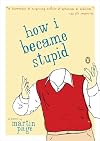
With a title like this gracing the front cover, you might get the impression that this is a tale of wrong choices, longing for the good ole’ days and trying to figure out how it all got away.
You’d be mostly wrong…mostly.
How I Became Stupid is a tale about Antoine, who feels forever burdened by his astounding intelligence and natural curiosity about the world he inhabits. The weight of his knowledge is stifling and he longs to become one of the drooling, ignorant masses he sees around show more him every day. His goal by whatever means necessary is to dumb himself down into apparent nothingness in a crowd. Only then, he thinks, or deduces rather, can he find true happiness. He tries various methods and over-complicated ways to end up in places most people find themselves without thinking at all. This sarcastically comic journey follows these brave attempts to limit the reaches of his mind and the effects it has on those who know him, before and after his inclusion into the world of the stupid. Antoine is a wanderer, a rover, a vagabond of the mind, yearning for a place where his mind doesn’t run free because it sees nothing and nowhere to run to.
Martin Page, a French author, created Antoine almost as a reaction and retribution of the world of today. We cling to evolution and parade around preening in front of all other creatures, but not with our feathers or our fur, since we lost those long ago, but we preen with our minds and our reason. As a race we lord our cognitive thought over all other organisms, but Antoine shows us it comes with a hefty price tag. Martin’s novel gives us a glimpse into the mirror, a vision of someone we all hide deep in the closet who judges other people, overthinks each and every detail of the life before his eyes and who has a problem taking anything at face value. The eternal question posed by the book is whether there is a way to tone down that voice in our mind? Reel in the ego and superego and just become one with the mass consciousness, oh, and don’t forget to enjoy it as well.
This was a quick and enjoyable read, laced with wry wit, sarcasm and unique characters, people who would have to be incredibly singular just to stand hanging around Antoine in the first place. I felt the lesson I took away was you can never run away from who you really are and to be truly happy you need to start with acceptance of that fact. A tall tale indeed, but one that can be accomplished with a little time, energy and possibly a nice, creamy bar of dark chocolate. show less
You’d be mostly wrong…mostly.
How I Became Stupid is a tale about Antoine, who feels forever burdened by his astounding intelligence and natural curiosity about the world he inhabits. The weight of his knowledge is stifling and he longs to become one of the drooling, ignorant masses he sees around show more him every day. His goal by whatever means necessary is to dumb himself down into apparent nothingness in a crowd. Only then, he thinks, or deduces rather, can he find true happiness. He tries various methods and over-complicated ways to end up in places most people find themselves without thinking at all. This sarcastically comic journey follows these brave attempts to limit the reaches of his mind and the effects it has on those who know him, before and after his inclusion into the world of the stupid. Antoine is a wanderer, a rover, a vagabond of the mind, yearning for a place where his mind doesn’t run free because it sees nothing and nowhere to run to.
Martin Page, a French author, created Antoine almost as a reaction and retribution of the world of today. We cling to evolution and parade around preening in front of all other creatures, but not with our feathers or our fur, since we lost those long ago, but we preen with our minds and our reason. As a race we lord our cognitive thought over all other organisms, but Antoine shows us it comes with a hefty price tag. Martin’s novel gives us a glimpse into the mirror, a vision of someone we all hide deep in the closet who judges other people, overthinks each and every detail of the life before his eyes and who has a problem taking anything at face value. The eternal question posed by the book is whether there is a way to tone down that voice in our mind? Reel in the ego and superego and just become one with the mass consciousness, oh, and don’t forget to enjoy it as well.
This was a quick and enjoyable read, laced with wry wit, sarcasm and unique characters, people who would have to be incredibly singular just to stand hanging around Antoine in the first place. I felt the lesson I took away was you can never run away from who you really are and to be truly happy you need to start with acceptance of that fact. A tall tale indeed, but one that can be accomplished with a little time, energy and possibly a nice, creamy bar of dark chocolate. show less
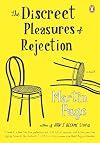
What would happen if you received a message from someone breaking up with you and you couldn’t remember ever that individual or a relationship of any kind? That’s the conundrum for neurotic advertising executive Virgil. This unsettling message, from a woman named Clara, sends Virgil on a two-week mission to find out if there’s something wrong with him and to also uncover details about the mysterious Clara. First, Virgil runs off in a panic to his psychiatrist with his answering machine show more in hand to get her take on what he feels is a colossal dilemma. He feels that he’s suffering from a dire condition; he has apparently erased all memories of Clara and in doing so his brain must be malfunctioning in some manner. Virgil has never been very successful with relationships.
The Discreet Pleasures of Rejection by Martin Page is unlike any novel I’ve read. Page has a unique style and perspective that he infuses throughout the pages [perhaps because he’s French]. I found myself laughing and wanting to share passages with friends. There’s a peculiar absurdity in the story and Virgil is quite the character. He’s analytical, successful in business but not in his personal life, and befriends the hookers on his block. Virgil remains quite particular and has a penchant for retro things: black and white films, records, and an orange Bic with a black point. The Discreet Pleasures of Rejection is a refreshing novel that provides an astute commentary on navigating the dating world. The end result proves to be both hilarious and sardonic. show less
The Discreet Pleasures of Rejection by Martin Page is unlike any novel I’ve read. Page has a unique style and perspective that he infuses throughout the pages [perhaps because he’s French]. I found myself laughing and wanting to share passages with friends. There’s a peculiar absurdity in the story and Virgil is quite the character. He’s analytical, successful in business but not in his personal life, and befriends the hookers on his block. Virgil remains quite particular and has a penchant for retro things: black and white films, records, and an orange Bic with a black point. The Discreet Pleasures of Rejection is a refreshing novel that provides an astute commentary on navigating the dating world. The end result proves to be both hilarious and sardonic. show less
Wow, what an odd book! Antoine, a highly intelligent man who can't find happiness decides his intellect is in the way. He tries drinking, pills, stock trading, TV, everything. Slowly he loses his conscience and starts blending into the society around him.
Very funny at times, this book also touches upon some serious subjects such as a loss of a moral compass and what can happen when you walk blithely through life, completely unaware of how your actions affect others.
I loved the part with the show more suicidal woman in the hospital, btw. Hilarious. Yes, the humor is dark.
The end is bizarre.
(I've just read the other reviews. There is so much hate for this book! I loved reading the other reviews - they are clever and funny. Yes, the ending sucks!) show less
Very funny at times, this book also touches upon some serious subjects such as a loss of a moral compass and what can happen when you walk blithely through life, completely unaware of how your actions affect others.
I loved the part with the show more suicidal woman in the hospital, btw. Hilarious. Yes, the humor is dark.
The end is bizarre.
(I've just read the other reviews. There is so much hate for this book! I loved reading the other reviews - they are clever and funny. Yes, the ending sucks!) show less
Unbelievable that this book could be thought to be any good. It is so easy to see how Page's mind works: he has to think about everything he encounters until he makes a witty paradoxical observation about it, and that "solves" the thing, and makes it available for clever conversation or novel writing.
On McDonald's in Paris: "Fast-food places were now the only welcoming, lively environments that were open to the people. It was depressing."
On the fountains in Paris: "Virgil had spent his life show more thirsty; he had a vital need to live near a fountain."
On women's clothing: "Women and their clothing fascinated Virgil. They made him think of chameleons eternally searching for the color that would allow them to blend in with the world. This perpetual quest for a new look make them impossible to grasp."
This sort of life is enervating, depressing. To think that you have adequately responded to the world, and to people, by packaging them in ersatz surrealist clichés, is to entirely miss the fact that the world, and people, have depth and nuance. It's no wonder that Page is continuously inadvertently or carelessly praising himself by praising his protagonist's wit. And it's no wonder that Le Clézio likes this book. show less
On McDonald's in Paris: "Fast-food places were now the only welcoming, lively environments that were open to the people. It was depressing."
On the fountains in Paris: "Virgil had spent his life show more thirsty; he had a vital need to live near a fountain."
On women's clothing: "Women and their clothing fascinated Virgil. They made him think of chameleons eternally searching for the color that would allow them to blend in with the world. This perpetual quest for a new look make them impossible to grasp."
This sort of life is enervating, depressing. To think that you have adequately responded to the world, and to people, by packaging them in ersatz surrealist clichés, is to entirely miss the fact that the world, and people, have depth and nuance. It's no wonder that Page is continuously inadvertently or carelessly praising himself by praising his protagonist's wit. And it's no wonder that Le Clézio likes this book. show less
Lists
Awards


You May Also Like


Associated Authors
Statistics
- Works
- 25
- Members
- 1,108
- Popularity
- #23,191
- Rating
- 3.4
- Reviews
- 30
- ISBNs
- 150
- Languages
- 15